Reviewed by our editorial team Updated
Helsinki Walking Tour Overview
Discover Helsinki at street level with this self-guided walking tour through the heart of Finland’s capital. Blending neoclassical landmarks, contemporary Nordic design, harbourfront views, and local food culture, this route gives you a well-balanced introduction to one of Europe’s most elegant cities.
Starting at Helsinki Central Railway Station, the tour runs as a compact 4 km route through the city’s key highlights, finishing at Helsinki Cathedral rather than looping back to the station, though the two are only a short walk or one tram ride apart. You’ll pass from grand civic architecture to peaceful modern spaces, from bustling market squares to scenic waterfront promenades. Along the way, expect opportunities to stop for coffee, explore cultural landmarks, and take in panoramic harbour views.
One of Helsinki’s biggest strengths is its walkability. The city is flat, clean, and designed on a human scale, making it easy to navigate without transport. Architectural styles shift seamlessly from neoclassical to functionalist to cutting-edge modern, creating constant visual interest without ever feeling overwhelming.
The route takes approximately 2.5 to 3 hours, depending on pace and how often you stop. It is suitable year-round, though winter conditions can make surfaces icy, so sturdy footwear is recommended. Public toilets (✓), cafés, and rest stops are available throughout, making it an accessible and comfortable walk for most travellers.
For navigation, we recommend using offline mapping tools or GPS-based apps to follow the route easily. You can also adapt the walk to suit your schedule, start from a different point, reverse the route, or take detours into nearby districts like the Design District.
This tour is designed to be flexible, practical, and immersive, helping you experience Helsinki not just as a visitor, but at the pace of the city itself.
Local Transport & Access Info
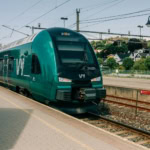
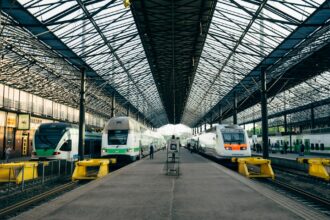
The Helsinki Walking Tour begins at Helsinki Central Railway Station, one of the city’s key transport hubs. If you’re arriving by train, tram, or airport bus, this is your natural starting point. The station connects directly with Helsinki Airport via the Ring Rail Line (P and I trains, approx. 30 minutes).
Local public transport is operated by HSL (Helsinki Region Transport), covering buses, trams, metro, commuter trains, and ferries. You can purchase tickets from ticket machines, R-kiosks, or the HSL app. Single tickets are valid across multiple transport modes for 80 minutes.
We recommend downloading the HSL app for live route planning, ticket purchases, and up-to-date tram/bus schedules.

App availability and prices vary by country. Some of these may not appear in your local App Store or Google Play.
Best for a short trip. Compare rooms by neighbourhood, price and guest rating before you book.
Compare hotelsBest for longer stays. Whole apartments and houses, so you are not eating out three times a day.
View rentalsBest for double-checking. Runs the same Helsinki search across several booking sites so you are not leaving money behind.
Compare pricesRecommended Navigation App
For easy turn-by-turn directions, offline mapping, and landmark locations even without data, we recommend downloading Maps.me.

App availability and prices vary by country. Some of these may not appear in your local App Store or Google Play.
| Category | Detail |
|---|---|
| Capital city | Helsinki |
| Population | ~700,000 |
| Currency | Euro (€) |
| Plug type | Type C & F (Europlug) |
| Official language(s) | Finnish, Swedish |
| Time zone | Eastern European Time (EET) |
| Emergency number | 112 |
| Local transport | HSL (Helsinki Region Transport) |
Helsinki Central Station – The Grand Gateway to the City
Begin your walking tour at Helsinki Central Railway Station, one of the most recognisable landmarks in Finland. Completed in 1919 and designed by architect Eliel Saarinen, the building blends Finnish granite, Art Nouveau detailing, and early modernist elements. It sets the tone for Helsinki’s distinctive architectural style from the very first step.
The entrance is guarded by the famous lantern-bearing stone figures, known locally as Lyhdynkantajat. These statues have become an unofficial symbol of Helsinki and are one of the most photographed features in the city.
Inside, the station is both functional and atmospheric. High vaulted ceilings lead to platforms serving the entire country, while cafés, shops, luggage storage, and public toilets (✓) make this an ideal place to begin your walk. The station also connects directly to Helsinki Airport via the Ring Rail Line, with frequent trains running throughout the day.
Fun fact: Helsinki Central Station was voted Finland’s most beloved building in a national poll.
Directions: Cross Kaivokatu and walk north along Töölönlahdenkatu for about 5 minutes (350 metres).
Oodi Library – Helsinki’s Most Modern Cultural Space
A short walk brings you to Oodi Central Library, one of the most celebrated modern buildings in Helsinki. Opened in 2018 to mark Finland’s centenary, Oodi represents the country’s commitment to education, equality, and public space.
The structure itself is striking. A sweeping timber façade made from Finnish spruce curves outward, while the upper level opens into a bright, glass-walled space often referred to as “Book Heaven”. From here, you get excellent views across Kansalaistori Square toward Parliament.
Inside, Oodi goes far beyond a traditional library. You will find 3D printers, music studios, gaming areas, editing suites, and creative workspaces, all freely available to the public. The ground floor hosts exhibitions and cafés, making it a lively social hub throughout the day.
The building has won multiple international awards, including Public Library of the Year 2019, and is widely seen as a symbol of Helsinki’s forward-thinking design culture. Toilets (✓) and lockers are available inside.
Fun fact: Oodi welcomed over 2 million visitors in its first year, far exceeding expectations.
Directions: Walk west across Kansalaistori Square for about 2–3 minutes (200 metres) toward Parliament House.
Parliament House – Finland’s Seat of Democracy
Standing ahead is Parliament House, the political heart of Finland. Completed in 1931 and designed by J. S. Sirén, the building features a commanding façade of 14 Corinthian columns carved from Finnish granite.
The design blends Neoclassical symmetry with early Functionalist ideas, reflecting Finland’s identity during its early years of independence. Inside, the debating chamber is illuminated by a large skylight, symbolising transparency in governance.
Guided tours are available in English on selected days and are free of charge, although advance booking is recommended. Even if you do not go inside, the building’s scale and setting make it one of the most impressive stops on the route.
The square in front often hosts events, exhibitions, and public gatherings, adding energy to the space. Nearby facilities at Oodi provide toilets (✓) and rest areas.
Fun fact: During the Cold War, this building hosted key diplomatic visits from both Eastern and Western leaders.
Directions: Walk southeast along Mannerheimintie for about 4 minutes (250 metres), crossing toward Narinkkatori Square, past the Forum Centre. The Chapel of Silence sits on the far side of Narinkkatori Square.
Kamppi Chapel of Silence – A Calm Escape in the City Centre
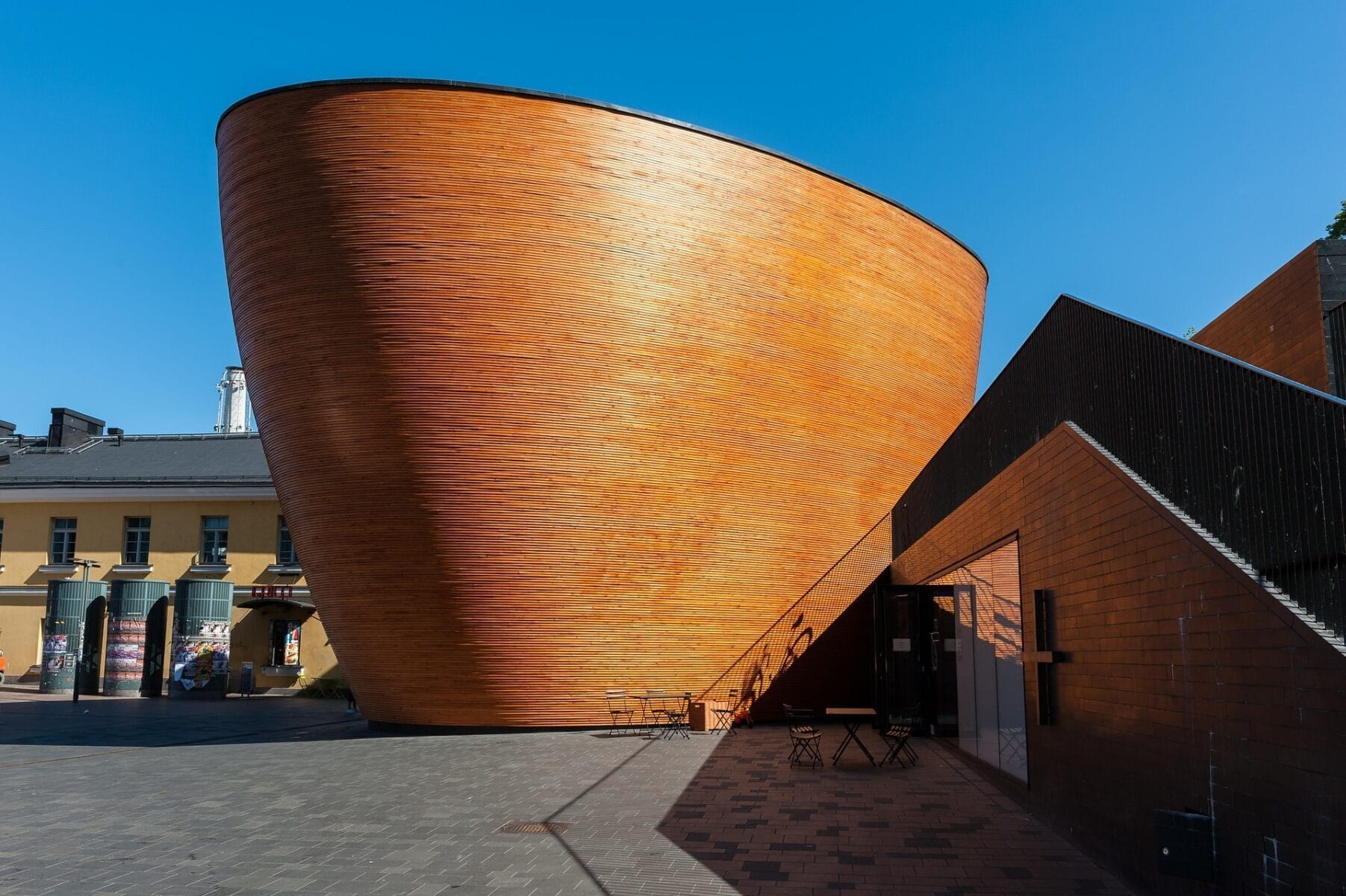
Arriving in Narinkkatori Square, you’ll immediately notice the smooth wooden form of Kamppi Chapel of Silence. This striking building, completed in 2012, is one of Helsinki’s most unique architectural spaces.
The exterior is crafted from heat-treated Finnish spruce, forming a curved, almost sculptural shape that stands in contrast to the surrounding shopping centres and transport hubs. Step inside and the atmosphere changes instantly. The interior is warm, quiet, and intentionally minimal, designed as a space for reflection and calm rather than formal worship.
There are no religious symbols, services, or ceremonies, making the chapel accessible to everyone regardless of background. It offers a rare moment of stillness in the middle of one of the busiest parts of the city.
Nearby, you’ll find several cafés including Way Bakery and Café Picnic, ideal for a short break. Public toilets (✓) are available inside the Kamppi Centre next door.
Fun fact: The chapel has won multiple international design awards and is considered a global example of modern Nordic architecture.
Directions: Walk back toward Mannerheimintie, turn left, and continue for about 2 minutes toward Lasipalatsi Square.
Lasipalatsi Square – Culture, Architecture and Urban Life
From Kamppi, you arrive at Lasipalatsi Square, a lively urban space centred around the historic Lasipalatsi building.
Constructed in the 1930s, Lasipalatsi is one of Helsinki’s best examples of Functionalist architecture, with clean lines, curved corners, and large windows that were considered innovative at the time. Today, the building houses cafés, cultural venues, and the historic Bio Rex cinema.
The square is also home to Amos Rex, one of Helsinki’s most exciting modern art museums. Its underground galleries are topped by distinctive glass domes that rise from the plaza, creating one of the city’s most photographed spaces.
This area is a social hub for locals, with events, food stalls, and outdoor gatherings throughout the year. In summer, the square is particularly lively, while in winter it takes on a quieter, atmospheric feel.
Toilets (✓) are available inside Amos Rex.
Fun fact: Lasipalatsi was originally intended as a temporary structure but became so popular it was permanently preserved.
Directions: Continue southeast along Mannerheimintie for about 8 minutes (600 metres), then turn left into Esplanadi Park.
Best if you can move a day either way. Shows how the fare to Helsinki changes across the month.
Compare flightsBest if you want maps and messaging working the moment you switch your phone on.
See eSIM plansBest after a long flight or a late landing. Price agreed before you travel, and no taxi queue.
Check transfersEsplanadi Park – Helsinki’s Green Social Boulevard
Welcome to Esplanadi Park, one of Helsinki’s most famous public spaces. This elegant boulevard has been a meeting place for locals for over 200 years.
The park runs between two parallel streets and is lined with linden trees, flowerbeds, benches, and sculptures. It acts as both a relaxing green space and a lively social area where people gather throughout the day.
In summer, you’ll often find live music performances at the central bandstand, while terraces fill with people enjoying coffee, drinks, and food. In winter, the park transforms with seasonal lighting, creating a completely different atmosphere.
The surrounding streets are home to some of Finland’s best-known brands, including Marimekko and Iittala, making this a good place for a quick shopping detour.
Public toilets (✓) are located at the eastern end near Market Square.
Fun fact: Composer Jean Sibelius had early performances of his music in this very park.
Directions: Walk east through the park for about 5 minutes until you reach the waterfront. The Old Market Hall will be just ahead on your right.
Old Market Hall – A Taste of Traditional Finland
Step inside Old Market Hall Helsinki, one of the most atmospheric places to experience Finnish food culture. Opened in 1889, it is the city’s oldest indoor market.
The building itself is full of character, with wooden beams, tiled walls, and historic stalls that have been serving locals for generations. Inside, you’ll find a wide range of traditional foods including smoked salmon, reindeer meat, pickled herring, and fresh pastries.
This is one of the best places to try Finnish salmon soup, especially from popular vendors like Soppakeittiö. You’ll also find coffee stands, bakeries, and delicatessens offering local specialities.
The market is not just about food. It’s also a window into daily life, with locals shopping for fresh produce and chatting with stall owners.
Toilets (✓) are available inside.
Fun fact: The market originally served traders arriving by ship, making it a key part of Helsinki’s historic trading network.
Directions: Exit the market and walk along the waterfront for about 2 minutes (150 metres) toward Market Square.
Tsarina’s Stone – A Symbol of Helsinki’s Imperial History
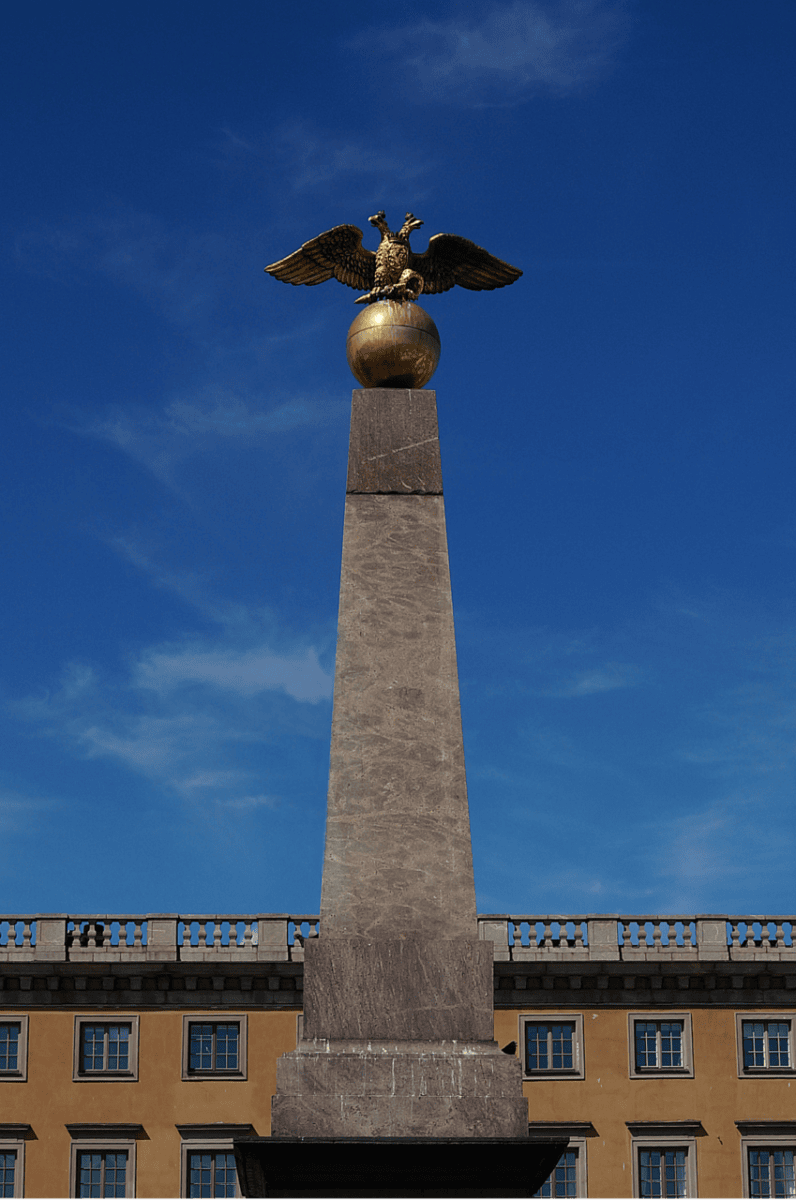
Just outside the market, you’ll find Tsarina’s Stone, the oldest public monument in Helsinki, dating back to 1835.
This granite column was erected to commemorate the visit of Empress Alexandra Feodorovna, linking Helsinki to its past under Russian rule. At the top sits the double-headed eagle, a symbol of the Russian Empire.
While the monument itself is small, its location at the harbour makes it historically significant. It represents Helsinki’s role as a gateway between East and West, connecting trade, culture, and politics across the Baltic.
The surrounding area begins to open into Market Square, one of the most vibrant parts of the city.
Toilets (✓) are available nearby along the waterfront.
Fun fact: The imperial eagle was removed after Finland gained independence in 1917, but later restored as part of preserving the city’s history.
Directions: Continue forward into Market Square, just 1 minute ahead, where the harbour opens up.

Market Square (Kauppatori) – Helsinki’s Waterfront Heart
Welcome to Market Square Helsinki, known locally as Kauppatori, the busiest and most vibrant part of Helsinki’s waterfront.
This open-air market has been the city’s trading hub for over two centuries, and today it’s packed with stalls selling fresh berries, smoked fish, reindeer dishes, pastries, and handmade crafts. It’s one of the best places to experience everyday Finnish life while sampling local food.
Street food is a highlight here. Many visitors stop for salmon soup with rye bread, or grab quick snacks while walking along the harbour. The square is also lined with souvenir stalls offering traditional Nordic goods, from wool products to wooden crafts.
The harbour itself is constantly active. Ferries depart regularly to Suomenlinna, while sightseeing boats and water taxis move in and out of port. It’s a great place to pause and take in the Baltic Sea views.
Watch out for the local seagulls. They are famous for swooping in and stealing food if you are not paying attention.
Toilets (✓) are available near the ferry terminal.
Fun fact: Every October, this square hosts the Baltic Herring Festival, one of Helsinki’s oldest annual events.
Directions: Walk along the harbourfront for about 4 minutes (300 metres) toward Allas Sea Pool.
Allas Sea Pool – Nordic Wellness by the Harbour
A short walk brings you to Allas Sea Pool, one of Helsinki’s most unique modern attractions.
This waterfront complex combines traditional Finnish sauna culture with an urban outdoor setting. It features three pools, including a heated freshwater pool, a children’s pool, and a filtered seawater pool that allows you to experience the Baltic safely.
What makes this place stand out is that it operates all year round. In winter, visitors can move between the sauna and freezing outdoor water, a classic Finnish experience that locals take seriously.
Even if you are not planning to swim, the rooftop terrace is worth visiting. It offers one of the best public viewpoints in Helsinki, with clear views over the harbour, Market Square, and surrounding landmarks.
There is also a café and bar area, making it a good place to pause and recharge.
Toilets (✓) and changing facilities are available on site.
Fun fact: The pools use filtered seawater and renewable energy systems, making the complex one of the most environmentally forward-thinking in Europe.
Directions: Cross the pedestrian bridge just ahead and walk for about 3 minutes (250 metres) toward Uspenski Cathedral.
Uspenski Cathedral – Helsinki’s Striking Orthodox Landmark
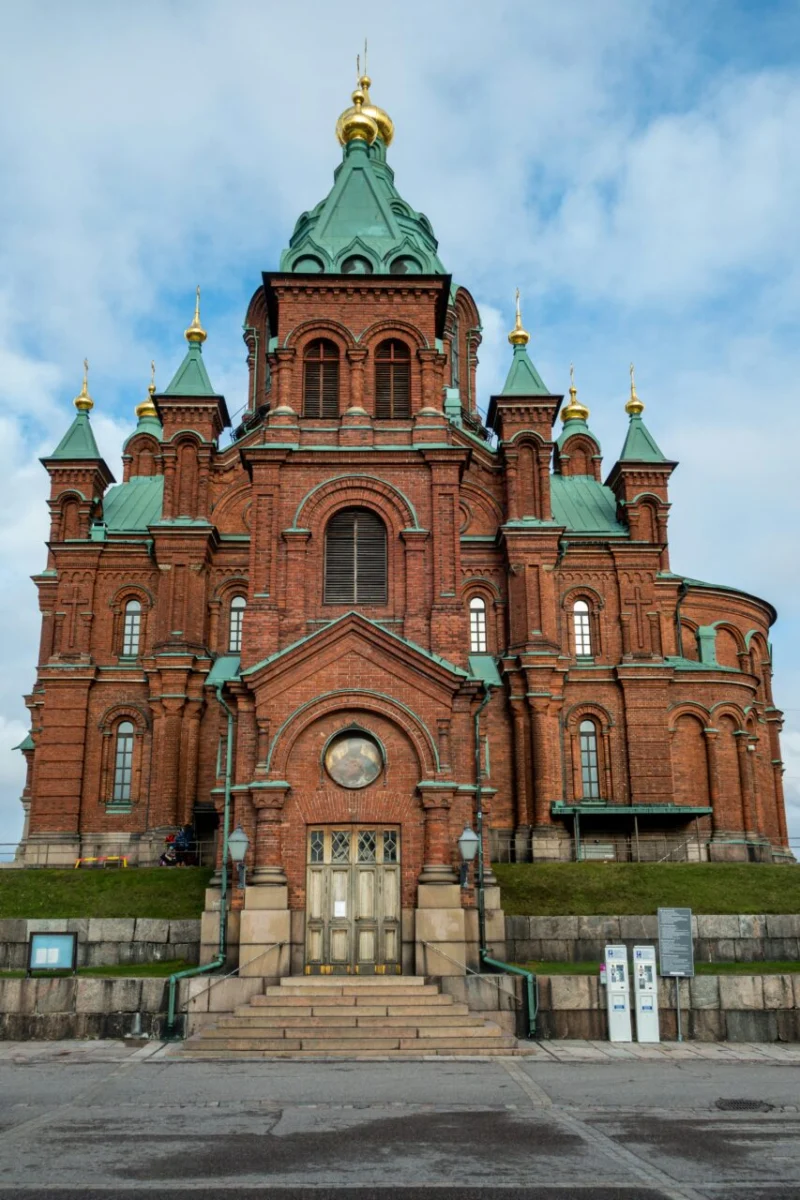
Rising above the harbour is Uspenski Cathedral, the largest Orthodox church in Western Europe.
Completed in 1868 and designed by Alexey Gornostaev, the cathedral stands out with its red-brick façade, arched windows, and 13 gold-domed towers. These domes represent Christ and the twelve apostles, adding symbolic meaning to its already dramatic appearance.
From below, the cathedral dominates the skyline. As you climb toward it, the views over the harbour become increasingly impressive, making this one of the best photo spots on the route.
Inside, the atmosphere shifts completely. You’ll find gold icons, chandeliers, and detailed religious artwork, all set within a dimly lit interior that creates a strong sense of calm and tradition. Sightseeing entry costs €5 (£4 / $6), with under-18s admitted free, and respectful behaviour is expected. The cathedral is closed to visitors on Mondays.
The elevated position also offers excellent views across Market Square and the Baltic coastline.
Toilets (✓) are available nearby at Market Square or in surrounding cafés.
Fun fact: The building materials were sourced from the same quarries used in parts of Tallinn, linking the two cities historically.
Directions: Descend toward the waterfront and follow the promenade for about 3 minutes to Kanavaranta.
Best if you would rather spend the money on Helsinki than on the room. Compare hostels by location and rating.
Search hostelsBest if you have ever given up on a claim. AirHelp checks whether the flight qualifies and pursues it for you.
See the benefitsBest for a day with a bag and nowhere to put it. Find a storage point near where you already are.
View storageKanavaranta Waterfront – Icebreakers and Maritime Helsinki
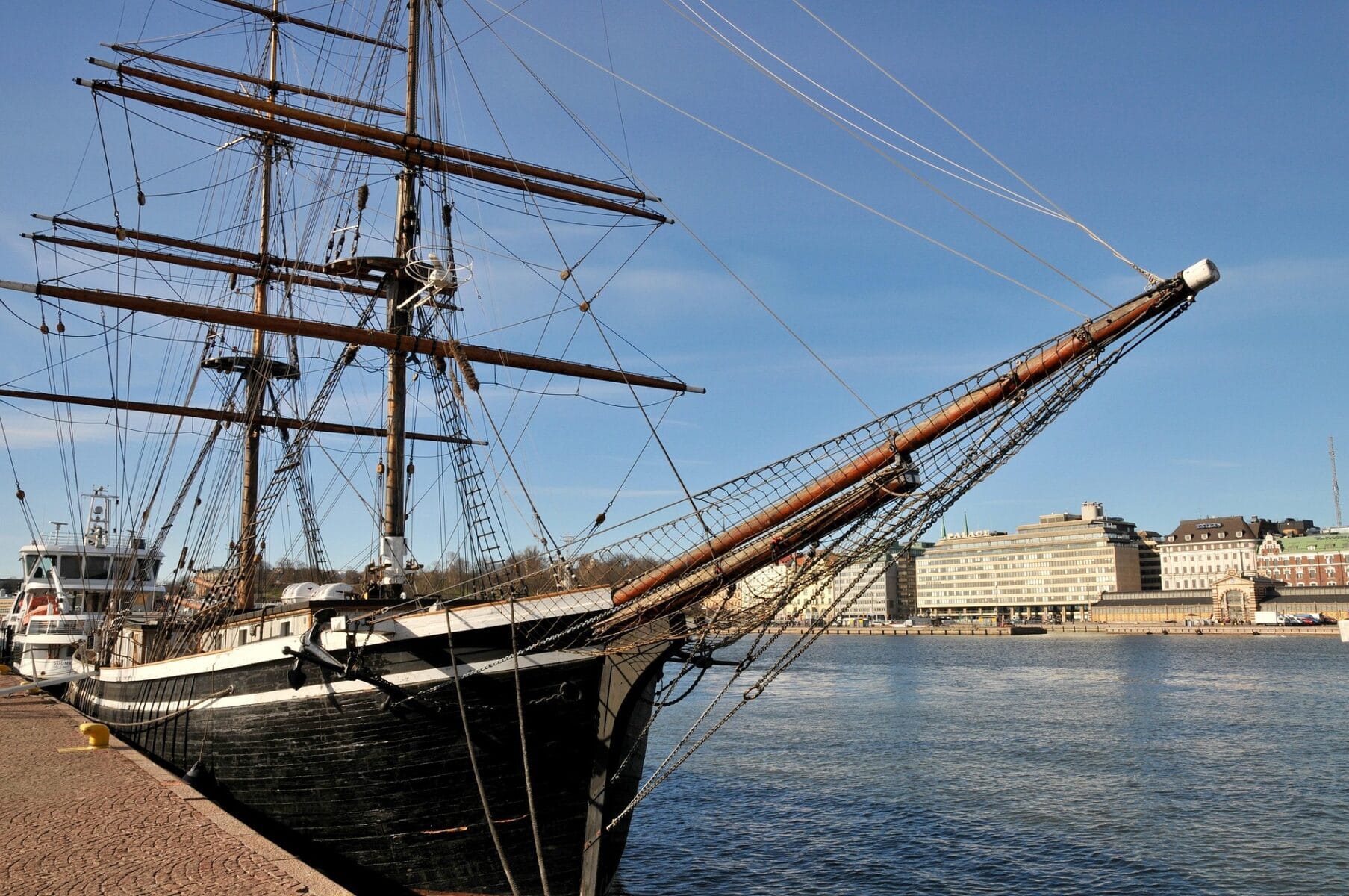
At Kanavaranta, you step into a very different side of the city. This stretch of harbour shows working Helsinki, where maritime history meets modern infrastructure.
Along the quay, you will often see icebreakers, large industrial ships designed to keep Finland’s shipping routes open during harsh winters. These vessels are a powerful reminder of how important the sea is to the country’s survival and economy.
Mixed in among them, you may also spot historic wooden ships and smaller heritage vessels, offering a contrast between old and new maritime traditions.
This part of the walk is quieter than Market Square and gives you time to slow down, take photos, and enjoy the open water views across the harbour.
Benches along the route make it a good place to pause.
Fun fact: Finland designs around 80% of the world’s icebreakers, making it a global leader in cold-climate maritime engineering.
Directions: Follow the waterfront west, cross the small pedestrian bridge, then continue along Aleksanterinkatu for about 7 minutes (500 metres) toward Senate Square.
Senate Square – Helsinki’s Grand Historic Centre
You now arrive at Senate Square Helsinki, one of the most impressive and recognisable spaces in the city.
Designed in the 19th century by Carl Ludvig Engel, the square is a perfect example of neoclassical urban planning. It is surrounded by major buildings including the Government Palace, the University of Helsinki, and the National Library.
At the centre stands a statue of Tsar Alexander II, a reminder of Finland’s complex historical relationship with Russia.
The square is often used for events, festivals, and public gatherings, and its wide open space makes it one of the best places to appreciate Helsinki’s architectural identity.
Look upward and you will see the final highlight of the tour rising above you.
Toilets (✓) are available in nearby cafés and museums.
Fun fact: Senate Square has been used as a filming location for international movies, often standing in for historic Russian cities.
Directions: Climb the steps ahead to reach Helsinki Cathedral, the final stop of the tour.
Helsinki Cathedral – The Icon of the City
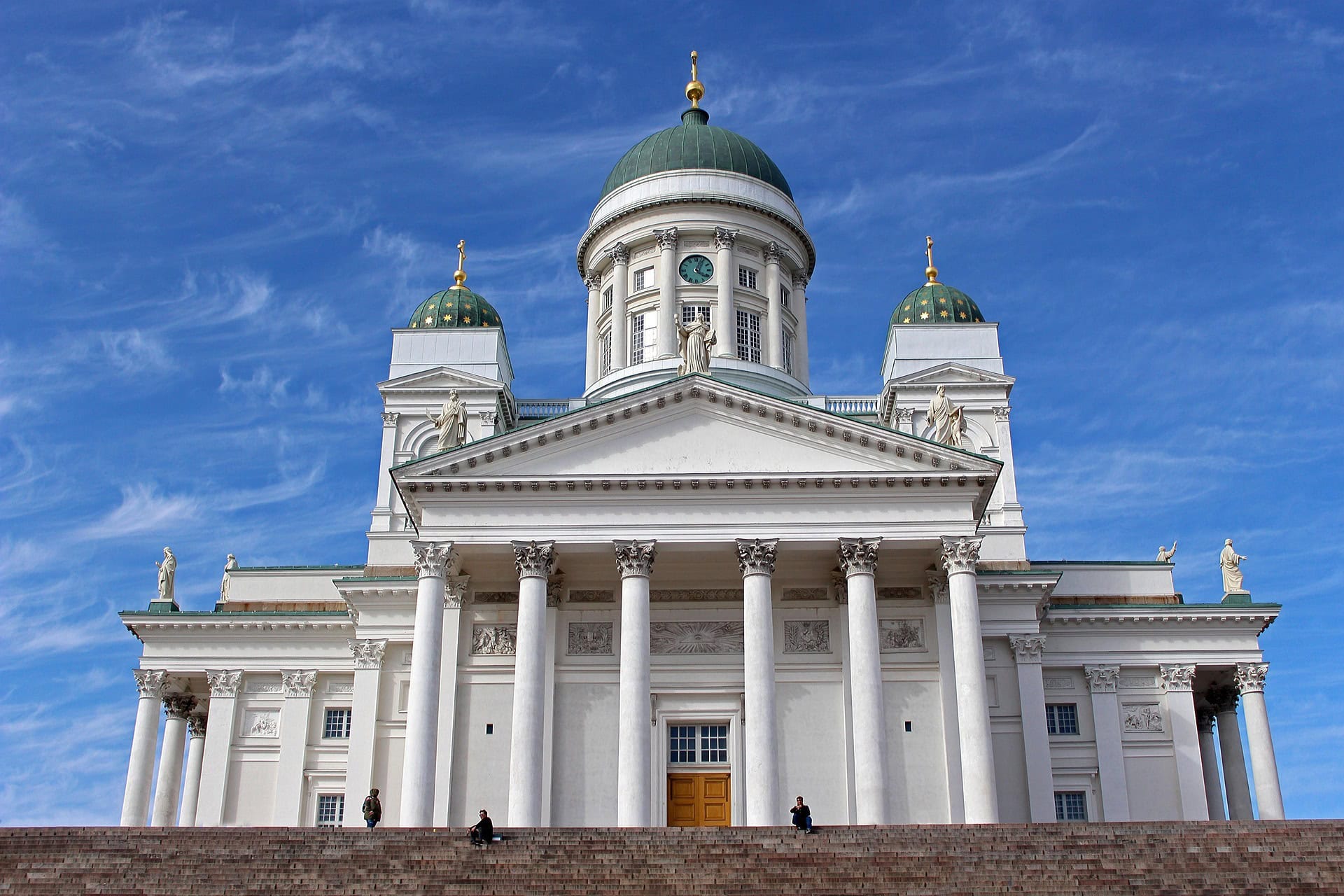
Towering above the square is Helsinki Cathedral, the most recognisable landmark in Finland’s capital.
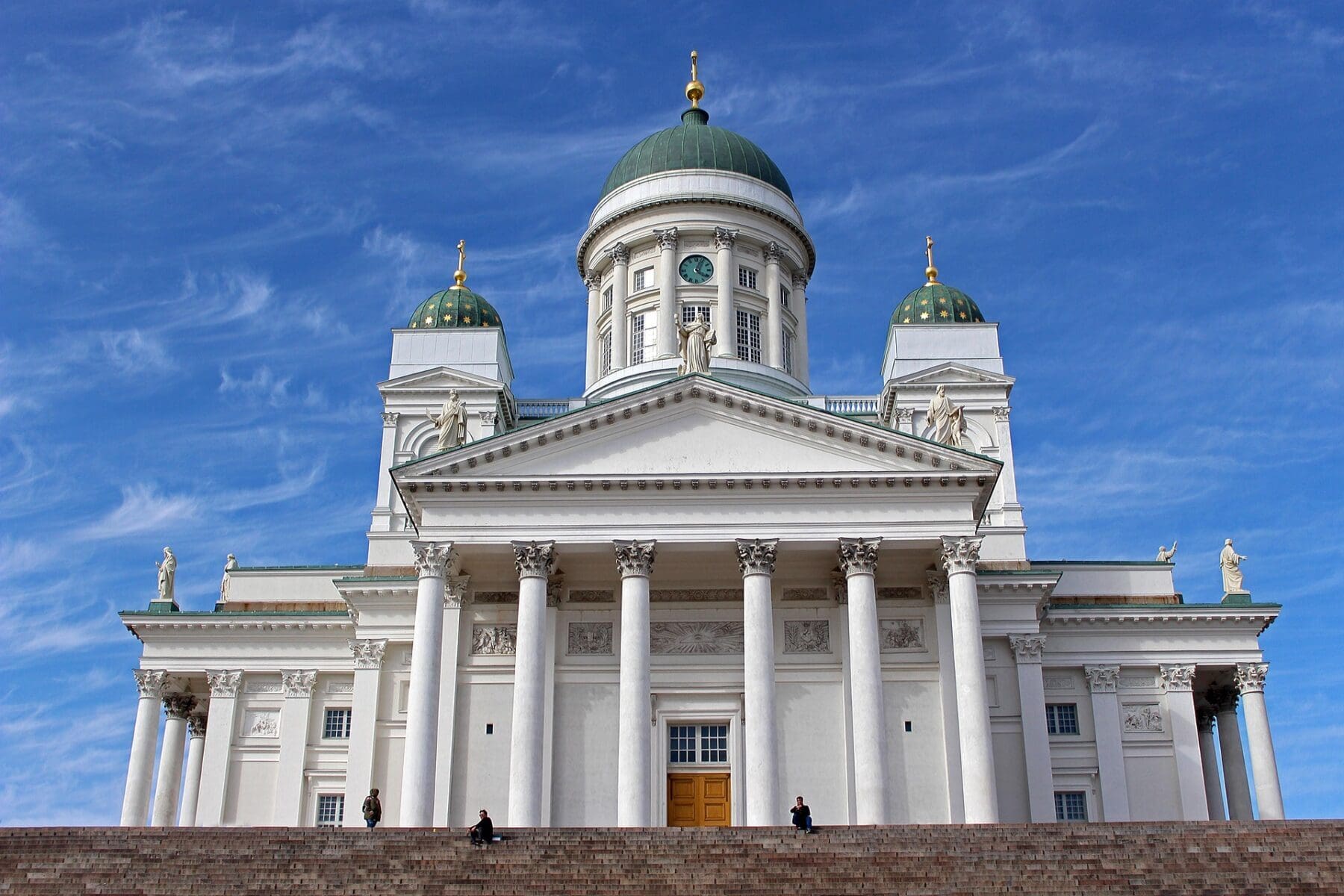
Completed in 1852 and designed by Carl Ludvig Engel, the cathedral forms the centrepiece of Helsinki’s neoclassical design. Its white façade, green domes, and symmetrical columns give it a clean, striking appearance that dominates the skyline.
Climb the wide stone steps for one of the best viewpoints in the city. From the top, you can look back across Senate Square, the harbour, and much of central Helsinki. It’s one of the most popular photo spots on the entire route.
Inside, the atmosphere is intentionally simple. As a Lutheran cathedral, the design focuses on minimalism rather than decoration. The interior is bright, calm, and uncluttered, offering a contrast to the ornate Orthodox style seen earlier at Uspenski Cathedral.
The cathedral remains an active place of worship, hosting services, concerts, and national events throughout the year. Entry is free for most of the year, but over the summer season, roughly June to late September, sightseeing visitors pay €10 (£9 / $12), or €8 (£7 / $9) reduced. Sightseeing is not possible during services.
Toilets (✓) are available nearby in surrounding cafés and public buildings.
Fun fact: The cathedral was originally built to honour a Russian tsar, but today it stands as a symbol of Finnish national identity.
Directions: This is the final stop. From here, you can explore nearby cafés, visit the Helsinki City Museum, or take a tram back to the station.

Safety & Accessibility Tips for Your Helsinki Walking Tour
Helsinki is widely regarded as one of the safest cities in Europe, with low crime levels and a calm, relaxed atmosphere. Walking this route is straightforward for most visitors, but a few practical considerations will make your experience smoother.
The route is mostly flat and well maintained, making it suitable for wheelchairs, pushchairs, and travellers who prefer an easy walking pace. Some areas, particularly around Senate Square, include cobbled surfaces and steps, which may require a little extra care.
During winter, conditions can change quickly. Pavements may become icy or slippery, especially in shaded areas or on stone steps. Wearing shoes with good grip is strongly recommended to avoid slips.
Public toilets (✓) are available at key locations such as Helsinki Central Station, Kamppi Centre, Old Market Hall, and Market Square. In addition, many cafés and public buildings provide facilities for customers, making it easy to plan breaks along the route.
English is widely spoken throughout Helsinki, signage is clear, and locals are generally helpful if you need assistance. Overall, this is a very accessible and visitor-friendly city to explore on foot.

Rupert’s Handy Travel Tips
Walking this route yourself? Here are a few useful tips to make the most of your Helsinki walking tour:
- Wear comfortable shoes: cobblestones around Senate Square and the harbour are much easier in trainers than sandals or heels.
- Time the harbour for photos: early morning or golden-hour light makes Market Square and the cathedral steps look their best.
- Dress in layers: weather near the waterfront can shift quickly, so a light jacket you can add or remove is worth carrying.
- Break the walk with a café stop: Oodi Library and the Old Market Hall are both good places to pause, warm up and refuel.
- Save Senate Square for a quieter moment: the steps and square feel far more atmospheric with fewer crowds, so visiting slightly off-peak is worth it.
Want to meet the reindeer behind our travel tips? Find out more in our page Who is Rupert?.



Frequently Asked Questions
Can I do this walking tour in winter?
Yes, Helsinki is walkable throughout the year. In winter, icy pavements can make walking conditions more challenging, particularly on steps and cobbled areas, so sturdy footwear is recommended. Indoor stops such as cafés, Kamppi Chapel, and the Old Market Hall provide regular opportunities to warm up.
Is this tour suitable for families or strollers?
Yes, the route is compact, mostly flat, and easy to navigate. The distances between stops are manageable, and there are frequent opportunities to rest, making it well suited to families with children or strollers.
Are there toilets along the route?
Yes, public toilets (✓) are available at major locations including the station, Kamppi, Market Square, and the Old Market Hall. Many cafés also offer toilet access for customers, so facilities are never far away.
Is there a hop-on hop-off bus nearby?
Yes, seasonal hop-on hop-off buses and ferry services operate from Market Square. These can be useful if you want to extend your visit or reduce walking.
Can I start or finish the route anywhere?
Yes. The route runs as a line rather than a loop, but it finishes close to where it starts, so you can begin at Market Square, Senate Square, or any stop that fits your plans and pick up the rest in order. This makes it easy to adapt the walk to your schedule.
Further Reading & Related App Guides
If you are planning a trip to Finland, you may want to start with our Finnair Airline Guide, which explains routes, fleet information, onboard experience, and how Finland’s national airline connects Helsinki with destinations across Europe, Asia, and North America.
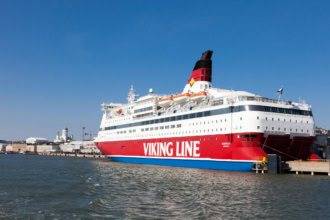
If you are travelling between Finland and Estonia, many travellers take the ferry across the Gulf of Finland, and our Tallinn to Helsinki Ferry Guide explains ferry operators, journey times, ticket prices, and what to expect on board.
For travellers planning to explore more of Finland by train, our Interrail Finland Pass Guide explains how the pass works, typical routes, pricing, and whether a rail pass is good value for travel across Finland and neighbouring countries.
Once you have explored the city on foot, it is worth extending your trip. Our Suomenlinna Helsinki guide covers the sea fortress just a short ferry ride from Market Square, and the Helsinki City Card guide explains whether the sightseeing pass is worth buying for museums and transport. Our Best Things to Do in Helsinki guide covers everything else the city has to offer beyond this walking route. If you have a full day to spare, our guides to a day trip from Helsinki to Tallinn and a day trip from Tallinn to Helsinki cover the ferry crossing to Estonia’s capital in both directions.
When exploring Helsinki or other Finnish cities, having navigation and connectivity apps installed can make travelling much easier. Our Offline Map Apps Guide explains how to navigate cities without mobile data, while our eSIM Apps Guide shows how to stay connected abroad without expensive roaming charges. Before travelling, it is also worth checking the forecast using our Weather Apps Guide, especially if you are visiting Finland in winter when weather conditions can affect travel plans.
Reading these guides together will help you plan your Finland trip, transport, and travel apps more effectively and make your journey smoother from start to finish.