

Reviewed by our editorial team Updated
Why Tour Booking Apps Are a Must for Travellers
Tour booking apps have become one of the smartest ways to plan, organise, and improve a trip, because they solve a problem that almost every traveller faces at some point. Finding the right tour can completely reshape how a destination feels, but doing that the old-fashioned way often means wasting time comparing websites, queueing at kiosks, or taking risks with street sellers whose quality and reliability are impossible to judge properly. In busy destinations, especially during peak travel periods, that can quickly turn excitement into frustration.
What makes these apps so valuable is the amount of control they give back to the traveller. Instead of depending on chance availability or vague recommendations, you can compare guided walks, food tours, museum entries, day trips, adventure experiences, and private excursions directly from your phone. You can see prices, durations, languages, cancellation terms, and verified reviews before committing. That level of visibility matters, particularly when time in a destination is limited and mistakes can be costly.
They are also ideal for different styles of travel. Some travellers like to plan every major experience before they leave home, while others prefer to stay flexible and book on the go. Tour booking apps support both approaches. You can secure high-demand experiences in advance, or sit in a café in the middle of a city and decide to book a same-day walking tour, museum entry, or sunset cruise in just a few taps. That flexibility is one of the biggest reasons these apps have become essential.
Another major advantage is convenience. Mobile vouchers, digital tickets, real-time availability, and in-app support remove much of the friction that used to come with excursions and sightseeing. There is usually no need to print anything, and in many cases you can book, receive confirmation, and present your phone at the meeting point or entry gate without any additional steps. This becomes even more useful in countries where signage is limited, where language barriers make local booking harder, or where tours sell out quickly.
Tour booking apps are especially helpful in places where demand changes fast. In cities with heavy tourism, at major landmarks, or during high season, availability can disappear quickly and prices can vary sharply between providers. Having access to a trusted app allows you to act faster, compare more effectively, and reduce the chances of paying too much or missing out altogether.
Ultimately, these apps are about reducing uncertainty and improving choice. They help travellers save time, make better decisions, avoid disappointment, and build richer itineraries with less stress. Whether you are looking for structured sightseeing, cultural immersion, skip-the-line access, or a last-minute local experience, a good tour booking app makes the whole process easier, safer, and far more efficient.
Benefits of Using Tour & Excursion Apps
Tour and excursion booking apps remove much of the stress that traditionally comes with planning activities abroad, because they bring choice, convenience, and clarity into one place. Instead of jumping between multiple websites, comparing notes from blog posts, or negotiating with local agents in person, travellers can access a huge range of experiences through one mobile platform.
One of the biggest benefits is efficiency. These apps act as central marketplaces for thousands of experiences across major cities and tourist regions worldwide, which means travellers can search once and compare a wide variety of options without wasting time. Whether the goal is a cooking class, a historical walking tour, a boat trip, a desert safari, or a museum ticket, the process becomes much faster and easier.
Another important advantage is booking speed. Many platforms provide instant confirmation, which is particularly useful for travellers who like to stay flexible or make plans at the last minute. In busy destinations, that immediacy can be crucial. It allows travellers to secure a place before availability disappears, especially during weekends, school holidays, or peak sightseeing seasons.
Reviews and ratings are another major strength. Verified customer feedback gives travellers a far better sense of what to expect than a glossy brochure or a street-side sales pitch ever could. Seeing how previous visitors rated the guide, organisation, pace, and overall quality makes it easier to avoid poor operators and choose better experiences.
Digital convenience also matters. Mobile tickets and in-app vouchers remove the need for paper printouts, which simplifies everything from museum entry to guided meeting points. For travellers who are already managing transport apps, hotel bookings, and maps from their phone, having tours organised in the same way feels natural and efficient.
Security is another reason these apps have become so important. Established booking platforms usually offer secure payment systems, transparent cancellation policies, and clear booking records, which reduce the risk of scams or misunderstandings. That is especially valuable in unfamiliar destinations where consumer protection may be less obvious than at home.
For solo travellers, couples, families, and groups alike, the overall value is clear. Tour booking apps combine access, flexibility, transparency, and convenience in a way that makes trip planning faster and safer while also improving the quality of the experiences you choose.
Browse hotels and accommodation for your journey.
View staysBrowse apartments, holiday homes and self-catering stays.
View rentalsCompare prices from multiple hotel booking sites.
Check dealsHow These Apps Work
Most tour booking apps work as digital marketplaces that connect travellers with local operators, guides, attractions, and activity providers, making it easy to browse and secure experiences without dealing directly with dozens of separate businesses. While the exact layout differs from app to app, the overall process is broadly similar and designed to be simple enough for use while travelling.
The journey usually starts with destination search. Once you enter a city, region, or attraction, the app presents available tours and experiences that can then be filtered by category, date, duration, price, language, group size, or type of activity. This makes it easy to narrow a large number of options into something that actually fits your schedule and travel style.
After selecting a product, the app typically shows a full listing with key details. This usually includes the itinerary, meeting point, cancellation terms, what is included, what is not included, customer reviews, and provider information. Good apps also make it clear whether the booking is instantly confirmed or subject to later approval, which can matter for niche or capacity-limited experiences.
Once payment is made, the confirmation is handled inside the app. Travellers usually receive either a digital ticket, a mobile voucher to show the guide, or a QR code for entry, depending on the type of activity. In many cases, that is all that is needed. You arrive at the attraction, meeting point, or pickup zone, show your phone, and begin the experience.
Many platforms add extra support features around that core booking flow. Some offer in-app customer service, map-based browsing, downloadable instructions, and direct communication tools that help travellers manage changes, delays, or meeting-point questions. Others specialise in certain areas, such as same-day ticketing, cultural attractions, food experiences, or private guided tours.
This structure is what makes tour booking apps so practical. They simplify discovery, comparison, payment, confirmation, and entry into one digital process, which means travellers spend less time managing logistics and more time actually enjoying the destination.
GetYourGuide
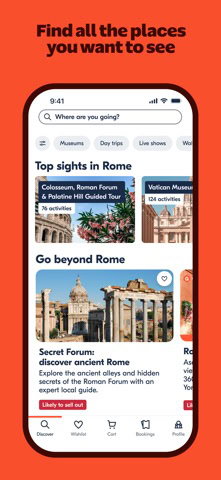
GetYourGuide is one of the strongest and most recognisable tour booking apps in the market, and for many travellers it has become the default platform for browsing and booking activities abroad. With more than 150,000 activities across more than 12,000 cities worldwide, it covers a huge range of experiences, from major landmark entries and guided city walks to food tours, desert safaris, and day trips.
One of its biggest strengths is breadth. A traveller can use the same app to book skip-the-line Colosseum access in Rome, a food tour in Tokyo, a canal experience in Amsterdam, or a desert excursion in Dubai. That level of global range is part of what makes the platform so useful, especially for people planning multi-country itineraries who want a consistent booking experience from one destination to the next.
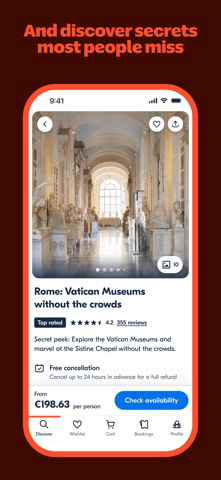
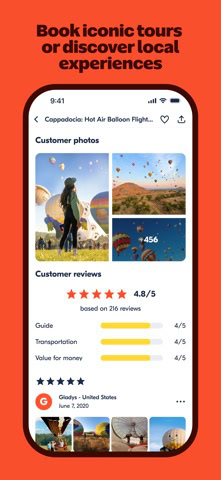
The app itself is also one of the most user-friendly in the category. Listings are typically well structured, with clear descriptions, verified customer reviews, practical information, and strong image support, making it easier to judge what an experience is actually likely to be like before paying for it. The filtering system is also strong, allowing users to sort by price, duration, language, category, and cancellation flexibility.
That cancellation flexibility is one of GetYourGuide’s strongest selling points. Many listings carry a clearly marked free-cancellation option, which is valuable for travellers whose plans may shift due to weather, transport changes, or general spontaneity. That makes the app especially good for travel styles that mix forward planning with flexibility.
In practical use, the app handles digital ticketing very well. Instant confirmations, mobile QR codes, and paperless entry make it easy to book and use activities without additional admin, which is ideal when travelling quickly or trying to avoid queues. The platform also performs well in terms of support, with 24-hour in-app help available for many booking issues.
GetYourGuide is particularly strong in Europe, North America, and Southeast Asia, though its footprint continues to expand into Latin America, Africa, and the Middle East. Its main limitation is that some niche, highly local, or smaller-scale operators may not appear on the platform, and in some cases direct booking with a local provider can be slightly cheaper.
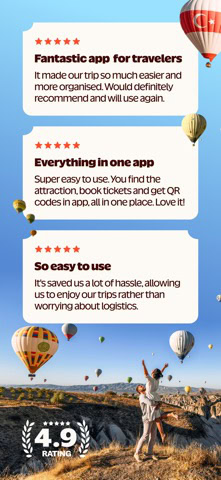
Even so, GetYourGuide remains one of the most dependable all-round tour booking apps available, particularly for travellers who want broad coverage, a smooth user experience, strong cancellation flexibility, and a trusted global platform they can rely on repeatedly.



App availability and prices vary by country. Some of these may not appear in your local App Store or Google Play.

Discover Unforgettable Experiences with GetYourGuide
From guided walking tours and skip-the-line attraction tickets to boat trips, food tours, and adventure activities, GetYourGuide helps you discover and book memorable experiences around the world.
It is ideal for city breaks, family holidays, and travellers looking to make the most of their destination. Browse thousands of activities, compare verified reviews, and book online before you travel or while you’re already on your trip.
Viator
Viator is one of the largest and most established tour booking apps in the world, and its biggest advantage lies in the sheer scale of its inventory combined with the strength of Tripadvisor review integration. With more than 400,000 tours and experiences worldwide, it offers one of the broadest selections available to travellers.
Its connection to Tripadvisor is a major reason many users trust it. Listings benefit from large volumes of reviews, traveller photos, and star ratings, which makes it easier to separate well-run experiences from weaker ones before booking. For travellers who rely heavily on social proof and want extra reassurance about quality, this is a major strength.
The app itself is polished and highly functional. Users can filter by price, duration, group size, accessibility, language, and activity type, which makes it especially useful for travellers with more specific needs, such as families, older travellers, or those looking for premium or private experiences. Same-day bookings are also supported in many major cities, which adds flexibility for those who do not want every day of a trip fixed in advance.
Another reason Viator stands out is booking confidence. Its cancellation policies are usually presented clearly, and many listings offer free cancellation up to 24 hours before the activity begins. Combined with secure payment processing and relatively strong customer support, this makes the platform feel reliable even when booking expensive or high-value experiences.
Viator is especially strong in North America, Europe, and Australia, where the depth of options is often excellent. It is somewhat weaker in certain emerging markets or less-touristed destinations, where inventory may be thinner or more concentrated around mainstream experiences.
Pricing is another factor to consider. Viator sometimes sits slightly higher than direct local booking, especially for premium products, but many travellers accept that trade-off in exchange for the platform’s scale, review strength, and consumer reassurance. That makes it especially appealing to users who value reliability and transparency over finding the absolute lowest price.
Viator is best for travellers who want a very large global selection, deep review support, strong filtering, and dependable booking confidence, particularly when choosing between several similar operators in popular destinations.

App availability and prices vary by country. Some of these may not appear in your local App Store or Google Play.
Discover Top Attractions with Viator
Planning what to do is just as important as planning how to get there. Viator helps you discover and book thousands of tours, attractions, day trips, and unique experiences in destinations around the world.
Whether you’re looking for skip-the-line tickets, guided tours, boat trips, or unforgettable local experiences, Viator makes it easy to compare options, read verified reviews, and book online before you travel.

Klook
Klook has become one of the strongest tour booking apps for travellers in Asia, and its appeal comes from combining good pricing, strong mobile usability, and a product mix that goes well beyond standard sightseeing tours. While it now has a broader international footprint, it remains particularly valuable in destinations such as Japan, South Korea, Thailand, Singapore, Taiwan, and Hong Kong, where its coverage and local relevance are especially strong.
One of Klook’s biggest advantages is localisation. The app is built to work smoothly across Asian travel markets, with support for regional payment methods, strong mobile-first booking flows, and a product catalogue that reflects how people actually travel in the region. This means it is just as likely to show rail passes, theme park tickets, food experiences, SIM cards, and airport transfers as it is to show traditional guided tours. For many travellers, that makes it more useful than a simple activity marketplace.
Pricing is another major strength. Klook frequently runs flash sales, bundle discounts, referral offers, and limited-time promotions, which can make it one of the cheapest ways to secure attractions, transport, and experiences in its core markets. For travellers planning a busy itinerary in Asia, those small savings can add up quickly.
The booking process is also very smooth. Most products offer instant confirmation, digital ticket delivery, and app-stored QR codes, which means travellers can often book something and use it almost immediately without additional steps. That convenience is especially useful in fast-moving city itineraries where plans are made on the day rather than weeks in advance.
Klook also performs well for practical trip-building. It is particularly useful for families, theme park visitors, and travellers moving around urban Asia, because it combines tours and attractions with transport and connectivity products in one app. That means someone planning a city break can often sort airport transfer, eSIM, rail pass, and attraction entry from the same platform.
Its weakness is geographic consistency. Outside its strongest Asian markets, especially in smaller European cities or more rural regions, coverage can feel thinner and less compelling than on broader platforms like GetYourGuide or Viator. Even so, within Asia, Klook is one of the most useful and cost-effective travel apps available.
Klook is best for travellers who want strong value, local relevance, and a mobile-first booking platform that performs especially well across Asia while also supporting broader trip logistics.

App availability and prices vary by country. Some of these may not appear in your local App Store or Google Play.
Discover More with Klook
Klook helps you discover and book attractions, tours, airport transfers, transport passes, theme parks, and unique travel experiences across destinations worldwide. It is a convenient way to organise key parts of your trip before you travel.
Whether you are planning a city break, family holiday, or a longer adventure, Klook makes it easy to compare experiences, secure tickets in advance, and spend less time queuing and more time exploring your destination.
Tiqets
Tiqets occupies a slightly different place in the tour booking landscape because it is much more focused on cultural attractions, museums, and landmark entry than on broad excursion coverage. For travellers whose trips revolve around famous sights, exhibitions, and skip-the-line access, that specialisation makes it extremely useful.
Its biggest strength is directness. Tiqets is designed to make cultural entry simple, fast, and mobile, which is why it performs so well for places such as the Louvre, Vatican Museums, Sagrada Família, and many other high-demand attractions. Instead of treating these as just one category among many, the app is built around this kind of product, and that gives it a clearer focus than more general platforms.
The booking experience is quick and efficient. Users typically receive instant QR-code tickets that can be stored in the app and used directly at the attraction, removing the need for printing or separate collection. This makes it ideal for city breaks where travellers want to move quickly between sites without dealing with unnecessary admin.
Another strong point is filtering. The app allows travellers to search by city, attraction type, accessibility, and timing, which makes it particularly effective for short stays where itinerary efficiency matters. It also supports combinations such as audio guides, city passes, and bundled museum entry, helping travellers get more from a destination without stitching everything together manually.
Tiqets is strongest in Europe, parts of the United States, and selected Middle Eastern destinations, where museum culture and high-volume sightseeing entry products are especially important. Its focus is less on adventure, nature, or niche local experiences and more on structured access to major attractions.
That specialisation is both its strength and its limitation. If a traveller is looking for immersive food tours, outdoor excursions, or private guided local experiences, Tiqets is usually not the first app to reach for. But if the goal is cultural sightseeing, especially in major cities with famous monuments, it performs extremely well.
Tiqets is best for travellers who want fast, paperless, and efficient access to museums, monuments, and landmark attractions, especially where queue-skipping and official mobile entry are key priorities.

App availability and prices vary by country. Some of these may not appear in your local App Store or Google Play.
Book Top Attractions with Tiqets
Many of the world’s most popular attractions sell out quickly, especially during weekends and peak travel seasons. Tiqets makes it easy to book attraction tickets online, helping you secure entry before you arrive.
It is ideal for museums, landmarks, theme parks, observation decks, and cultural experiences. With instant mobile tickets available for many attractions, you can spend less time queuing and more time enjoying your destination.
Civitatis
Civitatis has grown quickly by focusing on a part of the travel market that many bigger global apps serve less well, particularly Spanish-speaking travellers and destinations across Spain, Portugal, Italy, and Latin America. While its reach continues to expand, its clearest strength remains in culturally familiar, Spanish-language, and Southern European or Latin American travel environments.
One of the biggest reasons people choose Civitatis is language confidence. For Spanish-speaking travellers, the platform offers clear booking flows, good local support, and a large number of experiences with Spanish-speaking guides, which can create a much smoother and more comfortable travel experience. That focus has helped it build trust in markets where travellers may feel underserved by English-first global platforms.
The app covers a wide mix of products. Walking tours, airport transfers, food experiences, city highlights, day trips, and even multi-day excursions can all be booked through the same interface, which makes it useful for both short city breaks and more layered itineraries. It also places strong emphasis on guided, curated experiences rather than overwhelming travellers with endless low-quality listings.
Another useful feature is offline access to certain trip details. Travellers can download itineraries and booking information in advance, which is valuable in places where connectivity is poor or where roaming data is limited. This adds practical resilience, especially when meeting points or transfer details matter.
Civitatis is strongest in Spain, Portugal, Italy, Mexico, Argentina, and other parts of Latin America, where its local familiarity and guide network are particularly effective. Its English-language offering is growing, but it is still not as broad or as dominant in that space as larger global competitors.
That means its main limitation is audience breadth. For non-Spanish-speaking travellers in destinations outside its core markets, it may not always be the most complete or convenient choice. But within its strongest regions and language base, it performs very well.
Civitatis is best for travellers who want strong Spanish-language support, curated regional experiences, and reliable booking across Spain, Southern Europe, and Latin America. It is especially useful for users who value clarity, local depth, and a more regionally focused approach than the biggest global platforms offer.
App availability and prices vary by country. Some of these may not appear in your local App Store or Google Play.
Search routes and flight options for your journey.
Search flightsUse an eSIM to get online without hunting for a local SIM after arrival.
See eSIM optionsBook a private airport transfer in advance and have your ride planned before you arrive.
Check transfersTUI Musement
TUI Musement, still widely known simply as Musement, positions itself as a more curated and culture-led tour app, and that gives it a slightly different character from the broad marketplace style of larger competitors. Now part of the TUI Group, and branded TUI Musement across its website and app stores, it combines the reassurance of a major travel brand with an offering that leans heavily towards city culture, events, boutique experiences, and well-presented urban sightseeing.
Its strongest appeal is curation. Rather than overwhelming users with sheer volume, Musement tends to emphasise experiences that feel more polished, cultural, and city-break friendly, such as theatre tickets, food and wine experiences, workshops, museum access, and smaller group activities. For travellers who prefer this style of product, the app can feel more refined and less cluttered than general tour marketplaces.
The city-based layout works well too. Users can browse by destination and explore activities by location, which makes it easier to fill itinerary gaps without sending yourself to the wrong side of a city for a short experience. This is especially useful on short breaks where time efficiency matters and where travellers want to combine several activities in walkable or logical clusters.
Musement also works well with bundled access and city-pass style products. In destinations such as Rome, Paris, and Berlin, it can help travellers combine landmark entry with cultural experiences and local events in a way that feels more thoughtfully assembled than a basic ticketing app. Mobile QR ticketing and skip-the-line access are common, which keeps the operational side easy.
Because of its ownership structure and curation style, there is also a sense of trust in the platform. Listings tend to feel well written, coherent, and quality checked, which may appeal to travellers who care as much about presentation and reliability as they do about raw variety.
Its main weakness is international scale. Outside Europe, especially in less tourism-heavy or non-urban destinations, the inventory is noticeably thinner than on giants such as Viator or GetYourGuide. Prices can also be a little higher in some cases, reflecting the more curated positioning.
Musement is best for travellers who want cultural, boutique-style, and city-focused experiences, especially in Europe, with a cleaner and more curated feel than broad marketplace competitors.

App availability and prices vary by country. Some of these may not appear in your local App Store or Google Play.
Headout
Headout is built for spontaneity, and that is what makes it stand out. While many tour booking apps are useful for planning in advance, Headout is especially strong for travellers who arrive in a city and decide what to do at the last minute. In major urban destinations, that can be incredibly useful.
Its biggest strength is same-day availability. The app focuses heavily on activities, shows, museums, and landmark entry that can still be booked just hours before they begin, which makes it ideal for travellers who do not want a rigid itinerary. If you suddenly decide you want an evening show, observation deck ticket, or afternoon attraction entry, Headout is often built for exactly that kind of decision.
Real-time availability is central to the experience. Travellers can see what still has space, compare timings, and secure mobile tickets quickly without being forced into long planning cycles. This is particularly valuable in cities such as London, New York, Dubai, Las Vegas, and other major urban hubs, where entertainment and attraction capacity moves quickly.
Another standout feature is seat selection for certain products. For some theatre, entertainment, and venue bookings, the app allows users to choose their seats directly, which is something many competitors still handle less elegantly. That makes it particularly attractive for performance-based city experiences rather than just sightseeing alone.
The app is clearly strongest in large metropolitan destinations. Its coverage is best where there is a high density of attractions, venues, and tourism infrastructure, which suits spontaneous city travellers very well. In that context, mobile delivery and in-app storage of tickets make everything feel quick and practical.
Its weakness is scale outside those major cities. Headout is far less useful in small towns, rural destinations, or more niche travel regions, and it tends to prioritise mainstream urban products over highly local or boutique cultural experiences. For many trips, it works best as a secondary app rather than the only one you use.
Headout is best for travellers who want same-day flexibility, fast mobile ticketing, and strong access to big-city attractions and entertainment without overplanning their day.

App availability and prices vary by country. Some of these may not appear in your local App Store or Google Play.
GuruWalk
GuruWalk takes a very different approach to traditional tour booking apps, focusing on free walking tours that operate on a tips-based model rather than fixed pricing. This makes it one of the most accessible and flexible options for travellers who want to explore a city without committing to upfront costs.
The concept is simple but powerful. You reserve your place through the app at no cost, join the tour at the scheduled time, and then pay your guide whatever you feel the experience was worth at the end. This creates a low-risk environment for travellers while also encouraging guides to deliver engaging, high-quality tours.
One of GuruWalk’s biggest strengths is its global reach. The platform operates in over 100 countries and includes many destinations that larger tour booking apps often overlook, particularly in Eastern Europe, Latin America, and smaller cities worldwide. This makes it especially valuable for travellers heading beyond the usual tourist hotspots.
The tours themselves tend to feel more personal and less scripted. Many are led by passionate local guides who focus on storytelling, hidden history, street culture, or niche themes such as street art, food scenes, or alternative neighbourhoods. This often results in a more authentic experience compared to larger, more commercial group tours.
However, the open model also means variability. Because tours depend heavily on individual guides, quality can differ significantly between cities and even between different guides in the same location. Travellers need to pay close attention to recent reviews and ratings before booking.
Weather and logistics can also play a role. As most tours are outdoors and community-driven, cancellations or last-minute changes are more common than on structured paid platforms. That said, the flexibility and low barrier to entry make it a valuable option for many travellers.
GuruWalk is best for travellers who want budget-friendly, flexible, and locally driven walking tours, especially those who enjoy informal experiences and discovering cities through passionate guides rather than structured itineraries.

App availability and prices vary by country. Some of these may not appear in your local App Store or Google Play.
Withlocals
Withlocals is built around one core idea: connecting travellers directly with local hosts for private, personalised experiences. This immediately sets it apart from most tour booking apps, which tend to focus on group tours and standardised itineraries.
The defining feature is customisation. Travellers can choose a host, communicate directly through the app, and tailor the experience to their interests, whether that means focusing on food, architecture, photography, history, or a mix of everything. This creates a far more flexible and personal experience than traditional group tours.
Experiences on Withlocals often go beyond typical sightseeing. You might join a home-cooked meal, take part in a cooking class, explore neighbourhoods through a local’s perspective, or follow a completely bespoke walking route designed just for you. This emphasis on authenticity makes it particularly appealing to travellers who want deeper cultural engagement.
Trust and safety are handled carefully. Each host has a verified profile, including reviews, ratings, and background information, allowing travellers to make informed decisions before booking. The in-app messaging system also helps confirm expectations and refine the experience before the tour begins.
Coverage is strongest in Europe and Asia, particularly in cities such as Amsterdam, Barcelona, Bangkok, Hanoi, and Lisbon, where the platform has built a solid network of experienced hosts. Outside these regions, availability can be more limited.
The main trade-off is cost. Because these are private and often customised experiences, prices are typically higher than standard group tours. For some travellers, however, the added personalisation and flexibility justify the difference.
Withlocals is best for travellers who want private, tailor-made experiences with local insight, especially when travelling as a couple, family, or small group seeking a more personal connection with a destination.

App availability and prices vary by country. Some of these may not appear in your local App Store or Google Play.
Comparison Table of Key Features
A clear comparison helps highlight where each app excels, especially since different platforms are built for different types of travellers and travel styles.
| App Name | Key Focus | Region Strength | Last-Minute Booking | Private Tours | Free Cancellation |
|---|---|---|---|---|---|
| GetYourGuide | Wide range of tours | Global | Yes | Yes | Yes |
| Viator | Very large global selection | Global, strongest in North America, Europe, Australia | Yes | Yes | Yes |
| Klook | Local activities & bundles | Asia | Yes | No | Yes |
| Tiqets | Museums & attractions | Europe | Yes | No | Yes |
| Civitatis | Spanish-language tours | Spain, Latin America | Yes | Yes | Yes |
| TUI Musement | Cultural experiences | Europe | Yes | Yes | Yes |
| Headout | Same-day bookings | Major cities | Yes | No | Yes |
| GuruWalk | Free walking tours | Global | Yes | No | Not fixed (tips-based) |
| Withlocals | Private custom tours | Europe, Asia | No | Yes | Limited |
This comparison shows a clear divide between broad marketplace apps, specialist platforms, and niche experience providers. Apps like GetYourGuide and Viator dominate global coverage, while Klook leads in Asia, and platforms such as Withlocals and GuruWalk focus on experience style rather than scale.
Tour & Excursion App Safety Tips
Using tour booking apps is generally very safe, but a few smart habits can make a significant difference to your overall experience and help you avoid common travel issues.
Reviews should always be your first checkpoint. High ratings alone are not enough. Look for recent feedback, consistent comments about the guide, and specific mentions of organisation, timing, and communication. This helps you avoid outdated or misleading listings.
Meeting points and timings deserve careful attention. Many tours operate across time zones, especially when booking in advance. Always double-check the exact meeting location, local time, and instructions provided in your booking confirmation, as confusion here is one of the most common travel mistakes.
Flexible cancellation policies are worth prioritising. Travel plans can change quickly, especially when flights, weather, or schedules shift. Choosing tours with free cancellation up to 24 hours in advance gives you breathing room and reduces financial risk.
Secure payment is another key advantage of these apps. Booking through the platform ensures traceability, customer support access, and refund protection, which is not available when paying cash or dealing with unverified street vendors.
Finally, avoid being redirected outside the app. If a provider asks you to complete payment through messaging platforms or external links, treat it as a warning sign. Legitimate operators complete transactions within the app ecosystem.
By following these simple steps, travellers can use tour booking apps with confidence while reducing the risk of poor experiences or scams.
Compare hostels and budget-friendly places to stay.
Browse hostelsGet fast compensation payouts, eligible lounge benefits and expert help when flights go wrong.
See AirHelp+ benefitsUse convenient luggage storage between arrival, check-in and departure.
Check storageUsage Rules & Legal Restrictions
Tour booking apps operate globally, but local laws and regulations can still affect how tours are delivered in different destinations. Understanding these basics helps travellers avoid unexpected issues.
Licensed guides are often required in many countries. In destinations such as Italy, France, or parts of Asia, only certified guides are legally allowed to conduct paid tours at certain landmarks or historical sites. Reputable apps usually vet providers, but it is still worth checking if you are visiting regulated locations. Italy, for example, now publishes a national register of tourist guides, set up by the Ministry of Tourism under its 2023 reform of the profession.
Certain sites require special permits or permissions. Archaeological areas, religious sites, and protected landmarks may have strict rules on access, group size, or guided entry, and attempting to bypass these rules can lead to fines or denied entry.
Photography and drone use are commonly restricted. Some attractions enforce rules around filming, drone usage, or even handheld photography, particularly in culturally sensitive or security-controlled locations.
Tour size and structure can also be regulated. Walking tours in some cities require local council approval or limits on group sizes, which is why legitimate platforms work with compliant operators rather than informal street guides.
Age and participation rules vary by activity. Adventure tours, food experiences, and cultural activities may include minimum age requirements, health restrictions, or safety guidelines, which should always be reviewed before booking.
By being aware of these factors, travellers can ensure their experiences remain smooth, legal, and stress-free, while still enjoying everything these platforms have to offer.
App Availability by Region
Tour booking apps may appear global, but their real strength varies significantly by region. Understanding where each platform performs best helps you choose the right combination of apps before you travel, rather than relying on a single option everywhere.
Europe remains the most competitive and best-covered region. Travellers will find strong availability across GetYourGuide, Viator, Tiqets, TUI Musement, and Withlocals, with dense coverage in cities such as London, Paris, Rome, Barcelona, and Amsterdam. Cultural attractions, museum access, and guided tours are particularly well represented, making Europe the easiest place to rely entirely on apps.
Asia is dominated by Klook, supported by global platforms. In destinations such as Japan, South Korea, Thailand, Singapore, and Taiwan, Klook often provides the best pricing, strongest availability, and the most localised experiences. It is usually complemented by Viator and Withlocals, which add premium and private tour options.
North America is led by Viator and GetYourGuide, with strong urban coverage. Cities like New York, Los Angeles, Las Vegas, and Toronto offer extensive listings, same-day booking options, and highly structured tours, while Headout becomes particularly useful for last-minute entertainment and ticket-based experiences.
Latin America benefits from a mix of global and regional platforms. Civitatis stands out here, especially for Spanish-speaking travellers, while GuruWalk fills gaps in smaller cities with flexible walking tours. Global platforms such as GetYourGuide and Viator are present but less comprehensive in rural or remote areas.
Africa and the Middle East are growing but still uneven. Major hubs such as Dubai, Abu Dhabi, Cape Town, and Marrakech have solid coverage through Headout, Viator, and GetYourGuide, but outside these cities, availability drops quickly. Travellers often need to combine apps with local operators in these regions.
Oceania offers reliable but slightly narrower coverage. In Australia and New Zealand, Viator, GetYourGuide, and Klook provide strong listings in cities like Sydney, Melbourne, and Auckland, particularly for adventure tours and outdoor experiences.
The key takeaway is simple. No single app dominates globally. The most effective approach is to use a combination, selecting platforms based on your destination rather than relying on one universal solution.

Rupert’s Handy Travel Tips
Booking tours through apps can save you time and money, but a few careful steps make the whole experience smoother:
- Compare platforms: Use more than one app, as prices and availability often differ.
- Look for bundles: Apps like Klook or Tiqets sometimes offer multi-entry deals that cut costs.
- Download tickets: Save them in advance in case of weak signal or app glitches at entry.
- Enable alerts: Get notified of cancellations, schedule changes, or weather warnings.
- Cross-check listings: Verify tours against official attraction websites to avoid duplicates or misleading titles.
Want to meet the reindeer behind our travel tips? Find out more in our page Who is Rupert?.




Frequently Asked Questions
Do I need to book tours in advance with these apps?
Not always. Many platforms support both advance reservations and last-minute bookings. Apps such as Headout and Klook specialise in same-day availability, while others like GetYourGuide and Viator offer a mix of early booking and flexible options.
Are tour booking apps cheaper than booking directly?
Often they are. Apps frequently provide discounts, bundles, and seasonal deals that are not available on-site. However, in some cases, small local operators may offer slightly lower prices when booked in person, though this comes with less security.
Can I get a refund if my tour is cancelled?
Most major platforms offer free cancellation up to 24 hours before departure, but this varies by listing. Always check the cancellation policy carefully before confirming your booking.
Are tours booked through apps reliable?
Yes, provided you use reputable platforms. Apps such as GetYourGuide, Viator, and Tiqets vet their providers and include verified user reviews, which significantly reduces the risk compared to booking informally.
Which tour booking app has the best global coverage?
Viator and GetYourGuide currently offer the widest global reach, while Klook dominates in Asia, Civitatis in Spanish-speaking regions, and Withlocals or GuruWalk excel in niche and cultural experiences.
Don’t Miss These Related Travel Apps
Planning activities is just one part of a smooth journey, and a few extra apps can round out the experience. Before you head out, check upcoming conditions with our Weather Apps, ideal for planning walking tours or outdoor activities, and stay connected abroad using eSIM Apps, essential for app-based tickets and support. Our Translation Apps guide also helps you make sense of signs, menus, and guide information along the way.
A booked tour also pairs naturally with other ways of exploring a destination. Book accommodation through our Hotel Booking Apps guide for easy access to pick-up points, then book a table with Restaurant Table Booking Apps. Our Attraction Ticket Apps guide covers skip-the-line entry, while a City Pass Apps bundle combines several sights into one ticket. Between guided stops, a Hop-On Hop-Off Apps ticket adds flexible, self-paced sightseeing.

Further Reading & Related App Guides
A booked tour rarely stands alone in a trip, and it pairs naturally with the tickets that get you into the landmarks many tours actually visit. Our Attraction Ticket Apps guide covers skip-the-line entry platforms worth checking before assuming a guided booking includes everything.
Between organised excursions, many travellers like to explore at their own pace, which is where our Hop-On Hop-Off Apps guide comes in, explaining how to combine flexible sightseeing loops with the fixed departure times of a booked tour.
Where you stay also shapes how easy it is to reach a tour’s meeting point, so our Hotel Booking Apps guide is a useful companion for picking accommodation close to the areas your excursions are likely to cover.
Finally, since most tour bookings now rely on mobile tickets, live maps, and in-app messaging with guides, staying connected matters just as much as booking well. Our eSIM Apps guide explains how to keep data running smoothly abroad so digital vouchers and QR codes are always ready to show.