Reviewed by our editorial team Published
Why Oslo Is the Gateway to Norway’s Ski Resorts
For travellers heading into the Norwegian mountains, Oslo Airport to ski resorts is one of the most useful routes to understand before booking a winter trip. Unlike the tightly clustered Alpine gateways of France, Italy and Switzerland, Norway’s best-known resorts are spread across a wide arc of inland valleys north and west of the capital, which means the journey onward from the airport plays a much bigger role in planning than it does in the Alps.
The good news is that Oslo Airport Gardermoen sits at the centre of an excellent transport network. Norway’s mainline railway, its long-distance coach network and a well-maintained road system all radiate outward from the airport and central Oslo, giving skiers several genuinely practical ways to reach the mountains rather than relying on a single expensive transfer option.
Norway’s ski resorts also differ from their Alpine counterparts in another important way. Several of them, including Geilo and Kvitfjell, sit directly on Norway’s mainline railway with their own dedicated stations, meaning a proper ski train exists in a way that simply isn’t possible for most French or Italian resorts. Others, such as Trysil and Hemsedal, rely on dedicated winter express coaches instead.
This guide covers the six resorts most commonly reached from Oslo Airport and central Oslo, namely Trysil, Hemsedal, Hafjell, Kvitfjell, Geilo and Norefjell, along with the realistic transport options, approximate journey times and where prices can genuinely be verified, for each one.
Oslo Airport at a Glance for Ski Travellers
Officially known as Oslo Airport Gardermoen (OSL), Norway’s main international gateway sits approximately 47 kilometres north-east of central Oslo in the municipality of Ullensaker. It is Scandinavia’s second-busiest airport and by far the most likely arrival point for anyone flying in for a Norwegian ski holiday.
One of the airport’s biggest advantages for skiers is that it sits slightly closer to several mountain resorts than central Oslo does. Trysil, Hafjell and Norefjell can all be reached without ever entering the capital, which shortens the road journey noticeably compared with starting from Oslo city centre.
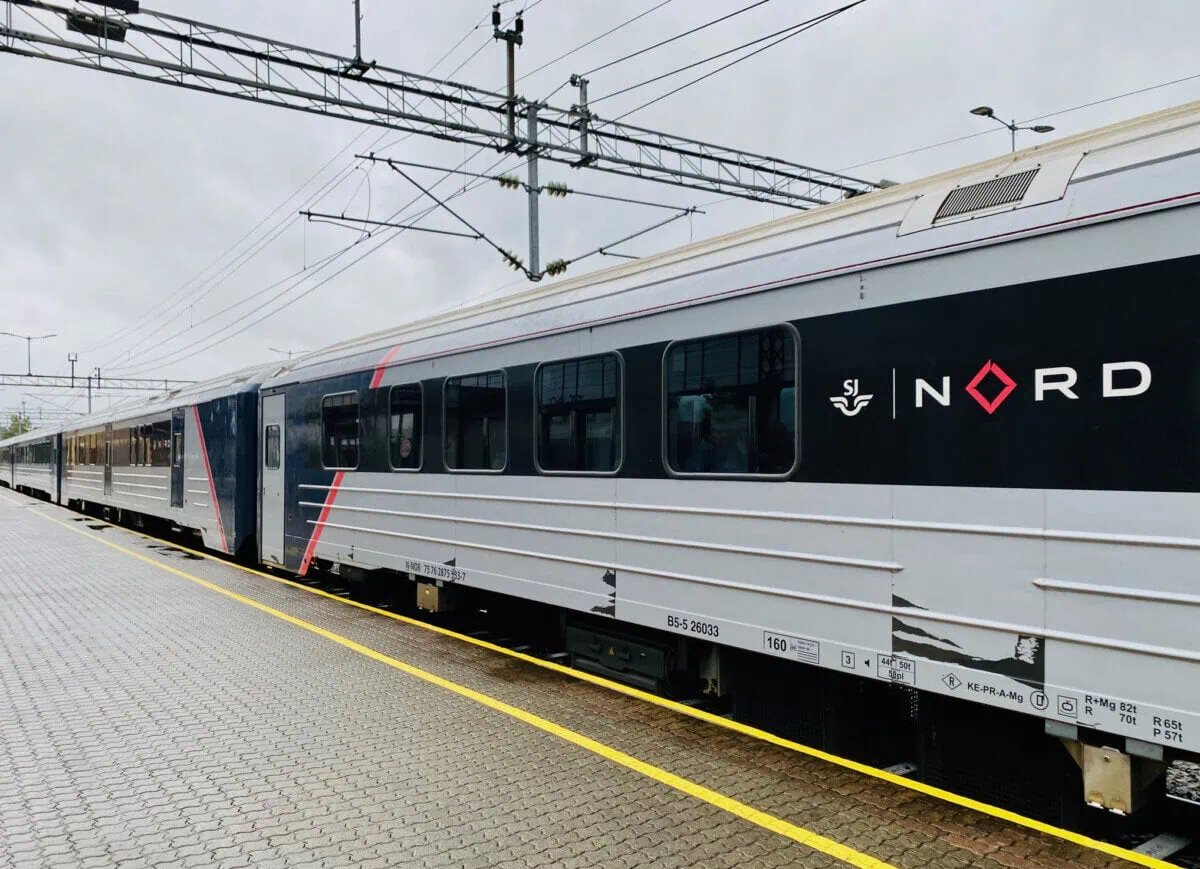
The airport has railway platforms directly beneath the terminal, giving quick access to both the Dovre Line towards Lillehammer and Trondheim and the wider rail network. Two different operators share this route: Vy runs the frequent regional shuttle between Oslo and Lillehammer, while SJ Nord (SJ Norge) operates the long-distance Oslo-Trondheim trains that continue further north and call at Kvitfjell. For travellers heading to Hafjell or Kvitfjell, this means the ski train journey effectively begins the moment you land, without a detour into Oslo first, whichever operator’s service you’ve booked.
Facilities at Gardermoen include a full range of car hire desks, luggage services, cafes, currency exchange and free Wi-Fi, and the terminal is compact enough that even first-time visitors rarely struggle to find their way between arrivals, the railway station and the bus terminal.
See hotel options and places to stay in Oslo.
Browse hotelsExplore holiday homes and apartments around Oslo.
See holiday homesCompare hotel deals in Oslo from multiple booking sites.
Compare pricesWhich Ski Resorts Can You Reach from Oslo Airport?
Norway’s leading ski resorts are spread across several valleys, so journey times vary considerably depending on the destination. The table below summarises the six resorts covered in detail throughout this guide.
| Resort | Approx Distance | Approx Journey Time | Best Method |
|---|---|---|---|
| Norefjell | Approx 100 km | 1 hr 30 mins | Car or Seasonal Bus |
| Hafjell | Approx 200 km (150 km from OSL) | 2 hrs 10 mins to 2 hrs 30 mins | Train + Bus or Car |
| Kvitfjell | Approx 230 km | 2 hrs 40 mins to 2 hrs 45 mins | Train or Car |
| Trysil | Approx 200 km (160 km from OSL) | 3 hrs to 3 hrs 20 mins | Express Bus or Car |
| Hemsedal | Approx 200 km | 3 hrs by car; 3.5 to 4.5 hrs by train or bus | Car, Train + Bus or Express Bus |
| Geilo | 219 km | 3 hrs 15 mins to 3 hrs 40 mins | Train or Car |
Unlike many Alpine gateways, Oslo Airport is not the closest starting point for every resort on this list. Norefjell, Trysil and Hafjell can all be reached slightly faster from the airport than from central Oslo, while Hemsedal, Kvitfjell and Geilo are reached via broadly the same route whichever end of the city you start from.
Trysil: Norway’s Largest Ski Resort
Sitting close to the Swedish border, Trysil is Norway’s largest ski resort by both piste length and visitor numbers, and its gentle, forested slopes make it especially popular with families and first-time skiers.
Trysil lies approximately 200 kilometres from Oslo, but the more useful figure for flying visitors is the distance from the airport itself. At only around 160 kilometres from Oslo Airport, Trysil is genuinely closer to Gardermoen than it is to the capital.
The main public transport option is the Trysilekspressen, a dedicated winter coach service operated by Boreal as part of the NOR-WAY Bussekspress network. The coach departs from both Oslo Bus Terminal and Oslo Airport Gardermoen, calling at Elverum en route, and the total journey from the airport takes just under three hours.
Rail travellers can take a Vy train as far as Elverum, then connect onto local Innlandet Traffic buses, which run six times daily on to Trysil, although this two-stage journey is generally slower than the direct coach.
For self-drivers, the route from the airport follows good main roads throughout, and once inside the resort itself, free ski buses connect the various accommodation areas to the lift bases for anyone holding a valid lift pass.
Trysilekspressen fares are not published as a single fixed figure and vary with demand and booking date, so it is worth checking NOR-WAY Bussekspress or Entur directly for current prices before travelling.
Hemsedal: Norway’s Alpine-Style Resort
Often nicknamed the “Scandinavian Alps” for its comparatively steep, dramatic terrain, Hemsedal is one of Norway’s most popular resorts with intermediate and advanced skiers, and offers some of the country’s most reliable snow.
Hemsedal sits roughly 200 kilometres from Oslo along the E16 via Hønefoss and Gol before joining Road 52 for the final stretch into the valley. Driving normally takes around three hours in good conditions.
For non-drivers, Vy Bus4You operates an express coach service, marketed locally as the Hemsedal Ekspressen, which typically takes around four to four and a half hours from Oslo depending on stops and winter road conditions.
An alternative is the train and bus combination. Vy trains run from Oslo to Gol several times daily in around three hours, with a connecting local bus completing the final 30 minutes into Hemsedal itself. As with Geilo, this route runs on the Bergen Line from Oslo Central Station rather than the airport, so travellers arriving at Gardermoen change at Oslo S onto the Gol-bound service rather than boarding directly.
These Bergen Line services carry the same café carriage, family carriage and free WiFi as the wider route, along with reservable space for skis and luggage. The journey to Gol follows river valleys and passes close to Gol’s reconstructed stave church, a full-scale copy of the 13th-century original that now stands preserved in Oslo, before the line begins its climb toward the Hardangervidda plateau further west.
Third-party booking sites such as Omio and Busbud list one-way express coach fares between Oslo and Hemsedal starting from roughly the equivalent of NOK 270 to NOK 360 (£21-28 / $29-39 / €25-33), although these marketplace prices fluctuate constantly and should be treated only as a rough guide rather than an official fare.
Whichever route you take, booking ahead during the Christmas, New Year and February half-term periods is strongly advised, since both the express coach and the connecting local bus can fill up quickly during peak Norwegian school holidays.
Hafjell: The Lillehammer Olympic Slopes
Located just outside Lillehammer, Hafjell hosted the alpine skiing events at the 1994 Winter Olympics and remains one of the most family-friendly resorts within easy reach of Oslo, thanks largely to its excellent rail connection.
By road, Hafjell sits around 200 kilometres from Oslo, a journey of roughly two hours and thirty minutes via the E6 or the Rv4 through Gjøvik. From Oslo Airport, the distance drops to around 150 kilometres, cutting the drive down to about two hours.
Rail is often the more comfortable option. Vy trains run roughly hourly, with around 12 to 18 departures a day between Oslo and Lillehammer, from both Oslo Central Station and Oslo Airport to Lillehammer Station in around two hours to two hours and ten minutes, making this one of the most straightforward rail journeys to any Norwegian resort covered here.
Onboard, most services carry a café carriage with hot and cold food, free WiFi and power sockets at most seats, and some trains include a family carriage with a small playroom for younger children. The route has its own appeal too, running alongside Lake Mjøsa, Norway’s largest lake, before climbing into the Gudbrandsdalen valley and crossing the Randklev Bridge over the Lågen river on the approach to Lillehammer.
From Lillehammer, the dedicated Hafjellbussen completes the final stage in around 15 minutes, running frequently between roughly 08:40 and 18:30 during the winter season. A single fare costs NOK 29 (£2.30 / $3.15 / €2.70) and is valid for one and a half hours, making it one of the cheapest verified prices anywhere on this route.
Because the train and connecting bus work so well together, many visitors find Hafjell one of the easiest Norwegian resorts to reach without a car, even outside peak booking windows.
Kvitfjell: A Rare Resort with Its Own Railway Station
A little further up the Gudbrandsdalen valley from Hafjell, Kvitfjell hosted the men’s downhill and Super-G events at the 1994 Winter Olympics and remains known for genuinely challenging, high-altitude terrain.
What makes Kvitfjell unusual, and genuinely rare anywhere in European ski travel, is that it has its own dedicated railway station right beside the finish area, on the Dovre Line that runs between Oslo and Trondheim.
By road, Kvitfjell is around 230 kilometres from Oslo, with driving times of roughly two hours and forty minutes. Trains from Oslo, including from Oslo Airport, reach Kvitfjell Station directly in approximately two hours and fifteen minutes to two hours and forty-five minutes, depending on the specific service. These are the long-distance Oslo-Trondheim trains operated by SJ Nord (SJ Norge), a different company from the Vy regional shuttle that serves Hafjell and Lillehammer.
Because both northbound and southbound Dovre Line trains call at Kvitfjell, travellers can reach the resort without needing a connecting bus at all, an important difference from almost every other resort covered in this guide. Kvitfjell shares these services with the wider Trondheim-to-Oslo mainline rather than having its own dedicated timetable, and the train only calls at Kvitfjell Station if your ticket is booked to or from that specific stop, so this is worth confirming when you buy. SJ Nord’s own website won’t sell tickets to buyers outside Norway, so international visitors usually find it easier to book through Entur instead, which covers both SJ Nord and Vy services.
Onboard facilities match the rest of the Dovre Line, including a café carriage and free WiFi at most seats. North of Lillehammer the valley narrows and the mountains close in, with the line passing Hunderfossen, Ringebu, Vinstra, Otta and Dombås as it climbs steadily toward the resort, making the approach itself one of the more dramatic stretches of railway in this guide.
On certain days of the week a local transfer bus also runs from the station up to the Gudbrandsgard or Skitorget base areas, and a taxi service is available for travellers arriving outside those departure windows.
Geilo: Norway’s Oldest Ski Resort
Established in 1909, Geilo is generally considered Norway’s oldest purpose-built ski resort, and its position roughly halfway along the spectacular Bergen Line gives it one of the country’s most useful rail connections.
Geilo sits 219 kilometres from Oslo by road, a drive of around three hours and fifteen minutes following the E16 to Hønefoss before continuing on Road 7 through the Hallingdal valley.
Vy trains on the Bergen Line reach Geilo Station from Oslo in around three and a half hours, and because the station sits in the middle of the resort itself, most accommodation is within a short walk of the platform once you arrive. Services run 4 to 7 times a day in each direction, plus a night train on most nights of the week, giving genuine flexibility over arrival and departure times. Unlike Hafjell and Kvitfjell, this isn’t a single through-train from the airport: the Bergen Line departs from Oslo Central Station rather than calling at Gardermoen, so travellers landing at the airport take a short regional hop into Oslo S first and change onto the westbound Bergen Line service there.
Onboard, Bergen Line trains carry a café carriage serving hot and cold food, a family carriage with a small playroom, free WiFi and reservable bicycle storage. The stretch either side of Geilo is one of the most dramatic on the whole network, climbing onto the treeless Hardangervidda plateau past Ustaoset and Haugastøl, with Finse, the highest station in Northern Europe at 1,222 metres and reachable only by train, a little further along the line beneath its glacier backdrop.
For travellers who prefer the road, the Hallingbus express coach service, route NX175, also runs directly between Oslo and Geilo, with schedules and fares available through Entur.
A seasonal Airport Shuttle also links Oslo Airport directly with Geilo during the winter months, giving flying visitors a further option beyond the standard train and coach services.
Because it sits directly on Norway’s rail network with a resort-centre station, Geilo is arguably the single easiest Norwegian ski destination to reach without a car anywhere covered in this guide.
Search routes and flight options for your trip to Oslo.
Search flightsUse an eSIM to get online without hunting for a local SIM after arrival.
See eSIM optionsArrange a private airport pickup for your trip to Oslo.
Check transfersNorefjell: The Closest Resort to Oslo
For anyone short on time, Norefjell is by far the most convenient option on this list, sitting only around 90 minutes by car from central Oslo, roughly 100 kilometres away.
The resort has no year-round train or scheduled bus service, which reflects its status as a smaller, more local mountain rather than a major destination resort, but two seasonal options exist for travellers without a car.
The Norefjell Express coach runs between Oslo and the resort during weekends and holiday periods from December onwards, making it a realistic option for a short weekend ski trip rather than a full week away.
A separate winter Airport Shuttle also connects Oslo Airport with Norefjell via a boarding point at Sokna, although this service normally requires reservations by the preceding Thursday, so it needs planning further in advance than a standard bus ticket.
Because of its proximity to the capital and its family-friendly slopes, Norefjell is popular with Oslo residents for day trips and short breaks, and self-driving remains by far the most flexible way to visit.
Train, Bus or Car: Which Option Is Best?
Unlike the Alps, where train lines rarely reach the resorts themselves, the best option from Oslo Airport to ski resorts depends heavily on which mountain you’re heading to, because Norway’s rail network reaches some resorts directly and misses others almost entirely.
For Geilo and Kvitfjell, the train is usually the clear winner. Both sit directly on a mainline route with their own stations, so there is no need for a connecting bus at all, and comfort levels are generally higher than on winter roads.
For Hafjell, the train plus the short Hafjellbussen connection works almost as smoothly, thanks to frequent departures and a genuinely low, verified local bus fare.
For Trysil, Hemsedal and Norefjell, dedicated winter coach services are generally the most practical public transport option, since none of the three sit on a useful rail line.
| Option | Cost | Convenience | Best For |
|---|---|---|---|
| Train (direct) | Moderate | Excellent | Geilo and Kvitfjell |
| Train + Local Bus | Low to Moderate | Very Good | Hafjell |
| Winter Express Coach | Moderate | Good | Trysil, Hemsedal and Norefjell |
| Private Transfer or Taxi | Higher | Excellent | Families and groups |
| Car Hire | Variable | Excellent | Multi-resort trips and remote lodges |
For most solo travellers and couples, the combination of train and, where needed, a short local bus offers the strongest balance of cost and comfort. Families and larger groups often find that car hire or a private transfer pays for itself once luggage, ski equipment and flexible timings are taken into account.
Buying Train Tickets: Which Apps and Operators to Use
Norway’s railway isn’t run by a single company, which can catch out visitors booking their first Norwegian ski trip. Vy operates the regional Oslo-Lillehammer shuttle used for Hafjell, along with the Bergen Line services to Geilo and Gol, while the long-distance Oslo-Trondheim service that calls at Kvitfjell is run by a separate operator, SJ Nord (SJ Norge).
The simplest fix is to book through Entur, Norway’s national journey planner, which sells tickets across every mainline train operator plus regional and winter ski coaches in a single app or website. This matters in particular for SJ Nord, whose own booking site won’t take bookings from outside Norway, making Entur the practical option for most overseas visitors heading to Kvitfjell.
For Vy-operated routes, the Vy app works well too and offers a couple of extras Entur doesn’t, including the ability to pick a seat in the family carriage on Bergen Line and Dovre Line services. Either app displays the mobile ticket you’ll need to show on board, since paper tickets are rarely issued at Norwegian stations.
Fares work on a tiered system: the cheapest non-flexible tickets go on sale up to 90 days ahead and can cost less than half the price of the same ticket bought close to travel, while semi-flexible and fully flexible fares cost more but allow changes or refunds. Booking as soon as tickets release is the single best way to keep a Norwegian ski trip affordable.
Seat reservations are optional on day trains but worth adding when travelling with ski or snowboard bags, since dedicated luggage space is limited and can’t be guaranteed on arrival. They’re compulsory on the Geilo night train, so book that leg early if an overnight journey suits your schedule.
Car Hire at Oslo Airport for Ski Holidays
Hiring a car at Oslo Airport remains the most flexible way to reach Norway’s ski resorts, particularly for travellers staying in self-catered cabins away from railway stations or bus stops, or planning to visit more than one resort during the same trip.
Gardermoen hosts all the major international rental brands, including Avis, Hertz, Europcar, Sixt, Budget and Enterprise, with desks located in the Arrivals Hall and a dedicated car hire centre a short walk from the terminal.
Norwegian law requires winter tyres on vehicles used in snowy conditions, and rental companies fit these automatically during the ski season, so there is no need to request them separately when booking.
Demand for rental cars rises sharply during Christmas, New Year and the Norwegian winter half-term in February, so booking well ahead of travel is the best way to secure both a reasonable price and a vehicle genuinely suited to mountain driving.
Roads to all six resorts covered in this guide are generally well maintained, but mountain routes such as the final stretch into Hemsedal or Norefjell can still see heavy snowfall, so travellers unfamiliar with winter driving should build in extra time rather than pushing to a tight schedule.

Search Car Hire Options in Oslo
When public transport does not fit your plans in Oslo, hiring a car can give you more control over your route and travel times.
Search both Discover Cars and EconomyBookings to compare rental prices, vehicle categories and supplier conditions.
Private Transfers to Norway’s Ski Resorts
A pre-booked private transfer is the closest Norwegian equivalent to the door-to-door minibus services common in the Alps, giving you a driver waiting at arrivals with a name board and a fixed price agreed before you travel. It removes any need to navigate trains or connecting buses with ski bags in tow, which is why it is a popular choice for families and larger groups.
Pricing is quoted per vehicle rather than per person, which makes transfers noticeably better value for groups than for solo travellers. As a rough guide, a standard car for up to three passengers on the longer route to Trysil typically starts from around NOK 6,200 (£480 / €548 / $597), while a larger minivan seating six to seven runs from roughly NOK 7,200 (£560 / €638 / $694).
Shorter routes cost proportionally less. A transfer to Hemsedal, for example, can start from around NOK 1,350 (£105 / €120 / $131) as a typical example fare, although the exact price depends on vehicle size, pickup time and the specific route booked.
Most private transfers carry ski and snowboard equipment free of charge and provide child or booster seats on request, though it is worth confirming both when booking, particularly for a larger group travelling with multiple bag sets. A dedicated ski trailer on the longest routes sometimes carries a small additional charge.
Advance booking matters more here than for a standard airport taxi, with most services asking for at least 16 to 24 hours’ notice. During Christmas, New Year and the February half-term, minivans in particular can be booked out days ahead, so it is worth arranging this well before you fly.
For solo travellers or couples on a budget, this option is rarely the cheapest way to reach the mountains, but for families or groups splitting the cost across several passengers, a private transfer can end up comparable to, or cheaper than, individual train and bus tickets while being far more convenient with ski equipment.

Compare Airport Transfer Companies
Pre-booking your airport transfer can save time and reduce stress when you arrive. Whether you need a private taxi, shared shuttle or executive transfer, comparing providers can help you find the best price and service for your journey.
We’ve selected three trusted airport transfer companies so you can compare prices, vehicle options, cancellation policies and customer reviews before you travel.

Rupert’s Handy Travel Tips
Flying into Oslo for a Norwegian ski holiday? Here are a few useful tips to make your journey smoother:
- Check whether your resort has a direct train first: Geilo and Kvitfjell both sit on mainline routes with their own stations, so a bus connection often isn’t needed at all.
- Book winter express coaches early: Trysilekspressen, the Hemsedal Ekspressen and the Norefjell Express all run a reduced winter timetable and can fill up during Christmas, New Year and February half-term.
- Compare the airport and the city as your starting point: Trysil, Hafjell and Norefjell are all slightly closer to Oslo Airport than to central Oslo, which can shave time off a road journey.
- Use Entur for tickets and timetables: Norway’s national journey planner covers trains, regional buses and winter ski coaches in a single app, and it’s especially useful for booking SJ Nord’s Kvitfjell-bound service, since SJ Nord’s own site won’t sell tickets from outside Norway.
- Allow extra time in heavy snow: Norwegian roads are well maintained, but mountain routes into valleys such as Hemsedal can still slow down during and after major snowfall.
Want to meet the reindeer behind our travel tips? Find out more in our page Who is Rupert?.




Frequently Asked Questions about Oslo Airport Ski Transfers
Is Oslo Airport a good base for reaching Norway’s ski resorts?
Yes. Oslo Airport sits at the centre of Norway’s rail, coach and road networks, and several major resorts including Trysil, Hafjell and Norefjell are actually closer to the airport than to central Oslo.
Which Norwegian ski resort has its own train station?
Geilo and Kvitfjell both have dedicated railway stations directly on Norway’s mainline network, so trains reach the resort itself rather than a distant valley town.
What is the closest ski resort to Oslo?
Norefjell is the closest major resort, reached in around 90 minutes by car and roughly 100 kilometres from the capital.
How do I get from Oslo Airport to Trysil?
The Trysilekspressen coach runs directly from Oslo Airport and Oslo Bus Terminal to Trysil in just under three hours, calling at Elverum en route.
Can I reach Hemsedal by train?
Not directly. The usual rail route is a Vy train to Gol followed by a short connecting bus of around 30 minutes, or you can take the direct Hemsedal Ekspressen coach instead.
How do I get to Hafjell from Oslo Airport?
Take a Vy train to Lillehammer Station, roughly two hours from the airport, then connect onto the local Hafjellbussen for the final 15 minutes into the resort.
Do I need a connecting bus for Kvitfjell?
Not necessarily. Kvitfjell has its own railway station right beside the resort, so many visitors can walk or take a short local transfer rather than relying on a scheduled bus.
Is Geilo easy to reach without a car?
Yes. Geilo is arguably the easiest resort in this guide to reach by public transport, thanks to a station located in the middle of the resort itself on the Bergen Line.
Do I need to change trains for Geilo or Hemsedal?
Yes. The Bergen Line departs from Oslo Central Station rather than calling at the airport, so travellers landing at Gardermoen take a short regional hop into Oslo S first, then change onto the westbound service. Hafjell and Kvitfjell, by contrast, sit on a through-train straight from the airport platform.
What’s the easiest way to buy Norwegian train tickets?
Entur, Norway’s national journey planner, is the simplest option, since it sells tickets across Vy, SJ Nord and the country’s winter ski coaches in a single app. This is particularly useful for SJ Nord’s Kvitfjell-bound service, which can’t be booked from outside Norway on the operator’s own site.
Do I need to hire a car for a Norwegian ski holiday?
Not always. Train and dedicated winter coach services cover all six resorts in this guide, although car hire remains the most flexible option for families, groups and multi-resort trips.
Should I book ski transport in advance?
Yes. Winter express coaches and connecting local buses run a reduced seasonal timetable, and demand rises sharply during Christmas, New Year and the February school holidays.
Compare hostels and budget-friendly accommodation around Oslo.
Browse hostelsAccess compensation support, eligible lounge benefits and faster payouts when flights go wrong.
See the benefitsLeave your luggage somewhere convenient and enjoy Oslo hands-free.
View storageFurther Reading & Related Guides
If you’re still planning the first stage of your trip, our Oslo Airport to City Centre Guide covers the Flytoget express train, standard Vy regional services, airport buses and taxis in detail, which is particularly useful if you’re spending a night or two in the capital before heading onward to the mountains. Anyone planning to explore Oslo itself before or after skiing should also read our Best Things to Do in Oslo guide.
Travellers curious about Norway’s wider rail network, including the spectacular route toward Bergen that Geilo sits on, should read our Bergen Line Guide. If your trip extends beyond a single ski week, our Norway Night Trains Guide explains how sleeper services connect Oslo with Bergen, Trondheim and destinations further north, while our Ferries from Oslo Guide covers onward travel by sea for anyone extending a Scandinavian itinerary.
If you’re still deciding between Norway and other winter sports destinations, our Ski & Snowboarding in Europe Guide compares resorts and snow reliability across the continent, including how Trysil and Hemsedal stack up against the Alps. Before you travel, our eSIM Apps Guide compares the best travel eSIM providers for staying connected across Norway’s more remote mountain valleys.