Reviewed by our editorial team Updated
Why the Bergen Line Is One of the World’s Greatest Rail Journeys
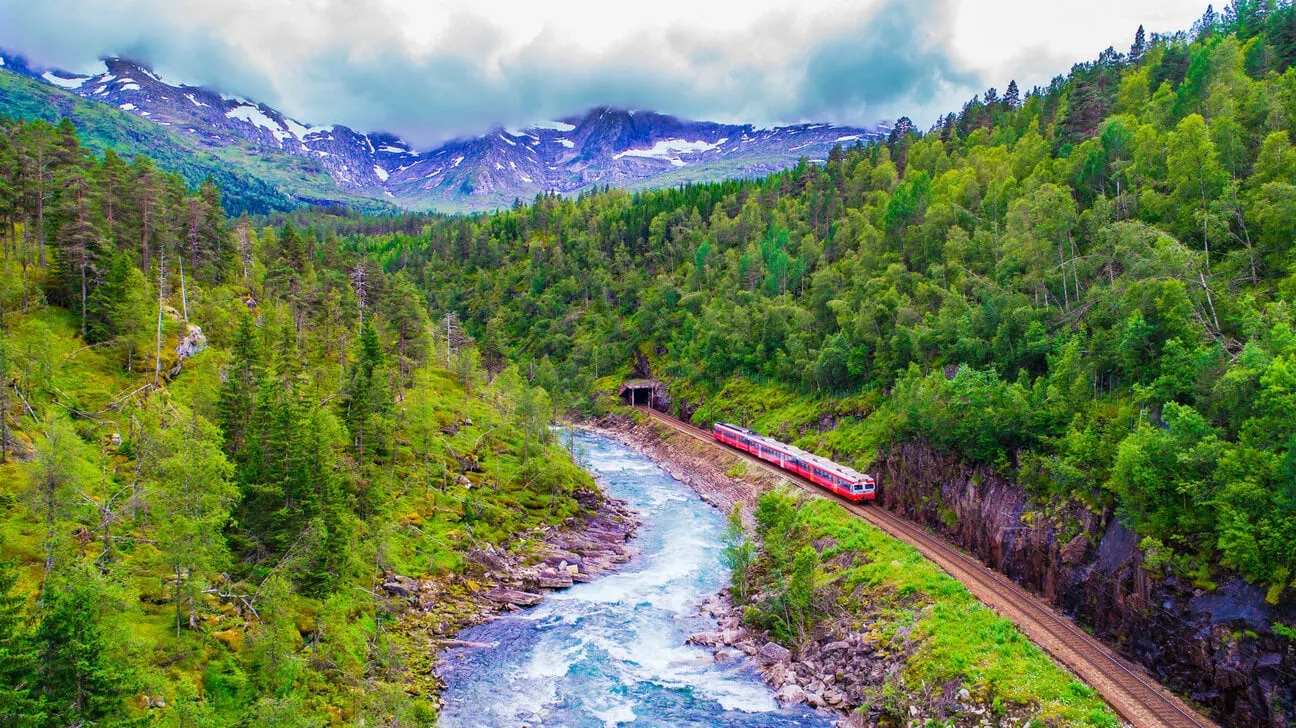
The Bergen Line is regularly described as one of the finest railway journeys anywhere in the world and, unlike many overhyped scenic rail routes, the reputation is genuinely deserved. Crossing the mountains of southern Norway between Oslo and Bergen, the railway combines huge open landscapes, alpine scenery, snow-covered plateaus and dramatic weather conditions unlike almost anywhere else in Europe.
What makes the line especially impressive is the scale and isolation of the scenery. Large sections cross remote mountain terrain where there are few roads, settlements or signs of modern urban life. During winter, snow can completely bury parts of the landscape, while summer reveals exposed rock, frozen lakes and vast upland scenery stretching far beyond the railway itself.
The route also works exceptionally well as practical transport. Instead of flying between Norway’s two largest cities, travellers can cross the country by rail in roughly seven hours while experiencing one of Scandinavia’s greatest travel experiences along the way.
For many travellers, the Bergen Line becomes the highlight of an entire Norway itinerary rather than simply a way of reaching Bergen.
What Is the Bergen Line
The Bergen Line, known locally as the Bergensbanen, is the main railway connecting eastern and western Norway between Oslo and Bergen. Opened fully in 1909, it remains one of the most important transport corridors in the country and one of Europe’s highest mainline railways.
The full route stretches for roughly 500 kilometres across southern Norway and crosses the huge mountain plateau of Hardangervidda, reaching elevations of more than 1,200 metres above sea level.
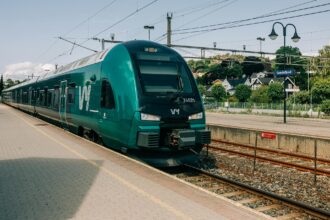
Today the line carries a mixture of daytime trains, overnight sleeper services and regional connections while also acting as one of Norway’s most important tourism railways. The route is operated primarily by Vy and remains fully integrated into Norway’s wider long-distance rail network.
Unlike many scenic railways built mainly for tourism, the Bergen Line remains a genuine working transport corridor linking communities across southern Norway while also carrying large numbers of domestic and international visitors throughout the year.
See hotel options and places to stay in Bergen.
Browse hotelsBrowse apartments, homes and self-catering accommodation in Bergen.
Browse rentalsCompare hotel deals in Bergen from multiple booking sites.
Compare pricesQuick Facts About the Bergen Line
| Feature | Details |
|---|---|
| Route | Oslo ↔ Bergen |
| Norwegian Name | Bergensbanen |
| Operator | Vy |
| Approximate Distance | 500 km |
| Typical Journey Time | 6.5 to 7.5 hours |
| Highest Point | Finse at 1,222 metres |
| Most Famous Scenic Area | Hardangervidda Plateau |
| Main Intermediate Stops | Drammen, Geilo, Myrdal, Voss |
| Sleeper Trains Available? | Yes |
| Interrail Valid? | Yes |
| Best Season | Year-round |
| Winter Snow Operations | Extensive |
| Best Known Connection | Flåm Railway at Myrdal |
| Most Scenic Direction | Often considered Oslo to Bergen |
| Best For | Scenic rail travel, winter journeys and fjord access |
Oslo Central Station and Boarding Bergen Line Trains
Most Bergen Line journeys begin at Oslo Central Station, usually referred to locally as Oslo S. Located in the centre of the Norwegian capital beside the waterfront and public transport network, the station functions as the main hub of long-distance rail travel in Norway.
Compared with some of Europe’s larger historic terminals, Oslo Central Station is relatively straightforward to navigate. Departure boards clearly display Bergen Line platforms, while long-distance trains usually board well before departure to allow passengers time to settle into seats or sleeper compartments.
The station contains supermarkets, cafés, restaurants and convenience stores, which is particularly useful because onboard catering can vary depending on the train service being used. Many experienced travellers buy food and drinks before departure, especially for evening sleeper services crossing the mountains overnight.
Boarding procedures are typically relaxed compared with airports. Tickets are generally checked onboard after departure rather than during platform access, and luggage handling is significantly easier than flying domestically within Norway.
One important detail is that Bergen Line services can occasionally be affected by severe weather conditions during winter. Heavy snowfall across the mountains sometimes creates delays, particularly during major storms affecting the Hardangervidda Plateau.
Oslo to Bergen Train Journey and Route Overview
The full journey on the Bergen Line between Oslo and Bergen normally takes around 6.5 to 7.5 hours, although winter weather and operational conditions can occasionally extend journey times slightly. During this time, trains cross huge sections of southern Norway, moving from urban eastern Norway through mountain plateaus before descending toward the fjords and Atlantic coastline around Bergen.
After departing Oslo, the line initially passes through more populated eastern Norwegian landscapes around Drammen before gradually climbing into valleys, forests and upland scenery. As the railway heads westward, the environment becomes increasingly mountainous and remote, particularly after passing through ski regions and mountain towns around Geilo.
One of the most dramatic sections occurs near Finse Station, the highest station on the entire Norwegian railway network at roughly 1,222 metres above sea level. This exposed alpine region frequently experiences severe winter weather and deep snow, giving the Bergen Line a far more Arctic atmosphere than most travellers expect from southern Norway.
After crossing the mountains and the vast Hardangervidda Plateau, the railway eventually descends toward western Norway through waterfalls, valleys and fjord landscapes before reaching Bergen beside the Atlantic coast.
The journey feels unusually varied for a single rail route. Travellers experience modern cityscapes, forests, frozen mountain plateaus, remote alpine terrain and coastal fjord scenery all within a single day of rail travel.
Major Stops Along the Bergen Line
Several important stations along the Bergen Line function as transport hubs, tourism gateways and major scenery transition points during the journey between Oslo and Bergen.
The first major stop after Oslo is usually Drammen, an important regional transport centre southwest of the capital. From there, trains continue toward increasingly mountainous scenery as the line approaches interior Norway.
Further west, Geilo is one of the route’s best-known mountain towns and ski destinations. During winter, the station becomes especially busy with travellers heading toward Norway’s snow sports regions and mountain resorts.
One of the most important operational stops on the entire line is Myrdal Station, where passengers can transfer onto the world-famous Flåm Railway descending toward the fjords at Flåm.
Nearby Finse Station is particularly famous because of its extreme elevation and isolated mountain setting. The station has no direct road access and is surrounded by alpine terrain for much of the year. Winter conditions around Finse often appear almost polar in character.
As the line descends toward the west coast, trains usually stop at Voss, another major outdoor tourism centre known for skiing, adventure sports and fjord access before the final approach toward Bergen.
Together, these stops help create one of Europe’s most geographically varied long-distance rail journeys.
Myrdal Station and Flåm Railway Connections
For many travellers, Myrdal Station is one of the single most important locations on the entire Bergen Line because it provides the connection to the spectacular Flåm Railway, often considered one of the steepest and most scenic railway lines in the world.
Located high in the mountains between Oslo and Bergen, Myrdal itself is relatively isolated and exists primarily as a railway interchange rather than a traditional town. Despite this, it has become internationally famous because of its role connecting the Bergen Line with the fjord village of Flåm.
The Flåm Railway descends dramatically from the mountains toward the Aurlandsfjord, passing waterfalls, cliffs, valleys and some of Norway’s most photographed railway scenery. Many travellers deliberately break their Bergen Line journey at Myrdal specifically to experience this connection.
Operationally, the interchange is usually straightforward because the Flåm Railway timetable is designed around Bergen Line arrivals and departures. During peak tourism periods, however, connections can become extremely busy and advance reservations are strongly recommended.
The combination of the Bergen Line and the Flåm Railway creates one of the strongest rail-and-fjord travel experiences anywhere in Scandinavia. Travellers can leave Oslo by train in the morning and descend into the Norwegian fjords via one of Europe’s most famous railway branches later the same day.
Crossing the Hardangervidda Plateau
The crossing of the Hardangervidda is the defining section of the Bergen Line and one of the reasons the route is regarded as one of the greatest railway journeys in the world. Hardangervidda is the largest mountain plateau in northern Europe and creates a landscape unlike almost anything else reachable by conventional rail.
At its highest points, the railway climbs above 1,200 metres, entering a huge exposed environment of rock, snow, frozen lakes and open tundra-like scenery. During winter, the landscape often appears completely Arctic despite the line being located in southern Norway.
Weather conditions across the plateau can become extremely severe. Heavy snow, drifting conditions and high winds regularly affect operations during winter months, and snow-clearing equipment is essential to keep the railway open. In especially difficult conditions, parts of the line can briefly close because of storms and avalanche risk.
The area around Finse Station is particularly famous for its harsh climate and remote alpine setting. The station is inaccessible by public roads and is surrounded almost entirely by mountain wilderness.
For passengers, however, these conditions are precisely what make the Bergen Line so memorable. Crossing Hardangervidda by train feels dramatically different from ordinary European rail travel. Huge open scenery, deep snow and isolated mountain landscapes create an atmosphere that feels closer to Arctic expedition travel than a standard intercity railway journey.
Compare routes and fares for your journey to Bergen.
Compare flightsUse an eSIM to get online without hunting for a local SIM after arrival.
See eSIM optionsArrange a private airport pickup for your trip to Bergen.
Check transfersBergen Line Sleeper Trains
Overnight sleeper trains on the Bergen Line provide one of the most memorable long-distance rail experiences anywhere in Scandinavia. Operating mainly through trains 605 and 606, the overnight services allow travellers to cross southern Norway while sleeping through the mountainous interior before arriving in either Oslo or Bergen the following morning.
The sleeper services are especially practical because the journey is long enough to justify overnight travel while still short enough to avoid spending an excessive amount of time onboard. Instead of losing a full daytime period crossing Norway by rail, passengers can board during the evening and wake up beside fjords or mountains the next morning.
Accommodation normally includes standard seats, reclining seats and sleeper compartments with beds and bedding. Most travellers covering the full route strongly prefer sleeper compartments because the mountain crossing lasts roughly 7 hours and proper sleep makes a major difference to the experience.
During winter, the overnight atmosphere on the Bergen Line becomes especially distinctive. Travellers often wake to snow-covered mountains, frozen lakes and deep alpine scenery around the western sections of the route. In severe weather, snow can completely surround the train across exposed parts of the Hardangervidda Plateau, creating an experience unlike most European overnight rail journeys.
The sleeper trains are also highly popular with Interrail travellers because they combine transportation and accommodation costs while connecting naturally into wider Norwegian rail and fjord itineraries.
Bergen Line Winter Weather and Snow Operations
Winter transforms the Bergen Line into one of the most dramatic railway journeys in Europe. Snowfall across the mountains can become extremely heavy, particularly around Hardangervidda and Finse Station, where weather conditions frequently resemble Arctic environments more than southern Scandinavia.
The line is famous for its extreme snow operations. Snowploughs and specialist clearing equipment are regularly required to keep the railway open during winter storms, while deep snowdrifts can accumulate rapidly across exposed plateau sections.
At Finse, temperatures can fall dramatically below freezing for extended periods and visibility during storms can become extremely poor. These conditions are part of what gives the Bergen Line its legendary status among railway travellers and winter tourism enthusiasts.
Despite the harsh conditions, the line remains remarkably reliable considering the terrain it crosses. Norwegian railway operations are heavily adapted for winter weather, and closures are relatively uncommon compared with what many travellers might expect from such exposed mountain infrastructure.
Winter also changes the atmosphere onboard. Warm sleeper compartments and heated carriages contrast sharply with the frozen landscapes outside, creating a particularly memorable long-distance rail experience during darker months.
For photographers and scenic travellers, winter is often considered the best season overall because the snow-covered mountains, frozen lakes and isolated stations create some of the most dramatic railway scenery anywhere in Europe.
Scenic Highlights and the Best Side of the Train
The scenery on the Bergen Line changes constantly throughout the journey, which is one reason the route has such a strong international reputation. Travellers experience forests, lakes, valleys, mountain plateaus, waterfalls and fjord landscapes all within a single rail journey across southern Norway.
The eastern sections departing Oslo initially pass through gentler Norwegian countryside before the railway gradually climbs into more dramatic mountain terrain around Geilo and Hardangervidda.
The crossing near Finse Station is usually considered the most visually impressive section because of the exposed alpine scenery and huge open landscapes surrounding the line. During winter, snow can completely dominate the view in every direction.
As the route descends westward toward Bergen, the scenery becomes greener, steeper and more fjord-like with waterfalls, valleys and dramatic mountain slopes increasingly visible from the train windows.
Many travellers ask which side of the train offers the best scenery. In reality, excellent views exist throughout the journey, but many experienced passengers slightly prefer the left-hand side travelling from Oslo to Bergen because some of the mountain and valley scenery feels more open from this direction during parts of the western descent.
However, the route is scenic enough that passengers on both sides experience outstanding views for large sections of the journey. The best strategy is often simply to move around during quieter parts of the trip and enjoy changing perspectives across different sections of the line.
Journey Times and Train Frequency
The full journey between Oslo and Bergen on the Bergen Line normally takes between 6.5 and 7.5 hours depending on the specific service, seasonal conditions and operational factors.
Several trains normally operate daily in each direction, including both daytime departures and overnight sleeper services. This creates relatively strong flexibility for travellers compared with many other scenic railways, which may operate only limited tourist-oriented services.
Daytime trains are usually preferred by travellers wanting to experience the scenery fully in daylight, especially during summer when Norway enjoys extremely long daylight hours. Overnight sleeper services, meanwhile, are popular with travellers prioritising efficiency, accommodation savings and longer Scandinavian rail itineraries.
Winter weather can occasionally affect journey times, particularly during severe storms across Hardangervidda. Snow operations and difficult mountain conditions sometimes create delays, although Norwegian railway operators are generally highly experienced at managing winter infrastructure challenges.
Journey frequency also changes slightly throughout the year. Summer and holiday periods often see especially high demand, while winter brings increased use from skiers, scenic travellers and Northern Lights tourists combining the Bergen Line with wider Norway itineraries.
Tickets, Prices and How to Book Bergen Line Trains
Tickets for the Bergen Line are normally released several months in advance through Vy and wider European rail booking platforms. Because the route is one of the most famous railway journeys in Scandinavia, demand remains consistently high throughout much of the year, especially during the summer tourism season, the Christmas period and the height of winter snow travel across the mountains.
Travellers booking the route between Oslo and Bergen usually choose between standard seats, reclining seats and overnight sleeper accommodation. Daytime departures are particularly popular during summer because passengers want uninterrupted views across Hardangervidda and the mountain scenery west of Finse Station. Overnight services attract travellers wanting to save both time and accommodation costs while crossing Norway during the night.
Prices fluctuate heavily depending on season, departure time and remaining availability. Last-minute tickets can become surprisingly expensive during major holiday periods and winter weekends, particularly on sleeper departures where compartment space is limited. Travellers wanting private sleeper accommodation should normally book as early as possible because the overnight trains often fill well ahead of departure.
The Bergen Line also works extremely well as part of wider Norwegian itineraries. Many passengers combine the railway with the Flåm Railway, fjord ferries, western Norway road trips and Arctic rail journeys further north, which means demand stays strong far beyond ordinary commuter travel.
Using Interrail on the Bergen Line
The Bergen Line is fully included within both Interrail and Eurail, making it one of the most important long-distance rail routes for travellers exploring Scandinavia by train. The line fits naturally into wider Nordic rail itineraries because it links Norway’s capital with the fjord regions and western coast entirely by rail across some of the most dramatic scenery in Europe.
Passengers using Interrail can travel on standard daytime services with relatively simple reservations, while overnight sleeper trains require additional supplements for reclining seats or sleeper compartments. Despite the additional reservation costs, many travellers still consider the Bergen Line sleeper excellent value because it combines transportation and accommodation into a single overnight journey.
For many rail travellers, the Bergen Line becomes one of the defining highlights of an entire Scandinavian itinerary. The atmosphere feels completely different from most mainland European railways because the journey crosses huge mountain plateaus, isolated alpine regions and snow-covered landscapes that feel far more remote than western European intercity corridors.
The western end of the line at Bergen connects naturally into Norway’s famous fjord regions, coastal ferries and western hiking areas, while the eastern terminus at Oslo links directly into Sweden, Denmark and wider Scandinavian rail networks. This makes the Bergen Line one of the most strategically useful and visually impressive rail corridors anywhere in northern Europe.
Because accommodation prices in Norway are often extremely high, many Interrail travellers deliberately use the overnight services to reduce hotel costs while simultaneously covering large distances across the country.
Compare hostels and lower-cost places to stay in Bergen.
Search hostelsGet help with compensation, eligible lounge access and disruption support.
Explore AirHelp+Use convenient luggage storage around Bergen between arrival, check-in and departure.
Check storageFood, Luggage and Facilities Onboard
Facilities onboard the Bergen Line are designed around long-distance comfort and practical travel across difficult mountain terrain. The trains are not ultra-luxury tourist railways, but they provide a calm, spacious and highly comfortable environment for one of Europe’s great scenic journeys.
Standard seating offers generous legroom, large windows and power outlets suitable for long daytime travel across Norway. Reclining seats provide improved overnight comfort, while sleeper compartments deliver the best experience overall for passengers travelling during evening departures between Oslo and Bergen.
Large luggage is generally easy to manage onboard because Norwegian long-distance trains provide significantly more baggage flexibility than airlines. This becomes especially useful for travellers carrying winter clothing, hiking equipment, skis or larger backpacks while exploring the mountains and fjord regions of Norway.
Many services include café or refreshment facilities selling drinks, snacks and light meals, although experienced travellers often still buy supplies before departure from Oslo Central Station or Bergen Station. The long mountain crossing encourages a slower style of travel where passengers spend hours simply watching the scenery evolve outside the windows.
One of the most distinctive aspects of the onboard experience is the atmosphere itself. Large panoramic windows, relatively quiet carriages and the gradual transition from eastern Norway to the fjords create a far more immersive experience than flying between the country’s major cities.
eSIMs and Mobile Connectivity on the Bergen Line
Reliable mobile connectivity is increasingly important for travellers using the Bergen Line, especially because many passengers rely heavily on digital tickets, weather forecasts, hotel bookings and ferry reservations while travelling across Norway.
Coverage remains strong around major urban areas including Oslo and Bergen, but reception becomes noticeably more variable across mountain sections and isolated plateau regions near Finse Station and the exposed landscapes of Hardangervidda.
These intermittent signal gaps are largely a result of the extreme geography crossed by the railway. Large sections of the route pass through remote alpine environments where there are few settlements and limited telecommunications infrastructure. During winter storms, conditions across the plateau can become particularly severe, making weather and operational updates especially important for travellers monitoring the line.
Using an eSIM is often the simplest solution for international visitors because it removes the need to purchase physical Norwegian SIM cards after arrival. Regional Scandinavian and European eSIM plans work particularly well for passengers combining Norway with wider Nordic rail journeys through Sweden and Denmark.
For many travellers, mobile connectivity along the Bergen Line becomes part of the wider experience itself. The route regularly passes through landscapes so isolated and mountainous that temporary signal loss actually reinforces the feeling of crossing one of Europe’s last great wilderness railways.

Rupert’s Handy Travel Tips
The Bergen Line is one of the greatest railway journeys in Europe, but Rupert says travellers who plan carefully get a dramatically better experience crossing the mountains of Norway.
- Choose a daytime departure during winter if scenery is your main priority because the snow-covered crossing of Hardangervidda is often the highlight of the entire journey.
- Book sleeper compartments early on overnight services because the limited number of cabins regularly sells out during ski season and summer holidays.
- Carry food and drinks onboard before departure because mountain sections of the line are long and café selections can vary between departures.
- Watch weather forecasts carefully during winter because storms across Finse and the plateau occasionally affect schedules.
- Do not rush through Myrdal because the connection with the world-famous Flåm Railway is one of Norway’s greatest rail experiences.
Want to meet the reindeer behind our travel tips? Find out more in our page Who is Rupert?.
Frequently Asked Questions About the Bergen Line
Is the Bergen Line the most scenic train in Norway?
Many travellers consider the Bergen Line the most scenic railway in Norway because it crosses the huge mountain landscapes of Hardangervidda while linking Oslo with the fjords and coast around Bergen.
How long does the Bergen Line take?
Most trains between Oslo and Bergen take roughly 6.5 to 7.5 hours depending on the specific service, weather conditions and seasonal operations.
Does the Bergen Line have sleeper trains?
Yes, overnight sleeper services operate on the route using reclining seats and sleeper compartments for passengers crossing Norway during the night.
Can you use Interrail on the Bergen Line?
Yes, the route is fully included within Interrail and Eurail, although sleeper reservations and supplements are normally required for overnight accommodation.
What is the highest point on the Bergen Line?
The railway reaches its highest elevation near Finse Station at roughly 1,222 metres above sea level, making it one of Europe’s highest mainline railways.
Which side of the train is best on the Bergen Line?
Many travellers slightly prefer the left-hand side travelling from Oslo to Bergen because parts of the western descent and valley scenery feel more open from this direction, although excellent views exist throughout the train.

Further Reading & Related Guides
Travellers exploring the Bergen Line will often also find themselves planning wider journeys across Norway and Scandinavia. Our guides to Norway Night Trains, the Flåm Railway and the Nordland Line explore some of the country’s other iconic railway journeys in far greater detail, while our wider Interrail Norway Guide explains how to combine long-distance rail travel with fjord ferries, Arctic routes and sleeper trains.
Travellers continuing beyond Bergen should also explore our Bergen Ferry Guide.
For staying connected across Norway’s mountain and remote rail corridors, our guides to the best eSIMs explain how to maintain reliable mobile coverage while travelling through some of Europe’s most isolated railway landscapes.