Reviewed by our editorial team Updated
Why Ride the Nordland Line
The Nordland Line is one of the most spectacular railway journeys in Europe, yet it still feels surprisingly undiscovered compared with famous Alpine routes in Switzerland or luxury tourist trains elsewhere on the continent. Running from Trondheim to Bodø across the immense landscapes of Central and Northern Norway, the route combines dramatic scenery, Arctic wilderness and authentic long-distance rail travel in a way very few European railways can match. The experience feels less like a tourist attraction and more like a genuine expedition into the far north.
What makes the Nordlandsbanen so memorable is the sheer sense of distance and remoteness. As the train leaves Trondheim Central Station, passengers gradually move from relatively populated parts of Norway into increasingly isolated territory filled with forests, frozen lakes, mountain plateaus and tiny settlements surrounded by wilderness. The scenery constantly changes throughout the journey, making the route feel far longer and more adventurous than a standard intercity train ride.
The railway is also one of the best ways to experience the transition into the Arctic region without flying. Travelling north hour by hour allows passengers to watch the landscapes, climate and atmosphere slowly evolve as the train approaches and eventually crosses the Arctic Circle. That geographical milestone gives the route a unique identity among European railways and turns the journey itself into a major travel experience rather than simply a method of transport.
Unlike many scenic railways designed primarily for tourism, the Nordland Line remains a fully functioning transport corridor used daily by local residents, students, military personnel and business travellers. That gives the route a far more authentic atmosphere than many heavily marketed panoramic trains elsewhere in Europe. One carriage may contain backpackers heading towards the Lofoten Islands, while another carries residents returning to remote northern communities after shopping trips or work journeys further south.
The route also fits naturally into wider Norway itineraries. Many travellers combine the journey with ferries from Bodø to the Lofoten Islands, coastal voyages aboard the Hurtigruten, or onward rail and road journeys deeper into Arctic Scandinavia. For rail enthusiasts, it is considered one of the defining railway experiences in northern Europe. For ordinary travellers, it offers one of the easiest and most comfortable ways to experience the scale and beauty of Arctic Norway without needing to drive through difficult mountain conditions.
Quick Route Overview
The Nordland Line stretches for approximately 729 kilometres between Trondheim and Bodø, making it the longest railway line in Norway. The full daytime journey usually takes just under 10 hours, although overnight sleeper services also operate on many departures, allowing travellers to experience the route in either direction while saving on accommodation costs.
The line begins in the historic city of Trondheim, one of Norway’s most important rail hubs and a major cultural centre in its own right. From there, the train heads north through the agricultural landscapes of Trøndelag before gradually entering far more remote and mountainous regions. Over the course of the journey, stations become smaller, settlements more isolated and the scenery increasingly dramatic.
Some of the most important stops along the route include Steinkjer, Mosjøen, Mo i Rana and Fauske. These towns serve as vital regional transport centres for northern Norway and provide useful overnight stopping points for travellers who want to break up the journey. Around the midpoint of the route, the railway crosses the Arctic Circle near Saltfjellet, one of the most famous moments on the entire journey.
The line terminates in Bodø, a coastal Arctic city positioned above the Arctic Circle and surrounded by dramatic sea and mountain landscapes. Bodø acts as a major gateway to northern Norway, particularly for travellers heading onwards towards the Lofoten Islands or wider Arctic destinations. The arrival into Bodø feels genuinely remote compared with most European railway termini, reinforcing the sense that the Nordland Line reaches deep into the far north.
Despite the route’s global reputation among rail enthusiasts, the trains themselves remain practical rather than luxurious. Services are operated by SJ Norge and are designed primarily for long-distance comfort and reliability in difficult Arctic conditions. That practical approach actually adds to the authenticity of the experience and keeps the journey relatively affordable compared with premium scenic railways elsewhere in Europe.
The route also connects seamlessly with the Dovre Line south towards Oslo, allowing travellers to create a continuous rail journey from southern Norway all the way into the Arctic north. For many visitors, the Nordland Line becomes the centrepiece of a much larger Scandinavian rail adventure.
See hotel options and places to stay in Norway.
Browse hotelsExplore holiday homes and apartments around Norway.
See holiday homesCompare hotel deals in Norway from multiple booking sites.
Compare pricesTrondheim to Bodø Route Map & Major Stops
The journey starts at Trondheim Central Station, located close to the waterfront in one of Norway’s oldest cities. Many travellers spend at least one night in Trondheim before departure, partly because early morning northbound departures are common and partly because the city itself is well worth exploring. Attractions such as Nidaros Cathedral, the historic district of Bakklandet and the colourful riverside warehouses provide a strong introduction to Norwegian culture before the long journey north begins.
Shortly after leaving Trondheim, the railway passes through relatively populated farmland and forest landscapes that still feel closely connected to southern Norway. Towns such as Steinkjer and Snåsa provide a gentle beginning to the route before the scenery gradually becomes wilder and more remote. Dense forests, large lakes and mountain backdrops increasingly dominate the views outside the carriage windows.
Further north, the train reaches Mosjøen, one of the oldest settlements in the Helgeland region. The town is known for its traditional wooden architecture and dramatic mountain surroundings. Beyond Mosjøen, the railway pushes deeper into Arctic Norway, with long stretches of isolated landscape interrupted only occasionally by small stations and remote communities.
One of the most visually striking sections arrives around Mo i Rana, where industrial infrastructure sits dramatically against a backdrop of snow-covered mountains and vast open landscapes. During winter, this area often looks almost completely Arctic in character, with heavy snow accumulation and frozen terrain stretching far beyond the railway line.
The railway later reaches Fauske, historically intended to become an important junction for future northern railway expansion towards Narvik. Although those railway extensions were never fully completed, Fauske remains a major transport centre in northern Norway and an important stop on the Nordland Line today.
Finally, the train arrives in Bodø, positioned beside the sea above the Arctic Circle. The approach into the city is particularly impressive because passengers suddenly transition from mountain and plateau scenery to dramatic coastal landscapes and Arctic waters. From Bodø, ferries depart towards the Lofoten Islands, while nearby Bodø Airport provides onward connections across northern Scandinavia.
One of the most distinctive aspects of the Nordland Line is how isolated some stations feel. During winter especially, passengers may see little more than a small illuminated platform surrounded by darkness, snow and wilderness. That atmosphere creates a powerful sense of travelling through truly remote territory rather than simply moving between large cities.
Crossing the Arctic Circle by Train
The most iconic moment on the Nordland Line comes when the train crosses the Arctic Circle, officially entering the Arctic region of northern Europe. This famous geographical boundary sits at approximately 66°33′ north latitude and marks the point where parts of the year experience the phenomena of the Midnight Sun and the Polar Night. For many travellers, this is not simply another railway landmark. It is the symbolic moment where the journey transforms from a scenic Norwegian rail trip into a true Arctic adventure.
The crossing takes place near Saltfjellet, one of the most remote and visually dramatic regions in Norway. Shortly before reaching the Arctic Circle, onboard announcements usually inform passengers so they can prepare cameras and move towards the windows. Beside the railway line stands the well-known Arctic Circle monument, positioned against a backdrop of exposed mountain terrain, snowfields and open wilderness. Even experienced travellers often pause during this moment because there are surprisingly few places in the world where you can cross into the Arctic by conventional railway.
What makes the experience especially powerful is the gradual nature of the journey north. Travelling on the Nordlandsbanen allows passengers to physically feel the transition into the Arctic landscape hour by hour. The forests become thinner, settlements become increasingly isolated and the terrain grows harsher and more exposed. Unlike flying directly into northern Norway, the railway allows travellers to witness the changing geography naturally, making the Arctic Circle crossing feel genuinely earned.
During winter, this section of the route can feel almost surreal. Huge expanses of snow stretch across the surrounding plateau, while freezing winds sweep across the exposed landscape around Saltfjellet. In heavy snowfall, visibility can collapse entirely, leaving passengers staring into near-total whiteness broken only by railway infrastructure and occasional isolated station lights. The environment feels far removed from urban Europe and much closer to the landscapes associated with polar expeditions and Arctic documentaries.
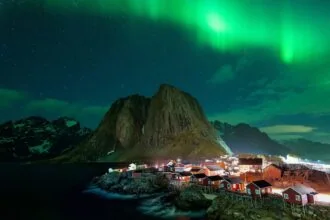
At certain times of year, this section of the journey also provides opportunities to spot the Northern Lights. Although sightings are never guaranteed, many overnight passengers specifically choose the Nordland Line during the colder months because the combination of dark skies and remote landscapes creates favourable viewing conditions. Watching the Aurora Borealis appear above the snowy landscapes of northern Norway from a moving train is one of the most memorable rail experiences available anywhere in Europe.
The atmosphere changes completely during summer. Instead of darkness and snowstorms, travellers encounter vast open mountain scenery illuminated by extraordinarily long daylight hours. Around midsummer, the sun can remain visible late into the evening, bathing the surrounding landscapes in golden Arctic light. This creates a very different but equally unforgettable atmosphere aboard the train, especially as passengers realise they are travelling above the Arctic Circle while daylight still fills the carriages close to midnight.
For many travellers, crossing the Arctic Circle carries genuine emotional significance. The Arctic has long been associated with exploration, remoteness and extreme natural environments, and the Nordland Line provides one of the most accessible ways to experience that world firsthand. Because the journey unfolds gradually across nearly ten hours of changing scenery, the crossing feels meaningful in a way that air travel rarely can replicate.
The Arctic Circle crossing is ultimately one of the defining reasons why the Nordland Line is considered one of the world’s great railway journeys. The route combines authentic long-distance transport, immense natural scenery and a genuine sense of geographical progression. By the time the train reaches Bodø, passengers do not simply feel like they have arrived somewhere new. They feel like they have travelled deep into another climatic and cultural region of Europe altogether.
What the Journey Is Actually Like
Travelling on the Nordland Line feels very different from riding a high-speed railway in mainland Europe. The pace is slower, the atmosphere calmer and the scenery far more dominant. This is not a route where passengers spend the journey staring at phones or rushing between business meetings. Instead, the experience revolves around watching the landscapes gradually unfold outside the windows as the train pushes further north into increasingly remote parts of Norway.
The journey begins relatively gently around Trondheim, where forests, rivers and agricultural landscapes dominate the early stages of the route. As the hours pass, however, the scenery becomes steadily more dramatic. Vast lakes appear beside the railway, mountain ranges begin to dominate the horizon and settlements become noticeably smaller and further apart. By the time the train approaches the Arctic Circle, many passengers realise they have travelled into one of the least densely populated parts of Europe.
One of the defining characteristics of the Nordlandsbanen is the constant variation in scenery. Unlike some scenic railways where the landscape remains relatively similar for hours, the Nordland Line continuously changes character. Dense forests suddenly give way to open mountain plateaus, while isolated stations emerge unexpectedly from stretches of wilderness. During winter, frozen rivers and deep snow transform huge sections of the route into landscapes that feel almost Siberian in appearance.
The onboard atmosphere is generally relaxed and practical rather than luxurious. The trains are designed for real long-distance travel in difficult Arctic conditions, so comfort and reliability are prioritised over glamour. Passengers often include tourists, students, local residents and workers travelling between northern communities. That mixture gives the journey a more authentic feel than heavily curated tourist rail experiences elsewhere in Europe.
Weather also plays a major role in shaping the experience. During winter, snowstorms and darkness can create an incredibly atmospheric journey, particularly on overnight services. In summer, the opposite happens, with enormous daylight hours and glowing evening skies giving the route an entirely different personality. Travellers making the same journey in January and July often describe it as feeling like two completely different railways.
Another surprising aspect of the route is how quiet large sections can feel. There are long stretches where the train passes through wilderness with almost no visible roads, towns or human activity. This isolation is part of what makes the Nordland Line so memorable. Even experienced European rail travellers are often surprised by just how remote parts of northern Norway genuinely feel from the comfort of a standard passenger train.
By the time the train finally reaches Bodø, many passengers feel as though they have completed an expedition rather than a simple rail journey. The gradual progression into the Arctic landscape creates a strong sense of distance travelled, something increasingly rare in modern transport.

Best Scenic Sections of the Nordland Line
Although the entire Nordland Line is scenic, certain sections stand out as especially spectacular. The landscapes constantly evolve throughout the journey, but there are several areas where passengers consistently leave their seats to photograph the views outside the windows.
One of the most beautiful early sections lies north of Steinkjer, where the railway passes through heavily forested landscapes dotted with lakes and rivers. This area provides a classic image of central Norway, particularly during autumn when the forests turn shades of gold and deep orange. Morning departures from Trondheim are especially atmospheric here because mist often hangs low across the valleys and water.
Further north, the landscapes around Mosjøen become significantly more dramatic. Towering mountains begin rising sharply around the railway, creating some of the first truly cinematic sections of the journey. This region of Helgeland is famous for its rugged scenery and rapidly changing weather conditions, both of which add to the atmosphere aboard the train.
The most famous scenic section is undoubtedly the crossing of Saltfjellet near the Arctic Circle. Here the railway climbs into exposed mountain terrain surrounded by wide-open Arctic landscapes. During winter, this area becomes a world of snowfields, frozen lakes and powerful winds. In summer, the same landscapes appear vast, empty and almost lunar under endless daylight. This section gives the Nordland Line much of its international reputation as one of Europe’s great railway journeys.
Another highlight comes south of Fauske, where passengers begin seeing dramatic combinations of mountains, water and Arctic coastal scenery. The transition from inland mountain terrain towards the coast near Bodø creates a powerful sense of arrival. During clear weather, the surrounding peaks and Arctic waters can look extraordinary from the carriage windows.
Seasonal changes dramatically affect the appearance of the route. In winter, the railway feels wild and extreme, with deep snow covering almost every visible surface for hours at a time. In summer, huge daylight hours illuminate the landscapes late into the evening, creating glowing skies and long shadows across the mountains. Autumn brings rich colours and rapidly changing weather, while spring often combines snow-covered mountains with thawing rivers and waterfalls.
Window reflections can occasionally become an issue during darker periods of the journey, particularly on overnight trains. Travellers hoping to photograph the scenery often prefer daytime departures and seats with large unobstructed windows. Even without photography, however, the landscapes themselves are more than enough to make the journey unforgettable.
Day Train vs Overnight Sleeper
One of the biggest decisions travellers face when planning the Nordland Line is whether to travel during the day or use the overnight sleeper service. Both experiences are excellent, but they offer completely different atmospheres and suit different types of travellers.
The daytime journey is ideal for passengers who want to experience the scenery in full. Because the Nordland Line passes through such varied and dramatic landscapes, daylight travel allows passengers to fully appreciate the forests, lakes, mountain plateaus and Arctic scenery that make the route famous. Travelling during the day also means passengers experience the gradual transition into northern Norway in real time, particularly when crossing the Arctic Circle.
Day services are particularly rewarding during summer, when long daylight hours mean passengers can enjoy scenery for almost the entire journey. Around midsummer, light can remain visible surprisingly late into the evening, creating extraordinary conditions for photography and sightseeing from the train windows.
The overnight sleeper service, however, offers a completely different type of experience. Sleeping aboard the train while travelling through Arctic Norway creates a strong sense of adventure and can also save a significant amount on accommodation costs. Many travellers choose the sleeper because it allows them to maximise time in destinations such as Bodø or the Lofoten Islands without sacrificing an entire daytime travel period.
During winter, sleeper services can feel especially atmospheric. Looking out from the carriage into dark snow-covered landscapes illuminated only by isolated station lights creates a uniquely Arctic railway experience. Some passengers even specifically choose overnight departures in the hope of glimpsing the Northern Lights from the train during the darker months.
The main disadvantage of the sleeper is obvious. Travellers miss large sections of the scenery while asleep. Those riding the Nordland Line primarily for the landscapes usually prefer at least one daytime journey, even if they return using the overnight service in the opposite direction.
Comfort levels onboard are generally good by European night train standards. Private sleeping compartments are available on many departures, offering considerably more privacy and comfort than standard reclining seats. Booking these cabins early is highly recommended, especially during summer and winter peak travel periods when demand rises sharply.
For many travellers, the ideal strategy is actually to combine both experiences. Taking the daytime train north towards Bodø and the overnight sleeper south back towards Trondheim allows passengers to enjoy the scenery fully while also experiencing the unique atmosphere of Arctic overnight rail travel.
Classes, Seats & Comfort Onboard
The trains used on the Nordland Line are designed for long-distance travel across difficult northern terrain, so comfort is taken seriously even though the services are not marketed as luxury tourism products. The onboard experience feels practical, reliable and distinctly Scandinavian, with a strong emphasis on functionality and calm rather than excessive glamour.
Standard seating on the Nordlandsbanen is generally comfortable by European rail standards. Seats are well padded, legroom is reasonable and large windows help maximise visibility of the surrounding scenery. Because the journey lasts close to ten hours, many passengers spend significant periods simply relaxing and watching the landscapes pass by outside.
Some services also offer upgraded seating areas with quieter environments and additional comfort features. These sections are particularly popular with travellers making the entire journey between Trondheim and Bodø, especially during busy summer periods when trains can become crowded with tourists heading north.
The real comfort upgrade comes from booking a sleeping compartment on overnight departures. Sleeper cabins provide a far more private and restful experience than attempting the journey in standard seats. Compartments are usually compact but comfortable, with bedding provided and enough space for travellers to settle properly during the long Arctic journey.
The atmosphere onboard is usually quiet and relaxed. Unlike many busy intercity routes elsewhere in Europe, the Nordland Line often feels calm even when trains are relatively full. Large stretches of the journey pass through wilderness with little mobile signal or urban distraction, encouraging passengers to slow down and simply enjoy the experience.
One of the most noticeable aspects of the route is the sense of reliability required for operating in Arctic conditions. Trains are built to cope with heavy snowfall, freezing temperatures and difficult weather. During winter, passengers often gain a new appreciation for Norwegian railway engineering as the train continues steadily through landscapes that appear almost impossible to traverse comfortably.
Travellers planning to ride the full route should still prepare carefully. Bringing snacks, entertainment and extra layers is sensible, particularly during winter departures when conditions outside can become extremely cold. Even though the trains are heated and comfortable, the long journey feels far more enjoyable when treated as a proper travel experience rather than a simple commuter service.
For most passengers, however, the real luxury of the Nordland Line is not onboard opulence but the extraordinary scenery outside the windows. Few railway journeys anywhere in Europe combine this level of comfort with such dramatic geographical progression into genuinely Arctic landscapes.
Compare routes and fares for your journey to Norway.
Compare flightsChoose an Airalo eSIM and arrange mobile data before you arrive.
Browse eSIMsArrange a private airport pickup for your trip to Norway.
Check transfersFood, Wi-Fi & Facilities
The onboard facilities on the Nordland Line are designed around the realities of long-distance Arctic rail travel rather than short commuter journeys. Because passengers may spend close to 10 hours onboard between Trondheim and Bodø, the trains provide enough comfort and practicality to make the journey feel manageable even in difficult winter conditions.
Most services include a café or bistro carriage where passengers can purchase drinks, snacks and light meals during the journey. The food offering is not luxurious, but it is usually reliable and surprisingly important on such a long route. Sitting with a coffee while the train crosses the snow-covered landscapes of Saltfjellet or rolls through the mountains south of Fauske becomes part of the overall experience rather than simply a practical necessity.
Prices onboard are predictably Norwegian, meaning food and drinks can feel expensive for international visitors unfamiliar with Scandinavian pricing. Many experienced travellers therefore bring additional snacks or packed food, particularly when travelling the full distance between Trondheim and Bodø. This is especially useful on overnight services or during winter journeys when passengers may prefer remaining comfortably seated rather than repeatedly walking through the train.
Wi-Fi availability onboard the Nordlandsbanen has improved significantly in recent years, but passengers should still understand the realities of travelling through some of the most remote landscapes in Europe. Connections can work perfectly well around larger towns and populated areas, then disappear completely for long stretches through mountains and wilderness. Travellers expecting uninterrupted high-speed internet for the entire journey are likely to be disappointed.
Mobile signal coverage behaves similarly. Around major stations such as Mo i Rana or Mosjøen, reception is usually stable, but there are substantial sections of the route where signals weaken or vanish entirely. Many passengers actually view this as part of the appeal. The lack of constant connectivity encourages people to focus on the scenery, read, relax or simply enjoy the unusual experience of travelling slowly through Arctic Norway.
Toilets and basic onboard facilities are generally clean and functional, reflecting the Scandinavian emphasis on practicality and maintenance. Trains are heated well during winter, which becomes particularly important when outside temperatures drop far below freezing across the exposed mountain sections near the Arctic Circle.
Passengers travelling overnight in sleeper compartments usually receive bedding and a quieter, more private environment than those remaining in seated accommodation. Compartments are not enormous, but they are comfortable enough to make overnight Arctic rail travel genuinely enjoyable rather than simply tolerable.
Ultimately, the onboard facilities on the Nordland Line are less about luxury and more about supporting one of Europe’s great long-distance rail experiences. The real attraction remains outside the windows, where the landscapes of northern Norway provide a constantly changing backdrop for the entire journey.
Best Time to Ride the Nordland Line
The Nordland Line can be ridden year-round, but the experience changes dramatically depending on the season. Choosing the best time to travel depends entirely on what type of Arctic Norway experience you want from the journey.
For many travellers, winter delivers the most atmospheric version of the route. From roughly November to March, huge sections of the railway become covered in deep snow, transforming the landscapes into a world of frozen lakes, white mountain plateaus and isolated Arctic settlements. Travelling north during heavy snowfall feels genuinely adventurous, particularly around the exposed regions near Saltfjellet and the Arctic Circle.
Winter is also the best period for passengers hoping to see the Northern Lights. While sightings are never guaranteed, the combination of long darkness and remote low-light environments gives travellers a realistic chance of spotting the Aurora Borealis, especially on overnight services. The feeling of watching Arctic landscapes pass outside the carriage while northern lights flicker overhead is one of the most memorable experiences available on any European railway.
The downside of winter is limited daylight. Around midwinter, daylight hours in northern Norway become extremely short, meaning passengers on daytime services may spend large parts of the journey in darkness. Severe weather can also occasionally cause delays, although Norwegian railways are generally highly experienced at operating in Arctic conditions.
By contrast, summer offers almost endless daylight and dramatically different scenery. From June to August, passengers experience green forests, thawed rivers, open mountain landscapes and long golden evenings that can continue close to midnight above the Arctic Circle. The route feels brighter, calmer and more expansive during summer, making it particularly attractive for photography and sightseeing.
Summer is also peak tourism season in northern Norway, especially for travellers continuing onwards to the Lofoten Islands. Trains can therefore become significantly busier, and sleeper compartments often sell out well in advance. Early booking becomes extremely important during this period.
Many experienced travellers actually consider the shoulder seasons to be the ideal compromise. During September and early October, autumn colours spread across the forests and valleys, while the first snow begins appearing on the mountains. In April and May, passengers can experience snow-covered peaks alongside rapidly thawing rivers and increasing daylight hours.
Each season creates a completely different atmosphere onboard the Nordland Line. Winter emphasises Arctic extremity and remoteness, while summer highlights the vastness and beauty of northern Norway under endless light. Neither is objectively better. They simply offer entirely different versions of one of Europe’s greatest railway journeys.
Winter vs Summer on the Route
Choosing between winter and summer on the Nordland Line is not simply about weather. It fundamentally changes the personality of the journey. The same railway can feel like two entirely different experiences depending on the time of year.
During winter, the Nordland Line becomes one of the most atmospheric rail journeys in Europe. Huge sections of the landscape disappear beneath deep snow, while frozen lakes and white mountain plateaus dominate the views outside the train windows. Around the Arctic Circle, conditions can appear genuinely extreme, especially during storms when snow blows across the exposed terrain near Saltfjellet.
The darkness of winter adds enormously to the atmosphere. Isolated stations emerge from blackness illuminated only by platform lights, while remote villages appear briefly before vanishing back into the Arctic night. Overnight services during winter often feel almost cinematic, particularly when passengers glimpse snow-covered forests illuminated by moonlight or station lighting.
Winter also provides the possibility of seeing the Northern Lights, which has become a major reason why many international visitors now choose the route during colder months. Although the Aurora is never guaranteed, the combination of remote landscapes and dark skies creates excellent viewing conditions compared with heavily urbanised parts of Europe.
However, winter travel also involves compromises. Daylight hours become extremely limited above the Arctic Circle, meaning passengers may miss sections of scenery entirely unless travelling during the brighter parts of the season. Temperatures can also become brutally cold outside, particularly during northern Norway cold snaps.
By contrast, summer transforms the Nordland Line into a journey of light, colour and enormous open landscapes. Forests become vivid green, rivers run freely and mountain scenery appears far softer and more accessible than during winter. Around midsummer, daylight can continue late into the night, creating a surreal atmosphere aboard the train as passengers cross the Arctic Circle under glowing evening skies.
Summer is generally the best season for passengers focused primarily on scenery and photography. The long daylight hours allow travellers to see almost the entire route clearly, including sections that would otherwise pass in darkness during winter months.
The trade-off is that summer feels less extreme and adventurous than winter. The landscapes remain spectacular, but they lose some of the raw Arctic intensity created by snowstorms, darkness and freezing conditions. Summer also brings significantly larger tourist crowds, particularly on services connecting with ferries towards the Lofoten Islands.
Ultimately, the choice depends on what travellers want emotionally from the journey. Winter delivers atmosphere, Arctic drama and potential Northern Lights sightings. Summer provides endless scenery, easier conditions and some of the longest daylight hours anywhere in Europe.
Best Stops Along the Nordland Line
Although many passengers ride the Nordland Line in a single day, breaking the journey into multiple sections can create a far richer experience. Several towns along the route make excellent overnight stops and allow travellers to explore parts of northern Norway that many visitors otherwise simply pass through.
The obvious starting point is Trondheim, which deserves far more than a quick railway connection. As one of Norway’s oldest cities, Trondheim combines important medieval history with a lively modern atmosphere. The city’s most famous landmark is Nidaros Cathedral, one of Scandinavia’s most significant religious buildings and the traditional coronation site of Norwegian monarchs. The colourful riverside district of Bakklandet is also worth exploring before boarding the train north.
Further along the route, Mosjøen provides one of the most attractive smaller-town stops on the line. Surrounded by dramatic mountain scenery in the Helgeland region, the town is known for its historic wooden buildings and quieter atmosphere. This area feels noticeably more remote than southern Norway and gives travellers an early sense of entering Arctic territory.
One of the most practical and visually impressive stopping points is Mo i Rana. Historically an industrial centre, the town sits amid extraordinary landscapes of mountains, rivers and Arctic wilderness. It also acts as an important gateway for outdoor activities and regional exploration. During winter, the surrounding scenery becomes especially dramatic under heavy snow conditions.
Further north, Fauske serves primarily as a transport hub, but it remains strategically important for travellers continuing deeper into northern Norway. Historically, Fauske was intended to become a major railway junction for future northern expansion projects, giving it an important place in Norwegian railway history.
The final destination, Bodø, is much more than simply the end of the railway line. Positioned above the Arctic Circle on the Norwegian coast, Bodø acts as one of the main gateways to Arctic Norway. Many travellers continue onwards by ferry to the Lofoten Islands, while others use Bodø as a base for hiking, coastal exploration or onward flights further north.
One of the strengths of the Nordland Line is that even relatively small stops can feel memorable because of their surroundings. Tiny stations surrounded by mountains, forests or frozen wilderness often leave as much impression as the larger towns themselves. The route encourages slow travel and rewards passengers who allow themselves time to experience northern Norway properly rather than rushing directly from south to north in a single uninterrupted journey.
Bodø Connections to Lofoten & Arctic Norway
One of the biggest reasons the Nordland Line has become increasingly popular with international travellers is that it does not simply end in Bodø. Instead, the city acts as one of the main gateways to wider Arctic Norway, creating easy onward connections towards the Lofoten Islands, northern coastal routes and some of Scandinavia’s most dramatic landscapes.
For many passengers, the railway journey itself is only the first stage of a larger Arctic itinerary. After arriving at Bodø Station, travellers can walk or take a short taxi ride to the ferry terminal, where regular services depart towards destinations including Moskenes in the Lofoten Islands. This train-and-ferry combination has become one of the classic overland journeys in northern Europe because it allows travellers to move gradually from mainland Norway into increasingly remote Arctic environments.
The transition feels especially dramatic after spending nearly ten hours crossing forests, mountains and Arctic plateaus aboard the Nordland Line. Suddenly stepping onto a ferry surrounded by cold Arctic waters and jagged island peaks creates a genuine sense of progression into the far north. Unlike flying directly into the region, the railway and ferry combination makes the geography of northern Norway feel connected and immersive.
The Lofoten Islands themselves have become globally famous for their fishing villages, dramatic mountain scenery and opportunities to experience the Northern Lights during winter. Many travellers therefore use the Nordland Line as the backbone of a wider Arctic trip combining rail travel, ferries and island exploration. During summer, the same route provides access to some of Europe’s most famous Midnight Sun landscapes.
Bodø also connects with the famous Hurtigruten coastal route, allowing passengers to continue north by ship towards destinations such as Tromsø, Hammerfest and even Kirkenes near the Russian border. Combining the Nordland Line with Hurtigruten creates one of the great Scandinavian slow-travel itineraries, linking railway and coastal transport across huge distances.
For travellers with limited time, Bodø Airport sits close to the city centre and offers flights throughout northern Norway. This makes it entirely possible to arrive in Bodø by train and return south by air, or vice versa. However, many rail enthusiasts deliberately avoid flying because the gradual overland approach into the Arctic is such an important part of the overall experience.
The city itself is also worth exploring rather than treating purely as a transport interchange. Although smaller than southern Norwegian cities, Bodø has a distinctive Arctic atmosphere shaped by its coastal location, wartime history and role as a northern transport hub. Watching ferries depart into the Arctic waters while mountains rise in the distance reinforces just how far north the Nordland Line has carried its passengers.
How to Book Nordland Line Tickets
Booking tickets for the Nordland Line is relatively straightforward, although travellers should understand that this is a long-distance Arctic railway with limited capacity compared with major high-speed routes elsewhere in Europe. During peak periods, especially in summer and around the Northern Lights season, trains can sell out surprisingly far in advance.
Services on the route are operated by SJ Norge, which manages most long-distance passenger rail operations in northern Norway. Tickets can normally be booked directly through the operator’s website or app, where passengers can reserve standard seats, upgraded seating areas or sleeper compartments depending on the service.
The most important booking decision is whether to reserve a standard seat or pay extra for a sleeping compartment on overnight departures. Travellers attempting the full overnight journey in regular seats often underestimate just how long the route is. While the seats are reasonably comfortable, private sleeper cabins create a significantly better experience, particularly during winter journeys when darkness and Arctic conditions add to the atmosphere.
Advance booking is especially important for sleeper services because cabin availability can become extremely limited during busy periods. Summer departures towards Bodø and the Lofoten Islands are particularly popular with international tourists, while winter departures attract travellers hoping to experience Arctic rail travel and potentially see the Northern Lights.
Ticket pricing on the Nordland Line varies substantially depending on season, demand and how early reservations are made. Booking several weeks or months ahead usually results in significantly cheaper fares than last-minute purchases. Flexible tickets and premium accommodation options naturally cost more, particularly during high-demand periods.
Travellers using an Interrail Pass or Eurail Pass should also remember that reservations may still be required on certain services, especially for sleeper compartments. Having a rail pass does not automatically guarantee a bed or seat on busy departures.
One of the advantages of Norwegian rail booking systems is that they are generally simple and user-friendly compared with some European railway operators. English-language booking options are widely available, and mobile tickets work well for most travellers. However, because the Nordland Line operates through remote Arctic regions, relying entirely on mobile connectivity during the journey is not always ideal. Many experienced passengers therefore keep downloaded or printed ticket copies available as backup.
Ultimately, booking the Nordland Line is less complicated than many travellers expect. The key is simply understanding that this is one of Scandinavia’s most famous railway journeys and planning accordingly, especially during the busiest travel seasons.
Compare hostels and budget-friendly accommodation around Norway.
Browse hostelsFlying to Norway? Get fast compensation payouts, eligible lounge benefits and expert help when flights go wrong.
See AirHelp+ benefitsLeave your luggage somewhere convenient and enjoy Norway hands-free.
View storageUsing Interrail & Eurail on the Nordland Line
The Nordland Line is fully included within both the Interrail and Eurail systems, making it one of the most attractive long-distance rail adventures available to pass holders in northern Europe. For many travellers exploring Scandinavia by train, the route becomes a major highlight because it combines practical long-distance transport with one of the continent’s most spectacular scenic railway journeys.
Using an Interrail Pass on the Nordland Line is relatively straightforward. Standard daytime seats are generally covered by the pass, meaning travellers can simply board after making any required reservations. This allows pass holders to travel from Trondheim all the way to Bodø without purchasing expensive point-to-point tickets separately.
However, the situation changes slightly for overnight sleeper services. While the rail pass covers the basic journey itself, passengers must normally pay supplements for sleeper compartments or couchettes. These reservation fees vary depending on the type of accommodation selected, but they are usually worthwhile given the length of the journey and the comfort improvements provided by private cabins.
The route works particularly well as part of a larger Scandinavian Interrail itinerary. Many travellers begin in Oslo, continue north via the Dovre Line to Trondheim and then transfer onto the Nordland Line for the journey into Arctic Norway. From Bodø, onward ferries towards the Lofoten Islands create one of the classic combinations of European rail and sea travel.
One of the biggest advantages of using a rail pass on the Nordland Line is flexibility. Travellers can break the journey at intermediate stops such as Mosjøen, Mo i Rana or Fauske without needing to purchase multiple separate tickets. This suits the slow-travel nature of northern Norway particularly well, allowing passengers to spend extra time exploring smaller Arctic communities and landscapes along the route.
The Nordland Line is also one of the few truly Arctic railway experiences accessible using a standard European rail pass. Crossing the Arctic Circle aboard a train covered by an Interrail or Eurail ticket feels surprisingly surreal for many passengers, especially considering how remote parts of the route become compared with the dense railway networks of mainland Europe.
Travellers should still reserve early during busy periods, particularly in summer and winter. Even with an Interrail Pass, reservations on popular departures can sell out. Sleeper compartments are especially competitive during the peak Northern Lights season and summer holiday months.
For many rail enthusiasts, the Nordland Line represents one of the strongest value journeys within the entire Interrail network. Few routes combine such dramatic scenery, immense geographical scale and genuine Arctic atmosphere while still remaining fully integrated into the wider European rail system.
Ticket Prices & Reservation Costs
Ticket prices on the Nordland Line vary considerably depending on how early travellers book, the season of travel and the type of accommodation selected. Like many Scandinavian railways, prices can appear expensive compared with parts of mainland Europe, but booking strategically often makes a substantial difference.
Standard daytime tickets between Trondheim and Bodø are usually cheapest when booked several weeks or months in advance. Last-minute fares can rise significantly, especially during peak travel periods such as summer holidays, Christmas travel and the Northern Lights season. Flexible tickets allowing changes or refunds naturally cost more than basic advance fares.
The biggest pricing jump normally comes when selecting sleeper accommodation. Private sleeper compartments on overnight services are substantially more expensive than standard seats, but most travellers consider the upgrade worthwhile given the length of the route. Sleeping comfortably while travelling through Arctic Norway creates a dramatically better experience than attempting to remain overnight in a standard reclining seat.
Travellers should also understand that Norway itself is an expensive country by European standards. Food, drinks and onboard purchases can therefore add noticeably to the overall journey cost. Many experienced passengers reduce expenses slightly by bringing snacks and drinks onboard before departure from Trondheim or intermediate stations.
For Interrail and Eurail users, the overall value proposition is often extremely strong. The rail pass itself covers the majority of the journey cost, leaving travellers responsible mainly for reservation supplements and optional sleeper upgrades. Given the distance travelled and the uniqueness of the route, many pass holders consider the Nordland Line one of the best-value scenic journeys in the wider European rail network.
Seasonality has a major impact on pricing. Summer departures towards Bodø and the Lofoten Islands are especially popular with international tourists, while winter services attract passengers hoping to experience Arctic rail travel or see the Aurora Borealis. During these periods, both seats and sleeper compartments can become expensive if booked late.
Travellers hoping to secure the cheapest fares should ideally avoid major holiday periods and reserve as early as possible. Midweek departures can occasionally offer better value than heavily booked weekend services, particularly during summer.
Although the Nordland Line is not a cheap railway experience by European standards, most passengers ultimately feel the route justifies the cost. Few train journeys anywhere in the world combine this level of scenery, remoteness and geographical progression into the Arctic. For many travellers, the experience itself becomes one of the defining highlights of an entire Norway trip rather than simply another transport expense.
Is the Nordland Line Worth It?
The Nordland Line is absolutely worth doing for travellers who enjoy scenic rail journeys, remote landscapes and slow travel experiences that feel genuinely immersive rather than manufactured for tourism. This is not simply a convenient train between Trondheim and Bodø. It is one of the few railways in Europe where the journey itself becomes the main attraction.
What makes the route special is the feeling of progression. Over nearly ten hours, passengers travel from the historic urban environment of Trondheim into increasingly isolated Arctic territory filled with mountains, forests, frozen lakes and tiny settlements surrounded by wilderness. Few European railway journeys create such a strong sense of distance travelled or environmental change.
The crossing of the Arctic Circle gives the journey additional significance. Many travellers have visited Arctic regions by plane, but crossing into the Arctic gradually by rail feels fundamentally different. Watching the landscapes evolve hour by hour creates a much stronger emotional connection to the geography of northern Norway.
The route is especially rewarding for travellers who appreciate atmosphere rather than constant activity. Large parts of the Nordland Line involve simply sitting quietly while dramatic scenery unfolds outside the windows. People expecting onboard entertainment, luxury service or fast-paced sightseeing may find the journey too slow. Those who enjoy long-distance rail travel, however, often rank the Nordland Line among the best journeys in Europe.
Winter and summer each offer completely different experiences. During winter, the route feels wild, dark and intensely Arctic, particularly around Saltfjellet and the exposed plateau landscapes near the Arctic Circle. During summer, endless daylight and clearer conditions make it easier to fully appreciate the scale of the scenery. Both seasons have strong arguments in their favour.
The journey also feels more authentic than many famous scenic railways because the trains remain part of Norway’s real transport infrastructure. Local residents use the route daily alongside tourists, giving the experience a grounded atmosphere that many heavily commercialised scenic railways lack.
For photographers, rail enthusiasts and travellers exploring Scandinavia by Interrail or Eurail, the Nordland Line is almost essential. Even travellers who are not particularly interested in trains often finish the journey surprised by how memorable the experience becomes once the railway pushes fully into Arctic Norway.
The main drawback is simply the length. Nearly ten hours onboard is a significant commitment, especially for travellers unused to slower forms of transport. However, most passengers who complete the full journey feel the time becomes part of the appeal rather than a disadvantage. The gradual movement northwards is exactly what gives the route its atmosphere and emotional impact.
Ultimately, the Nordland Line succeeds because it still feels like a real journey rather than a packaged attraction. It delivers scenery, remoteness and Arctic atmosphere on a scale that very few European railways can match.

Tips for Riding the Nordland Line
Planning properly can make a major difference to the overall Nordland Line experience, particularly because the route passes through such remote and climatically challenging parts of Norway. Although the railway is comfortable and well organised, treating the journey as a proper expedition rather than a short intercity train ride generally leads to a much better experience.
Choosing the right side of the train matters less than on some famous scenic railways because impressive landscapes appear throughout the journey. However, travellers should still try to secure a good window seat, especially for daytime departures. Large sections of the route involve extraordinary scenery, and spending nearly ten hours away from the window can feel frustrating once the train reaches the more dramatic Arctic landscapes.
Bringing food and snacks is strongly recommended. The onboard café is useful, but Norwegian prices are high and options can sometimes feel limited on such a long journey. Many experienced passengers stock up in Trondheim before departure, particularly when travelling overnight or during winter periods.
Passengers travelling during winter should prepare for highly variable weather conditions. Temperatures outside can fall dramatically below freezing around the Arctic Circle, and severe snowstorms occasionally affect visibility for hours at a time. Although the trains themselves remain heated and comfortable, dressing in layers makes station stops and transfers significantly more pleasant.
For travellers hoping to see the Northern Lights, overnight winter departures usually provide the best opportunity. Window reflections can make photography difficult, but many passengers still enjoy simply watching the dark Arctic landscapes outside while remaining alert for aurora activity above the mountains and forests of northern Norway.
Booking sleeper compartments early is one of the most important practical tips for the route. During peak summer and winter seasons, private cabins can sell out surprisingly quickly, particularly on departures popular with tourists heading towards the Lofoten Islands. Waiting until the last minute often leaves only standard seats available.
Travellers should also allow extra time in Bodø rather than immediately transferring onwards. The city itself has a distinctive Arctic coastal atmosphere and serves as a useful base for ferries, coastal routes and wider northern Norway exploration. Rushing directly onwards can make the journey feel unnecessarily exhausting after such a long rail experience.
Mobile signal and Wi-Fi interruptions are completely normal on the Nordland Line. Downloading tickets, maps, films or entertainment before departure is sensible because there are extensive sections of wilderness where connectivity becomes weak or disappears entirely.
Finally, travellers should resist the temptation to treat the Nordland Line purely as transport. The railway works best when approached as one of the core experiences of a Norway trip. Slowing down, watching the landscapes carefully and embracing the long travel time is exactly what makes the journey feel so memorable.
Apps for Norway Train Travel
Using the right apps can make travelling on the Nordland Line significantly easier, particularly because journeys through northern Norway involve long distances, changing weather conditions and occasional onward ferry or bus connections beyond Bodø.
The most important app for the route is the official SJ Norge app, which allows passengers to book tickets, manage reservations and access digital boarding passes for services across the Nordland Line. Mobile ticketing works well across Norway and removes the need for printed paper tickets in most situations.
For travellers using an Interrail Pass or Eurail Pass, the official Rail Planner app is particularly useful for checking reservation requirements, train times and connection planning across Scandinavia. Because the Nordland Line links directly with wider European rail routes via Oslo and Trondheim, the app becomes especially valuable for passengers building longer overland itineraries.
Navigation apps also become increasingly important once travellers reach Bodø or continue onwards towards the Lofoten Islands. The official Entur app is extremely useful because it integrates rail, bus and wider public transport information across Norway. This is particularly valuable in northern regions where connections may be infrequent and weather disruptions occasionally occur during winter.
Connectivity can be challenging in remote Arctic regions, so offline navigation apps remain highly recommended. Downloading offline maps before departure helps enormously during stretches where mobile signal weakens across mountain and wilderness sections of the Nordland Line.
Weather forecasting apps are also more important in northern Norway than many travellers initially expect. Conditions around the Arctic Circle can change rapidly, especially during winter, and weather can affect ferries, roads and onward travel plans. Travellers continuing into Arctic regions often rely heavily on accurate local forecasting throughout their trip.
Passengers hoping to photograph the Northern Lights frequently use aurora forecasting apps during winter journeys. Although sightings are never guaranteed, these tools can help travellers identify periods of increased solar activity while travelling through dark sections of Arctic Norway.
One of the advantages of travelling in Norway is that transport systems are generally highly digital and well integrated. Ticketing, reservations and live updates are usually easy to manage through apps, even on remote long-distance routes like the Nordland Line. However, because connectivity occasionally disappears in wilderness areas, downloading key information in advance remains one of the smartest decisions travellers can make before departure.

Rupert’s Handy Travel Tips
Rupert absolutely loves the Nordland Line. He says few journeys in Europe make you feel the sheer scale of travel quite like sitting by the window as the train rolls north from Trondheim towards the frozen landscapes around the Arctic Circle. If you are travelling in winter, he recommends keeping your eyes firmly on the skies after dark because this is one of the rare rail journeys where you genuinely have a chance of spotting the Northern Lights from your seat.
- Book early: Sleeper compartments on the Trondheim to Bodø route can disappear surprisingly quickly during the busy summer and Northern Lights seasons.
- Bring snacks and drinks: The onboard café is useful, but Norway is expensive and the journey takes almost 10 hours.
- Download maps and tickets before departure: Large sections of the route pass through remote Arctic wilderness where Wi-Fi and mobile coverage can vanish completely.
- Do not rush straight out of Bodø: Rupert recommends spending at least one night there before heading onwards to the Lofoten Islands or wider Arctic Norway.
Want to meet the reindeer behind our travel tips? Find out more in our page Who is Rupert?.




Frequently Asked Questions About the Nordland Line
How long does the Nordland Line take?
The full journey between Trondheim and Bodø normally takes around 9 hours and 50 minutes, although exact timings vary slightly depending on the specific service and seasonal conditions.
Does the Nordland Line cross the Arctic Circle?
Yes. The railway crosses the Arctic Circle near Saltfjellet, making it one of the few major railway lines in Europe to enter the Arctic region.
Can you sleep on the Nordland Line?
Yes. Overnight sleeper services operate on many departures, and passengers can reserve private sleeping compartments or couchette-style accommodation depending on availability.
Is the Nordland Line included in Interrail?
Yes. The route is fully included within both Interrail and Eurail passes, although sleeper reservations and certain supplements may still require additional payment.
What is the best season for the Nordland Line?
Both winter and summer offer very different experiences. Winter provides snow-covered Arctic scenery and possible Northern Lights sightings, while summer delivers endless daylight and clearer visibility across the mountains and coastal landscapes.
Can you see the Northern Lights from the train?
Potentially, yes. Winter overnight services passing through remote areas of northern Norway can provide opportunities to spot the Aurora Borealis, particularly during periods of strong solar activity and clear skies.
Is Bodø worth visiting?
Absolutely. Bodø is not just the end of the railway line. It acts as one of the main gateways to Arctic Norway and provides ferry connections towards the Lofoten Islands, coastal routes and wider northern Scandinavian destinations.
Are there food services onboard?
Most trains on the Nordland Line include café or food services selling snacks, drinks and light meals. However, many travellers still bring additional food because the journey is long and onboard prices can be high.
How far in advance should tickets be booked?
Booking several weeks or months ahead is highly recommended, especially for sleeper compartments during summer and the Northern Lights season, when demand can become extremely high.
Is the Nordland Line one of Europe’s best train journeys?
Many rail enthusiasts consider the Nordland Line one of the greatest railway journeys in Europe because of its Arctic scenery, immense geographical scale and authentic long-distance atmosphere.

Further Reading & Related Guides
Travellers arriving into Bodø on the Nordland Line often continue straight into wider Arctic Norway, so our Northern Lights Travel Guide is essential reading if you are hoping to experience the Aurora Borealis during the darker months.
If the journey leaves you wanting to explore more of Norway’s spectacular rail network, our Dovre Line Guide explains the mountain railway linking Oslo with Trondheim, creating the southern half of one of Europe’s greatest continuous overland rail journeys.
Passengers interested in overnight Scandinavian rail travel should also read our Norway Night Trains Guide, which covers sleeper routes towards Bodø, Trondheim, Bergen and Stavanger, including what to expect onboard during long-distance journeys across Norway.
Rail pass travellers planning a wider Scandinavian itinerary should explore the Interrail Norway Pass Guide, which explains how to combine the Nordland Line, Dovre Line and other Norwegian railways into one seamless Arctic rail adventure.
If you are continuing beyond Bodø, it is also worth reading our guides to the Lofoten Islands, Arctic ferry routes and wider northern Norway travel planning, especially during winter when weather, daylight hours and transport schedules can change rapidly.