Reviewed by our editorial team Updated
Why Ferry Travel Is Important in the Channel Islands
For many travellers, ferries remain the most practical and atmospheric way to explore the Channel Islands. While flights connect islands such as Jersey and Guernsey with the UK and nearby European destinations, ferry services still play a central role in everyday island life, tourism, freight transport, and inter-island connectivity. For visitors, ferry travel offers a slower and often more scenic way to experience the islands while also making island hopping far easier than relying entirely on flights.
One reason ferries remain so important is geography. The Channel Islands sit much closer to France than mainland Britain, meaning sea links have historically been vital for trade, transport, and tourism. Routes from ports such as St Malo, Poole, and Portsmouth continue connecting the islands with both the UK and continental Europe, while smaller ferries link islands such as Sark and Herm with larger transport hubs.
Ferry travel also provides much greater flexibility for travellers carrying vehicles, bicycles, pets, or larger luggage. Visitors planning walking holidays, camping trips, cycling itineraries, or longer stays often prefer ferries because airline baggage limits can become restrictive and expensive. Car ferries additionally make it easier for UK travellers to bring vehicles across for extended island exploration.
Another major advantage is the experience itself. Approaching Jersey, Guernsey, or Sark by sea creates a completely different first impression compared with arriving by air. Coastal cliffs, harbours, fortifications, beaches, and island skylines gradually emerge from the sea, helping ferry travel feel more connected to the maritime identity that still shapes life across the Channel Islands today.
Quick Facts About Channel Islands Ferries
| Feature | Details |
|---|---|
| Main Ferry Operators | DFDS, Brittany Ferries |
| Additional French Operator | Manche Iles Express |
| Main UK Departure Ports | Portsmouth, Poole |
| Main French Departure Port | St Malo |
| Vehicle Ferries Available | Yes |
| Foot Passenger Ferries Available | Yes |
| Inter-Island Ferries | Jersey, Guernsey, Sark, Herm, Alderney |
| Peak Season | May to September |
| Fast Ferry Routes | Available on selected routes |
| Advance Booking Recommended | Yes, especially for vehicles |
Best for a short trip. Compare rooms by neighbourhood, price and guest rating before you book.
Compare hotelsBest for groups who want one address and separate bedrooms rather than three hotel rooms.
See holiday homesBest for double-checking. Runs the same search across several booking sites so you are not leaving money behind.
Compare pricesWhat Are the Channel Islands?
The Channel Islands are a group of islands located in the English Channel between southern England and the northern coast of France. Although closely connected to the United Kingdom, they are not actually part of the UK itself. Instead, the islands operate as British Crown Dependencies, with their own governments, legal systems, and financial structures.
The two largest islands are Jersey and Guernsey, both of which act as the main transport and tourism hubs for the wider island group. Smaller inhabited islands include Sark, Herm, and Alderney, each with very different atmospheres and transport arrangements. Together, the islands combine British and French cultural influences, creating a distinctive regional identity unlike anywhere else in Europe.
For travellers, the Channel Islands often feel like a mixture of southern England and coastal Normandy. English is the main language, sterling is widely used, and the islands maintain strong British political connections. However, place names, cuisine, architecture, and ferry routes all reveal strong historical links with nearby France. Ferry travel plays an especially important role in reinforcing these cross-channel relationships because routes connect both British and French ports directly with the islands.
The islands are particularly popular for coastal walking, beaches, seafood, cycling, history, and slower-paced travel. Ferry access also makes it relatively easy for visitors to combine multiple islands within a single trip, particularly during the busy summer season when inter-island sailings become more frequent and reliable.
Main Ferry Operators Serving the Channel Islands
Several ferry operators serve the Channel Islands, providing essential links between Jersey, Guernsey, France, and the United Kingdom. While air travel is popular, ferries remain the preferred choice for many travellers because they allow vehicles, larger amounts of luggage, bicycles, pets, and outdoor equipment to be transported easily.
DFDS is one of the principal operators serving the Channel Islands and now operates several key routes to Jersey. Services connect the island with Portsmouth, Poole, and St Malo, offering both passenger and vehicle transport. These routes are particularly popular with holidaymakers bringing cars to the island, as well as travellers arriving from Northern France. DFDS also operates the important Jersey to Guernsey inter-island route, allowing visitors to combine both islands within the same trip.
For many travellers, DFDS provides one of the most flexible ways to reach Jersey. Vehicle passengers benefit from generous luggage allowances, while onboard facilities typically include restaurants, lounges, duty-free shopping, and pet-friendly travel options on selected sailings.
Brittany Ferries plays a major role in connecting Guernsey with both the United Kingdom and France. The company operates routes from Portsmouth and Poole, as well as services linking Guernsey with St Malo. These routes are particularly valuable for travellers exploring multiple destinations across the English Channel region.
Guernsey’s position within the island group also makes Brittany Ferries an important operator for travellers planning wider Channel Islands itineraries. Many visitors use Guernsey as a gateway for onward journeys to Sark, Herm, and occasionally Alderney, creating opportunities for island-hopping holidays that would be difficult to achieve by air alone.
Manche Iles Express provides seasonal passenger-only ferry services between the Channel Islands and several ports along the Normandy coast. These sailings are especially popular during the summer months and offer a convenient option for travellers already touring Northern France. Although vehicles cannot be carried on these services, they provide fast and efficient connections for foot passengers.
Alongside the larger operators, several smaller local ferry companies maintain vital inter-island links throughout the year. Services between Guernsey, Herm, Sark, and Alderney play an important role in daily life across the islands and allow visitors to explore destinations that cannot easily be reached by direct international ferry routes.
Together, these operators create a comprehensive network that connects the Channel Islands with both England and France, while also supporting travel between the islands themselves. Whether you are planning a day trip, a self-drive holiday, or a multi-island itinerary, understanding which operator serves each route can make planning considerably easier.
Which Channel Islands Have Ferry Ports?
Not every island in the Channel Islands has the same level of ferry infrastructure. Larger islands such as Jersey and Guernsey operate substantial commercial ferry ports capable of handling international passenger ferries, freight services, and vehicle transport. Smaller islands rely on simpler harbours and local inter-island ferry connections instead.
The main ferry hub in Jersey is St Helier Harbour, located on the island’s southern coast close to the capital. This is the busiest passenger ferry terminal in the Channel Islands and handles services from the UK, France, and neighbouring islands. Facilities around the port are well developed, with nearby hotels, cafés, car hire services, and public transport links.
In Guernsey, ferries operate primarily through St Peter Port, which functions as the island’s main harbour and transport gateway. The port sits directly beside the town centre, making ferry arrivals particularly convenient for visitors staying locally. From here, travellers can continue onward to islands such as Sark and Herm, both of which rely heavily on Guernsey as their primary connection point.
Smaller islands operate much more limited facilities. Sark is served by ferries arriving at Maseline Harbour, while Herm relies on seasonal passenger boat services from Guernsey. Alderney also maintains ferry connections, although schedules are usually more limited and weather dependent compared with the larger islands. Ferry access across the Channel Islands therefore varies considerably depending on which island travellers intend to visit.

UK Ferry Routes to the Channel Islands
The most important UK ferry routes to the Channel Islands operate from the south coast of England, particularly from Poole and Portsmouth. These routes provide vital passenger and freight links between mainland Britain and islands such as Jersey and Guernsey, while also supporting tourism throughout the year.
The route from Poole to Jersey is one of the most popular crossings because it combines relatively short journey times with convenient access from southern England. Fast ferry services can complete the crossing in roughly 4 to 5 hours depending on weather and intermediate stops. Travellers from London and southern England often find Poole particularly convenient because of good motorway and rail connections.
Meanwhile, Portsmouth generally offers longer overnight or conventional ferry services. These crossings can take significantly longer but may appeal to travellers bringing vehicles or wanting more relaxed sailing conditions compared with high-speed ferries. Overnight sailings can additionally help visitors maximise daytime sightseeing once they arrive in the islands.
Some routes also connect directly with both Guernsey and Jersey on the same sailing, while others may require onward inter-island ferries depending on schedules. Travellers should therefore check carefully whether their chosen service sails directly to their final destination or includes intermediate island stops along the route.
Can You Reach the Channel Islands by Rail and Sail?
Although the Channel Islands do not currently have a fully integrated national Rail & Sail ticketing system like some ferry routes to Ireland or the Isle of Man, it is still entirely possible to reach the islands using combined train and ferry journeys from both the UK and France.
For travellers coming from Britain, the most common option is travelling by rail to southern ferry ports such as Poole or Portsmouth before continuing by ferry to Jersey or Guernsey. Routes from London Waterloo toward Portsmouth are particularly straightforward because the railway station sits close to the ferry terminal, making onward transfers relatively simple even with luggage.
Travellers heading toward Poole can also combine rail and ferry relatively easily, although the ferry terminal itself is not directly attached to the railway station in the same way as Portsmouth. Taxi transfers or local transport may therefore be required between the station and ferry port depending on luggage and arrival times.
One of the most interesting options involves travelling via France. Travellers can take the Eurostar to Paris, continue by high-speed rail toward St Malo, and then board fast ferries directly to Jersey or Guernsey. Because the Channel Islands sit geographically much closer to France than mainland Britain, this route can sometimes feel surprisingly efficient despite involving multiple stages.
Rail and ferry combinations are particularly attractive for travellers wanting to avoid flying, reduce luggage restrictions, transport bicycles, or create lower-carbon travel itineraries. They also allow visitors to combine the Channel Islands with wider rail journeys across southern England, Normandy, or Brittany, making the islands easier to integrate into broader European transport itineraries.
France Ferry Routes to the Channel Islands
France provides some of the fastest and most convenient ferry links to the Channel Islands, making it an excellent option for travellers already exploring Normandy, Brittany, or wider regions of Northern France. Compared with departures from England, French crossings are often significantly shorter and can provide a more efficient route to the islands for both foot passengers and motorists.
The principal French gateway is St Malo, one of Brittany’s most attractive historic port cities. Located just a short distance from the Channel Islands, St Malo offers regular ferry services to both Jersey and Guernsey. The route between St Malo and Jersey, operated by DFDS, is one of the shortest international ferry crossings serving the islands and typically takes less than two hours. This makes it particularly attractive for day trips, short breaks, and travellers combining the Channel Islands with a wider French itinerary.
Services between Guernsey and St Malo, operated by Brittany Ferries, provide another important link between France and the islands. These crossings are popular with visitors travelling from Western France as well as tourists touring both Brittany and the Channel Islands during the same holiday.
French departures often offer several advantages compared with UK sailings. Journey times are generally shorter, fuel costs may be lower for motorists already travelling in France, and the route provides easy access to destinations such as Mont Saint-Michel, St Malo, Rennes, and the wider Brittany coastline. Travellers arriving by train can also benefit from good rail connections to St Malo via the French high-speed rail network.
Many visitors underestimate how closely connected the Channel Islands are with France. In reality, Jersey and Guernsey sit much closer to the French coast than to England, and French ferry routes remain a vital part of the islands’ transport network. For travellers seeking the quickest crossings or planning a broader tour of Northern France, the French ferry routes often provide the most practical option.
Best for finding routes the airlines do not sell as a single ticket. Combines carriers to bring the fare down.
Search flightsBest for anyone whose home plan charges by the megabyte abroad. Pay a fixed price up front.
Check eSIMsBest if you would rather not work out the transport on arrival. Book it now and forget it.
View transfersSaint-Malo to Jersey Ferry Times & Departures
Use Ferryhopper to check live sailings between Saint-Malo and Jersey in both directions. Select your travel date to compare scheduled ferry departures, sailing times and available tickets.
Select the date you want to travel. The times shown on the right-hand side are the scheduled departure and arrival times for each ferry.
Availability can change quickly, particularly during weekends and the summer season. Some sailings may stop accepting bookings a few hours before departure. If a timetable is blank, there may be no available sailings for today. Try moving to a later date to check future services.
This is the timetable for the outward direction. Use it to check sailings from Saint-Malo to Jersey for the date you plan to travel.
This is a separate timetable for the opposite direction. It does not select a return ticket for the journey above. Use it to check sailings from Jersey to Saint-Malo.
Want to compare different routes and other ferry options?
Compare routes, operators, sailing times and prices with Ferryhopper or Direct Ferries.
Jersey Ferry Guide
Jersey is the largest and most visited of the Channel Islands, attracting visitors with its combination of spectacular beaches, dramatic coastal scenery, historic sites, and distinctive blend of British and French influences. The island’s ferry network plays a vital role in supporting tourism, freight, and everyday travel.
Today, Jersey is served by ferry routes from Portsmouth, Poole, and St Malo, with DFDS operating the island’s principal passenger and vehicle services. These routes allow travellers to reach Jersey directly from both England and France while also providing important links for island residents and businesses.
The Portsmouth to Jersey route offers one of the most comprehensive ferry options available, particularly for travellers bringing vehicles. The crossing provides a practical alternative to flying and is popular with holidaymakers planning longer stays. The Poole to Jersey route is often preferred by travellers from Southern England because of its convenient location and shorter crossing times. Meanwhile, the St Malo to Jersey service provides the fastest international connection to the island and is particularly attractive to visitors already touring France.
Jersey’s ferry terminal is located in St Helier, the island’s capital and main transport hub. From here, visitors can easily access accommodation, car hire facilities, public transport services, restaurants, and many of the island’s leading attractions. The port’s central location means that many visitors can begin exploring almost immediately after arriving.
One of the biggest advantages of travelling to Jersey by ferry is the ability to bring your own vehicle. Although the island’s road network is relatively compact, having a car provides easy access to attractions such as Corbière Lighthouse, Gorey Castle, St Brelade’s Bay, and the island’s extensive coastal routes. Cyclists and motorcyclists also benefit from the flexibility offered by ferry travel.
Jersey additionally serves as an important gateway for inter-island travel. Ferry services between Jersey and Guernsey make it possible to explore multiple Channel Islands during the same holiday, allowing visitors to experience the distinct character of each island without returning to the mainland.
Check Ferry Tickets from Portsmouth to Jersey
Use the live Ferryhopper timetable below to check sailings from Portsmouth to Jersey. Choose today or a future travel date to see available departures and scheduled arrival times.
Select the date you want to travel. The times shown on the right-hand side are the scheduled departure and arrival times for each ferry.
It is important to be aware that availability can change quickly, particularly during weekends and the summer season. Some sailings may also stop accepting bookings a few hours before departure, so leaving it too late can limit your options. If the timetable box is blank, there may be no available sailings for today. Try moving to a later date to check future services.
Want to compare different routes and other ferry options?
Compare routes, operators, sailing times and prices with Ferryhopper or Direct Ferries.
Find Ferry Tickets from Poole to Jersey
Planning a ferry from Poole to Jersey? Select your travel date below to compare available sailings, departure times and scheduled arrival times.
Select the date you want to travel. The times shown on the right-hand side are the scheduled departure and arrival times for each ferry.
It is important to be aware that availability can change quickly, particularly during weekends and the summer season. Some sailings may also stop accepting bookings a few hours before departure, so leaving it too late can limit your options. If the timetable box is blank, there may be no available sailings for today. Try moving to a later date to check future services.
Want to compare alternative ferry routes and more sailing options?
Compare routes, operators, sailing times and prices with Ferryhopper or Direct Ferries.
Guernsey Ferry Guide
Guernsey is the second-largest Channel Island and is often regarded as the transport hub of the wider island group. While slightly smaller than Jersey, Guernsey offers a rich combination of coastal scenery, historic fortifications, picturesque harbours, and easy access to several neighbouring islands.
The island is connected to Portsmouth, Poole, and St Malo through services operated by Brittany Ferries. These routes provide both passenger and vehicle transport and form the backbone of Guernsey’s international ferry network.
The Portsmouth to Guernsey route is particularly important for travellers arriving from the UK, while the Poole to Guernsey service often provides a convenient alternative for visitors travelling from Southern England. The St Malo to Guernsey route remains a valuable link with France and is popular with tourists combining Brittany and the Channel Islands within a single trip.
Guernsey’s main ferry terminal is located in St Peter Port, one of the most attractive harbour towns in the British Isles. The port sits at the heart of the island and provides easy access to accommodation, restaurants, attractions, and onward ferry services. Many visitors find that Guernsey’s compact size makes it easy to explore, whether travelling by car, bicycle, bus, or on foot.
One of Guernsey’s greatest strengths is its role as an inter-island gateway. Regular services connect Guernsey with Jersey, while smaller ferry operators provide essential links to Sark, Herm, and, on selected routes and seasons, Alderney. For visitors planning an island-hopping itinerary, Guernsey often becomes the natural base from which to explore the wider Channel Islands.
Unlike Jersey, which attracts larger visitor numbers, Guernsey offers a slightly quieter atmosphere while still providing excellent facilities and transport links. The island is particularly popular with walkers, history enthusiasts, and travellers seeking a more relaxed pace of life. Combined with its strong ferry connections and strategic location within the island group, Guernsey remains one of the most important destinations in the Channel Islands ferry network.
Sark Ferry Guide
Unlike Jersey and Guernsey, the island of Sark has no airport and depends almost entirely on ferries for passenger access. This isolation is part of what makes Sark feel so different from the larger Channel Islands. With no private cars permitted on the island and very limited modern infrastructure, arriving by ferry becomes part of the overall travel experience rather than simply transportation.
Most ferries to Sark operate from Guernsey, specifically from St Peter Port. Crossing times are usually around 45 to 60 minutes depending on sea conditions and vessel type. During summer, sailings operate relatively frequently because Sark is a very popular day-trip destination for walkers, cyclists, and visitors looking for a quieter island atmosphere.
Ferries arrive at Maseline Harbour, a small but dramatic harbour surrounded by steep cliffs. One of the most famous parts of visiting Sark is the steep climb from the harbour toward the village area above. Some visitors walk, while others use the island’s famous tractor-drawn passenger vehicles for luggage and transport assistance.
Weather conditions can occasionally affect Sark ferry reliability because the island’s harbour is more exposed than larger ports such as St Helier or St Peter Port. Rough seas and strong winds sometimes lead to cancellations or schedule changes, particularly outside peak summer months. Travellers planning tight onward connections should therefore allow flexibility when visiting Sark by ferry.
Best for solo travellers and anyone watching the budget. Dorm beds and private rooms in the same search.
Browse hostelsBest for anyone flying more than once or twice a year. Handles the compensation claim so you are not chasing the airline.
See AirHelp+Best if your room is not ready yet. Left luggage booked in advance, so you are not hunting for a locker.
Check storageHerm Ferry Guide
The tiny island of Herm is one of the smallest inhabited islands in the Channel Islands, and like Sark, it relies entirely on ferries for visitor access. Known for sandy beaches, coastal walking, and an extremely peaceful atmosphere, Herm attracts large numbers of day-trippers during the warmer months.
Most ferries to Herm depart from St Peter Port in Guernsey. The crossing is relatively short, often taking roughly 20 minutes, making Herm one of the easiest and most popular island excursions in the region. During summer, services run frequently throughout the day to support tourism demand.
One of Herm’s defining characteristics is its complete lack of cars. Visitors arriving by ferry immediately enter an environment focused on walking, beaches, and quiet coastal scenery. The island’s small size also makes it very manageable for day trips, with many visitors spending several hours exploring before returning to Guernsey later the same day.
Because Herm’s ferry services are strongly seasonal, travellers visiting outside peak tourism months may encounter reduced schedules or limited service frequency. Weather conditions can additionally affect crossings during rough seas. However, during good weather, the route between Guernsey and Herm is widely considered one of the most pleasant short ferry journeys anywhere in the Channel Islands.
Alderney Ferry Connections
Alderney sits further north than the other main Channel Islands and has more limited ferry connectivity compared with Jersey and Guernsey. While the island does maintain maritime links, schedules are usually less frequent and more weather dependent, especially during winter periods.
Ferry services commonly connect Alderney with Guernsey, although flights often play a larger role for travellers visiting the island because of the more limited sea schedules. Crossing times vary considerably depending on vessel type and sea conditions, and sailings may not operate daily throughout the entire year.
One challenge affecting Alderney ferry travel is the island’s exposure to rougher sea conditions compared with some of the more sheltered southern islands. Strong tides and changing weather patterns in this part of the English Channel can occasionally disrupt sailings, particularly outside summer.
Despite the more limited transport network, Alderney attracts visitors interested in wildlife, coastal scenery, walking, and quieter island life away from the busier tourism centres of Jersey and Guernsey. Travellers visiting the island by ferry should generally plan carefully and avoid extremely tight onward travel schedules because weather-related changes are more common here than on larger Channel Islands routes.
Island Hopping Between the Channel Islands
One of the biggest advantages of travelling by ferry in the Channel Islands is the ability to combine multiple islands within a single trip. Inter-island ferries allow visitors to experience very different island atmospheres over relatively short distances, creating excellent opportunities for flexible island hopping itineraries.
Most island hopping journeys operate through Jersey and Guernsey, which function as the region’s two main transport hubs. From Guernsey in particular, travellers can easily continue onward toward Sark and Herm, both of which are especially popular for day trips. Many visitors therefore choose Guernsey as their base while exploring the smaller islands.
Island hopping also allows travellers to experience the remarkable variety between islands despite their close proximity. Jersey feels larger and more cosmopolitan, with broader beaches and stronger urban infrastructure. Guernsey combines historic harbour atmosphere with easier access to smaller islands, while Sark and Herm offer dramatically quieter environments focused on walking, nature, and slower-paced travel.
Summer is generally the best period for island hopping because ferry frequencies increase significantly and sea conditions are usually calmer. During winter, reduced schedules and weather disruption risks can make complex inter-island itineraries more difficult. Travellers planning multi-island trips should therefore always check seasonal ferry timetables carefully before travelling.

Main Inter-Island Ferry Crossings
| Route | Typical Crossing Time | Main Operator | Seasonal or Year-Round | Vehicles Allowed? | Best For |
|---|---|---|---|---|---|
| Jersey ↔ Guernsey | 1 to 2 hours | DFDS / Brittany Ferries | Mostly year-round | Yes | Main island connections |
| Guernsey ↔ Sark | 45 to 60 minutes | Local ferry operators | Frequent in summer | No | Day trips, walking |
| Guernsey ↔ Herm | 20 minutes | Travel Trident | Mostly seasonal | No | Beaches, short trips |
| Guernsey ↔ Alderney | 1 to 2 hours | Local seasonal operators | Limited seasonal service | Limited | Wildlife, quieter islands |
| Jersey ↔ Sark | Usually indirect via Guernsey | Combination routes | Seasonal flexibility | No direct vehicle route | Multi-island itineraries |
| Jersey ↔ Herm | Usually indirect via Guernsey | Combination routes | Seasonal flexibility | No | Extended island hopping |
| Sark ↔ Herm | Usually indirect via Guernsey | Combination routes | Seasonal flexibility | No | Adventure island hopping |
| Jersey ↔ Alderney | Usually indirect | Mixed ferry + air options | Limited ferry availability | Limited | Specialist itineraries |
The majority of inter-island ferry travel in the Channel Islands operates through Guernsey, which acts as the main hub for reaching smaller islands such as Sark and Herm. Travellers planning complex island hopping routes should check seasonal schedules carefully because frequencies increase dramatically during summer but become much more limited during winter months.
Booking Channel Islands Ferries with Direct Ferries
Many travellers now compare and book Channel Islands ferries using Direct Ferries because it allows multiple operators, routes, and sailing times to be viewed in one place rather than checking several ferry company websites individually.
This can be particularly useful when planning more complicated ferry itineraries involving Jersey, Guernsey, Sark, and connections from both the UK and France. Travellers comparing sailings from ports such as Poole, Portsmouth, and St Malo can often save considerable time by viewing route options together instead of searching operator websites separately.
One of the biggest advantages of using Direct Ferries is flexibility. Ferry schedules across the Channel Islands vary significantly depending on season, weather conditions, and vessel availability, so comparison platforms help travellers quickly identify which crossings are operating on specific dates and whether alternative sailings are available if services become disrupted or fully booked.
Direct Ferries can also be extremely useful for travellers bringing vehicles because ferry space for cars, campervans, motorcycles, and bicycles often becomes limited during busy summer periods. Comparing crossings early frequently provides better pricing, more sailing options, and improved departure times.
Travellers should still carefully check important details before finalising bookings, particularly regarding vehicle dimensions, pet travel policies, seasonal route availability, weather disruption procedures, and inter-island connection timings. During peak summer months, many Channel Islands ferry routes become surprisingly busy, so booking well in advance is usually recommended.

Organise Your Channel Islands Ferry Journey with Direct Ferries
You can use Direct Ferries to research ferry travel for Channel Islands, check sailing schedules and compare operators before booking.
Having the available crossings together can make it easier to build your itinerary around the most convenient departure and arrival times.
Want to compare ferry prices? You can also check Ferryhopper and FerryScanner before booking.
Best Ferry Routes for Tourists
Some Channel Islands ferry routes are particularly attractive from a tourism perspective because of scenery, convenience, or the overall experience of the journey itself. For many travellers, the ferry crossing becomes part of the holiday rather than simply a way to reach the islands.
The route from St Malo to Jersey is often considered one of the best overall options because of its short crossing time and convenient connection between northern France and the islands. Travellers can easily combine Brittany with a Channel Islands trip, and the fast ferry journey itself is relatively straightforward compared with longer UK sailings.
Meanwhile, the short crossing from Guernsey to Sark is frequently regarded as one of the most scenic ferry journeys in the region. Approaching Sark’s dramatic cliffs and small harbour by sea creates a memorable arrival experience, particularly during clear summer weather. The route also provides a strong contrast between Guernsey’s larger harbour infrastructure and Sark’s far quieter atmosphere.
Longer UK crossings from Poole or Portsmouth appeal to travellers wanting a more traditional ferry experience. Bringing a car, travelling with bicycles, or slowly approaching the islands across the English Channel creates a very different atmosphere compared with flying directly into the region. For many visitors, ferry travel feels more connected to the islands’ maritime identity and slower pace of life.

Fast Ferries vs Conventional Ferries
Travellers using Channel Islands ferries will usually encounter two main types of vessels: fast ferries and conventional ferries. Each offers different advantages depending on budget, weather conditions, luggage needs, and personal comfort preferences during sea crossings.
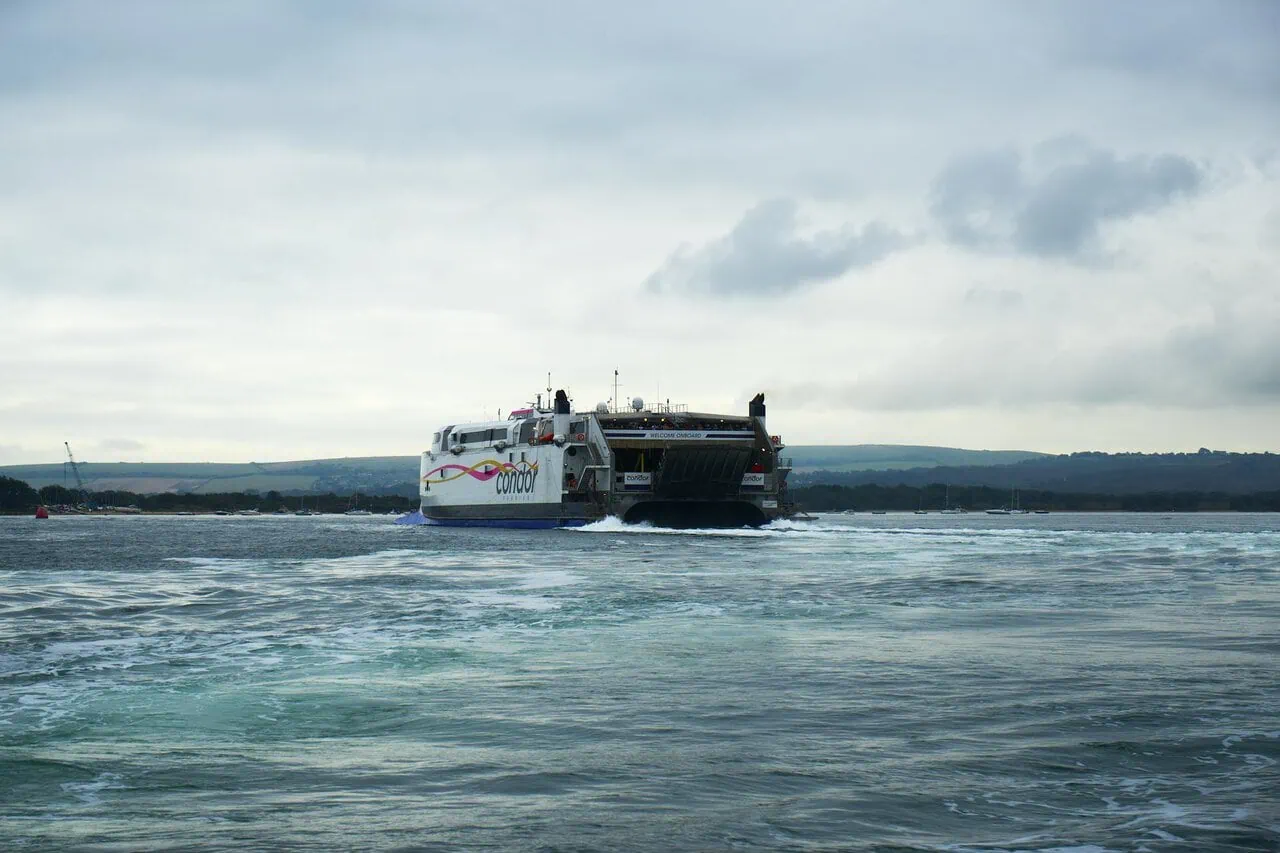
Fast ferries are designed primarily for speed. These vessels significantly reduce crossing times on routes such as Poole to Jersey or St Malo to Jersey, making them especially attractive for short breaks and day-trip style travel. Many passengers appreciate the shorter journey times, particularly on routes from France where crossings can sometimes take little more than an hour.
However, fast ferries can feel noticeably different during rough weather. Because they travel at higher speeds and often sit closer to the water, crossings may feel bumpier during strong winds or heavy seas. Travellers prone to seasickness sometimes find conventional ferries more comfortable during poor weather conditions, especially on longer UK crossings across the English Channel.
Conventional ferries are slower but usually offer more space, larger seating areas, improved vehicle capacity, and a calmer onboard atmosphere. They are particularly useful for travellers bringing cars, campervans, bicycles, pets, or substantial luggage. Overnight conventional ferry services from Portsmouth can additionally help travellers maximise time on the islands by travelling while sleeping rather than using daytime sailings.
How Long Do Channel Islands Ferries Take?
Crossing times for Channel Islands ferries vary significantly depending on the departure port, weather conditions, vessel type, and whether intermediate island stops are included during the journey. Some crossings from France are surprisingly short, while certain UK sailings may take most of the day or operate overnight.
The fastest international route is usually St Malo to Jersey, where high-speed ferries can complete the crossing in approximately 1 hour 15 minutes to 1 hour 30 minutes under good conditions. This short distance highlights just how geographically close the Channel Islands are to France compared with mainland Britain.
UK crossings are typically longer. Fast ferries from Poole to Jersey often take around 4 to 5 hours, while conventional ferry services from Portsmouth may take substantially longer depending on sailing schedules and whether ferries stop at multiple islands during the route. Overnight sailings naturally increase total travel time but may feel more convenient for some travellers.
Inter-island ferry times are usually much shorter. Routes such as Guernsey to Herm may take only around 20 minutes, while crossings to Sark are commonly under an hour. However, travellers should always remember that weather conditions in the English Channel can affect sailing times significantly, particularly during winter or periods of rough seas.
Can You Take a Car on Channel Islands Ferries?
Yes. Most major Channel Islands ferry routes allow passengers to bring vehicles, particularly on sailings operated by larger ferries between the UK, France, Jersey, and Guernsey. Bringing a car can provide substantial flexibility, especially for travellers planning longer stays or exploring multiple coastal areas across the islands.
Vehicle ferry access is especially useful for travellers from southern England because it allows camping equipment, bicycles, sports gear, and larger luggage to be transported far more easily than on flights. Campervans and motorcycles are also commonly transported on major ferry routes, although space can become limited during busy summer periods.
However, vehicle practicality varies between islands. Jersey and Guernsey both maintain full road networks suitable for cars, while smaller islands such as Sark prohibit private cars entirely. Visitors arriving into Sark therefore leave vehicles behind before continuing as foot passengers on local ferries.
Travellers should additionally remember that the islands have their own driving rules and speed limits. Roads can become narrow and congested in places, particularly during peak summer tourism periods. Parking availability may also vary depending on accommodation location and island size, especially in older harbour areas such as St Helier and St Peter Port.

Foot Passenger Ferry Travel
Travelling as a foot passenger is extremely common on Channel Islands ferries, particularly for visitors taking shorter breaks, island hopping trips, or day excursions from nearby islands and France. In many cases, foot passenger travel is actually easier than bringing a vehicle because town centres, ports, and accommodation areas often sit relatively close together.
Both Jersey and Guernsey are manageable without cars for many visitors, especially those staying near St Helier or St Peter Port. Public buses, taxis, cycling routes, and walking infrastructure allow travellers to explore substantial parts of the islands without needing to drive themselves.
Foot passenger travel is especially important for routes toward smaller islands such as Herm and Sark, where private cars are either absent or heavily restricted. Visitors commonly arrive carrying only day bags or overnight luggage before exploring on foot, by bicycle, or using local transport services.
One advantage of travelling without a vehicle is simpler boarding and check-in procedures. Foot passengers generally face fewer logistical complications compared with vehicle travellers, particularly during busy summer sailings. However, travellers should still arrive at ferry terminals with sufficient time because Channel Islands ferry security and boarding procedures can vary depending on route and operator.
Channel Islands Ferry Prices Explained
Prices for Channel Islands ferries vary heavily depending on route, season, vessel type, and whether passengers are travelling with vehicles. Peak summer sailings and school holiday periods are usually significantly more expensive than quieter winter crossings or shoulder-season travel.
The shortest and cheapest international crossings are often the routes between France and the islands. Fast ferries from St Malo to Jersey can sometimes offer relatively affordable foot passenger pricing, particularly when booked well in advance. Meanwhile, longer UK routes from Poole and Portsmouth generally cost more because of increased sailing distances and operating costs.
Vehicle transport can increase prices substantially. Cars, campervans, motorcycles, and trailers all attract additional charges, while premium cabin upgrades or onboard seating options may further increase costs on overnight sailings. During busy summer periods, vehicle space sometimes sells out long before standard passenger tickets.
Inter-island ferries are usually cheaper than international routes, although seasonal demand still affects pricing. Day trips to islands such as Sark and Herm remain especially popular during summer, meaning sailings can become busy and more expensive during peak tourism weeks. Travellers wanting the best prices should usually book ferry tickets as early as possible, particularly for vehicle travel or holiday-period crossings.
Best Time to Travel by Ferry
For most travellers, the best period for using Channel Islands ferries is between May and September, when sea conditions are generally calmer, ferry frequencies increase, and the islands experience their warmest and sunniest weather. This period also supports the widest range of inter-island services, particularly toward smaller destinations such as Sark and Herm.
Summer offers the strongest overall travel experience because ferry schedules become more reliable and tourism infrastructure across the islands operates at full capacity. Outdoor cafés, beaches, walking routes, coastal attractions, and harbour areas are all busiest during this period, creating the classic Channel Islands atmosphere many visitors expect.
However, peak summer also brings higher prices and heavier passenger volumes. School holidays, bank holiday weekends, and major summer events can make ferries significantly more crowded, especially on popular routes such as St Malo to Jersey or inter-island day trips from Guernsey. Vehicle spaces may sell out weeks in advance during peak periods.
Spring and early autumn can offer an excellent balance between weather and crowd levels. During these shoulder seasons, ferries are often quieter while temperatures remain comfortable enough for walking, sightseeing, and coastal exploration. Winter travel is still possible, but travellers should expect fewer sailings, rougher seas, and a greater risk of weather-related disruption.

Winter Weather & Ferry Disruption Risks
The English Channel can become extremely unpredictable during winter, and weather disruption is one of the most important factors travellers should consider when planning Channel Islands ferry travel outside the main summer season.
Strong winds, rough seas, storms, and poor visibility can all affect sailing schedules, particularly for high-speed ferries. Fast ferries are generally more vulnerable to cancellation during difficult weather conditions because rough sea states can make crossings uncomfortable or unsafe. Conventional ferries often continue operating more reliably during poorer conditions, although delays still occur regularly during severe winter weather.
Smaller inter-island routes are usually the most vulnerable to disruption. Sailings toward Sark, Herm, and Alderney may be delayed or cancelled more frequently because smaller harbours and exposed routes are more heavily affected by changing sea conditions. Travellers planning tight onward schedules should therefore build flexibility into winter itineraries wherever possible.
Winter disruption can also create knock-on effects across accommodation bookings, onward transport, and flights. Visitors travelling to the islands during colder months should therefore monitor ferry operator updates carefully and consider travel insurance covering weather-related cancellations or delays. Although winter ferry travel can still be rewarding, it requires significantly more flexibility compared with peak summer conditions.
Ferry Travel with Pets
Travelling with pets on Channel Islands ferries is generally possible on most major routes, although rules vary depending on the ferry operator, sailing type, and departure country. Travellers bringing dogs or other pets should always check official requirements carefully before booking because documentation and onboard arrangements can differ substantially.
Routes between the UK and the islands are usually relatively straightforward for pet owners, although specific carrier rules still apply. Pets may sometimes remain inside vehicles during crossings, while other services require designated pet-friendly seating or onboard kennel arrangements depending on the vessel.
Travellers arriving from France or continuing onward into Europe should additionally verify animal health and entry requirements carefully. Pet passports, microchips, vaccinations, and veterinary documentation may all be required depending on the route and current regulations. Rules can change periodically, particularly after wider UK and EU border policy updates.
The islands themselves are generally very welcoming for dog owners. Coastal walks, beaches, rural lanes, and outdoor cafés make destinations such as Jersey, Guernsey, and Sark particularly attractive for travellers bringing pets. However, smaller islands and busy summer ferries may require more careful planning because accommodation and transport capacity can become limited during peak tourism periods.
Accessibility on Channel Islands Ferries
Accessibility standards on Channel Islands ferries vary depending on vessel type and route, although larger ferries serving Jersey and Guernsey generally provide substantially better facilities than smaller inter-island boats.
Major ferries operated on UK and French routes commonly include accessible seating areas, lifts, toilets, and assistance services for passengers with reduced mobility. Travellers requiring additional support should still notify ferry operators in advance wherever possible because boarding arrangements and port infrastructure differ between terminals.
Ports such as St Helier Harbour and St Peter Port are relatively accessible compared with smaller island harbours, although historic town layouts and steep streets nearby can still create challenges for some visitors once ashore. Travellers visiting islands such as Sark should prepare for more limited infrastructure because the island’s transport systems and harbour access are much more traditional and physically demanding.
Sea conditions can also affect accessibility. Rough crossings, steep boarding ramps, and weather-related changes occasionally create additional challenges even on larger ferries. Travellers with mobility concerns should therefore consider crossing length, vessel type, and seasonal weather carefully when choosing routes between the Channel Islands and mainland ports.
Channel Islands Ferry Travel from France vs the UK
One of the most interesting aspects of Channel Islands ferry travel is the choice between arriving via the UK or directly from France. Although the islands are politically linked with Britain, geographically they sit far closer to the French coast, which creates very different travel experiences depending on the chosen route.
Travelling from France is often faster and more convenient. Routes such as St Malo to Jersey are relatively short and can feel more like regional coastal crossings than major international journeys. For travellers already exploring Normandy or Brittany, adding the Channel Islands into a wider France itinerary can therefore be surprisingly simple.
UK ferry routes usually involve longer crossings but may feel more convenient for travellers already based in southern England or bringing vehicles from the UK mainland. Ports such as Poole and Portsmouth provide strong motorway and rail connections, making the islands accessible without needing additional European travel arrangements first.
The choice often depends on wider itinerary planning. Travellers combining the islands with UK rail journeys, southern England road trips, or British coastal travel may naturally prefer UK sailings. Meanwhile, visitors already touring western France often discover that French ferry routes provide a far quicker and more efficient way to access the Channel Islands than travelling back through Britain first.

Rupert’s Handy Travel Tips
Rupert always recommends treating the Channel Islands as an island hopping destination rather than visiting only one island. Even short ferry crossings can completely change the atmosphere of a trip, especially when moving between larger islands such as Jersey and smaller places like Sark or Herm.
- Book vehicle ferry spaces early during summer because popular sailings can sell out well in advance.
- Travellers prone to seasickness may prefer conventional ferries instead of fast ferries during rough weather.
- Use Guernsey as the main base for visiting Sark and Herm.
- Allow flexibility during winter because storms and rough seas can disrupt ferry schedules.
- Travelling from St Malo is often much faster than travelling from southern England.
Want to meet the reindeer behind our travel tips? Find out more in our page Who is Rupert?.



Frequently Asked Questions About Channel Islands Ferries
Can you take a ferry to the Channel Islands from the UK?
Yes. Major ferry routes operate from ports such as Poole and Portsmouth to islands including Jersey and Guernsey.
Can you travel to the Channel Islands from France?
Yes. Fast ferry routes connect the islands with French ports such as St Malo, Granville, and other Norman coastal towns during parts of the year.
Which is the best Channel Island for island hopping?
Many travellers use Guernsey as the best island hopping base because ferries toward Sark and Herm depart regularly from St Peter Port.
Are cars allowed on Channel Islands ferries?
Yes. Most major ferry routes allow vehicle transport, although some smaller islands such as Sark do not allow private cars once you arrive.
What is the fastest Channel Islands ferry route?
The route between St Malo and Jersey is usually the fastest international crossing, often taking around 1 hour 15 minutes to 1 hour 30 minutes.
Do Channel Islands ferries get cancelled in bad weather?
Yes. Rough seas and storms can occasionally disrupt ferry schedules, especially during winter and on smaller inter-island routes.
Further Reading & Related Guides
Travellers planning journeys around the Channel Islands should also read our detailed airline guides covering Aurigny Air Services who play an important role in regional transport between the islands and the UK mainland. These guides explain routes, onboard experience, baggage rules, and the realities of flying around smaller island airports.
Travellers interested in the islands’ wartime history should also read our detailed Channel Islands Dark Tourism Guide, covering Nazi occupation sites, German bunkers, Jersey War Tunnels, Atlantic Wall fortifications, and the remarkable WWII history hidden across Jersey, Guernsey, and Alderney.
If you are sailing from the French coast rather than the UK mainland, our St Malo Ferry Routes guide covers the Brittany crossings to Jersey and Guernsey, while the Cherbourg Ferry Port guide explains the Normandy alternative for reaching the islands.
For travellers wanting reliable mobile connectivity across multiple islands and countries, our eSIM Apps Guide explains how to stay connected while travelling between the UK, France, and the Channel Islands without relying on expensive roaming charges or physical SIM card swaps.