Reviewed by our editorial team Updated
Why the Jack the Ripper Story Still Fascinates London Visitors
More than 130 years after the Whitechapel murders, the story of Jack the Ripper continues to attract visitors from around the world. Few criminal cases have embedded themselves so deeply into the identity of a city in the same way that the Ripper murders became tied to the dark history of Victorian London. The combination of mystery, poverty, fear, media hysteria, and the fact that the killer was never officially identified has created one of the world’s most enduring true crime legends.
Part of the fascination comes from the setting itself. The murders took place in the overcrowded streets and alleyways of Whitechapel, an area that was once among the poorest districts in Britain. Visitors exploring the East End today still encounter narrow lanes, historic pubs, Victorian architecture, and hidden courtyards that preserve fragments of nineteenth century London. Even though much of the original Whitechapel has changed, enough survives to create an atmosphere unlike anywhere else in the city.
The case also transformed journalism and policing forever. Newspapers competed aggressively for readers during the autumn of 1888, publishing sensational headlines and graphic rumours that spread panic throughout London. The name “Jack the Ripper” itself came from a letter supposedly sent to the press, helping create one of history’s first true media-driven criminal legends. Modern visitors are often surprised by how much of the story revolves around Victorian society itself, rather than simply the murders.
Today, a Jack the Ripper tour in London is less about horror and more about understanding the realities of Victorian life. The best tours focus on the human stories behind the case, the conditions in the East End, and the social issues that shaped Whitechapel during the late nineteenth century. When approached respectfully, the experience becomes a fascinating exploration of London’s history rather than simple sensationalism.
London transport status
Live from Transport for London.
Powered by TfL Open Data
Live service status for the London Underground, DLR, London Overground, Elizabeth line, London Trams, river buses and the cable car, updated continuously from Transport for London.
Quick Facts About Jack the Ripper
| Category | Details |
|---|---|
| Main Area | Whitechapel & Spitalfields, East London |
| Murders Took Place | 1888 |
| Most Visited Sites | Mitre Square, Hanbury Street, Ten Bells Pub |
| Nearest Tube Stations | Aldgate East, Whitechapel, Liverpool Street |
| Typical Walking Time | 2 to 3 hours |
| Best Time to Visit | Evening tours for atmosphere, daytime for photography |
| Tour Prices | Usually £15 to £30 ($19–$38 / €17–€34) |
| Self Guided Possible? | Yes |
| Area Safety | Generally safe and busy, especially around Brick Lane and Spitalfields |
| Best Nearby Attraction | Old Spitalfields Market |
| Museum Option | Jack the Ripper Museum |
| Photography Opportunities | Victorian streets, pubs, alleyways, churches |
| Accessibility | Mostly flat walking route, though some pavements are uneven |
Best if you want daily housekeeping and a front desk. Filter by area first, then by price.
Check availabilityBest for families, or any stay past about four nights. A kitchen and a washing machine start paying for themselves.
Browse rentalsBest as a last check before booking. Compares London hotel rates across several sites in one search.
Compare ratesUnderstanding Victorian Whitechapel
To understand why the Jack the Ripper murders shocked Britain so deeply, it is essential to understand what Whitechapel was like during the late nineteenth century. Victorian London was the largest city on Earth, but beneath its wealth and imperial power existed extreme poverty, overcrowding, and disease. The East End represented the harshest side of that reality.
Thousands of people lived in cramped lodging houses and slum buildings across Whitechapel and nearby Spitalfields. Entire families often shared single rooms, while many others slept in common lodging houses where beds were rented by the night. Streets were poorly lit, sanitation was terrible, and violent crime was common. For many Londoners living in wealthier western districts, the East End felt almost like another world entirely.
The district was also home to large immigrant communities, particularly Jewish refugees fleeing persecution in Eastern Europe and Russia. This created both cultural diversity and social tension. Victorian newspapers frequently exaggerated crime in Whitechapel, helping fuel fear and prejudice throughout London. The murders intensified these anxieties dramatically, leading to public panic and constant rumours about the killer’s identity.
Walking through modern Whitechapel today, visitors often struggle to imagine the conditions of 1888. Much of the original slum housing has disappeared, replaced by modern buildings, offices, and apartment developments. However, fragments of Victorian London remain hidden between newer streets. Historic pubs, old churches, surviving alleyways, and parts of the original street layout still allow visitors to experience traces of the environment where the murders took place.
The case also exposed major weaknesses in Victorian policing. Detectives lacked modern forensic science, fingerprint analysis, CCTV, and reliable communication systems. Officers patrolled dark streets on foot, relying heavily on witness statements and basic observation. The inability of the police to identify the killer damaged public confidence and helped turn the case into one of the world’s most famous unsolved mysteries.
Who Were the Canonical Five Victims?
Modern historians generally recognise five victims as the so-called “Canonical Five” associated with Jack the Ripper. While debates continue over whether the killer claimed additional victims, these five women are most consistently linked to the murders that terrorised Whitechapel during 1888.
The first was Mary Ann Nichols, whose body was discovered in Buck’s Row on 31 August 1888. Nichols had experienced severe poverty and instability, like many women living in Whitechapel at the time. Her murder shocked local residents, but few realised it would become the beginning of a much larger nightmare.
Just over a week later, Annie Chapman was murdered near Hanbury Street. Chapman’s death intensified fears across the East End because of the increasingly brutal nature of the crimes. The narrow streets and cramped courtyards around Hanbury Street remain one of the most atmospheric parts of many modern Jack the Ripper walking tours.
The third victim, Elizabeth Stride, was discovered in Berner Street, now called Henriques Street. Unlike some of the other victims, Stride’s injuries led investigators to speculate that the killer may have been interrupted. Her death occurred on the same night as the murder of Catherine Eddowes, creating what became known as the “Double Event” of 30 September 1888.
Eddowes was found in Mitre Square, one of the most visited locations on modern Ripper tours. Today, Mitre Square sits within London’s financial district, surrounded by office buildings and modern infrastructure. Yet despite the redevelopment, the square still carries a strange atmosphere at night, particularly during quiet evening walking tours.
The final canonical victim was Mary Jane Kelly, murdered in her room on Dorset Street in November 1888. Kelly’s death is widely considered the most horrific of the murders and marked the effective end of the main Ripper killing spree. Dorset Street itself no longer survives in its original form, having disappeared during later redevelopment, but the surrounding area remains central to the story of Victorian Whitechapel.
One of the most important aspects of modern historical interpretation is remembering that these women were real people living in extremely difficult conditions. The best modern guides increasingly focus on their lives and circumstances rather than treating them simply as characters within a famous mystery.
Jack the Ripper Walking Route Overview
A self guided Jack the Ripper walk through London is one of the most atmospheric ways to explore the darker side of the city’s history. Most routes focus on the streets of Whitechapel, Spitalfields, and the edge of the modern City of London, where many of the key events of 1888 unfolded within surprisingly short distances of one another.
Most visitors begin near Aldgate East Underground Station, which provides excellent access via the District Line, Hammersmith & City Line, and the Elizabeth Line through nearby Whitechapel Station. Starting here places you immediately inside the heart of the old East End. The surrounding streets still retain fragments of Victorian character, particularly during the evening when crowds thin out and the modern glass towers of the City create a dramatic contrast with the older alleyways below.
A typical Jack the Ripper tour London route covers around 2 to 3 miles, depending on detours and additional stops. Most guided walks last between two and two and a half hours, although dedicated history enthusiasts can easily spend longer exploring side streets, churches, pubs, and markets connected to the case. The route itself is mostly flat and manageable, making it accessible for most visitors, though some pavements remain uneven in older sections of the East End.
The atmosphere changes dramatically depending on the time of day. Evening walks are by far the most popular because the narrow lanes, dim lighting, and quieter streets recreate some of the tension associated with Victorian Whitechapel. Areas around Mitre Square, Gunthorpe Street, and the old market streets become particularly atmospheric after dark. However, daytime visits offer advantages too, especially for photography and exploring architectural details that are easier to appreciate in natural light.
Many visitors are surprised by how modern parts of Whitechapel now feel. Glass office towers, luxury apartments, cafés, and creative studios sit alongside historic churches and surviving Victorian pubs. This contrast is actually one of the most fascinating aspects of the walk. The route becomes not only a journey into the history of the murders, but also a look at how London constantly rebuilds itself while traces of the past remain hidden beneath the surface.
| Stop | Location | Historical Importance | Nearest Station | Approx Visit Time | Free to Visit |
|---|---|---|---|---|---|
| Aldgate East | Whitechapel | Common starting point for tours | Aldgate East | 10 mins | Yes |
| Durward Street | Whitechapel | Site linked to Mary Ann Nichols | Whitechapel Station | 10 mins | Yes |
| Hanbury Street | Spitalfields | Annie Chapman murder location | Liverpool Street | 15 mins | Yes |
| Wilkes Street | Spitalfields | Preserved Victorian atmosphere | Liverpool Street | 10 mins | Yes |
| Fournier Street | Spitalfields | Historic Huguenot houses and East End setting | Shoreditch High Street | 15 mins | Yes |
| Mitre Square | City of London | Catherine Eddowes murder site | Aldgate | 15 mins | Yes |
| Gunthorpe Street | Whitechapel | Area connected to lodging houses and investigations | Whitechapel Station | 10 mins | Yes |
| Ten Bells Pub | Spitalfields | Pub historically associated with victims | Liverpool Street | 20 mins | No |
| Christ Church Spitalfields | Spitalfields | Landmark dominating the old East End skyline | Liverpool Street | 20 mins | Yes |
Major Jack the Ripper Sites to Visit
One of the reasons the Jack the Ripper story continues to attract visitors is that many of the locations connected to the case can still be explored today. Although redevelopment has transformed large parts of the East End, enough survives to make a walking tour feel immersive and historically grounded.
Perhaps the most famous surviving location is Mitre Square, where Catherine Eddowes was discovered in September 1888. Today the square lies within London’s financial district, surrounded by modern office buildings and glass towers. During busy weekday hours it can feel surprisingly ordinary, but visiting later in the evening creates a very different atmosphere. The narrow approaches into the square still give visitors a sense of how isolated the area could feel during the Victorian era.
Another major stop is Hanbury Street, associated with the murder of Annie Chapman. While the original buildings connected to the case no longer survive, the street remains one of the most historically significant areas on any Whitechapel murder tour. Nearby streets still preserve elements of the old East End street pattern, helping visitors visualise the crowded conditions of Victorian London.
The area around the former Dorset Street is equally important. Once described as one of the worst streets in London, Dorset Street became infamous for poverty, violence, overcrowding, and criminal activity. Although the original street disappeared during twentieth century redevelopment, the surrounding district near Brushfield Street and Spitalfields still forms a key part of modern Ripper tours. The transformation of the area into a fashionable district filled with restaurants, cafés, and offices creates a striking contrast with its darker past.
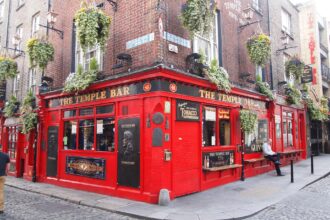
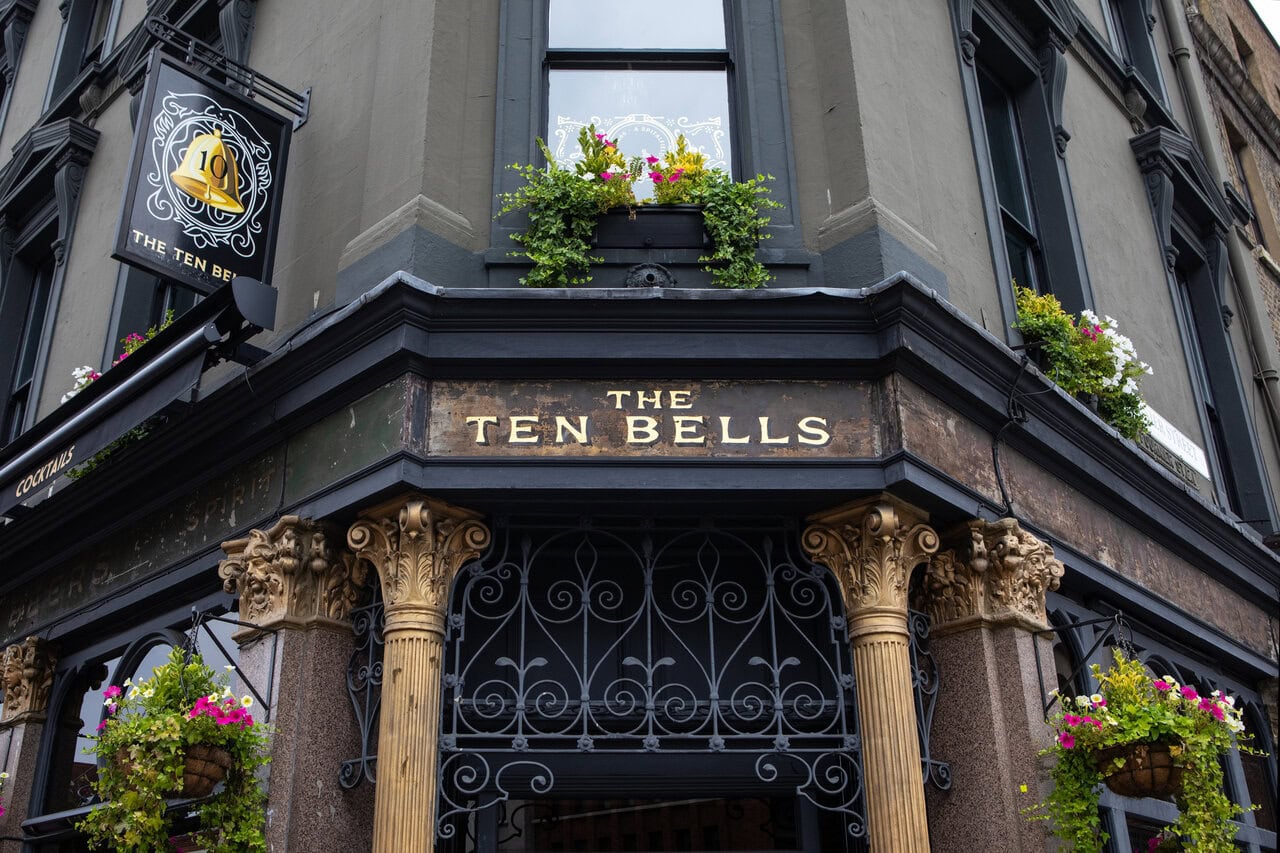
Many tours also stop outside the famous Ten Bells Pub, one of the most recognisable surviving Victorian pubs linked to the Ripper story. The pub existed during the time of the murders and is believed to have been visited by several victims. Today it remains one of the most photographed locations in the East End, combining historic interiors with a direct connection to Victorian Whitechapel.
Other important locations include Christ Church Spitalfields, whose towering architecture dominates the skyline of the area, along with sections of Commercial Street, Gunthorpe Street, and the old market districts surrounding Spitalfields Market. Together, these locations help visitors understand how compact the geography of the murders actually was. Many key sites lie only minutes apart on foot, showing how intensely concentrated the fear and panic became during the autumn of 1888.
Best Jack the Ripper Tours in London
There are dozens of Jack the Ripper tours in London, but the quality varies enormously. Some focus heavily on sensationalism and horror themes, while others approach the story through serious historical research and social history. Choosing the right style of tour makes a major difference to the overall experience.
Traditional walking tours remain the most popular option. These usually begin near Aldgate East or Tower Hill and guide visitors through Whitechapel’s historic streets over the course of two hours. The best guides combine storytelling with detailed historical context, explaining not only the murders themselves but also the poverty, immigration, policing failures, and media hysteria that shaped Victorian London.
Historian-led tours are increasingly popular among travellers looking for a more balanced and respectful experience. Rather than focusing purely on gruesome details, these tours examine the broader social history of the East End. Many also discuss the lives of the victims themselves, helping shift attention away from the mythology surrounding the killer. For visitors interested in genuine historical depth, these are usually the strongest option.
Some companies offer more theatrical experiences, with guides dressed in Victorian clothing or carrying lanterns through the streets at night. These tours can be entertaining and atmospheric, particularly for first time visitors to London, although they sometimes prioritise drama over accuracy. Evening tours naturally create stronger atmosphere because Whitechapel’s narrow streets and old alleyways still feel surprisingly mysterious after dark.
Private tours are another option for visitors wanting a quieter or more personalised experience. These often allow greater flexibility, additional historical discussion, and opportunities to explore less visited locations beyond the standard tourist route. Photography enthusiasts also tend to prefer private tours because they allow more time at individual locations.
The best booking periods are usually between September and March, when darker evenings create stronger atmosphere for walking tours. Summer tours remain busy, but daylight lasts much longer and reduces some of the eerie character that makes Whitechapel famous. Weekend evenings tend to be the busiest, particularly around Spitalfields and Brick Lane, so weekday tours often feel more immersive.
The Jack the Ripper Museum: Is It Worth Visiting?
Located near Aldgate East Station, the Jack the Ripper Museum is one of London’s most controversial dark tourism attractions. Since opening, it has attracted both strong interest and significant criticism, making it a fascinating but divisive addition to the city’s true crime tourism scene.
The museum focuses heavily on recreating the atmosphere of Victorian Whitechapel. Inside, visitors move through themed rooms containing reconstructed police offices, lodging house bedrooms, forensic displays, newspaper reproductions, and Victorian artefacts linked to the period. Wax figures, sound effects, and dramatic lighting are used throughout the experience to immerse visitors in the tension and fear surrounding the murders.
One of the museum’s strengths is its attempt to place the crimes within the broader social conditions of the East End. Exhibits covering overcrowding, poverty, prostitution, and policing provide useful context for visitors unfamiliar with Victorian London. Some sections are particularly effective at showing how difficult life was for many women living in Whitechapel during the late nineteenth century.
However, the museum has also faced criticism for sensationalism. Some historians and campaigners argue that certain exhibits focus too heavily on graphic details and risk turning real victims into entertainment. This debate reflects wider discussions surrounding dark tourism in London and the ethics of presenting true crime history to paying visitors.
For many travellers, the museum works best when combined with a proper walking tour of Whitechapel itself. The streets, churches, pubs, and surviving Victorian locations provide a much stronger sense of place than indoor exhibits alone. Visitors particularly interested in Victorian crime history will likely find the museum worthwhile, while casual visitors may prefer focusing primarily on the outdoor walking experience.
The museum’s location also makes it easy to combine with nearby attractions such as Spitalfields Market, Brick Lane, The Ten Bells Pub, and the historic streets around Whitechapel. For dark tourism enthusiasts exploring London’s East End, it can serve as a useful additional stop rather than the main focus of the experience.
Best for finding routes the airlines do not sell as a single ticket. Combines carriers to bring the fare down.
Search flightsBest for short trips. Install the eSIM at home and arrive in London with working data, no shop queue.
Browse eSIMsBest when public transport has stopped, or when you are travelling with children and bags.
Book a transferVictorian Crime, Poverty and the East End
To fully understand the fear surrounding the Jack the Ripper murders, visitors need to understand just how difficult life was in the East End of London during the late nineteenth century. Victorian Whitechapel was not simply poor by modern standards. It was one of the most overcrowded and desperate urban districts anywhere in Europe.
By the late 1800s, thousands of people were arriving in London searching for work, safety, and opportunity. Many ended up trapped in overcrowded lodging houses around Whitechapel, Spitalfields, and Stepney. Entire families sometimes lived in single rooms, while others paid nightly fees for shared beds in filthy common lodging houses. Disease spread easily, sanitation was poor, and crime rates were high throughout the district.
The East End also became home to large immigrant communities, particularly Jewish refugees escaping persecution in Eastern Europe and Russia. While these communities helped shape the rich culture of modern East London, they also faced prejudice and suspicion from sections of Victorian society. During the Ripper murders, newspapers and rumours frequently blamed outsiders and immigrants, increasing tensions across Whitechapel.
Crime itself was an everyday reality in many parts of the East End. Pickpocketing, robbery, gang violence, prostitution, and alcohol abuse were widespread, often driven by extreme poverty rather than organised criminal networks. Modern myths about Victorian London sometimes exaggerate the existence of secret gangs and hidden underground societies, but the reality was usually far more bleak and ordinary. Survival was the dominant concern for many residents.
One of the most striking things about walking through modern Whitechapel today is how dramatically the area has changed. Stylish cafés, restored markets, office developments, and expensive apartments now occupy districts once associated with some of the harshest living conditions in Britain. Yet traces of Victorian London still survive in old pub façades, narrow alleyways, churchyards, and fragments of original street layouts hidden among newer buildings.
For many visitors, this broader social history becomes one of the most fascinating aspects of a Jack the Ripper walking tour. The murders themselves form only part of the story. The wider reality of Victorian poverty, social inequality, and rapid urban growth is what truly explains why the case became such a defining moment in London’s history.
Theories About Jack the Ripper
One of the biggest reasons the Jack the Ripper case continues to fascinate people around the world is the simple fact that the killer was never conclusively identified. More than a century later, historians, detectives, journalists, and amateur researchers still debate who committed the murders in Whitechapel during 1888.
Over the decades, dozens of suspects have been proposed. Some theories focus on local criminals or violent individuals living in the East End at the time. Others suggest doctors, butchers, sailors, police officers, or even members of the British establishment. The lack of reliable forensic evidence means that no single theory has ever been universally accepted.
Among the most famous suspects was Montague Druitt, a barrister and schoolteacher whose death shortly after the murders drew police attention. Another commonly discussed figure is Aaron Kosminski, a Polish Jewish barber living in Whitechapel who was later institutionalised for mental illness. Some modern researchers believe surviving evidence points most strongly toward Kosminski, although historians remain divided on the reliability of the claims.
Perhaps the most controversial theories involve supposed royal conspiracies and cover ups involving members of the British royal family or high society. These ideas became especially popular after books and films in the twentieth century dramatised the case. While such theories attract public attention, most serious historians view them with scepticism due to limited supporting evidence.
Modern forensic attempts have also reignited interest in the case. Researchers have examined old letters, photographs, witness statements, and even disputed DNA evidence connected to artefacts supposedly linked to the murders. However, the age of the evidence and uncertainty surrounding many historical objects make definitive conclusions extremely difficult.
What makes the mystery so enduring is that every theory contains gaps and contradictions. The surviving evidence is incomplete, many police files were lost or destroyed, and witness testimony from the period was often unreliable. In many ways, the identity of Jack the Ripper has become less important than the mythology surrounding the case itself. The mystery continues because there is still no universally accepted answer.
Dark Tourism Ethics: Visiting Ripper Sites Respectfully
Modern interest in Jack the Ripper tourism raises important ethical questions. Unlike fictional horror stories, the Whitechapel murders involved real victims who lived difficult lives during one of London’s harshest historical periods. The best modern tours increasingly recognise this and encourage visitors to approach the subject with sensitivity rather than treating it as entertainment alone.
One of the biggest criticisms of some Ripper attractions is sensationalism. Graphic storytelling, exaggerated myths, and theatrical performances can sometimes overshadow the historical realities of Victorian poverty and violence. Many historians argue that focusing purely on the killer risks turning the victims into secondary figures within their own story.
This is why many modern Jack the Ripper walking tours in London now spend far more time discussing the lives of the women themselves. Understanding the social conditions of Whitechapel helps visitors see the murders within the wider context of inequality, homelessness, unemployment, and vulnerability faced by many women in Victorian London.
Visitors should also remember that Whitechapel is not a museum district frozen in time. It is a living neighbourhood where people work, live, and commute every day. Many of the streets connected to the murders are now residential or commercial areas filled with modern businesses, apartments, and local communities. Respectful behaviour matters, especially during evening tours when large groups gather in narrow streets.
Photography is generally permitted at most public locations, but visitors should avoid blocking pathways, disturbing residents, or treating the area like a theatrical set. Some locations, particularly around former lodging house areas and smaller side streets, are quiet residential spaces rather than tourist attractions.
Approached properly, dark tourism can actually deepen historical understanding rather than trivialise tragedy. The strongest London dark tourism experiences encourage visitors to think critically about poverty, inequality, media influence, policing, and social change. In this context, the Ripper story becomes more than a mystery. It becomes a lens through which to examine Victorian London itself.
Other Dark Tourism Sites Nearby
One of the advantages of exploring Jack the Ripper sites in London is that many of the city’s other major dark tourism attractions are located within relatively short distances of Whitechapel and the East End. Visitors interested in London’s darker history can easily combine multiple sites into a much broader historical itinerary.
One of the most significant nearby attractions is the Tower of London, which has witnessed centuries of imprisonment, executions, political intrigue, and royal conflict. Famous prisoners including Anne Boleyn, Guy Fawkes, and Sir Walter Raleigh were held within its walls. The Tower remains one of Britain’s most important historical landmarks and naturally complements the darker themes explored during a Ripper tour.
Another fascinating site is the Churchill War Rooms, located beneath Westminster. These underground bunkers served as Britain’s wartime command centre during the Second World War and preserve one of the most atmospheric underground historical spaces in London. Visitors interested in wartime history, bunkers, and hidden infrastructure often combine the War Rooms with East End dark tourism itineraries.
Near London Bridge, the Old Operating Theatre Museum provides a completely different type of historical experience. Hidden inside the attic of an old church, the museum explores Victorian surgery and medicine before modern anaesthetics and hygiene practices transformed healthcare. The preserved operating theatre offers an unsettling but fascinating insight into nineteenth century medical history.
The nearby Clink Prison Museum focuses on medieval punishment and crime, covering centuries of brutal prison conditions, torture methods, and criminal justice in London. While more theatrical in presentation than some historical museums, it remains one of the city’s best known crime history attractions.
Visitors exploring the East End should also consider Cross Bones Graveyard in Southwark, a former burial ground associated with London’s poorest communities and marginalised residents. The site has become one of the city’s most atmospheric hidden historical spaces, particularly during evening visits.
Together, these attractions show how broad dark tourism in London really is. The city’s history includes war, disease, poverty, crime, executions, political conflict, industrial hardship, and disaster stretching across nearly two thousand years. The Ripper story may be the most famous chapter, but it is only one part of London’s darker historical landscape.
Food, Pubs and Historic Stops Along the Route
One of the most enjoyable parts of exploring the Jack the Ripper tour London route is discovering how the modern East End blends historic streets with some of the city’s best food and pub culture. While Whitechapel was once associated with extreme poverty and overcrowding, today the district surrounding Spitalfields and Brick Lane has become one of London’s most vibrant neighbourhoods for cafés, restaurants, markets, and historic pubs.
The most famous stop is undoubtedly the Ten Bells Pub near Spitalfields Market. This Victorian pub is closely associated with the Ripper story and is believed to have been visited by several of the victims during the late nineteenth century. The exterior remains one of the most photographed locations on any Whitechapel murder tour, while inside, visitors still find decorative Victorian features and a historic atmosphere that feels deeply connected to old East London. Even travellers with little interest in true crime often stop here simply because it is one of the East End’s most iconic historic pubs.
Nearby Brick Lane offers a completely different side of the modern East End. Famous for its Bangladeshi restaurants, cafés, bakeries, and street art, the area highlights how dramatically Whitechapel and Spitalfields have evolved since Victorian times. Many visitors choose to combine an evening walking tour with dinner afterwards, particularly because Brick Lane remains lively well into the evening.
Traditional pie and mash shops can also still be found in parts of East London, preserving one of the city’s classic working class food traditions. These historic eateries provide a direct connection to the sort of affordable meals that would have existed during the Victorian era, although modern versions are obviously far more comfortable and hygienic than their nineteenth century equivalents.
Coffee culture has transformed the area too. Around Old Spitalfields Market and Commercial Street, independent cafés now occupy former warehouses and industrial buildings. This creates a fascinating contrast between the East End’s difficult past and its modern identity as one of London’s trendiest districts.
For visitors wanting a full evening itinerary, combining a Jack the Ripper walking tour, a historic pub stop, and dinner around Brick Lane creates one of the most atmospheric night experiences anywhere in London. The contrast between Victorian history and modern East End culture is part of what makes the area so compelling to explore.
How to Get to Whitechapel
Reaching the heart of the Jack the Ripper tour area is straightforward thanks to the excellent transport connections serving East London. Modern Whitechapel sits only minutes from the financial district and is now one of the best connected parts of the capital, particularly since the arrival of the Elizabeth Line.
For most visitors, Aldgate East Station is the best starting point. The station sits directly beside many of the key historical locations associated with the Whitechapel murders and is served by both the District Line and Hammersmith & City Line. Exiting here places visitors immediately within walking distance of Mitre Square, Whitechapel High Street, and several major tour meeting points.
The newer Whitechapel Station has become increasingly important because of the Elizabeth Line. This gives visitors fast direct connections from places such as Paddington, Heathrow Airport, Canary Wharf, and Liverpool Street. Travellers staying elsewhere in London often find the Elizabeth Line significantly quicker than older Underground routes.
Visitors arriving from major railway stations also have easy options. From Liverpool Street Station, many of the main Ripper sites can actually be reached on foot in around fifteen minutes. This walk through the edge of the City into Spitalfields creates an excellent introduction to the transition between modern London and the older East End streets connected to the murders.
Night transport is another major advantage for evening tours. The area remains busy and well connected long after midnight, with regular buses and Underground services nearby. London’s contactless payment system also makes travel extremely simple for tourists. Visitors can use bank cards, phones, or Oyster cards across all Tube and bus services without needing separate paper tickets.
Although Whitechapel once had a reputation for crime and rough conditions, modern visitors generally find the area busy, lively, and safe, particularly around Spitalfields, Brick Lane, and the main station areas. Like any major city, standard awareness is sensible at night, but the district is now one of London’s busiest cultural and tourist zones rather than the dangerous slum district associated with Victorian history.
Best if you would rather spend the money on London than on the room. Compare hostels by location and rating.
Search hostelsBest arranged before you fly rather than after. Covers claim handling, plus lounge access on eligible delays.
Explore AirHelp+Best if your room is not ready yet. Left luggage booked in advance, so you are not hunting for a locker.
Check storageRecommended Apps for Exploring London’s East End
Using the right apps can make exploring the Jack the Ripper sites in London significantly easier, especially for visitors navigating the Underground, planning evening routes, or locating historical streets hidden within the modern East End.
For transport, Citymapper remains one of the best apps for navigating London. The app provides highly accurate real time Underground, bus, walking, and rail directions throughout the city. Visitors moving between Whitechapel, Aldgate East, Liverpool Street, and other nearby stations will find it particularly useful because it automatically updates around delays and engineering works.
Google Maps is still essential for most self guided Ripper walks. Many historical locations are hidden within side streets or tucked between modern office buildings, making reliable mapping important. Google Maps also helps visitors identify nearby cafés, pubs, museums, and transport connections throughout the East End.
Visitors arriving from abroad should strongly consider using an eSIM app before exploring London. Reliable mobile data becomes extremely useful during walking tours, particularly when researching historical sites, checking routes, or booking transport late in the evening. London’s Underground system also increasingly supports mobile connectivity across many stations and lines.
Taxi and ride hailing apps are particularly useful after late evening tours. Uber, Bolt, and London’s black cab apps all operate heavily throughout East London. This gives visitors a safer and more convenient way to return to hotels after dark, especially during winter months when tours finish late at night.
Audio and podcast apps can also improve the experience dramatically. Many visitors now listen to historical true crime podcasts or Victorian London history episodes while exploring Whitechapel independently. Combining self guided walking with historical audio creates a more immersive experience without needing to join a large group tour.
For photography enthusiasts, weather apps are surprisingly important too. Whitechapel and Spitalfields become especially atmospheric during fog, rain, or colder evenings, conditions that naturally suit the Victorian atmosphere associated with the Ripper story. Planning around weather can genuinely improve the experience and create stronger photography opportunities around the old East End streets.

Rupert’s Handy Travel Tips
Rupert says the best Jack the Ripper tours in London are the ones that focus on the history of Victorian Whitechapel, not just the mystery itself. The atmosphere of the old East End is what makes these walks so memorable.
- Book an evening tour: the streets around Spitalfields and Whitechapel feel completely different after dark, making it the most atmospheric option.
- Wear comfortable shoes: many of the old streets have uneven pavements and the walk can last more than two hours.
- Combine the tour with dinner on Brick Lane: Rupert strongly recommends warming up afterwards with good food and a hot drink for one of the best evenings in East London.
- Use the Elizabeth Line where possible: it is now one of the fastest and easiest ways to reach the East End from central London and Heathrow Airport.
- Remember the victims were real people: Rupert believes the best tours are respectful, informative, and focused on understanding London’s history rather than sensationalism.
Want to meet the reindeer behind our travel tips? Find out more in our page Who is Rupert?.




Frequently Asked Questions About Jack the Ripper Tours
Is a Jack the Ripper tour in London scary?
Most tours are more historical than frightening. While some guides use dramatic storytelling to create atmosphere, the majority focus on Victorian history, policing, poverty, and the mystery surrounding the case rather than trying to create a horror experience.
Is Whitechapel safe at night?
Modern Whitechapel is generally safe and busy, especially around Brick Lane, Spitalfields, and the main Underground stations. Evening tours are extremely common and the area sees large numbers of tourists, commuters, and restaurant visitors every night.
Can you visit the original murder sites?
Several original locations connected to the murders can still be visited, including Mitre Square and parts of Hanbury Street. However, many original Victorian buildings no longer survive due to redevelopment across East London during the twentieth century.
How long does a Jack the Ripper walking tour take?
Most guided tours last between two and three hours. Self guided walks can take longer depending on how many historical sites, pubs, museums, or nearby attractions visitors choose to include.
What is the best time to do a Jack the Ripper tour?
Evening tours are generally considered the best because the streets feel more atmospheric after dark. Autumn and winter often create the strongest Victorian atmosphere due to colder weather and earlier sunsets.
Is the Jack the Ripper Museum worth visiting?
For visitors interested in Victorian crime history and the broader social history of Whitechapel, the museum can be worthwhile. However, many travellers find the outdoor walking experience itself more memorable than the museum exhibits.
Can you do a self guided Jack the Ripper walk?
Yes. Many visitors explore the area independently using online maps, guidebooks, podcasts, and walking route apps. However, professional guides often provide historical detail and context that is difficult to replicate alone.
Are there daytime Jack the Ripper tours?
Yes. Daytime tours operate throughout the year and are often better for photography and architecture. Evening tours are simply more popular because they create a stronger atmosphere.
Further Reading & Related London Guides
If exploring the darker side of London’s history has sparked your interest in the city itself, there are plenty of related guides that help build a much broader understanding of the capital. Many visitors who complete a Jack the Ripper tour London experience also explore the city’s wartime history, underground infrastructure, hidden streets, and historic transport systems, all of which reveal very different sides of London’s past. For travellers who enjoy tracing disasters through the city’s streets, our Great Fire of London Guide follows a similar walking format through the City of London, while our broader Dark Tourism Guide covers atmospheric and unsettling destinations across Britain and Europe.
Exploring the London Underground Guide is also highly recommended because many visitors use the Tube extensively while moving between Whitechapel, Westminster, Tower Hill, and other major historical areas. Understanding the network properly makes navigating London far easier, especially during evening walking tours and museum visits.
Finally, visitors interested in London’s major historical landmarks should continue into guides covering the Tower of London, and Westminster Abbey. These locations place the Ripper story within the much larger timeline of London’s history, stretching from medieval England through empire, war, industrialisation, and modern global city life.