Reviewed by our editorial team Updated
Why Visit Britain’s Nuclear Bunkers
Hidden beneath ordinary hillsides, forests, suburbs, and countryside fields across Britain lies one of the country’s strangest and most unsettling historical networks. Scattered across the UK are dozens of surviving nuclear bunkers, underground command centres, Cold War monitoring posts, and secret government facilities built for the possibility of nuclear war.
Unlike castles, cathedrals, or traditional museums, Britain’s nuclear bunkers feel intensely real and modern. These were not ancient ruins or symbolic structures. They were working facilities designed for a terrifying purpose: helping parts of the British state survive after a nuclear attack.
That realism is what makes visiting them so fascinating.
Inside many bunkers, visitors can still walk through original blast doors, narrow underground corridors, communications rooms, dormitories, control centres, and fallout monitoring areas left behind from the height of the Cold War. Some sites still contain original telephones, warning boards, generators, maps, military equipment, and emergency planning infrastructure frozen in time beneath the surface.
The atmosphere inside these bunkers is often unlike anywhere else in Britain. Deep underground, surrounded by concrete walls and low artificial lighting, it becomes easy to understand the fear that shaped Cold War Britain for decades. Many visitors are surprised by how immersive and unsettling the experience feels, particularly in larger sites such as Kelvedon Hatch, Hack Green, and Scotland’s Secret Bunker.
Britain’s bunker network also reveals a hidden side of modern history that many people barely know existed. During the Cold War, the government built extensive survival systems in preparation for nuclear conflict with the Soviet Union. Entire underground command networks were created to coordinate emergency services, military operations, communications, and fallout monitoring after a possible attack.
For travellers interested in dark tourism, Cold War history, abandoned infrastructure, military history, or unusual places hidden beneath Britain, these bunkers offer some of the country’s most unique visitor experiences.
They also combine extremely well with wider UK travel. Many bunkers sit close to major rail routes, road trip corridors, historic cities, and military museums, making them easy to include within broader itineraries around England, Scotland, and Wales.
Perhaps most importantly, Britain’s nuclear bunkers feel deeply connected to real historical fear. These were places built for what many believed could become the end of civilisation itself. Visiting them today offers a rare chance to step directly into that hidden world of secrecy, survival planning, and Cold War paranoia.
Why Britain Built Nuclear Bunkers
Across Britain, hidden beneath forests, farmland, suburbs, and ordinary streets, lies the remains of a vast Cold War survival network built during one of the most dangerous periods in modern history. These underground facilities, now known collectively as Britain’s nuclear bunkers, were constructed in preparation for the possibility of nuclear war between the Western powers and the Soviet Union.
Following the end of World War II, relations between the former Allies rapidly deteriorated. By the late 1940s and 1950s, Britain faced the very real possibility of long-range nuclear attack. As the Cold War escalated, British governments feared that cities, ports, military bases, and industrial areas could become targets during a future conflict.
The response was the creation of a nationwide network of bunkers, monitoring posts, command centres, and protected government facilities designed to keep parts of the state functioning after a nuclear strike. Some sites were intended to house military personnel and civil defence teams, while others were built for regional government officials, communications staff, and scientific monitoring units.
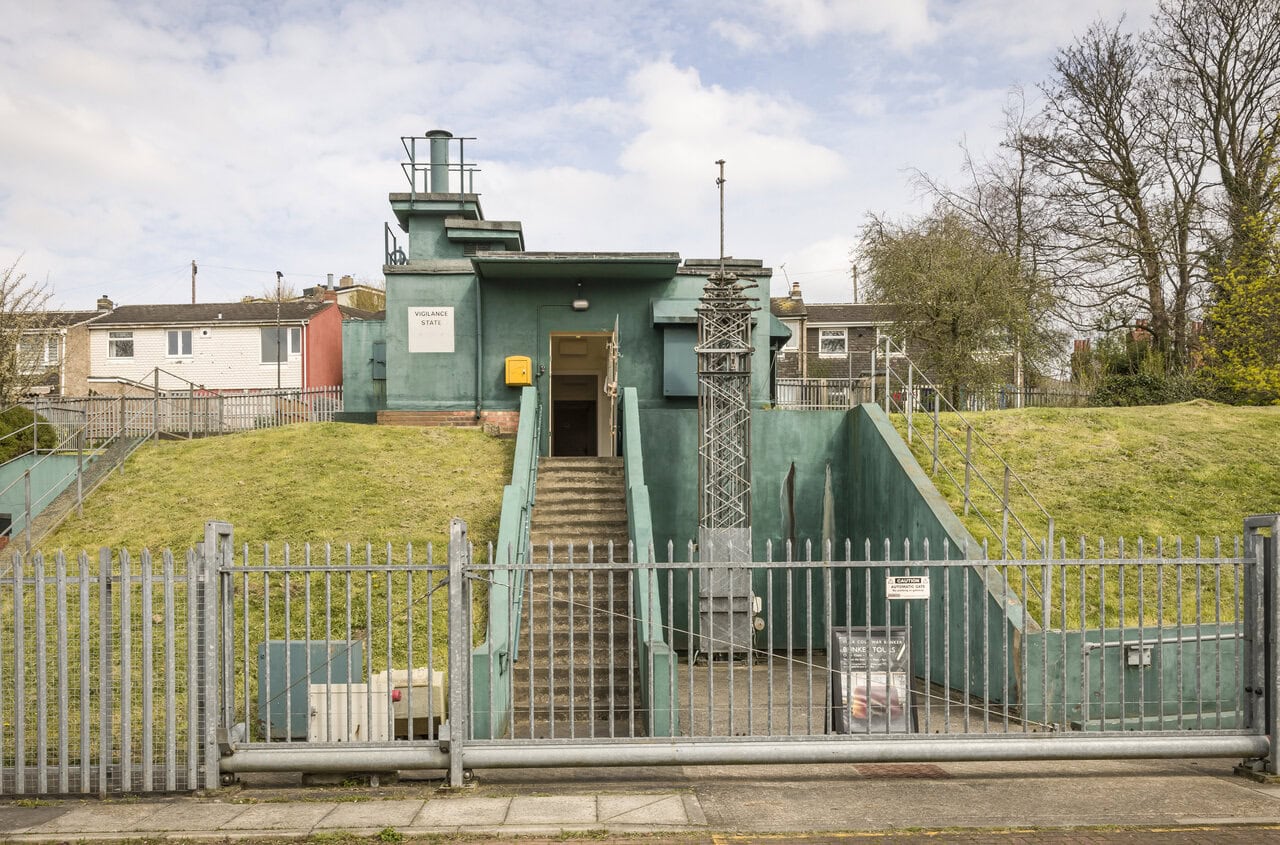
Many bunkers were deliberately hidden in plain sight. Some were disguised as farm buildings, ordinary houses, or telecommunications facilities. Others were buried deep underground beneath hillsides or forests, protected by thick concrete blast walls and steel doors designed to withstand shockwaves and radioactive fallout.
One of the most fascinating aspects of Britain’s bunker network is how widespread it became. Large regional command bunkers existed alongside hundreds of tiny underground Royal Observer Corps monitoring posts, where volunteers would have tracked nuclear explosions and fallout across the country. Together, these facilities formed part of an extraordinary attempt to prepare Britain for the unthinkable.
Today, many of these bunkers survive as museums and historical attractions. Some remain abandoned and hidden across the countryside, while others continue to operate as military or government facilities closed to the public. Visiting them offers a rare glimpse into the paranoia, secrecy, and survival planning that defined the Cold War era.
For travellers interested in dark tourism, Cold War history, underground infrastructure, or unusual places hidden beneath Britain, nuclear bunkers provide some of the country’s most fascinating historical sites.
Best if you want daily housekeeping and a front desk. Filter by area first, then by price.
Check availabilityBest for longer stays. Whole apartments and houses, so you are not eating out three times a day.
View rentalsBest for double-checking. Runs the same search across several booking sites so you are not leaving money behind.
Compare pricesThe Cold War Fear of Nuclear Attack
To understand why Britain built such an extensive bunker network, it is important to understand the atmosphere of fear that dominated much of the Cold War.
During the decades after 1945, Britain lived under the constant possibility of nuclear conflict between NATO and the Soviet Union. The development of atomic and later thermonuclear weapons transformed military planning completely. Unlike previous wars, future conflict now carried the possibility of entire cities being destroyed within minutes.
Throughout the 1950s, 1960s, and 1970s, the threat of nuclear war became deeply embedded in British political life and public consciousness. Air raid sirens, civil defence campaigns, public information films, and government emergency planning all reflected fears that Britain could become a frontline target during a global nuclear exchange.
Particular concern focused on Britain’s role as a key NATO member and host to American military facilities. Major cities such as London, Manchester, Birmingham, Glasgow, and Liverpool were widely considered likely targets in the event of war. Naval bases, RAF stations, ports, and industrial centres were also expected to face direct attack.
The government believed that preserving communication and some form of central authority after an attack would be essential. This led to the development of hardened underground command centres where military officers, civil servants, scientists, and communications staff could continue operating even after nuclear strikes above ground.
At the same time, Britain also developed a huge monitoring system designed to measure radioactive fallout and assess damage after any attack. The Royal Observer Corps played a key role in this system, operating hundreds of underground monitoring posts across the country.
Public fear reached particular highs during moments such as the Cuban Missile Crisis in 1962, when the world came dangerously close to nuclear war. During these periods, bunker construction and emergency planning intensified further.
Many of the surviving bunkers visitors explore today were therefore not theoretical experiments or symbolic structures. They were intended for real operational use during what officials genuinely feared could become a civilisation-ending conflict.
That sense of realism is one of the reasons Britain’s nuclear bunkers remain so fascinating today. They represent not just military infrastructure but physical reminders of a period when nuclear war seemed entirely possible.
What Was Britain’s Nuclear Bunker Network?
Britain’s nuclear bunker network was not one single system but a huge collection of interconnected facilities spread across the country. Together, these bunkers formed part of Britain’s wider Cold War civil defence strategy, designed to maintain communication, military coordination, and government control during and after a nuclear attack.
At the highest level were the secret regional government bunkers, often known as Regional Seats of Government (RSGs). These large underground complexes were intended to house senior civil servants, military commanders, communications teams, and technical staff in the aftermath of nuclear war. If central government in London became inoperable, these regional bunkers would help coordinate what remained of the country.
Some of these facilities were enormous. Sites such as the famous Burlington Bunker beneath Corsham in Wiltshire were effectively underground cities, complete with offices, dormitories, kitchens, power generation, communications rooms, water supplies, and medical facilities. Burlington alone was reportedly designed to support thousands of personnel for extended periods underground.
Alongside these major command centres existed a second layer of infrastructure focused on monitoring and warning systems. Hundreds of small underground Royal Observer Corps posts were built across Britain, often hidden in isolated countryside locations. Volunteers stationed inside these tiny bunkers would have measured blast effects, radiation levels, and radioactive fallout following nuclear detonations.
The network also included radar stations, communications bunkers, military headquarters, telephone exchanges, and protected broadcasting facilities. Some underground sites linked directly into Britain’s wartime rail, telephone, and emergency communication systems.
One of the most striking aspects of the bunker network was its secrecy. Many facilities were disguised or deliberately omitted from public maps. In some cases, even nearby residents had little idea what existed beneath the surface nearby.
Although many bunkers were eventually abandoned after the Cold War ended, significant parts of the network remained operational into the 1990s. Some sites were sold, demolished, or sealed, while others reopened as museums and visitor attractions.
Today, exploring Britain’s surviving nuclear bunkers reveals just how extensive the country’s preparations for nuclear war once became. Hidden beneath ordinary landscapes lies the infrastructure of a Britain preparing for one of the darkest possible futures.
How Britain Planned to Survive a Nuclear War
Britain’s Cold War survival planning went far beyond simply building bunkers. During the height of the nuclear threat, the government developed extensive plans designed to maintain some form of national administration and civil order after a nuclear attack.
The assumption behind much of this planning was stark. Officials believed that if nuclear war occurred, millions of people could die within hours, major cities might be destroyed, communications networks could collapse, and radioactive fallout would spread across large areas of the country. Despite this, the government still aimed to preserve a functioning state structure underground.
Regional bunkers formed the centre of this strategy. If London became unusable, surviving officials would relocate to hardened underground command centres around Britain. From there, regional authorities would attempt to coordinate emergency services, food supplies, communications, radiation monitoring, and whatever remained of local government.
Inside these bunkers, conditions would have been basic but functional. Facilities typically included air filtration systems, backup generators, fuel reserves, water tanks, communications equipment, kitchens, medical rooms, and sleeping quarters. Some larger bunkers even contained BBC broadcasting studios and secure telephone exchanges designed to maintain national communication after an attack.
The government also invested heavily in public warning systems. Sirens would alert the population to incoming attacks, while radio broadcasts would distribute emergency instructions. Public information campaigns encouraged families to create improvised fallout shelters and stockpile food and water.
The famous government booklet Protect and Survive became one of the most recognisable symbols of this era. Distributed during periods of heightened Cold War tension, it advised the public on how to respond during nuclear attack scenarios. Today, many people view the advice as unrealistic, but at the time it reflected genuine government planning assumptions.
Britain’s Royal Observer Corps would also have played a critical role after any attack. Volunteers stationed in underground monitoring posts would record blast data and radiation levels to help authorities assess the scale of destruction across the country.
Looking back today, much of Britain’s nuclear planning feels surreal and deeply unsettling. However, during the Cold War these preparations were treated extremely seriously by military planners and government officials alike.
Visiting Britain’s surviving nuclear bunkers provides a rare opportunity to step directly into this hidden world of Cold War fear, government secrecy, and nuclear survival planning.

Kelvedon Hatch Secret Nuclear Bunker
Hidden beneath an ordinary-looking bungalow in rural Essex, Kelvedon Hatch Secret Nuclear Bunker is one of the most famous and atmospheric Cold War sites in Britain. From the surface, almost nothing reveals what lies below. Visitors arrive at what appears to be a quiet countryside property before descending deep underground into a vast nuclear command bunker built to survive the aftermath of atomic war.
Originally constructed during the early years of the Cold War, the site expanded dramatically throughout the 1950s and 1960s as fears of Soviet nuclear attack intensified. The bunker eventually became a major regional government headquarters intended to coordinate survival operations after a nuclear strike on London and southeast England.
What makes Kelvedon Hatch especially memorable is its realism. Unlike heavily polished museum attractions, much of the bunker still feels raw, functional, and unsettlingly authentic. Visitors walk through long underground concrete corridors connecting blast doors, communications rooms, BBC broadcasting studios, dormitories, medical facilities, and heavily protected command centres where officials would have attempted to govern after nuclear war.
The bunker’s atmosphere is one of its greatest strengths. Dim lighting, original Cold War equipment, heavy steel doors, and preserved operational rooms make the experience feel deeply immersive. Many visitors are surprised by how claustrophobic and eerie the underground complex feels once inside.
The audio guide also works particularly well because it explains the bunker’s purpose without turning the experience into entertainment or gimmick. Instead, visitors gain a strong understanding of how seriously Britain prepared for nuclear conflict during the Cold War decades.
One of the most fascinating areas is the preserved government communications infrastructure, where regional authorities would have received fallout data, coordinated emergency planning, and attempted to maintain control after a nuclear strike. The bunker also contains sleeping quarters, operations rooms, and survival facilities designed to support personnel living underground for extended periods.
Transport access is relatively straightforward compared with many bunker locations. The site sits within reach of London and works well as a day trip from the capital. Travellers without cars can reach nearby rail stations such as Brentwood or Epping, although taxis are usually required for the final stretch.
Adult admission costs around £15 (€17/$19), with discounted tickets available for children and families. Most visits take at least ninety minutes, longer for anyone keen to read every information panel along the route.
For travellers interested in dark tourism, Cold War history, underground infrastructure, or secret Britain, Kelvedon Hatch delivers one of the strongest and most atmospheric bunker experiences anywhere in the UK.
Hack Green Secret Nuclear Bunker
Tucked away in the Cheshire countryside near Nantwich, Hack Green Secret Nuclear Bunker is one of Britain’s largest surviving nuclear bunkers and one of the country’s most impressive Cold War museums. Unlike Kelvedon Hatch, which focuses heavily on atmosphere and realism, Hack Green combines preserved underground infrastructure with extensive military exhibitions and Cold War displays spread throughout the bunker complex.
The site originally began life as a World War II radar station before later being transformed into a hardened Regional Government Headquarters during the Cold War. Deep underground, the bunker was designed to survive nuclear attack and coordinate emergency response operations across large parts of northwest England.
What makes Hack Green particularly fascinating is the sheer scale of the underground facility. Visitors descend into a sprawling network of tunnels, operational rooms, command centres, communication areas, dormitories, and protected government offices hidden beneath the countryside. The bunker feels far larger than many visitors expect, with multiple levels and long corridors stretching beneath the surface.
Inside, the museum contains an enormous collection of Cold War equipment, including radiation monitors, warning sirens, communications systems, military vehicles, nuclear warning devices, and original civil defence material. Large sections also focus on Britain’s broader Cold War strategy, explaining how the country prepared for the possibility of Soviet attack.
One of the most memorable aspects of Hack Green is how immersive the bunker feels. The deeper visitors move underground, the more disconnected the site becomes from the outside world. Thick concrete walls, steel blast doors, emergency control rooms, and preserved operations areas create a genuine sense of stepping back into one of the most tense periods of twentieth-century history.
The bunker also includes displays focused on famous Cold War flashpoints such as the Cuban Missile Crisis, helping visitors understand just how close the world came to nuclear conflict during several moments of the Cold War era.
Hack Green is relatively accessible compared with some bunker sites. The nearest major rail access is via Crewe, one of Britain’s largest railway hubs, making the bunker surprisingly practical for travellers exploring northwest England by train. From Crewe, taxis or local transport can connect onward to the site.
Adult admission costs around £17.50 (€20/$22), with concession and family tickets also available on site. The scale of the collection means a full visit can easily fill an afternoon.
For travellers interested in Britain’s Cold War history, nuclear survival planning, underground infrastructure, or unusual museums, Hack Green is one of the most comprehensive bunker experiences in the country.
York Cold War Bunker
Located on the edge of the historic city of York, York Cold War Bunker offers a very different experience from some of Britain’s larger nuclear bunkers. Smaller and more compact than sites such as Kelvedon Hatch or Hack Green, the York bunker focuses heavily on the operational reality of Britain’s Cold War civil defence system.
Built in the 1960s, the bunker served as a regional headquarters for the Royal Observer Corps, the organisation responsible for monitoring nuclear explosions and radioactive fallout across Britain. During the Cold War, staff working inside this underground facility would have collected blast data, tracked radiation levels, and passed information to government authorities following any nuclear attack.
Today, the bunker is operated by English Heritage and remains one of the best-preserved examples of a smaller operational Cold War command facility. Unlike some larger bunkers that feel almost like underground cities, York demonstrates how cramped and functional many of these facilities actually were.
Visitors descend below ground into preserved operational rooms containing original communications systems, monitoring equipment, maps, warning devices, and office areas left largely intact from the Cold War era. The bunker’s relatively small size actually enhances the atmosphere because it helps visitors imagine what daily life underground might have felt like during a prolonged crisis.
One of the strongest aspects of the York bunker is the guided tour experience. Staff explain how nuclear monitoring worked, how information would have been transmitted across Britain’s bunker network, and what personnel inside the facility expected might happen during a real attack.
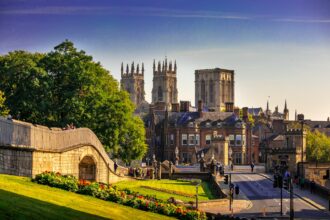
The bunker also works particularly well for travellers because of its location. Unlike many rural bunker sites, it sits close to one of Britain’s best-connected historic cities. Visitors can easily combine the bunker with wider exploration of York, including its railway history, medieval streets, museums, and city walls.
Rail access is excellent, with York Station acting as one of northern England’s major transport hubs. This makes the site especially attractive for travellers exploring Britain by train.
Adult admission costs around £11 (€12/$14) when booked in advance online, and English Heritage members visit free. Guided tours run at set times, so checking the schedule before arriving is worthwhile.
For visitors wanting a more focused and realistic view of Britain’s civil defence infrastructure during the Cold War, the York bunker provides one of the country’s most accessible and informative experiences.
Best if you can move a day either way. Shows how the fare changes across the month.
Compare flightsBest for short trips. Install the eSIM at home and arrive with working data, no shop queue.
Browse eSIMsBest if you would rather not work out the transport on arrival. Book it now and forget it.
View transfersScotland’s Secret Bunker
Hidden beneath a farmhouse in rural Fife, Scotland’s Secret Bunker is one of Britain’s most remarkable Cold War sites. Buried deep underground beneath the Scottish countryside, the bunker remained secret for decades and was designed to function as the centre of Scottish government operations after a nuclear attack.
From the surface, almost nothing suggests the scale of what lies below. Visitors enter through what appears to be an ordinary rural property before descending into a massive underground complex hidden beneath the landscape. The contrast between the peaceful countryside above and the hardened Cold War infrastructure below creates an immediate sense of unease and fascination.
Constructed during the height of Cold War tensions, the bunker was intended to house military personnel, government officials, communications teams, and emergency planners responsible for coordinating survival operations across Scotland after nuclear war. The facility was effectively an underground city, complete with operational control rooms, dormitories, kitchens, communications areas, medical facilities, and protected command centres.
Today, large sections of the bunker remain preserved with original furniture, equipment, telephones, warning boards, and Cold War-era infrastructure still in place. Walking through the underground corridors feels like entering a hidden world frozen in time beneath rural Scotland.
One of the most striking parts of the bunker is the large operations room, where officials would have monitored nuclear strikes, fallout reports, and national emergency information during a crisis. The bunker also demonstrates the scale of Britain’s regional nuclear planning, revealing how seriously the government expected parts of the country to continue functioning after attack.
The atmosphere inside the bunker is especially powerful because of its isolation. Deep underground, surrounded by concrete walls and artificial lighting, the facility feels detached from normal life above the surface. Many visitors describe it as one of the most immersive Cold War experiences in Britain.
Transport access is easiest by car, although travellers can reach nearby areas from Edinburgh or Leuchars by rail before continuing onward by taxi.
Adult admission costs around £18 (€20/$23), with discounted child and family tickets available at the gate. Allow at least two hours to see the full scale of the complex underground.
For travellers interested in Cold War Britain, underground infrastructure, secret military history, or dark tourism, Scotland’s Secret Bunker is one of the UK’s most unforgettable historical attractions.
Burlington Bunker
Hidden beneath the hills around Corsham in Wiltshire lies one of the most extraordinary secret sites ever built in Britain. Known today as the Burlington Bunker, this vast underground complex was designed to act as a fully functioning underground government city in the event of nuclear war.
Unlike many surviving Cold War bunkers open to visitors today, Burlington was built on an entirely different scale. At its peak, the bunker reportedly stretched across more than 35 acres underground and was intended to house up to 4,000 government personnel, military leaders, technicians, and support staff after a nuclear attack on Britain.
The facility was developed within old underground stone quarries near Corsham, transforming hidden tunnels beneath the Wiltshire countryside into one of the most secretive government facilities in the country. Deep underground, the bunker included offices, dormitories, kitchens, medical facilities, water supplies, fuel storage, communications systems, workshops, cafeterias, and even a protected BBC broadcasting studio.
Perhaps most fascinating of all was the bunker’s role within Britain’s Cold War survival planning. Burlington was intended to preserve a functioning national government after nuclear war. If London were destroyed, surviving officials would relocate underground here to continue administering what remained of Britain.
The complex became so extensive that it effectively functioned as an entire underground town. The site had its own internal roads, railway connections, power generation systems, and secure communications infrastructure designed to survive attack and maintain national coordination.
Although Burlington itself is not generally open as a standard tourist attraction, its legend has become central to Britain’s Cold War history. Parts of the wider Corsham tunnel network occasionally open during special events, heritage activities, or rare tours, but the main complex remains largely inaccessible to the public.
Even so, Burlington remains one of the most fascinating examples of Cold War paranoia, government secrecy, and nuclear survival planning anywhere in Europe. The sheer scale of the bunker demonstrates how seriously Britain prepared for the possibility of nuclear conflict during the twentieth century.
For travellers interested in secret Britain, underground infrastructure, hidden military history, or Cold War planning, Burlington represents one of the country’s most legendary and mysterious bunker sites.
Royal Observer Corps Monitoring Posts
Scattered quietly across fields, forests, hillsides, and farmland throughout Britain are the hidden remains of hundreds of tiny underground Royal Observer Corps monitoring posts, often known simply as ROC posts. Unlike the huge regional government bunkers built for senior officials, these small underground shelters had a very specific purpose during the Cold War: monitoring nuclear explosions and radioactive fallout.
During the height of Cold War tensions, volunteers from the Royal Observer Corps would have operated these isolated posts after a nuclear attack. Their role was to record blast effects, monitor radiation levels, and report information back to larger command bunkers around Britain.
Most ROC posts were extremely small. Typically buried underground with just a hatch and ventilation shafts visible on the surface, they usually consisted of a compact monitoring room designed for only a handful of people. Conditions inside were basic and claustrophobic, with little space, minimal comfort, and simple operational equipment.
Today, many ROC posts survive abandoned across the countryside. Some have collapsed, flooded, or been sealed, while others remain surprisingly intact beneath overgrown fields and woodland. Their hidden nature has made them especially popular among urban explorers, Cold War enthusiasts, and travellers interested in abandoned infrastructure.
What makes ROC posts particularly fascinating is how ordinary and isolated their locations often feel. Many sit in completely peaceful rural settings far from cities or military sites. Yet during the Cold War, these remote fields formed part of a nationwide nuclear monitoring network preparing for possible atomic war.
Because most ROC posts are abandoned and not formal museums, visitors need to approach them carefully and legally. Many sites are on private land, while others may contain hazards such as flooding, unstable ladders, confined spaces, or asbestos. Respecting access rules and avoiding trespassing is extremely important.
Some preserved examples can still be visited through museums or heritage organisations, allowing travellers to experience how confined and basic these underground monitoring shelters really were. Compared with larger bunkers, ROC posts provide a more personal and unsettling insight into the everyday reality of Britain’s Cold War civil defence system.
For travellers interested in hidden infrastructure, abandoned Britain, secret Cold War sites, or unusual underground locations, ROC posts remain some of the country’s most eerie and fascinating surviving historical sites.

How to Reach Britain’s Nuclear Bunkers
| Bunker | Nearest Major City | Closest Train Station | Approx. Distance from Station | Sat Nav Postcode | Best Way to Reach the Site |
|---|---|---|---|---|---|
| Kelvedon Hatch Secret Nuclear Bunker | London | Brentwood or Epping | Around 8–10 miles | CM15 0LA | Best reached by car or taxi from nearby stations due to rural location |
| Hack Green Secret Nuclear Bunker | Manchester / Crewe | Crewe Station | Around 7 miles | CW5 8BL | Easy by taxi from Crewe, making it practical for rail travellers |
| York Cold War Bunker | York | York Station | Around 1.5 miles | YO24 4HT | Accessible by taxi, local bus, or longer walk from the station |
| Scotland’s Secret Bunker | Edinburgh | Leuchars Station | Around 11 miles | KY16 8QH | Best reached by car or taxi due to isolated countryside setting |
Planning Your Bunker Route
One of the advantages of exploring Britain’s Cold War bunkers is that several major sites connect surprisingly well with the UK rail network. Travellers can realistically combine multiple bunkers into a wider historical itinerary using trains alongside short taxi or car connections.
York Cold War Bunker is by far the easiest bunker to reach entirely by public transport because it sits close to central York and one of Britain’s largest rail hubs. This makes it ideal for travellers building a rail-based dark tourism or Cold War history itinerary.
Hack Green Secret Nuclear Bunker also works very well with rail travel thanks to its proximity to Crewe, a major interchange station on the West Coast Main Line. Travellers can easily reach the bunker from Manchester, Liverpool, Birmingham, or London in a single day.
The more isolated sites such as Kelvedon Hatch Secret Nuclear Bunker and Scotland’s Secret Bunker are easiest with a car, although rail-and-taxi combinations still work well for most visitors.
For travellers creating a longer road trip, these bunkers also pair naturally with nearby military museums, Cold War sites, abandoned infrastructure attractions, and wartime history destinations across Britain.
What Nuclear Bunkers Were Actually Like Inside
One of the most surprising things about visiting Britain’s nuclear bunkers is how functional and uncomfortable many of them actually were. Popular culture often imagines luxurious underground command centres filled with advanced technology, but the reality inside most bunkers was far more practical, cramped, industrial, and psychologically oppressive.
Inside larger sites such as Kelvedon Hatch, Hack Green, and Scotland’s Secret Bunker, visitors walk through long concrete corridors lined with heavy blast doors, exposed pipework, communications wiring, and industrial ventilation systems. The atmosphere is often cold, dimly lit, and highly enclosed.
Most bunkers were designed around survival and operational efficiency rather than comfort. Rooms were small, furniture was basic, and many facilities were highly improvised by modern standards. Dormitories often contained rows of narrow bunk beds packed tightly together, while kitchens, medical rooms, and wash areas were designed to support large numbers of people underground for extended periods.
Air filtration systems were among the most important pieces of infrastructure. These systems were intended to reduce the danger from radioactive fallout entering the bunker after a nuclear attack. Many sites still display their original filtration units, emergency ventilation systems, and decontamination procedures today.
Communications equipment also formed the centre of bunker operations. Radio systems, telephone exchanges, fallout monitoring boards, and military communications rooms allowed officials to coordinate emergency planning and maintain contact with other regions after an attack.
In many bunkers, visitors also encounter preserved Cold War warning posters, operational maps, radiation meters, and original emergency planning documents that reveal how seriously the government expected nuclear conflict might become reality.
Perhaps the most unsettling feature of many bunkers is their isolation. Once blast doors closed, personnel inside would effectively become sealed off from the outside world. Many Cold War plans assumed that those underground might remain isolated for days, weeks, or potentially even longer following an attack.
The deeper visitors move into these underground facilities, the easier it becomes to understand the psychological pressure bunker personnel would have faced. Many sites feel claustrophobic, repetitive, and strangely disconnected from time itself. That atmosphere is one of the reasons Britain’s nuclear bunkers remain such powerful dark tourism destinations today.
For modern visitors, these bunkers provide far more than just military history. They offer a direct physical connection to the fear, secrecy, and survival planning that shaped Britain throughout the Cold War era.
Best for solo travellers and anyone watching the budget. Dorm beds and private rooms in the same search.
Browse hostelsBest if you have ever given up on a claim. AirHelp checks whether the flight qualifies and pursues it for you.
See the benefitsBest if your room is not ready yet. Left luggage booked in advance, so you are not hunting for a locker.
Check storageLife Underground During the Cold War
For the people assigned to Britain’s Cold War bunkers, life underground would have been highly controlled, isolated, and psychologically exhausting. These facilities were not designed for comfort or long-term quality of life. They were emergency survival centres intended to keep parts of government, communications, and civil defence functioning after a nuclear attack.
Inside larger bunkers such as Kelvedon Hatch Secret Nuclear Bunker, Hack Green Secret Nuclear Bunker, and Scotland’s Secret Bunker, personnel would have lived beneath the surface for days or potentially weeks following an attack. Conditions would have been cramped, artificial, and repetitive, with little privacy and no natural daylight.
Daily life underground would have revolved around strict operational routines. Staff would monitor communications systems, radiation data, government instructions, military reports, and regional fallout patterns around the clock. Many bunkers operated on shift systems, meaning some personnel would sleep while others maintained continuous operations in command rooms and communications centres.
Sleeping arrangements were extremely basic. Dormitories often contained tightly packed bunk beds arranged in narrow rooms with little personal space. In many facilities, hundreds of people would have shared limited washing facilities, communal dining areas, and heavily rationed supplies.
Air quality and filtration were constant concerns. Bunkers depended on complex air filtration systems designed to reduce radioactive contamination entering from outside. Noise from generators, ventilation systems, and communications equipment would have been continuous, adding to the stressful environment underground.
Food supplies were practical rather than enjoyable. Emergency rations, canned goods, and long-life supplies formed the basis of bunker survival planning. Fresh food would have been extremely limited after the initial lockdown period.
One of the most disturbing aspects of life underground was the uncertainty surrounding conditions above the surface. Personnel inside bunkers would likely have had little clear information about the true scale of destruction outside. In many scenarios, staff might continue operating while much of the surrounding country had been devastated.
The psychological pressure of this environment would have been enormous. Isolation, claustrophobia, fear, exhaustion, and uncertainty would all have shaped daily life underground. Many historians believe morale inside bunkers could have become a major operational problem during a prolonged nuclear crisis.
Visiting Britain’s surviving bunkers today gives travellers a powerful sense of these conditions. Walking through confined corridors, windowless operations rooms, and tightly packed dormitories helps transform abstract Cold War history into something far more personal and unsettling.
How to Visit Britain’s Nuclear Bunkers Without a Car
Although many of Britain’s nuclear bunkers sit in rural or semi-hidden locations, it is still possible to visit several major sites using public transport. In fact, combining bunker visits with Britain’s rail network can create some excellent dark tourism and Cold War history itineraries.
One of the easiest sites to reach is York Cold War Bunker. Located close to one of Britain’s major railway hubs, the bunker can be reached relatively easily from York Station by taxi, local bus, or even on foot depending on your route. This makes it one of the most practical bunker sites for travellers relying entirely on trains.
Hack Green Secret Nuclear Bunker is also relatively accessible by rail. Travellers can reach nearby Crewe, one of Britain’s largest railway junctions, before continuing onward by taxi toward the bunker near Nantwich. Because Crewe sits on the West Coast Main Line, the site works surprisingly well as a day trip from cities such as Manchester, Liverpool, or even London.
For travellers exploring southeast England, Kelvedon Hatch Secret Nuclear Bunker can be combined with rail routes from London toward Brentwood or Epping. However, taxis are usually needed for the final section because the bunker sits in a relatively rural area.
In Scotland, Scotland’s Secret Bunker is easiest to reach from Edinburgh or Leuchars, again usually requiring a taxi connection for the final stage of the journey.
Travellers should also remember that some bunker sites have limited opening days outside peak tourist season. Checking official opening hours in advance is essential, particularly during winter months.
One major advantage of travelling by rail is the ability to combine bunker visits with nearby cities and historical attractions. A Cold War-themed trip could easily combine York and its railway museums, Manchester and industrial history, London and the Churchill War Rooms, or Edinburgh and Scottish military history.
Using trains also removes the stress of rural driving and allows travellers to build wider itineraries around Britain’s historical sites more efficiently.
For visitors interested in unusual travel experiences, Britain’s bunker network combines surprisingly well with the country’s excellent rail infrastructure and dark tourism routes.
Britain’s Abandoned ROC Posts & Hidden Cold War Sites
Beyond the major museum bunkers lies a second, more mysterious layer of Britain’s Cold War infrastructure. Across the countryside, hidden in woods, fields, hilltops, and remote farmland, are the abandoned remains of hundreds of Royal Observer Corps posts, communications sites, warning stations, and forgotten military facilities connected to Britain’s nuclear defence network.
These hidden sites create some of the most fascinating Cold War exploration opportunities in Britain.
Many abandoned ROC posts remain surprisingly difficult to spot. Often only a small concrete hatch, vent pipe, or fenced patch of ground reveals the presence of an underground monitoring shelter beneath the surface. During the Cold War, these isolated locations formed part of a nationwide nuclear monitoring network preparing for possible atomic war.
Unlike larger visitor attractions such as Kelvedon Hatch Secret Nuclear Bunker or Hack Green Secret Nuclear Bunker, abandoned ROC posts feel deeply eerie because of their isolation. Many sit far from roads, towns, or tourist infrastructure entirely. Overgrown vegetation, rusting ladders, collapsed entrances, and flooded chambers add to the atmosphere of abandonment.
Alongside ROC posts, Britain also contains numerous hidden Cold War structures including former radar stations, abandoned military communications sites, disused bunker complexes, protected government exchanges, Cold War listening stations, and old warning siren systems.
Some sites remain officially sealed or still used by the military, while others have been demolished, converted, or reclaimed by nature.
However, travellers should approach abandoned Cold War exploration responsibly. Many sites are located on private property, while others contain serious dangers including unstable structures, deep shafts, flooding, asbestos, or confined underground spaces.
For most visitors, preserved and legal sites provide the safest and most rewarding experience. However, the existence of these abandoned facilities adds another layer of fascination to Britain’s Cold War landscape. Hidden beneath ordinary countryside locations are the remains of a survival network built for a conflict that thankfully never came.
For travellers interested in hidden Britain, abandoned infrastructure, urban exploration history, or Cold War archaeology, these forgotten sites remain among the country’s most intriguing hidden historical layers.

Cold War Museums & Related Attractions
Britain’s nuclear bunkers form part of a much wider network of Cold War museums, military attractions, and underground historical sites spread across the country. Combining bunker visits with related museums can help travellers better understand the political tensions, military planning, and technological developments that shaped the Cold War era.
One of the most important complementary attractions is Churchill War Rooms. Although focused on World War II rather than the Cold War itself, the underground command centre demonstrates the origins of Britain’s later bunker mentality and protected government infrastructure.
In Cambridgeshire, Imperial War Museum Duxford contains major exhibitions covering Cold War aviation, NATO defence planning, spy aircraft, and nuclear-era military technology. The scale of the museum makes it one of Britain’s strongest Cold War companion attractions.
Travellers interested in nuclear deterrence and military aviation should also consider RAF Museum London and RAF Museum Midlands, both of which contain aircraft and exhibits linked to Britain’s nuclear defence posture during the Cold War decades.
In Scotland, The National Museum of Flight includes important military aviation collections linked to Cold War air defence and NATO operations.
Travellers interested in underground infrastructure should also explore Britain’s wartime tunnels, hidden rail infrastructure, and former military headquarters scattered throughout the country. These sites often overlap heavily with Cold War survival planning and emergency government systems.
One of the strengths of this niche is how well different attractions connect together. A traveller exploring Britain’s nuclear bunkers can naturally combine military aviation museums, radar stations, underground command centres, wartime tunnels, Cold War naval history, abandoned military infrastructure, and spy museums within a single wider itinerary.
Together, these attractions create one of Britain’s most unusual, atmospheric, and immersive historical travel themes.
The Ethics of Exploring Abandoned Bunkers
Britain’s abandoned Cold War bunkers, hidden ROC posts, and forgotten military facilities attract huge interest from travellers fascinated by underground infrastructure and dark tourism. However, exploring these sites also raises important ethical, legal, and safety questions that visitors should take seriously.
Many abandoned bunkers are located on private land. Others remain government property, sealed military facilities, or environmentally hazardous sites. While photographs and urban exploration videos online can make these locations appear easily accessible, entering sites without permission may be illegal and potentially dangerous.
One of the biggest problems is deterioration. Many abandoned ROC posts and underground facilities have suffered decades of flooding, vandalism, corrosion, collapse, and neglect. Rusted ladders, unstable concrete, hidden shafts, and deep standing water are common hazards inside Cold War structures. Some sites may also contain asbestos, old fuel residues, damaged wiring, or poor air quality.
There is also an important historical responsibility attached to these locations. Britain’s bunker network formed part of a very real national survival system during one of the most dangerous periods in modern history. Treating these places respectfully matters. Graffiti, theft, vandalism, or damage to surviving equipment gradually destroys important pieces of Cold War history.
For most travellers, visiting preserved bunker museums such as Kelvedon Hatch Secret Nuclear Bunker, Hack Green Secret Nuclear Bunker, or Scotland’s Secret Bunker provides a far safer and more responsible way to experience Britain’s underground Cold War infrastructure.
Some enthusiasts still document abandoned sites through photography and historical research, often helping preserve knowledge of disappearing Cold War structures. However, the best explorers generally follow strict ethical standards, avoiding forced entry, respecting landowners, and never removing historical objects from sites.
The fascination surrounding abandoned bunkers is understandable. Hidden beneath ordinary countryside locations are the remains of facilities built for the possibility of nuclear war. Yet preserving these sites for future generations is just as important as exploring them.
Responsible travel, historical respect, and legal access should always come before the thrill of entering forgotten underground places.
Best Time to Visit Britain’s Nuclear Bunkers
Britain’s nuclear bunkers can be visited year-round, but the experience changes significantly depending on season, weather, and visitor numbers.
For many travellers, autumn and winter actually provide the most atmospheric bunker experience. Dark skies, cold weather, misty countryside, and shorter daylight hours enhance the eerie atmosphere surrounding Cold War sites. Arriving at an isolated bunker entrance on a grey winter afternoon can feel remarkably immersive, particularly at underground locations such as Kelvedon Hatch Secret Nuclear Bunker or Scotland’s Secret Bunker.
Winter visits also tend to be quieter. Outside school holidays and summer tourism peaks, many bunker museums feel calmer and more reflective, allowing visitors more time to absorb the atmosphere without large crowds.
However, winter travel does come with limitations. Some smaller museums and heritage sites reduce opening hours significantly during colder months, while rural weather conditions may make access more difficult in remote areas. Checking official opening schedules before travelling is essential.
Spring offers one of the best balances between atmosphere and practicality. Countryside landscapes become greener, roads are quieter than summer, and temperatures are generally more comfortable for longer historical trips. Spring also works particularly well for combining bunker visits with wider road trips or rail journeys around Britain.
During summer, Britain’s major Cold War museums often operate with their longest opening hours and fullest programme of guided tours. Attractions such as Hack Green Secret Nuclear Bunker and York Cold War Bunker can become significantly busier, especially during weekends and school holidays.
Some travellers also choose to visit during major anniversaries connected to the Cold War, nuclear disarmament history, or military commemorations, when museums occasionally host special exhibitions and events.
Ultimately, the best time depends on the type of experience you want. Summer provides easier logistics and longer opening hours, while autumn and winter often deliver the strongest atmosphere for travellers interested in dark tourism and Cold War history.

Apps for Visiting Britain’s Nuclear Bunkers
Several travel apps can make exploring Britain’s Cold War bunkers and hidden historical sites much easier, especially when travelling between remote countryside locations, railway stations, and underground attractions.
For rail travel, apps such as Trainline, National Rail, and regional train operator apps are extremely useful for planning journeys to nearby stations such as York, Crewe, Brentwood, or Edinburgh. Because many bunker sites require a final taxi connection from rural stations, checking live train updates is particularly important.
Navigation apps become essential once travelling beyond major cities. Google Maps works well for most major bunker attractions, while offline navigation tools can be helpful in remote rural areas with poor mobile coverage. Some Cold War sites sit in surprisingly isolated countryside locations where signal can become unreliable.
Taxi-hailing apps such as Uber may help in larger cities, although many rural bunker locations still depend on traditional local taxi firms rather than app-based services. Planning these final transport connections in advance often makes bunker visits much smoother.
For travellers exploring multiple historical sites in one trip, general planning apps such as Google Travel, TripIt, or offline itinerary organisers can help combine bunkers with nearby museums, railway routes, hotels, and military attractions.
Photography enthusiasts may also find weather apps particularly useful. Britain’s bunkers often look most atmospheric during misty, cloudy, or stormy weather conditions, especially for exterior photography around isolated countryside entrances and Cold War structures.
Some travellers also use historical map apps and archive tools to research abandoned Royal Observer Corps posts, former military sites, and forgotten Cold War infrastructure before travelling. However, visitors should always respect private land and legal access restrictions when researching hidden locations.
Used together, these apps help turn Britain’s scattered bunker network into a surprisingly accessible travel experience. Combining rail planning, navigation, local transport, and historical research tools makes exploring Cold War Britain far easier and far more rewarding.

Rupert’s Handy Travel Tips
Rupert says Britain’s Cold War bunkers are some of the strangest places you can visit in the UK because many still feel exactly as though staff might return tomorrow.
- Bring a warm layer: underground bunkers stay cold throughout the year, even during summer.
- Arrive early: popular sites such as Kelvedon Hatch and Hack Green get busy, especially during weekends and school holidays.
- Check opening days carefully: several Cold War museums operate seasonal timetables outside peak months.
- Carry a power bank: underground areas can drain phone batteries quickly due to poor signal and constant searching for reception.
- Respect abandoned sites: never enter sealed or unsafe bunkers illegally, as many hidden ROC posts contain flooding, unstable ladders, or hazardous materials.
Want to meet the reindeer behind our travel tips? Find out more in our page Who is Rupert?.




Frequently Asked Questions About Britain’s Nuclear Bunkers
Can you visit real nuclear bunkers in Britain?
Yes. Several genuine Cold War bunkers are open to the public across the UK, including Kelvedon Hatch Secret Nuclear Bunker, Hack Green Secret Nuclear Bunker, York Cold War Bunker, and Scotland’s Secret Bunker.
What was the purpose of Britain’s nuclear bunkers?
Britain’s bunker network was built during the Cold War to help government officials, military personnel, and civil defence teams continue operating after a nuclear attack. Some bunkers acted as regional government headquarters, while smaller sites monitored radiation and fallout.
Are abandoned nuclear bunkers legal to explore?
Not always. Many abandoned bunkers and ROC posts are located on private property or contain dangerous conditions such as flooding, unstable structures, or asbestos. Visitors should always respect access laws and avoid trespassing.
Which is the best nuclear bunker to visit in Britain?
Many travellers consider Kelvedon Hatch Secret Nuclear Bunker the most atmospheric, while Hack Green Secret Nuclear Bunker offers the largest museum collection and one of the biggest underground complexes open to visitors.
Can you visit Britain’s secret underground government bunkers?
Some sites are open as museums, but others remain closed or only partially accessible. The famous Burlington Bunker near Corsham is not normally open to the public, although occasional heritage events sometimes allow limited access to parts of the wider tunnel network.
Further Reading & Related Guides
If exploring Britain’s hidden Cold War bunkers has sparked your interest in unusual historical travel, there are several other guides that pair perfectly with this topic. Travellers fascinated by underground infrastructure and wartime history should also explore our coverage of Britain’s wider dark tourism and military heritage network, including other Cold War sites such as Sofia, Tallinn, and Bratislava.
If you are planning a wider rail-based historical trip, our Train Booking Apps Guide can help you navigate routes between major Cold War sites such as York, Manchester, London, and Edinburgh more efficiently. Many bunker destinations connect surprisingly well with Britain’s rail network.
Travellers interested in hidden underground infrastructure should also explore our guides to Britain’s abandoned railway history, wartime tunnels, and unusual transport sites. Many Cold War facilities were directly linked to protected communications and transport infrastructure beneath the surface.
If your interests lean more toward military history, our wider Dark Tourism UK coverage explores prisons, disaster sites, wartime locations, and hidden historical attractions across Britain. Nuclear bunkers form just one part of a much larger network of unusual and emotionally powerful historical destinations.
For travellers combining Cold War history with broader European journeys, our Interrail Guides and European Rail Travel pages can also help connect similar sites across countries such as Germany, Poland, and the Czech Republic, where Cold War infrastructure remains highly visible today.
Finally, if you are travelling through remote parts of Britain to reach hidden bunker locations, our eSIM Apps Guide can help keep you connected in rural areas where mobile coverage may become unreliable.