Reviewed by our editorial team Updated
Why UNESCO Vienna Matters for Travellers
For travellers exploring Austria, few cities combine imperial history, grand architecture, classical music, and everyday liveability as successfully as Vienna. The city’s Historic Centre of Vienna was officially added to the UNESCO World Heritage List in 2001, recognising centuries of architectural, political, and cultural importance shaped by the Habsburg Empire. Unlike some UNESCO destinations where the protected area is limited to a single monument or archaeological site, much of central Vienna functions as a living UNESCO landscape filled with active streets, cafés, museums, churches, and transport hubs used daily by locals and visitors alike.
What makes UNESCO Vienna especially appealing is how accessible the heritage feels. You are not dealing with isolated ruins or remote historic villages. Instead, travellers can walk directly from major rail hubs such as Wien Hauptbahnhof or Wien Mitte into districts filled with imperial palaces, monumental boulevards, opera houses, and historic squares. Major landmarks including St Stephen’s Cathedral, Hofburg Palace, the Vienna State Opera, and parts of the famous Ringstrasse all sit within or directly beside the UNESCO protected core. This creates one of the easiest major heritage cities in Europe for independent travellers to navigate without needing organised transport or expensive guided tours.
The UNESCO designation also reflects Vienna’s wider influence on European culture. The city shaped classical music through figures such as Mozart, Beethoven, Schubert, and Johann Strauss II, while its cafés, intellectual circles, and imperial institutions influenced politics, science, philosophy, and architecture across Central Europe. Even today, travellers can still experience much of this atmosphere through historic coffee houses, traditional concert venues, monumental museums, and elegant residential streets that survived both the collapse of the empire and the destruction of the Second World War.
Another reason UNESCO Vienna works so well for modern tourism is the balance between preservation and infrastructure. Unlike some historic capitals where visitor numbers overwhelm the centre, Vienna remains unusually functional. The U-Bahn, tram network, regional rail system, and airport connections make it easy to move between UNESCO attractions, while pedestrian-friendly streets allow travellers to cover large parts of the historic centre on foot. This combination of history and efficiency is one reason the city consistently ranks among the world’s most liveable destinations while also remaining one of Europe’s strongest cultural tourism hubs.
Quick Facts About UNESCO Vienna
| Feature | Details |
|---|---|
| UNESCO Site Name | Historic Centre of Vienna |
| UNESCO Inscription Year | 2001 |
| Country | Austria |
| Main UNESCO Area | Innere Stadt (1st District) |
| Famous Landmark | St Stephen’s Cathedral |
| Imperial Complex | Hofburg Palace |
| Major Boulevard | Ringstrasse |
| Main Rail Hub | Wien Hauptbahnhof |
| Main Airport | Vienna International Airport |
| Best Months to Visit | April to June and September to December |
| Famous Cultural Heritage | Classical music, coffee houses, imperial architecture |
| Typical Visit Length | 2 to 4 days |
| Walkability | Excellent |
| Public Transport Quality | One of Europe’s best |
| UNESCO Threat Discussions | In Danger List since 2017 (Heumarkt development) |
| Best Nearby UNESCO Addition | Schönbrunn Palace |
Best for a short trip. Compare rooms by neighbourhood, price and guest rating before you book.
Compare hotelsBest for longer stays. Whole apartments and houses, so you are not eating out three times a day.
View rentalsBest for double-checking. Runs the same Vienna search across several booking sites so you are not leaving money behind.
Compare pricesWhat UNESCO Sites Are in Vienna?
The primary UNESCO listing in Vienna is the Historic Centre of Vienna, which covers much of the city’s old imperial core. This area includes a dense concentration of historic streets, churches, palaces, museums, and civic buildings developed over several centuries. The protected zone largely centres around the Innere Stadt, or 1st District, surrounded by the monumental Ringstrasse boulevard that replaced Vienna’s old defensive walls during the nineteenth century.
Within this UNESCO area, travellers encounter many of the city’s most famous attractions. St Stephen’s Cathedral dominates the skyline with its patterned roof and Gothic tower, while the enormous Hofburg Palace complex reflects centuries of Habsburg political power. Other major UNESCO-connected landmarks include the Spanish Riding School, Albertina Museum, Vienna State Opera, Karlskirche, and the monumental civic architecture lining the Ringstrasse. The UNESCO listing recognises not just individual buildings but the urban layout, architectural harmony, and cultural continuity of the city itself.
Outside the main UNESCO core, Schönbrunn Palace forms one of Vienna’s other major heritage highlights. Although technically managed separately from the Historic Centre listing, Schönbrunn is internationally recognised as one of Europe’s most important former imperial residences. The palace, gardens, gloriette, and zoo attract millions of visitors annually and represent the luxurious summer world of the Habsburg dynasty. Many travellers combine both UNESCO areas during the same trip because the palace is easily reached using the city’s excellent public transport system.
Major UNESCO Attractions in Vienna at a Glance
| Attraction | Type | UNESCO Area | Nearest Station | Typical Visit Time | Ticket Needed? | Best For |
|---|---|---|---|---|---|---|
| St Stephen’s Cathedral | Gothic cathedral | Historic Centre of Vienna | Stephansplatz | 1 to 2 hours | Interior free, towers/catacombs paid | First-time visitors, history lovers |
| Hofburg Palace | Imperial palace complex | Historic Centre of Vienna | Herrengasse | 2 to 4 hours | Yes | Imperial history, museums |
| Schönbrunn Palace | Imperial palace & gardens | UNESCO-linked palace complex | Schönbrunn Station | 4 to 6 hours | Palace paid, gardens partly free | Families, royal history |
| Vienna State Opera | Opera house | Historic Centre of Vienna | Karlsplatz | 1 to 3 hours | Usually yes | Classical music, architecture |
| Albertina Museum | Art museum | Historic Centre of Vienna | Karlsplatz | 1 to 2 hours | Yes | Art lovers |
| Kunsthistorisches Museum | Fine art museum | Near UNESCO core | Volkstheater | 2 to 4 hours | Yes | Classical art, Habsburg collections |
| Belvedere Palace | Baroque palace museum | Wider heritage area | Quartier Belvedere | 2 to 3 hours | Yes | Art, palace gardens |
| Karlskirche | Baroque church | Historic Centre buffer area | Karlsplatz | 45 minutes to 1 hour | Yes | Architecture, photography |
| Spanish Riding School | Cultural institution | Hofburg Complex | Herrengasse | 1 to 2 hours | Yes | Austrian traditions |
| Ringstrasse | Historic boulevard | Historic Centre of Vienna | Multiple stations | 1 to 4 hours | No | Walking tours, architecture |
| Museum Quarter | Museum & cultural district | UNESCO-adjacent | MuseumsQuartier | 2 to 5 hours | Varies | Museums, cafés |
| Café Central | Historic coffee house | Historic Centre of Vienna | Herrengasse | 45 minutes to 2 hours | No | Coffee culture, atmosphere |
| Stephansplatz | Historic square | Historic Centre of Vienna | Stephansplatz | 30 minutes to 1 hour | No | City atmosphere, photography |
| Heldenplatz | Imperial square | Historic Centre of Vienna | Volkstheater | 30 minutes to 1 hour | No | History, architecture |
| Naschmarkt | Historic market | Near UNESCO core | Kettenbrückengasse | 1 to 2 hours | No | Food, local atmosphere |
Learn More from UNESCO
This destination is connected to a UNESCO World Heritage Site, recognised for its outstanding cultural, historical, or natural importance. You can explore official listings, background information, and protected heritage sites through UNESCO’s global database.
The Historic Centre of Vienna UNESCO Site
The Historic Centre of Vienna represents the political, cultural, and architectural heart of the former Austro-Hungarian Empire. Much of the district still follows medieval street patterns, although many areas were transformed during the grand redevelopment projects of the nineteenth century. The result is a cityscape where Gothic churches, Baroque palaces, neoclassical institutions, and elegant Art Nouveau buildings exist within a remarkably compact walkable core.
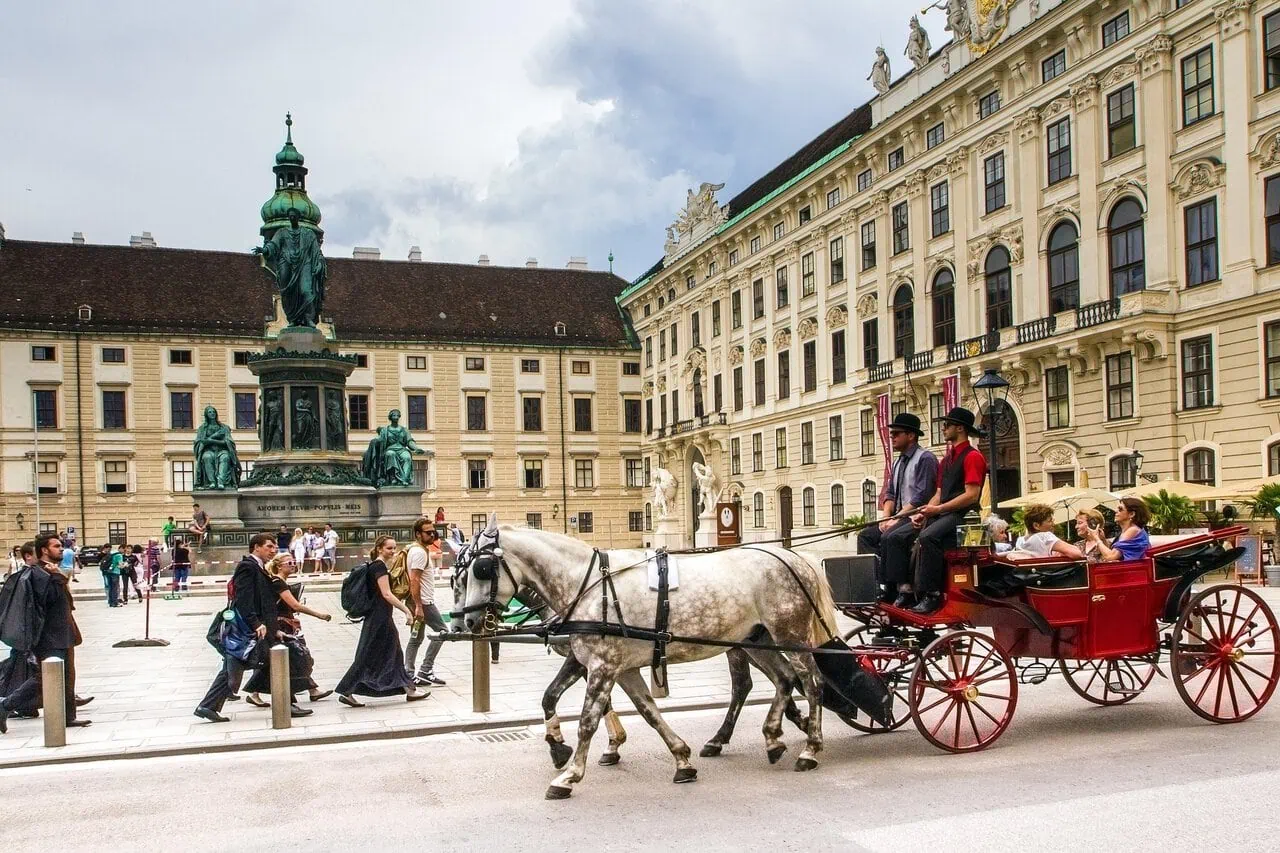
One of the defining features of the UNESCO area is the famous Ringstrasse, the enormous circular boulevard constructed after the old city walls were demolished in the mid nineteenth century. Walking the Ringstrasse allows visitors to experience many of Vienna’s greatest buildings in a single route, including the Austrian Parliament, Vienna City Hall, the University of Vienna, the Burgtheater, and the State Opera House. Horse-drawn carriages, grand façades, historic cafés, and wide tram-lined boulevards still create the atmosphere of an imperial capital.
At the centre of the UNESCO district stands St Stephen’s Cathedral, one of the most recognisable religious landmarks in Europe. Its multicoloured tiled roof, Gothic tower, underground catacombs, and panoramic viewing platforms make it one of Vienna’s most visited attractions. The surrounding streets around Stephansplatz are often crowded with tourists, but quieter alleys nearby still preserve fragments of medieval Vienna hidden behind luxury shopping streets and elegant façades.
The UNESCO protection of central Vienna remains politically important today because of debates surrounding modern construction and skyline changes. UNESCO has previously raised concerns about high-rise development projects affecting the historic urban landscape. These debates highlight how the city continues balancing preservation, modernisation, tourism growth, and commercial development within one of Europe’s most historically significant capitals.
Schönbrunn Palace and Its UNESCO Status
For many visitors, Schönbrunn Palace is the single most impressive imperial attraction in Vienna. Located southwest of the historic centre near Schönbrunn Station on the U4 U-Bahn line, the vast palace complex represents the former summer residence of the Habsburg dynasty and remains one of the most important cultural sites in Austria. Although many travellers associate UNESCO Vienna primarily with the city centre, Schönbrunn Palace forms a major part of Vienna’s wider global heritage identity and attracts millions of visitors every year.
The origins of Schönbrunn date back several centuries, but the palace became especially associated with Empress Maria Theresa, who transformed it into a grand imperial residence during the eighteenth century. Today, travellers can explore lavish ceremonial rooms, private royal apartments, enormous landscaped gardens, fountains, sculptures, and elevated viewpoints overlooking the city. The yellow exterior of the palace has become one of the defining visual symbols of Vienna tourism, appearing across guidebooks, travel campaigns, and UNESCO-related material.
One of the reasons Schönbrunn Palace stands out among European royal residences is the sheer scale of the estate. Beyond the palace itself, the UNESCO protected grounds include the famous Gloriette, ornamental gardens, the Palm House, the maze complex, and the historic Tiergarten Schönbrunn, which is recognised as the world’s oldest continuously operating zoo. During warmer months, visitors often spend an entire day exploring the estate because the gardens alone cover such a large area.
The palace also connects strongly to wider European history. Figures linked to Schönbrunn include Napoleon Bonaparte, Emperor Franz Joseph, and Empress Elisabeth (Sisi), whose life story remains deeply connected to Austrian tourism and popular culture. Many travellers specifically visit the palace because of films, royal history, or interest in the final decades of the Austro-Hungarian Empire. Combined with the nearby cafés, museums, and transport links, Schönbrunn Palace remains one of the essential experiences within any broader UNESCO Vienna itinerary.
How UNESCO Protection Shapes Modern Vienna
The UNESCO designation covering the Historic Centre of Vienna is not simply symbolic. It directly influences how the city manages development, preservation, tourism, transport planning, and skyline expansion. Because central Vienna contains such a dense concentration of historic architecture, local authorities must carefully balance modern economic growth with the preservation of one of Europe’s most important cultural landscapes.
One of the most controversial issues surrounding UNESCO Vienna has been high-rise construction. UNESCO has repeatedly expressed concern about modern towers and redevelopment projects potentially damaging the historic skyline, particularly around areas visible from the Ringstrasse and the old imperial centre. In 2017, these concerns culminated in the Historic Centre of Vienna being formally added to UNESCO’s List of World Heritage in Danger, principally over the planned Heumarkt redevelopment and its high-rise InterContinental tower near Karlsplatz. The site remains on that danger list today, with the World Heritage Committee retaining it at its most recent sessions while continuing to review Vienna’s development controls and impact assessments for projects near the historic core.
For travellers, however, these preservation rules create major advantages. Large sections of central Vienna retain remarkable architectural consistency because modern redevelopment remains tightly controlled. Walking through districts such as the Innere Stadt, visitors experience uninterrupted rows of imperial façades, historic plazas, monumental museums, and preserved civic buildings that still resemble the city’s appearance during the late Habsburg era. This sense of continuity is one reason Vienna feels dramatically different from many other European capitals heavily altered after the Second World War.
UNESCO status also strengthens investment in restoration and tourism infrastructure. Buildings such as St Stephen’s Cathedral, the Hofburg Palace, and historic theatres receive ongoing conservation work designed to protect both structural integrity and cultural authenticity. Meanwhile, the city continues modernising transport systems beneath this historic environment, allowing the Vienna U-Bahn, tram network, and regional rail services to function efficiently without completely disrupting the character of the UNESCO core.
Top UNESCO Landmarks to Visit in Vienna
The most famous landmark within UNESCO Vienna is undoubtedly St Stephen’s Cathedral, located at the centre of Stephansplatz. Its towering Gothic spire dominates the skyline and has become one of the defining symbols of both Vienna and Austria itself. Visitors can explore the cathedral interior, climb the south tower for panoramic city views, or descend into the underground catacombs where members of the Habsburg dynasty and former church officials were buried.
Another essential UNESCO landmark is the enormous Hofburg Palace complex. Once the political centre of the Austro-Hungarian Empire, the Hofburg now contains museums, ceremonial halls, libraries, chapels, and government institutions spread across multiple interconnected buildings. Travellers can visit the Imperial Apartments, learn about Empress Sisi, watch performances at the Spanish Riding School, or explore the nearby Heldenplatz square, which also carries darker twentieth century historical associations connected to Nazi Germany and the Anschluss of 1938.
The grand Ringstrasse boulevard itself functions almost like an open-air UNESCO museum. Constructed during the nineteenth century after Vienna’s defensive walls were demolished, the Ringstrasse is lined with monumental state architecture including the Austrian Parliament, Vienna City Hall, the University of Vienna, the Museum of Art History, and the Natural History Museum. Many travellers use the historic tram routes circling the Ringstrasse as an easy way to experience Vienna’s imperial architecture without excessive walking.
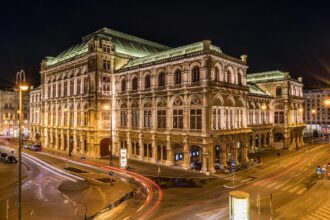
No UNESCO Vienna itinerary feels complete without visiting the Vienna State Opera. Opened in 1869, the opera house remains one of the world’s most prestigious classical music venues and symbolises Vienna’s global cultural influence. Even travellers who do not attend a performance often visit the building because of its historic importance, architectural elegance, and location within the UNESCO protected centre. Combined with nearby cafés, luxury shopping streets, and historic hotels, this district represents the classic image many travellers associate with imperial Vienna.
Best if you can move a day either way. Shows how the fare to Vienna changes across the month.
Compare flightsBest if you want maps and messaging working the moment you switch your phone on.
See eSIM plansBest when public transport has stopped, or when you are travelling with children and bags.
Book a transferImperial Vienna: Habsburg Palaces, Churches & Museums
Much of UNESCO Vienna revolves around the legacy of the Habsburg dynasty, which ruled large parts of Central Europe for centuries. The imperial family transformed Vienna into one of Europe’s great political and cultural capitals, leaving behind monumental architecture that still shapes the city today. Walking through the historic centre often feels like moving through an enormous open-air museum dedicated to imperial power, aristocratic wealth, and classical European culture.
The most important imperial complex is the sprawling Hofburg Palace, which expanded gradually over centuries as the power of the Habsburg Empire grew. Rather than being a single building, the Hofburg consists of multiple palaces, courtyards, chapels, libraries, museums, and ceremonial halls linked together across a vast area near the city centre. Visitors can explore the lavish Imperial Apartments, the silver collections, and exhibitions dedicated to Empress Elisabeth (Sisi), whose life story continues attracting enormous international interest.
Religious architecture also forms a major part of Vienna’s UNESCO identity. Alongside St Stephen’s Cathedral, travellers encounter extraordinary churches such as Karlskirche, Peterskirche, and the gothic Votive Church. These buildings reflect different periods of Vienna’s architectural development, from medieval Gothic construction through Baroque religious grandeur. Many also contain major artworks, elaborate domes, crypts, and historic organs linked to Vienna’s long musical tradition.
Vienna’s museum landscape further reinforces the UNESCO atmosphere. Institutions such as the Kunsthistorisches Museum, Albertina, and Belvedere Palace Museum house world-famous collections connected to imperial collecting traditions and European artistic history. Together, these palaces, churches, and museums create one of the densest concentrations of cultural heritage attractions anywhere in Europe, making UNESCO Vienna especially rewarding for travellers interested in architecture, history, classical art, and political history.
Best Streets, Squares & Districts to Explore
One of the greatest strengths of UNESCO Vienna is how walkable the historic centre feels. Many of the city’s most famous streets, squares, and imperial districts sit within relatively short distances of one another, allowing travellers to experience grand architecture, historic cafés, luxury shopping streets, and hidden medieval alleys within a single afternoon. Unlike some European capitals where major attractions feel heavily separated, central Vienna rewards slow exploration on foot.
Most visitors naturally gravitate toward Stephansplatz, the historic square surrounding St Stephen’s Cathedral. This area forms the geographical and symbolic centre of the old city, with pedestrian streets radiating outward toward shopping districts, churches, and former aristocratic quarters. Streets such as Graben and Kohlmarkt contain some of Vienna’s most elegant architecture and luxury retail spaces, while smaller side streets nearby still preserve fragments of medieval Vienna hidden behind polished imperial façades.
Another essential area is the monumental Ringstrasse, which circles the historic core where Vienna’s medieval walls once stood. Walking sections of the Ringstrasse allows travellers to experience many of the city’s greatest UNESCO landmarks in sequence, including the Vienna State Opera, Parliament Building, Burgtheater, Museum Quarter, and Vienna City Hall. Historic tram lines running around the boulevard also make it one of the easiest areas in the city to explore without needing taxis or complicated route planning.
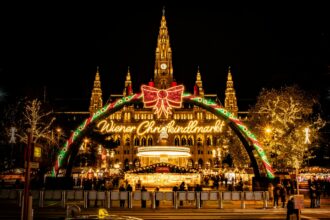
Travellers wanting a quieter atmosphere should spend time around districts such as Spittelberg and the lanes surrounding the Hofburg Palace. These areas contain narrower streets, traditional cafés, smaller museums, and more intimate architectural details often missed by visitors rushing between major attractions. During winter, many of these streets become especially atmospheric thanks to Christmas markets, seasonal lighting, and the contrast between imperial buildings and smaller residential courtyards.
Hidden UNESCO Details Most Visitors Miss
Many visitors to UNESCO Vienna focus entirely on the city’s major landmarks, but some of the most interesting details are hidden in quieter streets, overlooked courtyards, and smaller architectural features scattered throughout the historic centre. Because Vienna developed gradually across centuries, layers of medieval, Baroque, neoclassical, and Art Nouveau history often exist within the same district, rewarding travellers who slow down and look beyond the headline attractions.
One commonly overlooked detail is the large number of hidden inner courtyards attached to former aristocratic residences and commercial buildings. Around areas near the Hofburg Palace and Stephansplatz, many entrances reveal elegant passageways, decorative façades, and historic staircases invisible from the street. Some courtyards now contain cafés, boutiques, or galleries, while others preserve fragments of older Vienna largely untouched by modern tourism.
Travellers also frequently overlook Vienna’s darker twentieth century history within the UNESCO area. Locations such as Heldenplatz are closely connected to the Anschluss of 1938, when Adolf Hitler addressed enormous crowds following the annexation of Austria into Nazi Germany. Although much of Vienna is marketed through imperial glamour and classical music, these darker historical layers remain deeply embedded within the city landscape and add important context to understanding modern Austrian history.
Another hidden feature of UNESCO Vienna is the surviving network of plague memorials, historic fountains, and symbolic religious sculptures found across the old city. The famous Pestsäule on Graben commemorates the devastating seventeenth century plague outbreak and reflects how public monuments were used to project both religious devotion and imperial authority. Similar details appear throughout the city once travellers begin recognising them, turning ordinary walks through Vienna into surprisingly rich historical experiences.
UNESCO Vienna Walking Route
A self-guided walk through UNESCO Vienna is one of the best ways to experience the city because so many major attractions sit within a compact and pedestrian-friendly historic core. Most travellers begin around Stephansplatz, which provides easy access via the U1 and U3 U-Bahn lines and places visitors directly beside St Stephen’s Cathedral. Starting early in the morning usually provides the best atmosphere before tour groups and shopping crowds fully arrive.
From Stephansplatz, travellers can follow pedestrian streets such as Graben and Kohlmarkt toward the enormous Hofburg Palace complex. This section of the walk passes luxury boutiques, historic façades, traditional cafés, and several smaller churches hidden between grand imperial buildings. The route then naturally opens into major squares such as Michaelerplatz and Heldenplatz, where the scale of Vienna’s imperial architecture becomes especially dramatic.
Continuing westward, visitors can reach the Museum Quarter, one of the largest cultural districts in Europe. This area combines historic imperial buildings with modern museum architecture and contains attractions such as the Leopold Museum and the Museum of Modern Art Ludwig Foundation Vienna. Nearby streets also provide good opportunities for café stops and quieter breaks away from the busiest tourist corridors around the cathedral district.
Many travellers then complete the route by walking sections of the Ringstrasse, passing the Austrian Parliament, Vienna City Hall, Burgtheater, and the Vienna State Opera before looping back toward the city centre. Depending on museum visits and café stops, the full route usually takes between 4 and 7 hours. Comfortable footwear is strongly recommended because although Vienna is relatively flat, most visitors cover far larger distances on foot than expected.
Best Museums Within Vienna’s UNESCO Core
Few cities in Europe can match the concentration of museums found within UNESCO Vienna. Many of the institutions inside the historic centre originated from imperial collections accumulated by the Habsburg dynasty, meaning travellers can explore world-class art, decorative objects, manuscripts, armour, and scientific collections within buildings that are themselves historic landmarks.
The most famous museum complex is the Kunsthistorisches Museum, located beside the Museum Quarter near the Ringstrasse. The museum contains extraordinary collections gathered by the Habsburg rulers, including works by Bruegel, Rubens, Caravaggio, and Velázquez. Even travellers with limited interest in fine art often visit because of the building itself, whose marble staircases, domes, and decorative interiors rank among the grandest museum spaces anywhere in Europe.
Another major highlight is the Albertina Museum, located near the Vienna State Opera. The Albertina is internationally known for its graphic art collections, including works by Dürer, Picasso, and Monet, while also offering excellent temporary exhibitions. The museum’s elevated terrace additionally provides one of the best viewpoints overlooking parts of central Vienna and the surrounding UNESCO protected streetscape.
Travellers interested in imperial history should also prioritise the museums inside the Hofburg Palace complex. The Imperial Treasury contains crowns, ceremonial regalia, and religious relics associated with the Holy Roman Empire and the Habsburg monarchy, while the Sisi Museum explores the life and mythology surrounding Empress Elisabeth. Together, these museums help explain why Vienna became one of Europe’s most culturally influential imperial capitals for centuries.
Vienna’s Coffee House Culture and UNESCO Heritage
The coffee house tradition forms one of the most distinctive cultural experiences within UNESCO Vienna. In fact, Viennese coffee house culture was officially recognised by UNESCO as part of Austria’s intangible cultural heritage because of its historical role in shaping intellectual, artistic, and social life within the city. For many travellers, visiting Vienna without spending time inside its historic cafés would feel incomplete.
Traditional Viennese coffee houses developed into far more than simple places to drink coffee. During the nineteenth and early twentieth centuries, writers, musicians, politicians, philosophers, and artists gathered inside cafés to debate ideas, read newspapers, compose music, and conduct business. Figures connected to Vienna’s café culture included Sigmund Freud, Leon Trotsky, and numerous composers and intellectuals associated with the final decades of the Austro-Hungarian Empire.
Today, travellers can still experience much of this atmosphere in historic venues such as Café Central, Café Sacher, Café Landtmann, and Café Demel. Interiors often feature chandeliers, marble tables, velvet seating, and uniformed waiters preserving traditions that feel dramatically different from modern chain coffee shops. Many visitors combine coffee house visits with museum trips or walking routes through the UNESCO district because cafés provide ideal resting points between major attractions.
Coffee culture in Vienna is also closely tied to food traditions. Travellers commonly pair drinks with desserts such as Sachertorte, Apfelstrudel, or other classic Austrian pastries while watching city life unfold around them. During colder months, particularly between November and December, historic cafés become even more atmospheric thanks to winter decorations, festive lighting, and the seasonal rhythm of Vienna’s famous Christmas market period.
Best for a short stop where being central matters more than the room. Dorms and private rooms both listed.
See hostelsBest for anyone flying more than once or twice a year. Handles the compensation claim so you are not chasing the airline.
See AirHelp+Best for a day with a bag and nowhere to put it. Find a storage point near where you already are.
View storageMusic, Opera & Cultural Heritage in Vienna
Few cities are as closely associated with classical music as Vienna. The city’s cultural identity is deeply connected to composers such as Mozart, Beethoven, Schubert, Haydn, and Johann Strauss II, many of whom lived, worked, or performed within the streets that now form part of UNESCO Vienna. For travellers interested in music history, opera, orchestras, and concert culture, Vienna remains one of the most important destinations in the world.
The centrepiece of Vienna’s musical reputation is the magnificent Vienna State Opera on the Ringstrasse. Opened in 1869, the opera house remains one of the world’s leading venues for opera and ballet performances. Visitors can attend evening performances, book guided tours, or simply admire the building’s architecture while exploring the UNESCO district. Even travellers without a strong background in classical music often find the atmosphere around the opera house unforgettable, particularly during performance evenings when the surrounding streets fill with elegantly dressed visitors.
Another major cultural institution is the Musikverein, famous worldwide for hosting the annual Vienna New Year’s Concert performed by the Vienna Philharmonic Orchestra. The building’s celebrated Golden Hall is renowned for its acoustics and regularly hosts performances considered among the finest in Europe. Nearby, the Konzerthaus adds another layer to Vienna’s musical landscape, offering orchestral concerts, chamber music, jazz, and contemporary performances throughout the year.
Music heritage also appears throughout the wider UNESCO area in smaller but equally fascinating ways. Travellers encounter statues of composers, former residences linked to famous musicians, historic theatres, and churches where classical works were first performed. The city’s relationship with music is not confined to museums or elite concert halls. Street musicians around Stephansplatz, seasonal outdoor performances, and evening chamber concerts inside historic churches all contribute to the sense that music remains woven into the daily rhythm of Vienna itself.
How to Get Around UNESCO Vienna
One reason UNESCO Vienna works exceptionally well for travellers is the quality of the city’s public transport system. The historic centre combines excellent walkability with efficient trams, U-Bahn lines, buses, suburban rail services, and airport connections, allowing visitors to move between major attractions quickly without relying on taxis or rental cars.
Most travellers exploring the UNESCO district use the Vienna U-Bahn system as the backbone of their journeys. Key stations such as Stephansplatz, Karlsplatz, Schwedenplatz, and Volkstheater provide direct access to many of the city’s major heritage attractions. The network is clean, reliable, and easy to understand even for first-time visitors. Trains operate frequently throughout the day, while night services run on weekends, making late evening opera performances or restaurant visits straightforward to manage.
Vienna’s historic tram network is equally useful for sightseeing. Several tram routes circle the famous Ringstrasse, passing landmarks such as the Vienna State Opera, Parliament Building, Museum Quarter, and City Hall. For travellers wanting a relaxed overview of the UNESCO core without excessive walking, trams provide one of the easiest and most scenic transport options in the city. Many visitors underestimate how enjoyable simple tram journeys around central Vienna can be.
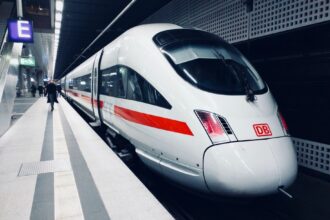
Arriving from Vienna International Airport is also relatively simple. The fastest connection is usually the City Airport Train (CAT) linking the airport with Wien Mitte, although regular S-Bahn services provide cheaper alternatives. Long-distance rail travellers typically arrive via Wien Hauptbahnhof, which connects efficiently to the UNESCO district using the U1 line. Because transport infrastructure is so strong, many visitors comfortably explore Vienna entirely without needing private vehicles during their stay.
Best Time to Visit UNESCO Vienna
The best time to visit UNESCO Vienna depends heavily on what kind of experience travellers want from the city. Different seasons dramatically change the atmosphere around the imperial streets, cafés, museums, and public squares that define the UNESCO district.
Many travellers consider April to June the ideal period for visiting Vienna. During spring, temperatures are generally comfortable for walking, gardens begin filling with colour, and outdoor café culture becomes especially lively. Areas such as the grounds of Schönbrunn Palace, the parks around the Ringstrasse, and pedestrian streets near Stephansplatz feel particularly attractive during this period. Spring also avoids the larger crowds associated with peak summer tourism.
Summer brings long daylight hours, outdoor concerts, and major cultural events, but central Vienna can become significantly busier between July and August. Major attractions such as St Stephen’s Cathedral, the Hofburg Palace, and the Vienna State Opera area often experience heavy visitor numbers during peak afternoons. However, summer evenings can be spectacular for walking through the UNESCO district because many buildings remain beautifully illuminated after dark while cafés and restaurants stay busy late into the evening.
For many repeat visitors, the most atmospheric season is late autumn and early winter. Between November and December, Vienna transforms into one of Europe’s great Christmas market destinations. Areas around Rathausplatz, Schönbrunn Palace, and the historic centre become filled with festive lighting, seasonal food stalls, and winter concerts. Combined with the city’s imperial architecture and historic coffee houses, this creates an atmosphere that many travellers consider one of the strongest seasonal city experiences anywhere in Europe.

Where to Stay for Exploring UNESCO Vienna
Choosing the right area to stay can significantly improve a trip to UNESCO Vienna, particularly because different districts offer very different atmospheres, transport connections, and accommodation styles. Fortunately, Vienna’s public transport system makes most central locations practical for travellers even without expensive hotels directly beside the major landmarks.
The most convenient area is usually the Innere Stadt, or 1st District, which forms the heart of the UNESCO protected centre. Staying here places travellers within walking distance of attractions such as St Stephen’s Cathedral, the Hofburg Palace, the Albertina, and the Vienna State Opera. Hotels in this area tend to be elegant and historic, although prices are often significantly higher than elsewhere in the city. For shorter stays focused heavily on sightseeing, however, the location can save substantial travel time.
Travellers wanting a balance between convenience and lower accommodation costs often choose districts such as Leopoldstadt, Mariahilf, or areas near Karlsplatz and Wien Hauptbahnhof. These locations still provide excellent access to the UNESCO core through the U-Bahn network while offering a broader mix of hotels, apartments, and mid-range accommodation options. Areas near Naschmarkt are especially popular with visitors who want lively restaurant scenes alongside easy sightseeing access.
For luxury travellers, historic hotels around the Ringstrasse provide some of the most iconic accommodation experiences in Europe. Several former aristocratic buildings have been converted into high-end hotels overlooking major UNESCO landmarks and boulevards. Meanwhile, budget-conscious visitors often find strong value near outer U-Bahn stations because Vienna’s transport system allows fast access into the centre even from districts outside the historic core.
Compare hotel prices in Vienna with Vio
Vio compares prices across major booking sites, including Booking.com, Expedia, Agoda and Hotels.com, so you can check whether the same stay is cheaper elsewhere before you book.
Other booking options
Click the map to open a larger interactive view and explore more accommodation options.
Food & Drink Near Vienna’s UNESCO Attractions
Food forms a major part of the experience when exploring UNESCO Vienna, and the historic centre contains everything from elegant imperial cafés to traditional taverns and modern Austrian restaurants. Many of the city’s best-known food experiences sit within walking distance of major landmarks such as St Stephen’s Cathedral, the Hofburg Palace, and the Vienna State Opera, making it easy for travellers to combine sightseeing with classic Viennese dining culture.
One of the most famous culinary experiences in Vienna is trying a traditional Wiener Schnitzel inside a historic restaurant. Establishments around the Innere Stadt and near the Ringstrasse specialise in classic Austrian dishes including schnitzel, Tafelspitz, sausages, potato salads, and seasonal desserts. Restaurants such as Figlmüller have become internationally famous for oversized schnitzels, although travellers should expect queues during peak tourist periods, particularly in the evenings and around weekends.
Coffee house culture also remains central to food experiences within UNESCO Vienna. Historic cafés such as Café Central, Café Sacher, and Demel attract visitors looking for traditional pastries, elaborate interiors, and slower dining experiences connected to Vienna’s intellectual and cultural history. Sampling Sachertorte or Apfelstrudel while sitting beneath chandeliers inside a nineteenth century café is considered almost essential for many first-time visitors to the city.
Travellers wanting more affordable food options will also find strong variety beyond the grand imperial cafés. Areas around Naschmarkt, Schwedenplatz, and side streets near the universities contain a mixture of Austrian, Central European, Middle Eastern, and international restaurants reflecting Vienna’s increasingly multicultural population. During winter, Christmas markets across the UNESCO district additionally become important food destinations, with stalls selling mulled wine, roasted chestnuts, sausages, pastries, and seasonal sweets beneath the illuminated imperial architecture.
Day Trips from Vienna with UNESCO Connections
One of the major advantages of visiting UNESCO Vienna is how easily the city connects to other important heritage destinations across Austria and Central Europe. Thanks to excellent rail infrastructure and Vienna’s position near several international borders, travellers can combine imperial city sightseeing with castles, monasteries, wine regions, and additional UNESCO sites reachable within a few hours.
The most famous nearby UNESCO destination is probably the Wachau Valley, located west of Vienna along the Danube River. This scenic region is known for vineyards, medieval towns, abbeys, and river landscapes, with highlights including Melk Abbey, Dürnstein, and riverside cruise routes. Direct trains from Wien Franz-Josefs-Bahnhof and organised tours make the area relatively easy to visit even as a single-day excursion.
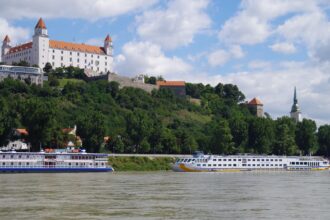
Another popular option is Bratislava, the capital of Slovakia, located roughly one hour from Vienna by train or river boat. Although Bratislava itself is not a UNESCO city in the same way as Vienna, its medieval old town, castle district, and position on the Danube make it one of Europe’s easiest international day trips. Many travellers combine both capitals during the same holiday because direct rail services between Wien Hauptbahnhof and Bratislava hlavná stanica operate frequently throughout the day.
Travellers interested in music heritage and Alpine scenery often head toward Salzburg, the birthplace of Mozart and another major Austrian UNESCO destination. Although the journey is longer, high-speed Railjet services make Salzburg practical as either a long day trip or an overnight extension from Vienna. Other UNESCO-connected options include Graz, the monastery landscapes around Semmering Railway, and sections of the broader Danube cultural corridor stretching across Central Europe.

Tickets, Tours & City Passes for UNESCO Vienna
Travellers visiting UNESCO Vienna quickly discover that attraction costs can add up, particularly when combining palaces, museums, opera visits, and guided tours. Planning ticket strategies in advance can therefore save both money and queueing time, especially during the busy summer and Christmas market seasons.
Many of Vienna’s major attractions operate with timed entry systems. Places such as Schönbrunn Palace, the Spanish Riding School, and some exhibitions inside the Hofburg Palace can become heavily booked during peak periods, particularly around weekends and holidays. Travellers planning short stays should usually reserve high-priority attractions in advance rather than relying entirely on same-day availability.
The main city sightseeing pass is the Vienna Pass, which includes access to numerous museums and attractions alongside hop-on-hop-off bus services. Whether the pass offers good value depends heavily on travel style. Visitors planning intensive sightseeing over two or three days can often save money, while slower travellers focused mainly on walking through the UNESCO district may find individual tickets more economical. Public transport passes are normally purchased separately unless included in specific combined offers.
Guided tours also remain extremely popular in UNESCO Vienna, especially for themes connected to imperial history, classical music, or darker twentieth century events such as the Anschluss and the Second World War. Walking tours around the Innere Stadt are particularly effective because so many historic layers exist within a relatively compact area. Evening classical concerts, palace tours, and food-focused experiences additionally provide alternative ways to experience Vienna’s UNESCO heritage beyond traditional museum visits.
Accessibility in Vienna’s Historic Centre
Compared with many older European capitals, UNESCO Vienna performs relatively well for accessibility, although travellers should still expect occasional challenges linked to historic architecture and protected streetscapes. The city has invested heavily in transport modernisation and pedestrian infrastructure, making large sections of the UNESCO core easier to navigate than many visitors initially expect.
The Vienna U-Bahn system is generally highly accessible, with elevators and step-free access available at many major stations including Stephansplatz, Karlsplatz, and Wien Hauptbahnhof. Modern tram vehicles increasingly support low-floor boarding, while pedestrian crossings across the historic centre are usually well maintained. This makes it realistic for many travellers with reduced mobility to explore large parts of central Vienna independently.
However, some historic attractions present unavoidable limitations due to preservation requirements. Buildings such as St Stephen’s Cathedral, older palace sections, and certain museum interiors may include stone staircases, uneven flooring, narrow passageways, or restricted lift access. Cobblestones in older streets can also create difficulties for wheelchair users and travellers with mobility impairments, particularly during wet or icy winter conditions.
Travellers requiring step-free access should usually book accommodation carefully and verify accessibility details directly with hotels before arrival. Vienna generally performs strongly compared with many historic European cities, but the balance between heritage preservation and modern accessibility still creates occasional inconsistencies across the UNESCO district. Planning routes around major U-Bahn stations and modern tram corridors can significantly improve the overall experience for visitors with accessibility needs.
Safety Tips & Tourist Scams in Vienna
Overall, Vienna remains one of the safest major capitals in Europe and is widely regarded as a comfortable destination for independent travellers, solo visitors, and families. Violent crime affecting tourists is relatively uncommon, and the UNESCO historic centre is generally well monitored, well lit, and heavily used throughout the day and evening.
The most common issues affecting visitors involve petty theft and tourist-targeted scams rather than serious safety risks. Crowded areas around Stephansplatz, Schwedenplatz, Christmas markets, and major transport hubs such as Wien Hauptbahnhof occasionally attract pickpockets, particularly during busy summer periods and festive events. Travellers should remain especially cautious around crowded tram stops, busy café terraces, and packed sightseeing areas where distractions are common.
Some visitors also encounter overpriced tourist restaurants or unofficial ticket sellers near major attractions. Buying opera tickets, concert seats, or attraction passes directly from official venues or recognised providers is usually the safest approach. Horse carriage rides around the historic centre are another area where travellers should confirm pricing clearly before departure because route lengths and costs can vary significantly.
Late at night, most areas of central UNESCO Vienna still feel relatively calm and secure compared with many other European capitals. Public transport generally remains reliable, streets are well maintained, and visible policing around tourist districts is common. Even so, travellers should apply normal urban precautions, particularly around nightlife areas, crowded stations, and unfamiliar outer districts beyond the historic centre.

Rupert’s Handy Travel Tips
If you want to enjoy UNESCO Vienna properly, slow down and treat the city as somewhere to experience rather than simply tick off. The real magic often comes from wandering between the grand attractions, sitting inside historic cafés, and exploring quieter side streets away from the busiest tourist crowds.
- Visit major landmarks like St Stephen’s Cathedral and the Hofburg Palace early in the morning before large tour groups arrive.
- Use Vienna’s excellent tram network to explore the Ringstrasse without exhausting yourself walking long distances.
- Book tickets for the Vienna State Opera or Schönbrunn Palace in advance during summer and Christmas market season.
- Do not rush coffee house visits. Traditional cafés in Vienna are designed for lingering, reading, and people watching.
- If you visit during winter, carry warm waterproof layers because cold winds can move quickly through the open imperial boulevards around the UNESCO centre.
Want to meet the reindeer behind our travel tips? Find out more in our page Who is Rupert?.





Frequently Asked Questions About UNESCO Vienna
Is Vienna a UNESCO World Heritage Site?
Yes. The Historic Centre of Vienna became a UNESCO World Heritage Site in 2001 because of its architectural, cultural, and historical importance linked to the Habsburg Empire, classical music, and European urban development.
What is the main UNESCO site in Vienna?
The primary UNESCO area is the Historic Centre of Vienna, covering much of the Innere Stadt and surrounding imperial districts including landmarks such as St Stephen’s Cathedral, the Hofburg Palace, and the Ringstrasse.
Is Schönbrunn Palace part of UNESCO Vienna?
Yes. Schönbrunn Palace is recognised as a major UNESCO heritage attraction connected to Vienna’s imperial history and forms one of the city’s most important cultural sites.
How many days do you need in Vienna?
Most travellers need at least 2 to 4 days to properly explore UNESCO Vienna, including the historic centre, major museums, coffee houses, and Schönbrunn Palace.
What is the best time to visit UNESCO Vienna?
Many travellers prefer April to June or September to December. Spring offers comfortable sightseeing weather, while winter brings famous Christmas markets and festive seasonal atmosphere.
Can you explore UNESCO Vienna without a car?
Yes. Vienna has one of Europe’s best public transport systems, including the U-Bahn, trams, buses, and regional rail services. Most visitors explore the UNESCO district entirely on foot and public transport.
Further Reading & Related Guides
Travellers exploring UNESCO Vienna often combine the city with wider journeys across Austria and Central Europe. If you are planning a broader itinerary, our guides to Vienna Christmas Markets, Vienna to Bratislava, and the wider Austria Interrail Pass can help you build a more complete trip around the region. Visitors interested in transport planning should also read our guides to European Railway Journeys and Train Booking Apps, especially if continuing onward toward destinations such as Budapest, Prague, or Salzburg.
Travellers wanting a broader overview of museums, palaces, food markets, seasonal attractions, river cruises, and general sightseeing should also read our Best Things to Do in Vienna guide, which covers many additional experiences beyond the main UNESCO Vienna landmarks.
If you are arriving internationally, our eSIM Apps Guide explains the best ways to stay connected while travelling through Austria and neighbouring countries. Travellers wanting to explore more heritage destinations should also read our growing collection of UNESCO Guides, including pages covering historic cities, industrial heritage sites, and major cultural landmarks across Europe. Meanwhile, visitors interested in darker historical themes may also enjoy our developing Dark Tourism Guides, which explore wartime history, Cold War locations, and politically significant sites connected to European history.