Reviewed by our editorial team Updated
Why Milan Is a Major Gateway to the Alps
For travellers heading toward the Italian Alps, Swiss Alps, and parts of the French Alps, Milan functions as one of Europe’s most important winter transport gateways. The city combines multiple international airports, extensive rail infrastructure, motorway access, and strong coach connections, allowing skiers and snowboarders to reach major mountain resorts relatively quickly after landing in northern Italy. Whether travelling toward Cervinia, Courmayeur, Livigno, St Moritz, or even cross-border resorts such as Chamonix and Zermatt, many Alpine journeys naturally begin in Milan.
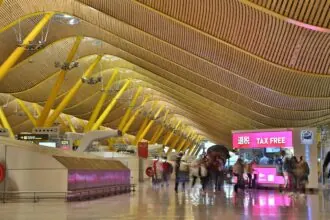
One reason Milan to ski resorts transfers are so popular is the variety of airports serving the region. Milan Malpensa Airport, Milan Linate Airport, and Milan Bergamo Airport all handle large volumes of winter traffic, including budget airlines, long-haul services, and seasonal ski flights from across Europe. This gives travellers flexibility when comparing ski package prices, flight schedules, and transfer times. In many cases, travellers choose flights based primarily on which airport offers the easiest onward journey to their chosen resort.
The geography of northern Italy also makes Milan strategically important. Sitting close to major Alpine corridors, the city provides direct motorway access toward the Aosta Valley, Lombardy ski regions, and Swiss mountain routes through the Bernina Pass and other major transit corridors. High-speed trains and regional rail services further strengthen Milan’s role as a transport hub connecting urban Italy with mountain destinations.
Another major advantage is flexibility. Travellers can choose between private transfers, rail journeys, self-driving routes, ski shuttle buses, and shared transfer companies depending on budget and travel style. Some resorts such as Courmayeur and Cervinia are particularly straightforward by road transfer, while destinations such as St Moritz and Zermatt often combine rail and mountain transport systems. This wide range of options makes Milan ski transfers suitable for luxury travellers, families, backpackers, and independent skiers alike.
Quick Facts About Milan to Ski Resort Transfers
| Feature | Details |
|---|---|
| Main Gateway City | Milan |
| Main Airports | Malpensa, Linate, Bergamo |
| Best Airport for Most Resorts | Milan Malpensa Airport |
| Closest Major Ski Area | Cervinia |
| Fastest Resort Transfer | Around 2 hours |
| Countries Reachable | Italy, Switzerland, France |
| Best Transfer Types | Private transfer, rail, shuttle bus |
| Best Luxury Ski Route | Milan to St Moritz |
| Best Budget Ski Route | Milan to Bormio |
| Main Rail Hub | Milano Centrale |
| Peak Ski Season | December to March |
| Winter Driving Risk | Snow, ice, mountain passes |
| Best Family Resort Access | Courmayeur and Cervinia |
| Main Cross-Border Ski Routes | Chamonix and Zermatt |
| Typical Shared Transfer Cost | €40 to €120+ (£34–£103+ / $44–$131+) |
| Typical Private Transfer Cost | €180 to €600+ (£155–£516+ / $196–$654+) |
These figures are a general guide only: the right choice for you will depend on your exact resort, group size, and how much luggage or ski equipment you are travelling with, which the sections below break down in detail.
Best if you want daily housekeeping and a front desk. Filter by area first, then by price.
Check availabilityBest for families, or any stay past about four nights. A kitchen and a washing machine start paying for themselves.
Browse rentalsBest as a last check before booking. Compares Milan hotel rates across several sites in one search.
Compare ratesWhich Milan Airport Is Best for Ski Transfers?
Choosing the correct airport can significantly improve a Milan to ski resorts journey because the three main Milan airports serve different parts of the Alps more efficiently. Although all three airports can work for ski holidays, transfer times, motorway access, rail connectivity, and shuttle availability vary considerably depending on the destination.
For most travellers, Milan Malpensa Airport is usually the strongest overall option. Located northwest of the city, Malpensa sits closer to many Alpine motorway corridors leading toward the Aosta Valley, Cervinia, Courmayeur, and Swiss resort regions. The airport also handles extensive international traffic and supports a large number of private ski transfer operators during the winter season. Travellers heading toward Zermatt, St Moritz, or cross-border Alpine destinations often find Malpensa especially convenient.
Milan Bergamo Airport, officially known as Orio al Serio Airport, is particularly popular with budget airline passengers using carriers such as Ryanair. Bergamo can work very well for resorts in eastern Lombardy and parts of the Dolomites, although some western Alpine transfers become longer from this airport. Budget-conscious travellers frequently choose Bergamo because flight prices can be dramatically lower than equivalent services into Malpensa or Linate during peak ski season.
Meanwhile, Milan Linate Airport functions best for travellers prioritising convenience to central Milan itself. Linate sits much closer to the city centre and works well for travellers combining skiing with urban stays in Milan before or after their mountain holiday. However, because the airport mainly handles short-haul European flights and has less direct motorway positioning for Alpine routes, it is not always the strongest option for longer ski transfers compared with Malpensa.
Major Ski Resorts Reachable from Milan Airports
| Ski Resort | Country | Best Milan Airport | Approx Transfer Time | Best Transfer Type | Best For |
|---|---|---|---|---|---|
| Cervinia | Italy | Malpensa | 2 to 2.5 hours | Private transfer / shared shuttle | Matterhorn skiing, families |
| Courmayeur | Italy | Malpensa | 2.5 to 3 hours | Private transfer | Luxury skiing, Mont Blanc |
| Livigno | Italy | Bergamo | 3.5 to 5 hours | Private transfer / rail + bus | Budget ski trips, snow reliability |
| Bormio | Italy | Bergamo | 3 to 4 hours | Car / rail + bus | Thermal spas, skiing |
| St Moritz | Switzerland | Malpensa | 3 to 4 hours | Bernina rail route / private transfer | Luxury travel, scenic rail |
| Zermatt | Switzerland | Malpensa | 3 to 4.5 hours | Rail / private transfer | Matterhorn scenery, luxury skiing |
| Chamonix | France | Malpensa | 3 to 4 hours | Private transfer | Alpine adventure, Mont Blanc |
| Madonna di Campiglio | Italy | Bergamo | 3.5 to 5 hours | Car / transfer | Dolomites, luxury skiing |
| La Thuile | Italy | Malpensa | 3 hours | Private transfer | Cross-border skiing into France |
| Pila | Italy | Malpensa | 2.5 to 3 hours | Rail + gondola / transfer | Shorter ski breaks |
| Madesimo | Italy | Malpensa | 2.5 to 3.5 hours | Car / transfer | Weekend ski trips |
| Aprica | Italy | Bergamo | 3 hours | Rail + bus / car | Budget-friendly skiing |
| Sestriere | Italy | Malpensa | 3.5 to 4.5 hours | Car / transfer | Olympic ski terrain |
| Sauze d’Oulx | Italy | Malpensa | 3.5 to 4 hours | Car / shared shuttle | Après ski, Milky Way ski area |
| Val Gardena | Italy | Bergamo | 4.5 to 5.5 hours | Car / transfer | Dolomites scenery |
| Cortina d’Ampezzo | Italy | Bergamo | 5 to 6 hours | Car / transfer | Luxury Dolomites skiing |
As the table shows, transfer times vary hugely depending on destination, so it’s worth deciding on your resort first before comparing the specific transport options covered in the sections below.
Best Ski Resorts Reachable from Milan
One of the reasons Milan ski transfers are so popular is the sheer variety of mountain destinations reachable from the city. Travellers can access glamorous luxury resorts, family-friendly ski villages, high-altitude snow-sure destinations, and major Alpine ski areas across multiple countries within a few hours of Milan’s airports and rail hubs.
For travellers remaining within Italy, the most famous options include Cervinia, Courmayeur, Bormio, and Livigno. Cervinia is especially popular because of its connection to Zermatt and the iconic Matterhorn, while Courmayeur attracts skiers looking for stylish Alpine atmosphere beneath Mont Blanc. Meanwhile, Livigno and Bormio appeal strongly to travellers wanting excellent skiing combined with more affordable Italian pricing compared with some Swiss resorts.
Travellers heading into Switzerland often target destinations such as St Moritz and Zermatt. These resorts combine spectacular mountain scenery with premium rail journeys and world-famous Alpine reputations. The route from Milan to St Moritz, particularly via the Bernina Express corridor, has become one of Europe’s most scenic winter travel experiences and attracts many visitors even beyond the skiing community.
Cross-border travel toward the French Alps is also realistic from Milan, particularly for resorts such as Chamonix beneath Mont Blanc. While journey times are longer compared with Italian resorts, Milan still functions as an important arrival gateway for travellers using low-cost flights or combining multiple Alpine destinations within the same trip. This flexibility makes Milan one of Europe’s strongest all-round ski access cities rather than simply an Italian ski gateway alone.
Getting to Courmayeur from Milan
The route from Milan to Courmayeur is one of the most popular Alpine transfer journeys in northern Italy. Located beneath the dramatic slopes of Mont Blanc in the Aosta Valley, Courmayeur combines luxury Alpine atmosphere, strong skiing infrastructure, and relatively straightforward road access from Milan’s airports. The resort attracts skiers, snowboarders, hikers, and luxury travellers throughout the winter season, particularly because of its proximity to both France and Switzerland.
For most travellers, private road transfer remains the easiest option. Journey times from Milan Malpensa Airport typically range between 2.5 and 3 hours depending on weather and traffic conditions, while transfers from Milan Linate Airport or Bergamo Airport may take slightly longer. The route primarily follows major motorways toward Aosta before climbing into the upper valley toward Courmayeur. During heavy snowfall periods, travel times can increase significantly, especially around weekends and holiday periods.
Rail travel to Courmayeur is possible but less direct than road transfers. Travellers usually take trains from Milano Centrale toward Aosta, followed by regional bus connections into the resort itself. While this route can be scenic, it normally involves multiple changes and longer journey times compared with private or shared shuttle transfers. Families travelling with ski equipment often prefer direct road services because they reduce the complexity of handling luggage between stations and buses.
One major advantage of Courmayeur is its position near the Mont Blanc Tunnel, allowing travellers to combine skiing in Italy with excursions into Chamonix or other parts of the French Alps. This cross-border flexibility makes the resort especially attractive for travellers planning multi-country Alpine itineraries starting from Milan.
How to Reach Cervinia from Milan
The journey from Milan to Cervinia is one of the most iconic ski transfer routes in the Italian Alps because of the resort’s spectacular setting beneath the Matterhorn. Officially known as Breuil-Cervinia, the resort sits close to the Swiss border and links directly with the ski areas of Zermatt, creating one of Europe’s largest high-altitude ski domains.
For most visitors, the fastest and simplest transfer option is a direct private or shared road transfer from Milan Malpensa Airport. Typical journey times range from 2 to 2.5 hours, making Cervinia one of the most accessible major Alpine resorts from Milan. The route passes through the scenic Aosta Valley, gradually climbing toward the mountain resort as views become increasingly dramatic during the final stages of the journey.
Shared ski transfer companies operate heavily on this route during winter, particularly on Saturdays and Sundays when many package holidays begin. Travellers booking flights into Malpensa, Linate, or Bergamo often find organised transfer packages available alongside ski accommodation deals. However, winter weather conditions can occasionally affect final mountain access roads, particularly during periods of heavy snowfall.
Rail travel to Cervinia is more complicated because there is no direct train station inside the resort itself. Travellers generally take trains toward Chatillon-Saint-Vincent before continuing by regional bus or taxi. Although possible, this route is considerably less convenient for travellers carrying ski equipment. For that reason, road transfers remain overwhelmingly the preferred option for most international visitors heading from Milan to Cervinia.
Travelling from Milan to Livigno
The route from Milan to Livigno feels very different from transfers toward the western Alps because the resort sits deep within the mountains near the Swiss border in northern Lombardy. Known for its long ski season, high altitude, duty-free status, and strong snow reliability, Livigno has become increasingly popular with international skiers flying into Milan.
Journey times from Milan to Livigno are typically longer than transfers to Cervinia or Courmayeur, usually ranging between 3.5 and 5 hours depending on road conditions and the departure airport. The route involves extensive mountain driving through Alpine valleys and, during winter, weather conditions can significantly affect journey reliability. Snow chains or winter tyres are often legally required during colder months.
Private transfers are particularly common for this route because public transport connections can become complicated. Some travellers use rail services from Milano Centrale toward Tirano, followed by buses climbing into the mountains toward Livigno. This route becomes especially scenic during winter and partially overlaps with the famous Bernina railway corridor, although total journey times can be considerably longer than direct road travel.
One reason travellers choose Livigno despite the longer transfer is the resort’s strong value proposition. Compared with many Swiss ski destinations, accommodation, food, and shopping can feel significantly more affordable. The town’s duty-free status additionally attracts visitors looking for lower prices on certain goods, helping make Milan to Livigno one of the strongest budget-friendly ski routes in the wider Alpine region.
Best for finding routes the airlines do not sell as a single ticket. Combines carriers to bring the fare down.
Search flightsBest for anyone whose home plan charges by the megabyte abroad. Pay a fixed price up front.
Check eSIMsBest after a long flight or a late landing. Price agreed before you travel, and no taxi queue.
Check transfersBest Transfer Options for Bormio
The journey from Milan to Bormio combines Alpine scenery with access to one of Italy’s most respected mountain resorts. Located in the Lombardy Alps, Bormio is famous for skiing, thermal spas, cycling history linked to the Stelvio Pass, and its strong reputation within Italian winter sports culture.
Transfer times from Milan usually range between 3 and 4 hours depending on departure point and weather conditions. Travellers arriving via Milan Bergamo Airport sometimes find slightly more convenient eastern approaches compared with routes from Malpensa, although all three Milan airports can work for Bormio transfers. Winter weather conditions remain an important factor because roads become increasingly mountainous during the later stages of the journey.
Rail options involve travelling from Milano Centrale toward Tirano, followed by regional buses into Bormio. While slower than direct road transfers, this route can appeal to travellers wanting to avoid winter driving risks. The rail journey through northern Lombardy also offers attractive mountain scenery, particularly during snowy winter periods.
One major advantage of Bormio is the combination of skiing with wellness tourism. The town’s famous thermal baths attract many visitors beyond the core ski season, helping create a more year-round mountain atmosphere compared with purely ski-focused resorts. This makes Milan to Bormio transfers popular not only with skiers and snowboarders, but also with travellers seeking Alpine spa holidays and scenic mountain escapes.
Travelling from Milan to St Moritz
The route from Milan to St Moritz is widely regarded as one of the most scenic Alpine journeys in Europe. Combining luxury Swiss mountain tourism with spectacular rail scenery and high-end winter sports culture, St Moritz attracts travellers looking for more than simply skiing. The resort is internationally associated with glamorous hotels, winter sporting history, luxury shopping, and the dramatic landscapes of the Engadin Valley.
For many travellers, the rail journey itself becomes a major part of the experience. The most famous route involves travelling from Milano Centrale to Tirano, before continuing aboard the legendary Bernina Express into Switzerland. This UNESCO-listed railway line climbs through dramatic Alpine scenery, crossing viaducts, frozen lakes, mountain villages, and snow-covered passes before eventually reaching St Moritz. During winter, the scenery can feel extraordinary, particularly after fresh snowfall.
Private transfers from Milan Malpensa Airport or central Milan remain faster than rail in many cases, with typical journey times ranging between 3 and 4 hours depending on border traffic and weather conditions. However, winter driving conditions through Alpine routes can become challenging, especially during snowstorms or icy periods. Travellers unfamiliar with mountain driving often prefer professional transfer companies rather than self-driving across Alpine roads.
One reason Milan to St Moritz transfers remain so popular is flexibility. Many travellers combine the route with wider Swiss or Italian itineraries, while others use Milan simply because international flights into Zurich or direct Swiss airports can sometimes be significantly more expensive during peak ski season. The result is a route that appeals to luxury travellers, rail enthusiasts, photographers, and winter sports visitors alike.
How to Reach Chamonix from Milan
Although located in France, Chamonix remains surprisingly accessible from Milan, particularly for travellers arriving via Milan Malpensa Airport. Sitting beneath the towering slopes of Mont Blanc, Chamonix is one of the world’s most famous Alpine destinations and attracts skiers, mountaineers, hikers, and adventure travellers throughout the year.
Road transfers are usually the simplest option. Typical journey times range between 3 and 4 hours, depending heavily on traffic conditions around the Mont Blanc Tunnel and weather in the upper valleys. The route passes through the scenic Aosta Valley before crossing into France beneath Mont Blanc, making the journey itself highly scenic during winter.
Private ski transfers dominate this route because rail options between Milan and Chamonix are considerably more complicated. Travellers using trains generally need multiple changes involving Italian and French regional rail services, often combined with buses for the final stages. While possible, rail journeys can become time consuming, especially when travelling with ski equipment or large luggage.
One advantage of travelling from Milan to Chamonix is the flexibility to combine multiple Alpine destinations in the same holiday. Travellers often split time between Italian resorts such as Courmayeur and the French slopes around Chamonix because the two destinations sit relatively close together despite being in different countries. This creates opportunities for broader Alpine itineraries that combine Italian food culture with French mountain resorts.

Getting to Madonna di Campiglio from Milan
The journey from Milan to Madonna di Campiglio takes travellers into the heart of the Dolomites, one of the most visually spectacular mountain regions in Europe. Known for elegant Alpine atmosphere, extensive ski terrain, and dramatic limestone mountain scenery, Madonna di Campiglio is one of Italy’s premier winter sports destinations.
Transfer times from Milan are generally longer than routes into the western Alps, often ranging between 3.5 and 5 hours depending on traffic and weather conditions. Travellers arriving through Milan Bergamo Airport sometimes benefit from slightly easier eastern access compared with passengers landing at Malpensa. However, all Milan airports can still function effectively for the route.
Unlike some Alpine resorts directly connected to rail infrastructure, Madonna di Campiglio relies heavily on road access for the final stages of the journey. Travellers usually combine trains from Milano Centrale toward Trento with onward regional buses into the mountains. While this route works reasonably well, many visitors still prefer direct road transfers because of the complexity of transporting ski equipment across multiple transport modes.
The appeal of Madonna di Campiglio extends beyond skiing itself. The surrounding Dolomite landscapes are recognised as a UNESCO World Heritage Site, and the area attracts travellers interested in photography, winter hiking, and luxury Alpine hotels. This combination of scenery and winter sports helps make Milan to Madonna di Campiglio one of the most attractive longer-distance ski transfer routes from northern Italy.
Visiting Zermatt via Milan and Switzerland
The route from Milan to Zermatt differs from many other Alpine transfers because Zermatt itself is completely car-free. Located beneath the iconic Matterhorn in southern Switzerland, the resort combines luxury Alpine tourism with some of Europe’s most famous mountain scenery and ski terrain.
Most travellers heading toward Zermatt begin by travelling from Milan toward the Swiss town of Täsch, where vehicles must be left before continuing into Zermatt via shuttle train. Private transfer companies usually handle this process efficiently, although journey times from Milan Malpensa Airport or central Milan still generally range between 3 and 4.5 hours depending on weather and border traffic.
Rail travel is particularly attractive on this route because Swiss transport infrastructure is exceptionally efficient. Travellers commonly use trains from Milano Centrale toward Visp or Brig, before transferring onto regional mountain rail services toward Zermatt. Although the journey involves several changes, the scenery through the Alps can be spectacular, especially during winter conditions.
One major reason travellers choose the Milan to Zermatt route is pricing flexibility. Flights into Milan are often substantially cheaper than direct flights into Switzerland during peak ski season, especially for travellers using budget airlines. Combined with Switzerland’s reliable rail network, this allows visitors to access one of Europe’s most prestigious ski resorts without necessarily paying premium Swiss aviation prices from the start of the journey.
Best Ways to Travel from Milan to Ski Resorts
Travellers heading from Milan to ski resorts generally choose between four main transport options: private transfers, shared ski shuttles, rail journeys, or self-driving. The best choice depends heavily on budget, group size, luggage requirements, weather confidence, and which Alpine destination you are visiting.
For most international visitors, private transfers remain the easiest and most stress-free option. Drivers typically meet passengers directly at Milan Malpensa Airport, Linate Airport, or Bergamo Airport, helping reduce the complexity of navigating unfamiliar stations while carrying ski equipment. Private transfers are especially popular for families, luxury travellers, groups with children, and visitors arriving late at night when regional train frequencies become more limited.
Shared ski transfer buses offer a cheaper alternative and operate heavily during the winter season. Many companies run scheduled routes linking Milan airports with resorts such as Cervinia, Courmayeur, and parts of the Aosta Valley. These services often provide strong value, although journey times can increase because multiple hotels or resorts may be served along the route. Travellers should also remember that weather delays can affect all mountain road transport during severe winter conditions.
Rail travel becomes especially attractive for destinations connected to strong Alpine railway infrastructure. Resorts such as St Moritz and Zermatt work particularly well by train because of Switzerland’s highly developed mountain rail systems. Meanwhile, self-driving appeals mainly to experienced winter drivers wanting maximum flexibility for exploring multiple resorts or rural mountain regions. However, winter tyres, snow chains, toll roads, and mountain weather conditions can make Alpine driving considerably more demanding than many visitors expect.
Best for a short stop where being central matters more than the room. Dorms and private rooms both listed.
See hostelsBest for anyone flying more than once or twice a year. Handles the compensation claim so you are not chasing the airline.
See AirHelp+Best for the gap between checking out and your train. Drop bags at a shop or hotel nearby and carry on.
Store your bagsTrain Routes from Milan to Alpine Resorts
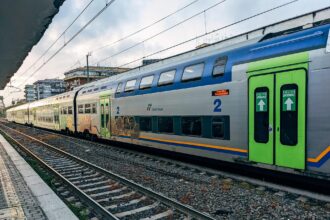
Rail travel from Milan into the Alps can be one of the most scenic and comfortable ways to begin a ski holiday, particularly for travellers wanting to avoid winter motorway traffic and mountain driving risks. While not every ski resort has direct rail access, northern Italy and Switzerland both offer strong railway infrastructure linking many major Alpine regions with Milano Centrale.
The most famous Alpine rail journey from Milan is undoubtedly the route toward St Moritz via the Bernina Express corridor. Travellers typically take regional or express services from Milano Centrale to Tirano, before transferring onto the spectacular mountain railway climbing into Switzerland. Snow-covered viaducts, glaciers, frozen lakes, and dramatic mountain scenery make this one of Europe’s great winter rail journeys, even for non-skiers.
Routes toward resorts in the Aosta Valley generally involve trains toward Aosta or Chatillon-Saint-Vincent, followed by regional buses into mountain resorts such as Cervinia and Courmayeur. Although these routes can work well for independent travellers, journey times are usually longer than direct road transfers and handling ski luggage across multiple connections can become tiring during busy periods.
Swiss Alpine routes often provide the smoothest rail experiences overall. Travellers heading toward Zermatt commonly use fast services toward Visp or Brig before transferring onto mountain rail lines deeper into the Alps. Switzerland’s punctuality, station infrastructure, and integrated rail systems make these journeys relatively straightforward even for first-time visitors. However, travellers should budget carefully because Swiss rail pricing can become expensive without advance reservations or rail passes.

Plan Your Milan Train Journey with Omio
Planning a train journey involving Milan? Omio lets you compare routes, check departure times and search for tickets from different transport operators in one place.
It is particularly useful when a journey involves different rail companies or crosses a border, saving you from checking several operator websites separately.
Scan to open
on your phone

Airport Shuttle Buses and Shared Ski Transfers
Shared ski transfers have become one of the most popular ways to travel from Milan airports to Alpine resorts, particularly for budget-conscious travellers and solo visitors. During peak winter season, dozens of specialist operators run routes linking Malpensa, Linate, and Bergamo Airport with major ski destinations across Italy, Switzerland, and parts of the French Alps.
One major advantage of shared ski shuttles is simplicity. Travellers are usually collected directly from airport terminals and transported to central resort areas or nearby hotels without needing to navigate rail stations or manage complex transport changes. This can be especially valuable after long international flights, particularly when carrying skis, snowboards, boots, or heavy winter luggage.
Pricing for shared transfers varies considerably depending on distance and season. Shorter journeys toward resorts such as Cervinia may start around €40 to €70 (£34–£60 / $44–$76), while longer Alpine routes toward destinations such as St Moritz or Chamonix can cost substantially more. Travellers should also expect higher prices during Christmas, New Year, February school holidays, and major ski event periods.
However, shared transfers do involve compromises. Vehicles often stop at multiple resorts or hotels, increasing total travel time compared with private transfers. Delays caused by weather, road conditions, or late-arriving flights can also affect schedules during busy winter weekends. For travellers prioritising comfort, speed, or flexibility, private transfers may still justify the additional cost despite the higher pricing.
Private Transfers from Milan Airports
Private ski transfers remain the premium option for travelling from Milan airports to ski resorts, particularly for families, luxury travellers, groups, and visitors carrying large amounts of winter sports equipment. Unlike shared shuttles or rail journeys, private transfers offer direct transport with flexible departure times and no additional hotel stops along the route.
Most private transfer companies operate directly from Milan Malpensa Airport, which is generally considered the strongest airport for Alpine access. Services also run extensively from Linate Airport and Bergamo Airport, allowing travellers to select flights based on convenience and pricing rather than transfer limitations alone. Drivers often monitor flight arrivals automatically, reducing stress if inbound flights are delayed during winter weather conditions.
Vehicles used for private ski transfers are usually adapted for Alpine travel, with winter tyres, snow equipment, and additional luggage capacity for skis and snowboards. Luxury transfer companies may additionally offer premium minibuses, executive vehicles, Wi-Fi, bottled water, and multilingual drivers. These services become especially attractive for groups because dividing the total cost across several passengers can sometimes make private transfers surprisingly competitive compared with multiple train tickets and hotel taxis.
The largest drawback is price. Transfers toward nearby resorts such as Cervinia or Courmayeur may already cost several hundred euros, while longer journeys toward St Moritz, Zermatt, or parts of the Dolomites can become significantly more expensive. Even so, many travellers still consider private transfers worthwhile because they dramatically simplify the overall experience of travelling from Milan to ski resorts during winter conditions.
Book Your Milan Airport Transfer with Welcome Pickups
Arriving in Milan? You can arrange your airport transfer with Welcome Pickups before you travel, so your driver is ready when your flight arrives.
Pre-booking can be especially convenient after a late flight or when visiting Milan for the first time, giving you a direct journey from the airport to your accommodation.
Compare transfer options for Milan. You can also check another transfer provider before booking.

Driving from Milan to Ski Resorts
For travellers wanting maximum flexibility, self-driving from Milan to ski resorts can be an excellent option. Renting a car allows visitors to travel on their own schedule, stop in mountain towns along the way, carry large amounts of ski equipment more easily, and explore multiple Alpine destinations within the same trip. However, winter driving in the Alps is significantly more demanding than ordinary motorway driving elsewhere in Europe and should not be underestimated.
Most journeys begin on modern toll motorways leaving Milan, but conditions change rapidly as routes enter the mountain valleys of the Aosta Valley, Lombardy Alps, or Swiss Alpine regions. Roads become steeper, narrower, and more exposed to snow, ice, fog, and sudden weather changes. During peak winter weekends, traffic around popular resorts such as Cervinia, Courmayeur, and Livigno can also become extremely heavy, especially during Saturday changeover periods.
Winter tyres are often legally required across Alpine regions during colder months, and some routes additionally require snow chains to be carried inside the vehicle. Travellers renting cars should verify these requirements carefully before departure because penalties for non-compliance can be severe. Mountain tunnels, border crossings, and toll systems also increase overall driving costs, particularly on routes involving Switzerland or the Mont Blanc Tunnel.
Parking arrangements vary considerably between resorts. Some destinations such as Zermatt are car-free, meaning vehicles must be left in nearby towns before continuing by rail. Others, including Livigno and Bormio, offer extensive resort parking but can become crowded during peak periods. Travellers unfamiliar with mountain driving often discover that professional transfers or rail journeys feel considerably less stressful than handling icy Alpine roads themselves.
Winter Road Conditions and Mountain Driving Risks
Winter weather is one of the biggest variables affecting Milan ski transfers, particularly between December and March when Alpine conditions can change extremely quickly. Even routes that appear straightforward on maps may become significantly slower or more dangerous during heavy snowfall, freezing rain, fog, or avalanche control operations.
Higher-altitude routes toward resorts such as Livigno, Cervinia, and St Moritz are especially vulnerable to weather disruptions because roads pass through exposed valleys and mountain corridors. Snowfall can reduce visibility dramatically, while icy surfaces on steep Alpine roads create serious risks for inexperienced drivers. Travellers arriving from warmer countries are often surprised by how demanding Alpine winter driving conditions can feel compared with standard European motorway journeys.
Avalanche control occasionally affects some mountain roads and tunnels, particularly after periods of intense snowfall. Temporary closures can delay both private transfers and shared shuttle services, especially in the upper valleys approaching major ski resorts. Border crossings into Switzerland and France may additionally experience delays during busy winter weekends when traffic volumes increase sharply.
Because of these risks, travellers should always allow contingency time when planning ski transfer schedules. Booking flights too close to resort check-in times or return departures can create unnecessary stress if weather conditions deteriorate. Many experienced Alpine travellers deliberately arrive in Milan a day early during peak winter periods to reduce the risk of missed connections caused by mountain weather disruptions.
How Long Do Milan Ski Transfers Take?
Transfer times from Milan to Alpine ski resorts vary considerably depending on destination, weather, departure airport, and transport type. Although many resorts appear relatively close geographically, winter road conditions and mountain terrain can increase journey times far beyond what travellers initially expect.
The quickest major ski routes from Milan are generally those toward the Aosta Valley, particularly Cervinia and Courmayeur. Under good conditions, transfers from Milan Malpensa Airport often take roughly 2 to 3 hours, making these resorts especially attractive for shorter ski holidays and weekend trips. This relatively fast access is one reason the western Italian Alps remain extremely popular with international visitors.
Longer journeys are required for resorts deeper inside the mountains or further east toward the Dolomites. Routes toward Livigno, Bormio, and Madonna di Campiglio commonly take between 3.5 and 5 hours, while rail-based journeys can take even longer depending on connection times. Winter traffic and snowfall can easily add substantial delays, particularly during busy Saturday arrival and departure periods.
Cross-border routes toward St Moritz, Zermatt, and Chamonix vary heavily depending on whether travellers choose road or rail transport. Scenic rail journeys via Switzerland can sometimes take most of the day, although many travellers intentionally treat these routes as part of the overall holiday experience rather than simply transportation. Private road transfers are usually faster, but weather and border traffic remain important factors throughout the winter season.

Best Apps for Milan Ski Travel
Using the right travel apps can significantly improve the experience of travelling from Milan to ski resorts, especially during winter conditions when transport delays, weather disruptions, and route changes become more common. Travellers heading into the Alps often rely heavily on apps for train tickets, navigation, weather forecasting, accommodation management, and real-time mountain conditions.
For rail travel, apps such as Trainline, Omio, and the official Trenitalia platform help travellers book tickets between Milan, regional mountain towns, and cross-border Swiss destinations. These apps are particularly useful for routes involving Milano Centrale, where onward Alpine connections toward Tirano, Aosta, or Switzerland often require careful coordination between multiple train services.
Navigation apps become especially important for travellers driving into the mountains. Google Maps, Waze, and regional Alpine traffic services can help monitor road conditions, border queues, and winter traffic problems around major resorts. However, travellers should remember that mountain weather conditions sometimes change faster than apps fully update, particularly during snowstorms or avalanche-related road closures.
Connectivity apps also matter heavily during ski holidays because roaming charges and weak mountain signal coverage can create unexpected problems. Many international travellers now use travel eSIM providers such as Airalo, Saily, or Yesim to maintain reliable mobile data access across Italy, Switzerland, and neighbouring Alpine countries. This becomes particularly useful for accessing digital lift passes, weather alerts, navigation tools, and emergency travel updates while moving between mountain regions.
Where to Stay Before Heading to the Alps
Many travellers choose to spend at least one night in Milan before continuing toward Alpine ski resorts, particularly after long-haul flights or late evening arrivals. Breaking the journey can reduce stress significantly, especially during winter periods when mountain weather and road conditions may affect transfer reliability.
The most practical overnight locations depend heavily on the airport being used. Travellers arriving late into Milan Malpensa Airport often stay near the airport itself before taking morning ski transfers toward the Aosta Valley or Switzerland. Meanwhile, visitors planning rail journeys into the Alps frequently stay near Milano Centrale, which offers easy access to long-distance trains and early morning Alpine departures.
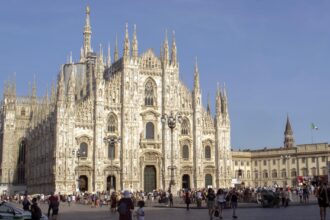
Some travellers intentionally build short city breaks into their ski holidays by spending time exploring Milan before heading into the mountains. Attractions such as the Duomo di Milano, Galleria Vittorio Emanuele II, and the city’s famous fashion districts provide a dramatic contrast to the Alpine environment awaiting further north. This combination of urban Italy and mountain resorts can create a more varied overall travel experience.
Accommodation prices in Milan vary heavily depending on season, events, and location. During major fashion events and trade fairs, hotel prices can rise sharply even during ski season. Travellers planning overnight stops before Alpine transfers should therefore book accommodation well in advance, particularly around Christmas, New Year, and February holiday periods when both Milan tourism and ski travel demand become extremely high.
Compare hotel prices in Milan with Vio
Vio compares prices across major booking sites, including Booking.com, Expedia, Agoda and Hotels.com, so you can check whether the same stay is cheaper elsewhere before you book.
Other booking options
Click the map to open a larger interactive view and explore more accommodation options.
Best Time for Milan Ski Transfers
Timing can make a major difference when planning Milan to ski resorts journeys because Alpine weather, school holidays, airport congestion, and road traffic all fluctuate significantly throughout the winter season. Choosing the right travel period can affect not only snow conditions but also transfer reliability, accommodation pricing, and overall stress levels.
The busiest period for Milan ski transfers usually runs from late December through February, particularly during Christmas, New Year, and European school holiday weeks. During these periods, roads toward major resorts such as Cervinia, Courmayeur, and Livigno can become heavily congested, especially on Saturdays when many ski holidays operate on weekly changeover schedules. Airports such as Milan Malpensa and Bergamo Airport also experience large spikes in winter passenger traffic.
For travellers wanting quieter roads and lower prices, early December and much of January outside holiday periods often provide excellent conditions. Resorts are usually fully operational by this stage, but transfer routes can feel significantly calmer compared with peak holiday weeks. March can also work very well because daylight hours become longer while many high-altitude resorts still maintain strong snow coverage, particularly destinations such as Cervinia and Livigno.
Weather remains one of the biggest variables throughout the season. Heavy snowfall can improve ski conditions dramatically while simultaneously making transfer routes slower and more unpredictable. Travellers flying into Milan during winter should therefore always allow flexibility within itineraries rather than planning extremely tight airport-to-resort schedules, especially if travelling toward higher Alpine regions or cross-border mountain destinations.

Packing Tips for Ski Resort Transfers
Packing correctly can make Milan ski transfers significantly smoother, particularly because many journeys involve multiple transport modes, winter weather exposure, and strict airline luggage policies. Travellers frequently underestimate how difficult moving ski equipment through airports, rail stations, buses, and mountain roads can become during busy winter weekends.
Layered winter clothing is essential even before reaching the ski resort itself. Travellers arriving at Milan Malpensa Airport or Bergamo Airport may experience relatively mild city temperatures, but Alpine conditions at higher elevations can be dramatically colder within just a few hours. Waterproof jackets, insulated gloves, hats, and thermal layers should therefore remain easily accessible during transfers rather than packed deep inside checked luggage.
Ski equipment policies vary considerably between airlines, transfer operators, and rail companies. Some shared shuttle services charge additional fees for skis and snowboards, while certain budget airlines apply strict size and weight rules for winter sports equipment. Travellers using trains through Switzerland or northern Italy should also prepare for carrying luggage through stations, staircases, and crowded platforms during busy travel periods.
Many experienced Alpine travellers additionally pack smaller emergency items specifically for transfer days. Portable chargers, snacks, water bottles, offline maps, medications, and printed booking confirmations can become surprisingly important during weather delays or long mountain journeys. Mobile signal coverage can occasionally weaken in remote Alpine valleys, making offline preparation especially useful when travelling deeper into the mountains from Milan.
Family Travel Tips for Milan Ski Holidays
Families travelling from Milan to ski resorts face slightly different challenges compared with solo travellers or couples because winter transfers become more complicated when managing children, luggage, ski equipment, and strict resort arrival times. Planning carefully in advance can make the entire experience significantly smoother.
For most families, direct private transfers are usually worth the additional cost. Avoiding multiple train changes, crowded platforms, and long waits for shuttle buses can dramatically reduce stress after flights into Milan Malpensa Airport, Linate Airport, or Bergamo Airport. Many private transfer companies additionally provide child seats, larger luggage space, and direct hotel drop-off, which becomes especially valuable when travelling with younger children.
Choosing the right resort also matters heavily for families. Resorts such as Cervinia and Courmayeur tend to offer relatively straightforward access from Milan alongside strong beginner infrastructure and family-friendly accommodation. Meanwhile, resorts requiring very long mountain transfers or multiple rail changes can become exhausting for younger children, particularly during poor weather conditions.
Families should also remember that winter transfer delays are common throughout the Alps. Snowstorms, motorway congestion, and airport disruption can all extend journey times significantly beyond original estimates. Carrying snacks, entertainment, warm clothing, and spare essentials inside hand luggage rather than checked baggage can therefore make long transfer days far more manageable for children travelling into the mountains.
Luxury Ski Transfers from Milan
Luxury travellers heading from Milan to Alpine ski resorts increasingly expect the transfer itself to feel like part of the holiday experience rather than simply transportation. As a result, premium ski transfer services have expanded significantly across northern Italy and Switzerland, particularly on routes toward resorts such as St Moritz, Courmayeur, Zermatt, and Cervinia.
Private executive transfers usually begin directly at airport arrivals inside Milan Malpensa Airport or private aviation terminals serving wealthy winter visitors. High-end services commonly include luxury SUVs, executive minibuses, Wi-Fi, bottled water, ski storage systems, multilingual drivers, and flexible scheduling designed around private flight arrivals or luxury hotel check-ins.
Some premium travellers additionally choose helicopter transfers between Milan and Alpine resorts, particularly during peak traffic periods or when travelling toward remote mountain destinations. Helicopter services remain extremely expensive but can reduce transfer times dramatically while offering spectacular aerial views of the Alps. Resorts such as St Moritz and parts of the Swiss Alps are especially associated with these ultra-premium winter travel experiences.
Luxury rail travel also forms part of the premium Alpine transfer market. First-class journeys aboard the Bernina Express or Swiss panoramic trains appeal strongly to travellers wanting scenic winter experiences combined with high comfort standards. Combined with five-star hotels and private chauffeurs, these routes allow visitors to transform ordinary Milan ski transfers into full luxury Alpine travel itineraries.

Budget-Friendly Milan Ski Transfer Options
Although Alpine ski holidays are often associated with luxury tourism, there are still many ways to reduce the cost of travelling from Milan to ski resorts. Budget-conscious travellers frequently use Milan because of its strong low-cost airline network and extensive public transport infrastructure connecting northern Italy with the Alps.
Flights into Milan Bergamo Airport are often substantially cheaper than equivalent winter flights into Swiss or specialist ski airports. Budget airlines serving Bergamo attract large numbers of skiers from across Europe, particularly younger travellers heading toward resorts such as Livigno, Bormio, and parts of the Italian Alps where accommodation and food costs may also remain lower than Swiss destinations.
Shared ski shuttle buses usually provide the cheapest direct transfer method between Milan airports and major resorts. While journeys may take longer because of multiple hotel stops, the savings compared with private transfers can be substantial. Travellers using rail services from Milano Centrale can also reduce costs significantly by booking tickets early, especially on routes toward Switzerland and northern Italian mountain towns.
Accommodation strategy matters heavily too. Some travellers save money by staying overnight in Milan before early morning train departures rather than paying premium resort-area transfer pricing during busy weekends. Others deliberately choose resorts such as Livigno or Bormio, where skiing costs can feel noticeably cheaper than equivalent holidays in the Swiss Alps or high-end French resorts around Chamonix and Courchevel.

Rupert’s Handy Travel Tips
Rupert always recommends allowing more time than you think you need when travelling from Milan to ski resorts. Alpine weather can change extremely quickly, especially during peak winter season, and even short delays at airports or on mountain roads can have a knock-on effect across the rest of your journey.
- Pick the right airport: Choose Milan Malpensa Airport where possible if heading toward resorts in the Aosta Valley or Switzerland, as transfer routes are usually more efficient.
- Book early: Reserve ski transfers well in advance during Christmas, New Year, and February school holidays, as popular routes can sell out.
- Pack smart: Carry essential ski clothing in your cabin baggage in case checked luggage is delayed during winter flights.
- Allow time for rail connections: If using trains through the Alps, allow generous connection times at stations such as Milano Centrale and Tirano during snowy conditions.
- Check winter driving rules: If driving into the mountains, always check snow chain and winter tyre requirements before leaving Milan.
Want to meet the reindeer behind our travel tips? Find out more in our page Who is Rupert?.




Frequently Asked Questions About Milan to Ski Resorts
What is the best Milan airport for ski transfers?
For most Alpine destinations, Milan Malpensa Airport is usually the strongest overall option because of its position northwest of Milan and better motorway access toward the Aosta Valley and Switzerland.
Which ski resort is closest to Milan?
Cervinia is one of the closest major ski resorts to Milan, with transfers from Malpensa Airport often taking around 2 to 2.5 hours under good conditions.
Can you reach Swiss ski resorts from Milan?
Yes. Travellers regularly use Milan as a gateway for resorts such as St Moritz and Zermatt, either by private transfer or rail routes through Switzerland.
Are Milan ski transfers expensive?
Costs vary significantly depending on transport type and destination. Shared ski shuttles can start around €40 to €70 (£34–£60 / $44–$76), while private transfers toward luxury resorts may cost several hundred euros.
Is it safe to drive from Milan to ski resorts in winter?
Yes, but Alpine winter driving requires caution. Snow, ice, fog, and mountain roads can create difficult conditions, especially for inexperienced drivers unfamiliar with the Alps.
Can you travel from Milan to ski resorts by train?
Yes. Many resorts can be reached partially by rail, particularly routes toward St Moritz, Zermatt, and Alpine towns connected to northern Italy’s rail network.
Further Reading & Related Guides
Travellers planning journeys from Milan to ski resorts should also read our detailed guides covering all three Milan airports, including Milan Malpensa Airport to Milan City Centre, Milan Linate Airport to Milan City Centre, and Milan Bergamo Airport to Milan City Centre. These pages explain airport transfers, rail links, buses, taxi options, and the best ways to reach central Milan before continuing into the Alps. If you have time before heading up to the mountains, our Things to Do in Milan guide rounds up the best ways to spend it.
For a broader look at skiing across the continent, our Ski & Snowboarding in Europe guide compares resorts and access points beyond just the Milan gateway, while our Best Ski Resorts in the World roundup helps you weigh up how the Italian and Swiss resorts reachable from Milan compare globally.
If you are travelling further across Europe, our guides to European Railway Journeys, Train Booking Apps, and the spectacular Bernina Express route can help you plan wider Alpine rail adventures beyond Italy. Travellers heading toward the Swiss mountains should also explore our growing Switzerland travel coverage, particularly routes connected to St Moritz and Zermatt.
Travellers exploring the Alps by rail should also read our detailed Interrail Italy Pass guide, which explains how to use Italy’s rail network for longer journeys between Milan, mountain regions, major cities, and cross-border Alpine routes into Switzerland, Austria, and France.
Visitors planning winter travel across multiple countries may additionally benefit from our eSIM Apps Guide, which explains how to stay connected across Italy, Switzerland, and the wider Alps without relying on expensive roaming charges.