Reviewed by our editorial team Updated
Why Norway Is Perfect for Night Trains
Few countries in Europe are better suited to overnight rail travel than Norway. Huge distances, dramatic mountain scenery, unpredictable winter weather and expensive domestic flights all combine to make sleeper trains one of the most practical and memorable ways to travel across the country.
Unlike many European night train networks focused primarily on connecting major cities quickly, Norway’s overnight railways are often as much about the scenery and experience as the transport itself. Routes cross mountain plateaus, frozen valleys, remote forests and Arctic landscapes while linking some of the country’s most important destinations.
The overnight trains also solve one of Norway’s biggest travel challenges, namely the sheer scale of the country. Travelling between Oslo, Bergen, Trondheim, Stavanger and northern Norway by daytime transport can consume entire days. Sleeper trains allow travellers to cover these huge distances overnight while saving on hotel costs and maximising sightseeing time.
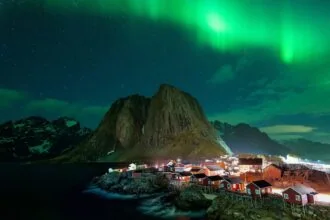
Winter makes the experience even more distinctive. Snow-covered stations, frozen lakes and long stretches of remote mountain scenery create some of the most atmospheric overnight rail journeys anywhere in Europe. On northern routes, travellers may even experience sections of the journey beneath the Northern Lights during darker winter months.
What Night Trains Operate in Norway
Norway’s overnight rail network is relatively small compared with countries such as Austria or Germany, but the routes that do exist are among the most scenic and iconic sleeper services in Europe. Most overnight trains radiate outward from Oslo, connecting the Norwegian capital with major regional cities and remote northern corridors.
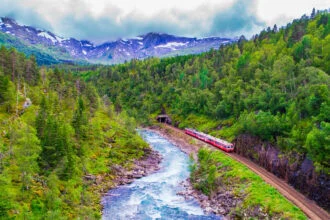
The best-known service is the famous Bergen Line, operated by trains 605 and 606, linking Oslo with Bergen across the mountainous Hardangervidda Plateau. This route is frequently ranked among the world’s greatest railway journeys because of its dramatic scenery and isolated alpine landscapes.
Further north, trains 405 and 406 operate between Oslo and Trondheim along the historic Dovre Line, while services 725 and 726 connect Oslo with Stavanger via the coastal and southern Norwegian rail corridor.
The most remote sleeper service in Norway is the Nordland Line, using trains 475 and 476 between Trondheim and Bodø. This route is especially important because it crosses the Arctic Circle and provides one of the world’s northernmost conventional sleeper train journeys.
Although not fully Norwegian-operated, the famous 93 and 94 Arctic sleeper between Stockholm and Narvik also plays an important role for travellers exploring northern Scandinavia and Arctic Norway.
Browse hotels and accommodation for your visit to Bergen.
View staysExplore holiday homes and apartments around Bergen.
See holiday homesSee hotel prices from multiple booking sites in one search.
Compare ratesQuick Facts About Norway Night Trains
| Feature | Details |
|---|---|
| Main Sleeper Hub | Oslo |
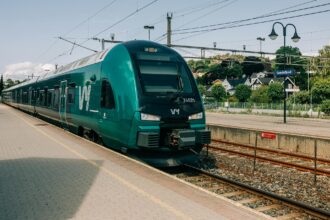
| Main Operator | Vy |
| Main Sleeper Routes | Bergen, Trondheim, Stavanger and Bodø |
| Most Famous Route | Bergen Line |
| Most Remote Route | Nordland Line to Bodø |
| Arctic Sleeper Route | Trondheim to Bodø |
| International Arctic Connection | Stockholm to Narvik |
| Best Winter Route | Bergen Line |
| Northern Lights Potential | Nordland Line and Narvik corridor |
| Typical Accommodation | Seats, reclining seats and sleeper compartments |
| Interrail Friendly? | Yes, reservations required |
| Longest Norwegian Sleeper | Trondheim to Bodø |
| Most Scenic Route | Bergen Line across Hardangervidda |
| Best For | Scenic rail travel, winter trips and slow travel |
| Typical Journey Lengths | 7 to 10 hours |
Oslo Central Station and Boarding Sleeper Trains
Almost all overnight trains in Norway begin at Oslo Central Station, usually referred to locally as Oslo S. Located in the centre of the Norwegian capital beside the waterfront and main public transport connections, the station functions as the heart of Norway’s long-distance rail network.
Compared with some of Europe’s huge historic terminals, Oslo Central Station feels relatively straightforward and easy to navigate. Large electronic departure boards clearly display overnight train platforms, while most sleeper services board well before departure to allow passengers time to settle into compartments and store luggage.
The station itself contains supermarkets, cafés, restaurants and convenience stores, which is particularly useful because onboard catering on Norwegian sleeper trains can vary depending on the route and train type. Many experienced travellers buy snacks, drinks and breakfast supplies before boarding.
Boarding procedures are generally relaxed compared with airports. Tickets are normally checked onboard after departure rather than during platform access, and passengers using sleeper compartments are often directed personally by train staff toward the correct carriage.
One important detail for travellers unfamiliar with Norway is that weather conditions can occasionally affect operations during winter. Heavy snowfall and severe mountain weather sometimes create delays, particularly on the more exposed mountain corridors crossing central Norway.
Bergen Line Overnight Trains
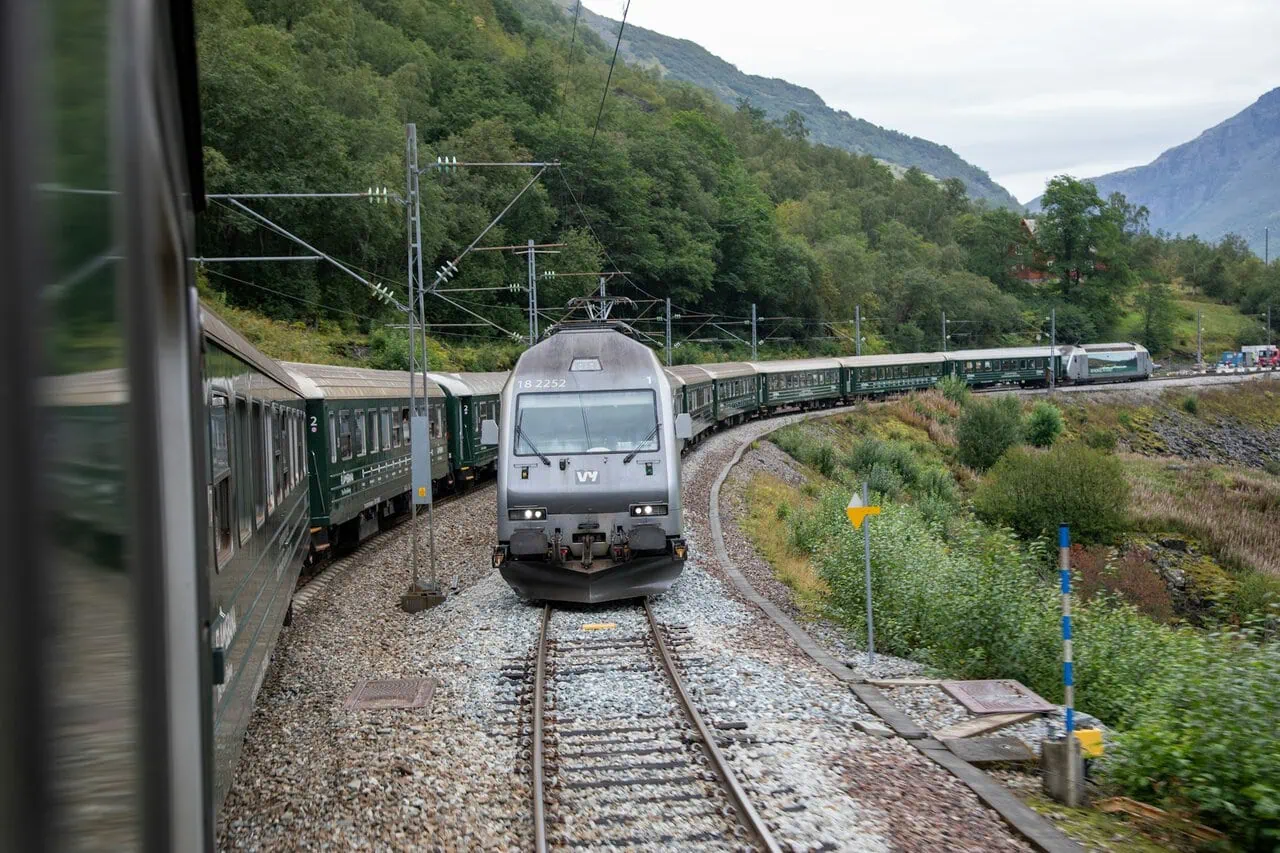
The overnight sleeper trains on the Bergen Line are widely regarded as some of the most spectacular rail journeys anywhere in the world. Operating between Oslo and Bergen using trains 605 and 606, the route crosses huge sections of remote mountain scenery, frozen plateaus and isolated alpine terrain that feel completely different from most European railways.
The full journey normally takes around 6.5 to 7.5 hours, with overnight departures allowing travellers to sleep while crossing the mountainous interior of southern Norway. Major intermediate stops often include Drammen, Geilo, Myrdal and Voss before arrival beside the fjords and waterfront districts of Bergen.
One of the most famous sections of the route is the crossing of the Hardangervidda plateau, the largest mountain plateau in northern Europe. During winter, trains pass through snow-covered landscapes that can feel almost Arctic in character, while summer brings exposed rock, mountain lakes and huge open scenery stretching far beyond the railway itself.
The route is also operationally fascinating because weather conditions across Hardangervidda can become extremely severe. Heavy snow, high winds and drifting conditions regularly affect the line during winter, and snow-clearing trains are often required to keep the railway open.
For many travellers, the Bergen Line represents the perfect combination of practicality and scenery. Instead of losing a full day travelling across Norway, passengers can board in central Oslo during the evening and wake up surrounded by fjords and mountains in western Norway the next morning.
The route also connects naturally into wider Norwegian travel itineraries. After arriving in Bergen, travellers can continue toward the Norwegian fjords, coastal ferry routes, hiking regions and Arctic cruise corridors across western Norway.
Trondheim and Dovre Line Overnight Trains
The overnight sleeper trains between Oslo and Trondheim operate using trains 405 and 406 along the historic Dovre Line, one of Norway’s most important long-distance railway corridors.
The full journey usually takes around 6.5 to 8 hours depending on timetable variations and weather conditions. After leaving Oslo during the evening, the train heads north through forests, river valleys and mountain landscapes before reaching Trondheim the following morning.
Major intermediate stops often include Lillehammer, Otta, Oppdal and sections of the mountainous interior surrounding the Dovrefjell region.
The scenery along the Dovre Line changes dramatically throughout the journey. Southern sections feature forests and lakes, while northern stretches become increasingly mountainous and remote. Winter transforms the line completely, with deep snow and frozen valleys creating one of Scandinavia’s most atmospheric overnight rail experiences.
The route is especially useful because Trondheim acts as the gateway toward northern Norway and the Arctic rail network. Travellers arriving from Oslo can continue onward toward Bodø using the Nordland Line, making Trondheim one of Norway’s most important railway interchange cities.
Historically, the Dovre Line has played a major role in connecting northern and southern Norway. Even today, it remains one of the country’s most strategically important passenger rail corridors because it links the capital with central Norway entirely by rail through extremely challenging terrain.
Nordland Line Arctic Sleeper Trains
The overnight sleeper trains on the Nordland Line are among the most remarkable railway journeys in northern Europe. Operating between Trondheim and Bodø using trains 475 and 476, the route travels deep into northern Norway while crossing the Arctic Circle along the way.
The full journey usually takes around 9 to 10 hours, making it Norway’s longest true domestic sleeper route. After departing Trondheim, the train heads north through forests, lakes, mountains and increasingly remote Arctic landscapes before eventually reaching Bodø on the Norwegian coast.
Important intermediate stops often include Mosjøen, Mo i Rana and remote northern stations surrounded by forests and mountains. One of the biggest highlights of the journey is the actual crossing of the Arctic Circle, marked onboard and celebrated as a major milestone during the trip.
The Nordland Line feels noticeably different from most European railway journeys because of its scale and remoteness. Huge sections of the route pass through sparsely populated wilderness where mountains, forests and lakes dominate the landscape for hours at a time.
Winter creates an especially dramatic atmosphere on this route. Long hours of darkness, deep snow and Arctic weather conditions transform the railway into one of Europe’s great cold-weather rail experiences. During periods of strong solar activity, travellers may even glimpse the Northern Lights from the train windows across northern sections of the line.
Bodø itself is also strategically important because it acts as one of the main gateways toward the Lofoten Islands and wider Arctic Norway. Many travellers combine the Nordland sleeper with ferries, coastal ships and northern Norway road trips after arrival.
Stavanger and Sørlandet Line Overnight Trains
The overnight sleeper service between Oslo and Stavanger operates using trains 725 and 726 along the scenic Sørlandet Line, connecting eastern and south-western Norway overnight.
The journey normally takes around 7.5 to 9 hours and travels through a mixture of forests, valleys, lakes and southern Norwegian landscapes before reaching Stavanger on the North Sea coast.
Major stops commonly include Drammen, Kristiansand and important towns across southern Norway before arrival in Stavanger the following morning.
Compared with the more dramatic alpine scenery of the Bergen Line or Nordland Line, the Sørlandet corridor feels calmer and more coastal in character. The route passes through quieter regions of southern Norway while still providing impressive scenery and long stretches of isolated countryside.
The Stavanger sleeper is particularly useful for travellers exploring Norway’s western fjord regions and famous hiking destinations. Stavanger acts as the gateway toward attractions including Preikestolen and the wider Lysefjord region, making the overnight train a highly practical alternative to domestic flights.
During summer, the route becomes especially popular with tourists combining Norway’s cities, fjords and hiking areas within a single rail-based itinerary.
Compare routes and fares for your journey to Bergen.
Compare flightsUse an eSIM to get online without hunting for a local SIM after arrival.
See eSIM optionsArrange a private airport pickup for your trip to Bergen.
Check transfersInternational Arctic Sleeper Connections
Although most Norwegian overnight trains are entirely domestic services, one of the most famous sleeper routes connected with Norway is the Arctic overnight train between Stockholm and Narvik using trains 93 and 94. While primarily operated through Sweden, the route remains hugely important for travellers exploring Arctic Norway and northern Scandinavia.
The full journey takes roughly 18 hours and travels north through enormous stretches of Swedish Lapland before crossing into northern Norway near the end of the route. Major stops often include Uppsala, Gällivare, Kiruna and Arctic mining regions before the final approach toward Narvik.
The line is internationally famous because it reaches some of the most remote railway landscapes in Europe. Huge forests, frozen lakes, Arctic tundra and snow-covered mountain scenery dominate large sections of the route, particularly during winter.
For many travellers, the real highlight is the transition into Norway itself. As the train approaches Narvik, the scenery changes dramatically from inland Arctic landscapes toward steep mountains, fjords and coastal scenery close to the Norwegian Sea.
The route is also strongly connected with Northern Lights tourism. During darker months, passengers occasionally see aurora activity from the train windows across northern Sweden and Arctic Norway, particularly during periods of strong solar conditions and clear weather.
Many travellers combine the Stockholm to Narvik sleeper with Norway’s domestic overnight network, creating large-scale Scandinavian rail journeys linking Oslo, Trondheim, Bodø and Arctic Norway almost entirely by train.
Sleeper Cabins, Seats and Comfort Levels
Norwegian overnight trains use a mixture of standard seats, reclining seating and sleeper compartments depending on the route and train type. Comfort levels vary considerably, and choosing the correct accommodation can make a major difference on longer overnight journeys across Norway’s huge distances.
Standard seating is usually the cheapest option and works reasonably well on shorter overnight routes. However, many travellers find proper sleep difficult in ordinary seats, particularly on journeys approaching ten hours such as the Nordland Line between Trondheim and Bodø.
Reclining seats provide slightly improved comfort and are common on some Norwegian long-distance trains. These offer more legroom and greater recline than standard daytime rail seating, although they still cannot compete with proper sleeper accommodation for overnight rest.
Sleeper compartments remain the best overall option for most travellers. Compartments normally include fold-down beds, bedding and increased privacy compared with seated accommodation. On some routes, compartments may also contain sinks or small storage areas for luggage and personal items.
Norwegian sleeper trains are generally simpler and less luxurious than the newest Nightjet services operating in central Europe, but they compensate with scenery and atmosphere. The overall experience feels practical, comfortable and strongly connected with the remote landscapes outside the train windows.
Because overnight trains in Norway often operate through isolated mountain and Arctic regions, sleeper compartments also provide a much more relaxing experience during winter storms and difficult weather conditions.
Tickets, Prices and How to Book Norway Night Trains
Booking overnight trains in Norway is usually straightforward, although the country’s relatively small sleeper network means accommodation can sell out surprisingly quickly during peak travel periods. Most domestic overnight services are operated by Vy, with tickets normally released several months in advance.
Prices vary significantly depending on the route, season and accommodation type selected. Standard seats remain the cheapest option, while reclining seats and sleeper compartments cost more but provide dramatically better comfort on Norway’s long overnight journeys. On routes such as the Bergen Line and Nordland Line, private sleeper compartments are especially popular because passengers may spend between 7 and 10 hours onboard.
The Bergen and Nordland routes are often the hardest services to book because they attract both domestic travellers and international tourists. Demand rises sharply during the Northern Lights season, the Christmas period, school holidays, ski season and the height of summer when travellers explore the fjords and Arctic Norway.
One of the biggest advantages of Norwegian sleeper trains is that they effectively combine transportation and accommodation into a single overnight experience. Because hotel prices in Norway are often extremely high, especially in cities such as Bergen and Oslo, sleeper trains can represent surprisingly strong value overall despite relatively expensive ticket prices.
Travellers using overnight trains also avoid losing entire sightseeing days to long daytime transport across Norway’s enormous distances. Instead of spending a full day crossing mountains or forests by train, passengers can board in the evening and wake up at the next destination the following morning.
Using Interrail on Norway Night Trains
Most overnight trains in Norway are fully compatible with Interrail and Eurail, making the country one of the best destinations in northern Europe for long-distance rail pass travel. Norway’s combination of dramatic scenery, huge distances and relatively limited domestic aviation alternatives means sleeper trains fit naturally into wider Scandinavian rail itineraries.
However, travellers should understand that reservations are almost always compulsory on Norwegian overnight services even when holding a valid rail pass. The Interrail or Eurail pass covers the base fare, but passengers still need to pay supplements for reserved seating, reclining seats or sleeper compartments.
Reservation prices vary considerably depending on the accommodation chosen and the popularity of the route. Sleeper compartments on the Bergen Line and Nordland Line can become especially expensive during peak travel periods because demand regularly exceeds available capacity.
Norway works particularly well for Interrail because the country encourages slower, scenic travel rather than fast city-hopping. Long distances between major destinations mean overnight trains become genuinely useful rather than simply novel tourist experiences. Travellers can leave Oslo in the evening, cross huge sections of mountain scenery overnight and arrive in destinations such as Bergen, Trondheim or Bodø the next morning.
The sleeper routes also connect naturally into wider Scandinavian journeys. Many travellers combine the Norwegian domestic network with the Arctic sleeper between Stockholm and Narvik, creating enormous rail itineraries stretching from southern Scandinavia deep into the Arctic Circle.
For many Interrail travellers, Norway ultimately becomes one of the highlights of an entire European rail journey because the sleeper trains feel less like simple transport and more like part of the adventure itself.
Most Scenic Night Train Journeys in Norway
Few countries can match the sheer scenery of overnight rail travel in Norway. Unlike sleeper trains in much of Europe, which often pass through densely populated urban corridors overnight, Norwegian night trains travel through mountain plateaus, frozen valleys, forests and Arctic wilderness where huge sections of the landscape feel almost untouched.
The most famous scenic route is undoubtedly the Bergen Line between Oslo and Bergen. Crossing the vast Hardangervidda plateau, the railway passes through one of the harshest and most exposed mountain environments in northern Europe. During winter, deep snow and frozen lakes dominate the landscape, while summer reveals huge open mountain scenery stretching far beyond the tracks.
The Nordland Line between Trondheim and Bodø delivers a completely different experience. Instead of alpine plateaus, the route feels increasingly Arctic and remote as the train pushes northward through forests, lakes and sparsely populated wilderness before crossing the Arctic Circle itself.
The overnight train toward Stavanger along the Sørlandet Line provides softer but still highly impressive scenery, with forests, lakes and southern Norwegian countryside dominating much of the route. Meanwhile, the Dovre Line toward Trondheim combines valleys, mountains and isolated upland scenery across central Norway.
One of the most remarkable aspects of Norwegian sleeper trains is how quickly the scenery changes. Travellers can leave a modern capital city in the evening and wake up surrounded by mountains, fjords or Arctic landscapes the following morning without ever stepping onto a plane.
Winter Travel and Northern Lights Sleeper Trains
Winter is arguably the best season to experience overnight trains in Norway. Snow transforms the railway network completely, creating some of the most atmospheric long-distance rail journeys anywhere in Europe.
The Bergen Line becomes especially dramatic during winter because the route crosses exposed mountain plateaus where snowdrifts and Arctic-like weather conditions regularly affect operations. Trains passing across the Hardangervidda Plateau during snowstorms create an experience that feels far more remote than most rail journeys elsewhere in Europe.
Further north, the Nordland Line sleeper toward Bodø enters genuinely Arctic territory during winter months. Long hours of darkness, frozen forests and isolated stations create a uniquely northern atmosphere that feels very different from central European sleeper routes.
The possibility of seeing the Northern Lights is another major reason many travellers specifically choose Norwegian and Scandinavian overnight trains during winter. The best chances usually occur on northern corridors including the Nordland Line and the Arctic sleeper between Stockholm and Narvik. Strong solar activity combined with clear skies can occasionally produce spectacular aurora displays visible directly from the train windows.
Winter also creates practical advantages for sleeper travel in Norway. Roads can become difficult during severe weather, domestic flights are sometimes disrupted by storms and daylight hours become extremely short. Overnight trains allow travellers to continue moving comfortably across huge distances while sleeping through the darkest hours of the day.
Browse hostels and budget-friendly stays around Bergen.
See hostelsGet help with compensation, eligible lounge access and disruption support.
Explore AirHelp+Leave your luggage somewhere convenient and enjoy Bergen hands-free.
View storageFood, Showers and Facilities Onboard
Facilities onboard Norwegian overnight trains are generally practical and comfortable rather than luxurious. Most services focus heavily on reliability and functionality because routes often operate through remote mountain and Arctic regions where weather conditions can become severe.
Standard seating and reclining seats normally include power outlets, overhead luggage storage and reasonable legroom for long-distance travel. Sleeper compartments provide fold-down beds, bedding and greater privacy, making them considerably more comfortable for overnight journeys lasting seven hours or longer.
Compared with some of Europe’s newest Nightjet services, Norwegian sleeper trains are usually simpler in design. However, the focus on comfort, warmth and practicality suits the country’s long-distance overnight routes extremely well.
Food service varies depending on the route and train type. Some trains include café or kiosk facilities selling drinks, snacks and light meals, while others rely more heavily on station purchases before departure. Many experienced travellers therefore buy food supplies at Oslo Central Station before boarding.
Showers are not universally available across the Norwegian sleeper network, although sleeper compartments generally provide much better comfort and privacy than ordinary seating. Travellers expecting hotel-style luxury may find the trains relatively simple, but the scenery and atmosphere usually become the real highlight of the journey.
During winter, onboard heating systems become especially important. Norwegian overnight trains are designed for harsh weather conditions, and even during severe snowstorms the interiors usually remain warm and comfortable despite the freezing landscapes outside.
Luggage, Safety and Overnight Train Security
Overnight trains in Norway are generally extremely safe, with the country itself having one of the strongest overall safety reputations in Europe. Most sleeper routes operate through quiet mountain and rural regions where onboard environments tend to feel calm and relaxed compared with many busier international rail corridors elsewhere on the continent.
Sleeper compartments offer the best security because luggage remains inside the compartment overnight. Most cabins can also be locked internally while occupied, adding an additional level of privacy and reassurance during longer journeys.
Travellers using reclining seats or standard seating should still keep valuables close overnight, particularly on busier departures during holiday periods. However, problems onboard Norwegian sleeper trains are relatively uncommon compared with some major western European overnight routes.
One of the main operational differences in Norway is the effect of extreme winter weather. Heavy snowfall, drifting conditions and mountain storms occasionally create delays, especially on exposed routes such as the Bergen Line crossing Hardangervidda. Travellers should therefore allow some flexibility when planning onward connections during winter months.
Large luggage is usually relatively easy to manage onboard because Norwegian trains generally provide generous baggage areas compared with airlines. This is especially useful for travellers carrying winter clothing, ski equipment or hiking gear while exploring Norway’s mountains and Arctic regions.
eSIMs and Mobile Connectivity Across Norway
Reliable mobile data is extremely important when travelling across Norway by overnight train because huge sections of the country are remote, mountainous and sparsely populated. Travellers frequently rely on mobile connections for digital rail tickets, weather updates, ferry bookings, accommodation check-ins and onward transport information.
Using an eSIM is often the easiest option for international visitors because it avoids the need to buy physical Norwegian SIM cards after arrival. This becomes particularly useful on long overnight journeys where passengers may cross isolated regions late at night or arrive early in the morning before shops open.
Coverage across southern Norway is generally very strong, particularly around Oslo, Bergen, Trondheim and the main railway corridors. However, some mountain and Arctic sections of the network can still experience weaker signal coverage, especially on remote stretches of the Bergen Line and Nordland Line.
The overnight crossing of the Hardangervidda Plateau on the Bergen Line is particularly known for intermittent mobile reception because of the exposed mountain environment and limited infrastructure across the plateau itself. Similarly, northern sections of the Nordland Line can occasionally lose signal for short periods while travelling through remote Arctic landscapes.
Many travellers also use Norwegian sleeper trains as part of wider Scandinavian journeys involving Sweden, Denmark and Arctic Norway. Regional European eSIM plans can therefore be especially useful because they continue functioning across borders without requiring separate SIM cards or roaming adjustments.
For travellers chasing the Northern Lights, strong mobile connectivity can also become surprisingly important. Aurora forecast apps, weather tracking tools and cloud cover maps are widely used across northern Norway, particularly on routes toward Bodø and the Arctic rail corridor approaching Narvik.

Rupert’s Handy Travel Tips
Norwegian night trains are some of the most scenic overnight rail journeys anywhere in Europe, but Rupert says a little planning makes the experience dramatically smoother.
- Book sleeper compartments early on the Bergen Line and Nordland Line because winter and summer departures can sell out weeks ahead.
- Bring food onboard before departure because catering facilities can vary significantly depending on the route and train type.
- Expect delays during severe winter weather especially across the Hardangervidda Plateau and exposed mountain sections.
- Keep cameras and phones charged overnight because Northern Lights displays can occasionally appear unexpectedly on Arctic routes.
- Choose sleeper compartments whenever possible because journeys through Norway are long enough that proper overnight rest makes a major difference.
Want to meet the reindeer behind our travel tips? Find out more in our page Who is Rupert?.

Frequently Asked Questions About Norway Night Trains
Are there sleeper trains in Norway?
Yes, Norway operates several overnight sleeper routes linking Oslo with destinations including Bergen, Trondheim, Stavanger and Bodø.
What is the most scenic night train in Norway?
Most travellers consider the Bergen Line the most scenic overnight route because of its crossing of the Hardangervidda Plateau and dramatic mountain scenery.
Can you see the Northern Lights from Norwegian sleeper trains?
Yes, it is occasionally possible on northern routes such as the Nordland Line and the Arctic sleeper toward Narvik, particularly during winter and periods of strong aurora activity.
Can you use Interrail on Norway night trains?
Yes, most Norwegian overnight trains work with Interrail and Eurail, although reservations and supplements are normally required.
Do Norwegian sleeper trains have private cabins?
Yes, many routes offer sleeper compartments with beds and bedding, providing much better comfort than ordinary seats on Norway’s long overnight journeys.
What is the longest sleeper train in Norway?
The Nordland Line between Trondheim and Bodø is Norway’s longest domestic sleeper route.
Further Reading & Related Guides
Travellers exploring Norway night trains will often also find themselves planning wider Scandinavian and Arctic journeys. Our guides to the Bergen Line, Nordland Line and Arctic rail travel explore these famous routes in far greater depth, while our Interrail Norway Guide explains how to combine overnight trains with ferries, fjord travel and long-distance Scandinavian rail itineraries.
If you are continuing north, our coverage of the Stockholm to Narvik Arctic sleeper, Northern Lights travel and Lofoten Islands transport provides additional practical information for exploring Arctic Norway without flying.
For staying connected across Norway’s remote mountain and Arctic railway corridors, our guides to the best eSIMs explain how to maintain reliable mobile coverage while travelling through some of northern Europe’s most isolated landscapes.