Reviewed by our editorial team Updated
Discover the Very Best of Athens
Athens is one of the world’s great historic capitals, where 2,500 years of history sit alongside lively neighbourhoods, rooftop restaurants, excellent museums and a thriving café culture. Whether you’re spending a weekend in the city or using it as the starting point for a wider trip around Greece, there’s far more to discover than simply visiting the Acropolis.
Ancient temples stand beside bustling shopping streets, world-class archaeological museums overlook modern metro stations, and within an hour you can be sailing to a Greek island or watching the sun set over the Temple of Poseidon. It’s this remarkable variety that makes Athens such an enjoyable destination for every type of traveller.
Many of the city’s biggest attractions can be explored independently, while others are included in the various Athens sightseeing passes, helping you save both time and money if you’re planning to visit several sites. Some attractions also benefit from booking ahead, particularly during the busy summer months when tickets for the Acropolis regularly sell out.
In this guide we’ve brought together the very best things to do in Athens, from world-famous archaeological sites and fascinating museums to hidden gems, family attractions and unforgettable day trips beyond the city.
Athens Attractions at a Glance
If you’re only in Athens for a few days, this table will help you decide how long to allow for each attraction and whether it’s commonly included in the city’s sightseeing passes.
| Attraction | Typical Visit | Included in Some Passes? |
|---|---|---|
| Acropolis & Parthenon | 2–3 hours | ✔ Yes |
| Acropolis Museum | 1.5–2 hours | ✔ Yes |
| Ancient Agora | 1–2 hours | ✔ Yes |
| National Archaeological Museum | 2–3 hours | ✔ Yes |
| Temple of Olympian Zeus | 30–60 minutes | ✔ Yes |
| Panathenaic Stadium | Around 1 hour | Some |
| Museum of Illusions | Around 1 hour | ✔ Yes |
| Benaki Museum | 1.5–2 hours | Some |
| Mount Lycabettus | 1–2 hours | No |
| ARCHELON Sea Turtle Rescue Centre | 45–90 minutes | No |
| Cape Sounion | Half day | Tour |
| Saronic Islands Cruise | Full day | Tour |
If you’re planning to visit several of the paid attractions listed above, it’s worth comparing the different options in our Athens Travel Passes Guide, where we explain which passes include each attraction and who they’re best suited for.
See hotel options and places to stay in Athens.
Browse hotelsExplore holiday homes and apartments around Athens.
See holiday homesSee hotel prices from multiple booking sites in one search.
Compare ratesGetting Around Athens
Most of Athens’ major attractions are clustered around just a handful of metro stations, making it easy to explore the city without a car.
| Metro Station | Attractions Within Walking Distance |
|---|---|
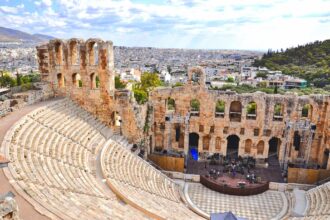
| Acropoli (Line 2) | Acropolis & Parthenon, Acropolis Museum, Temple of Olympian Zeus, Plaka, Anafiotika, Theatre of Dionysus |
| Monastiraki (Lines 1 & 3) | Monastiraki Square, Ancient Agora, Roman Agora, Plaka, Museum of Illusions, Hadrian’s Library |
| Syntagma (Lines 2 & 3) | Changing of the Guard, Hellenic Parliament, National Garden, Benaki Museum, Ermou Shopping Street, Panathenaic Stadium (15-minute walk) |
| Evangelismos (Line 3) | Mount Lycabettus Funicular, Lycabettus Hill, Byzantine Museum |
| Victoria (Line 1) | National Archaeological Museum (10-minute walk) |
| Omonoia (Lines 1 & 2) | Athens Central Market, shopping district |
| Elliniko (Line 2) | ARCHELON Sea Turtle Rescue Centre (short bus or taxi), gateway to the Athens Riviera |
Most visitors will spend the majority of their time between Acropoli, Monastiraki and Syntagma stations, where many of Athens’ most famous attractions can be explored on foot. For destinations along the Athens Riviera, including the ARCHELON Sea Turtle Rescue Centre, continue south from Elliniko using local buses, taxis or the coastal tram network.
Explore the Acropolis & Parthenon
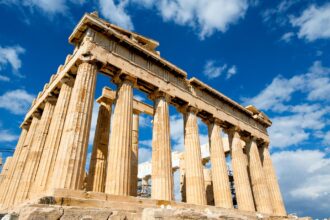
No visit to Athens is complete without standing on the Acropolis, the rocky hill that has dominated the city skyline for more than two millennia. Home to the magnificent Parthenon, this UNESCO World Heritage Site is one of the world’s greatest archaeological treasures and the symbol of both Athens and classical Greece.
As you make your way through the monumental Propylaea, you’ll discover an extraordinary collection of ancient buildings including the Erechtheion, famous for its Caryatid statues, and the elegant Temple of Athena Nike. The panoramic views from the summit stretch across the entire city, making this one of the most rewarding places to begin your visit.
The Acropolis can become extremely busy during the summer, so booking your ticket in advance is highly recommended. Timed-entry slots help manage visitor numbers and often sell out several days ahead during peak season.
For everything you need to know about visiting, including tickets, opening hours, accessibility, the monuments you’ll see and the fascinating history behind the site, take a look at our dedicated Acropolis & Parthenon Guide.
Wander Through Plaka
Often referred to as the neighbourhood of the gods, Plaka is Athens’ oldest district and one of its most charming places to explore. Sitting beneath the Acropolis, its maze of narrow streets is filled with colourful houses, family-run tavernas, traditional cafés and independent shops selling everything from handmade jewellery to local olive oil.
Unlike many historic centres across Europe, Plaka remains a genuine residential neighbourhood as well as a tourist destination. You’ll often find quiet residential lanes only a few minutes’ walk from lively restaurant terraces, giving the area an authentic atmosphere that’s perfect for exploring without a map.
Many visitors simply wander through Plaka at their own pace, stopping for coffee in one of the shaded squares or browsing the small boutiques that line the pedestrian streets. It’s also one of the best places in Athens to sample traditional Greek dishes, particularly during the evening when the neighbourhood comes alive.
Plaka is easy to combine with a visit to the Acropolis, the Roman Agora or Anafiotika, making it one of the most enjoyable areas to explore on foot.
Visit the Acropolis Museum
Standing at the foot of the Acropolis, the Acropolis Museum is one of the finest archaeological museums anywhere in the world. Purpose-built to display the treasures uncovered from the Acropolis itself, it provides the perfect companion to a visit to the ancient citadel and helps bring the ruins above to life.
Inside, you’ll discover an extraordinary collection of original sculptures, statues, carvings and architectural masterpieces that once decorated the Acropolis. Highlights include the beautiful Caryatids, the surviving sculptures from the Parthenon Frieze, and colourful artefacts that reveal ancient Greek buildings were once painted in vivid colours rather than the plain white marble many people imagine today.
One of the museum’s most fascinating features is its glass floors, allowing visitors to look directly down onto an active archaeological excavation beneath the building. Hundreds of ancient streets, houses and workshops have been uncovered here, creating a unique opportunity to see one archaeological site while standing inside another.
The entire top floor has been carefully aligned with the Parthenon itself, allowing visitors to admire the surviving sculptures while looking directly towards the temple through the museum’s huge glass walls. It’s an impressive piece of architectural design that helps explain exactly where many of the exhibits originally stood.
Allow at least 90 minutes to two hours for your visit, although history enthusiasts could easily spend much longer exploring the galleries. The museum is fully accessible, air-conditioned and an excellent option during the hottest part of the day if you’re visiting Athens during the summer.
The Acropolis Museum is included in several Athens sightseeing passes, making it excellent value if you’re planning to visit multiple attractions during your stay.
Watch the Changing of the Guard
One of the most memorable free things to do in Athens is watching the Changing of the Guard outside the Hellenic Parliament on Syntagma Square. Taking place throughout the day, the ceremony is performed by the Evzones, Greece’s elite Presidential Guard, whose distinctive uniform has become one of the country’s most recognisable national symbols.
The guards wear traditional dress that dates back to the Greek War of Independence, including the famous white pleated fustanella, handmade leather shoes known as tsarouchia, and red caps finished with long black tassels. Every part of the uniform has historical significance, and the slow, highly choreographed movements have remained largely unchanged for generations.
The changing ceremony takes place every hour, but the most impressive event is held at 11:00 every Sunday, when a larger ceremonial guard, military band and additional troops take part in a much more elaborate display. If your visit coincides with a Sunday morning, it’s well worth arriving early to secure a good viewing position.
While you’re here, don’t miss the Tomb of the Unknown Soldier, which sits directly in front of Parliament and honours the Greek soldiers who lost their lives defending the country. The guards remain completely motionless while on duty, making them a favourite subject for photographers throughout the day.
Because Syntagma Square is also one of Athens’ main transport hubs, it’s easy to combine the ceremony with visits to Plaka, the National Garden, Ermou shopping street or the Acropolis.
Visit the National Archaeological Museum
If the Acropolis Museum tells the story of Athens, the National Archaeological Museum tells the story of ancient Greece itself. It houses the country’s largest archaeological collection, spanning thousands of years of Greek civilisation and displaying many of the most important discoveries ever made across the mainland and islands.
Among the museum’s most famous exhibits is the spectacular Mask of Agamemnon, discovered at Mycenae, together with remarkable gold jewellery, bronze weapons, marble sculptures and beautifully preserved pottery dating back to the Bronze Age. The collection continues through the Classical, Hellenistic and Roman periods, giving visitors an unrivalled overview of Greece’s rich history.
Another highlight is the extraordinary Antikythera Mechanism, often described as the world’s first analogue computer. Recovered from a shipwreck, this astonishing device demonstrates just how advanced ancient Greek engineering and astronomy had become more than two thousand years ago.
Unlike the Acropolis Museum, which focuses on a single archaeological site, the National Archaeological Museum brings together treasures from Delphi, Mycenae, Santorini, Olympia, Crete and dozens of other locations, making it an excellent introduction to places you may later visit elsewhere in Greece.
You’ll need at least two to three hours to appreciate the museum properly, and history enthusiasts could easily spend half a day here. The galleries are spacious, well laid out and fully air-conditioned, making the museum an excellent option if you’re looking to escape Athens’ intense summer heat.
Several Athens sightseeing passes include admission, making it worth considering if you’re planning to visit multiple museums during your stay.
Search flights and useful route combinations for your trip.
View flightsUse an eSIM to get online without hunting for a local SIM after arrival.
See eSIM optionsCheck private pickup options and plan your onward journey before arrival.
View transfersRide the Funicular to Mount Lycabettus
Rising 277 metres above sea level, Mount Lycabettus is the highest point in central Athens and offers what many visitors consider to be the finest panoramic view in the city. From the summit you can enjoy spectacular views across the Acropolis, Temple of Olympian Zeus, Panathenaic Stadium, Piraeus Port, the Athens Riviera, and, on exceptionally clear days, all the way to the mountains of the Peloponnese.
There are two ways to reach the summit. If you’re feeling energetic, a network of well-maintained footpaths climbs steadily through the pine forest from the lower slopes, taking around 30 to 45 minutes depending on your pace. Most visitors, however, choose the Lycabettus Funicular Railway, which climbs through a tunnel inside the mountain and reaches the summit in around three minutes.
The funicular station is located at Aristippou Street in Kolonaki, approximately a 15 to 20-minute walk from Syntagma Square. The entrance is slightly hidden at the end of a residential street, so it’s worth using Google Maps if it’s your first visit. Trains normally operate every 30 minutes, although departures become more frequent during busy periods and around sunset.
A return ticket costs approximately €13, while a single journey costs around €10. Prices can occasionally change, so it’s worth checking the latest fares before travelling. Many visitors ride the funicular to the top before walking back down through the forest, allowing them to enjoy both experiences.
At the summit you’ll find much more than just a viewpoint. The beautiful white Chapel of Saint George sits at the very highest point of the hill, while a restaurant, café and several large viewing terraces provide plenty of places to relax while admiring the scenery. It’s one of the best places in Athens for photography, particularly during the golden hour, when the setting sun bathes the city in warm light before the Acropolis becomes illuminated after dark.
Mount Lycabettus is especially worthwhile if you’ve already explored the Acropolis, as it offers the rare opportunity to look back towards the Parthenon from above rather than standing beside it. Seeing the ancient citadel rising from the centre of the modern city gives a real appreciation of Athens’ unique landscape.
Allow one to two hours for your visit, depending on whether you walk or use the funicular. Many visitors combine Mount Lycabettus with the nearby Benaki Museum, the National Garden, or the cafés and boutiques of Kolonaki, creating an enjoyable afternoon away from the busiest archaeological sites.
Explore the Ancient Agora
Long before modern democracy spread around the world, the Ancient Agora was where the citizens of Athens gathered to debate politics, trade goods, worship the gods and discuss philosophy. Often described as the birthplace of democracy, this remarkable archaeological site offers one of the most fascinating insights into everyday life in classical Greece.
Unlike the Acropolis, which was primarily a religious sanctuary, the Agora was the commercial, political and social heart of the ancient city. Philosophers including Socrates taught here, politicians addressed the public, merchants sold their goods and ordinary Athenians gathered to discuss the issues of the day.
One of the highlights is the beautifully preserved Temple of Hephaestus, regarded as one of the best-preserved ancient Greek temples anywhere in the world. Sitting on a small hill overlooking the Agora, its impressive marble columns remain largely intact more than two thousand years after construction.
Visitors can also explore the reconstructed Stoa of Attalos, an elegant colonnaded building that now houses the Museum of the Ancient Agora. Inside you’ll discover statues, pottery, inscriptions, coins and everyday objects that help explain how life unfolded in one of history’s most influential public spaces.
Other notable remains include the Bouleuterion, where members of Athens’ council met, the Tholos, which served as the headquarters of the city’s executive officials, and the Altar of the Twelve Gods, once considered the geographical centre of ancient Athens.
Allow one to two hours to explore the site comfortably. The Ancient Agora is included in several Athens travel passes, making it an excellent addition to your itinerary if you’re already planning to visit the Acropolis and other archaeological attractions.
Explore Monastiraki Square & Flea Market
If there’s one place that captures the energy of modern Athens, it’s Monastiraki Square. Located just a short walk from both the Acropolis and Plaka, this lively neighbourhood combines historic monuments, bustling markets, rooftop cafés and some of the city’s best shopping into one fascinating district.
The square itself is always busy, with street performers, musicians and cafés creating a lively atmosphere throughout the day. Surrounded by historic buildings and overlooked by the Acropolis, it’s one of the best places to pause for a coffee while watching the city go by.
Branching away from the square are the famous Monastiraki Flea Market streets. Despite the name, this is far more than a traditional flea market. You’ll find everything from antiques, handmade jewellery and leather goods to Greek souvenirs, vintage clothing, artwork and locally produced food. It’s one of the best places in Athens to browse for unique gifts rather than mass-produced souvenirs.
The area is also home to several important historic landmarks, including the Tzistarakis Mosque, the Library of Hadrian, and the nearby Roman Agora, making it easy to combine shopping with sightseeing.
One of Monastiraki’s biggest attractions is its collection of rooftop restaurants and bars. Many offer spectacular views of the illuminated Acropolis, particularly after sunset, making this one of the most popular places in Athens for an evening meal or drink.
Whether you’re shopping, sightseeing or simply soaking up the atmosphere, Monastiraki deserves several hours of your itinerary and is one of the city’s most enjoyable neighbourhoods to explore.

Visit the Temple of Olympian Zeus
Once the largest temple in Greece, the Temple of Olympian Zeus was built to honour the king of the gods and took almost 700 years to complete. Although only a small number of its enormous columns remain standing today, the scale of the monument still gives an impressive sense of the ambition behind one of the ancient world’s greatest building projects.
Originally supported by 104 towering Corinthian columns, the temple dominated the landscape of ancient Athens. Today, 15 columns remain standing, while another lies dramatically on the ground, having been toppled during a violent storm in the nineteenth century.
Walking through the archaeological site allows you to appreciate the sheer size of the structure while enjoying excellent views back towards the Acropolis, creating some of the city’s most recognisable photographs.
The temple also marks the entrance to a wider archaeological area that includes Hadrian’s Arch, built to celebrate the Roman emperor’s contribution to Athens. The monumental gateway still stands between the ancient city and the Roman extension developed during Hadrian’s reign.
Because the site is relatively compact, most visitors spend 30 to 60 minutes exploring before continuing towards the Acropolis or the nearby National Garden. It’s an easy attraction to include in almost any sightseeing itinerary and is commonly included in several Athens sightseeing passes.
For anyone interested in ancient architecture, mythology or Roman Athens, the Temple of Olympian Zeus is a worthwhile stop that perfectly complements the Acropolis and Ancient Agora.
Stand Where the Modern Olympics Began
The magnificent Panathenaic Stadium occupies a unique place in sporting history as the venue of the first modern Olympic Games in 1896. Built entirely from gleaming white Pentelic marble, it remains the only full-sized marble stadium in the world, making it one of Athens’ most distinctive landmarks.
Although athletic competitions had taken place here since ancient times, the stadium was completely rebuilt during the nineteenth century to host the revival of the Olympic Games. Today, visitors can walk through the players’ tunnel, stand on the running track and imagine the excitement that greeted the world’s athletes as they entered the arena more than a century ago.
The stadium also houses a small exhibition exploring the history of the Olympic movement, including Olympic torches, posters and memorabilia from Games held around the world. It’s a fascinating addition for sports fans and provides useful context for one of the world’s greatest sporting events.
One of the highlights is climbing to the upper seating areas, where you’ll enjoy excellent views across both the stadium and central Athens. From here it’s easy to appreciate the impressive scale of a venue capable of accommodating around 50,000 spectators.
Allow around an hour for your visit. The Panathenaic Stadium is within walking distance of Syntagma Square, the National Garden and the Temple of Olympian Zeus, making it easy to combine several attractions into a single morning or afternoon exploring central Athens.
Discover Anafiotika
Hidden beneath the northern slopes of the Acropolis lies one of Athens’ most surprising neighbourhoods. Anafiotika feels more like a tiny village on a Greek island than part of a bustling capital city, with whitewashed houses, narrow alleyways, colourful doors and flowering bougainvillea creating a wonderfully peaceful atmosphere just minutes from some of Athens’ busiest streets.
The neighbourhood dates back to the nineteenth century, when skilled builders from the Cycladic island of Anafi arrived in Athens to help construct King Otto’s new capital. Missing their island homes, they built small white cottages using traditional Cycladic techniques, giving the area the appearance of a miniature Aegean village.
Today, wandering through Anafiotika is one of the city’s most enjoyable free experiences. The winding lanes are too narrow for vehicles, creating a quiet escape where cats sleep in the sunshine, colourful flower pots decorate tiny courtyards and every corner seems to reveal another beautiful photograph.
Despite its peaceful setting, you’re never far from the city’s major attractions. The Acropolis, Plaka, Roman Agora and Ancient Agora are all within easy walking distance, making Anafiotika an ideal place to slow down between sightseeing stops.
Because many people head straight for the Acropolis without exploring the surrounding streets, Anafiotika often feels far quieter than neighbouring Plaka, particularly if you visit during the early morning or late afternoon.
Browse hostels and budget-friendly stays around Athens.
See hostelsFlying to Athens? Get fast compensation payouts, eligible lounge benefits and expert help when flights go wrong.
See AirHelp+ benefitsArriving before check-in or leaving later? Store your luggage and make more of your time in Athens.
Store your bagsExplore Athens Central Market
For a glimpse of everyday life in modern Athens, head to the Athens Central Market, also known as the Varvakios Agora. This lively indoor market has been serving the city for more than a century and remains one of the best places to experience authentic local life away from the main tourist attractions.
The market is divided into several sections, with the impressive fish market and meat market attracting chefs, restaurant owners and local residents every day. Alongside them you’ll find stalls selling fresh fruit, vegetables, herbs, spices, olives, cheeses, honey and traditional Greek delicacies, creating an explosion of colour, aromas and activity.
Even if you don’t plan to buy anything, the market is fascinating to explore. Watching traders call out to customers and seeing the sheer variety of local produce provides a completely different perspective on Athens from the archaeological sites found elsewhere in the city.
Surrounding the market are dozens of traditional cafés and family-run tavernas, many serving hearty Greek dishes that have been popular with market traders for generations. It’s an excellent place to enjoy an authentic lunch before continuing your sightseeing.
The market is particularly lively during the morning, when local businesses are stocking up for the day. Visiting early allows you to experience the market at its busiest and gives you plenty of time to continue exploring nearby Monastiraki, Psyrri or Omonia afterwards.
Visit the ARCHELON Sea Turtle Rescue Centre
If you’d like a break from ancient temples and archaeological sites, the ARCHELON Sea Turtle Rescue Centre offers one of Athens’ most unusual and rewarding attractions. Located close to the coast in Glyfada, this rehabilitation centre cares for injured and endangered loggerhead sea turtles before releasing them back into the wild, giving visitors the chance to see marine conservation in action.
The centre is operated by ARCHELON, Greece’s leading sea turtle conservation organisation. Since the 1980s, the charity has protected nesting beaches across Greece, rescued injured turtles from around the country’s coastline and helped educate thousands of visitors about the challenges facing marine wildlife.
During your visit you’ll usually see several rescued loggerhead turtles recovering in specially designed rehabilitation pools. Each turtle has an information board explaining its name, where it was found and the injuries or illnesses being treated. Many have been rescued after collisions with boats, entanglement in discarded fishing gear or swallowing plastic pollution, while others are recovering from infections before returning to the sea.
Alongside the rehabilitation pools you’ll find educational displays explaining the life cycle of loggerhead turtles, their migration routes across the Mediterranean, and the conservation work carried out by volunteers every summer to protect nesting beaches. It’s an enjoyable visit for all ages and particularly popular with families travelling with children.
Admission is free, although donations are warmly welcomed and go directly towards caring for the turtles and supporting conservation projects. Allow 45 minutes to 90 minutes for your visit, depending on how much time you spend reading the exhibits and speaking with the volunteers.
The rescue centre is located in Glyfada, approximately 12 kilometres south of central Athens. It’s easy to reach using public transport and makes an excellent addition to a day exploring the Athens Riviera.
The simplest option is to take the Athens Tram towards Voula, leaving the tram at one of the nearby Glyfada stops before walking for around 10 to 15 minutes to the centre. The journey from Syntagma Square typically takes 45 to 60 minutes, depending on connections.
Alternatively, you can travel by Metro Line 2 to Elliniko before continuing by taxi or local bus, reducing the overall journey time. Taxis and ride-hailing services are also widely available and usually take around 25 to 35 minutes from central Athens, depending on traffic.
If you’re hiring a car, parking is generally much easier here than in central Athens, making it a convenient stop if you’re planning to explore more of the coastline.
The rescue centre works particularly well as part of a relaxing day along the Athens Riviera. After your visit, you can head into Glyfada, one of Athens’ smartest seaside suburbs, where you’ll find boutique shops, cafés, ice cream parlours and waterfront restaurants overlooking the Saronic Gulf.
Several attractive public beaches are also within easy reach, making it easy to combine wildlife conservation with a swim or a leisurely afternoon by the sea during the summer months.
If you have more time, continue south towards Lake Vouliagmeni, one of Greece’s most unusual natural attractions. From the ARCHELON Sea Turtle Rescue Centre, it’s around 20 to 25 minutes by taxi or roughly 30 to 40 minutes by tram and bus, depending on connections. The lake is naturally heated throughout the year and is famous for its mineral-rich waters, floating fish spa and peaceful setting surrounded by limestone cliffs. It’s an excellent place to enjoy a swim or relax for a few hours after visiting the rescue centre.
If you’re planning a full day along the coast, continue even further south to the spectacular Temple of Poseidon at Cape Sounion. The drive from the rescue centre takes approximately 50 to 60 minutes along the scenic Athens Riviera, while public transport is also possible by travelling to Glyfada and catching a KTEL Attikis bus to Cape Sounion. The journey takes around 90 minutes by bus, making it a straightforward trip for visitors without a car. Many travellers finish the day here to watch one of Greece’s most famous sunsets before returning to Athens in the evening.
For visitors looking to experience a different side of the Greek capital, combining the ARCHELON Sea Turtle Rescue Centre, Glyfada, and the Athens Riviera makes an enjoyable contrast to the city’s world-famous archaeological attractions while supporting an organisation carrying out important conservation work.
Experience the Museum of Illusions
If you’re looking for something completely different from Athens’ archaeological sites, the Museum of Illusions offers a fun and interactive experience that’s suitable for families, couples and groups of friends.
Rather than traditional museum displays, you’ll find a collection of optical illusions, interactive exhibits, puzzle rooms and mind-bending installations designed to challenge your perception. It’s the sort of attraction where visitors are encouraged to touch the exhibits, take photographs and become part of the displays themselves.
Highlights include the famous Vortex Tunnel, gravity-defying rooms, holograms, mirrored spaces and perspective illusions that create some wonderfully unusual photographs. Many exhibits appear impossible until you understand the science behind them, making the museum entertaining as well as educational.
Because the experience is highly interactive, it’s particularly popular with younger visitors, although adults often enjoy it just as much. It’s also an excellent option if you’re travelling during the hottest part of the day or looking for something different after several days exploring ancient ruins.
Most visitors spend around an hour inside, making it easy to combine with nearby attractions such as Monastiraki, Plaka or the Ancient Agora. The Museum of Illusions is also included in several Athens travel passes, making it a worthwhile addition if you’re already planning to visit multiple attractions during your stay.

Walk Through the National Garden
Tucked away behind Syntagma Square and the Greek Parliament, the National Garden offers a peaceful escape from the busy streets of central Athens. Covering around 15 hectares, this leafy oasis was originally created in the nineteenth century as the royal gardens for Queen Amalia and remains one of the city’s favourite green spaces.
Shaded pathways wind beneath palm trees, pine trees and exotic plants collected from around the world, while ornamental ponds, small bridges and quiet seating areas provide plenty of places to relax. It’s a welcome break after exploring Athens’ archaeological sites, particularly during the warmer months when the gardens offer much-needed shade.
Families will also find a small children’s playground, a duck pond and a modest collection of animals including goats, peacocks and birds, making it a pleasant stop if you’re travelling with younger children.
The gardens are surrounded by several of Athens’ best-known attractions, including the Panathenaic Stadium, the Temple of Olympian Zeus, the Presidential Mansion and Syntagma Square, making them easy to include in a full day of sightseeing.
Best of all, entry is completely free, making the National Garden one of the city’s best-value attractions and a wonderful place to enjoy a slower pace between museums and archaeological sites.
Visit Cape Sounion and the Temple of Poseidon
Perched dramatically on cliffs overlooking the Aegean Sea, the Temple of Poseidon at Cape Sounion is one of the most spectacular ancient monuments in Greece. Located around 70 kilometres south of Athens, it combines magnificent coastal scenery with one of the country’s most important archaeological sites, making it one of the most popular day trips from the capital.
Dedicated to Poseidon, the god of the sea, the temple has watched over ships entering Athens for more than 2,400 years. Although only part of the original structure survives today, the elegant marble columns remain one of Greece’s most iconic sights, particularly when viewed against the deep blue waters of the Saronic Gulf.
Many visitors choose to arrive during the late afternoon, when the setting sun transforms the coastline into one of the most photographed landscapes in Greece. According to legend, this is also where King Aegeus threw himself into the sea after mistakenly believing his son Theseus had died, giving the Aegean Sea its name.
Cape Sounion can be reached independently using KTEL buses from Athens, although organised tours remain extremely popular as they combine transport, commentary and perfectly timed visits for sunset. Many tours also follow the beautiful Athens Riviera, passing beaches, marinas and seaside resorts along the way.
Cruise to the Greek Islands
One of the biggest advantages of staying in Athens is that you don’t have to travel far to experience the Greek islands. Several full-day cruises depart each morning, allowing visitors to enjoy crystal-clear waters, traditional harbour towns and island scenery before returning to Athens in the evening.
The most popular cruises explore the Saronic Gulf, visiting islands such as Hydra, Poros, Aegina and Agistri. Each island offers something slightly different. Hydra is famous for its beautiful harbour and car-free streets, Aegina is known for its pistachios and ancient temples, while Agistri attracts visitors with its clear water and relaxed beaches.
It’s worth deciding what sort of cruise you’re looking for before booking. Some itineraries are designed primarily for sightseeing, giving you plenty of time to explore traditional towns and historic landmarks. Others focus on swimming and relaxation, with stops in secluded bays where you can snorkel, swim directly from the boat or simply enjoy the sunshine with lunch served on board.
Most cruises include lunch, while many also provide hotel transfers, drinks and optional guided excursions. During the summer months these trips are extremely popular, so booking in advance is highly recommended.
If you’re unsure which cruise is right for you, our Athens Day Cruises Guide compares the main operators, explains which trips are best for sightseeing and which focus on swimming, and helps you choose the cruise that best matches your travel style.

Experience Traditional Greek Food
Athens is one of the best places in Greece to discover the country’s rich culinary traditions. From simple neighbourhood tavernas to modern rooftop restaurants overlooking the illuminated Acropolis, the city offers something for every taste and budget.
Classic dishes such as moussaka, souvlaki, gyros, spanakopita and fresh Greek salads appear on menus throughout the city, while seafood lovers will find everything from grilled octopus to freshly caught fish served in restaurants near Piraeus and along the Athens Riviera.
Don’t miss the opportunity to sample traditional desserts including baklava, loukoumades drizzled with honey and cinnamon, or rich Greek yoghurt topped with local honey and walnuts. Pair your meal with a glass of Assyrtiko or Agiorgitiko wine, or try a traditional ouzo or tsipouro if you’d like to experience some of Greece’s best-known spirits.
Some of the city’s most enjoyable meals are found away from the main tourist streets. Neighbourhoods such as Psyrri, Koukaki and Exarchia are packed with family-run tavernas where recipes have often been passed down through generations.
Whether you’re enjoying a quick souvlaki between sightseeing stops or lingering over a long evening meal beneath the Acropolis, Greek food is an essential part of the Athens experience and one of the city’s greatest attractions in its own right.
Visit Hydra or Aegina
If you’d like to experience the Greek islands without committing to an overnight stay, Hydra and Aegina are two of the easiest destinations to visit from Athens. Regular ferries depart from Piraeus Port throughout the year, making both islands ideal for an independent day trip.
Hydra is one of Greece’s most distinctive islands. Cars and motorcycles are largely prohibited, leaving donkeys, water taxis and walking as the main ways of getting around. The beautiful horseshoe-shaped harbour is lined with elegant stone mansions, boutique hotels and waterfront cafés, while narrow cobbled streets climb the hillside behind. Visitors can spend the day exploring the harbour, swimming from rocky coves or walking to nearby beaches.
Aegina, meanwhile, offers a very different atmosphere. It’s famous throughout Greece for producing some of the world’s finest pistachios, and the colourful harbour is filled with cafés, restaurants and local shops selling pistachio products of every description. The island is also home to the impressive Temple of Aphaia, one of the country’s best-preserved ancient temples, together with attractive beaches and traditional villages.
Both islands can easily be explored independently using the regular ferry network, while organised cruises often combine Hydra, Poros and Aegina into a single full-day excursion.
If you’re planning to travel independently, our Saronic Islands Guide explains the different ferry operators, journey times, ticket options and everything you need to know before travelling.
Explore the Athens Riviera
Stretching south from Piraeus towards Cape Sounion, the Athens Riviera offers a completely different side to the Greek capital. Instead of ancient ruins and busy city streets, you’ll discover marinas, sandy beaches, luxury hotels, waterfront restaurants and palm-lined promenades overlooking the Saronic Gulf.
The Riviera is surprisingly easy to reach using Athens’ tram network, making it an excellent choice if you want a relaxing afternoon away from the city’s busiest attractions. Popular coastal districts include Palaio Faliro, Alimos, Glyfada and Vouliagmeni, each offering a different atmosphere.
One of the highlights is Lake Vouliagmeni, a naturally heated lake fed by underground thermal springs. Its warm mineral-rich waters remain at a pleasant temperature throughout the year, making it one of the most unusual swimming locations anywhere in Greece.
The coastline is also home to numerous organised beaches where visitors can hire sunbeds, umbrellas and watersports equipment, while those looking for a quieter experience will find plenty of smaller coves and public beaches dotted along the coast.
Whether you’re enjoying a leisurely seafood lunch overlooking the sea, spending the afternoon on the beach or continuing south towards Cape Sounion, the Athens Riviera provides a refreshing contrast to the city’s ancient monuments.

See Athens from a Hop-on Hop-off Bus
If you’re short on time or want an easy introduction to the city, a Hop-on Hop-off Bus Tour is one of the most convenient ways to explore Athens. These open-top buses connect many of the capital’s biggest attractions while providing commentary about the city’s history, culture and landmarks along the way.
Most routes stop at major sights including the Acropolis, Acropolis Museum, Syntagma Square, Temple of Olympian Zeus, Panathenaic Stadium, National Archaeological Museum, Monastiraki and Plaka. Many operators also include additional routes serving Piraeus Port and parts of the Athens Riviera, making it easy to reach attractions beyond the city centre.
One of the biggest advantages is the flexibility. Rather than following a fixed itinerary, you can leave the bus whenever something catches your eye, spend as much time as you like exploring, then simply board the next service when you’re ready to continue.
Several Athens travel passes include a 48-hour Hop-on Hop-off Bus ticket, making it an excellent addition if you’ve already decided to purchase a sightseeing pass. Even if you prefer exploring on foot, many visitors use the buses on their first day to familiarise themselves with the city’s layout before returning to individual attractions later.
Want to see more of Athens without relying on the Metro? Our Athens Hop-On Hop-Off Bus Comparison Guide compares Big Bus, City Sightseeing and Sights of Athens, helping you choose the best sightseeing bus for your itinerary.
Enjoy Rooftop Views of the Acropolis
Few cities can rival the sight of an illuminated Parthenon rising above the skyline after dark, and one of the best ways to enjoy it is from one of Athens’ many rooftop bars and restaurants.
Neighbourhoods including Monastiraki, Plaka, Syntagma and Psyrri are home to dozens of rooftop venues offering spectacular views across the city. Whether you’re enjoying a morning coffee, a leisurely lunch or an evening meal as the Acropolis lights up, the views are often every bit as memorable as the food itself.
Many rooftop restaurants specialise in modern Greek cuisine, combining traditional ingredients with contemporary cooking, while others focus on cocktails and relaxed evening drinks. During the summer months it’s worth reserving ahead, particularly for tables overlooking the Acropolis at sunset.
Even if you’re travelling on a budget, several rooftop cafés offer affordable drinks with equally impressive views, making this one of the easiest ways to end a day of sightseeing.
Watching the sun set behind the Acropolis, before the ancient temples are illuminated against the night sky, is one of those unforgettable moments that many visitors remember long after leaving Athens.
Free Things to Do in Athens
Exploring Athens doesn’t have to be expensive. While many of the city’s most famous archaeological sites charge an admission fee, there are plenty of excellent attractions that cost nothing at all. In fact, some of the best experiences simply involve wandering through the city’s historic neighbourhoods, enjoying the views and soaking up the atmosphere.
Start by watching the Changing of the Guard outside the Hellenic Parliament in Syntagma Square, one of the city’s most popular free spectacles. From there, stroll through the National Garden, explore the charming alleyways of Anafiotika, browse the lively streets around Monastiraki, or simply wander through Plaka, where the historic streets are every bit as enjoyable as the museums nearby.
If you’re happy to tackle a few hills, both Philopappos Hill and Mount Lycabettus reward visitors with spectacular panoramic views across Athens and towards the Acropolis. The walk to the top of Lycabettus is completely free if you choose not to use the funicular, while Philopappos Hill offers some of the finest viewpoints anywhere in the city.
The Athens Central Market is another fascinating place to visit without spending a penny. Watching local traders at work and exploring the colourful food stalls provides an authentic glimpse into everyday life in the Greek capital.

Rupert’s Handy Travel Tips
Planning to explore Athens? Here are a few simple tips that will help you make the most of your visit.
- Start at the Acropolis early: During summer, temperatures climb quickly and the Acropolis is one of the busiest attractions in Greece. Booking an early morning timed-entry slot makes for a much more enjoyable visit.
- Use the Metro: Athens has a modern, reliable metro system linking the airport, Piraeus Port and the city centre. It’s usually the quickest way to travel between attractions.
- Wear comfortable footwear: Many archaeological sites have polished marble surfaces, uneven stone paths and steep steps. Trainers or walking shoes provide much better grip than sandals.
- Consider a travel pass: If you’re planning to visit several attractions such as the Acropolis, Acropolis Museum and Ancient Agora, an Athens sightseeing pass could save both money and time.
- Leave time for the islands: Even if you’re only staying in Athens for a few days, it’s easy to visit destinations such as Hydra, Aegina or Agistri on a day trip.
Want to meet the reindeer behind our travel tips? Find out more in our page Who is Rupert?.
Frequently Asked Questions
How many days do you need in Athens?
Most visitors find that three days gives enough time to see the major attractions, explore the historic neighbourhoods and perhaps enjoy a short trip to the coast. If you’re also planning a day cruise or a visit to Delphi, Meteora or Cape Sounion, allow four or five days.
What is the number one attraction in Athens?
The Acropolis and Parthenon are unquestionably Athens’ most famous attractions and are considered among the world’s most important archaeological sites.
Is Athens walkable?
Yes. Many of the city’s main attractions, including the Acropolis, Plaka, Monastiraki, Ancient Agora, Temple of Olympian Zeus and Syntagma Square, are all within comfortable walking distance of one another.
Should I buy an Athens sightseeing pass?
If you’re planning to visit several paid attractions, a sightseeing pass can offer excellent value. Our Athens Travel Passes Guide explains the different options and who they’re best suited for.
Can you visit Athens on a budget?
Absolutely. Many of the city’s highlights, including Plaka, Anafiotika, the National Garden, the Changing of the Guard and several excellent viewpoints, are completely free to visit.
What is the best time of year to visit Athens?
Spring and autumn usually offer the most comfortable weather for sightseeing. Summer brings long opening hours but can also be extremely hot, particularly at exposed archaeological sites.
Further Reading
Athens is often the starting point for a wider journey around Greece, and there are plenty of ways to continue your adventure once you’ve explored the city’s highlights. If you’re planning to visit the Acropolis, our dedicated Acropolis & Parthenon Guide covers tickets, opening hours, accessibility and everything you’ll see once you’re inside. To decide whether a sightseeing pass is worthwhile, take a look at our Athens Travel Passes Guide, where we compare the different options and explain exactly what’s included.
If you’re planning to explore beyond the city, our Day Trips from Athens Guide covers destinations including Delphi, Meteora, Corinth, Nafplio and Cape Sounion, while our Athens Day Cruises Guide compares the most popular island cruises departing from the capital. Travelling independently? Our Athens Public Transport Guide explains how to use the metro, buses and trams, and our Athens Airport Transfers Guide will help you reach the city centre when you first arrive.
Many visitors continue their holiday by exploring the Greek islands or travelling further across the country by rail and ferry. Our Greece Interrail Pass Guide and Greek Islands Interrail Guide explain how to make the most of Greece’s rail and ferry networks, while our guide to the best eSIMs will help you stay connected throughout your trip using mobile data without expensive roaming charges.