Reviewed by our editorial team Updated
Discover How to Get Around Athens
Athens has one of the best public transport systems in Southern Europe, making it easy to travel between the city’s historic landmarks, modern neighbourhoods, beaches and ports without hiring a car. Whether you’re heading to the Acropolis, catching a ferry from Piraeus, relaxing on the Athens Riviera, or flying home from Athens International Airport, there’s usually a straightforward public transport option available.
The network is made up of three Metro lines, an extensive bus network, trolleybuses, the Athens Tram and the Suburban Railway (Proastiakos). Better still, most services are integrated, meaning you can use the same ticket across multiple forms of transport, making changing between Metro, buses and trams simple.
For most visitors, the Metro will be the quickest and easiest way to travel around the city centre. It’s modern, clean, air-conditioned and connects many of Athens’ biggest attractions. Meanwhile, the Tram provides a scenic journey along the coast, buses reach areas beyond the rail network, and the Suburban Railway connects Athens with the airport and destinations further afield such as Corinth.
If you’re staying in central Athens, you’ll probably find that you only need public transport a handful of times each day, as many of the city’s most famous attractions are within comfortable walking distance of one another.
Athens Public Transport at a Glance
Before deciding how to travel, it’s worth understanding what each part of the network is best suited for.
| Transport | Best For | Airport | Piraeus | Attractions |
|---|---|---|---|---|
| Metro | Fast, frequent travel across the city | ✔ | ✔ | ✔ |
| Tram | Athens Riviera and beaches | ✖ | Partial | ✔ |
| Bus | Areas not served by rail | ✔ | ✔ | ✔ |
| Trolleybus | Central Athens neighbourhoods | ✖ | ✖ | Limited |
| Suburban Railway (Proastiakos) | Airport and regional journeys | ✔ | ✖ | Corinth & beyond |
For most visitors, the Metro and Tram will cover the majority of journeys, with buses filling the gaps where rail services don’t operate.
Compare hotels and other places to stay in Athens.
Check availabilityBrowse apartments, homes and self-catering accommodation in Athens.
Browse rentalsSee hotel prices from multiple booking sites in one search.
Compare ratesMeet the Athens Metro
The Athens Metro is the backbone of the city’s public transport system and one of the easiest metro networks in Europe for visitors to use. Originally opened in the nineteenth century and extensively modernised before the 2004 Olympic Games, today’s network combines modern stations, frequent trains and excellent accessibility with fascinating glimpses into the city’s ancient past.
The system consists of three colour-coded lines serving central Athens, the airport, Piraeus Port and many residential neighbourhoods. Stations are clearly signposted in both Greek and English, while route maps, electronic displays and onboard announcements make navigating the system straightforward even if it’s your first visit to Greece.
Trains generally run every 4 to 8 minutes during the day, with slightly longer intervals during the evening. Stations are fitted with ticket machines, lifts, escalators and electronic information boards, while the trains themselves are air-conditioned and provide plenty of space for luggage outside the busiest commuting periods.
One of the Metro’s biggest advantages is that it’s much more than simply a transport system. During construction, archaeologists uncovered tens of thousands of ancient artefacts, transforming several stations into fascinating underground museums that are well worth stopping to explore.
For visitors staying in Athens for a few days, the Metro is almost always the fastest, cheapest and most reliable way to travel between the city’s major attractions.
The Athens Metro Lines Explained
Although the Metro looks extensive on the map, most visitors only need to become familiar with three simple routes.
| Metro Line | Colour | Serves |
|---|---|---|
| Line 1 | Green | Piraeus, Monastiraki, Omonia, Kifisia |
| Line 2 | Red | Acropolis, Syntagma, Elliniko |
| Line 3 | Blue | Athens Airport, Syntagma, Monastiraki, Evangelismos |
Line 1 (Green) is the oldest railway in Athens and is ideal for anyone travelling between Piraeus Port, Monastiraki, Omonia and the northern suburbs. If you’re catching a ferry to the Greek islands, this is likely to be the line you’ll use.
Line 2 (Red) is the most useful line for sightseeing. It serves Acropoli Station, giving easy access to the Acropolis, Acropolis Museum, Plaka and the Temple of Olympian Zeus, before continuing south towards Elliniko, which acts as a gateway to the Athens Riviera.
Line 3 (Blue) connects Athens International Airport with the city centre, making it the most convenient option for many arriving visitors. It also serves Syntagma, Monastiraki and Evangelismos, the nearest station for the Lycabettus Funicular.
Once you’ve travelled on the Metro a couple of times, you’ll quickly realise that most of Athens’ biggest attractions are only a few stops apart, making the network one of the easiest ways to explore the city.
Metro Stations Worth Visiting
Athens is unusual in that some of its Metro stations are attractions in their own right. During construction of the modern Metro network, archaeologists uncovered tens of thousands of artefacts, ranging from ancient roads and cemeteries to Roman baths and everyday household objects. Rather than moving everything into museums, many of the discoveries were incorporated directly into the stations, allowing commuters and visitors to experience thousands of years of history while travelling around the city.
If you have time, it’s worth stopping at several stations to admire these free archaeological displays.
Syntagma is undoubtedly the most famous Metro station in Athens. Beneath the platforms you’ll find one of the city’s largest underground archaeological exhibitions, showcasing discoveries made during construction of the station.
Excavations uncovered ancient roads, Roman baths, water pipes, graves, pottery, jewellery, coins and domestic artefacts, providing an extraordinary insight into everyday life in ancient Athens. Many of these finds are displayed in large glass cases throughout the station, effectively turning part of the Metro into a free museum.
Even if you’re simply changing trains, it’s worth allowing a few extra minutes to explore the exhibits before continuing your journey.
At Monastiraki, modern transport meets ancient Athens in a particularly impressive way. One of the station’s highlights is the exposed section of the River Eridanos, which once flowed through the heart of the ancient city.
Visible beneath a glass floor, the river has been flowing here for thousands of years and remains one of the most unusual sights on the Metro network. Combined with the nearby Ancient Agora and Roman Agora, it provides a fascinating glimpse into the city’s earliest history.
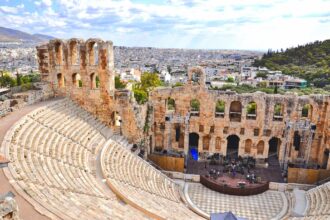
While Acropoli Station doesn’t contain as many archaeological displays as Syntagma, it features several interesting exhibits inspired by the nearby Acropolis and provides the quickest access to Athens’ most famous attraction.
From here it’s only a five-minute walk to both the Acropolis and the Acropolis Museum, making it one of the busiest stations on the network.
Allowing a few extra minutes to look around before heading above ground is well worthwhile.
Which Metro Station for Athens Attractions?
One of the biggest advantages of visiting Athens is that many of the city’s best attractions are clustered around just a handful of Metro stations. Once you know which station serves each area, getting around becomes extremely straightforward.
| Metro Station | Nearby Attractions |
|---|---|
| Acropoli (Line 2) | Acropolis, Parthenon, Acropolis Museum, Temple of Olympian Zeus, Plaka, Anafiotika, Theatre of Dionysus |
| Monastiraki (Lines 1 & 3) | Ancient Agora, Roman Agora, Monastiraki Square, Hadrian’s Library, Museum of Illusions, western Plaka |
| Syntagma (Lines 2 & 3) | Changing of the Guard, Hellenic Parliament, National Garden, Ermou Shopping Street, Benaki Museum, Panathenaic Stadium |
| Evangelismos (Line 3) | Mount Lycabettus Funicular, Lycabettus Hill, Byzantine & Christian Museum |
| Victoria (Line 1) | National Archaeological Museum |
| Omonoia (Lines 1 & 2) | Athens Central Market, shopping district |
| Elliniko (Line 2) | Gateway to the Athens Riviera, ARCHELON Sea Turtle Rescue Centre (short bus or taxi ride) |
Most visitors will spend the majority of their time travelling between Acropoli, Monastiraki and Syntagma, as these three stations place almost all of Athens’ major historic attractions within easy walking distance.
Explore the Athens Riviera on the Coastal Tram
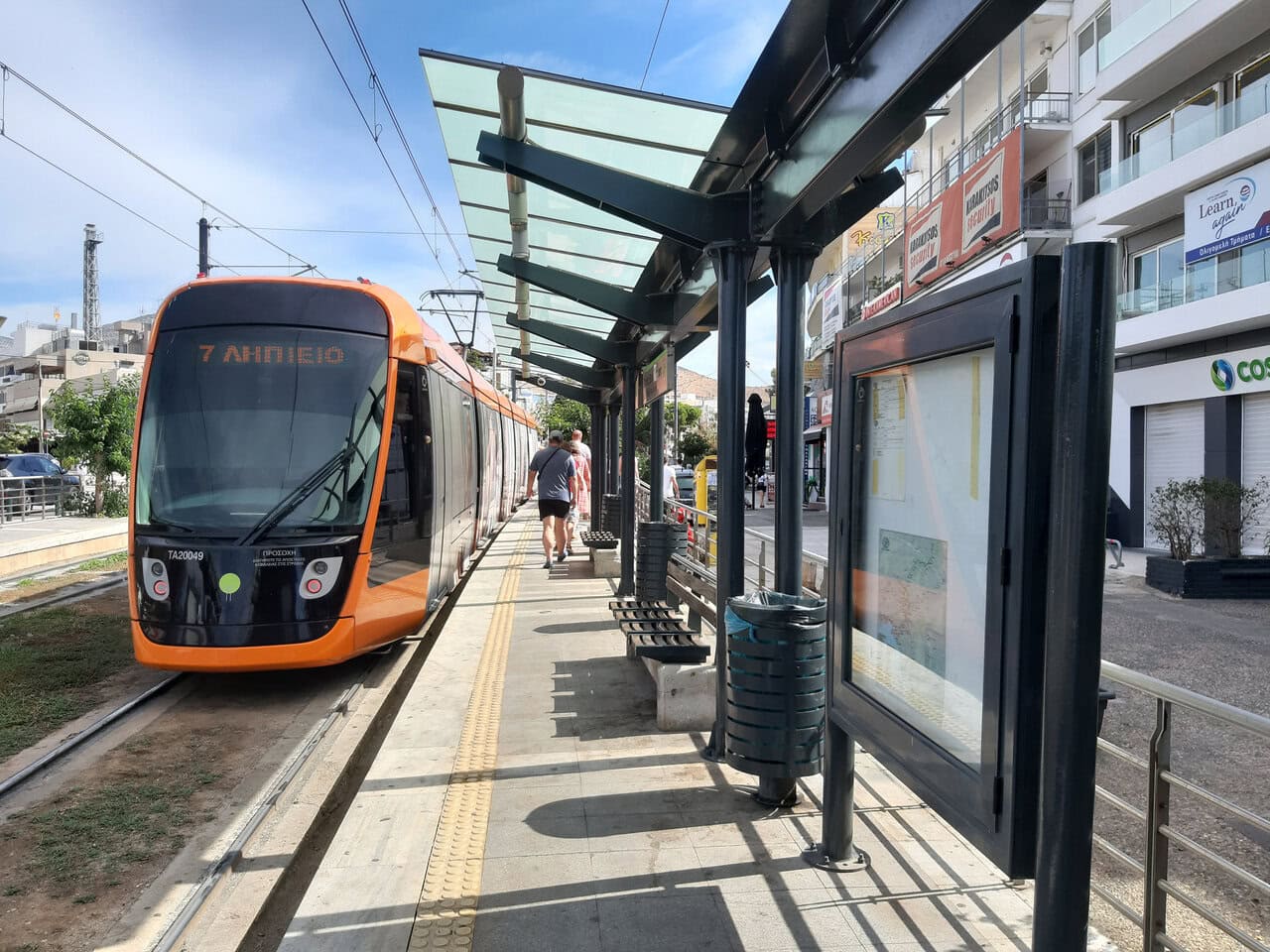
While the Metro is the fastest way to travel around Athens, the Athens Tram offers one of the city’s most enjoyable journeys. Rather than travelling underground, the tram follows much of the Athens Riviera, providing relaxing views of the coastline as it links the city with beaches, marinas and seaside suburbs.
The modern, fully accessible trams depart from Syntagma Square before heading south through Neos Kosmos and Palaio Faliro, where the route divides. One branch continues towards Peace and Friendship Stadium near Piraeus, while the other follows the coast through Alimos, Elliniko, Glyfada and finally Voula.
Although the tram is slower than the Metro, it’s ideal if you’re planning to spend time outside the historic centre. Along the route you’ll find Flisvos Marina, several public beaches, waterfront cafés, the shopping streets of Glyfada, and easy connections to attractions including the ARCHELON Sea Turtle Rescue Centre.
Many visitors combine a morning exploring the Acropolis with an afternoon travelling along the Riviera by tram, creating a completely different perspective on Athens away from the archaeological sites. It’s also an inexpensive way to enjoy some of the city’s coastal scenery without hiring a car.
Places You Can Easily Visit by Public Transport
Athens’ public transport network isn’t just useful for getting around the city centre. It also makes it easy to reach many of the capital’s most popular attractions, nearby beaches and transport hubs without needing a hire car.
| Destination | Best Public Transport |
|---|---|
| Acropolis & Plaka | Metro Line 2 (Acropoli) |
| Monastiraki & Ancient Agora | Metro Lines 1 & 3 |
| Mount Lycabettus | Metro Line 3 to Evangelismos + Funicular |
| National Archaeological Museum | Metro Line 1 to Victoria |
| Piraeus Port | Metro Line 1 |
| Athens International Airport | Metro Line 3 or Suburban Railway |
| ARCHELON Sea Turtle Rescue Centre | Metro Line 2 + local bus or taxi |
| Athens Riviera & Glyfada | Coastal Tram |
| Cape Sounion | Metro to Elliniko or Glyfada + KTEL Attikis bus |
| Ancient Corinth | Suburban Railway (Proastiakos) |
One of the biggest advantages of Athens’ transport system is that it allows visitors to experience far more than just the city centre. Whether you’re catching a ferry to the Greek islands, relaxing on the beaches of the Riviera or taking a day trip to Ancient Corinth, public transport makes it surprisingly easy to explore without driving.
Search routes and flight options for your trip to Athens.
Search flightsChoose an Airalo eSIM and arrange mobile data before you arrive.
Browse eSIMsCheck private pickup options and plan your onward journey before arrival.
View transfersUsing Athens Buses and Trolleybuses
Although the Metro is the easiest way to travel around Athens, the city’s extensive bus and trolleybus network fills in the gaps by serving neighbourhoods, beaches and attractions that aren’t directly connected by rail. With hundreds of routes operating throughout the capital, it’s possible to reach almost anywhere using public transport.
For visitors, buses are particularly useful when travelling to destinations such as Cape Sounion, Lake Vouliagmeni, the ARCHELON Sea Turtle Rescue Centre, and many residential districts beyond the Metro network. Airport buses also provide an excellent alternative to the Metro, especially if you’re travelling very early in the morning or late at night.
Athens also operates one of Europe’s largest trolleybus networks. These electric buses draw power from overhead wires and mainly operate within central Athens. From a passenger’s perspective they work exactly like ordinary buses, using the same tickets and stopping at the same style of bus stops. Unless you’re particularly interested in transport, there’s little practical difference between the two.
Most buses display their destination electronically, while Google Maps and the official OASA apps provide reliable journey planning and live arrival information.
Travelling to Athens Airport by Public Transport
Athens International Airport is one of the easiest airports in Europe to reach without a car. Both the Metro and the Suburban Railway provide direct rail connections, while a network of 24-hour express buses serves the city centre and Piraeus.
For most visitors staying in central Athens, Metro Line 3 is the most convenient option. Trains run directly between the airport and stations including Syntagma, Monastiraki and Piraeus, with the journey taking around 40 minutes to Syntagma and approximately 55 minutes to Piraeus.
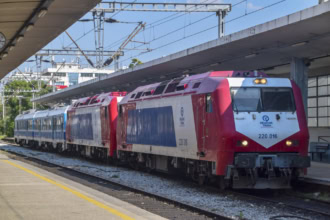
The Suburban Railway (Proastiakos) also serves the airport and can be useful if you’re travelling towards western Athens or continuing to destinations such as Corinth.
If you’re travelling overnight, the Airport Express bus network is invaluable. Routes operate 24 hours a day, making them the best option when the Metro is closed.
| Transport | Journey Time | Best For |
|---|---|---|
| Metro Line 3 | Around 40 minutes to Syntagma | Most visitors |
| Suburban Railway | Around 40 minutes | Regional connections |
| Airport Express Bus | 45 to 70 minutes | Overnight travel and hotels not close to Metro stations |
| Taxi | 35 to 60 minutes | Door-to-door convenience |
If you’re arriving in Athens for the first time, our Athens Airport Transfers Guide explains every option in much more detail, including airport buses, taxis and private transfers.
Travelling to Piraeus Port
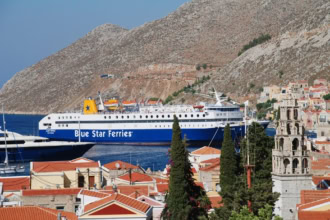
If you’re continuing your journey to the Greek Islands, you’ll almost certainly pass through Piraeus Port, the largest passenger port in Greece and one of the busiest ferry terminals in Europe.
The easiest way to reach the port is by Metro Line 1 (Green Line), which terminates directly beside the ferry terminals. The journey from Monastiraki takes around 20 minutes, while travelling from Syntagma requires a simple change of trains.
Metro Line 3 now also serves Piraeus, providing a direct connection from Athens Airport without needing to change trains, making it particularly convenient for visitors flying in before boarding a ferry.
Depending on which ferry company you’re travelling with, you may need to walk 5 to 20 minutes between the Metro station and your departure gate, so it’s sensible to allow extra time, especially during the busy summer season.
Several city buses also serve the port, while taxis remain a convenient option if you’re travelling with heavy luggage or staying outside the Metro network.
If you’re planning to explore the Greek islands, don’t miss our dedicated Athens Ferry Guide, which explains the different terminals, ferry companies and routes available from Piraeus.

Athens Public Transport Tickets, Fares and Contactless Payments
Athens has one of the simplest ticketing systems in Europe, and it’s recently become even easier thanks to the introduction of Tap2Ride. Visitors can now travel across much of the network using either traditional transport tickets or by paying directly with a contactless bank card, smartphone or smartwatch, removing the need to buy an ATH.ENA Ticket or ATH.ENA Card for most journeys.
Using Tap2Ride is straightforward. Simply tap your Visa or Mastercard bank card, or a digital wallet such as Apple Pay or Google Pay, against the validation machine when you begin your journey. The system automatically charges the correct fare, making it an excellent option for tourists and occasional users who don’t want the hassle of buying tickets.
One of the biggest advantages is the built-in daily fare cap. Once your spending reaches €4.10, the cost of a standard 24-hour ticket, you won’t pay any more for additional journeys that day on Athens’ urban transport network. Airport journeys are charged separately at €9.00 for the Metro or €5.50 for the Airport Express buses.
When using contactless payments, it’s important to use exactly the same payment method throughout the day. For example, if you begin your journey using your iPhone with Apple Pay, continue using the same device rather than switching to your Apple Watch or physical bank card, otherwise the system will treat each device as a separate passenger and charge additional fares.
If you prefer to buy a traditional ticket, several options are available depending on the length of your stay.
| Ticket | Price | Validity | Airport Included? |
|---|---|---|---|
| 90-minute Ticket | €1.20 | Unlimited travel for 90 minutes | ❌ |
| 24-hour Ticket | €4.10 | Unlimited travel for 24 hours | ❌ |
| 5-day Ticket | €8.20 | Unlimited travel for five consecutive days | ❌ |
| 3-day Tourist Ticket | €20.00 | Unlimited travel for 72 hours | ✔ Return Airport Metro or Express Bus |
The standard tickets are valid on the Metro, buses, trolleybuses, trams and most Suburban Railway services within the Athens urban area. The main exceptions are the Metro between Koropi and Athens Airport and the dedicated Airport Express buses, unless you’re travelling with the 3-day Tourist Ticket, which includes a return airport journey.
For most visitors, Tap2Ride is now the easiest choice. There’s no need to queue at ticket machines, and the automatic daily fare cap ensures you never pay more than the cost of a day ticket. However, if you’re staying in Athens for several days and expect to use public transport frequently, the 5-day Ticket offers excellent value, while the 3-day Tourist Ticket can save money if you’re flying into Athens and plan to use public transport extensively during your stay.
Regardless of which option you choose, Athens’ integrated ticketing system makes travelling around the city remarkably simple, allowing you to move seamlessly between the Metro, tram, buses and trolleybuses using a single fare structure.
Accessibility on Athens Public Transport
Athens has invested heavily in making its public transport network more accessible, particularly since the 2004 Olympic and Paralympic Games. Today, the Metro is one of the easiest ways for visitors with mobility requirements, luggage or pushchairs to travel around the city.
Most Metro stations are equipped with lifts, escalators and step-free access, while trains have designated spaces for wheelchair users and passengers with pushchairs or large suitcases. Visual displays and clear audio announcements also make navigating the network straightforward.
The Athens Tram is fully accessible, with modern low-floor vehicles providing level boarding at most stops. This makes it an excellent option for travelling along the Athens Riviera without needing to negotiate steps.
Many of the city’s buses are also low-floor and wheelchair accessible, although older vehicles can still occasionally appear on some routes. If accessibility is particularly important, checking live vehicle information before travelling can be worthwhile.
Although the transport network itself is generally accessible, it’s worth remembering that some of Athens’ ancient attractions, including parts of the Acropolis, still feature uneven surfaces and historic pathways where additional assistance may be required.
Useful Apps for Getting Around Athens
Having the right apps on your phone can make travelling around Athens considerably easier. Journey planning, live departures and ticket information are all readily available, helping you spend less time waiting and more time exploring.
Google Maps remains one of the best all-round tools for visitors, providing reliable public transport directions, walking routes and estimated journey times across the Metro, tram and bus network.
The official OASA Telematics app provides real-time arrival information for buses, trolleybuses and trams, making it particularly useful when waiting at stops where services are less frequent than the Metro.
If you’re planning to use taxis, apps such as FREE NOW allow you to book licensed taxis directly from your smartphone, while Uber also operates in Athens by connecting passengers with licensed local taxi drivers rather than private ride-share vehicles.
Reliable mobile data makes using these apps much easier, particularly when navigating unfamiliar parts of the city. If you’re visiting Greece from abroad, our Greece eSIM Guide explains the easiest ways to stay connected throughout your trip.

Rupert’s Handy Travel Tips
Getting around Athens is much easier than many first-time visitors expect. Here are a few tips to help you make the most of the city’s transport network:
- Use the Metro whenever possible: It’s usually the quickest way to travel between the city’s major attractions and avoids Athens’ busy road traffic.
- Choose the tram for the coast: The coastal tram is slower than the Metro but offers a relaxing journey to Glyfada, beaches and the Athens Riviera.
- Allow extra time for ferries: Piraeus is a huge port, and some ferry gates are a 15 to 20-minute walk from the Metro station.
- Explore the Metro stations: Don’t rush straight through Syntagma and Monastiraki stations. Both contain fascinating archaeological discoveries that are completely free to see.
Want to meet the reindeer behind our travel tips? Find out more in our page Who is Rupert?.
Frequently Asked Questions
Is public transport in Athens easy to use?
Yes. Athens has one of the easiest public transport systems in Europe for visitors. Metro stations are clearly signposted in both Greek and English, ticket machines are available in multiple languages, and Google Maps provides reliable journey planning across the Metro, buses and trams.
What is the best way to get around Athens?
For most visitors, the Metro is the quickest and most convenient option. It connects the Acropolis, Plaka, Monastiraki, Syntagma Square, Piraeus Port and Athens Airport, while the tram is ideal for exploring the Athens Riviera.
Can I use the same ticket on the Metro, buses and trams?
Yes. Athens operates an integrated ticketing system, allowing most tickets to be used across the Metro, buses, trolleybuses and trams within their validity period. Separate fares apply for journeys to and from Athens International Airport.
Does the Athens Metro go to the airport?
Yes. Metro Line 3 (Blue Line) provides a direct service between Athens International Airport and central Athens, stopping at stations including Syntagma, Monastiraki and Piraeus.
How do I get from Athens to Piraeus Port?
The easiest option is Metro Line 1 (Green Line) or Metro Line 3 (Blue Line), both of which serve Piraeus. Allow extra time once you arrive, as some ferry departure gates are a considerable walk from the Metro station.
Is the Athens Metro safe?
The Metro is generally considered very safe and is used by thousands of commuters and visitors every day. As with any major city, it’s sensible to keep an eye on your belongings, particularly on busy trains and around popular tourist areas such as Monastiraki and Syntagma.
Can I visit the Athens Riviera using public transport?
Yes. The Athens Tram provides a scenic route along much of the coastline, serving destinations including Palaio Faliro, Alimos, Glyfada and Voula. Local buses continue further south towards Cape Sounion.
Can I visit Ancient Corinth by train?
Yes. The Athens Suburban Railway (Proastiakos) provides direct services from Athens to Corinth, making it one of the easiest independent day trips from the capital. From Corinth station, local buses and taxis connect with the archaeological site of Ancient Corinth.
Do Athens Metro stations have lifts?
Most modern Metro stations are fully accessible with lifts, escalators and step-free access, making them suitable for wheelchair users, families with pushchairs and travellers with luggage.
Do I need a car in Athens?
No. Most visitors find that public transport, combined with walking, is all that’s needed. The Metro, tram and bus network provide excellent coverage, while many of Athens’ biggest attractions are located within easy walking distance of one another.
Further Reading
Once you’ve mastered Athens’ public transport system, you’ll find it’s easy to explore far more than just the city centre. Whether you’re planning to visit ancient monuments, head for the coast or continue your journey across Greece, we’ve created a range of detailed guides to help you get the most from your trip.
If you’re arriving by air, our Athens Airport Transfers Guide explains every option for reaching the city, including the Metro, airport buses, taxis and private transfers. If you’re heading onwards to the islands, our Athens Ferry Routes Guide and Piraeus Port Guide explain how to reach the port and choose the right ferry.
Planning to see the city’s biggest attractions? Our guides to the Acropolis of Athens, Athens Travel Passes, Best Things to Do in Athens and Day Trips from Athens will help you plan your itinerary and decide which attractions offer the best value.
Finally, if you’re travelling further around the country, don’t miss our Greece Interrail Pass Guide, Greek Islands Interrail Guide, and Best eSIMs. Together they’ll help you stay connected, save money and make the most of travelling around Greece by train, ferry and public transport.