

Best Ways to Travel from Toulouse to Andorra
Travelling from Toulouse to Andorra is one of the most straightforward cross-border journeys into the Pyrenees, but it comes with an important distinction that shapes your options from the outset. Andorra has no airport and no railway network, which means your journey will always finish by road, regardless of how you start.
For most travellers, this simplifies the decision rather than complicating it. There are two realistic options: take the direct bus for ease, or drive for flexibility and scenery. Both routes follow a broadly similar path south from Toulouse, and both typically take around 2.5 to 3 hours, depending on traffic and conditions.
What makes this journey particularly appealing is how quickly the landscape changes. Leaving Toulouse, you move through open countryside before the terrain begins to rise around Foix, eventually giving way to the more dramatic slopes and valleys of the Pyrenees. By the time you reach the Andorran border, the shift from lowland France to mountain scenery is complete, and the journey itself becomes part of the experience.
Compared to routes from Barcelona, travelling from Toulouse is often slightly shorter and less congested, especially outside peak ski-season weekends. The absence of rail options also removes unnecessary complexity. There is no need to weigh up train connections or transfers. Instead, you can focus on a simple choice between convenience and flexibility.
For most visitors, the bus is the most efficient and stress-free option, particularly if you are travelling solo or without a car. If you prefer independence, want to stop along the way, or plan to explore the wider French Pyrenees, then driving offers a more flexible and scenic alternative.
Toulouse to Andorra, Choosing the Right Option
When deciding how to travel from Toulouse to Andorra, the key is understanding what matters most for your trip. The journey itself is relatively short, but the experience can vary depending on whether you prioritise simplicity, cost, comfort, or flexibility.
The bus is the most straightforward choice. Journey times are typically 2.5 to 3 hours, with ticket prices usually falling between €25 and €45. Services are direct, meaning there are no transfers, and departures are timed specifically for this cross-border route. For travellers who want a predictable, low-effort journey without worrying about navigation, fuel, or parking, this is usually the best option.
Driving takes roughly the same amount of time, but the experience is very different. You gain the freedom to stop in places such as Foix or Ax-les-Thermes, explore viewpoints, or adjust your schedule as you go. Costs will depend on fuel and rental, but the route itself is largely toll-free, which keeps expenses lower than some Spanish approaches. The trade-off is that you will need to handle mountain roads, which can become more demanding in winter conditions.
A third option, private transfers, sits at the premium end of the spectrum. Journey times are similar at around 3 hours, but prices typically range from €250 to €400 per vehicle. While this is significantly more expensive than the bus, it offers a door-to-door service, which can be worthwhile for groups, travellers with heavy luggage, or those arriving directly at the airport.
In practical terms, the choice is simple. If you want the easiest and most cost-effective route, take the bus. If you want the ability to explore and shape your journey, choose driving. If comfort and convenience matter most, consider a private transfer.
See hotel options and places to stay in Andorra.
Browse hotelsBrowse apartments, holiday homes and self-catering stays in Andorra.
View rentalsSee hotel prices from multiple booking sites in one search.
Compare ratesToulouse to Andorra by Bus
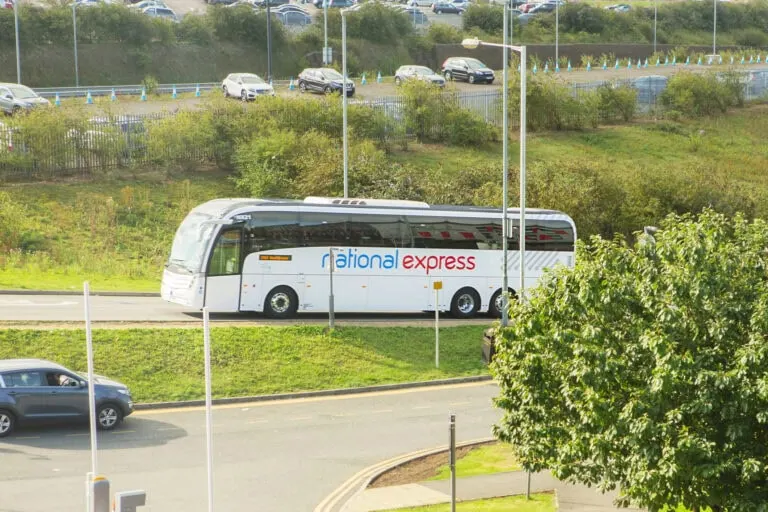
Taking the bus from Toulouse to Andorra is by far the most popular option, and for good reason. It combines direct routing, reasonable pricing, and minimal planning, making it ideal for most travellers, especially those visiting Andorra for the first time.
Most services depart from the area around Toulouse Matabiau, the city’s main transport hub. This location is easy to reach from anywhere in Toulouse, whether you are arriving by train, staying in the city centre, or transferring from the airport. The departure points are usually well connected and clearly signposted, which removes much of the stress often associated with intercity travel.
On arrival, buses typically stop in Andorra la Vella and Escaldes-Engordany, the two main areas where most hotels, shops, and services are located. This means you are usually dropped close to your accommodation, avoiding the need for additional local transport.
Journey times are generally between 2.5 and 3 hours, although this can vary slightly depending on traffic, weather, and border conditions. As the route climbs into the mountains, the scenery becomes more dramatic, which makes the journey itself more engaging than a typical intercity coach trip. Modern buses are usually comfortable, with adequate seating and luggage space, and the route is designed to be as direct as possible.
Tickets are typically priced between €25 and €45, making this one of the most cost-effective ways to reach Andorra. Booking online in advance is strongly recommended, particularly during winter ski season, weekends, and holidays, when demand increases significantly. Operators such as Andbus and other regional providers run these routes, and schedules can vary depending on the time of year.
For most travellers, the bus offers the best overall balance. It removes the need to navigate mountain roads, avoids parking issues in Andorra, and provides a direct, reliable connection between the two destinations.
Toulouse to Andorra by Car, Driving Guide
Driving from Toulouse to Andorra is one of the most enjoyable ways to experience the journey, particularly if you value flexibility and scenery. The route is relatively straightforward, and compared to approaches from Spain, it is often considered less steep and less demanding, especially outside winter conditions.
The most commonly used route follows the A66 south from Toulouse, heading towards Foix, before continuing along the N20 through Ax-les-Thermes and up to the Andorran border. This route is largely toll-free, which is a notable advantage compared to some alternatives further east. The road quality is generally very good, particularly on the A66, although it becomes more winding as you move deeper into the mountains.
Fuel availability is good in and around Toulouse and along the early part of the route, but stations become less frequent as you approach Ax-les-Thermes. It is sensible to refuel before entering the more mountainous sections, particularly if you are travelling in winter or outside peak hours.
One of the main benefits of driving is the ability to stop along the way. Foix is a particularly worthwhile pause, with its striking hilltop castle and compact historic centre. Further along, Ax-les-Thermes offers a different atmosphere, known for its thermal baths and alpine setting. As you continue towards the border, you will also encounter scenic viewpoints that highlight the changing landscape of the Pyrenees.
Driving conditions are generally manageable, but they do require attention. As the road climbs, you will encounter tighter curves, steeper gradients, and narrower sections, although the route remains well maintained. In winter, conditions can change quickly, with snow and ice affecting higher sections of the road. Checking weather forecasts and road conditions before departure is essential during colder months.
For travellers who enjoy road trips and want to experience the journey as part of the destination, driving is an excellent option. It offers a level of independence that public transport cannot match, while still remaining accessible and relatively easy to navigate.
Is There a Train from Toulouse to Andorra?
Despite Toulouse’s strong rail connections within France, there is no direct train route from Toulouse to Andorra, and in practical terms, rail is not a useful option for this journey. The reason is simple. Andorra does not have a railway network, which means all journeys into the country must eventually be completed by road.
The closest rail connection is L’Hospitalet-près-l’Andorre, a small station located on the French side of the border. It is technically possible to take a train from Toulouse to this point, but from there you would need to arrange onward transport by bus or taxi to reach Andorra itself. This adds complexity, waiting time, and often additional cost, without providing any meaningful advantage over direct alternatives.
In most cases, the train option is both slower and less convenient than taking a direct bus. It also requires more planning, particularly around connections and final transfers, which can be inconvenient if you are travelling with luggage or arriving on a tight schedule.
For these reasons, rail is rarely recommended for this route. The absence of a train link is not a limitation once you understand the alternatives. The direct bus remains the simplest solution, while driving provides a flexible and scenic alternative for those who prefer to travel independently.
Toulouse Airport to Andorra
Arriving at Toulouse-Blagnac Airport (TLS) and continuing on to Andorra is a smooth process, but it usually involves one additional step compared to routes from Barcelona. Because direct airport-to-Andorra services are limited, most travellers will first transfer into Toulouse city centre before continuing the journey.
The most efficient way to reach the centre is via the Airport Shuttle (Navette Aéroport). This service runs frequently, typically every 15 to 20 minutes, and connects the airport directly with Gare Matabiau, the city’s main transport hub. The journey takes around 20 to 30 minutes, depending on traffic, and tickets usually cost between €8 and €10. This option is widely considered the easiest because it requires no changes and drops you exactly where most Andorra-bound buses depart.
A cheaper alternative is the tram and metro combination, which can cost as little as €1.80 to €2.50. The tram departs from directly outside the terminal and connects to the wider transport network, allowing you to reach central Toulouse. However, the journey takes longer, typically around 30 to 40 minutes, and may involve a transfer, which can be less convenient if you are travelling with luggage.
Once in the city centre, you can continue your journey to Andorra by bus. When combined, the full journey from the airport to Andorra usually takes around 3 to 4 hours, depending on connection times and traffic conditions.
For travellers looking for maximum convenience, private transfers are available directly from the airport. These services provide a door-to-door journey, removing the need to change transport or navigate the city. While more expensive, they can be a practical option if you are travelling with ski equipment, large luggage, or as part of a group, where the cost can be shared.
In most cases, the best balance of cost and simplicity comes from taking the airport shuttle into Toulouse and then continuing by coach. It is efficient, reliable, and avoids unnecessary complications at the start of your journey.
Best Route Overview and Journey Experience
The journey from Toulouse to Andorra is not just a transfer between two destinations. It is a gradual and visually rewarding transition from the plains of southern France into the high Pyrenees, with the landscape changing noticeably as you travel.
Leaving Toulouse, the route begins across relatively flat countryside, where farmland and open spaces dominate the view. This section is straightforward and often passes quickly, particularly if you are travelling by bus. As you approach Foix, the terrain begins to shift, with hills rising and the first signs of mountain scenery appearing.
Beyond Foix, the route follows the N20, which marks the start of the more scenic section of the journey. Here, the road begins to climb steadily through valleys, forested slopes, and smaller mountain settlements. The change in environment is clear, with tighter curves, steeper gradients, and increasingly dramatic views. One of the most notable points along the route is Ax-les-Thermes, a traditional mountain town known for its thermal baths and alpine setting. This is often seen as a natural midpoint in the journey.
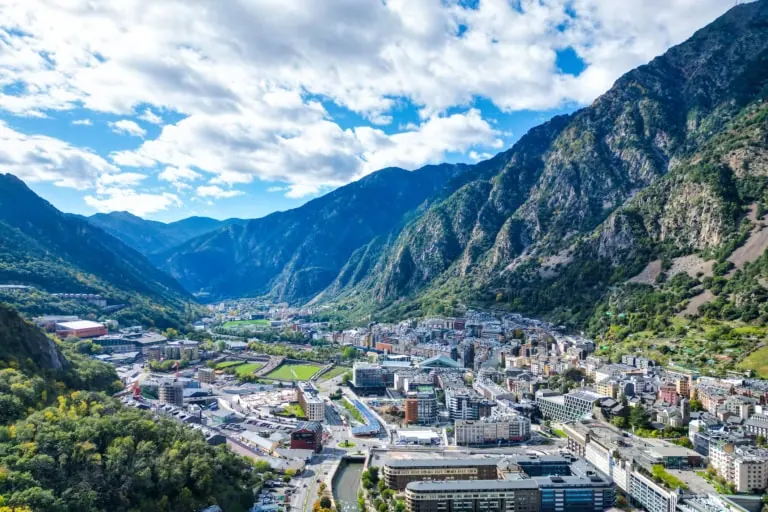
As you continue towards the border, the road becomes more winding but remains well maintained. The final approach into Andorra offers classic mountain scenery, with wide views across valleys and peaks that define the region. Compared to routes from Spain, this approach feels more gradual, making it a particularly enjoyable drive and a more relaxed bus journey.
For travellers who appreciate scenery, this route is one of the highlights of the trip. It provides a clear sense of entering a different landscape, rather than simply arriving at a new destination.
When Is the Best Time to Travel from Toulouse to Andorra
The best time to travel from Toulouse to Andorra depends on both your plans in Andorra and the seasonal conditions in the mountains. While the journey itself remains relatively short throughout the year, factors such as traffic, weather, and road conditions can influence how smooth it feels.
During winter, Andorra becomes a major destination for skiing and snow-based activities. This brings increased demand, particularly on weekends and during holiday periods, when traffic heading into the mountains can become noticeably heavier. Road conditions can also be more challenging, especially near the border, where snow and ice are more common. While the route is well maintained, drivers should be prepared for winter conditions, and travellers using buses should allow for possible delays.
In summer, the journey is at its easiest. Roads are typically clear, weather conditions are stable, and traffic levels are more predictable. This is also when the surrounding landscape is at its most accessible, with green valleys and open mountain views making the trip more visually appealing. For those planning scenic stops or outdoor exploration, summer offers the most relaxed travel conditions.
Spring and autumn sit between these extremes. These seasons often provide a good balance of milder weather and fewer crowds, although conditions can be less predictable. Rain is more likely, and temperatures can vary, particularly in higher areas. However, these periods can be ideal if you want to avoid peak-season traffic while still enjoying a comfortable journey.
For the smoothest overall experience, travelling midweek outside peak winter periods is usually the best approach. This helps avoid congestion, reduces the likelihood of delays, and makes the journey feel more relaxed from start to finish.
Compare routes and fares for your journey to Andorra.
Compare flightsChoose an Airalo eSIM and arrange mobile data before you arrive.
Browse eSIMsHave a private airport pickup arranged before you travel.
Book a transferPrivate Transfers from Toulouse to Andorra
For travellers who prioritise comfort, convenience, and a completely seamless journey, private transfers offer the most straightforward way to travel from Toulouse to Andorra. Unlike buses or self-driving, this option removes the need for any connections, navigation, or planning once your booking is confirmed.
Transfers can be arranged from either Toulouse city centre or directly from Toulouse-Blagnac Airport, with drop-off at your accommodation anywhere in Andorra. This door-to-door service is particularly valuable if you are arriving on a flight, travelling with heavy luggage, or simply want to avoid the extra step of transferring into the city before continuing your journey.
Journey times are typically around 3 hours, although this can vary slightly depending on traffic and weather conditions. The route taken is usually similar to that used by buses and private drivers, following the main roads through Foix and Ax-les-Thermes into the mountains.
The main consideration is cost. Prices generally start between €250 and €400 per vehicle, depending on factors such as the size of the vehicle, the number of passengers, and the level of service. While this is significantly higher than the bus, it becomes more reasonable when split between several travellers. For groups or families, the difference in cost can be offset by the added convenience and time savings.
Booking in advance is strongly recommended, especially during ski season, when demand for transfers increases and availability can become limited. Reputable providers can be found through online platforms or local transport companies, and most allow you to choose vehicle types based on your group size and luggage requirements.
Private transfers are best suited to travellers who value a smooth, direct experience, particularly those arriving late, travelling with equipment, or looking to minimise stress at the start of their trip.
Can You Do a Day Trip from Toulouse to Andorra
A day trip from Toulouse to Andorra is entirely possible and slightly more manageable than from Barcelona due to the shorter journey time. However, it is still a long day and requires realistic expectations about what you can see and do once you arrive.
With journey times of around 2.5 to 3 hours each way, you will spend a significant portion of your day travelling. Even so, it leaves enough time for a focused visit, particularly if you start early in the morning and return in the evening. For travellers who are short on time but want to experience Andorra, this can be a worthwhile option.
The most practical approach is to base your visit around Andorra la Vella, the capital and main hub. Here, you can explore the centre, enjoy the surrounding mountain scenery, and take advantage of the city’s well-known shopping areas, which are popular due to Andorra’s tax-free status. A relaxed lunch and a walk through the town are easily achievable within a day.
What tends to work less well on a day trip are activities that require more time. Skiing, hiking, or exploring multiple regions of Andorra are difficult to fit into a single day without feeling rushed. These experiences are better suited to an overnight stay or a longer visit.
Organised tours from Toulouse do exist but are less common than those from Barcelona. Travelling independently, either by bus or car, usually provides more flexibility and control over your schedule.
While a day trip is achievable, it is not the most relaxed way to experience Andorra. If your itinerary allows, staying overnight will give you a far more complete and enjoyable visit, with time to appreciate both the town and the surrounding landscape.

Rupert’s Handy Travel Tips
Heading from Toulouse into the Pyrenees? Here are a few simple tips to keep your journey to Andorra smooth and stress-free:
- Book buses early in winter: Ski season demand can push prices up quickly, especially on weekends.
- Carry valid ID: You’re crossing an international border, even if checks are usually minimal.
- Check mountain weather: Conditions near the border can change quickly, particularly in winter.
- Refuel before the mountains: Petrol stations become less frequent after Foix and Ax-les-Thermes.
- Travel midweek if possible: Weekends can see heavier traffic heading into Andorra.
Want to meet the reindeer behind our travel tips? Find out more in our page Who is Rupert?.

Frequently Asked Questions About Travelling from Toulouse to Andorra
How long does it take to travel from Toulouse to Andorra?
Most journeys from Toulouse to Andorra take between 2.5 and 3 hours, depending on traffic, weather conditions, and the specific transport option you choose. Bus and car journeys are broadly similar in duration, although winter conditions or weekend traffic heading into the mountains can add delays, particularly near the border.
Is there a direct bus from Toulouse to Andorra?
Yes, there are direct bus services operating between Toulouse and Andorra. These typically depart from the Toulouse Matabiau area and arrive in Andorra la Vella or Escaldes-Engordany, which are the main areas for hotels, shopping, and onward transport. The key advantage is that no transfers are required, making this the simplest and most popular option for travellers.
Is driving from Toulouse to Andorra difficult?
Driving the route is generally straightforward, especially on the A66 and N20, which are well maintained and clearly signposted. As you approach the Pyrenees, the road becomes more winding with steeper gradients, but it remains manageable in normal conditions. In winter, snow and ice can affect driving conditions near the border, so checking forecasts and road updates is important before setting out.
Can you visit Andorra in one day from Toulouse?
Yes, a day trip from Toulouse to Andorra is possible, as the journey time is relatively short. However, with 2.5 to 3 hours each way, a large part of your day will be spent travelling. A day trip works best for a focused visit to Andorra la Vella, including shopping, a short walk around the centre, and enjoying the mountain setting. For a more relaxed experience or outdoor activities, an overnight stay is strongly recommended.
Is there a train from Toulouse to Andorra?
No, there is no direct train to Andorra, as the country does not have a railway network. The closest station is L’Hospitalet-près-l’Andorre in France, but from there you would need to continue by bus or taxi, which adds time and complexity. For this reason, the train is not considered a practical option for this journey.
What is the cheapest way to travel from Toulouse to Andorra?
The bus is the cheapest option, with tickets typically costing between €25 and €45. Prices can increase during peak periods such as ski season, so booking in advance helps secure the best fares. Compared to driving or private transfers, the bus offers the best balance of cost and convenience.
Do you need a passport to travel from Toulouse to Andorra?
Although border checks are often minimal, you are crossing into a different country, so you should carry a valid passport or national ID card. Spot checks can occur, and it is always best to travel prepared to avoid delays.
Further Reading & Related Guides
Planning more of your trip to Andorra or travelling across the Pyrenees? These guides will help you organise transport, activities, and essential travel tools.
Before you set off, it helps to see the bigger picture. Our Andorra Travel Guide covers everything from where to stay to what to pack, and since this route involves real mountain driving through Foix and Ax-les-Thermes, our Driving in Andorra guide is worth reading before you cross the border, particularly for winter road conditions and parking once you arrive.
If you’re travelling during ski season, when weekend traffic through the mountains can add real delays, our Skiing in Andorra guide breaks down the resorts, lift passes, and what to expect once you’re on the slopes. It’s also worth weighing up the alternative approach from the coast: our Barcelona to Andorra guide compares the southern route, useful if you’re still deciding which side of the Pyrenees suits your trip best.
Toulouse itself deserves some time too. Explore the city in full with our Toulouse City Guide – France’s Pink City of Space, Culture & Cuisine, or if you have a spare day before heading into the mountains, our guide to the Best Day Trips from Toulouse (2026) highlights some worthwhile stops along the way.
Whichever way you travel, staying connected matters once you’re relying on live traffic updates or mountain weather forecasts. Our eSIM Apps Guide runs through the best options for keeping your phone online across the French and Andorran border, so you’re never caught out by patchy signal in the high Pyrenees.