Reviewed by our editorial team Updated
Beyond Athens: Ancient Sites, Mountain Towns and Coastal Escapes
Athens is a destination in its own right, but it is also one of the best bases in Greece for exploring beyond the capital. Within a single day, you can stand among the ruins of Delphi, walk beside the sea in Nafplio, watch the sun set at the Temple of Poseidon, or travel deep into the Peloponnese to discover Mycenae, Epidaurus and Ancient Olympia.
Some day trips are easy to organise independently using buses, suburban trains or ferries, while others are far more practical as guided tours. The difference usually comes down to distance, the number of connections required and how much time you would realistically have once you arrived. A direct coach to Nafplio can make for a relaxed independent day, while trying to reach Ancient Olympia by public transport and return the same evening would involve a far more demanding journey.
This guide explains which day trips are genuinely straightforward without a tour, which are technically possible but inconvenient, and which are best left to an organised excursion. We will also highlight the trips that involve very long travel days, so you can decide whether the experience is worth the time spent on the road.
Whether you are interested in archaeology, dramatic scenery, seaside towns or island escapes, there is no shortage of memorable places to visit from Athens without changing hotels.
Day Trips From Athens Compared
The table below gives a quick overview of the main destinations, how practical they are by public transport and whether joining a tour is likely to make the day easier.
| Destination | Approximate Day Length | Public Transport Possible? | Best Way to Visit |
|---|---|---|---|
| Delphi | Around 10 hours | Yes, by intercity bus | Independent bus or guided tour |
| Nafplio | Around 8 to 10 hours | Yes, by direct intercity bus | Independent bus trip |
| Cape Sounion | Around 5 hours | Yes, but services can be limited | Tour is easier, especially for sunset |
| Aegina | Around 8 to 10 hours | Yes, by ferry | Independent ferry trip |
| Meteora | Around 14 hours | Technically possible, but awkward | Guided coach tour |
| Corinth | Around 6 to 8 hours | Yes, by suburban rail or bus | Independent trip or car |
| Mycenae | Around 8 to 10 hours | Partly, but the final connection is inconvenient | Tour or car |
| Ancient Olympia | Around 13 hours | Possible with connections, but not practical | Guided tour or overnight stay |
| Hydra | Around 9 to 11 hours | Yes, by ferry | Independent ferry trip |
| Epidaurus | Around 8 to 10 hours | Possible via Nafplio, but awkward | Combined tour or car |
| Poros | Around 8 to 10 hours | Yes, by ferry | Independent ferry trip |
| Agistri | Around 8 to 10 hours | Yes, by ferry | Independent ferry trip |
The easiest independent trips are generally Nafplio, Aegina, Hydra, Poros, Agistri and Corinth, all of which can be reached without complicated changes. Delphi is also possible by public transport, although a tour can be worthwhile if you want commentary, pre-arranged tickets and a stop in Arachova.
Meteora and Ancient Olympia are the most demanding options. Both involve very long journeys from Athens, and organised tours are usually the only sensible way to visit and return in one day. Even then, travellers should expect an early start, several hours on a coach and a late arrival back in the city.
See hotel options and places to stay in Athens.
Browse hotelsExplore holiday homes and apartments around Athens.
See holiday homesCompare prices for Athens hotels across multiple booking sites.
Check dealsDelphi
Delphi is one of the most important archaeological sites in Greece and one of the most rewarding day trips from Athens. Set high on the slopes of Mount Parnassus, the site was once regarded as the centre of the ancient world and home to the famous Oracle of Delphi, whose prophecies influenced kings, generals and city states for centuries.
A full-day tour from Athens usually takes around 10 hours and includes transport by air-conditioned coach, several hours at the archaeological site and museum, and a short stop in Arachova or another nearby mountain village. Some tours also include virtual reality or multilingual audio commentary, helping visitors understand how the sanctuary would have looked at the height of its importance.
The main archaeological site includes the Temple of Apollo, the ancient theatre, the stadium and the remains of treasuries built by Greek city states. The nearby Delphi Archaeological Museum is equally important, housing sculptures and artefacts uncovered across the sanctuary, including the celebrated Charioteer of Delphi.
It is possible to visit Delphi independently using an intercity bus from Athens. This can be a good choice if you prefer exploring at your own pace and do not mind organising your own tickets and timings. However, a guided excursion removes the need to coordinate transport and usually gives you a clearer understanding of the history and mythology behind the site.
A typical tour leaves Athens in the morning, reaches Delphi after roughly two and a half hours, and allows around two to three hours to explore the ruins and museum. Many itineraries then include free time for lunch or shopping in a nearby village before returning to Athens in the evening.
Delphi is best suited to visitors who want a substantial archaeological day trip without committing to the very long travel times required for Meteora or Ancient Olympia. The mountain setting also makes it feel completely different from Athens, offering dramatic views and a much cooler atmosphere outside the height of summer.
Nafplio
Nafplio is one of the easiest and most enjoyable independent day trips from Athens. The former capital of modern Greece combines neoclassical streets, a picturesque waterfront, historic fortresses and excellent restaurants, making it a refreshing contrast to the busy centre of Athens.
Direct intercity buses connect Athens with Nafplio, making it possible to visit without joining a tour. The journey usually takes around two hours each way, depending on traffic, and services are frequent enough to allow a full day in the town before returning to Athens in the evening.
Once you arrive, most of Nafplio can be explored on foot. The old town is compact, with narrow streets lined by balconies, cafés and independent shops. The waterfront is ideal for a relaxed walk, while Syntagma Square forms the historic heart of the town.
The most dramatic sight is Palamidi Fortress, which rises high above Nafplio. Reaching the fortress involves either a steep climb or a short taxi journey, but the views across the town and the Argolic Gulf are outstanding. If your time is limited, taking a taxi up and walking down can save both energy and valuable sightseeing time.
Nafplio also works well for travellers who want a slower day. You can spend the morning exploring the old town, enjoy lunch beside the waterfront, visit one of the smaller museums and still have time for a coffee before returning to Athens.
Public transport is straightforward, but Nafplio is also commonly included in combined tours with Mycenae and Epidaurus. Those tours are better if your priority is ancient sites, while travelling independently is the stronger choice if you want to experience Nafplio itself without being restricted to a short stop.
Cape Sounion and the Temple of Poseidon
Standing high above the Aegean Sea on the southern tip of the Attica Peninsula, Cape Sounion is one of the most spectacular places to visit from Athens. Famous for the magnificent Temple of Poseidon, dramatic sea views and unforgettable sunsets, it is also one of the easiest day trips from the Greek capital.
Cape Sounion can be reached independently using KTEL Attikis buses, which operate between Athens and the cape throughout the year. The journey usually takes around 90 minutes, depending on traffic, making it perfectly possible to visit without joining a tour. However, public transport services are less frequent than many visitors expect, particularly outside the summer season, so careful planning is essential if you want to avoid a long wait for the return journey.
For many visitors, an organised tour is the simplest option. Tours include comfortable transport, commentary during the journey and carefully timed departures that allow you to experience the Temple of Poseidon at sunset, when the marble columns glow against the backdrop of the Aegean Sea. This is widely regarded as one of the finest sunset viewpoints in Greece.
The journey itself is part of the attraction. Coaches follow the beautiful Athenian Riviera, passing beaches, marinas and seaside suburbs before reaching the rocky headland where the temple stands almost 70 metres above the sea. Along the way there are opportunities to enjoy impressive coastal views that are difficult to appreciate when driving yourself.
Once at Cape Sounion you’ll have time to explore the temple ruins, walk around the archaeological site and admire panoramic views stretching across the Saronic Gulf. The dramatic setting has inspired visitors for centuries, including the poet Lord Byron, whose name can still be found carved into one of the stones.
If you’re short on time but want to experience somewhere beyond Athens, Cape Sounion is one of the easiest and most rewarding excursions available. The combination of ancient history, spectacular scenery and a relatively short journey makes it an excellent choice for almost any itinerary.
Aegina
If you’d like to experience a Greek island without spending several days away from Athens, Aegina is one of the easiest destinations to reach. Regular ferries leave from Piraeus Port, allowing visitors to enjoy an island atmosphere, beautiful waterfront cafés and fascinating historic sites before returning to Athens the same evening.
Depending on the service you choose, the ferry crossing takes between 40 minutes and just over an hour, making Aegina one of the quickest island day trips available from the capital. High-speed ferries reduce journey times further, although conventional ferries are often cheaper and provide more outdoor seating for enjoying the views.
The island’s attractive harbour is lined with cafés, seafood restaurants and small independent shops, making it an enjoyable place to spend several hours simply wandering around. Aegina is particularly famous for its pistachios, which are considered among the finest in Greece and appear in everything from pastries and ice cream to locally produced liqueurs and spreads.
Visitors with more time may also wish to explore beyond the harbour. The impressive Temple of Aphaia, perched high above the island, is one of Greece’s best-preserved ancient temples and offers wonderful views across the Saronic Gulf. Another popular attraction is the Monastery of Saint Nektarios, one of the country’s most important pilgrimage sites.
Because ferries operate throughout the day, Aegina is extremely easy to visit independently. Unlike many mainland archaeological sites, there is no need to coordinate complicated bus connections or lengthy coach journeys. Simply choose a morning sailing from Piraeus, enjoy the island at your own pace and return whenever you’re ready.
If you’re planning to visit, take a look at our dedicated Athens to Aegina Ferry Guide, where we explain ferry operators, sailing times, ticket options and everything you need to know before travelling.
Meteora
Few places in Greece leave as strong an impression as Meteora. Enormous sandstone pillars rise dramatically from the plain of Thessaly, topped by centuries-old monasteries that appear to balance impossibly on the cliffs. It is one of Greece’s most iconic landscapes and a UNESCO World Heritage Site, making it a hugely popular day trip from Athens.
While it is technically possible to reach Meteora using public transport, it is not a realistic independent day trip for most visitors. Current rail arrangements involve multiple stages of travel and can change depending on engineering works and replacement buses. By the time you’ve reached Meteora independently, there is very little time left to explore before beginning the journey back to Athens.
For that reason, organised coach tours remain the best option. Although they involve a very long day of around 14 hours, they remove all the logistical challenges and allow you to concentrate on the experience itself. Modern coaches usually provide WiFi, USB charging and comfortable seating, making the lengthy journey much more manageable.
Most tours visit three monasteries, stop at several panoramic viewpoints and include visits to the remarkable Hermit Caves of Badovas, where some of the earliest monks once lived in complete isolation. Throughout the afternoon you’ll enjoy spectacular views of all six active monasteries while learning about the fascinating history of this extraordinary religious landscape.
Many itineraries also include seaside comfort stops at Kamena Vourla on both the outward and return journeys, replacing the typical motorway service stations with cafés overlooking the sea. Lunch is usually available in the village of Kastraki, sitting directly beneath Meteora’s towering rock formations.
Although it requires a full day’s commitment, Meteora rewards visitors with some of the most dramatic scenery anywhere in Greece. If you only have time for one major excursion from Athens and don’t mind an early start and a late return, it is one of the country’s truly unforgettable experiences.
Corinth
Located less than 90 kilometres from Athens, Corinth is one of the easiest independent day trips from the capital and one of the few major archaeological destinations in Greece that can be reached almost entirely by train. Combining ancient history, impressive engineering and attractive coastal scenery, it’s an excellent introduction to the Peloponnese without requiring an overnight stay.
Most visitors begin at the famous Corinth Canal, where a narrow ribbon of water slices through towering limestone cliffs to connect the Aegean and Ionian Seas. Although only around six kilometres long, the canal is regarded as one of Greece’s greatest engineering achievements and is one of the country’s most photographed landmarks. Several viewpoints allow you to look directly down into the deep cutting, while adventure companies occasionally offer bungee jumping from the bridge for those looking for something more adventurous.
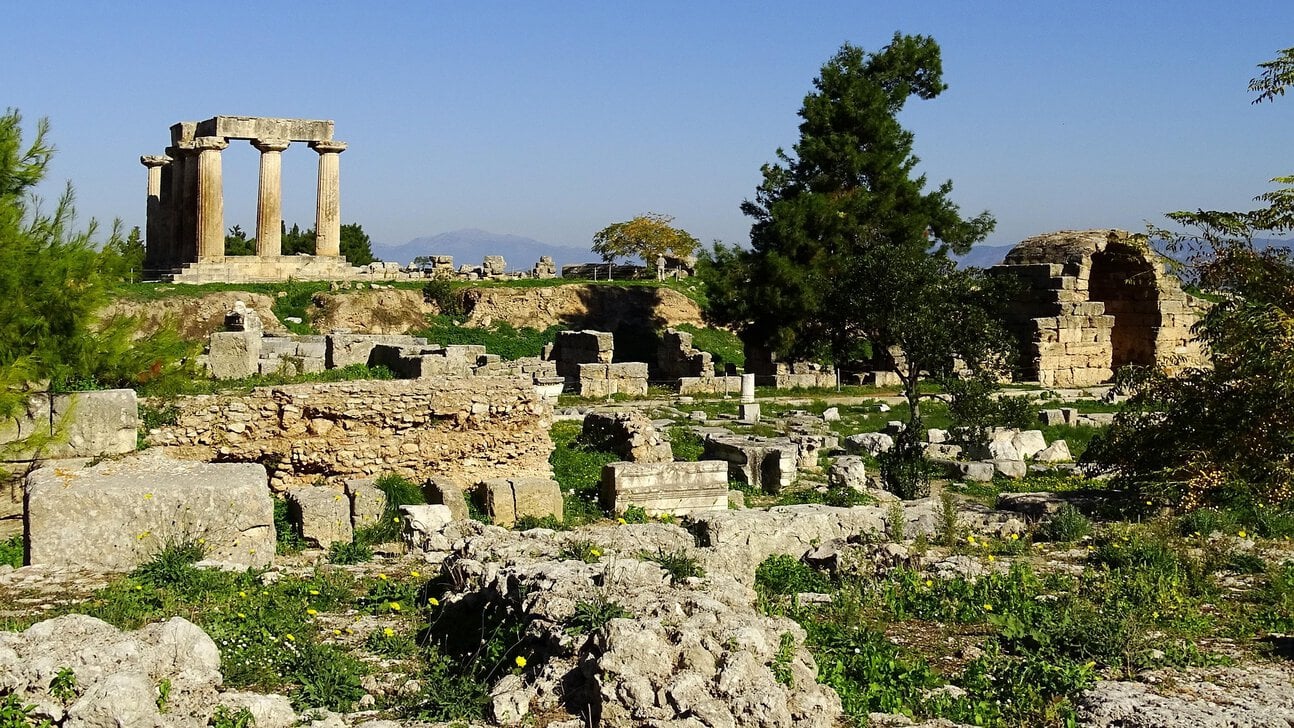
The historic heart of the region lies a little further inland at Ancient Corinth. Once one of the wealthiest cities of the classical and Roman world, it was a major trading centre linking mainland Greece with the Peloponnese. Today you can explore the remarkably well-preserved Temple of Apollo, the Roman Agora, ancient streets, fountains and extensive archaeological remains, before visiting the excellent on-site museum, which displays sculptures, mosaics and everyday objects uncovered during excavations.
Ancient Corinth also has strong biblical connections. Saint Paul lived and preached here during the first century AD, founding one of the earliest Christian communities. His letters to the Corinthians remain among the best-known books of the New Testament, making the city an important pilgrimage destination as well as a fascinating archaeological site.
One of the biggest advantages of visiting Corinth is how easy it is to reach by public transport. Frequent Athens Suburban Railway (Proastiakos) services run from Athens Central Railway Station (Larissa Station) to Corinth Station, with journeys taking around 75 to 85 minutes. The trains are modern, comfortable and air-conditioned, making them one of the easiest rail day trips available from Athens. From Corinth Station you can either catch a local bus or take a taxi to Ancient Corinth, which is approximately 7 kilometres away and usually takes around 15 minutes by road.
If you’re interested in both the canal and the archaeological site, it’s easy to visit both in a single day. Many travellers stop at the Corinth Canal first before continuing to Ancient Corinth, although you can also reverse the order depending on train and bus times. Allow around five to seven hours for the complete excursion, giving yourself enough time to explore the ruins, visit the museum and enjoy lunch in one of the traditional tavernas beside the archaeological site.
For visitors who enjoy travelling by rail, Corinth is one of the best day trips from Athens. The combination of easy train travel, world-class archaeology, biblical history and spectacular canal views makes it an excellent introduction to the Peloponnese without the long journey times required for destinations such as Delphi, Meteora or Ancient Olympia.
Compare routes and fares for your journey to Athens.
Compare flightsChoose an Airalo eSIM and arrange mobile data before you arrive.
Browse eSIMsHave a private airport pickup arranged before you travel.
Book a transferMycenae
Long before Athens became the centre of the ancient Greek world, Mycenae was one of the most powerful kingdoms in Europe. According to Greek mythology, it was ruled by King Agamemnon, leader of the Greek forces during the Trojan War, while archaeologists recognise it as the heart of the Mycenaean civilisation that flourished more than 3,000 years ago.
Today, Mycenae is one of Greece’s most impressive archaeological sites. Walking through the famous Lion Gate, you’ll enter a fortified citadel protected by enormous Cyclopean Walls, so vast that ancient Greeks believed only giants could have built them. Within the ruins you’ll find the remains of royal palaces, workshops, ancient houses and the famous Grave Circle A, where spectacular gold treasures, including the so-called Mask of Agamemnon, were discovered during nineteenth-century excavations.
Although it is possible to visit Mycenae independently, it isn’t particularly straightforward. Intercity buses from Athens reach the nearby village of Fichti, but you’ll still need to cover the final few kilometres to the archaeological site by taxi or on foot. While this is certainly possible, it requires considerably more planning than destinations such as Nafplio or Delphi.
For most visitors, Mycenae is best experienced as part of a combined tour that also includes Nafplio and Epidaurus. This removes the transport difficulties and allows you to visit three of the Peloponnese’s most important attractions in a single day.
If you’re particularly interested in ancient Greek history, however, Mycenae easily justifies the extra effort. Few archaeological sites in Greece offer such a powerful connection with both mythology and the earliest chapters of European civilisation.
Ancient Olympia
For anyone fascinated by the Olympic Games, Ancient Olympia is one of the most significant archaeological sites in the world. This peaceful sanctuary in the western Peloponnese was the birthplace of the ancient Olympic Games almost 3,000 years ago and remains the place where the Olympic Flame is still lit before every modern Olympic Games.
A full-day excursion from Athens typically lasts around 13 hours, making it one of the longest organised day trips available from the capital. Although that’s a considerable amount of travelling, it allows visitors to experience one of Greece’s most important historical sites without needing to spend a night away from Athens.
Most tours begin with a scenic drive across the Peloponnese, including a short stop at the impressive Corinth Canal, before continuing through the countryside to Olympia. Once there, you’ll have several hours to explore the archaeological site, including the magnificent Temple of Zeus, once home to the colossal gold and ivory statue of Zeus, one of the Seven Wonders of the Ancient World.
You’ll also visit the Temple of Hera, where the Olympic Flame ceremony continues to take place today, together with the original Olympic Stadium, where athletes once competed for glory in front of thousands of spectators. Other highlights include the Bouleuterion, where judges met before the Games, and numerous monuments that reveal how important Olympia became throughout the ancient Greek world.
Most organised tours also include free time in the modern village of Olympia, allowing visitors to enjoy lunch, browse local shops or simply relax before beginning the long journey back to Athens.
Although public transport connections do exist, they involve several changes and make for an extremely demanding day. For almost everyone, joining an organised coach tour is by far the most practical option. It may involve several hours on the road, but it allows you to focus entirely on one of the most remarkable archaeological sites anywhere in Greece.
Hydra
With its elegant stone mansions, colourful harbour and complete absence of private cars, Hydra feels like a completely different world despite lying only a short ferry journey from Athens. The island has long attracted artists, writers and musicians, and remains one of the most distinctive destinations in the Saronic Gulf.
Hydra is reached by high-speed ferry from Piraeus, with crossings typically taking around one and a half to two hours depending on the service. Ferries operate throughout the year, making it perfectly possible to visit independently without joining an organised excursion.
The moment you step off the ferry you’ll notice one of Hydra’s most unusual features. Cars and motorcycles are prohibited, leaving donkeys, water taxis and walking as the island’s traditional methods of transport. This creates a wonderfully peaceful atmosphere, particularly around the attractive harbour where cafés, galleries and small boutiques overlook the sea.
Most visitors spend their day exploring the narrow lanes climbing away from the waterfront, discovering historic churches, relaxing beside the harbour or walking along the coastal paths to nearby swimming spots. Although there are beaches on Hydra, they are generally smaller and rockier than those found on many other Greek islands.
Because ferry schedules allow several hours on the island before returning to Athens, Hydra makes an excellent independent day trip. It is especially appealing for travellers looking to experience traditional island life without needing to organise accommodation or domestic flights.
For ferry operators, sailing times and practical travel advice, take a look at our dedicated Athens to Hydra Ferry Guide.

Epidaurus
The ancient sanctuary of Epidaurus is internationally famous for one remarkable building. Its magnificent Ancient Theatre is considered one of the greatest surviving theatres from the classical world and is still used for performances today thanks to its extraordinary acoustics.
Built during the fourth century BC, the theatre seats around 14,000 spectators, yet even today it’s possible to hear a quietly spoken voice from the stage while sitting near the highest rows. Its exceptional preservation has made it one of Greece’s most important UNESCO World Heritage Sites.
Despite its importance, Epidaurus is not the easiest destination to reach independently from Athens. While buses connect Athens with Nafplio, onward public transport to the archaeological site is much less frequent, making it difficult to enjoy a relaxed visit and return to Athens on the same day.
For this reason, most visitors choose a combined Mycenae, Nafplio and Epidaurus excursion. These tours provide transport between all three sites, allowing you to experience the highlights of the eastern Peloponnese without worrying about complicated bus connections or taxis.
If you’re travelling by car, Epidaurus is much easier to include as part of a self-drive itinerary. However, for visitors relying on public transport, a guided tour offers by far the most convenient and time-efficient way to experience this extraordinary monument.
Poros
Poros is one of the closest Greek islands to Athens and makes an excellent day trip if you’re looking for a relaxed harbour town, attractive waterfront cafés and beautiful sea views rather than major archaeological sites. Despite its proximity to the mainland, the island has a distinctly traditional feel, with whitewashed houses climbing the hillside above one of the prettiest harbours in the Saronic Gulf.
Regular ferries depart from Piraeus Port, with journey times varying between approximately one hour on high-speed services and around two and a half hours on conventional ferries. Several sailings operate throughout the day, making it easy to spend six or seven hours on the island before returning to Athens in the evening.
Most visitors begin by exploring Poros Town, where narrow streets, small churches and traditional tavernas spread out from the busy waterfront. The harbour is lined with cafés and restaurants overlooking the marina, making it an ideal place to enjoy lunch while watching ferries and yachts arrive throughout the day.
If you have more time, it’s worth walking up to the famous Clock Tower, one of the island’s best-known landmarks. From here you’ll enjoy panoramic views across the harbour towards the Peloponnese mainland. Several small beaches are also within walking distance of the town, providing the opportunity for a swim during the warmer months.
Poros is one of the easiest independent island day trips from Athens and works particularly well for travellers who want to enjoy a slower pace of life without committing to a longer ferry journey.
Agistri
Although many visitors first discover Agistri during organised island cruises, it’s also an excellent destination to visit independently. Just a short ferry ride from Piraeus, the island offers clear turquoise water, pine forests, quiet beaches and a laid-back atmosphere that feels a world away from central Athens.
Depending on the ferry service, the crossing takes between 55 minutes and around 90 minutes, making Agistri one of the quickest islands to reach from the Greek capital. Regular departures allow plenty of time to explore before returning the same day.
Most ferries arrive at either Skala or Megalochori (Mylos). Skala is known for its sandy beach, waterfront cafés and relaxed holiday atmosphere, while Megalochori offers a quieter, more traditional village setting. Both are small enough to explore comfortably on foot.
One of Agistri’s biggest attractions is its natural scenery. Pine trees stretch almost to the shoreline, creating beautiful walking routes and shaded roads that are ideal for exploring by bicycle. Many visitors hire bikes locally to reach beaches such as Aponisos or Dragonera, both famous for their exceptionally clear water.
If you’re looking for a peaceful island escape without travelling too far from Athens, Agistri is one of the best choices. It also combines well with longer stays in the Saronic Gulf or as an alternative to the larger and busier islands.
Compare hostels and budget-friendly accommodation around Athens.
Browse hostelsAccess compensation support, eligible lounge benefits and faster payouts when flights go wrong.
See the benefitsArriving before check-in or leaving later? Store your luggage and make more of your time in Athens.
Store your bagsMycenae, Nafplio & Epidaurus Combined Tour
If you only have one day to explore the Peloponnese, this is arguably the best-value excursion from Athens. Rather than visiting a single destination, the tour combines three of southern Greece’s most important historical sites with comfortable coach travel, guided commentary and plenty of free time along the way.
The day begins with a stop at the spectacular Corinth Canal, where you’ll have time to admire one of Greece’s greatest engineering achievements before continuing into the Peloponnese.
The first major destination is Mycenae, once one of the most powerful kingdoms of the ancient Greek world. Here you’ll walk through the famous Lion Gate, explore the vast Cyclopean Walls and discover the remains of a civilisation that flourished more than three thousand years ago. Guided commentary helps bring the myths of Agamemnon and the Trojan War to life as you explore the archaeological site.
The tour then continues to the elegant seaside town of Nafplio, Greece’s first modern capital. A guided walk introduces the historic centre before you’ll have free time to explore independently. Depending on the tour option you choose, you may also enjoy a traditional Greek lunch overlooking the waterfront or simply wander through the picturesque streets at your own pace.
The final stop is the magnificent Ancient Theatre of Epidaurus, widely regarded as one of the finest surviving theatres from classical Greece. Even today, visitors are amazed by its remarkable acoustics and exceptional state of preservation, making it one of the highlights of any visit to the Peloponnese.
For travellers interested in ancient history, this tour offers outstanding value. Rather than attempting to piece together buses and taxis between several locations, everything is organised for you, allowing far more time to enjoy the sites themselves.
Tour, Public Transport or Car Hire?
Choosing the right way to explore beyond Athens depends on how far you want to travel, how much flexibility you need and whether you’d prefer to relax or organise everything yourself.
If you’re visiting destinations such as Nafplio, Corinth, Hydra, Aegina, Poros or Agistri, independent travel is usually straightforward. Regular buses, trains or ferries make these excellent self-guided day trips, allowing you to travel at your own pace and spend as long as you like exploring.
Some destinations sit somewhere in the middle. Delphi is easily reached by direct intercity bus, but many visitors still choose an organised tour because transport, entry arrangements and commentary are all taken care of. Cape Sounion is another example where public transport works well, although a guided sunset tour removes the need to worry about return bus times after dark.
The longest excursions, including Meteora and Ancient Olympia, are generally much better suited to organised tours. While independent travel is technically possible, the number of connections and the sheer amount of travelling involved make these difficult to enjoy comfortably in a single day. A modern coach with planned comfort stops, experienced drivers and a structured itinerary allows you to focus on the destination rather than the logistics.
Hiring a car offers the greatest flexibility, particularly if you’d like to combine places such as Mycenae, Nafplio and Epidaurus over a full day. However, driving in central Athens can be busy, parking is often limited, and many visitors prefer to collect a rental vehicle only after leaving the city.
Ultimately, there is no single right answer. If you enjoy travelling independently, Greece’s bus and ferry networks make many destinations surprisingly accessible. If your time is limited or you’d rather avoid complicated planning, an organised day tour often provides the easiest and most relaxing way to discover some of the country’s most remarkable places.

Rupert’s Handy Travel Tips
Planning a day trip from Athens? Here are a few tips to help you make the most of your time exploring beyond the Greek capital.
- Don’t underestimate journey times: Greece looks compact on the map, but destinations such as Meteora and Ancient Olympia involve very long travel days. If you’d rather spend more time sightseeing than travelling, consider closer options such as Nafplio, Cape Sounion or the Saronic Islands.
- Book ferries in advance: If you’re planning independent trips to Hydra, Aegina, Poros or Agistri, booking your ferry tickets ahead of time gives you the best choice of departure times, especially during the summer months.
- Carry cash as well as cards: Most attractions and restaurants accept card payments, but smaller cafés, local buses and market stalls may still prefer cash, particularly outside Athens.
- Wear comfortable shoes: Many of Greece’s archaeological sites involve uneven stone paths, steps and loose gravel. Good footwear will make exploring places such as Delphi, Mycenae and Ancient Olympia much more comfortable.
- Start early: Whether you’re catching a ferry or joining a coach tour, most day trips leave Athens early in the morning. Setting off early also helps you avoid the hottest part of the day during the summer.
Want to meet the reindeer behind our travel tips? Find out more in our page Who is Rupert?.
Frequently Asked Questions
What is the best day trip from Athens?
That depends on what interests you most. Delphi is ideal for ancient history, Meteora offers some of the most spectacular scenery in Greece, Cape Sounion is perfect for a shorter coastal excursion, while Hydra and Aegina provide an easy introduction to the Greek islands.
Can you visit Meteora in one day from Athens?
Yes, but expect a very long day. Organised tours usually last around 14 hours, with an early departure and late return. While it’s technically possible by public transport, a guided coach tour is by far the easiest and most practical option.
Is Delphi worth visiting from Athens?
Absolutely. Delphi is one of Greece’s most important archaeological sites and can comfortably be visited in a single day. Direct buses operate from Athens, although guided tours provide transport, commentary and often include a stop in Arachova.
Can I visit Cape Sounion without a tour?
Yes. KTEL Attikis buses run between Athens and Cape Sounion throughout the year. However, organised tours are often the easier choice, particularly if you want to see the famous sunset at the Temple of Poseidon without worrying about bus timetables.
Which Greek islands can I visit on a day trip from Athens?
The easiest islands to reach are Aegina, Hydra, Poros and Agistri, all of which have regular ferry connections from Piraeus. Several organised cruises also combine visits to multiple islands in a single day.
Is Ancient Olympia too far for a day trip?
It’s certainly a long day, but many visitors feel it’s worthwhile. Organised tours typically last around 13 hours and include several hours at the archaeological site. Travelling independently in one day is possible but involves multiple connections and considerably more planning.
Can I visit Mycenae by public transport?
You can, although it’s not especially straightforward. Intercity buses reach nearby Fichti, but you’ll need to complete the final part of the journey by taxi or on foot. Most visitors find a combined tour with Nafplio and Epidaurus much more convenient.
Is Nafplio easy to visit independently?
Yes. Direct KTEL buses connect Athens with Nafplio several times a day, making it one of the easiest independent day trips from the capital.
Which day trip is best for families?
Cape Sounion, Aegina and Nafplio are all excellent choices. They involve shorter travel times than destinations such as Meteora or Olympia and offer a good balance of sightseeing, cafés and open spaces.
Should I book day trips in advance?
During the summer months, it’s a good idea to book popular guided tours and ferry tickets in advance, particularly for Meteora, Delphi and the Saronic Islands. This gives you the widest choice of departure times and avoids disappointment during busy periods.
Further Reading
Athens is an excellent base for exploring mainland Greece, but many visitors also spend time discovering the nearby islands and historic attractions before travelling further afield. If you’re planning to stay in the capital for several days, our Things To Do in Athens guide highlights the city’s major attractions, museums and neighbourhoods, while our Athens Public Transport Guide explains how to use the metro, buses and trams to get around efficiently.
Our Athens Ferry Routes Guide covers services from Piraeus to destinations including Aegina, Hydra, Poros and Agistri, helping you choose the right ferry for your itinerary.
Visitors interested in ancient Greece should also read our Acropolis & Parthenon Guide, together with our Athens Travel Passes Guide, which explains the different sightseeing passes available and whether they represent good value. If you’re travelling more widely around the country, our Greece Interrail Pass Guide and Greek Islands Interrail Guide explain how trains and ferries can be combined into a longer journey beyond Athens.
Before you travel, don’t forget to compare the latest mobile data options in our Best eSIMs guide. Staying connected makes it much easier to access ferry tickets, bus timetables, maps and attraction bookings while exploring both Athens and the rest of Greece.