
Reviewed by our editorial team Updated
Athens to Aegina Ferry: What You Need to Know
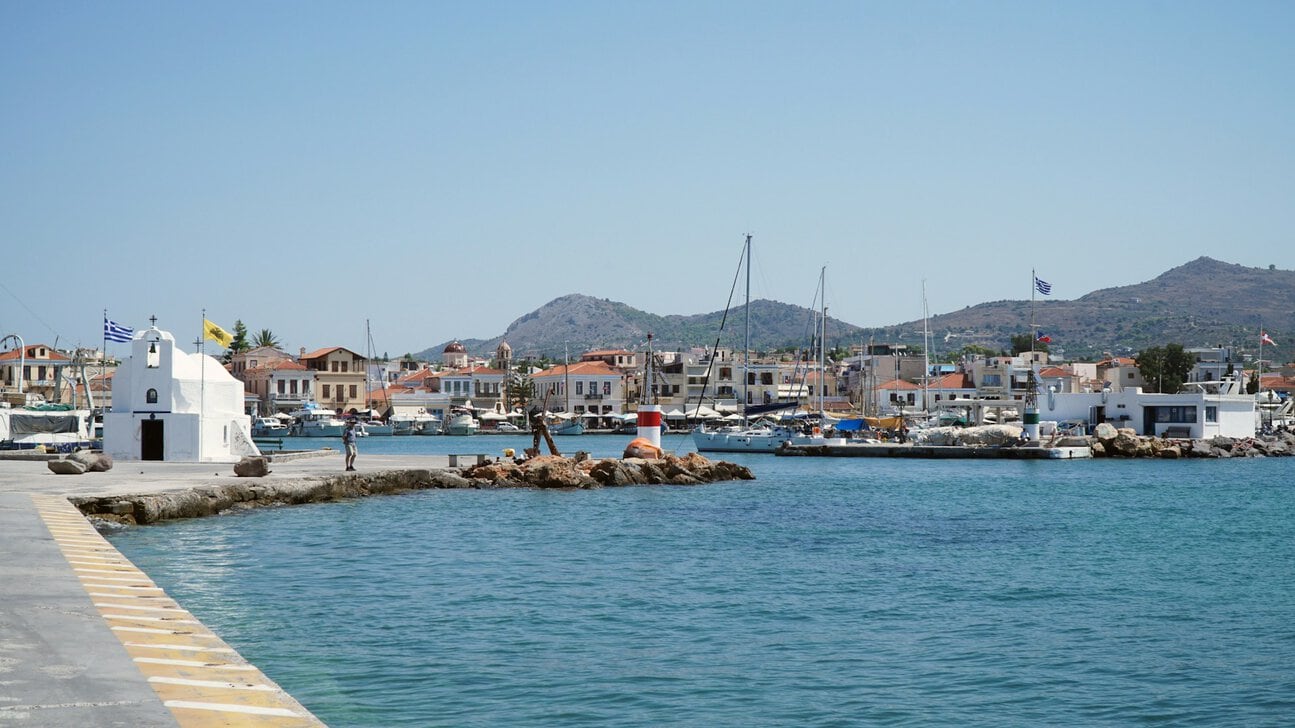
Taking the ferry from Athens to Aegina is one of the easiest ways to add a Greek island to a stay in the capital. Ferries leave from Piraeus Port and arrive directly in Aegina Town, putting you within a few minutes’ walk of the waterfront, shops, restaurants, buses and taxi rank.
There is an important choice to make before booking, because not every Athens to Aegina ferry offers the same journey. High-speed services can make the crossing in around 40 minutes, while conventional ferries take longer but provide a more traditional ferry experience and can be useful if you are travelling with a vehicle.
That difference matters enormously on a day trip. Choosing a fast ferry in both directions can save well over an hour of travelling time, giving you more time to explore Aegina itself. Conventional ferries can still make sense if the timetable suits you better or you simply prefer a larger ferry and a more relaxed crossing.
We travelled this route ourselves in August 2026, using Aegina not only to explore the island but also as a jumping-off point for Agistri. One thing that became immediately obvious is how easy Aegina is to visit independently. You do not need an organised excursion or a hire car: ferries, local buses, taxis and onward island connections all meet around Aegina Town’s harbour.
Aegina is also much more than somewhere to have lunch beside the sea. You can visit the Temple of Aphaia, explore Aegina Town, head across the island to Agia Marina, spend time at the beach or take another ferry to neighbouring Agistri.
For a first Greek island trip from Athens, Aegina is difficult to beat for simplicity.
Athens to Aegina Ferry Options at a Glance
The quickest service is not automatically the best choice for everyone. Before booking, compare the journey time, type of ferry and departure time, particularly if you are planning to return to Athens on the same day.
| Option | Typical Journey Time | Leaves From | Best For |
|---|---|---|---|
| High-speed / Flying Dolphin | Around 40 minutes | Piraeus, commonly Gate E9 area | Maximising time on Aegina |
| Other high-speed services | Around 40–60 minutes | Piraeus | Fast day trips |
| Conventional ferry | Around 1 hour 10–30 minutes | Piraeus | Relaxed crossing, vehicles and timetable flexibility |
Always check the exact vessel, journey time and departure gate shown on your ticket. Piraeus is an enormous port, and services can use different departure points. High-speed services to the Saronic Islands commonly use the E9 area, but you should not assume that your particular sailing will depart there.
For a day trip, we’d prioritise the departure and return times over loyalty to a particular ferry company. An early high-speed service out and a well-timed service back can give you substantially more usable time on Aegina.
If you are staying overnight, speed becomes less important and it can be worth choosing whichever sailing offers the best price and most convenient departure time.
Compare hotels and other places to stay in Athens.
Check availabilityBrowse apartments, homes and self-catering accommodation in Athens.
Browse rentalsCompare hotel deals in Athens from multiple booking sites.
Compare pricesHigh-Speed or Conventional Ferry: Which Should You Choose?
For most people visiting Aegina as a day trip from Athens, the high-speed ferry has an obvious advantage: time.
The fastest services can reach Aegina in roughly 40 minutes, which makes the island remarkably accessible from a major European capital. Once the vessel clears Piraeus, there is barely enough time to settle in before you are approaching Aegina.
The familiar Flying Dolphin hydrofoils are particularly distinctive. Rather than behaving like a conventional ferry, the vessel rises as it gathers speed and travels across the Saronic Gulf on its foils. They are designed primarily to move passengers quickly rather than provide the spacious outdoor-deck experience associated with a traditional Greek ferry.
A conventional ferry is slower, but that isn’t necessarily a disadvantage. Larger vessels can offer more room to move around, outdoor areas and a more leisurely journey across the Saronic Gulf. They are also the option to investigate if you need to take a car or other vehicle to Aegina.
For a day trip where you want to visit the Temple of Aphaia, Agia Marina or Agistri, we’d favour a high-speed departure where the timetable and price make sense. The time saved becomes valuable once you start coordinating ferries with Aegina’s local buses.
However, don’t choose purely on the advertised crossing time. A 40-minute ferry departing much later than a conventional service may actually leave you with less time on the island. Compare the complete day’s timetable before booking both directions.

Getting to Piraeus and Finding Your Aegina Ferry
The most important thing we learned about departing for Aegina is that “Piraeus Port” is not a sufficiently precise destination.
Piraeus is huge. Different ferries use different gates, and arriving at the wrong part of the harbour can leave you with a considerable walk just when you are trying to catch a departure.
High-speed services towards Aegina and the other Saronic Islands commonly leave from around Gate E9. That was the area used for our journey, but check the gate shown for your actual sailing rather than relying on E9 automatically. Ferry berths and operational arrangements can change.
From central Athens, Metro Line 1 provides a straightforward connection to Piraeus, while Metro Line 3 also reaches Piraeus and can be particularly useful depending on where you are staying. Once you arrive, allow additional time to get from the station to the correct ferry gate.
A taxi can make more sense if you are travelling with luggage, as a group or very early in the morning. If using one, show the driver your ferry company and departure gate, rather than simply asking for Piraeus Port.
We would aim to be at the correct gate at least 30 minutes before departure, and earlier if you are unfamiliar with Piraeus. With an e-ticket already on your phone, boarding itself can be straightforward; finding the correct part of the port is the part worth planning carefully.
For this route in particular, check three things before leaving your accommodation: the ferry operator, the vessel and the departure gate. That simple check can save a lot of unnecessary walking around Piraeus.
Tickets, Prices and Booking the Athens to Aegina Ferry
There is no single fare for the Athens to Aegina ferry, because the price depends heavily on whether you choose a conventional ferry or one of the faster passenger services. In general, the conventional ferries are the cheaper option, while high-speed services charge more in return for cutting a substantial amount of time from the journey.
For a day trip, it is worth looking beyond the cheapest ticket. Saving money on a slower sailing may not be worthwhile if it costs you an extra hour or more on Aegina, particularly if you want to coordinate your visit with the island’s buses or continue onwards to Agistri.
We recommend comparing the outbound and return journeys separately. You don’t necessarily need to use the same type of ferry in both directions. An early high-speed ferry from Piraeus followed by a conveniently timed conventional ferry home can sometimes produce a better day than simply booking a return with one operator.
E-tickets make the journey particularly straightforward. Once you have checked in and received the required boarding document, you can normally present the ticket on your phone rather than visiting a ticket office at Piraeus.
During the busy summer period, we’d book in advance if there is a particular high-speed departure you need. This becomes especially important when your plans rely on arriving in time for a specific Aegina bus or an onward ferry.
Before paying, check the vessel, crossing time and departure gate, rather than looking at price alone.
Piraeus, Athens to Aegina (town), Aegina Ferry Times & Departures
Use Ferryhopper to check live sailings between Piraeus, Athens and Aegina (town), Aegina in both directions. Select your travel date to compare scheduled ferry departures, sailing times and available tickets.
Select the date you want to travel. The times shown on the right-hand side are the scheduled departure and arrival times for each ferry.
Availability can change quickly, particularly during weekends and the summer season. Some sailings may stop accepting bookings a few hours before departure. If a timetable is blank, there may be no available sailings for today. Try moving to a later date to check future services.
This is the timetable for the outward direction. Use it to check sailings from Piraeus, Athens to Aegina (town), Aegina for the date you plan to travel.
This is a separate timetable for the opposite direction. It does not select a return ticket for the journey above. Use it to check sailings from Aegina (town), Aegina to Piraeus, Athens.
Want to compare different routes and other ferry options?
Compare routes, operators, sailing times and prices with Ferryhopper or Direct Ferries.
What the Crossing to Aegina Is Actually Like
The experience varies considerably depending on which type of ferry you book.
A conventional ferry feels like a traditional Greek island crossing. There is more time to settle in, move around and watch Piraeus disappear behind you as the vessel heads into the Saronic Gulf. If part of the appeal is simply being out on the water, the slower journey isn’t necessarily wasted time.
The high-speed experience is quite different. On the faster services, Aegina feels remarkably close to Athens. A crossing of around 40 minutes means the journey can feel more like a commuter connection than a major island voyage.
The Flying Dolphin hydrofoils are particularly unusual if you haven’t travelled on one before. Once underway, the vessel uses its hydrofoils to lift much of the hull above the water, reducing drag and allowing it to travel considerably faster than a conventional ferry.
The trade-off is that high-speed vessels are designed primarily around getting passengers between the islands quickly. If your idea of Greek ferry travel involves spending a long time outside on deck watching the coastline, check the facilities of the particular vessel before booking.
For us, the speed made a lot of sense because we were trying to make the most of the day rather than make the ferry itself the attraction.
Arriving at Aegina Port: What You’ll Find
One of the great advantages of arriving in Aegina Town is that you don’t need another complicated transfer once you step off the ferry.
The harbour is effectively the island’s transport hub. Ferries, local buses and taxis are concentrated around the waterfront, while the centre of Aegina Town begins almost immediately behind the port.
If you are heading elsewhere on the island, resist the temptation to walk straight into town before checking your transport. This is particularly important if you want to visit the Temple of Aphaia or Agia Marina, because local buses operate to a timetable rather than continuously.
The bus departure area is beside the harbour, so check the displayed timetable when you arrive and establish which service you need. We found this much more useful than trying to plan the entire day around information found online before arriving.
There is also a taxi rank close to the port. During our August 2026 visit, a large fare board displayed indicative prices to destinations around Aegina, making it surprisingly easy to compare a taxi with waiting for the next bus.
If you are staying in Aegina Town, things are even simpler. The waterfront, restaurants, cafés, shops and much of the historic centre are within walking distance, so you may not need transport at all.
And if you are continuing to Agistri, you are already in the right place: onward ferries leave from Aegina’s harbour, making it possible to combine the two islands without travelling across Aegina first.
Compare routes and fares for your journey to Athens.
Compare flightsUse an eSIM to get online without hunting for a local SIM after arrival.
See eSIM optionsArrange a private airport pickup for your trip to Athens.
Check transfersExplore Aegina Town and Its Harbour
Don’t treat Aegina Town simply as somewhere to wait for the next bus. The island’s capital is worth exploring in its own right, and its compact layout makes it particularly easy to fit into a day trip.
The harbour is the centre of activity. Conventional ferries, high-speed vessels, fishing boats and yachts come and go throughout the day, while the waterfront is lined with cafés, bakeries, restaurants and shops.
Just behind it are narrow streets filled with small businesses selling local produce, souvenirs and one product you’ll see almost everywhere: Aegina pistachios. The island’s fistiki Aiginis are one of its best-known products, appearing as bags of nuts, spreads, sweets, ice cream and other local specialities.
Aegina Town also has historic sights within walking distance. Near the harbour is the small Church of Agios Nikolaos, while a walk along the waterfront leads towards Kolona, the archaeological site associated with the Temple of Apollo, and the Archaeological Museum of Aegina.
What we particularly liked about Aegina Town was its practicality. You can get off the ferry, check the bus timetable, explore the harbour, buy something to eat and return for your onward transport without needing to cross the island or navigate a large resort.
If you want to escape the busy harbour for a while, Avli is worth seeking out for a coffee. We stopped here during our visit and found it tucked away on one of the back streets of Aegina Town, where you could easily walk past without realising what was inside. The highlight is its lovely little covered courtyard, which provides a quiet, shaded place to sit away from the activity along the waterfront. It was a particularly pleasant stop before continuing our journey around the island.
If you only have a short visit, allow at least an hour to wander around the harbour and surrounding streets. If Aegina is your only island for the day, it is worth allowing considerably longer and combining the town with one other part of the island rather than trying to race between every attraction.

Getting Around Aegina: Bus, Taxi or Hire Vehicle?
Once you arrive in Aegina Town, getting around the island is relatively straightforward, but it pays to decide what you want to see before choosing your transport. Local buses and taxis both leave from around the harbour, while scooters, ATVs and cars are available to hire if you want complete freedom.
For a straightforward day trip, the bus is perfectly usable. Services connect Aegina Town with destinations including the Temple of Aphaia and Agia Marina, and fares are considerably cheaper than taking taxis around the island.
The limitation is frequency. Aegina’s buses aren’t an urban turn-up-and-go service, so the timetable can dictate your day. When we visited, checking the departures at the bus station after arriving was one of the first things we did. If you are relying on buses, also establish your return journey before leaving Aegina Town, particularly when you have a ferry back to Piraeus later that day.
Taxis provide much more flexibility. They are particularly attractive for two or more people sharing the fare, and the fare board at the port makes it possible to see roughly what a journey should cost before getting in.
Hiring a vehicle gives you the greatest freedom and makes more sense if you want to visit several places around the island in one day. For a simple Aegina Town + Temple of Aphaia itinerary, however, we wouldn’t regard a hire vehicle as essential.
Aegina Taxi Prices from the Port
The taxi rank beside Aegina Town harbour is particularly useful because there is a large board displaying indicative one-way fares to destinations around the island.
We photographed the board during our visit in August 2026, so these prices give you a useful idea of what journeys were costing at the time. The board states that the amounts are indicative, include tax and are for a one-way journey.
| Destination from Aegina Town | Distance | Indicative One-Way Fare |
|---|---|---|
| Agios Nektarios | 9 km | €10 |
| Agia Marina | 16 km | €18 |
| Temple of Aphaia | 16 km | €18 |
| Souvala | 11 km | €13 |
| Vagia | 16 km | €18 |
| First Marathon Beach | 6 km | €8 |
| Second Marathon Beach | 7 km | €9 |
| Agioi Asomatoi | 10 km | €12 |
| Perdika | 12 km | €15 |
| Palaia Chora | 10 km | €12 |
There is another useful feature on the fare board: QR codes for contacting the taxi companies. When we scanned one, it took us straight to the telephone number, so there was no need to type a Greek number manually.
This makes taxis a particularly practical backup if the next bus doesn’t fit your plans. For example, the displayed fare from Aegina Town to the Temple of Aphaia was €18 one way, which may be reasonable when divided between several passengers.
Treat these as a guide rather than a guaranteed current fare, as prices can change. If there isn’t a taxi waiting, use the QR code or confirm the price before beginning the journey.

Taking the Bus from Aegina Town to the Temple of Aphaia
You do not need to hire a car or book a tour to visit the Temple of Aphaia. We made the journey using Aegina’s local bus, which provides an inexpensive connection between Aegina Town and the eastern side of the island.
Buses leave from the bus station beside Aegina Town’s harbour, within easy walking distance of the ferry arrivals. The station is simple but has a covered outdoor waiting area with seating, so you have somewhere shaded to wait for your departure.
You can buy your bus tickets at the station in Aegina Town, and it is worth buying the ticket for your return journey at the same time. That removes one thing to worry about later in the day, particularly when you are trying to coordinate the bus with a ferry back to Piraeus.
Don’t assume the bus will be quiet simply because Aegina is a small island. Our bus was full, with considerable passenger activity at Agios Nektarios, roughly midway across the island. The enormous Church and Monastery of Agios Nektarios is an important pilgrimage destination, so this can be a particularly busy part of the journey.
From there, the bus continues through Aegina’s interior towards the eastern side of the island and the Temple of Aphaia. The complete journey from Aegina Town takes roughly 30–35 minutes, depending on traffic and the number of stops.
The most important thing is to check the return timetable before setting off. Services are nowhere near as frequent as an Athens city bus, and missing one can leave you waiting considerably longer than expected. Take a photograph of the timetable at the bus station and plan around the departure you intend to use.
If the timings don’t work, taxis provide a useful alternative. The fare board we photographed beside Aegina harbour in August 2026 listed an indicative one-way fare of €18 from Aegina Town to the Temple of Aphaia.
You can also continue towards Agia Marina rather than immediately returning to Aegina Town, making it possible to combine the archaeological site with some time beside the sea.

Visiting the Temple of Aphaia
The Temple of Aphaia is one of the highlights of Aegina and somewhere we’d make time for even during a relatively short visit to the island. Standing on a pine-covered hill on the eastern side of Aegina, the setting is almost as impressive as the ancient temple itself.
The temple dates predominantly from around 500 BC and was dedicated to Aphaia, a goddess particularly associated with Aegina. A substantial amount of the Doric structure survives, including numerous standing columns, making it much easier to appreciate the original scale and appearance of the building than at archaeological sites where little remains above foundation level.
For 2026, general admission is €10 per person, covering the archaeological site and the Archaeological Collection of Aphaia. From 1 April to 31 October, the published opening hours are 09:00–18:00, while from 1 November to 31 March the site opens 10:30–17:00. Importantly, the Temple of Aphaia is closed on Tuesdays, so don’t plan your Aegina day trip around the temple on a Tuesday. Opening arrangements can change on public holidays or for operational reasons, so check the Ministry of Culture listing shortly before travelling.
One thing worth preparing before you leave Athens is the HH Guide app, which provides a digital guide to the site. We recommend downloading HH Guide while you’re still connected to your hotel or accommodation Wi-Fi rather than waiting until you reach Aegina. This avoids using unnecessary mobile data and potentially paying roaming charges to download the app once you’re at the temple.
Having the guide available makes the visit more interesting because it provides additional context about the sanctuary, its construction and the significance of Aphaia as you walk around the surviving remains.
The elevated setting is also a major part of the experience. There are extensive views across Aegina and the Saronic Gulf, so allow enough time to walk around rather than treating Aphaia as a quick photograph stop between buses.
The temple is also associated with the often-mentioned “sacred triangle” linking the Temple of Aphaia with the Parthenon in Athens and the Temple of Poseidon at Sounion. The geographical relationship between the three ancient sites is fascinating, although claims that they were deliberately positioned to create a precise mystical triangle should be treated cautiously rather than presented as established historical fact.
If you’re travelling by bus, check your return departure before entering the archaeological site. Aegina’s buses aren’t frequent enough to assume another one will arrive shortly, and missing your intended service can affect the rest of your day — particularly if you have a ferry back to Piraeus or onwards to Agistri.
The combination of well-preserved ancient architecture, hilltop scenery and the journey across Aegina to reach it makes the Temple of Aphaia much more than another archaeological stop. For us, it was one of the places that made getting beyond Aegina Town particularly worthwhile.
When you’re ready to return, there is a small café opposite the Temple of Aphaia archaeological site, which gives you somewhere to sit, get a drink and wait for the bus rather than standing beside the road. This is particularly useful because Aegina’s buses aren’t frequent, so you may have some time to wait after finishing your visit.

Continue to Agia Marina After the Temple of Aphaia
If you have made the journey across Aegina to visit the Temple of Aphaia, it can make sense to continue to Agia Marina rather than heading immediately back to Aegina Town.
Agia Marina sits on the eastern side of Aegina, only a short distance from the temple. This makes the two destinations a natural combination, particularly if you want your day to include both ancient history and some time beside the sea.
The bus drops you in a small square in Agia Marina, from where you can walk down into the resort and towards the waterfront. Make a mental note of where you arrived, because the return bus to Aegina Town does not leave from exactly the same spot. For the journey back towards Aegina, use the bus stop opposite the square, outside Hotel Aegli.
The village has a completely different atmosphere from the archaeological site. Here the focus is on the beach, waterfront, cafés and tavernas, making it an easy place to stop for lunch or cool down with a swim after exploring the temple.
If you are travelling by bus, check the timetable carefully before leaving Aegina Town and work out both the connection towards Agia Marina and your eventual journey back. The island’s buses are useful, but they are not frequent enough to improvise every stage of the day without looking at the timetable.
A taxi is another possibility. The fare board we photographed at Aegina harbour in August 2026 showed an indicative one-way fare of €18 between Aegina Town and Agia Marina.
For a day trip from Athens, Aegina Town → Temple of Aphaia → Agia Marina → Aegina Town gives you a much more varied impression of the island than simply staying around the ferry port.
Browse hostels and budget-friendly stays around Athens.
See hostelsFlying to Athens? Get fast compensation payouts, eligible lounge benefits and expert help when flights go wrong.
See AirHelp+ benefitsLeave your luggage somewhere convenient and enjoy Athens hands-free.
View storageBeaches and Other Places to Visit Around Aegina
Aegina has considerably more to offer than its main town and archaeological sites, and several places around the island can easily become the focus of a day away from Athens.
For a straightforward beach day, Agia Marina is one of the easiest choices to combine with sightseeing because of its position close to the Temple of Aphaia. Alternatively, the Marathon beaches are much closer to Aegina Town and can be useful if you don’t want to travel all the way across the island.
The taxi board at the port provides a useful indication of how accessible these places are. During our visit, it listed First Marathon Beach at €8 one way and Second Marathon Beach at €9, compared with €18 for Agia Marina.
Another option is Perdika, a small fishing village on the southwestern side of Aegina. The harbour and waterfront tavernas make it an attractive alternative to the busier surroundings of Aegina Town. The indicative taxi fare displayed at the port was €15 one way.
To the north and northeast are Souvala and Vagia, while inland you’ll find Agios Nektarios and Palaia Chora. Agios Nektarios is particularly significant as a religious destination and, as we discovered on the bus across Aegina, can generate a surprising amount of passenger traffic.
Trying to visit all of these places during one day would defeat much of the point of coming to Aegina. For a day trip, choose one side of the island or one main excursion, then leave enough time to enjoy Aegina Town rather than spending the entire visit travelling between stops.
Aegina to Agistri by Ferry
Aegina doesn’t have to be the end of your ferry journey. One of the best things about its location in the Saronic Gulf is how easily you can continue to neighbouring Agistri.
We made this journey ourselves, combining the two islands rather than returning directly to Athens. The crossing is very short, so Aegina and Agistri can realistically be visited as part of the same day if you choose your ferry times carefully.
Services can arrive at different ports on Agistri, so pay attention to the destination shown when booking. For a short visit, Skala is particularly convenient because you step off the ferry within easy walking distance of the village, beach, cafés and tavernas.
This is where advance planning becomes important. Don’t assume that because the islands are close together there will always be another ferry exactly when you need one. Check Aegina → Agistri and Agistri → Piraeus/Aegina connections before committing to the trip.
If the timetable works, however, the combination is excellent. Aegina gives you the busy harbour, archaeological sites and larger-island atmosphere, while Agistri feels smaller, greener and much more focused on slowing down beside the sea.
For travellers who enjoy ferry journeys, it is a remarkably easy way to turn a simple Athens day trip into a two-island adventure.

Take the Passenger Boat from Aegina to Moni Island
You don’t have to travel to another part of Aegina to take a boat to Moni Island. During our visit in August 2026, we found a seasonal passenger service operating directly from Aegina Port to Moni, making it surprisingly easy to add the small island to a day in Aegina Town.
The service advertised at the harbour was operated by Aegina Cruises / Sea Bond, using several passenger boats including Neraida Express, Panagia, Neraida and Georgia. This is a small-boat excursion rather than one of the regular inter-island ferries operating between Piraeus and the Saronic Islands.
The timetable we photographed showed departures from Aegina Port every 30 minutes for much of the day. Boats were advertised at 09:30, then every half hour from 10:00 until 14:30, and again every half hour from 14:30 through to 19:30. The 09:30, 13:00 and 19:30 departures were marked as operating on a full-basis/subject-to-demand basis, so don’t rely on those particular sailings without checking locally.
Return boats from Moni Island were similarly frequent, starting at 10:00 and generally operating every 30 minutes through the day, with the final advertised departure at 19:45. That frequency makes Moni much easier to fit into a day trip than you might expect because you don’t necessarily have to commit to spending several hours there.
Moni is promoted as a Natura island, with a largely undeveloped landscape, clear water and beaches surrounded by greenery. It is the sort of excursion that works particularly well if you’ve already explored Aegina Town and want to spend part of the afternoon swimming and relaxing away from the busier harbour.
One important point is that this is a seasonal small-boat service, so don’t assume the timetable we photographed will apply throughout the year or on the date of your visit. Check the day’s departures at Aegina harbour before building your plans around it.
The timetable board also displayed a QR code and contact details for reservations, so you can check locally if you’re unsure whether a particular sailing is operating.
For a summer day trip, this creates another very easy itinerary: Athens → Aegina Town → Moni Island → Aegina Town → Athens. Because the boat leaves directly from Aegina Port, you don’t need to cross the island to Perdika first.

Visiting Skala on Agistri
For a short visit to Agistri, we’d choose Skala. It is one of those places where the convenience becomes obvious almost immediately after stepping off the ferry.
The village and Skala Beach are right beside the port, so there is no need to arrange another transfer simply to start enjoying the island. That makes a big difference when you only have a couple of hours before your next ferry.
Skala has a relaxed resort feel, with cafés, tavernas and accommodation spread around the village and waterfront. The beach provides an easy place to swim without sacrificing a large part of your visit travelling elsewhere.
Agistri itself feels noticeably different from Aegina. It is smaller and much greener, with pine-covered landscapes and a quieter atmosphere. Coming directly from Aegina makes that contrast particularly noticeable.
If you have a full day or are staying overnight, you can explore farther across the island towards Megalochori and other swimming spots. For a short island-hopping stop, however, we wouldn’t overcomplicate things.
Skala works precisely because you don’t need a plan. Get off the ferry, walk into the village, have something to eat or drink, spend some time at the beach and return to the port for your onward sailing.
That simplicity is what makes Aegina + Skala such a practical two-island combination from Athens.
Our Aegina and Agistri Day Trip from Athens
If you want to see just how much you can comfortably fit into a day, we visited Aegina, the Temple of Aphaia, Agia Marina and Agistri on the same trip from Athens. It sounds ambitious, but with an early start and some attention to the bus and ferry timetables, it worked surprisingly well.
We started with the 08:30 high-speed ferry from Piraeus to Aegina. With the fast crossing taking around 40 minutes, we arrived on the island with most of the morning still ahead of us.
Rather than immediately heading across the island, we stopped for coffee at Avli in Aegina Town. It’s tucked away on a back street rather than directly on the busy waterfront, with a lovely covered courtyard that makes it an easy place to sit for a while before starting the day’s sightseeing.
From there, we returned to the bus station beside the harbour and caught the local bus across Aegina to the Temple of Aphaia. The journey also gave us a glimpse of everyday transport on the island, including the particularly busy stop around Agios Nektarios, where our bus became very full.
After visiting the temple, we continued to Agia Marina rather than retracing our journey immediately. The bus drops you at the small square in the resort, from where it’s easy to walk towards the waterfront and beach. For the return journey to Aegina Town, the important detail to remember is that the bus stops outside Hotel Aegli, opposite the square.
We then caught the bus back across the island to Aegina Town and returned to the harbour for our onward ferry to Agistri.
We arrived on Agistri at approximately 15:00, which still gave us around three hours on the island. For a short visit like this, Skala works extremely well because you don’t need another bus or taxi after arriving. The village, waterfront and beach are all close to the ferry.
At around 18:00, we caught our ferry back, bringing an unusually varied day of island hopping to an end.
What surprised us was that the day didn’t feel impossibly rushed. The early high-speed ferry was crucial, as was checking the Aegina bus timetable and knowing which onward ferries we wanted to catch.
Practical Tips We Learned from Visiting Aegina
A little preparation makes this day considerably easier. Check your Piraeus departure gate before travelling to the port rather than navigating simply to “Piraeus Port”; high-speed Saronic services commonly use the E9 area, but your actual ticket is the authority.
Once you reach Aegina, check the bus timetable immediately if you’re planning to leave Aegina Town. Buy your return ticket at the bus station at the same time and don’t assume the buses will be empty — ours became particularly busy around Agios Nektarios.
If you’re visiting Aphaia, remember that the Temple of Aphaia is closed on Tuesdays and download HH Guide before leaving Athens. There is a small café opposite the archaeological site where you can wait for the bus afterwards.
At Agia Marina, remember that the return bus towards Aegina Town stops outside Hotel Aegli, opposite the small square where you arrive.
For taxis, the rank beside Aegina harbour has an indicative fare board and QR codes. We found that scanning the QR code took us straight to the taxi company’s telephone number, which is useful if there isn’t a taxi immediately available.
Finally, don’t try to do everything. Aphaia, Agia Marina, Moni and Agistri are alternatives rather than a checklist. Aegina works particularly well as a day trip because you can choose how ambitious you want the day to be, and still have an enjoyable visit if all you do is explore the town, have a coffee and spend some time beside the sea.

Rupert’s Handy Travel Tips
Heading to Aegina for the day? Rupert has a few simple tips to help you make the most of this easy island escape from Athens.
- Take an early ferry from Piraeus so you have plenty of time to explore Aegina at a relaxed pace.
- Stick to Aegina Town and one key attraction rather than trying to see everything in one day.
- Bring swimwear even if you are unsure, as the beaches are easy to access and worth it.
- Try local pistachio products, which are one of the island’s most famous specialties.
- Leave enough time to return to the port, even though ferries run frequently, as queues can build in summer.
Want to meet the reindeer behind our travel tips? Find out more in our page Who is Rupert?.


Frequently Asked Questions About the Athens to Aegina Ferry
How long does the Athens to Aegina ferry take?
The journey takes approximately 75 minutes, making it one of the shortest island crossings from Athens.
How much does the ferry to Aegina cost?
Tickets typically start from around £10 per person, making it one of the most affordable island trips in Greece.
Can you visit Aegina as a day trip from Athens?
Yes, the route is ideal for a same-day trip, with frequent departures allowing you to travel at your own pace.
Where does the ferry depart from in Athens?
Ferries depart from Piraeus Port, which is easily reached from central Athens by metro, taxi, or transfer.
Do you need to print your ticket?
No, you can board using your e-ticket, although having a backup copy is always a good idea.
Plan Your Athens Trip: Further Reading & Related Guides
After taking the Athens to Aegina ferry, many travellers look to explore more of what Greece has to offer, combining city experiences with island escapes. If you are planning additional trips, our Greek island ferry guides help you compare routes, understand travel times, and build a flexible itinerary that works around your schedule.
While staying in the capital, our Athens travel guides cover everything from navigating the metro system to reaching Piraeus Port efficiently, helping you move around the city with ease. Many travellers combine Aegina with a short hop to nearby Agistri, or explore further options in our Saronic Islands travel guide.
Whether you are adding Aegina to a short city break or using it as a starting point for a longer journey, these guides will help you get more from your time in Athens and beyond.











