Reviewed by our editorial team Updated
Bergen Harbour and Norway’s Gateway to the Fjords
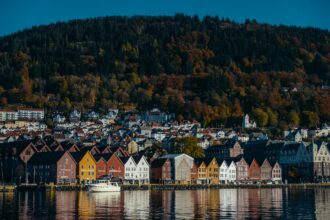
The harbour of Bergen is one of the most important maritime gateways in Norway and has shaped the identity of the city for centuries. Ferries, cruise ships, fast boats, fjord vessels and coastal passenger services all operate from the waterfront surrounding the historic harbour districts and UNESCO-listed Bryggen.
Unlike many ferry ports that sit isolated outside urban areas, Bergen’s maritime infrastructure remains deeply integrated into the city centre itself. Ferry terminals, cruise quays, harbour promenades and historic waterfront districts all sit within relatively short walking distance of each other around the harbour.
The port is especially important because it acts as one of the main gateways toward the Norwegian fjords, the western coastline and the famous coastal voyage routes stretching north toward the Arctic regions of Norway.
One of the most striking aspects of Bergen Harbour is the combination of dramatic scenery and constant maritime activity. Mountains rise directly behind the waterfront while ferries, fishing boats, cruise ships and fast passenger vessels move continuously through the harbour throughout the day.
The atmosphere changes dramatically depending on season and weather. Summer brings intense cruise activity and busy fjord excursions while winter creates a much darker and moodier harbour landscape shaped by rain, fog, harbour reflections and illuminated waterfront buildings.
Why Bergen Became One of Norway’s Great Ferry Cities
The importance of Bergen as a ferry and maritime hub is deeply connected to the geography of western Norway itself. Fjords, mountains, islands and fragmented coastlines made maritime transport essential for centuries, long before roads and railways could cross the region effectively.
For much of Norwegian history, travelling by sea was significantly easier than travelling overland through the mountains surrounding Bergen. Coastal vessels and ferries therefore became vital links between communities scattered along Norway’s western coastline.
The harbour also grew wealthy through international maritime trade during the era of the Hanseatic League. Merchant ships arriving from Germany, the Baltic and wider northern Europe transformed Bergen into one of Scandinavia’s most important ports during the medieval period.
Today, that maritime identity still dominates the city. Ferry routes, fjord cruises, cruise tourism and coastal passenger services remain central parts of Bergen’s economy and tourism industry.
The city’s position also makes it a natural transport gateway between southern Norway, the fjord regions and the northern coastline. Many coastal voyages either begin or end in Bergen, reinforcing the harbour’s role as one of Norway’s most important passenger ports.
Even visitors with no intention of taking a ferry quickly notice how strongly maritime culture shapes Bergen itself. Harbour activity, seafood markets, waterfront promenades and constant vessel movements remain visible throughout much of the city centre.
See hotel options and places to stay in Bergen.
Browse hotelsBrowse apartments, homes and self-catering accommodation in Bergen.
Browse rentalsCompare hotel deals in Bergen from multiple booking sites.
Compare pricesQuick Facts About Ferries from Bergen
| Feature | Details |
|---|---|
| Main Port City | Bergen |
| Main Ferry Theme | Fjords and coastal Norway |
| Most Famous Route | Hurtigruten Coastal Voyage |
| Major Coastal Operator | Hurtigruten |
| Alternative Coastal Operator | Havila Voyages |
| Main Fjord Excursions | Mostraumen and western fjords |
| Cruise Port? | Yes |
| Fast Passenger Boats | Extensive regional network |
| International Ferry Services | Limited compared with Oslo |
| Best Scenic Ferry Period | Late spring to early autumn |
| Main Harbour Landmark | Bryggen |
| Closest Railway Connection | Bergen Line |
| Major Travel Combination | Ferries and scenic railways |
Hurtigruten Coastal Voyages from Bergen
The famous Hurtigruten coastal voyage is one of the most iconic ferry experiences anywhere in Europe and Bergen acts as the southern gateway for the route. For many travellers, the voyage is not simply a ferry journey but one of the world’s great scenic coastal travel experiences.
Ships depart from Bergen before travelling northward along the spectacular coastline of Norway toward destinations including Ålesund, Trondheim, Bodø, Tromsø and eventually Kirkenes far above the Arctic Circle near the Russian border.
Unlike conventional ferries, the Hurtigruten route functions as a hybrid between a passenger ferry, working coastal service and scenic cruise. The ships carry travellers, vehicles, cargo and local passengers while simultaneously operating as one of the world’s most famous maritime journeys.
One of the biggest reasons the route is so celebrated is the extraordinary variety of scenery encountered during the voyage. Fjords, islands, cliffs, fishing villages, Arctic landscapes and mountain coastlines constantly change as the ships move northward through coastal Norway.
The full round-trip voyage between Bergen and Kirkenes normally takes around 12 days, while the northbound sailing from Bergen to Kirkenes alone takes approximately 6 days. However, many travellers only sail shorter sections of the route rather than completing the entire coastal journey.
One of the major advantages of Hurtigruten is frequency. Departures from Bergen normally operate daily throughout the year, making the service far more flexible than many scenic cruise products elsewhere in Europe.
Pricing varies enormously depending on season, cabin choice and voyage length. Shorter sectors can sometimes start from around NOK 1,500 to NOK 3,500, while private cabins, peak summer departures and full coastal voyages can become significantly more expensive.
Season also changes the character of the journey dramatically. Summer brings long daylight hours and the famous midnight sun in Arctic Norway, while winter attracts travellers hoping to experience the Northern Lights, snow-covered coastlines and dramatic Arctic scenery.
Many travellers begin or end their journey in Bergen because the city combines naturally with wider western Norway itineraries involving the Bergen Line, fjord cruises and the UNESCO waterfront districts surrounding Bryggen.
The Hurtigruten terminal itself sits relatively close to the centre of Bergen, allowing passengers to move easily between the harbour, hotels and major attractions before departure.
Havila Voyages and the Bergen Coastal Route
Alongside Havila Voyages, the coastal ferry route from Bergen has entered a new era of competition and modernisation. Havila now operates several departures along the same famous Norwegian coastal route traditionally associated with Hurtigruten, giving travellers an alternative way to experience coastal Norway.
Like Hurtigruten, the Havila ships travel northward from Bergen toward destinations including Ålesund, Trondheim, Bodø, Tromsø and Kirkenes. The route follows one of the world’s most scenic coastlines and combines dramatic fjords, Arctic landscapes, island chains and remote fishing communities throughout the voyage.
The overall journey structure is very similar to Hurtigruten. Full round trips normally take around 12 days, while the northbound coastal journey from Bergen to Kirkenes takes approximately 6 days.
One of the major differences is the onboard experience. Havila’s vessels are significantly newer and place strong emphasis on modern Scandinavian design, quieter hybrid propulsion systems and lower-emission coastal travel. The interiors feel more contemporary and minimalist compared with some of the more traditional Hurtigruten vessels.
Pricing also varies heavily depending on cabin category, voyage length and season. Shorter sectors can sometimes begin from around NOK 1,500 to NOK 3,500, while premium cabins and full Arctic voyages cost substantially more during busy summer and Northern Lights periods.
Like Hurtigruten, the service operates throughout the year, but seasonal conditions dramatically change the experience. Summer brings greener coastlines and midnight sun while winter creates darker Arctic landscapes, snow-covered mountains and opportunities to see the Northern Lights.
For many travellers, the decision between Havila and Hurtigruten comes down less to route differences and more to vessel style, onboard atmosphere and pricing.
Fjord Cruises and Scenic Ferries from Bergen
One of the biggest reasons travellers visit Bergen is the city’s position as one of the main gateways into the spectacular fjord landscapes of western Norway. Scenic ferries, fjord cruises and fast passenger boats depart directly from the harbour throughout much of the year.
The most famous excursion is the Mostraumen fjord cruise, which carries passengers deep into narrow fjord channels surrounded by waterfalls, cliffs and steep mountain scenery north-east of Bergen. These cruises are among the easiest ways to experience the dramatic fjord landscapes without committing to multi-day overland itineraries deeper into Norway.
Unlike conventional transport ferries, many of these services operate primarily as scenic experiences. Passengers travel through narrow waterways, isolated fjord settlements and dramatic coastal scenery where mountains descend directly into the sea.
Several routes also connect Bergen with wider fjord regions including the Sognefjord, which is the longest and deepest fjord in Norway. Fast passenger boats and scenic vessels provide important links between Bergen and fjord communities that can otherwise be difficult to reach overland.
Journey lengths vary enormously depending on route type. Shorter scenic cruises may last only a few hours while longer passenger ferry journeys toward fjord settlements can occupy much of the day.
Pricing also varies heavily. Smaller sightseeing cruises often start around NOK 700 to NOK 1,500, while longer premium fjord excursions can cost substantially more during peak summer season.
The scenery itself constantly changes during the journeys. Waterfalls, mountain walls, isolated farms, tiny villages and narrow fjord passages create one of the most visually dramatic ferry environments anywhere in Europe.
For many travellers, combining fjord ferries, scenic railways and the historic harbour districts of Bergen creates one of the defining travel experiences of western Norway.
Fast Boats and Passenger Ferries Around Bergen
Beyond the major coastal voyages and fjord cruises, Bergen also has an extensive network of fast passenger boats and regional ferry services connecting communities across the surrounding coastline and fjord regions.
These vessels play an important role in everyday life across western Norway, where mountains, islands and fjords still make maritime transport more practical than road travel in many areas.
Fast boats departing from Bergen connect smaller coastal settlements, island communities and fjord destinations throughout the wider region. Many services operate as functional public transport rather than purely tourist-oriented cruises.
The vessels themselves vary considerably depending on route. Some are modern high-speed catamarans focused on rapid passenger transport while others function more like traditional ferries carrying both people and vehicles between coastal communities.
For visitors, these routes provide a very different experience compared with commercial fjord cruises. Instead of operating purely for sightseeing, the boats often feel like part of the normal daily rhythm of coastal Norway itself.
Journey times vary dramatically depending on destination and weather conditions. Shorter island routes may take less than an hour while longer coastal services can continue for several hours through fjord systems and open coastal waters.
One of the most distinctive aspects of these services is the scenery encountered along the way. Unlike major cruise routes focused on headline destinations, regional passenger ferries often travel through quieter waterways, smaller fjords and lesser-known coastal landscapes rarely experienced by international tourists.
Island Ferries and Local Harbour Connections
The harbour around Bergen also supports numerous smaller ferry connections linking the city with nearby islands and local coastal communities across the surrounding region.
| Island / Area | Known For | Departure Area in Bergen | Typical Experience |
|---|---|---|---|
| Askøy | Coastal communities, hiking and local fjord scenery | Bergen harbour ferries | Large island close to Bergen |
| Sotra | Bridges, coastal landscapes and fishing communities | Western Bergen ferry connections | Scenic coastal island region |
| Fedje | Remote lighthouse island and North Sea atmosphere | Bergen regional ferries | Remote island excursion |
| Austevoll | Island communities and maritime culture | Bergen passenger ferries | Traditional coastal Norway |
| Kleppestø (Askøy) | Fast commuter ferry route across Byfjorden | Strandkaiterminalen | Frequent local passenger service |
| Rosendal | Hardangerfjord scenery and fjord access | Bergen express boats | Scenic fjord journey |
| Flåm via fjord services | Fjord landscapes and railway connections | Bergen fjord cruise routes | Tourism-focused fjord travel |
| Nordhordland Islands | Smaller fjord islands and coastal scenery | Regional Bergen ferry routes | Local fjord transport |
| Øygarden | Dramatic Atlantic coastline and island scenery | Western ferry and road connections | Coastal exploration |
| Bjørnafjorden Area | Fjord landscapes and smaller settlements | Southbound ferry services | Scenic regional fjord travel |
These routes are particularly important because the geography around Bergen is heavily fragmented by waterways, fjords and islands. Ferries therefore remain an essential part of local transport infrastructure even in the modern era.
Some services connect directly toward nearby island communities such as Askøy, while others continue deeper into the coastal regions surrounding Bergen. Several ferries are integrated into the wider Skyss transport network, allowing passengers to combine ferry journeys with buses and the Bybanen light rail system.
For visitors, these local ferry services can provide surprisingly scenic and inexpensive ways to experience the landscapes surrounding Bergen without booking expensive organised excursions.
The atmosphere aboard local island ferries also feels very different from larger cruise-oriented services. Commuters, students, workers and local residents regularly use the routes alongside tourists exploring the coastline around western Norway.
Weather conditions strongly influence the experience. Calm summer evenings can create beautiful harbour crossings beneath the surrounding mountains while winter journeys often feel dramatically more rugged beneath rain, fog and rough coastal weather.
Because ferries remain deeply integrated into everyday transport around Bergen, the harbour itself never feels like a purely tourist-focused waterfront. Local maritime life continues operating constantly alongside the cruise ships and scenic excursions moving through the city.
Search flights and useful route combinations for your trip.
View flightsBrowse Airalo eSIM options for convenient travel data.
Check eSIMsHave a private airport pickup arranged before you travel.
Book a transferFerry Terminals, Harbour Areas and Port Layout
The ferry infrastructure around Bergen is spread across several harbour districts rather than concentrated within a single isolated terminal complex. This gives the city a far more authentic and integrated maritime atmosphere than many modern ferry ports elsewhere in Europe.
The main passenger harbour areas sit close to the historic waterfront surrounding Bryggen, allowing travellers to move relatively easily between ferry terminals, hotels, restaurants, tram stops and major tourist attractions on foot.
The terminals used by Hurtigruten and Havila Voyages sit south-west of Bryggen near the central harbour districts. From here, passengers can normally reach the centre of Bergen within a short taxi ride or manageable walk depending on luggage and weather conditions.
Scenic fjord cruises and passenger ferries usually depart from harbour areas much closer to the UNESCO waterfront itself. During summer, the harbour becomes exceptionally busy as sightseeing vessels, cruise ships, fast passenger boats and local ferries move constantly through the port.
The wider harbour area also includes cruise terminals, cargo facilities, fishing infrastructure and smaller ferry piers spread around different sections of the waterfront. This mixture of tourism, working maritime activity and everyday coastal transport helps Bergen feel like a genuine maritime city rather than simply a cruise destination built around tourism alone.
One of the biggest strengths of Bergen’s layout is how naturally maritime transport connects into the wider city. Railway stations, the Bybanen, waterfront hotels and the harbour itself all sit relatively close together compared with many larger European port cities.
Because the waterfront is surrounded by mountains, tunnels and dense urban districts, navigation can initially feel slightly confusing for first-time visitors. However, once travellers understand the overall harbour layout, Bergen becomes relatively compact and easy to move around.
Cruise Ships, Harbour Traffic and Waterfront Tourism
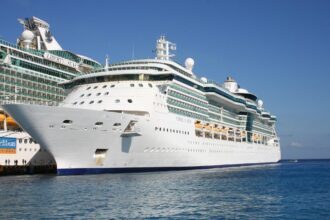
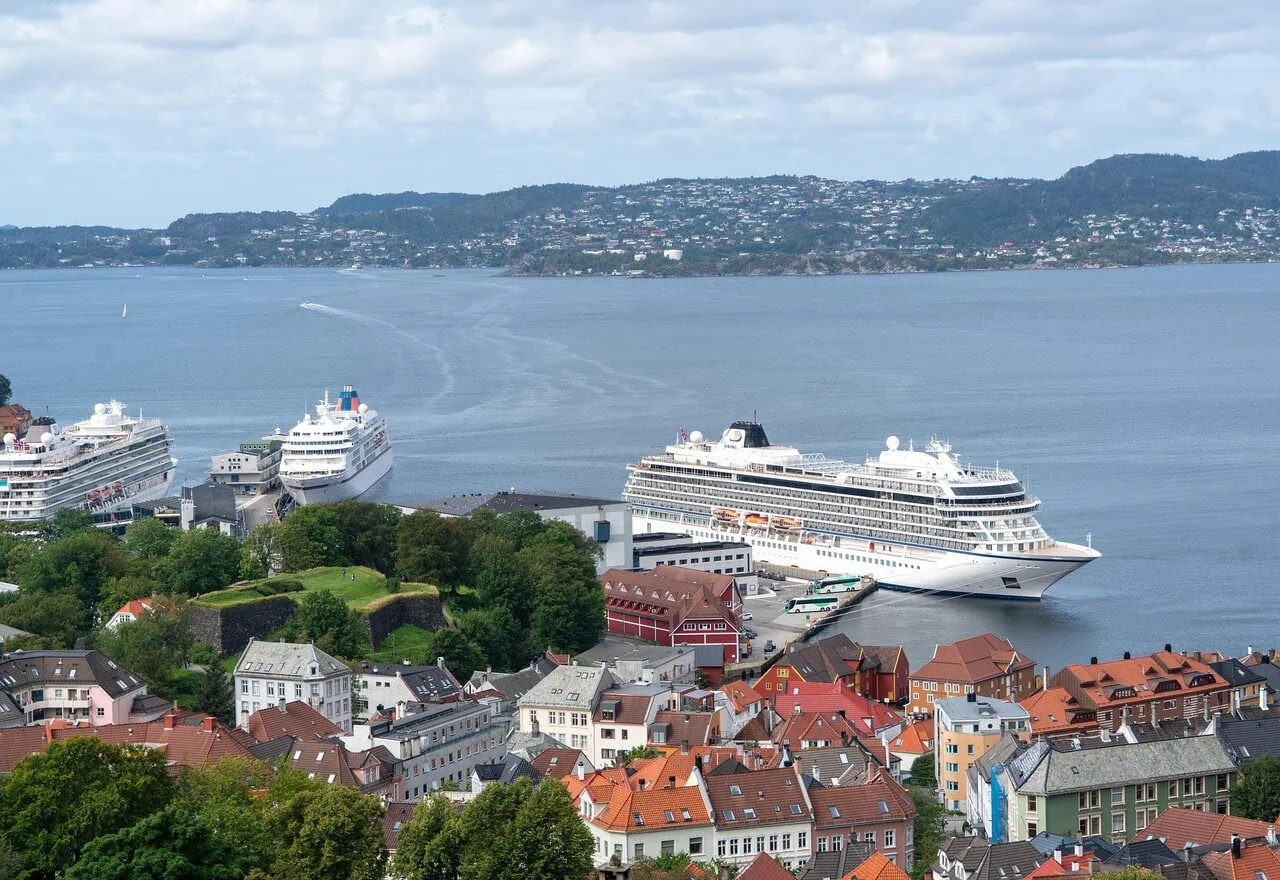
During summer, Bergen transforms into one of the busiest cruise destinations anywhere in northern Europe. Large cruise ships regularly dock directly beside the city centre, bringing thousands of passengers into the harbour districts surrounding Bryggen.
Cruise tourism dramatically changes the atmosphere of the waterfront during peak season. Harbour promenades, fjord excursion terminals, seafood restaurants and the UNESCO districts around Bryggen can become extremely crowded during the middle of the day, particularly when multiple ships arrive simultaneously.
The location of the cruise port is one of Bergen’s greatest advantages. Unlike many cruise destinations where terminals sit far outside the city itself, Bergen allows passengers to walk directly into the historic centre within minutes of disembarking.
This close integration between cruise terminals, historic harbour districts and the wider city also explains why waterfront tourism dominates so much of Bergen’s summer atmosphere. Fjord cruises, sightseeing boats, mountain transport systems and harbour restaurants all benefit heavily from cruise traffic.
At the same time, Bergen’s harbour remains a genuinely working maritime environment rather than a purely tourist-focused waterfront. Ferries, cargo ships, fishing boats, fast passenger vessels and local transport services continue operating alongside the cruise industry throughout the year.
Winter creates a dramatically different harbour atmosphere. Cruise activity reduces heavily while rain, fog, dark skies and illuminated waterfront reflections create a much quieter and moodier coastal environment compared with the busy summer season.
For many visitors, simply watching harbour activity becomes part of the attraction itself. Ferries, cruise ships, fjord boats and coastal vessels constantly moving beneath Bergen’s surrounding mountains create one of the most visually distinctive waterfront landscapes anywhere in Scandinavia.
Ferry Connections Between Bergen and Stavanger
Although there is no large-scale international-style ferry route between Bergen and Stavanger, the two cities remain strongly connected through coastal maritime transport and fast passenger boat services along western Norway.
The route between Bergen and Stavanger is especially famous for its scenery. Ferries and coastal vessels travel through island chains, narrow waterways, fjord landscapes and exposed sections of the North Sea coastline while linking two of western Norway’s most important cities.
Fast passenger boats normally provide the main ferry-style connection between the cities. Journey times are significantly longer than flying but allow travellers to experience coastal Norway in a way impossible from roads or aircraft.
The maritime route also passes through regions heavily shaped by offshore energy industries, fishing heritage and traditional coastal culture. Small island communities, sheltered harbours and dramatic Atlantic scenery constantly appear throughout the voyage.
Weather conditions can strongly affect the overall experience, particularly during winter when rough seas, Atlantic storms and coastal winds occasionally disrupt western Norway’s maritime routes.
Many travellers instead combine Bergen and Stavanger using scenic overland itineraries involving ferries, coastal roads and fjord crossings rather than relying entirely on a single direct passenger vessel.
Because both cities act as major gateways toward the fjords and wider western Norway, ferry travel between Bergen and Stavanger often forms part of larger coastal itineraries rather than functioning purely as a simple point-to-point connection.
International Ferry Routes and Denmark Connections
Compared with cities such as Oslo, Stockholm or Copenhagen, Bergen has relatively limited international ferry services. The city’s maritime importance is focused much more heavily on coastal Norway, fjord transport and domestic passenger routes.
Historically, Bergen maintained far stronger international maritime links across the North Sea and toward Denmark, particularly during the era of the Hanseatic League when merchant ships constantly connected western Norway with northern Europe.
Today, most travellers heading between Bergen and Denmark rely on flights or combined overland and ferry routes through southern Norway rather than direct international sailings from Bergen itself.
Even so, Bergen still functions as a major international maritime city because of its enormous cruise industry. Ships arriving from across Europe regularly include Bergen within larger Scandinavian and Norwegian fjord itineraries during the summer season.
For travellers specifically seeking international ferry experiences connected with Bergen, the more practical approach is often to combine the city with wider Scandinavian ferry networks operating through Oslo, Kristiansand or Danish ports further south.
Even without major direct international ferry routes, Bergen’s harbour still feels deeply international because of cruise passengers, fjord tourism and maritime travellers arriving from across Europe and beyond throughout the year.
Ferry Prices, Booking Tips and Seasonal Travel
Ferry pricing around Bergen varies enormously depending on whether travellers are using coastal voyages, fjord cruises, fast passenger boats or shorter regional ferry services. Unlike many European ferry ports dominated by a small number of international routes, Bergen’s maritime network is highly varied and heavily shaped by the geography of western Norway.
The famous Hurtigruten and Havila Voyages coastal routes normally operate throughout the year, with pricing changing significantly depending on season, cabin category and voyage length. Shorter sectors can sometimes start around NOK 1,500 to NOK 3,500, while full multi-day coastal voyages with private cabins can become substantially more expensive during summer and Northern Lights season.
Scenic fjord cruises departing from Bergen also vary heavily in price depending on vessel type and excursion length. Popular journeys such as the Mostraumen fjord cruise often cost around NOK 700 to NOK 1,500, while premium full-day fjord experiences can cost considerably more during peak tourism periods.
Regional passenger ferries and fast boats are generally much cheaper because many operate as part of the everyday public transport infrastructure across western Norway rather than functioning purely as tourist excursions.
Season has a major impact on both pricing and availability. Summer between June and August brings the highest demand, particularly when cruise ships arrive in Bergen and fjord tourism reaches its annual peak. During these periods, harbour areas become extremely busy and accommodation, ferry cabins and scenic excursions can sell out surprisingly early.
Winter creates a very different travel experience. Coastal voyages toward Arctic Norway become especially popular for travellers hoping to see the Northern Lights, while shorter daylight hours, rough seas and Atlantic storms create a much darker and more dramatic maritime atmosphere.
Advance booking becomes especially important during school holidays, peak summer season, Christmas travel periods and major Bergen events. Travellers wanting sea-view cabins or premium accommodation categories on longer coastal voyages should often book several months ahead.
Many visitors also combine ferries with the spectacular Bergen Line, the scenic Flåm Railway and wider fjord itineraries, creating one of the most memorable transport combinations anywhere in Scandinavia.

Check Ferry Sailings for Bergen with Direct Ferries
If your plans include travelling by ferry to or from Bergen, Direct Ferries provides a convenient way to search sailings and compare ticket options.
You can review different operators together instead of checking individual ferry company websites one by one.
Want to compare ferry prices? You can also check Ferryhopper and FerryScanner before booking.
Best Time of Year for Ferry Travel from Bergen
The best season for ferry travel from Bergen depends heavily on the type of experience travellers are looking for because western Norway changes dramatically throughout the year.
Summer between June and August is the busiest period for ferries, fjord cruises and coastal voyages. Long daylight hours, greener landscapes and calmer seas create ideal conditions for scenic travel along the Norwegian coastline. During the height of summer, parts of northern Norway also experience the famous midnight sun, making longer coastal voyages particularly attractive.
This is also the peak season for fjord tourism. Waterfalls are often at their strongest following snowmelt while scenic cruises around the fjords surrounding Bergen operate at maximum frequency.
However, summer also brings the largest crowds. Cruise ship traffic, packed harbour areas and higher accommodation prices can make Bergen feel significantly busier during peak periods.
Winter creates a completely different maritime atmosphere. Between November and March, the coastline becomes darker, moodier and far more dramatic beneath snow-covered mountains, Atlantic storms and shorter daylight hours.
For many travellers, winter ferry travel is actually the more memorable experience because of the atmosphere. Coastal voyages toward Arctic Norway also provide opportunities to see the Northern Lights, particularly north of Tromsø.
Spring and autumn are often the best compromise for visitors wanting fewer crowds while still enjoying relatively good weather and strong scenic conditions. During these shoulder seasons, Bergen’s harbour feels calmer and ferry journeys can feel significantly less commercialised than during midsummer.
Because Bergen sits within one of Europe’s wettest coastal climates, rain is possible throughout the year regardless of season. Ironically, the shifting weather and dramatic cloud conditions often make ferry journeys feel even more atmospheric rather than spoiling the experience.
Browse hostels and budget-friendly stays around Bergen.
See hostelsGet help with compensation, eligible lounge access and disruption support.
Explore AirHelp+Leave your luggage somewhere convenient and enjoy Bergen hands-free.
View storageWeather, Sea Conditions and Winter Ferry Disruption
Weather plays a huge role in ferry travel around Bergen because the coastline of western Norway is heavily exposed to Atlantic weather systems throughout much of the year.
Rain is extremely common in Bergen and visitors should expect wet conditions regardless of season. Harbour landscapes, fjords and coastal mountains frequently disappear beneath low cloud, fog and drifting rain showers before suddenly clearing again within hours.
Although the fjords themselves are often relatively sheltered, coastal routes exposed to the North Sea can become rough during periods of strong wind and winter storms. This is especially noticeable on longer coastal voyages heading north from Bergen.
Fast passenger boats are usually more affected by rough seas than larger coastal vessels such as Hurtigruten or Havila Voyages. During severe winter weather, some smaller services may experience timetable changes, delays or occasional cancellations.
Winter conditions can also affect visibility dramatically. Snow-covered mountains, dark skies and rough seas create exceptionally atmospheric ferry journeys, but travellers should remain flexible when planning tight onward connections involving trains or flights.
One of the biggest misconceptions about ferry travel in Norway is that snow causes most disruption. In reality, strong wind, Atlantic storms and rough coastal seas often create more operational challenges than snowfall itself.
At the same time, dramatic weather is also part of what makes ferry travel around Bergen so memorable. Stormy skies, shifting light, waterfalls cascading down mountain walls and fog drifting across the fjords create some of the most visually spectacular maritime scenery anywhere in Europe.
Combining Bergen Ferries with Rail and Fjord Travel
One of the greatest strengths of Bergen is how naturally ferries connect with wider rail and fjord itineraries across western Norway. Few cities in Europe combine maritime travel, mountain railways and dramatic natural scenery as effectively as Bergen.
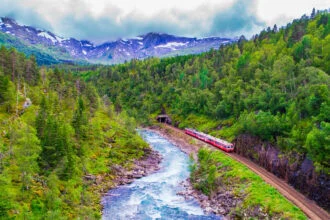
Many visitors arrive in Bergen via the spectacular Bergen Line, widely considered one of the world’s great railway journeys. The route crosses mountain plateaus, snow-covered landscapes and remote valleys before descending toward the harbour districts of Bergen itself.
From the city centre, travellers can then continue directly onto fjord cruises, fast passenger boats and coastal voyages departing from the harbour surrounding Bryggen.
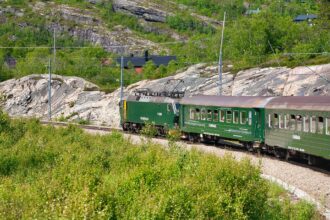
One of the most popular combinations involves the Flåm Railway, which connects with fjord transport networks around Flåm and the wider fjord regions east of Bergen. Many travellers combine scenic rail journeys with fjord ferries as part of larger Norway itineraries.
The close proximity between railway stations, ferry terminals, tram systems and harbour districts makes Bergen especially easy to navigate compared with many major transport hubs elsewhere in Europe.
For travellers wanting to experience the widest possible variety of Norwegian scenery, combining mountain railways, fjord ferries, coastal voyages and UNESCO harbour districts creates one of the strongest travel combinations anywhere in Scandinavia.
Hanseatic Trade, Maritime History and Bergen’s Port Heritage
The maritime importance of Bergen stretches back centuries and is deeply connected to the city’s position as one of the great trading ports of northern Europe. Long before modern cruise ships and fjord tourism transformed the harbour, Bergen functioned as one of Scandinavia’s most important commercial gateways.
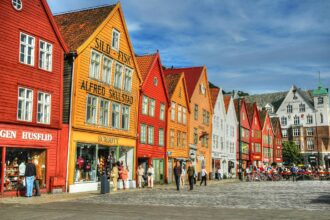
The harbour became especially powerful during the era of the Hanseatic League, the vast medieval trading network that connected northern European ports through maritime commerce. German merchants established themselves around the waterfront district now known as Bryggen and transformed Bergen into one of the most important trading centres in the Nordic world.
The city’s wealth was heavily connected to the export of stockfish, the dried cod transported southward from Arctic Norway before being traded onward across Europe. Ships constantly arrived and departed from Bergen carrying seafood, goods and commercial cargo between Norway, Germany and the wider Baltic region.
This maritime wealth helped shape Bergen politically and architecturally. The harbour districts surrounding Bryggen developed into dense trading quarters filled with warehouses, merchant buildings and timber passageways directly connected to the waterfront itself.
One of the reasons Bergen’s harbour feels so distinctive today is because much of this maritime history remains physically visible. The UNESCO-listed waterfront, narrow wooden alleyways and historic harbour layout still reflect the city’s medieval trading origins.
Modern Bergen may now be associated more strongly with fjord cruises, coastal voyages and tourism, but the maritime foundations of the city remain visible everywhere along the waterfront. Fishing vessels, cargo operations, ferries and passenger boats still operate alongside the historic harbour districts every day.
For many visitors, this mixture of living maritime activity and preserved Hanseatic history is what makes Bergen feel so different from many modern cruise destinations. The harbour is not simply a tourist attraction. It remains an active working port shaped by centuries of coastal trade and maritime culture.

Rupert’s Handy Travel Tips
Bergen Harbour is far bigger and more complex than many first-time visitors expect, and Rupert says understanding the different ferry types makes planning western Norway much easier.
- Do not confuse fjord cruises with transport ferries because many scenic sailings are sightseeing excursions rather than practical transport services.
- Book Hurtigruten and Havila cabins early because summer sailings and Northern Lights season can sell out months ahead.
- Expect rain at any time of year because Bergen’s harbour is one of the wettest major waterfronts in Europe.
- Combine ferries with the Bergen Line and Flåm Railway because the mix of rail, fjords and coastal voyages creates one of Scandinavia’s best travel itineraries.
- Explore the harbour early in the morning because Bryggen and the waterfront become dramatically quieter before the cruise crowds arrive.
Want to meet the reindeer behind our travel tips? Find out more in our page Who is Rupert?.

Frequently Asked Questions About Ferries from Bergen
What is the most famous ferry from Bergen?
The most famous route is the Hurtigruten coastal voyage travelling north through coastal Norway toward the Arctic Circle and Kirkenes.
Does Bergen have international ferries?
Modern international ferry routes from Bergen are relatively limited compared with cities such as Oslo, although Bergen remains a major international cruise destination.
Can you take ferries into the Norwegian fjords from Bergen?
Yes, Bergen is one of the main gateways for fjord cruises, scenic passenger boats and ferry journeys into western Norway’s fjord regions.
How long is the Hurtigruten voyage from Bergen?
The full round-trip coastal voyage normally takes around 12 days, while the northbound journey from Bergen to Kirkenes takes approximately 6 days.
When is the best time for ferry travel from Bergen?
Summer offers longer daylight hours and calmer conditions while winter provides dramatic scenery and possible Northern Lights viewing on Arctic coastal routes.
Are ferries from Bergen affected by weather?
Yes, strong wind, Atlantic storms and rough seas can occasionally affect ferry operations, particularly during winter along exposed coastal sections.
Further Reading & Related Guides
Travellers exploring the ferry routes from Bergen will often also want to experience the spectacular railways and fjord landscapes surrounding western Norway. Our guides to the Bergen Line, the scenic Flåm Railway and the best things to do in Bergen explain how to combine coastal voyages, UNESCO harbour districts and mountain railways into a wider Norway itinerary.
For travellers arriving through western Norway take a look at our Bergen airport transfers guide.