Reviewed by our editorial team Updated
Why Visit Bergen
Surrounded by mountains, fjords and dramatic coastal scenery, Bergen is one of the most visually spectacular cities anywhere in Norway. The city combines historic wooden streets, mountain railways, fjord cruises, funiculars and breathtaking natural scenery within a compact waterfront setting that feels completely different from most European destinations.
What makes Bergen especially impressive is the way the city and landscape merge together almost seamlessly. Within minutes of leaving the harbour area around Bryggen, visitors can already be climbing toward panoramic viewpoints on the Fløibanen, riding the Ulriken Cable Car high above the city or boarding fjord cruises deep into the landscapes of western Norway.
The city also acts as one of the main gateways into the famous Norwegian fjords, which makes it a natural starting point for wider journeys across western Norway and the spectacular Bergen Line railway.
Despite its international popularity, Bergen still feels surprisingly compact and walkable. Narrow lanes, colourful harbour buildings and steep mountain backdrops create an atmosphere that feels far more intimate than larger Scandinavian capitals such as Stockholm or Copenhagen.
For many travellers, Bergen ultimately becomes the highlight of an entire Norway itinerary because it delivers such a strong mixture of historic atmosphere, fjord scenery, mountain landscapes and unforgettable transport experiences.
What Makes Bergen One of Norway’s Most Popular Cities
One of the biggest reasons travellers fall in love with Bergen is the sheer concentration of scenery surrounding the city itself. Mountains rise directly behind the harbour, fjords begin almost immediately outside the urban centre and the colourful waterfront creates one of the most recognisable cityscapes anywhere in Scandinavia.
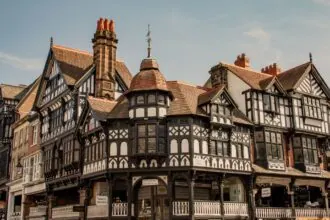
The city is particularly famous for Bryggen, the historic Hanseatic waterfront district that has become one of Norway’s best-known landmarks. The leaning wooden buildings, narrow alleyways and old trading houses create an atmosphere unlike almost anywhere else in northern Europe.
Bergen also works exceptionally well for travellers who see transport experiences as attractions in their own right. The city is packed with spectacular scenic infrastructure including the Fløibanen funicular, the Ulriken Cable Car, fjord cruises through Mostraumen and one of Europe’s greatest railway arrivals via the Bergen Line.
The weather also shapes the city’s identity. Bergen is famously rainy, but the shifting clouds, mountain mist and constantly changing light conditions actually add enormous atmosphere to the city. Waterfalls intensify after rainfall, fog drifts across the surrounding mountains and the fjords often appear even more dramatic during unsettled weather.
Another major strength is the city’s versatility. Bergen works equally well for fjord travellers, railway enthusiasts, cruise passengers, hikers, photographers, winter travellers, Interrail users and wider slow travel itineraries across Scandinavia.
This flexibility is one of the main reasons Bergen has become one of the strongest tourism destinations anywhere in northern Europe.
Compare hotels and other places to stay in Bergen.
Check availabilityBrowse apartments, homes and self-catering accommodation in Bergen.
Browse rentalsCompare hotel deals in Bergen from multiple booking sites.
Compare pricesQuick Facts About Bergen
| Feature | Details |
|---|---|
| Country | Norway |
| Region | Western Norway |
| Population | Around 290,000 |
| Known For | Fjords, mountains and Bryggen |
| UNESCO Site | Bryggen Wharf |
| Main Railway | Bergen Line |
| Major Mountain Attraction | Mount Fløyen |
| Main Cable Car | Ulriken Cable Car |
| Main Fjord Excursion | Mostraumen Cruises |
| Airport | Bergen Airport Flesland |
| Best Season | Year-round |
| Winter Travel | Excellent |
| Cruise Port | Major Scandinavian cruise destination |
| Best For | Fjords, rail travel and scenic Norway itineraries |
Getting to Bergen
Most travellers arrive in Bergen either via the spectacular Bergen Line, domestic flights into Bergen Airport Flesland or cruise and fjord routes along the western Norwegian coastline.
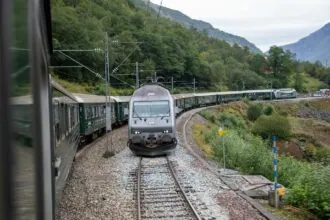
The railway journey from Oslo is widely considered one of the greatest train rides anywhere in Europe. Crossing the mountain landscapes of Hardangervidda before descending toward the fjords surrounding Bergen, the route has become one of Norway’s defining travel experiences in its own right.
Arrivals by rail feel especially dramatic because the scenery gradually shifts from exposed mountain terrain into fjord landscapes and coastal valleys before finally reaching the colourful waterfront districts of Bergen itself.
For air travellers, Bergen Airport Flesland sits south of the city and connects directly into the centre via the modern Bybanen light rail system. Transfers are relatively straightforward and allow passengers to reach the harbour and historic districts without relying heavily on taxis.
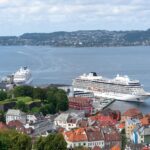
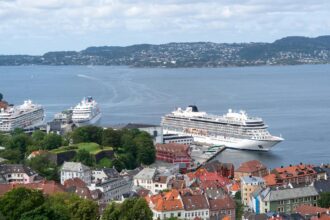
Cruise tourism also plays a huge role in the city’s identity. During summer, large international cruise ships dock directly beside the city centre, placing thousands of passengers within walking distance of Bryggen, the harbour area and Bergen’s main mountain attractions.
One of Bergen’s greatest strengths is that the city feels scenic almost immediately upon arrival. Whether arriving by train, plane or ship, visitors are surrounded almost instantly by mountains, fjords, waterfront scenery and the dramatic landscapes that define western Norway.
Bybanen Light Rail and Public Transport in Bergen
Public transport in Bergen is modern, reliable and unusually useful for sightseeing compared with many other Scandinavian cities. The system is heavily centred around the Bybanen light rail network and the wider Skyss regional transport system, both of which play a major role in helping visitors move between Bergen’s attractions.
The Bybanen is particularly important because it directly connects Bergen Airport Flesland with the city centre. For many travellers, the light rail becomes the easiest and cheapest way to reach Bergen after arriving by air.
The system is also highly useful for sightseeing. Visitors can use the Bybanen to reach attractions including Troldhaugen, the former home of composer Edvard Grieg, and Fantoft Stave Church, one of the most famous reconstructed stave churches in Norway.
Local buses extend much further into the surrounding mountain districts, residential areas and regional destinations around western Norway. Some routes even continue toward major hiking gateways and fjord regions beyond Bergen itself.
One of the more unusual aspects of Bergen’s public transport system is how closely it integrates with tourism. Visitors regularly combine the Bybanen, mountain funiculars, cable cars, ferries and fjord excursions within the same itinerary, creating one of the strongest multimodal sightseeing systems anywhere in Scandinavia.
The wider Skyss network also allows surprisingly extensive regional exploration. Slower public transport routes can theoretically take travellers from Bergen toward areas such as Voss and Odda, although journey times become far longer than the faster rail and express coach alternatives.
Because Bergen is surrounded by mountains, fjords and steep terrain, having strong public transport infrastructure dramatically improves the visitor experience. Many of the city’s best attractions are much easier to combine efficiently using the Bybanen and Skyss network rather than relying entirely on taxis or walking.
Is the Bergen Card Worth It for Visitors
The Bergen Card can provide very good value in Bergen, but whether it is actually worth buying depends heavily on how you plan to explore the city and wider western Norway.
The card currently costs around NOK 400 for 24 hours, NOK 500 for 48 hours, NOK 600 for 72 hours and NOK 700 for 96 hours, which means travellers need to use a reasonable number of attractions and public transport journeys in order to justify the price.
Where the card becomes genuinely strong is its combination of museum access, local public transport and airport connectivity rather than the major headline attractions. The inclusion of unlimited travel on the Bybanen light rail system between Bergen Airport Flesland and the city centre is particularly useful because airport transfers in Norway are rarely cheap.
The card also includes free travel on large parts of the Skyss transport network around Bergen and Vestland county, allowing visitors to use local buses, light rail services and some ferries without purchasing additional tickets. This can become surprisingly valuable for travellers planning to move around frequently during their stay.
Many of Bergen’s museums are either fully included or heavily discounted with the card. Strong examples include Bryggens Museum, Bergenhus Fortress, The Hanseatic Museum, Old Bergen Museum, Troldhaugen and the University Museum of Bergen. This makes the card particularly attractive during rainy weather or for travellers planning museum-heavy itineraries.
However, the Bergen Card is less impressive for visitors focused mainly on Bergen’s biggest commercial attractions. The Ulriken Cable Car only receives a relatively small discount, while major fjord cruises such as the Mostraumen excursions are not included at all.
The card also creates an interesting opportunity for slow travellers and backpackers because regional buses toward places such as Voss and Odda are included within the Skyss network. In theory, this allows extremely low-cost regional exploration from Bergen using only local public transport. However, journey times can become very long and the faster express buses and Bergen Line trains are not included.
Perhaps the most important point is that the Bergen Card rewards travellers who move around constantly. Visitors using public transport repeatedly, visiting multiple museums and staying several days in the city are far more likely to save money than passengers making only a quick overnight stop in Bergen.
Hop-On Hop-Off Buses in Bergen
The Hop-On Hop-Off sightseeing buses are one of the easiest ways to explore Bergen, particularly for cruise passengers, first-time visitors and travellers with limited time in the city.
Because Bergen spreads around hills, steep streets and waterfront districts, the buses provide a useful overview of the city’s layout while simultaneously functioning as practical transport between major attractions. The routes normally connect key areas including Bryggen, the harbour, museum districts, shopping streets and transport hubs across the centre.
The buses work especially well for visitors arriving from cruise ships because the city’s major attractions are relatively spread out compared with many smaller Scandinavian ports. The elevated seating also provides strong views across the harbour, surrounding mountains and waterfront scenery while moving between stops.
Bergen’s weather makes the sightseeing buses even more useful than in many other cities. During heavy rain, fog or colder winter weather, they allow visitors to continue exploring the city without spending long periods exposed to the elements while still experiencing much of Bergen’s scenery and atmosphere.
The service is also practical for travellers who may struggle with Bergen’s steep streets and hills. Areas surrounding Mount Fløyen, the harbour and the hillside districts can involve more walking and climbing than many visitors initially expect.
For travellers spending only a single day in Bergen, especially during cruise stopovers, the Hop-On Hop-Off buses often provide one of the simplest ways to combine historic sightseeing, waterfront scenery, mountain views and practical city orientation within a relatively short amount of time.
Bryggen and Bergen’s Hanseatic History
The colourful waterfront district of Bryggen is the historic heart of Bergen and one of the most recognisable urban landscapes anywhere in Scandinavia. The leaning wooden buildings facing the harbour have become one of the defining images of Norway and form part of a UNESCO World Heritage Site recognised for its importance within the medieval Hanseatic trading network.
For centuries, Bergen functioned as one of northern Europe’s most important trading cities, connecting Norway with commercial routes stretching across the Baltic, Germany and wider northern Europe. Hanseatic merchants operating from Bryggen controlled huge sections of the stockfish trade and helped transform Bergen into one of medieval Scandinavia’s richest and most powerful ports.
Today the district still feels remarkably atmospheric despite its global popularity. Narrow alleyways, uneven wooden passageways and dark timber corridors create an environment that feels deeply connected to Bergen’s trading past rather than simply functioning as a reconstructed tourist attraction.
Many of the structures visible today were rebuilt after devastating fires repeatedly swept through the tightly packed wooden harbour district. Even so, the layout and appearance still preserve the historic character that made Bryggen internationally significant for centuries.
The area surrounding Bryggen is now filled with cafés, museums, galleries, seafood restaurants and independent shops, but the historic architecture remains the defining attraction. Early mornings and evenings are often the best times to explore because the harbour becomes quieter while the light across the wooden waterfront buildings becomes especially dramatic.
Rain and mist also add enormous atmosphere to the district. Wet wooden walkways, fog drifting across the harbour and low cloud hanging over the surrounding mountains often make Bryggen feel even more cinematic and historically immersive than during perfect sunshine.
Search routes and flight options for your trip to Bergen.
Search flightsBrowse Airalo eSIM options for convenient travel data.
Check eSIMsArrange a private airport pickup for your trip to Bergen.
Check transfersFløibanen Funicular and Mount Fløyen
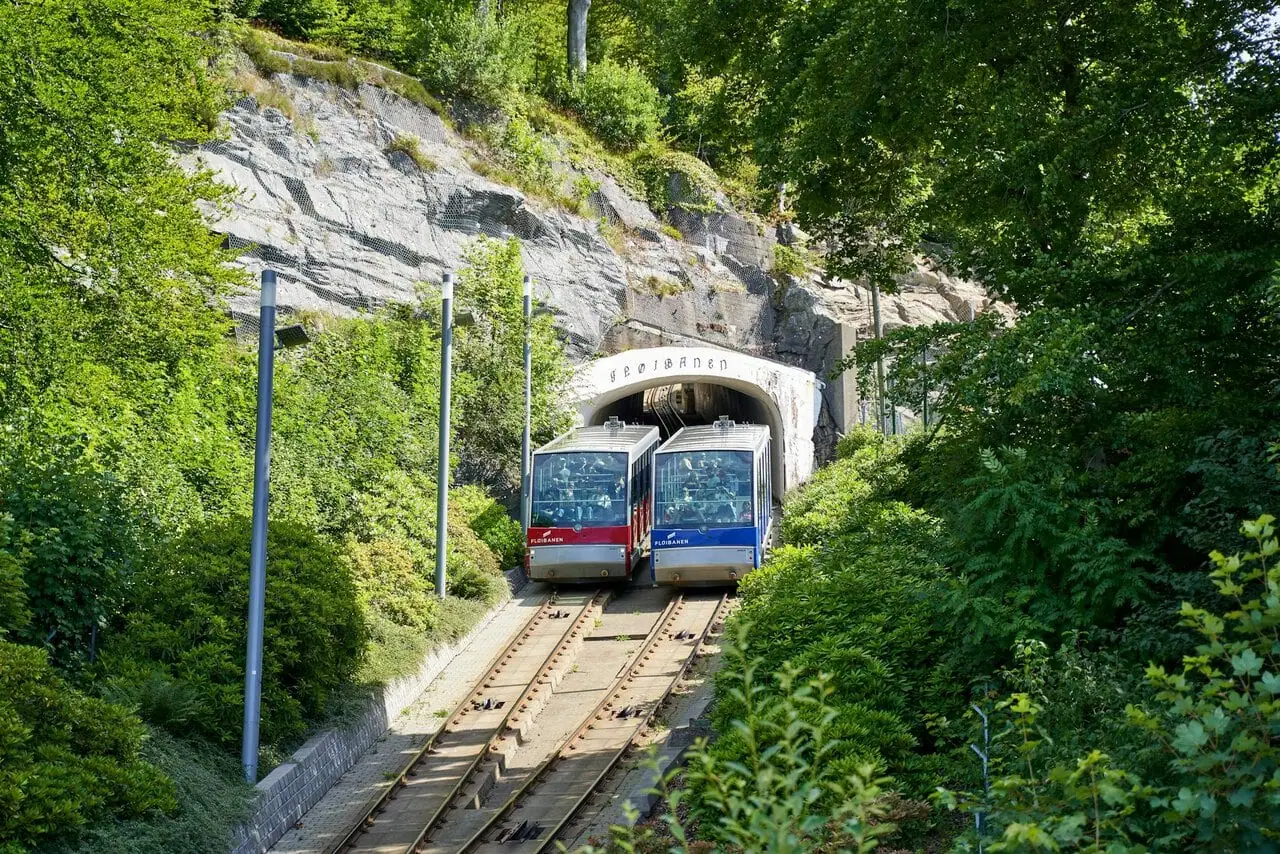
The Fløibanen is one of the most famous attractions in Bergen and provides one of the quickest ways to experience the city’s spectacular mountain scenery. Departing directly from the centre near Bryggen, the funicular climbs steeply toward Mount Fløyen high above the harbour and fjords below.
The journey itself lasts only a few minutes, but the scenery changes dramatically during the ascent. As the carriages climb upward, panoramic views quickly open across the harbour, the surrounding mountains, the fjords and the colourful waterfront districts below.
At the summit of Mount Fløyen, visitors reach one of the best viewpoints anywhere in Bergen. Viewing terraces overlook the city while forest trails, mountain paths and scenic walking routes continue far beyond the station into the surrounding high ground.
One of the biggest strengths of the Fløibanen is its accessibility. Even travellers with limited time or mobility can experience elevated mountain scenery above Bergen without needing to complete difficult hikes or long uphill climbs.
The atmosphere at the summit changes constantly depending on the weather. Clear summer days create enormous panoramic visibility across western Norway, while fog, rain and low cloud often produce a much moodier and more atmospheric landscape above the harbour.
During winter, snow frequently covers the upper sections of Mount Fløyen, transforming the viewpoint into a completely different environment overlooking the illuminated harbour and fjords below. Evening rides can be especially spectacular when the lights of Bergen begin glowing beneath the surrounding mountains as darkness spreads across western Norway.
The Fløibanen also works particularly well when combined with fjord cruises, harbour sightseeing and the historic districts around Bryggen because all of these attractions sit within relatively short walking distance of each other in the centre of Bergen.
Bergen Museums and Viking History
Although many visitors arrive in Bergen primarily for the fjords and mountain scenery, the city also contains one of the strongest collections of museums and maritime history attractions anywhere in Norway.
The city’s trading history, Viking connections and maritime culture have shaped Bergen for centuries and this heritage remains visible throughout many of its museums and historic collections. The excellent Bryggens Museum explores archaeological discoveries from the old harbour districts while helping visitors understand how medieval Bergen developed into one of Scandinavia’s most important trading centres.
Nearby, The Hanseatic Museum focuses on the German merchant communities who once dominated huge sections of Bergen’s commerce. Together, these museums provide a much deeper understanding of the city than visitors receive simply from walking through Bryggen itself.
The city also has strong maritime and Viking-related themes. The Bergen Maritime Museum explores Norway’s long relationship with the sea through ship models, maritime artefacts and exhibitions connected to fishing, shipping and coastal trade. Viking ship exhibitions and maritime archaeology displays reinforce how important the sea has always been to Norway’s identity.
Art and culture are equally important parts of Bergen’s museum landscape. The Kode Bergen Art Museum contains major collections linked to Norwegian art history including works associated with Edvard Grieg, Edvard Munch and other major Scandinavian artists.
One of the biggest advantages of Bergen’s museum scene is how well it complements the city’s famously unpredictable weather. Rainy conditions often make museum visits feel like a natural continuation of the Bergen experience rather than a backup plan when outdoor sightseeing becomes difficult.
Ulriken Cable Car and Bergen Mountain Views
The Ulriken Cable Car delivers some of the most dramatic panoramic views anywhere in Bergen and has become one of the city’s standout attractions for visitors wanting to experience western Norway’s mountain landscapes without leaving the urban area.
Rising toward Mount Ulriken, the highest of Bergen’s famous surrounding mountains, the cable car lifts passengers high above the city, fjords and harbour within just a few minutes. The elevation gain feels dramatic almost immediately after departure and the scenery expands rapidly across the surrounding coastline and mountain ridges.
From the summit, enormous panoramic views stretch across Bergen, the harbour, the fjords and the wider landscapes of western Norway. On clear days, visibility extends far beyond the urban area toward the islands, coastal mountains and fjord systems surrounding the city.
The atmosphere at the top feels noticeably different from the centre below. Strong winds, colder temperatures and exposed mountain terrain create a far more alpine environment despite the summit sitting directly above one of Scandinavia’s major tourism cities.
The area around Mount Ulriken is also one of Bergen’s most important hiking regions. Scenic trails connect into the wider “Seven Mountains” network surrounding the city, allowing visitors to combine the cable car with mountain walks, photography routes and downhill hikes back toward the harbour districts below.
Weather conditions dramatically affect the overall experience. Clear summer days provide huge panoramic visibility while rain, mist and low cloud often make the mountain feel wild, isolated and deeply atmospheric. During winter, snow frequently transforms the summit into a frozen mountain landscape overlooking the lights of Bergen far below.
The cable car also works exceptionally well for photography because the combination of fjords, mountains, harbour scenery, islands and urban landscapes creates one of the most visually varied panoramas anywhere in northern Europe.

Fjord Cruises from Bergen and Mostraumen Excursions
Fjord cruises are one of the defining travel experiences in Bergen and for many visitors they become the single biggest highlight of an entire trip to western Norway. Departing directly from the harbour area, the cruises travel into some of the most dramatic fjord landscapes anywhere in Scandinavia.
One of the most popular excursions is the famous Mostraumen fjord cruise, which carries passengers deep into narrow fjord channels surrounded by waterfalls, cliffs and steep mountain scenery north-east of Bergen. Unlike the open coastal waters around the harbour, the landscapes around Mostraumen feel enclosed, remote and intensely dramatic.
As the boats travel deeper into the fjords, waterfalls descend directly from the mountainsides while narrow passages and towering rock walls create some of the most spectacular scenery anywhere near Bergen. During periods of snowmelt or heavy rainfall, the waterfalls become especially powerful and dominate huge sections of the route.
The contrast between the busy harbour at Bergen and the isolated landscapes reached only a short time later is one of the reasons the cruises are so popular. Within a relatively short journey, passengers move from a major Scandinavian city into landscapes that feel almost untouched by modern development.
Many cruises also pass tiny villages, isolated farms and steep mountain valleys that would be difficult to reach independently without boats or long overland journeys through western Norway.
Weather conditions strongly shape the atmosphere of the fjords. Bright summer sunlight creates vibrant reflections across the water while rain, fog and low cloud often produce an even more cinematic appearance across the cliffs and waterfalls surrounding the route.
For travellers wanting to experience the famous Norwegian fjords without committing to long multi-day itineraries, the Mostraumen excursions provide one of the easiest and most visually rewarding introductions to western Norway’s extraordinary scenery.
Bergen Fish Market and Waterfront Area
The historic waterfront surrounding the Bergen Fish Market remains one of the liveliest and most recognisable parts of Bergen. Located beside the harbour near Bryggen, the market has operated in various forms for centuries and remains deeply connected to Bergen’s maritime and trading identity.
Today the area combines seafood stalls, cafés, restaurants and tourist activity within one of the city’s busiest waterfront districts. Fresh fish, shellfish and traditional Norwegian seafood dishes dominate the atmosphere while outdoor seating and harbour views keep the area active throughout much of the year.
The surrounding waterfront is also one of the best places in Bergen for simply absorbing the scenery of western Norway. Mountains rise directly behind the harbour, ferries move constantly across the water and the colourful buildings of Bryggen remain visible nearby throughout much of the district.
The market area works especially well as a natural stopping point between Bergen’s major attractions because it sits centrally between the harbour, the mountain transport systems, the museums and the historic waterfront streets.
During summer, the district becomes extremely busy with cruise passengers and fjord travellers arriving from across Scandinavia and northern Europe. Winter creates a quieter atmosphere, although mist, rain and dark coastal weather often make the harbour feel even more atmospheric beneath Bergen’s surrounding mountains.
For many visitors, the combination of seafood, historic waterfront buildings, harbour scenery and constant maritime activity perfectly captures the identity of western Norway.
Bergenhus Fortress and Historic Landmarks
The area surrounding Bergenhus Fortress contains some of the oldest and most historically important sites in Bergen. Positioned beside the harbour near Bryggen, the fortress complex reflects Bergen’s centuries as one of the most powerful trading and political centres in medieval Scandinavia.
One of the most famous buildings within the complex is Håkon’s Hall, a huge medieval stone hall constructed during the reign of King Håkon Håkonsson in the thirteenth century. At the height of Bergen’s political importance, the hall functioned as part of the royal residence and ceremonial centre of medieval Norway.
Nearby, the imposing Rosenkrantz Tower dominates part of the harbour skyline and combines medieval fortifications with later Renaissance additions. Climbing the tower also provides elevated views across the harbour, Bryggen and the surrounding waterfront districts.
The atmosphere around Bergenhus Fortress feels noticeably different from the colourful commercial environment around Bryggen. Thick stone walls, defensive structures and open fortress grounds create a far more military and political atmosphere connected to Bergen’s strategic role in Norwegian history.
The surrounding harbour districts also contain numerous smaller historic landmarks including merchant buildings, maritime monuments and remnants of Bergen’s Hanseatic trading period. Walking through these areas gives visitors a strong sense of how deeply the city’s identity was shaped by shipping, fishing and long-distance maritime commerce.
Rain, fog and low cloud often add enormous atmosphere to the fortress area itself. Wet stone walls, mist drifting across the harbour and dark mountain backdrops can make Bergenhus feel especially dramatic during unsettled weather conditions.
Compare hostels and lower-cost places to stay in Bergen.
Search hostelsFlying to Bergen? Get fast compensation payouts, eligible lounge benefits and expert help when flights go wrong.
See AirHelp+ benefitsArriving before check-in or leaving later? Store your luggage and make more of your time in Bergen.
Store your bagsWWII History and Resistance Museums Around Bergen
Many visitors are surprised by how much Second World War history surrounds Bergen and the wider western Norwegian coastline. Bergen’s strategic harbour position made the region extremely important during the German occupation of Norway and traces of that history remain visible across numerous museums and historic sites around the city.
The exhibitions inside Bergenhus Fortress already introduce parts of Bergen’s wartime story, including resistance activity and military operations connected to occupied Norway. However, several museums outside the immediate city centre explore this history in much greater depth.
One of the most powerful sites is the North Sea Traffic Museum at Telavåg, which tells the story of resistance networks, covert operations and the destruction of the village following clashes involving Norwegian agents and German forces during the occupation. The history surrounding Telavåg is among the most dramatic wartime stories anywhere along the Norwegian coast.
The nearby Herdla Museum explores both local history and the German military presence around the Bergen region, including airfields, coastal defence infrastructure and wartime aviation. The museum’s combination of military history and coastal scenery creates a particularly atmospheric experience.
Further north-east of Bergen, the Bjørn West Museum examines resistance fighting in the mountains during the final phases of the war in Europe. These remote mountain operations formed part of the wider Norwegian resistance effort against the occupation forces during the closing stages of the conflict.
What makes these sites especially compelling is the combination of dramatic natural landscapes and wartime history. Fjords, mountains and isolated coastal communities became deeply connected to resistance operations, covert maritime routes and military activity throughout western Norway.
For travellers interested in dark tourism, military history or occupation-era Scandinavia, Bergen offers a surprisingly rich collection of wartime sites extending far beyond the city centre itself.
Scenic Walks, Viewpoints and Photography Spots
One of the greatest strengths of Bergen is how easily visitors can access dramatic scenery directly from the city centre. Mountains, waterfront promenades, harbour districts and elevated viewpoints combine to create some of the best urban walking and photography opportunities anywhere in Scandinavia.
The route between Bryggen, the harbour and Bergenhus Fortress is one of the city’s most atmospheric walks. Colourful wooden buildings, ferries, fishing boats and mountain scenery remain visible almost constantly along the waterfront, particularly during early morning and evening when the lighting becomes especially dramatic.
Higher viewpoints around Mount Fløyen and Mount Ulriken provide enormous panoramic perspectives across the city, fjords and surrounding mountain landscapes. The constantly shifting weather conditions in western Norway also mean the scenery can look completely different from one hour to the next.
The narrow alleyways behind Bryggen are particularly popular with photographers because of their uneven wooden architecture, dark passageways and constantly changing light conditions. During rain or fog, reflections and wet timber surfaces often create even more atmospheric scenes than bright sunshine.
Bergen is also one of the strongest cities in northern Europe for combining urban photography with dramatic natural scenery. From many locations within the city centre, visitors can simultaneously capture harbour landscapes, historic buildings, mountains, fjords and shifting coastal weather systems within a single frame.
During winter, snow occasionally transforms the upper mountain viewpoints surrounding Bergen while the harbour below remains relatively ice-free because of the mild coastal climate. This contrast creates some of the city’s most visually striking photography conditions.
For travellers who enjoy slow exploration, Bergen rewards wandering especially well. Steep streets, hidden stairways, hillside neighbourhoods and constantly changing harbour views mean many of the city’s best experiences emerge simply from walking through the landscape itself.
Fantoft Stave Church and Historic Churches
One of the most distinctive historic attractions near Bergen is Fantoft Stave Church, a dramatic wooden church surrounded by forested hills south of the city centre. Although the current structure is a reconstruction following a devastating fire in 1992, the church still provides one of the strongest introductions to Norway’s famous stave church architecture.
The original church dates back to around 1170 and was relocated from the village of Fortun to the Bergen area during the nineteenth century. Its steep dark timber exterior, dragon-head roof carvings and medieval design create an atmosphere that feels deeply connected to Norway’s Viking and early Christian history.
The setting around Fantoft Stave Church also adds significantly to the experience. Surrounded by woodland and often partially hidden by mist and rain, the church can feel especially atmospheric during Bergen’s unsettled weather conditions.
One of the major advantages of visiting the church is its accessibility. The Bybanen light rail system makes the site relatively easy to reach from the city centre without requiring a car, which allows travellers to combine it naturally with other Bergen attractions during the same day.
Bergen also contains several other important historic churches connected to the city’s medieval past. St. Mary’s Church is considered the oldest surviving building in Bergen and dates from the twelfth century, while Bergen Cathedral reflects centuries of religious and political history connected to the city.
Together, these churches reveal a very different side of Bergen from the fjords and mountain scenery that dominate most tourism marketing. They help show how deeply history, religion and medieval trade shaped the city long before modern Norway emerged.

Old Bergen Museum and Historic Bergen Life
The Old Bergen Museum offers one of the best opportunities to experience what everyday life in historic Bergen may have looked like before the modern city developed around the harbour and fjords.
Located slightly north of the centre, the museum functions as an open-air reconstruction of older Bergen, with historic wooden buildings, narrow streets and traditional urban environments recreating the atmosphere of earlier centuries. Unlike many indoor museums, the attraction feels immersive and highly visual, allowing visitors to walk directly through reconstructed neighbourhoods and streets.
The setting works particularly well because Bergen’s historic wooden architecture is one of the defining characteristics of the city itself. Exploring the museum provides useful context for understanding districts such as Bryggen and the older waterfront areas around the harbour.
Families often enjoy the museum because the site feels less formal than conventional gallery-style attractions. Open spaces, reconstructed homes and historical demonstrations create a much more interactive atmosphere compared with many traditional museums.
The museum is also especially photogenic. Wooden buildings, narrow alleyways and traditional Norwegian urban design combine particularly well with Bergen’s shifting weather conditions, especially during misty or rainy periods when the old streets feel even more atmospheric.
For visitors interested in the everyday history of western Norway, the attraction provides a valuable contrast to the grander political and trading history visible around Bergenhus Fortress and Bryggen.
Edvard Grieg, Troldhaugen and Bergen’s Music Heritage
Music and culture form an important part of the identity of Bergen, particularly through the legacy of the internationally famous Norwegian composer Edvard Grieg.
The composer’s former home at Troldhaugen has become one of Bergen’s most important cultural attractions and provides visitors with a far more personal connection to Grieg’s life and work than a conventional museum setting alone.
Located south of the city centre near the fjord, the property combines scenic landscapes, historic buildings and music history within one of the most peaceful environments around Bergen. Visitors can explore the composer’s home, gardens and the small writing hut where many of his most famous works were composed.
The setting itself helps explain why Grieg became so strongly associated with Norwegian landscapes and atmosphere. Surrounded by forests, water and quiet fjord scenery, Troldhaugen feels deeply connected to the natural environments that influenced much of his music.
The attraction is also relatively easy to reach using the Bybanen and local public transport network, making it practical to combine with other attractions around Bergen during the same day.
Beyond Grieg himself, Bergen has a strong wider cultural identity linked to music, art and performance. Museums, galleries and concert venues across the city reinforce Bergen’s reputation as one of Norway’s most important cultural centres alongside its better-known mountain and fjord attractions.
Bergen Aquarium and Family Attractions
Although Bergen is often associated with fjords, railways and mountain scenery, the city also contains several strong family-friendly attractions that work especially well during rainy weather or shorter city breaks.
One of the best-known attractions is the Bergen Aquarium, located on the Nordnes peninsula close to the harbour. The aquarium combines marine exhibits, reptiles, tropical species and feeding demonstrations within one of the city’s most popular indoor attractions for families and younger visitors.
The coastal setting also feels highly appropriate for Bergen itself. Fishing, maritime trade and marine life have shaped the city for centuries, so the aquarium connects naturally into the wider identity of western Norway.
Another major family attraction is the VilVite Science Centre, where interactive exhibits focus on science, engineering and technology through hands-on displays aimed at both children and adults. The attraction works particularly well during Bergen’s wet weather because it provides a large indoor environment without sacrificing energy or activity.
The city’s growing collection of smaller themed museums also adds variety to family itineraries. Attractions such as the Troll Museum combine Norwegian folklore, mythology and interactive displays within a more modern visitor experience linked to Scandinavian legends and storytelling traditions.
The mountain attractions themselves are also surprisingly family friendly. Both the Fløibanen and the Ulriken Cable Car provide dramatic scenery without requiring difficult hiking, making them accessible for a much wider range of visitors.
One of Bergen’s strengths as a family destination is the balance between outdoor scenery and indoor alternatives. Even when rain or fog affects visibility across the fjords and mountains, museums, aquariums and cultural attractions still provide enough variety to keep itineraries flexible throughout the year.

Bergen Winter Travel and Christmas Atmosphere
Winter gives Bergen a completely different atmosphere from the busy cruise-focused summer season. Snow occasionally settles across the mountains surrounding the city while rain, mist and shorter daylight hours create a far moodier and more dramatic version of western Norway.
The contrast between the dark harbour waters, illuminated waterfront buildings and snow-covered mountain slopes around Mount Fløyen and Mount Ulriken can make Bergen feel especially atmospheric during colder months.
Winter is also one of the best periods for experiencing the city with fewer crowds. Major attractions including Bryggen, the Fløibanen and the harbour area often feel calmer and more relaxed compared with the intense cruise tourism of summer.
The festive season brings Christmas lights, seasonal markets and illuminated streets across the city centre. The combination of historic wooden buildings, harbour reflections and mountain scenery creates one of the most visually distinctive Christmas atmospheres anywhere in Scandinavia.
Weather conditions remain highly variable throughout winter. Bergen’s coastal climate means heavy snow inside the city itself is less consistent than inland Norway, but the surrounding mountains frequently remain snow-covered while rain and fog drift across the harbour districts below.
Winter also works particularly well for travellers combining Bergen with wider Norwegian rail itineraries. Arriving via the snow-covered Bergen Line before exploring the city’s illuminated waterfront creates one of the strongest cold-weather travel experiences anywhere in northern Europe.
The darker season also enhances Bergen’s cafés, museums and indoor attractions. Warm seafood restaurants, historic waterfront bars and cosy cafés become especially inviting after time spent exploring the harbour and mountain viewpoints in cold coastal weather.
Using Bergen as Part of a Norway Rail and Fjord Itinerary
For many travellers, Bergen functions as one of the central hubs of wider Norwegian rail and fjord travel rather than simply a standalone city destination. The city connects naturally into mountain railways, fjord cruises, sleeper trains and wider Scandinavian transport corridors stretching across northern Europe.
Arrival via the spectacular Bergen Line is particularly important because it links Bergen directly with Oslo across one of Europe’s most famous scenic railway journeys. Many visitors deliberately build entire Norway itineraries around this route because the railway itself becomes a defining attraction.
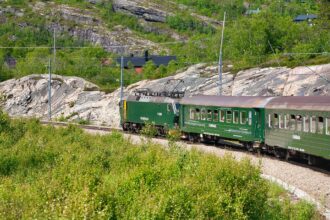
The connection at Myrdal Station with the Flåm Railway allows travellers to combine mountain rail travel with fjord landscapes entirely through public transport. Few places in Europe offer such a seamless transition between high mountain railways and deep fjord scenery within a single journey.
Bergen also works exceptionally well within wider Interrail and Scandinavian rail itineraries. Travellers frequently combine the city with Norway night trains, Swedish rail routes, Arctic Norway journeys, fjord ferries and longer slow-travel routes across Scandinavia.
The harbour itself creates additional connections into coastal Norway. Ferries, cruise ships and fjord vessels link Bergen with destinations stretching along the western coastline and deeper into the fjord regions beyond the city.
Because Bergen combines mountains, railways, fjords, harbour transport and scenic infrastructure within a single compact destination, the city has become one of the strongest multimodal travel hubs anywhere in northern Europe.

Rupert’s Handy Travel Tips
Bergen may be famous for fjords and mountains, but Rupert says the city becomes much more rewarding once you combine the transport experiences, viewpoints and harbour scenery properly.
- Take the Fløibanen early in the morning because the viewpoints around Mount Fløyen are often quieter before the cruise crowds arrive.
- Do not avoid Bergen because of the rain because mist, low cloud and wet wooden streets often make the city look even more atmospheric.
- Book Mostraumen fjord cruises in advance during summer because departures regularly sell out on busy cruise ship days.
- Use the Bybanen from the airport because it is usually the easiest and cheapest way to reach the city centre from Bergen Airport Flesland.
- Combine Bergen with the Bergen Line and Flåm Railway because together they create one of the greatest integrated rail and fjord itineraries anywhere in Europe.
Want to meet the reindeer behind our travel tips? Find out more in our page Who is Rupert?.
Frequently Asked Questions About Visiting Bergen
Is Bergen worth visiting?
Yes, Bergen is widely considered one of the most beautiful cities in Norway because of its combination of fjords, mountains, historic waterfront districts and scenic transport attractions.
How many days do you need in Bergen?
Most travellers spend between 2 and 4 days in Bergen, although longer stays work particularly well for fjord excursions and wider western Norway itineraries.
What is Bergen most famous for?
Bergen is best known for Bryggen, the surrounding fjords, the Bergen Line, mountain viewpoints and western Norway scenery.
Is Bergen expensive?
Like much of Norway, Bergen can be relatively expensive compared with many European destinations, particularly for accommodation, restaurants and organised excursions.
Can you see fjords from Bergen?
Yes, Bergen sits directly beside fjord landscapes and acts as one of the main gateways into western Norway’s famous fjord regions.
Is Bergen walkable?
Yes, most major attractions around the harbour, Bryggen and the waterfront are highly walkable, although some streets and mountain areas are steep.

Further Reading & Related Guides
Travellers exploring Bergen will often also find themselves travelling across wider regions of western Norway. Our guides to the Bergen Line, the Flåm Railway and Norway Night Trains explain how to combine mountain railways, sleeper trains and fjord travel into larger Scandinavian itineraries.
Visitors continuing beyond Bergen should also explore our coverage of Bergen Ferry Routes, Arctic Norway rail journeys, Lofoten travel and wider Scandinavian scenic rail routes linking Norway with Sweden and northern Europe.
For staying connected while travelling through Norway’s mountains and fjord regions, our guides to the best eSIMs explain how to maintain reliable connectivity across some of Europe’s most dramatic travel landscapes.