Reviewed by our editorial team Updated
Why the Flåm Railway Is One of the World’s Most Famous Train Journeys
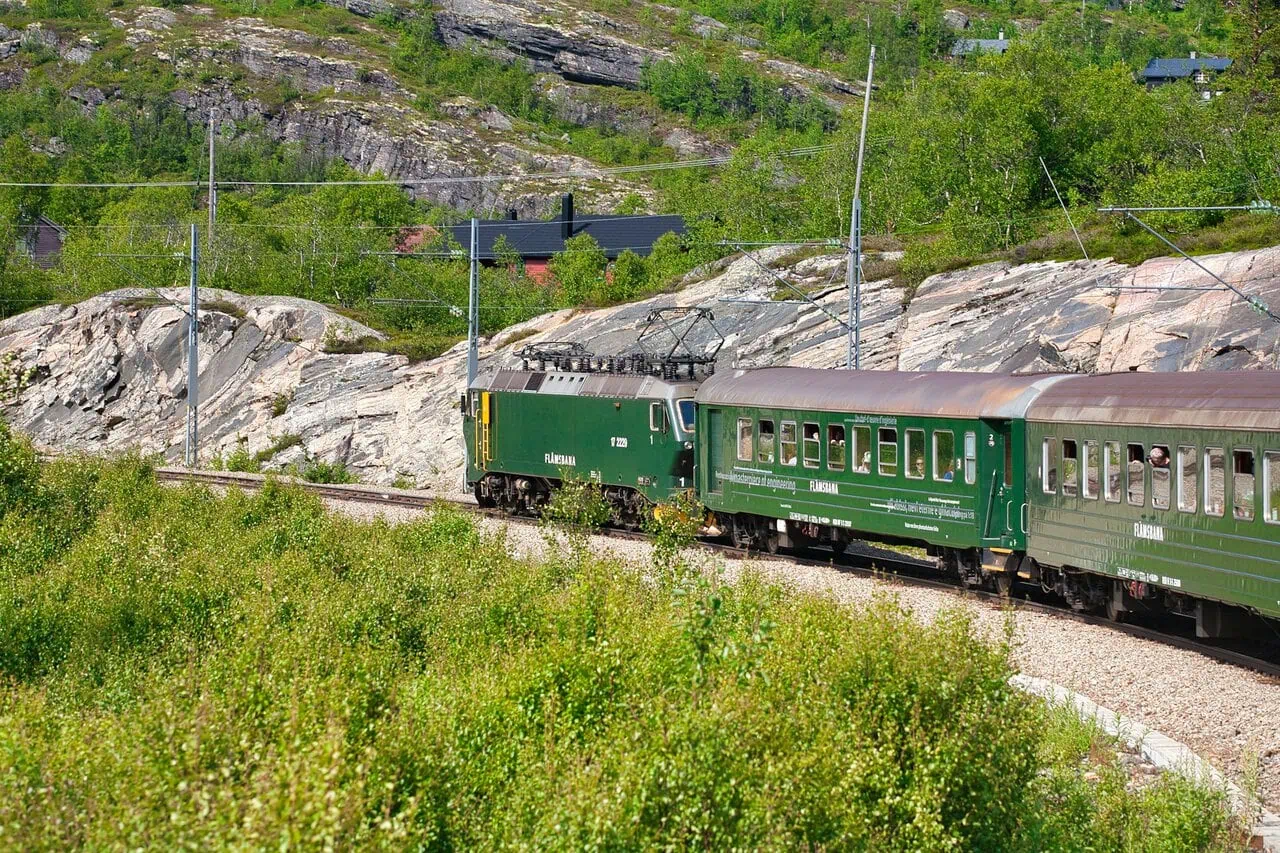
The Flåm Railway is regularly ranked among the greatest railway journeys anywhere in the world and has become one of the defining travel experiences in Norway. Descending dramatically from the mountains at Myrdal Station down toward the fjords at Flåm, the line combines waterfalls, cliffside railways, deep valleys, mountain scenery and fjord landscapes within one of Europe’s steepest standard-gauge railways.
What makes the journey especially remarkable is how rapidly the landscape transforms during the descent. Within less than an hour, passengers travel from the exposed alpine environment of the Bergen Line high above sea level down toward the deep waters of the Aurlandsfjord, one of the branches connected to the vast Sognefjord system.
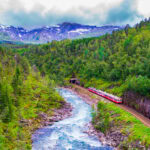
The railway feels unusually dramatic because huge sections cling directly to steep mountainsides while waterfalls crash beside the tracks and valleys plunge far below the train. During winter, snow and ice transform the line into one of the most atmospheric railway journeys in Scandinavia, while summer reveals green valleys, rushing rivers and towering mountain scenery throughout almost the entire route.
Unlike many scenic railways built primarily as tourist attractions, the Flåm Railway still feels deeply connected to the geography and transport history of western Norway. The route functions naturally as part of the wider Bergen Line network while simultaneously serving as one of Europe’s most visually spectacular railway experiences.
For many travellers, the journey between Myrdal and Flåm becomes the single most memorable rail experience of an entire Scandinavian trip.
What Is the Flåm Railway
The Flåm Railway, known locally as the Flåmsbana, is a steep mountain railway connecting Myrdal Station on the Bergen Line with the fjord village of Flåm deep within western Norway.
The line stretches for roughly 20 kilometres while descending approximately 860 metres from the mountains down toward the fjord. This huge elevation change over such a short distance is one of the reasons the railway is considered such an impressive engineering achievement.
Construction of the route was exceptionally difficult because of the surrounding terrain. Large sections required tunnels carved directly into the mountainsides, while the steep valley gradients forced engineers to create one of the most dramatic conventional railway lines anywhere in Europe.
Today the railway is internationally famous among travellers combining the Bergen Line, Norwegian fjords, cruise travel, Interrail journeys and wider Scandinavian rail itineraries. Despite its relatively short length, the scenery is so concentrated and visually dramatic that the route has become one of the best-known railway journeys in the world.
The line also acts as one of the strongest transport links between Norway’s mountain railway network and the fjord regions of western Scandinavia, making it far more than simply a tourist attraction.
Compare hotels and other places to stay in Norway.
Check availabilityBrowse apartments, homes and self-catering accommodation in Norway.
Browse rentalsSee hotel prices from multiple booking sites in one search.
Compare ratesQuick Facts About the Flåm Railway
| Feature | Details |
|---|---|
| Route | Myrdal Station ↔ Flåm |
| Norwegian Name | Flåmsbana |
| Approximate Length | 20 km |
| Journey Time | Around 1 hour |
| Elevation Difference | About 860 metres |
| Highest Station | Myrdal |
| Lowest Station | Flåm beside the fjord |
| Main Connection | Bergen Line |
| Most Famous Attraction | Kjosfossen Waterfall |
| Known For | Steep gradients and fjord scenery |
| Interrail Valid? | Partially discounted only |
| Best Season | Year-round |
| Winter Snow Travel | Excellent |
| Most Popular Direction | Myrdal to Flåm downhill |
| Main Tourism Link | Fjord cruises and Bergen Line itineraries |
Myrdal Station and Connecting from the Bergen Line
Almost all journeys on the Flåm Railway begin at Myrdal Station, the isolated mountain interchange located high on the Bergen Line between Oslo and Bergen.
Unlike a conventional town station, Myrdal exists almost entirely as a railway junction surrounded by mountains, valleys and exposed alpine terrain. The station has become internationally famous because it acts as the gateway between Norway’s great east-west mountain railway and the spectacular descent toward the fjords at Flåm.
Connections from Bergen Line services are usually straightforward because many departures are timed around the Flåm Railway schedule. Travellers arriving from Oslo or Bergen can often transfer directly between trains without lengthy waits, making the route particularly popular with passengers combining long-distance rail travel and fjord itineraries.
The setting around Myrdal Station is also a major part of the experience itself. During winter, the platforms are often buried beneath deep snow while frozen mountain scenery surrounds the station in every direction. During summer, waterfalls, steep valleys and dramatic mountain slopes dominate the landscape surrounding the junction.
Because the station sits at relatively high elevation, weather conditions at Myrdal can differ dramatically from those beside the fjord at Flåm only an hour away by train. Travellers regularly experience cold alpine conditions in the mountains before descending into far milder fjord weather beside the water.
Flåm Railway Route Overview and Journey Experience
The journey on the Flåm Railway between Myrdal Station and Flåm takes roughly one hour, but the scenery is so intense and constantly changing that the route feels far more dramatic than its relatively short distance might suggest.
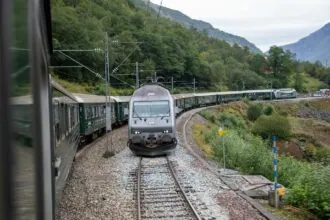
Departing from the mountains at Myrdal, the railway immediately begins descending through steep valleys and rugged alpine terrain toward the fjord far below. The line twists through tunnels, cliffside sections and sharp mountain gradients while rivers, waterfalls and snowfields dominate the surrounding landscape.
One of the most remarkable aspects of the journey is the sheer steepness of the descent. The railway drops around 860 metres over just 20 kilometres, making it one of the steepest standard-gauge railways anywhere in the world without rack-and-pinion assistance.
The atmosphere changes constantly throughout the route. Higher sections near Myrdal often feel exposed, cold and alpine in character, particularly during winter when snow can completely surround the railway. As the train descends, the environment gradually becomes greener, wetter and increasingly fjord-like with forests, rivers and waterfalls appearing beside the tracks.
Unlike many scenic railways where views are concentrated into a few short sections, the Flåm Railway remains visually spectacular for almost the entire journey. Passengers spend much of the trip looking directly down steep valley sides toward tiny roads, farms and rivers far below the train.
The final approach into Flåm creates one of the route’s biggest contrasts. After leaving the exposed mountain environment around Myrdal, the train eventually arrives beside the calm waters of the Aurlandsfjord, surrounded by steep cliffs and fjord scenery that feels completely different from the alpine landscape above.
Scenic Highlights, Waterfalls and Fjord Scenery
The scenery along the Flåm Railway is extraordinarily dense and visually dramatic, which is one of the main reasons the line has become internationally famous. Waterfalls, rivers, cliffs, snowfields and deep valleys appear continuously throughout the route between Myrdal Station and Flåm.
The most famous individual attraction along the railway is Kjosfossen, a huge waterfall cascading directly beside the tracks. Many trains briefly stop here to allow passengers to experience the falls and surrounding mountain scenery more closely. During summer, spray from the waterfall can often be felt directly from the platforms beside the train.
Large sections of the railway also cling directly to steep valley walls, creating enormous panoramic views across the mountains and rivers below. The scale of the terrain is one of the route’s defining characteristics. Tiny farms, isolated roads and rivers appear far beneath the train while waterfalls descend from cliffs high above the line itself.
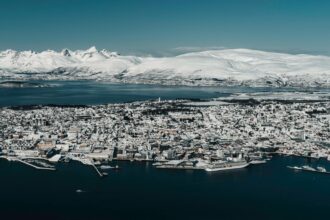
Winter transforms the route completely. Snow and ice cover the valleys, frozen waterfalls appear beside the tracks and the upper mountain sections near Myrdal often resemble Arctic landscapes rather than western Europe. The contrast between the snow-covered mountains and the dark fjord waters near Flåm becomes especially dramatic during colder months.
The final sections approaching the Aurlandsfjord are also visually spectacular because the valley gradually opens toward the fjord itself. The transition from mountain railway to fjord landscape happens remarkably quickly, creating one of the most distinctive rail descents anywhere in Scandinavia.
Because the scenery changes so constantly, many travellers spend the entire journey moving between windows and cameras trying to absorb the landscape around them. Few railways anywhere in Europe pack so much visual variety into such a short distance.
Flåm Railway Winter Travel and Snow Conditions
Winter gives the Flåm Railway a completely different atmosphere and many experienced travellers actually consider the colder months the best time to experience the route. Snow transforms the mountain sections near Myrdal Station into deep alpine landscapes where the railway feels isolated and almost Arctic in character.
The contrast between conditions at Myrdal and Flåm becomes especially noticeable during winter. Deep snow can surround the upper mountain stations while the lower fjord sections remain significantly milder because of the coastal climate around western Norway.
Waterfalls along the line also change dramatically during colder months. Some freeze partially into enormous ice formations while others continue crashing down the mountainsides beside the tracks despite surrounding snow and freezing temperatures.
Heavy snowfall regularly affects the upper sections of the railway and the surrounding Bergen Line. However, Norwegian railway operations are highly adapted for winter weather and snow-clearing infrastructure across the mountains is extensive.
Winter also brings a quieter atmosphere compared with the busy summer cruise season. Although the railway remains popular year-round, travellers during colder months often experience less crowding and a calmer onboard environment while crossing the mountains and fjords of western Norway.
For photographers and scenic rail enthusiasts, the winter combination of snow-covered valleys, frozen waterfalls and dark fjord landscapes creates some of the most atmospheric railway scenery anywhere in northern Europe.
Journey Times and Train Frequency
Journeys on the Flåm Railway between Myrdal Station and Flåm normally take around 55 minutes to 1 hour, although the constantly changing scenery makes the journey feel far longer and far more dramatic than its relatively short distance suggests.
The railway is designed primarily as a scenic mountain route rather than a fast transport corridor, which means trains move relatively slowly through many sections of the valley. This slower pace allows passengers to properly experience the waterfalls, rivers, cliffs and fjord landscapes surrounding the line throughout almost the entire descent toward Flåm.
Services normally operate several times daily in both directions, with significantly increased frequency during the busy summer tourism season. During this period, huge numbers of passengers arrive via the Bergen Line, fjord cruises and wider western Norway itineraries, making the railway one of the busiest scenic rail routes in Scandinavia.
The timetable is heavily integrated with connections at Myrdal Station, allowing relatively smooth transfers between Bergen Line trains and the Flåm Railway itself. This coordination is one of the reasons the route works so effectively within larger Norwegian rail journeys between Oslo, Bergen and the fjord regions.
Summer departures during cruise ship arrivals can become extremely crowded, especially around the middle of the day when multiple fjord excursions operate simultaneously from Flåm. Winter services, by contrast, often feel calmer, quieter and significantly more atmospheric.
Many travellers also slightly prefer travelling downhill from Myrdal toward Flåm because the valley scenery gradually opens in front of the train while the fjord slowly emerges below the mountains during the descent.
Search flights and useful route combinations for your trip.
View flightsBrowse Airalo eSIM options for convenient travel data.
Check eSIMsCheck private pickup options and plan your onward journey before arrival.
View transfersTickets, Prices and How to Book the Flåm Railway
Tickets for the Flåm Railway are among the most sought-after rail tickets anywhere in Scandinavia because the route has become internationally famous among rail travellers, fjord tourists and cruise passengers visiting western Norway.
Prices are noticeably higher than ordinary Norwegian regional rail services because the line functions primarily as a premium scenic railway experience rather than a conventional commuter route. Demand remains exceptionally strong throughout much of the year, particularly during the summer cruise season when large numbers of visitors arrive simultaneously in Flåm.
Advance booking is strongly recommended because departures regularly sell out during busy periods. This becomes especially important for travellers combining the route with the Bergen Line, fjord ferries and wider western Norway itineraries where missed connections can affect entire travel plans.
The railway is particularly popular within larger scenic Norway itineraries linking mountain railways, fjord cruises and long-distance Scandinavian rail travel. Many visitors specifically build entire trips around the combined experience of travelling from Oslo across the Bergen Line before descending via the Flåm Railway into the fjord landscapes surrounding Flåm.
Although the journey itself lasts only around one hour, most travellers still consider the price worthwhile because the scenery is genuinely extraordinary and the engineering of the railway is unlike almost anything else in Europe. The combination of waterfalls, mountain gradients, tunnels and fjord scenery creates an experience that feels far more substantial than the route’s relatively short length might initially suggest.
Using Interrail on the Flåm Railway
The Flåm Railway operates slightly differently from most mainline Norwegian railways when travelling with Interrail or Eurail. Unlike the fully covered Bergen Line, the Flåm Railway is normally only partially discounted rather than completely included within standard rail passes.
This distinction is important because many travellers assume the route works like an ordinary Norwegian railway service. In reality, passengers using Interrail or Eurail generally still need to purchase a discounted supplementary ticket in order to travel on the line.
Despite this additional cost, the route remains hugely popular with rail pass travellers because it connects so naturally into wider Scandinavian rail itineraries. Travellers can cross southern Norway on the Bergen Line before transferring directly at Myrdal Station onto one of the world’s most famous scenic mountain railways.
The railway is especially valuable for visitors wanting to experience both the Norwegian mountains and fjord regions entirely by public transport without needing a car. The combination of the Bergen Line, the Flåm Railway and the fjord transport network creates one of Europe’s strongest integrated rail-and-scenery travel experiences.
Because accommodation and transport costs in Norway are often relatively high, many Interrail travellers strategically combine the Flåm Railway with sleeper trains and longer Scandinavian rail itineraries in order to maximise value while reducing internal flights and hotel expenses.
Flåm Village and Fjord Connections
The village of Flåm sits at the end of the Flåm Railway beside the waters of the Aurlandsfjord, creating one of the most dramatic rail-to-fjord transitions anywhere in Europe. After descending through steep mountain valleys from Myrdal Station, passengers arrive directly beside the fjord surrounded by towering cliffs and western Norwegian mountain scenery.
Despite its relatively small size, Flåm has become one of the most important tourism hubs in western Norway because of its connections between railways, fjord cruises, ferries and wider scenic transport routes. Large numbers of travellers use the village as a gateway toward the Sognefjord region and the surrounding fjord landscapes.
Fjord cruises departing from Flåm are particularly popular because they allow travellers to continue deeper into the UNESCO-listed fjord regions of western Norway after arriving by train. The combination of the Bergen Line, the Flåm Railway and fjord ferries creates one of the strongest integrated scenic transport experiences anywhere in Scandinavia.
The village itself is highly walkable and compact, with the railway station located directly beside the waterfront and cruise areas. This makes transfers between trains, ferries and sightseeing excursions relatively simple even during busy tourism periods.
During summer, Flåm becomes extremely busy with international visitors and cruise passengers. However, outside peak daytime hours the village often feels calmer and more atmospheric, particularly during evenings when many cruise excursions have departed.
Winter creates a completely different atmosphere. Snow-covered mountains surround the fjord while the smaller crowds allow the railway and fjord scenery to feel significantly quieter and more remote than during the peak summer season.
Food, Luggage and Facilities Onboard
Facilities onboard the Flåm Railway are relatively simple because the journey itself lasts only around one hour, but the large panoramic windows and comfortable seating are specifically designed to maximise the scenic experience throughout the descent between Myrdal Station and Flåm.
The trains prioritise visibility and passenger comfort rather than luxury facilities. Large windows dominate the carriages, allowing uninterrupted views across waterfalls, valleys and mountain scenery during almost the entire route.
Luggage handling is generally straightforward because many passengers arrive directly from long-distance Bergen Line services carrying larger backpacks, suitcases and hiking equipment. The railway is heavily integrated into wider Norwegian rail travel rather than functioning purely as a short tourist shuttle.
Food service onboard is limited because of the relatively short journey length, although cafés, restaurants and convenience facilities are available both at Myrdal Station and within Flåm itself. Many travellers also combine the route with fjord cruises and longer Norway itineraries where food options become part of the wider travel experience.
One of the most distinctive aspects of travelling onboard the Flåm Railway is the atmosphere inside the carriages. Passengers spend much of the route moving between windows, photographing waterfalls and watching the dramatic transition from mountain landscapes toward the fjord below.
Because the scenery is so concentrated and visually intense, the journey feels far more immersive than many much longer scenic railways elsewhere in Europe.
Cruise Ship Crowds and Best Times to Travel
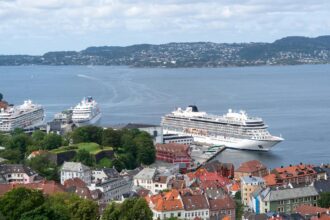
The popularity of the Flåm Railway means crowd levels can vary dramatically depending on the season, cruise ship schedules and time of day. During the peak summer tourism period, Flåm becomes one of the busiest fjord destinations in Norway, particularly when multiple cruise ships arrive simultaneously.
Midday departures during summer are usually the busiest because cruise excursions heavily concentrate passenger demand around the middle of the day. Platforms, trains and viewing areas can become extremely crowded during these peak periods, especially between late morning and early afternoon.
Travellers wanting a calmer experience often prefer either early morning departures or later evening services when cruise excursion traffic is lower. Shoulder seasons during spring and autumn can also provide an excellent balance between scenery, accessibility and reduced crowding.
Winter is often considered the most atmospheric season overall despite shorter daylight hours. Snow-covered valleys, frozen waterfalls and quieter trains create a dramatically different experience compared with the busy cruise-focused environment of summer.
Weather also affects the atmosphere significantly. Clear days provide spectacular mountain and fjord visibility throughout the journey, while mist, snow and rain can create a much moodier and more cinematic appearance across the valleys and waterfalls surrounding the railway.
For photographers and serious scenic rail enthusiasts, travelling outside peak cruise hours usually produces a far better overall experience because the trains feel calmer and windows are less crowded throughout the journey.
eSIMs and Mobile Connectivity in Flåm
Reliable mobile connectivity is increasingly important for travellers visiting Flåm because most visitors combine the village with wider journeys across the Bergen Line, fjord cruises, ferry routes and western Norway transport corridors. Digital tickets, railway reservations, weather forecasts and ferry schedules are now heavily integrated into the overall travel experience across the region.
Mobile coverage is generally strong within Flåm itself because the village has become one of Norway’s most important fjord tourism hubs. However, signal strength can become far more variable higher in the mountains around Myrdal Station and along isolated sections of the Flåm Railway where tunnels, steep valleys and mountain terrain interrupt reception.
The dramatic geography surrounding the route is one reason connectivity occasionally fluctuates during the journey. Large sections of the railway pass through steep-sided valleys and isolated mountain environments where telecommunications infrastructure is naturally more limited than in urban Norway.
Using an eSIM is often the simplest option for international visitors because it removes the need to purchase physical Norwegian SIM cards after arrival. Regional Scandinavian and wider European eSIM plans work especially well for travellers combining Norway with rail journeys through Sweden, Denmark and other Nordic destinations.
Connectivity becomes especially useful for travellers monitoring fjord cruise schedules, weather conditions, Bergen Line connections and wider western Norway transport updates. Conditions across the mountains can change rapidly, particularly during winter when snow and storms occasionally affect rail operations around Hardangervidda and the upper sections of the line.
Many travellers also find themselves constantly using phones and cameras throughout the route because the scenery changes so quickly. The combination of waterfalls, mountain valleys, tunnels and fjord landscapes makes the Flåm Railway one of the most photographed rail journeys anywhere in Europe.

Rupert’s Handy Travel Tips
The Flåm Railway may only last around an hour, but Rupert says it delivers one of the most intense scenic railway experiences anywhere in Europe.
- Travel downhill from Myrdal to Flåm if possible because the fjord scenery gradually opens in front of the train throughout the descent.
- Avoid midday departures during summer because cruise ship excursion crowds can become extremely heavy inside both Flåm and the trains themselves.
- Bring a camera with spare battery life because the waterfalls, tunnels and mountain scenery change constantly throughout the route.
- Do not underestimate winter travel because snow-covered valleys and frozen waterfalls often create an even more dramatic experience than summer.
- Combine the route with the Bergen Line because together they form one of the greatest integrated rail journeys anywhere in Scandinavia.
Want to meet the reindeer behind our travel tips? Find out more in our page Who is Rupert?.
Compare hostels and budget-friendly accommodation around Norway.
Browse hostelsAccess compensation support, eligible lounge benefits and faster payouts when flights go wrong.
See the benefitsLeave your luggage somewhere convenient and enjoy Norway hands-free.
View storageFrequently Asked Questions About the Flåm Railway
Is the Flåm Railway worth it?
Yes, the Flåm Railway is widely considered one of the greatest scenic rail journeys in the world because of its combination of waterfalls, fjord scenery, tunnels and steep mountain landscapes.
How long is the Flåm Railway journey?
Most journeys between Myrdal Station and Flåm take around 55 minutes to 1 hour.
Can you use Interrail on the Flåm Railway?
Interrail and Eurail normally provide discounted tickets rather than full free travel on the route.
What is the steepest part of the Flåm Railway?
The railway descends around 860 metres over roughly 20 kilometres, making it one of the steepest standard-gauge railways in Europe without rack assistance.
What is the famous waterfall on the Flåm Railway?
The best-known stop along the route is Kjosfossen, a huge waterfall located directly beside the tracks.
When is the best time to ride the Flåm Railway?
The route is spectacular year-round, although many travellers prefer winter for snow scenery or shoulder seasons for fewer crowds.
Further Reading & Related Guides
Travellers exploring the Flåm Railway will often also find themselves travelling across wider regions of western Norway. Our guides to the Bergen Line, Norway Night Trains and Scandinavian scenic railways explain how to combine mountain rail travel, sleeper trains and fjord transport into larger Norway itineraries.
Visitors continuing beyond Flåm should also explore our Ferries from Bergen guide for onward fjord and coastal routes, and our Nordland Line Guide, which covers the scenic Arctic railway linking Trondheim with Bodø for travellers extending their Norway itinerary further north.
For staying connected while travelling across Norway’s mountain railways and fjord regions, our guides to the best eSIMs explain how to maintain reliable connectivity across some of Europe’s most dramatic transport corridors.