
Reviewed by our editorial team Updated
Why Choose a BritRail Pass
Travelling across Great Britain by train is one of the most enjoyable ways to experience the country, and a BritRail Pass makes that experience far easier, more flexible, and often far better value. Created specifically for overseas visitors, the pass gives you unlimited rail travel within the area covered by your chosen ticket, whether that means travelling across England, Scotland, and Wales as a whole or focusing on one region in greater depth. For visitors who want freedom without the stress of booking every individual journey in advance, that simplicity is a major advantage.
One of the biggest strengths of a BritRail Pass is the freedom it gives you to travel spontaneously. Instead of locking yourself into fixed tickets, you can move between major cities, historic towns, coastal resorts, and rural landscapes with far less planning pressure. You can travel during peak hours, board most trains without needing compulsory reservations, and adjust your route as your trip develops. That makes the pass particularly attractive for travellers who want to combine famous urban stops such as London, Edinburgh, Manchester, Cardiff, York, Bath, and Oxford with scenic rail routes through the countryside.
The different pass types also make the system more adaptable than many first-time visitors realise. The full BritRail Pass covers the whole National Rail network across England, Scotland, and Wales, while regional versions narrow the focus for more targeted trips. The BritRail England Pass is ideal for visitors staying entirely within England. The BritRail London Plus Pass works especially well for those based in London who want to take high-value day trips into southern and central England. The BritRail South West & South Wales Pass is designed for travellers heading towards Bath, Bristol, Cardiff, Devon, and Cornwall, while the BritRail Spirit of Scotland Pass is built around the Scottish network, including some coach links for more remote areas.
For travellers who want to move widely, travel comfortably, and avoid the complexity of UK ticketing, a BritRail Pass combines flexibility, convenience, and broad network access in one product. It is not just a ticket. It is a practical way to turn a complicated rail system into a much simpler travel experience.
Quick Facts / Pass Overview
A BritRail Pass is available in several versions, each designed around a different geographical focus and travel style. Some cover the whole of Great Britain, while others focus on one region or one cluster of routes. What they all have in common is that they are intended for non-UK residents, offer unlimited rail travel within the relevant boundaries, and are available in either flexible or consecutive formats depending on the specific pass.
Here is a clearer overview of the main pass types.
| Pass Type | Area Covered | Class Options | Flexibility | Discounts Available |
|---|---|---|---|---|
| BritRail Pass (All-Britain) | England, Scotland and Wales | First and Standard | Flexi or Consecutive | Child, Youth, Senior, Saver Group |
| BritRail England Pass | All National Rail routes in England | First and Standard | Flexi or Consecutive | Child, Youth, Senior |
| BritRail London Plus Pass | South East and Central England | First and Standard | Flexible only | Child discount |
| BritRail South West & South Wales Pass | Great Western Railway and South Western Railway routes | First and Standard | Flexi or Consecutive | Child, Youth, Senior |
| BritRail Spirit of Scotland Pass | Scotland, plus selected coach routes | Standard only | Flexible only | Child discount |
In practical terms, this means visitors can choose a pass that matches how broad or narrow their itinerary is. Someone doing a major multi-city trip from London to York, Edinburgh, Glasgow, Cardiff, and Bath will often benefit most from the All-Britain pass, while someone staying largely in southern England may be better served by the London Plus Pass or the South West & South Wales Pass.
There are also some valuable extras built into the system. Depending on the pass, BritRail can include travel on Heathrow Express, Gatwick Express, and Stansted Express, and sleeper services can also be used, although berth supplements apply. Some passes additionally come with 2FOR1 attraction offers, which can improve value even further beyond the rail travel itself.
Another important point is timing. BritRail Passes can generally be bought up to 11 months before travel, which makes them useful for long-range trip planning. Because the passes are built for overseas visitors, they are intended to simplify the journey before you even arrive in the UK, rather than forcing you to decode ticketing rules once you land.
See hotel options and places to stay for your trip.
Browse hotelsBrowse apartments, homes and self-catering accommodation.
Browse rentalsCompare hotel deals from multiple booking sites in one search.
Compare pricesWhat Is Included and Not Included with a BritRail Pass
| Included | Usually Not Included |
|---|---|
| National Rail trains across covered areas | London Underground |
| LNER | Most buses |
| Avanti West Coast | Most trams |
| Great Western Railway | Eurostar |
| ScotRail | Ferries |
| CrossCountry | Private heritage railways |
| Transport for Wales Rail | Heathrow Underground services |
| Elizabeth Line (National Rail sections) | Oyster/contactless travel |
| Heathrow Express | Local metro systems |
| Gatwick Express | Sleeper berth supplements |
BritRail vs Interrail and Eurail Passes
One of the most common points of confusion for international travellers is the difference between BritRail, Interrail, and Eurail. All three are rail pass products, and all three offer a form of flexible train travel, but they are designed for different travellers and different kinds of trips. If your journey is focused entirely on Great Britain, then BritRail is usually the clearest and most practical option.
The most important distinction is eligibility. BritRail is for non-UK residents, including overseas visitors and, in some cases, British citizens who have lived abroad for an extended period. Interrail is for European residents, including UK residents, while Eurail is the equivalent product for non-European residents travelling across Europe more widely. That means BritRail is specifically built around Britain as a destination, while Interrail and Eurail are broader cross-European products.
Coverage is another key difference. BritRail is designed to work across England, Scotland, and Wales on almost the entire National Rail network. It also includes certain airport express routes that are particularly useful for visitors. By contrast, Interrail and Eurail include Britain only as one part of a much larger European system, and some routes and airport services are not covered in the same way. In Britain specifically, BritRail tends to be more straightforward.
The pass experience is also different. With BritRail, seat reservations are usually optional rather than compulsory, except on sleeper services, which means you can travel more spontaneously. In much of mainland Europe, especially on high-speed routes, Interrail and Eurail often involve more compulsory reservations and extra fees, which reduces flexibility and can add cost. BritRail is also valid during peak hours, apart from the weekday morning restriction on the Spirit of Scotland Pass before 09:15, which is a significant benefit when compared with many domestic UK ticket types.
Here is the comparison in a cleaner format.
| Feature | BritRail Pass | Interrail Pass | Eurail Pass |
|---|---|---|---|
| Who Can Buy | Non-UK residents | European residents | Non-European residents |
| Where It Works | Great Britain only | 33 European countries | 33 European countries |
| Coverage in Britain | Extensive National Rail coverage | More limited in some areas | More limited in some areas |
| Airport Express Routes | Often included | Not always included | Not always included |
| Peak-Hour Travel | Generally allowed | Varies by route and country | Varies by route and country |
| Seat Reservations | Usually optional | Often compulsory on key routes | Often compulsory on key routes |
| Best For | Britain-only trips | Europe-wide trips for residents | Europe-wide trips for non-Europeans |
In simple terms, BritRail is usually the better choice when your trip is focused on Great Britain alone. Interrail and Eurail become more useful when you are combining Britain with mainland Europe and want one cross-border rail product. For visitors staying within Britain, BritRail is generally simpler, more flexible, and more closely matched to the UK network.
Key Operators and Rail Network Size
A major reason the BritRail Pass is so useful is the scale of the network it covers. The pass is valid across almost the entire National Rail system, which is made up of more than 20 train operating companies running services across England, Scotland, and Wales. Together, these operators form one of the densest rail networks in Europe, linking major capitals, regional cities, market towns, coastal communities, national parks, and remote rural areas.
For visitors, what matters is not the exact number of operators but the breadth of places they collectively serve. Avanti West Coast connects London Euston with major destinations including Birmingham, Manchester, Liverpool, and Glasgow. LNER, running on the East Coast Main Line, links London King’s Cross with York, Newcastle, Edinburgh, and Aberdeen. Great Western Railway covers the corridor from London Paddington to Bath, Bristol, Cardiff, Exeter, Plymouth, and Cornwall, while CrossCountry stretches across the country on longer north-south and diagonal routes, connecting places such as Penzance, Bristol, Birmingham, Leeds, Edinburgh, and Aberdeen.
In Scotland, ScotRail forms the backbone of domestic travel, reaching not only the central belt but also longer scenic routes through the Highlands, including lines towards Fort William, Inverness, Kyle of Lochalsh, and Mallaig. In Wales, Transport for Wales Rail provides crucial coverage between Cardiff, Swansea, Shrewsbury, Aberystwyth, Llandudno, and the English borderlands. Meanwhile, urban and cross-London operators such as Thameslink, the Elizabeth Line, and London Overground can also be relevant within BritRail validity on the routes included by the pass.
This means BritRail covers far more than just headline intercity routes. It also reaches scenic branch lines, heritage-rich regional corridors, and leisure routes that many visitors would miss if they only focused on the best-known trains. You can travel from Penzance in Cornwall to Thurso in the far north of Scotland, from Cardiff in South Wales to Cambridge, from Bath to York, or from Manchester to the Highlands, all within the broader network structure.
Another important practical advantage is that some airport express services are also covered, including Heathrow Express, Gatwick Express, and Stansted Express. For overseas visitors, that makes the pass even more useful, because it starts adding value from the moment you arrive.
In effect, a BritRail Pass turns a complex multi-operator rail system into something much easier to use. Instead of having to worry about which company runs which line, travellers can focus on where they want to go.

Transport Hubs and Major Routes
The strength of the British rail network lies not only in its breadth but also in the major interchange stations that hold it together. With a BritRail Pass, these hubs become the gateways through which almost any multi-city itinerary can be built. The system is dense, frequent, and generally easy to navigate once you understand the role of a few key stations.
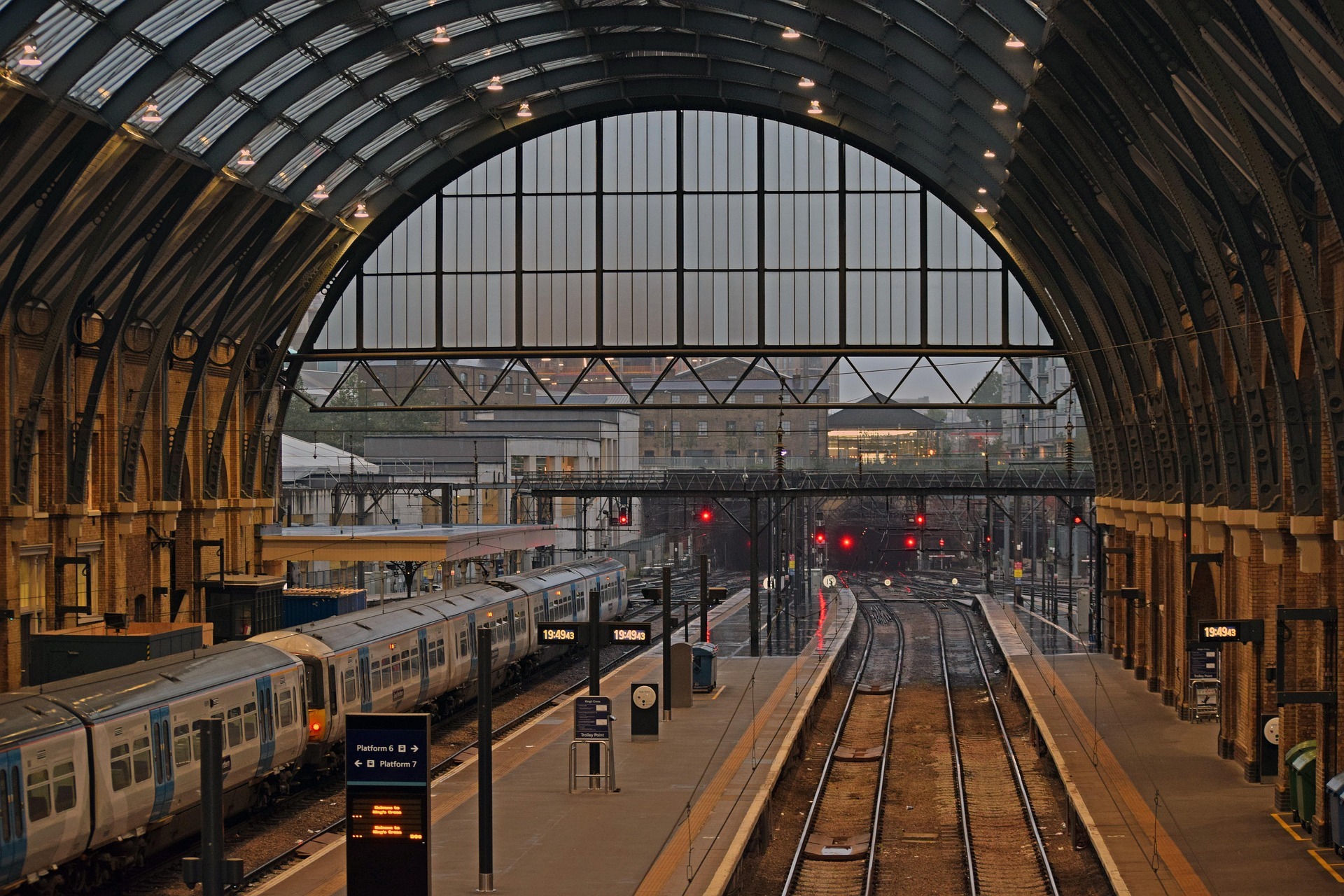
At the centre of everything is London, which is unusual among European capitals because it has several major terminal stations rather than one giant central hub. King’s Cross and St Pancras are crucial for the north and northeast, Euston is central to West Coast routes, Paddington is key for the west and southwest, Liverpool Street reaches East Anglia and the Stansted corridor, and Waterloo remains essential for large parts of southern England. For overseas visitors, understanding which London terminal matches which region can save a great deal of confusion.
Outside the capital, Birmingham New Street is one of the most important interchange stations in the country, linking north-south and cross-country services through the Midlands. Manchester Piccadilly is the main rail gateway for the North West, while Leeds performs a similar role for Yorkshire and parts of the northeast. In Wales, Cardiff Central is the main strategic hub, linking the capital to London, Swansea, and routes towards the borderlands. In Scotland, Edinburgh Waverley and Glasgow Queen Street sit at the heart of Scottish travel, connecting the Lowlands with longer routes north into the Highlands.
What makes the network especially strong for visitors is that many of the most important cities are connected by fast intercity routes. LNER and Avanti West Coast can take you from London to Scotland in under five hours, while Great Western Railway provides efficient access from London towards Bath, Bristol, Cardiff, Exeter, and Cornwall. These routes combine speed with comfort and make city-hopping across Britain far easier than many visitors expect.
The system also includes some of the UK’s most celebrated scenic routes. The Settle to Carlisle Line, the Cambrian Coast Line, the Heart of Wales Line, and the West Highland Line are all included within one BritRail boundary or another. These are not just transport corridors. They are attractions in themselves, cutting through mountains, dales, moorland, coastlines, and remote communities in a way that makes the railway part of the experience.
For a visitor using BritRail well, these hubs and routes are what turn the pass from a ticket into a travel framework. Once you understand the main stations and how the flagship lines connect them, the whole country becomes far easier to navigate.
Example Ticket Prices vs Pass Value
One of the strongest reasons to choose a BritRail Pass is the way it can turn an expensive and fragmented ticketing system into something far more predictable. Britain’s rail network is excellent for coverage, but individual fares can be surprisingly high, particularly if you are booking at short notice, travelling at busy times, or making several long-distance journeys within a short period. In those situations, a BritRail Pass can quickly become the better-value option.
The real value appears when you start combining multiple major routes in one trip. A visitor who travels from London to York, then continues to Edinburgh, heads west to Glasgow, moves south to Cardiff, and then returns via Bath to London would otherwise need to buy a series of separate long-distance tickets. Even before adding airport transfers or local positioning journeys, the total can become substantial. With a BritRail Pass, those same movements sit under one broader product, giving you the freedom to travel without recalculating every leg.
The same logic applies to shorter but more intensive regional itineraries. A traveller based in London who wants to make day trips to Windsor, Oxford, Bath, Salisbury, and Brighton can cover all of those journeys with a BritRail London Plus Pass, rather than piecing them together one by one. Likewise, someone using a Spirit of Scotland Pass for a route such as Edinburgh to Fort William to Mallaig to Inverness to Glasgow gains access to some of the most scenic rail travel in Europe without the stress of buying separate tickets for each stage.
What also strengthens the value proposition is the fact that BritRail includes peak-time travel, broad network access, and airport rail links that visitors often need anyway. There is also no penalty for deciding to stop somewhere unexpected, changing your travel day, or adding another journey at the last minute. That flexibility has genuine monetary value, not just convenience value.
For travellers who plan to make two or three substantial intercity journeys, plus local or regional trips around them, the pass often compares very well against standard point-to-point fares. For visitors who want spontaneity, it can be even stronger, because it removes the risk of expensive last-minute decisions.
Is a BritRail Pass Worth It?
For many overseas visitors, a BritRail Pass can offer excellent value, especially if you are planning to travel between several cities or regions within a relatively short period of time. Britain has a very extensive rail network, but individual train tickets can become surprisingly expensive, particularly on long-distance routes or when booking close to the day of travel. A pass removes much of that unpredictability and replaces it with a far simpler and more flexible way to travel.
The pass becomes particularly worthwhile when your itinerary includes major intercity journeys such as London to Edinburgh, London to York, London to Manchester, London to Bath, London to Cornwall, or routes across the Scottish Highlands. Buying these tickets separately, especially at peak times or without advance booking, can quickly add up. With a BritRail Pass, those journeys sit under one single product, allowing you to move around the country without constantly calculating fares or worrying about whether you have booked the correct ticket type.
One of the biggest advantages is the sheer amount of flexibility it provides. British train fares are often tied to specific trains and departure times, but BritRail usually allows you to board most services freely without being locked into one exact departure. That flexibility becomes incredibly valuable if you decide to stay longer somewhere, change your plans because of the weather, or make an unexpected stop in places such as York, Durham, Bath, or Inverness along the way.
The pass is also especially useful for travellers who prefer a more relaxed style of travel. Instead of spending time navigating Britain’s often confusing ticketing system, comparing operators, or understanding fare restrictions, you simply activate the pass and travel. For many visitors, particularly those unfamiliar with the UK rail network, that convenience alone can justify the cost.
However, a BritRail Pass is not always the cheapest possible option. If you are only making one or two train journeys, or if you are comfortable booking highly restricted Advance Tickets months ahead, buying separate tickets can sometimes cost less overall. The pass works best when you value freedom, spontaneity, and multiple journeys rather than trying to achieve the absolute lowest fare for a single route.
In practical terms, a BritRail Pass is usually strongest for travellers doing a genuine multi-city journey across England, Scotland, or Wales, particularly when combining famous routes with scenic rail travel. It is much less useful for travellers staying mostly within one city, especially London, where local transport systems such as the Underground are not included.
For visitors who want to explore Britain comfortably, travel widely, and avoid the stress of managing dozens of separate tickets, a BritRail Pass is often one of the simplest and most effective ways to experience the country by rail.
Compare routes and fares for your next trip.
Compare flightsUse an eSIM to get online without hunting for a local SIM after arrival.
See eSIM optionsArrange a private pickup before travel instead of sorting transport after landing.
Book a transferBritRail Pass Prices (Flexi & Consecutive Options)
A BritRail Pass is built around two main travel styles, and understanding the difference between them is one of the best ways to choose the right product. The first is the Flexible Pass, often called a Flexi Pass, and the second is the Consecutive Pass. Both provide unlimited travel within the boundaries of the chosen pass, but they are designed for very different types of itinerary.
A Flexible Pass allows you to travel on a set number of days within a wider validity window. This is ideal for visitors who want to spend several days in one destination before moving on. For example, an 8-day Flexi Pass valid within one month lets you choose any eight travel days inside that month. Those days do not need to run back-to-back, which makes this format particularly useful for city breaks, base-and-explore trips, or itineraries where you want breathing space between travel days.
A Consecutive Pass works differently. It allows unlimited rail travel every day for a continuous run of time, such as 3 days, 8 days, 15 days, 22 days, or even 1 month, depending on the pass. This is best suited to faster-moving trips where you expect to be on trains frequently and want the freedom to travel every day without thinking about which days to activate.
Here is the structure in a clearer format.
| Pass Type | Flexible Options | Consecutive Options | Available Classes | Discount Types |
|---|---|---|---|---|
| BritRail Pass (All-Britain) | 2, 3, 4, 8, 15 days within 1 to 2 months | 2, 3, 4, 8, 15, 22 days or 1 month | First and Standard | Child, Youth, Senior, Saver Group |
| BritRail England Pass | 3, 4, 8, 15 days within 1 to 2 months | 3, 4, 8, 15, 22 days or 1 month | First and Standard | Child, Youth, Senior |
| BritRail London Plus Pass | 3, 4, 8 days within 1 month | Not available | First and Standard | Child |
| BritRail South West & South Wales Pass | 3, 4, 8, 15 days within 1 to 2 months | 3, 4, 8, 15, 22 days or 1 month | First and Standard | Child, Youth, Senior |
| BritRail Spirit of Scotland Pass | 4 days within 8 days, or 8 days within 15 days | Not available | Standard only | Child |
The key point is not just price, but fit. A Flexi Pass works best for a slower trip with pauses. A Consecutive Pass is better for a more intensive rail journey where you expect to be moving frequently. Choosing the right format can make a big difference to how much value you actually get from the pass.
Another practical point is that these passes are designed to be purchased before arrival in the UK. They are not sold at British rail stations, which means planning ahead matters. Buying in advance also gives you time to compare which format matches your route best.
How Each BritRail Pass Works
A BritRail Pass is designed to make train travel in Britain much easier for overseas visitors, but it works best when you understand the basic mechanics before you start travelling. At heart, the system is simple. You buy the pass that matches your region and travel style, activate it correctly, and then use it for unlimited rail travel within its boundaries on the days covered by your pass.
Eligibility is the first important point. BritRail Passes are only available to non-UK residents, including British citizens who have been living abroad for more than six months. In some cases, you may be asked to show proof of residence outside the UK, so it is sensible to keep your passport or supporting travel documents accessible while using the pass.
You then choose between a Paper Pass and a Mobile M-Pass. A Paper Pass is delivered before travel and must normally be validated at a staffed station before first use. An M-Pass is delivered digitally and activated through a secure online process, making it the more convenient option for many modern travellers. Once activated, the pass becomes your travel authority for the dates and area covered.
The next difference is between Flexible and Consecutive use. With a Flexible Pass, you travel on selected days within a longer overall period. With a Consecutive Pass, you travel every day during the validity period. On each active travel day, you can make unlimited journeys on eligible trains within the pass boundaries, which is where the real flexibility comes in.
BritRail also offers different classes of travel depending on the pass. Standard Class is comfortable and practical for most travellers, while First Class provides more spacious seating, quieter carriages, and often additional perks such as refreshments or upgraded service on certain routes. Not every pass offers both options, however, so it is important to choose carefully at the point of purchase.
There are also several discount structures built into the scheme. Children aged 5 to 15 qualify for reduced fares, and one child per paying adult can often travel free depending on the product. Youth, Senior, and Saver Group discounts are also available on selected passes, which can make a noticeable difference for families and small groups.
Seat reservations are mostly optional, which is one of the biggest advantages of BritRail. On busy intercity routes, reserving is still sensible, but you are usually not forced to do so. The major exception is overnight sleeper travel, where berth supplements apply. That keeps the system much more flexible than many rail passes used across mainland Europe.
In practical terms, using a BritRail Pass is straightforward. You activate it correctly, carry your ID, understand your travel days, and then board eligible trains with far less friction than if you were buying separate tickets for every journey.
Can UK Residents Buy a BritRail Pass?
One of the most confusing parts of the BritRail system is eligibility. In general, BritRail Passes are designed for overseas visitors, not ordinary UK residents. This means tourists visiting from countries such as the United States, Canada, Australia, New Zealand, and many other international markets are normally eligible.
However, some British citizens can still qualify if they have been living outside the UK for an extended period, usually more than six months. In these cases, proof of overseas residency may be required when travelling.
If you live permanently within the UK, domestic products such as Railcards, Ranger tickets, Rover tickets, or regional rail passes are usually more appropriate than BritRail.
Where You Can Travel with Each Pass
One of the best features of BritRail is that there is not just one pass, but a set of regional options designed for different styles of trip. This means you can choose broad national coverage or focus on one part of Great Britain depending on your plans.
The BritRail Pass (All-Britain) gives you the widest reach. It covers England, Scotland, and Wales across the full National Rail network, making it the best option for travellers who want to see multiple nations in one trip. This is the pass for classic journeys such as London to York to Edinburgh to Glasgow to Cardiff to Bath, or for travellers who want the freedom to move between capital cities, national parks, and coastal regions without worrying about boundaries.
The BritRail England Pass narrows the focus to England alone. This makes it particularly useful for visitors whose trip centres on places such as London, Oxford, Bath, Bristol, York, Durham, Liverpool, Manchester, Cambridge, and Cornwall. If you are not heading into Scotland or Wales, this pass can be a more economical and more precise fit than the full Britain-wide version.
The BritRail London Plus Pass is built around day trips and short regional exploration from the capital. It is ideal for visitors based in London who want to reach places such as Windsor, Oxford, Bath, Brighton, Salisbury, Canterbury, and Stratford-upon-Avon. For travellers staying in London but wanting to explore beyond it without committing to a full national pass, this is often the smartest option.
The BritRail South West & South Wales Pass concentrates on routes served largely by Great Western Railway and South Western Railway, making it ideal for journeys through Bath, Bristol, Cardiff, Swansea, Exeter, Plymouth, Devon, and Cornwall. This pass suits travellers drawn to coastal rail routes, cathedral cities, and the slower-paced landscapes of the southwest.
The BritRail Spirit of Scotland Pass is the specialist pass for Scotland. It covers Scotland’s rail network north of Carlisle and Berwick-upon-Tweed, and also includes selected coach links that help travellers reach more remote Highland areas. This is the pass for classic Scottish journeys such as Edinburgh to Stirling to Fort William to Mallaig to Inverness to Glasgow, as well as many of the country’s best-known scenic rail experiences.
Each pass therefore opens a different version of Britain. The full pass gives you national scale. The regional passes give you sharper focus. Choosing the right one depends on whether you want a broad cross-country adventure or a deeper exploration of one area.
Where to Buy a BritRail Pass
Buying a BritRail Pass is relatively straightforward, but there is one rule that matters more than any other. You must buy it before you arrive in the United Kingdom, because BritRail passes are not sold at ordinary British railway stations. This is one of the few parts of the process where planning ahead is essential.
The easiest way to buy a pass is through an authorised international retailer online. This gives you the chance to compare pass types, classes, and travel formats before committing, and it also ensures you receive the correct version either as a Mobile M-Pass or a physical Paper Pass if that option is still relevant for your purchase channel.
Because there are multiple pass types, it helps to think about your trip in practical rather than abstract terms. If you are travelling widely across the whole country, the BritRail GB Pass is the natural fit. If your trip is entirely in England, the BritRail England Pass may offer better value. If you are based in London and mostly planning day trips, the BritRail London Plus Pass is often the most efficient. If you are focused on the southwest, south Wales, or Scotland, the specialist regional passes become more attractive.
| Pass Type | Coverage | Best For | Key Advantage | View Deal |
|---|---|---|---|---|
| BritRail GB Pass (England, Wales & Scotland) | Nationwide UK | First-time visitors, long trips | Maximum flexibility across the UK rail network | Check price on Klook |
| BritRail England Pass | England only | City-hopping in England | Cheaper than full UK pass if staying in England | Check price on Klook |
| BritRail London Plus Pass | London + South East | Short trips from London | Includes popular day trips like Oxford & Brighton | Check price on Klook |
| BritRail Spirit of Scotland Pass | Scotland | Scenic travel in Scotland | Covers Highlands routes and iconic rail journeys | Check price on Klook |
| BritRail South West Pass | South West England | Coastal & rural travel | Ideal for Devon, Cornwall and smaller towns | Check price on Klook |
BritRail Pass Rules, Delivery & Refunds
Before travelling with a BritRail Pass, it’s worth understanding a few practical rules around purchase timing, delivery, activation, and refunds. These are not complicated, but getting them right avoids unnecessary stress once you’re in the UK and ready to travel.
The first key point is timing. BritRail Passes can be purchased up to 11 months in advance, giving you plenty of flexibility to plan your trip early. This is particularly useful if you are building a multi-city itinerary or travelling during peak seasons such as summer or major festivals, when accommodation and transport demand is higher.
Delivery is handled in two main ways. The most common and recommended option is the Mobile M-Pass, which is delivered instantly by email. This can be downloaded to your phone and activated digitally, making it ideal for travellers who want everything organised before arrival. The alternative is the Paper Pass, which is physically shipped to your home address. While still valid, it requires more planning time for international delivery and is gradually being replaced by digital formats.
Activation depends on the type of pass you hold. A Paper Pass must be validated at a staffed railway station before your first journey, while an M-Pass is activated online when you select your first day of travel. Once activated, the pass becomes live and the validity period begins. This is an important moment, because it also affects refund eligibility.
Refunds are possible, but only under specific conditions. Unused passes can usually be refunded within their validity period, although a small administrative fee may apply depending on where you purchased the pass. However, once a pass has been activated or validated, it is generally non-refundable, so it is important to be confident in your travel dates before activating.
Finally, eligibility rules are strictly enforced. BritRail Passes are only valid for overseas visitors, and you may occasionally be asked to provide proof of residence outside the UK. In practice, this usually means having your passport available during ticket inspections.
In simple terms, the system is designed to be easy, but it rewards travellers who prepare in advance. Buy early, choose the right delivery method, activate at the right time, and your BritRail experience will run smoothly from the start.
Browse hostels and budget-friendly stays.
See hostelsGet help with compensation, eligible lounge access and disruption support.
Explore AirHelp+Arriving before check-in or leaving later? Store your luggage and enjoy the extra time hands-free.
Store your bagsTop Routes and Itineraries with BritRail Passes
One of the biggest advantages of a BritRail Pass is not just where it takes you, but how easily it allows you to build memorable routes. Britain’s rail network is compact, scenic, and well-connected, which means you can combine major cities with countryside and coastal journeys without complicated logistics.
For travellers using the BritRail Pass (All-Britain), a classic route is a multi-city loop that showcases the best of the country. A typical itinerary might run London to York to Edinburgh to Glasgow to Cardiff to Bath and back to London, combining historic cities, cultural hubs, and varied landscapes. This kind of journey highlights the strength of BritRail, allowing you to move freely between regions without worrying about ticket boundaries.
The BritRail England Pass works especially well for travellers who want to focus on England’s diversity. A strong route here could be London to Oxford to Bath to Bristol to Salisbury to Brighton and back to London, combining university cities, Roman heritage, coastal views, and classic English countryside. Alternatively, heading north via Manchester, York, and Durham adds a different dimension, with industrial history and dramatic landscapes.
For shorter trips, the BritRail London Plus Pass is built around high-value day trips. You can base yourself in London and travel out to Windsor, Oxford, Cambridge, Bath, or Canterbury, returning the same day. This format suits travellers who prefer a stable base while still exploring beyond the capital.
The BritRail South West & South Wales Pass is ideal for slower, more scenic travel. A popular route might run London Paddington to Bath to Cardiff to Swansea to Exeter to Penzance, taking in coastal stretches, cathedral cities, and some of the most relaxed landscapes in Britain. This is where the railway becomes part of the experience, not just a way to move between destinations.
The Spirit of Scotland Pass offers some of the most dramatic journeys in Europe. A classic route includes Edinburgh to Stirling to Fort William to Mallaig to Inverness to Aberdeen to Glasgow. This itinerary crosses mountains, lochs, and remote landscapes, with highlights such as the West Highland Line, widely considered one of the world’s most scenic rail journeys.
Across all passes, there are standout routes that deserve special attention. The Settle to Carlisle Line cuts through the Yorkshire Dales with viaducts and open moorland. The Cambrian Coast Line runs along the Welsh coastline with sea views for long stretches. The Heart of Wales Line offers a quieter, slower journey through rural landscapes, while the Kyle of Lochalsh route opens up access towards the Isle of Skye.
With a BritRail Pass, these routes are not separate decisions. They become part of a connected network that you can shape around your own interests, whether that is history, scenery, cities, or a mix of all three.
Seat Reservations and Supplements
One of the reasons travellers prefer a BritRail Pass is the freedom it gives, and that extends to seat reservations. Unlike many European rail systems, where reservations are often mandatory, the UK network allows far more flexibility, which is a major advantage for visitors who do not want to plan every journey in detail.
On most routes, seat reservations are optional, not required. This means you can simply turn up, board the train, and find an available seat. For shorter journeys and off-peak travel, this works perfectly well. However, on busy intercity routes such as London to Edinburgh, London to Manchester, or Birmingham to Glasgow, reserving a seat in advance is strongly recommended, especially during weekends, holidays, or peak travel periods.
Reservations themselves are usually free at UK railway stations, which is a useful detail many visitors overlook. You can walk up to a staffed ticket office and request a reservation for a future train, even when travelling with a BritRail Pass. Some online platforms also offer reservation services for a small fee, which can be convenient if you want everything organised in advance.
There are a few important exceptions where supplements are required. Overnight services such as the Caledonian Sleeper (linking London with Scotland) and the Night Riviera Sleeper (London to Penzance) require a berth reservation, which comes with an additional charge. These services are still available with a BritRail Pass, but they are treated differently from standard daytime travel.
Another key advantage is peak-hour validity. Most BritRail Passes allow travel at any time of day, including busy commuter periods. This is particularly valuable in the UK, where many domestic tickets restrict peak travel or charge significantly higher fares. The only notable exception is the Spirit of Scotland Pass, which cannot be used before 09:15 on weekdays, although this restriction is lifted on certain Highland routes.
Luggage rules are also straightforward. Travellers can typically bring up to three items, including larger suitcases and a smaller personal bag. Storage is available on most trains, either in overhead racks or at the ends of carriages, although space can be tighter on regional services.
In short, the reservation system supports flexibility rather than limiting it. You can reserve when it makes sense, ignore it when it doesn’t, and only deal with supplements in specific cases such as sleeper trains.
Do You Need Seat Reservations with a BritRail Pass?
For most daytime train journeys in Britain, seat reservations are optional rather than compulsory. This is one of the biggest advantages of BritRail compared with many European rail systems.
You can usually board trains freely using your pass and sit in any unreserved seat. However, on busy long-distance routes such as:
• London to Edinburgh
• London to Manchester
• London to Glasgow
• London to York
• Bristol to Scotland
reserving a seat is strongly recommended, especially on Fridays, weekends, and holiday periods.
Reservations are normally free at staffed railway stations, even if you already hold a BritRail Pass.
The main exception is overnight sleeper services such as the Caledonian Sleeper and Night Riviera, where a separate berth supplement is required.

Benefits of BritRail Passes
The appeal of a BritRail Pass goes far beyond simple cost comparisons. Its real strength lies in how it simplifies travel across a network that can otherwise feel complicated to visitors. For many travellers, the value is just as much about freedom and convenience as it is about saving money.
The most obvious benefit is unlimited travel. Once your pass is active, you can take as many journeys as you like within the covered area on your travel days. This removes the need to buy separate tickets, compare fares, or worry about missing cheaper booking windows. It also allows you to make spontaneous decisions, such as stopping in a town you had not originally planned to visit.
Another major advantage is peak-time flexibility. Unlike many standard UK tickets, which become expensive or restricted during commuter hours, BritRail allows you to travel at almost any time of day. This means you can plan your day around your itinerary, not around ticket rules.
Coverage is also a key strength. The pass works across almost the entire National Rail network, including intercity services, regional routes, and many scenic lines. It also includes important airport connections such as Heathrow Express, Gatwick Express, and Stansted Express, which adds practical value at the start and end of your trip.
Ease of use is another factor that shouldn’t be underestimated. With a BritRail Pass, you are not constantly navigating ticket machines, comparing fare types, or worrying about whether you have the correct ticket for a specific train. You simply show your pass and travel, which makes the overall experience far smoother, especially for first-time visitors.
There are also built-in discounts that improve value further. Children, youth, seniors, and small groups can all benefit from reduced pricing, and in some cases, children can travel free when accompanied by a paying adult. Additional perks such as 2FOR1 attraction offers at selected sites can extend savings beyond rail travel itself.
Finally, there is the environmental aspect. Travelling by train is one of the most sustainable ways to explore the UK, particularly compared with domestic flights or car travel. For visitors who want to reduce their carbon footprint while still seeing a wide range of destinations, BritRail is a strong option.
Taken together, these benefits make the pass less about individual journeys and more about creating a smoother, more flexible way to explore Britain as a whole.
Drawbacks and Limitations
While a BritRail Pass offers strong advantages, it is not a perfect fit for every traveller. Understanding its limitations helps you decide whether it matches your trip, rather than assuming it is always the best option.
One of the most important limitations is that BritRail does not cover every form of transport. It is valid on National Rail services, but it does not include the London Underground, buses, trams, or most local transit systems. While you can cross London using routes such as Thameslink, the Elizabeth Line, and London Overground, you will still need separate payment methods for the wider urban network.
Another key limitation is that Eurostar services are not included. If you are planning to travel between London and cities such as Paris, Brussels, or Amsterdam, you will need to purchase separate Eurostar tickets. This is an important distinction for travellers combining Britain with mainland Europe.
Regional boundaries also matter. Each BritRail Pass has clearly defined coverage, and you cannot travel outside those limits without buying additional tickets. For example, the London Plus Pass is focused on southern England, while the Spirit of Scotland Pass is limited to Scotland. Choosing the wrong pass for your itinerary can reduce its value.
Ferry travel is not included either. If your plans involve destinations such as the Isle of Skye, Orkney, Shetland, or the Isle of Wight, you will need to book ferry crossings separately. Some passes offer discounts, but not full coverage.
Eligibility is another restriction. BritRail is only available to overseas visitors, which means UK residents cannot use it unless they meet specific criteria related to living abroad. This is not a limitation for international travellers, but it is still an important rule to understand.
Finally, while the pass is excellent for flexible travel, it is not always the cheapest option. If you are making only one or two journeys, especially if they are booked well in advance, individual tickets can sometimes be cheaper. BritRail becomes more valuable as the number of journeys increases and as flexibility becomes more important.
In short, the pass is powerful, but it works best when it matches your travel style. For multi-city, flexible trips, it is often ideal. For very simple itineraries, it may not always be necessary.
Who BritRail Passes Are Best For
A BritRail Pass is not designed for every type of traveller, but when it fits, it works exceptionally well. The key is matching the pass to your travel style, not forcing your itinerary around it.
It is particularly well suited to international visitors exploring multiple regions. If your trip includes cities like London, Edinburgh, Manchester, Cardiff, or York, and you plan to move between them, a BritRail Pass removes the complexity of booking separate tickets. Instead of navigating fare rules, you gain simple, flexible access to the entire network.
It also works well for travellers who value freedom over rigid planning. If you prefer to decide your next destination the night before, or even on the same day, BritRail gives you that flexibility. You are not tied to specific trains or advance bookings, which is a major advantage in a country where ticket prices can vary significantly depending on timing.
Families and small groups can benefit strongly too. With child discounts, free child travel in some cases, and Saver Group pricing, the overall cost can become very competitive. More importantly, it simplifies logistics. You are not managing multiple tickets across different journeys, which reduces stress when travelling with others.
For those interested in heritage and culture, the pass is a natural fit. Britain’s most iconic destinations are all connected by rail, from the Roman streets of Bath to the medieval walls of York, and from the castles of Edinburgh to the universities of Oxford and Cambridge. The ability to move easily between these locations makes it ideal for travellers who want depth and variety.
It is also a strong option for sustainable travellers. Rail travel produces significantly lower emissions than domestic flights or long-distance driving, and BritRail encourages you to use this network fully.
Finally, it can even suit expats or returning visitors who qualify under the overseas residency rules. If you have lived outside the UK for more than six months, you may still be eligible, making it a useful tool for rediscovering the country without dealing with domestic fare structures.
In practical terms, BritRail is best for travellers who want flexibility, simplicity, and broad coverage, rather than those chasing the absolute lowest possible fare for a small number of journeys.

Tips for Using BritRail Passes
Using a BritRail Pass is straightforward, but a few practical habits can make a noticeable difference to your overall experience. The system is flexible, but it rewards travellers who stay organised and think ahead where it matters.
The first priority is activating your pass correctly. If you are using a Paper Pass, make sure it is validated at a station before your first journey. If you are using an M-Pass, ensure it is activated on the correct day. Getting this wrong can cause unnecessary delays or issues during inspections.
For busy routes, it is worth taking the time to reserve seats in advance. While not mandatory, reservations can make long journeys far more comfortable, especially on popular lines such as London to Edinburgh or London to Manchester. A reserved seat guarantees space and removes the stress of searching for one during peak times.
If you are using a Flexible Pass, manage your travel days carefully. Each day you activate counts as a full day of unlimited travel, so it makes sense to group longer journeys together rather than using a travel day for a short trip. Planning this properly can significantly increase the value you get from the pass.
Using the right tools also makes a big difference. Apps such as Trainline and National Rail Enquiries allow you to check live departure boards, platform numbers, and delays in real time. This is especially useful when making connections or travelling through major stations.
Timing matters more than many people expect. Travelling earlier in the day often means quieter trains, better seat availability, and clearer views on scenic routes. This is particularly noticeable on lines such as the West Highland Line or Settle to Carlisle, where visibility and lighting can transform the experience.
Packing efficiently is another small but important detail. UK trains have limited luggage space, particularly on regional services, so travelling light makes boarding and moving between trains much easier.
Finally, always keep your passport accessible. While checks are not constant, you may be asked to confirm your eligibility as a non-UK resident, and having documentation ready avoids any disruption.
These are not complicated steps, but they help you move from simply using a BritRail Pass to using it well, which is where the real value comes through.
Apps for Train Travel
A BritRail Pass gives you access to the network, but the right apps turn that access into a smooth, well-managed journey. In the UK, real-time information is essential, and having a small set of reliable tools on your phone makes a significant difference.
The most important app is National Rail Enquiries. This is the official source for live train times, platform updates, and service disruptions across the entire network. It covers every operator included in your BritRail Pass, making it the most accurate tool for checking conditions before and during travel.
Alongside this, Trainline is widely used for planning journeys and managing reservations. Even if you are not buying tickets, it is excellent for comparing routes, checking journey durations, and staying informed about delays or changes. It also integrates well with European rail services, which is useful if your trip extends beyond Britain.
For travellers who prefer a simpler interface, Railboard provides a lightweight way to check departures and delays quickly. It is particularly useful when you want fast information without navigating more complex menus.
If your trip includes time in London, TfL Go becomes important. While BritRail does not cover the Underground or buses, TfL Go helps you navigate these systems efficiently, ensuring you can move between stations and connect to National Rail services without confusion.
General navigation apps also play a role. Google Maps and Citymapper both integrate UK rail data with walking routes and local transport options, allowing you to plan door-to-door journeys, not just station-to-station travel. This is especially helpful in unfamiliar cities.
For international visitors, connectivity is critical. Using an eSIM app ensures you have reliable mobile data for accessing tickets, checking updates, and navigating in real time. Without a stable connection, even the best apps become less effective.
The key is not to overload your phone with tools, but to choose a small, reliable set that covers live updates, journey planning, and navigation. With those in place, your BritRail Pass becomes far more powerful, turning a flexible ticket into a fully connected travel system.
Frequently Asked Questions about BritRail Passes
Who can buy a BritRail Pass?
Only non-UK residents are eligible. British citizens who live abroad (for more than six months) can also purchase one, but may be asked for proof of residence overseas.
What’s the difference between a Flexible and Consecutive Pass?
– Flexible Passes: Travel on any selected number of days within a 1–2 month validity.
– Consecutive Passes: Travel every day in a continuous period (e.g. 8 or 15 straight days).
How do I validate or activate my pass?
– Paper Passes must be validated at a staffed ticket office before first travel.
– M-Passes are activated digitally when you select your first travel day via email or app.
Can I travel during peak hours?
Yes, BritRail Passes are valid all day, including during morning and evening peak periods. The only exception is the Spirit of Scotland Pass, which can’t be used before 09:15 on weekdays (except for Highland routes).
Is the London Underground included?
No, BritRail is valid only on National Rail services. However, you can cross London using Thameslink, Elizabeth Line, or London Overground routes.
Are ferries or buses included?
No ferries are included, but the Spirit of Scotland Pass offers discounted ferry fares to the Orkney, Shetland, and Northern Ireland routes. Most bus and metro systems are separate, except where rail replacement services operate.
Can I make seat reservations in advance?
Yes. Reservations are optional on most trains but recommended on busy routes. They’re free at any station or available online via authorised agents.
What luggage allowance do I have?
You can take up to three items of luggage free of charge, including two large bags and one small personal item.
Can I travel with a pet or bicycle?
Yes. Pets travel free (maximum two per person) as long as they don’t occupy a seat. Most trains accept bicycles, but some commuter routes restrict them during peak times.
What if I lose my pass?
Unfortunately, lost or stolen passes cannot be replaced. Always store your Paper Pass securely and back up your M-Pass confirmation email.
These FAQs cover the essentials, but each authorised retailer (such as VisitBritain or ACP Rail) includes detailed usage instructions and maps with every purchase.

Further Reading & Related App Guides
Want to make your BritRail journey smoother and more rewarding? These guides will help you plan routes, explore destinations, and stay connected across the UK.
Explore one of the UK’s best-connected cities with our Manchester Travel Guide → Manchester Travel Guide
Perfect for testing your BritRail Pass on fast intercity routes and local connections.
Plan a wider trip with our United Kingdom Travel Guide → United Kingdom Travel Guide
Get a complete overview of routes, regions, and must-visit destinations across Britain.
Book trains and check live departures with our Train Booking Apps Guide → Train Booking Apps
Compare routes, track delays, and manage reservations for UK rail travel.
Stay connected across Britain with our eSIM Apps Guide → eSIM Apps
Avoid roaming charges and keep access to tickets, apps, and live updates.
Check conditions before you travel with our Weather Apps Guide → Weather Apps
Plan ahead for delays, disruptions, or scenic routes affected by weather.

Rupert’s Handy Travel Tips
Travelling around Britain with a BritRail Pass couldn’t be easier, but a few insider tricks make it even better:
- Start early: morning departures mean quieter trains and better photo light on scenic routes.
- Pair your BritRail Pass with a Trainline or National Rail Enquiries app for real-time updates.
- Travelling in winter? Sit on the left side northbound to catch the sunrise and coastal views.
- Always write down or save your M-Pass travel days before boarding; Rupert says “paws on planning!”
- Keep your passport handy when travelling with a BritRail Pass; inspectors may ask for proof you’re visiting from abroad.
Want to meet the reindeer behind our travel tips? Find out more in our page Who is Rupert?.











