Reviewed by our editorial team Updated
Why the Cambrian Line Is One of Wales’ Most Scenic Rail Journeys
The Cambrian Line is not simply a useful railway through Wales. It is one of the most atmospheric and visually rewarding train journeys anywhere in the United Kingdom, combining wild coastline, estuary crossings, mountain scenery, historic towns, and long stretches of railway that feel wonderfully detached from the modern world.
What makes the route special is the constant sense of transition. Leaving Shrewsbury, the railway gradually pulls away from the English border and into the quieter landscapes of Mid Wales, passing through rolling countryside, river valleys, sheep farms, and isolated rural stations before eventually reaching the coast. By the time the train reaches Machynlleth, the atmosphere changes completely as the line splits towards either Aberystwyth or the spectacular Cambrian Coast Line towards Pwllheli.
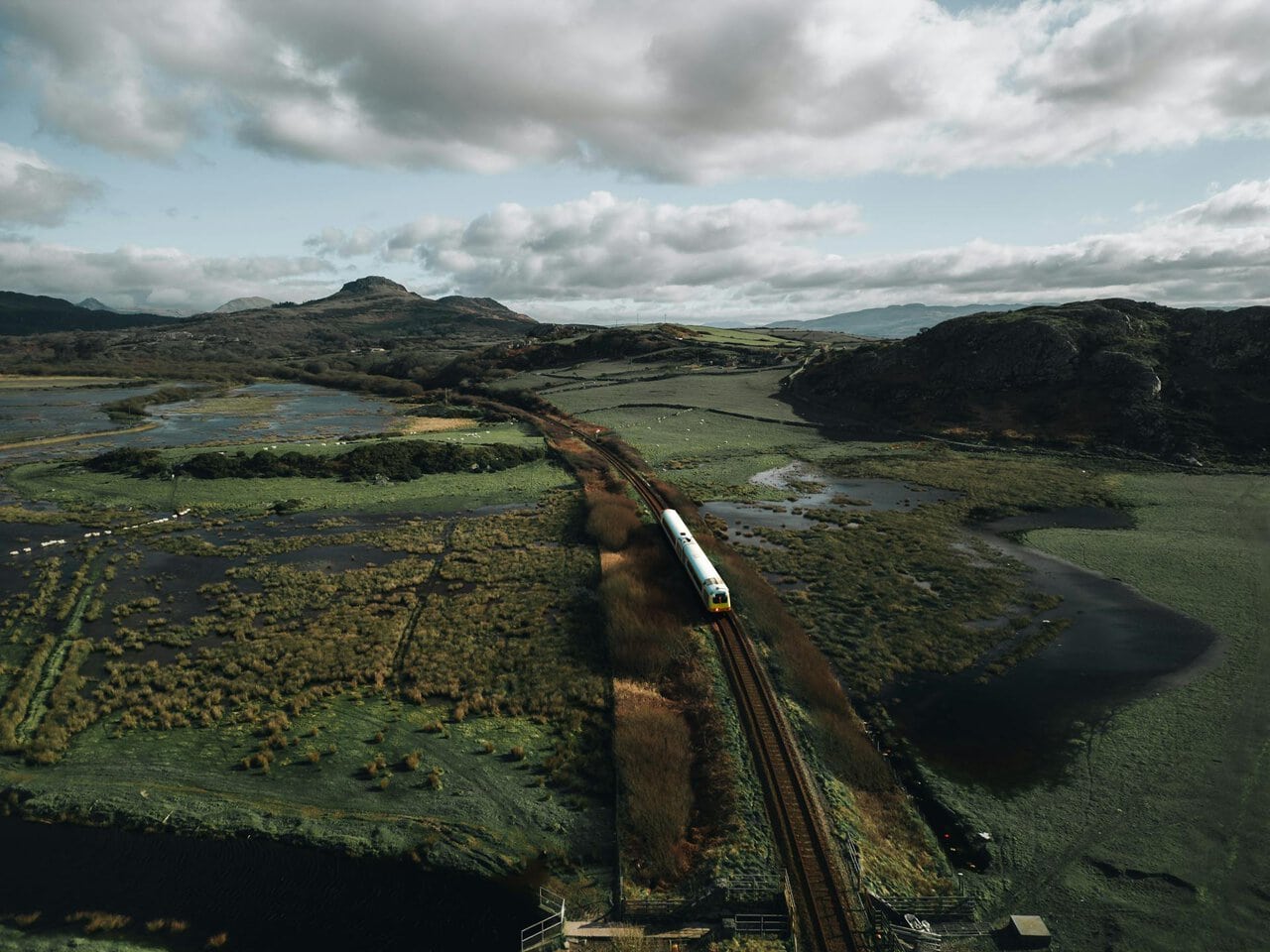
The coastal section is where the route becomes genuinely unforgettable. Trains run beside beaches, estuaries, salt marshes, and open sea, with long stretches where passengers can look directly across Cardigan Bay while mountains rise inland towards Eryri National Park, still widely known as Snowdonia. Few railways in Britain combine coast and mountain scenery so effectively in a single journey.
Unlike some famous scenic railways that feel remote or difficult to use, the Cambrian Line remains practical as well as beautiful. It connects major destinations including Aberystwyth, Barmouth, Harlech, and Pwllheli, making it useful both for sightseeing and real travel. That balance between usefulness and scenery is part of what gives the route such lasting appeal.
Most importantly, the line feels authentic. This is not a heritage railway recreated for tourists. It is a living part of Wales, carrying students, locals, walkers, holidaymakers, and rail enthusiasts through landscapes that still feel rugged and untamed compared with much of the UK rail network.
What the Cambrian Line Is and How It Works
The Cambrian Line runs west from Shrewsbury into the heart of Wales before dividing at Machynlleth into two separate branches serving very different destinations and landscapes. Operated by Transport for Wales, it forms one of the country’s most important rural rail corridors and remains one of the most distinctive train routes in Britain.
From Shrewsbury, trains head into increasingly rural scenery as the line crosses the Welsh border and moves deeper into Mid Wales. Early sections of the route feel peaceful and agricultural, with small stations, rolling hills, and long stretches where the railway appears isolated from major roads or urban development.
At Machynlleth, the line becomes particularly important operationally because this is where services divide. One branch continues southwest towards Aberystwyth, one of Wales’ best-known university and seaside towns. The other heads north and west onto the famous Cambrian Coast Line, eventually reaching Pwllheli after following large sections of the Welsh coastline.
Services generally operate every one to two hours, although frequencies vary depending on the section and time of day. This gives travellers reasonable flexibility, but the line still requires planning, particularly if you are making onward rail connections or attempting day trips along the coast.
Journey times are relatively slow compared with major intercity routes, but speed is not really the point here. The railway curves around estuaries, hugs the coastline, crosses rivers, and passes through small communities that larger rail corridors bypass entirely. The slower pace becomes part of the overall experience.
The line is also historically significant because parts of the Cambrian network became associated with ERTMS digital signalling, making it one of the first railways in Britain to use advanced in-cab signalling systems rather than relying entirely on traditional trackside signals. That creates an unusual contrast where one of Britain’s oldest-feeling rural railways also became part of one of its most modern railway technology projects.
In terms of distance, the Cambrian network covers around 120 miles in total, counting both the main line running west from Shrewsbury to Aberystwyth and the coast branch that turns north at Machynlleth for Pwllheli. This makes it one of the longest single scenic rail corridors anywhere in Britain.
Browse hotels and accommodation for your visit to Wales.
View staysBrowse apartments, holiday homes and self-catering stays in Wales.
View rentalsSee hotel prices from multiple booking sites in one search.
Compare ratesRoute Overview and Key Stops
The Cambrian Line works best when understood as a journey of changing landscapes rather than simply a direct route between two points. One of the reasons travellers remember it so strongly is because the scenery evolves continuously throughout the trip.
Leaving Shrewsbury, the railway quickly begins to feel quieter and more rural. The line passes through parts of the Welsh borderlands where stations are small, villages are scattered, and the landscape gradually becomes more open and isolated. Stops such as Welshpool provide access to market towns and surrounding countryside, while the route deeper into Mid Wales begins to feel increasingly remote.
The railway reaches a major turning point at Machynlleth, one of the most important stations on the entire route. This is where passengers must pay attention because trains divide between the Aberystwyth and Pwllheli branches. Machynlleth itself has a distinctive atmosphere and acts as the gateway between inland Mid Wales and the coast.
The Aberystwyth branch leads towards one of Wales’ best-known seaside towns, combining Victorian promenade scenery with university life, coastal walks, and connections to attractions such as the Vale of Rheidol Railway.
The Cambrian Coast Line towards Pwllheli is where the journey becomes truly extraordinary. The train passes through places such as Tywyn, Aberdovey, Barmouth, Harlech, and Porthmadog, with many sections running directly beside the sea. In several places, passengers can look out across beaches and estuaries on one side while mountains dominate the inland horizon on the other.
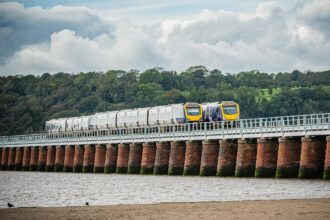
One of the defining moments comes near Barmouth Bridge, where the railway crosses the wide estuary with panoramic views across the water and surrounding hills. For many travellers, this is the standout section of the entire journey and one of the great railway views anywhere in Britain.
Further north, the route passes beneath the imposing presence of Harlech Castle, one of Wales’ most famous medieval fortresses and a dramatic reminder of how closely the railway intertwines with Welsh history and landscape.
The line finally reaches Pwllheli, a harbour town on the Llŷn Peninsula that feels dramatically different from the inland start of the journey at Shrewsbury. By this point, the railway has effectively crossed multiple versions of Wales in a single trip.
Best Stops and Things to Do Along the Cambrian Line
One of the reasons the Cambrian Line stands out among Britain’s scenic railways is that the route is filled with places genuinely worth stopping for rather than simply passing through. The journey works particularly well when treated as a slow-travel experience, allowing time to explore the towns, coastlines, castles, and mountain scenery that define western Wales.
Starting at Shrewsbury, travellers begin in one of England’s most attractive historic market towns. The medieval street pattern, Tudor buildings, and riverside setting around the River Severn make it a worthwhile stop before heading west into Wales. The town also acts as the main rail gateway towards the Cambrian network, with strong onward links from major cities such as Birmingham, Manchester, and London.
Further along the line, Machynlleth becomes one of the route’s most important operational and cultural stops because this is where the railway divides between Aberystwyth and the Cambrian Coast Line towards Pwllheli. The town itself has a strong independent atmosphere and historic links to Owain Glyndŵr, while also acting as a gateway towards southern areas of Eryri National Park.
The branch towards Aberystwyth leads to one of Wales’ best-known seaside destinations. The town combines Victorian promenade scenery with university life, historic remains, and coastal walking routes overlooking Cardigan Bay. Attractions such as the Vale of Rheidol Railway, Constitution Hill, and the remains of Aberystwyth Castle make it one of the strongest overnight stops anywhere on the line.
Along the coast, Aberdovey offers a quieter and more refined seaside atmosphere with expansive beaches and estuary views that feel dramatically different from larger UK resort towns. The surrounding scenery becomes increasingly impressive as the railway moves northwards beside the sea.
For many travellers, Barmouth becomes the defining stop of the entire route. The approach across the famous Barmouth Bridge is one of the most iconic moments anywhere on the British rail network, with sweeping views across the estuary, mountains, and coastline. The town itself combines broad beaches with dramatic scenery inland towards the mountains of Eryri.
The stop at Harlech adds a completely different dimension to the journey because the railway passes directly beneath the spectacular UNESCO-listed Harlech Castle. Few places in Britain combine medieval fortifications, beaches, coastline, and railway scenery so effectively within such a compact area.
Further north, Porthmadog becomes particularly important for railway enthusiasts because it connects with the world-famous Ffestiniog Railway and Welsh Highland Railway. This allows travellers to combine the Cambrian Line with some of the finest heritage railways anywhere in Europe.
Finally, the line reaches Pwllheli on the Llŷn Peninsula, where the landscape feels remote, maritime, and distinctly different from the inland start of the journey at Shrewsbury. The harbour, marina, beaches, and slower pace of life create a fitting end point to one of Britain’s great scenic rail journeys.
| Stop | Why Visit | Best For |
|---|---|---|
| Shrewsbury | Historic market town with medieval streets and strong rail connections | Starting the journey and overnight stays |
| Machynlleth | Important junction town and gateway to southern Eryri | Changing branches and exploring Mid Wales |
| Aberystwyth | Victorian seaside town with promenade, castle ruins, and heritage railway | Longer stays and coastal sightseeing |
| Aberdovey | Beautiful beaches and estuary scenery beside the railway | Relaxed seaside atmosphere |
| Barmouth | Famous estuary bridge crossing and dramatic coastal scenery | Photography and scenic views |
| Harlech | UNESCO-listed castle overlooking the coast | History and panoramic views |
| Porthmadog | Connections with the Ffestiniog and Welsh Highland Railways | Heritage railway enthusiasts |
| Pwllheli | Harbour town and gateway to the Llŷn Peninsula | Coastal relaxation and end-of-line atmosphere |
Cambrian Coast Line Section: Machynlleth to Pwllheli
The section between Machynlleth and Pwllheli is widely regarded as the true highlight of the entire Cambrian Line and is often considered one of the finest coastal railway journeys anywhere in the UK. This is the part of the route where the railway stops feeling like a conventional regional line and begins to feel like a rolling observation platform through some of Wales’ most dramatic scenery.
After leaving Machynlleth, the train gradually approaches the coast before beginning long stretches beside the sea. The atmosphere changes immediately. Inland farmland gives way to estuaries, sand dunes, tidal flats, beaches, and open views across Cardigan Bay. On clear days, the contrast between the sea and the mountains inland towards Eryri creates one of the most visually distinctive rail journeys in Britain.
One of the most famous moments comes at Barmouth Bridge, where the train crosses the broad estuary on a long timber viaduct with panoramic views in multiple directions. The combination of sea air, mountains, boats, and open sky gives this section an almost cinematic quality, particularly during sunrise or late afternoon light. Many travellers consider this the defining image of the Cambrian Coast Line.
Further north, the railway continues through a sequence of coastal communities that each feel slightly different in character. Aberdovey combines beaches with a quieter holiday-town atmosphere, while Tywyn acts as an important stop for travellers connecting with the Talyllyn Railway, one of the world’s most famous preserved narrow-gauge railways. The Talyllyn Railway Company operates that line from its Wharf Station base in Tywyn.
Wildlife adds another layer to this stretch. Ospreys have nested at Cors Dyfi, near Machynlleth, since 2011, close enough to the line that the reserve is signposted as the train heads towards the coast, while the mudflats and saltmarsh around the Dyfi and Mawddach estuaries regularly attract oystercatchers, curlews, and other wading birds working the shoreline of Cardigan Bay.
The section around Harlech is particularly striking because the railway runs beneath the medieval walls of Harlech Castle, a UNESCO World Heritage Site dramatically positioned above the coast. Few railways in Britain pass through scenery where castles, beaches, mountains, and coastline all appear within the same stretch of track.
As the train continues towards Porthmadog and eventually Pwllheli, the route begins to feel increasingly remote and windswept. The line curves around estuaries, passes isolated beaches, and moves through landscapes where the railway often appears almost alone against the sea and hills.
The slower pace is part of what makes the route special. This is not a railway designed for speed or efficiency. It is a line best experienced patiently, allowing the scenery to unfold gradually rather than rushing towards the destination.

A Typical Journey on the Cambrian Line
A journey on the Cambrian Line feels very different from travelling on most major British railways. Rather than fast intercity travel between large urban centres, the experience is quieter, slower, and far more connected to the surrounding landscape.
Leaving Shrewsbury, the first part of the route feels peaceful and rural. The train moves steadily through borderland countryside where stations are small, villages are scattered, and the pace immediately slows compared with the busy rail corridors of England. This opening section establishes the tone for the rest of the journey. The railway feels detached from motorways, cities, and modern urban noise.
As the route pushes deeper into Mid Wales, the scenery becomes more isolated and atmospheric. River valleys, rolling hills, grazing farmland, and distant mountain views dominate the landscape. The train itself often feels lightly loaded outside peak periods, adding to the sense of calm and space.
The atmosphere changes completely after Machynlleth if you continue onto the coast branch. The landscape suddenly opens outward as the railway begins running beside estuaries and beaches. This transition is one of the reasons the route feels so memorable. The journey does not remain visually static. It evolves continuously from inland countryside into expansive coastal scenery.
Passengers sitting beside the windows often spend large stretches simply watching the changing landscape. On clear days, the views across Cardigan Bay can extend for miles, while stormier weather creates a dramatically different atmosphere with rough seas, low clouds, and waves breaking beside the railway.
Unlike heavily commercial tourist routes, the Cambrian Line still feels authentic and lived-in. Local passengers use the railway alongside walkers, tourists, students, and rail enthusiasts. That mixture gives the journey character and prevents it feeling overly curated or artificial.
For many travellers, the experience becomes less about reaching Aberystwyth or Pwllheli and more about enjoying the route itself. The railway encourages slower travel in a way that few modern transport experiences still do.
Travel Times, Frequency and Timetables
The Cambrian Line offers more flexibility than some of Wales’ more remote rural railways, although careful planning still makes a major difference to the overall journey experience.
Services generally operate every one to two hours depending on the section of the line and time of day. This is frequent enough for practical travel, but not so frequent that passengers can simply turn up without checking schedules first, particularly on the coast branch.
Journey times are relatively long because of the route’s winding geography and multiple stops. Trains between Shrewsbury and Aberystwyth usually take a little under two hours, while direct services from Shrewsbury to Pwllheli take around three hours 45 minutes to four hours depending on the service pattern and connections.
One of the most important operational details involves the split at Machynlleth. Some trains divide here, with portions continuing towards different destinations. Travellers should always confirm whether they are sitting in the correct section of the train before departure, particularly during busier periods or when travelling northbound from Shrewsbury.
Connections from England are generally straightforward, especially from cities such as Birmingham, Manchester, and London via Shrewsbury. However, because services are relatively spaced out, missing a connection can sometimes add significant waiting time to the journey.
Travelling during daylight hours is strongly recommended because so much of the appeal comes from the scenery itself. Winter afternoons can become dark surprisingly early along the Welsh coast, meaning some of the best sections may be missed entirely if travelling late in the day.
During summer, weekends and holiday periods can become noticeably busier, particularly on the coastal section towards Barmouth, Harlech, and Pwllheli. Travellers wanting the best seats for scenery often benefit from boarding earlier sections of the route rather than joining later when carriages may already be crowded.
Best Sections for Scenic Views
The Cambrian Line is scenic for almost its entire length, but certain sections stand out so strongly that they have become famous among railway enthusiasts, photographers, and slow-travel travellers across the UK.
The most celebrated stretch is unquestionably the Cambrian Coast Line between Machynlleth and Pwllheli. This is where the railway begins running beside the coast for extended periods, with open views across Cardigan Bay and dramatic mountain backdrops inland towards Eryri. The combination of sea and mountains gives the route a visual variety that few British railways can match.
For many travellers, the absolute highlight comes at Barmouth Bridge. As the train slowly crosses the wide estuary, passengers are surrounded by panoramic views of water, boats, beaches, mountains, and open sky. The bridge itself feels exposed to the landscape in a way that modern railways rarely do, creating one of the most memorable moments anywhere on the UK rail network.
The section around Harlech is another standout because of the extraordinary sight of Harlech Castle rising above the coastline. Few railway routes in Britain pass so closely beneath such a dramatic medieval fortress. On clear days, the contrast between the castle, the sea, and the mountains creates one of the route’s most iconic views.
The coastal run through Aberdovey is particularly attractive during sunny weather, when the beaches and estuary landscapes become brightly lit and expansive. Meanwhile, sections further north near Porthmadog begin to feel increasingly rugged and remote, especially during changing weather conditions.
The inland portion between Shrewsbury and Machynlleth offers a very different type of scenery. Rather than dramatic coastlines, this section focuses on quiet rural Wales with rolling countryside, river valleys, farms, forests, and isolated stations. It feels slower, calmer, and more atmospheric, particularly during autumn and winter.
One of the reasons the Cambrian Line stands out among British scenic railways is this contrast between inland and coastal landscapes. Travellers are not simply looking at the same scenery for hours. The route constantly changes character, which keeps the journey visually engaging from start to finish.
Search routes and flight options for your trip to Wales.
Search flightsChoose an Airalo eSIM and arrange mobile data before you arrive.
Browse eSIMsArrange a private airport pickup for your trip to Wales.
Check transfersTickets and Fares for the Cambrian Line
Tickets for the Cambrian Line operate within the standard UK rail system, although the nature of the route means flexibility and timing become particularly important when choosing the right fare type.
Advance tickets are often available and can offer worthwhile savings, especially on longer journeys between England and the Welsh coast. However, these tickets are tied to specific trains, which can become restrictive on a route where services are relatively infrequent and delays or missed connections can have a larger impact than on busier intercity lines.
For many travellers, Off-Peak tickets provide the best balance between price and flexibility. They allow more freedom to adapt plans while still keeping costs relatively reasonable. This becomes particularly useful if you decide to stop at places such as Barmouth, Aberystwyth, or Harlech rather than travelling the full route in one continuous journey.
Railcards can provide significant discounts across the route and are especially valuable for longer scenic journeys where standard Anytime fares may otherwise become relatively expensive. Travellers using the railway extensively across Wales often find railcards quickly pay for themselves.
The route also works very well with an Interrail Pass or BritRail Pass, particularly for international visitors exploring multiple parts of the UK. Because the Cambrian Line combines practical transport with sightseeing value, it fits naturally into wider rail itineraries through Wales, England, and the rest of Britain.
Travellers booking through platforms such as Rail Europe, Trainline, Omio, or directly with Transport for Wales should still pay attention to connection times at Machynlleth, especially on journeys involving branch splits or onward travel along the coast.
One important thing to remember is that the Cambrian Line is not really a route where rushing brings major advantages. Flexible tickets often provide a far better experience because they allow travellers to pause, explore coastal towns, or simply take later services if weather and scenery encourage slower travel.

Plan Your Train Journey with Rail Europe
Booking train tickets in Europe can become complicated when different operators, routes, and booking systems are involved. Rail Europe makes it easier to search routes, compare fares, and buy train tickets in one place.
It is especially useful for international rail journeys, European city-to-city travel, and travellers looking to book both regular rail tickets and passes. Instead of checking multiple train operators separately, you can plan your journey faster and book with confidence.
When to Use the Cambrian Line
The Cambrian Line works best when approached as both a railway journey and a travel experience. This is not simply transport between two places. It is a route where the journey itself becomes one of the main attractions.
The line is ideal for travellers wanting to experience a slower and more scenic side of Wales without needing a car. Because it links major destinations such as Aberystwyth, Barmouth, Harlech, and Pwllheli, it provides access to large sections of the Welsh coast that would otherwise require complicated road journeys or multiple bus connections.
It is particularly well suited to travellers who enjoy railway journeys for their own sake. Unlike high-speed intercity travel, the Cambrian Line encourages passengers to sit back, watch the scenery evolve, and experience gradual transitions between countryside, estuaries, beaches, and mountain landscapes.
The route is also excellent for flexible touring. Many travellers break the journey across several days, combining the railway with coastal walks, castle visits, heritage railways, and seaside towns along the route. The line pairs especially well with attractions such as the Ffestiniog Railway, Talyllyn Railway, and wider exploration of Eryri National Park.
However, the route is not designed for speed. Travellers whose main priority is reaching destinations quickly may find road travel more efficient in some cases. The railway curves extensively, stops frequently, and prioritises landscape access over rapid transit.
The key is understanding what the Cambrian Line does best. It rewards travellers who value scenery, atmosphere, heritage, and slow travel. Used in the right way, it becomes one of the most memorable rail experiences anywhere in Britain.
Tips for Travelling the Cambrian Line
Travelling on the Cambrian Line is straightforward, but a few simple tips can significantly improve your experience.
The most important is to plan your journey in advance, particularly if you are travelling longer distances or making connections. While services are more frequent than some rural lines, they are still spaced out enough that timing matters.
Choosing the right seat can make a big difference. Sitting by the window allows you to fully enjoy the coastal views and inland scenery, which are the highlight of the journey.
Weather also plays a role. Clear days offer the best views along the coast, while poor weather can limit visibility. If possible, plan your journey during daylight hours and favourable conditions.
Bringing snacks and drinks is advisable, especially on longer journeys where onboard services may be limited.
Finally, pay attention to your route at Machynlleth. Knowing whether your train continues to your destination or requires a change helps avoid confusion.
With a little preparation, the Cambrian Line becomes a smooth, enjoyable, and memorable journey, rather than just a means of transport.

Rupert’s Handy Travel Tips
Rupert loves a train journey where the view keeps changing, and this one delivers exactly that. He knows the Cambrian Line is best enjoyed slowly, with time to sit back and take in both the countryside and the coastline.
- Grab a window seat: it’s the best spot for the coastal views.
- Travel by daylight: the scenery is the whole point, so avoid night journeys.
- Watch the split at Machynlleth: trains divide here, so double-check you’re in the right section.
- Don’t rush: allow extra time to enjoy the journey rather than racing through it.
Want to meet the reindeer behind our travel tips? Find out more in our page Who is Rupert?.



Frequently Asked Questions About the Cambrian Line
Is the Cambrian Line worth it?
Yes. It is widely considered one of the most scenic train routes in Wales, particularly along the coastal section.
Which part of the Cambrian Line is best?
The stretch between Machynlleth and Pwllheli is often seen as the highlight due to its coastal views and changing landscapes.
How long does the journey take?
The full journey from Shrewsbury to Pwllheli takes around three hours 45 minutes to four hours on a direct service, and longer if you change at Machynlleth. Shrewsbury to Aberystwyth is quicker, at just under two hours.
Can you travel part of the route?
Yes. Many travellers choose shorter sections, especially the coastal stretch, to experience the scenery without committing to the full journey.
Is it suitable for day trips?
Yes, particularly if you focus on a specific section of the line and plan your return journey carefully.
Further Reading & Related Guides
If you are planning to explore more of Wales by rail, our Wales trains guide explains how the network connects and how to combine routes effectively. For a slower and more rural experience, our Heart of Wales Line guide offers a completely different journey through the interior of the country, while our North Wales Coast Line guide covers the equally scenic coastal route further north.
For wider travel across the UK, our UK rail guide provides a full overview of major routes and how they link together. To find the best fares and manage your bookings, our train booking apps guide helps you compare routes and prices across multiple operators.
Staying connected is particularly useful when checking live train times, so our eSIM apps guide ensures you remain online throughout your journey, while our local transport apps guide helps you continue your trip once you arrive at your destination.