Reviewed by our editorial team Updated
Why Train Travel Is One of the Best Ways to Explore the UK
Train travel remains one of the most efficient, flexible, and rewarding ways to explore the United Kingdom, offering a combination of speed, comfort, and access that few other transport options can match. Whether you are planning a multi-city itinerary, a scenic journey through the countryside, or a simple point-to-point trip, the UK rail network provides a comprehensive and well-connected system that makes travel straightforward.
One of the biggest advantages of travelling by train in the UK is the ability to move directly between major cities and regions without the need for complex connections. Routes operated by services such as CrossCountry allow you to travel between destinations like Bristol, Birmingham, Manchester, and Edinburgh without passing through London, saving both time and effort.
Rail travel also offers a level of convenience that is difficult to replicate. Stations are typically located in city centres, eliminating the need for long airport transfers or motorway driving. This makes trains particularly effective for short city breaks, business travel, and multi-destination trips.
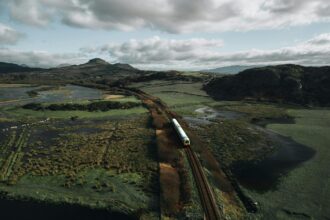
Beyond practicality, train travel in the UK also delivers some of the most scenic journeys in Europe. Routes such as the Settle–Carlisle Line, West Highland Line, and Cambrian Line provide spectacular views of coastlines, mountains, and countryside, turning travel time into part of the experience.
The key takeaway is simple. Trains are not just a way to get around the UK. They are a core part of the travel experience, offering a balance of speed, comfort, and scenery that makes them one of the best ways to explore the country.
How the UK Rail Network Works
Understanding how the UK rail network works is essential for planning efficient journeys, particularly because it operates differently from many other countries. Rather than being run by a single national operator, the system is made up of multiple train companies operating under a unified structure, commonly referred to as the National Rail network.
This means that while you may travel on services run by different operators, the overall system remains integrated and consistent. Tickets are generally interchangeable across operators on the same route, and stations, timetables, and booking systems follow a standardised framework.
At the centre of this system is the concept of shared infrastructure. Tracks and major stations are managed centrally, while train services are operated by different companies such as LNER, Great Western Railway, and Avanti West Coast. This allows multiple services to run across the same routes, increasing flexibility and coverage.
For travellers, this structure offers significant advantages. You can plan journeys across the entire country using a single booking platform, combine different operators in one trip, and access a wide range of routes without needing to understand complex systems.
However, it also means that pricing and service levels can vary depending on the operator and route. Understanding ticket types, booking strategies, and service differences becomes an important part of planning your journey.
Once you grasp the basics, the UK rail network becomes surprisingly easy to navigate, offering a level of flexibility and coverage that makes it one of the most accessible transport systems in Europe.
Compare hotels and other places to stay in United Kingdom.
Check availabilityBrowse apartments, holiday homes and self-catering stays in United Kingdom.
View rentalsCompare prices for United Kingdom hotels across multiple booking sites.
Check dealsMajor UK Rail Operators Explained
The UK rail network is operated by a range of train companies, each responsible for different routes and regions. Understanding these operators helps you plan journeys more effectively and identify the best options for your travel needs.
CrossCountry is one of the most distinctive operators, providing long-distance routes that connect regions across the UK without passing through London. It is particularly useful for journeys between cities such as Birmingham, Leeds, and Edinburgh.
Great Western Railway focuses on routes between London and the South West of England and Wales, including destinations such as Bristol, Bath, and Cornwall. It is one of the key operators for travel in the western part of the country.
LNER operates high-speed services along the East Coast Main Line, linking London with cities such as York, Newcastle, and Edinburgh. It is one of the fastest and most efficient ways to travel between England and Scotland.
Avanti West Coast runs services along the West Coast Main Line, connecting London with Birmingham, Manchester, and Glasgow. This is another major intercity route that forms a backbone of the UK rail system.
Regional operators also play an important role. Transport for Wales provides services across Wales and the border regions, while ScotRail operates the majority of services within Scotland.
Together, these operators form a highly interconnected network, allowing passengers to travel across the UK using a combination of services that work together within a unified system.
Major Rail Routes and Lines Across the UK
The UK rail network is structured around several key routes and corridors that define how passengers move across the country. Understanding these major lines provides a clear overview of how the system works and helps you identify the most efficient routes for your journey.
The East Coast Main Line is one of the most important routes, linking London with York, Newcastle, and Edinburgh. Operated primarily by LNER, it offers fast, direct services along the eastern side of the country.
The West Coast Main Line, operated by Avanti West Coast, connects London with Birmingham, Manchester, Liverpool, and Glasgow. It is one of the busiest and most important rail corridors in the UK.
The Great Western Main Line provides connections between London and the South West, including Bristol, Exeter, and Cornwall, with services run by Great Western Railway.
The Midland Main Line offers an important route between London and cities such as Leicester, Derby, and Sheffield, providing a central corridor through the country.
The TransPennine Route connects major cities across northern England, including Manchester, Leeds, and York, forming a critical east–west link across the Pennines.
In addition to these long-distance routes, urban and cross-city lines such as the Thameslink and the Elizabeth line provide high-frequency services within and across London.
Together, these routes form the core structure of the UK rail network, allowing passengers to travel efficiently between regions, cities, and local destinations.
Scenic Train Journeys in the UK
One of the biggest advantages of travelling by rail in the UK is access to some of the most scenic railway journeys in Europe, where the journey itself becomes a central part of the experience. These routes are not just about getting from one place to another. They offer landscapes, viewpoints, and atmosphere that you simply cannot experience by road or air.
The Settle–Carlisle Line is one of the most iconic examples, taking passengers across the Yorkshire Dales and Pennines, with highlights such as the Ribblehead Viaduct providing dramatic views and a sense of scale that defines the route.
In Scotland, the West Highland Line delivers one of the most famous rail journeys in the world, passing through mountain landscapes, lochs, and remote highland scenery. Similarly, the Kyle of Lochalsh Line offers a quieter but equally impressive journey through wild and rugged terrain towards the west coast.
Wales provides its own unique experiences. The Cambrian Line combines coastal views and inland countryside, while the Heart of Wales Line offers a slower, more immersive journey through rural landscapes and small communities.
These scenic routes highlight the diversity of the UK’s landscapes, from mountains and valleys to coastlines and open countryside. They also provide opportunities to explore regions that are less accessible by other means.
For travellers, these journeys represent more than transport. They are experiences in their own right, offering a different perspective on the country and creating some of the most memorable moments of any trip.

Heritage Railways and Steam Train Experiences
Alongside the main rail network, the UK is home to a wide range of heritage railways and steam train experiences, offering a completely different way to travel. These services are not designed for everyday transport. Instead, they focus on nostalgia, history, and the experience of classic railway travel.
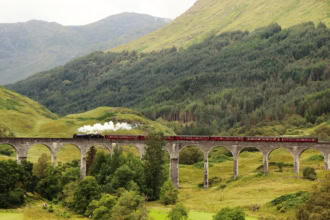
The Jacobite Steam Train is one of the most famous examples, running through the Scottish Highlands and crossing the iconic Glenfinnan Viaduct. This journey is widely recognised as one of the most visually spectacular steam train experiences in the world, attracting visitors from across the globe.
In England, the East Lancashire Railway offers a different experience, combining historic rolling stock with a route that passes through industrial heritage landscapes and countryside.
What defines heritage railways is their focus on experience over efficiency. Journeys are typically slower, stations are preserved in traditional styles, and the trains themselves often date back decades, providing a glimpse into the past.
These railways are best seen as attractions rather than transport options. They are ideal for day trips, themed experiences, and travellers who want to engage with the history of rail travel in the UK.
For many visitors, a heritage railway journey adds an extra layer to their trip, offering a unique and memorable experience that complements modern rail travel.
| Railway / Experience | Location | Type of Experience | Why It’s Special |
|---|---|---|---|
| Jacobite Steam Train | Scottish Highlands | Steam train | World-famous route over the Glenfinnan Viaduct with dramatic Highland scenery |
| East Lancashire Railway | North West England | Heritage railway | Classic steam and diesel services through historic industrial landscapes |
| Nene Valley Railway | Cambridgeshire | Heritage railway | International rolling stock and riverside scenery along the Nene |
| Ffestiniog Railway | North Wales | Narrow-gauge steam | One of the world’s oldest railways through Snowdonia landscapes |
| Welsh Highland Railway | North Wales | Narrow-gauge steam | Long scenic route through mountains linking Caernarfon and Porthmadog |
| Strathspey Railway | Scottish Highlands | Steam railway | Classic Highland scenery with vintage rolling stock |
| Bluebell Railway | Sussex | Steam railway | One of the UK’s oldest preserved lines with beautifully restored stations |
| North Yorkshire Moors Railway | Yorkshire | Steam railway | Long scenic route through national park landscapes to the coast |
| Severn Valley Railway | Midlands | Heritage railway | Extensive line with multiple stations and strong historical authenticity |
| West Somerset Railway | Somerset | Steam railway | One of the longest heritage railways in the UK with coastal sections |
| Swanage Railway | Dorset | Steam railway | Scenic route linking countryside with a traditional seaside town |
| Keighley & Worth Valley Railway | Yorkshire | Steam railway | Famous filming location with classic Yorkshire scenery |
International Train Travel: Eurostar and Beyond
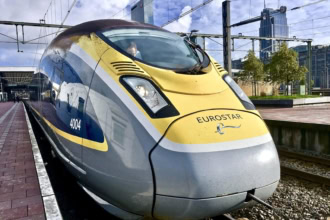
The UK rail network is not limited to domestic travel. It also connects directly to mainland Europe through the Eurostar, providing a fast and convenient way to travel between London and major European cities.
Eurostar services run from London St Pancras International to destinations such as Paris, Brussels, and Amsterdam, offering journey times that are competitive with flying when you consider airport transfers and security procedures. Trains operate at high speed through the Channel Tunnel, creating a seamless connection between the UK and continental Europe.
One of the key advantages of Eurostar is convenience. Passengers travel city centre to city centre, avoiding the need for long airport transfers. This makes it particularly attractive for short breaks and business travel.
The service is also integrated with wider European rail networks, allowing onward travel to destinations across France, Belgium, the Netherlands, and beyond. This opens up opportunities for multi-country rail journeys and extended itineraries.
For travellers based in the UK, Eurostar provides a practical and efficient gateway to Europe, combining speed, comfort, and accessibility in a way that complements domestic rail travel.
Eurostar also offers a lesser-known option called Eurostar Snap, which can significantly reduce the cost of international rail travel if you are flexible with your schedule. Instead of choosing a specific departure time, you select a travel date and destination, and Eurostar assigns you a train at a later stage. This can lead to substantial savings compared to standard fares, particularly on popular routes such as London to Paris or Brussels. The trade-off is reduced flexibility, but for travellers with open plans, it provides a simple way to access lower fares on high-speed European routes. If you are considering this option, it is worth reading our Eurostar Snap guide to understand how it works and when it offers the best value.
Overnight Sleeper Trains in the UK
Overnight rail travel in the UK offers a unique way to cover long distances while saving time and accommodation costs. Rather than travelling during the day, sleeper trains allow you to board in the evening and arrive the next morning, making them one of the most efficient ways to travel between London and Scotland.
The UK has two main sleeper services, both connecting London with key destinations in Scotland. These routes are not just practical. They are also considered one of the most distinctive rail experiences in the country.
The most well-known service is the Caledonian Sleeper, which runs from London to destinations including Edinburgh, Glasgow, Inverness, Fort William, and Aberdeen. This service offers a range of accommodation options, from standard seats to private cabins with beds, allowing travellers to choose between a budget-friendly journey or a more comfortable overnight experience.
The second key service is the Night Riviera Sleeper, which operates between London and Penzance in Cornwall. This route provides a convenient way to reach the far southwest of England without losing a full day to travel.
Sleeper trains are particularly useful for longer journeys where daytime travel would take several hours. By travelling overnight, you can maximise your time at your destination, arriving early and ready to explore.
However, they do require planning. Cabins can sell out quickly, especially during peak travel periods, and prices vary depending on demand and accommodation type. Booking in advance is usually essential if you want a private cabin.
For a full breakdown of routes, cabins, and booking strategies, see our detailed guides to the Caledonian Sleeper and Night Riviera Sleeper, which explain how to get the best value from these services.

Plan Your Train Journey with Rail Europe
Booking train tickets in Europe can become complicated when different operators, routes, and booking systems are involved. Rail Europe makes it easier to search routes, compare fares, and buy train tickets in one place.
It is especially useful for international rail journeys, European city-to-city travel, and travellers looking to book both regular rail tickets and passes. Instead of checking multiple train operators separately, you can plan your journey faster and book with confidence.
Search routes and flight options for your trip to United Kingdom.
Search flightsUse an eSIM to get online without hunting for a local SIM after arrival.
See eSIM optionsHave a private airport pickup arranged before you travel.
Book a transferRail & Sail: Combining Trains and Ferries
Rail travel in the UK can also be combined with ferry services to create integrated journeys across water, a concept often referred to as Rail & Sail. This approach allows passengers to travel seamlessly between rail networks and ferry routes using a single ticket or coordinated services.
Rail & Sail routes are particularly important for travel between the UK and Ireland, as well as journeys to Scottish islands and other coastal destinations. By combining train and ferry services, passengers can avoid the need for flights or complex transfers.
These journeys typically involve travelling by train to a port, followed by a ferry crossing, with connections designed to align as closely as possible. In many cases, tickets can be purchased as a single combined journey, simplifying the booking process.
Rail & Sail offers a different type of travel experience. It is often slower than flying, but it provides a more relaxed and scenic way to travel, with the added benefit of fewer restrictions on luggage and a more flexible journey structure.
For travellers looking to explore beyond the mainland, Rail & Sail creates opportunities to reach destinations that would otherwise require more complex planning, making it a valuable extension of the UK rail network.
Rail Passes for UK Travel: Interrail and BritRail
For travellers planning multiple journeys across the UK, rail passes can offer a flexible and often cost-effective alternative to individual tickets, particularly if you are covering long distances or visiting several destinations as part of a wider Interrail Pass trip across Europe.
The Interrail Great Britain Pass is designed primarily for European residents and allows unlimited travel on participating train services across England, Scotland, and Wales for a set number of days. This makes it ideal for multi-city trips and flexible itineraries, where you want the freedom to travel without booking every journey in advance.
For international visitors, the BritRail Pass provides a similar concept, offering unlimited travel within the UK over a fixed period. It is particularly useful for those visiting from outside Europe, as it simplifies travel planning and removes the need to navigate complex ticket pricing.
Both passes work best when used strategically. They offer the greatest value when covering long distances or multiple journeys within a short timeframe, where individual ticket costs would otherwise add up quickly.
However, for shorter trips or occasional travel, standard tickets may still be more cost-effective. Understanding when to use a rail pass is key to getting the best value.
For travellers planning extended journeys, these passes provide flexibility, simplicity, and the ability to explore the UK at your own pace.
Explore Europe by Train with Rail Passes
Travelling by train in Europe can quickly become expensive if you book individual tickets. Rail passes offer a flexible way to travel across one or multiple countries with a single ticket, making it easier to plan your journey.
Rail Europe allows you to compare and buy a wide range of rail passes, including Interrail-style options, helping you choose the best pass for your route and travel style.
How to Book Train Tickets in the UK
Booking train tickets in the UK is relatively straightforward once you understand the different ticket types and how pricing works. The system is built around flexibility versus cost, with different ticket options designed to suit different travel needs.
Advance tickets are typically the cheapest option and are released in limited quantities for specific trains. These tickets can offer significant savings, particularly on long-distance routes, but they are tied to a specific service and do not allow flexibility if your plans change.
Off-Peak tickets provide a balance between cost and flexibility, allowing travel on a range of services outside busy periods. These are often the best option for travellers who want some flexibility without paying the highest prices.
Anytime tickets offer full flexibility, allowing you to travel on any service, but they are usually the most expensive option.
Timing plays a major role in pricing. Booking in advance can reduce costs significantly, while travelling during peak hours typically increases fares.
Understanding these ticket types allows you to choose the right balance between price and flexibility, ensuring that your journey is both cost-effective and convenient.
Some operators also offer discounted flexible-style tickets that sit between Advance and Off-Peak pricing. A good example is Avanti West Coast’s Superfare, which allows you to select a time window rather than a specific train. You are then allocated a service within that window, often at a significantly reduced price compared to standard fares. This approach works particularly well on long-distance routes where prices can be high, giving you a way to save money while still retaining some flexibility. For a detailed breakdown, see our Avanti Superfare guide to understand how to use it effectively.
Best Train Booking Apps and Tools
Using the right tools can make a significant difference when planning rail travel in the UK. Train booking apps allow you to compare routes, check live times, and secure tickets quickly, often providing access to the best available fares.
Platforms such as Trainline and Rail Europe bring together multiple operators into a single interface, making it easier to plan complex journeys and compare options. These tools are particularly useful when travelling across different regions or combining services from multiple operators.
Booking apps also provide real-time updates, platform information, and journey notifications, helping you stay informed throughout your trip. This is especially valuable when travelling on longer routes or making connections.
For travellers using rail passes or flexible tickets, apps can help you track services and adjust plans as needed, adding an extra layer of convenience.
Choosing the right booking tools ensures that you can plan efficiently, save money, and stay informed, making your overall travel experience smoother and more predictable.
Seat Reservations and First Class Travel
Seat reservations play an important role in UK rail travel, particularly on long-distance routes where trains can become busy. While not always mandatory, reserving a seat can make a significant difference to comfort and overall travel experience.
On many services, especially those operated by CrossCountry, reservations are strongly recommended. These trains often cover long distances and can become crowded, particularly during peak periods or on popular routes.
First Class travel offers additional comfort, including more spacious seating, quieter environments, and sometimes complimentary services. For longer journeys, this can transform the experience, making travel more relaxed and enjoyable.
Understanding when to reserve and when to upgrade is key. On shorter journeys, reservations may not be necessary, but on longer routes, they can provide peace of mind and a more comfortable journey.
For travellers looking to improve their experience, combining reservations with strategic upgrades can make a noticeable difference, particularly on routes that last several hours.
Upgrading Your Seat with Seatfrog
One of the simplest ways to improve long-distance rail travel in the UK is by using Seatfrog, a tool designed to help passengers upgrade to First Class at a significantly reduced price.
On many UK routes, particularly those operated by CrossCountry and Avanti West Coast, First Class carriages often have spare capacity, while Standard Class can become crowded. Seatfrog allows you to take advantage of this by offering either auction-based upgrades or fixed-price offers, giving you access to a more comfortable travel environment without paying full First Class fares.
This can make a noticeable difference on longer journeys. First Class typically offers more space, quieter seating areas, and a more relaxed atmosphere, which is particularly valuable on routes lasting several hours.
The key to using Seatfrog effectively is flexibility. Checking availability before departure and being open to different times can increase your chances of securing a good deal.
For travellers looking to enhance comfort without significantly increasing costs, Seatfrog provides a practical and accessible way to upgrade your journey, especially on busy intercity routes.
Compare hostels and budget-friendly accommodation around United Kingdom.
Browse hostelsFlying to United Kingdom? Get fast compensation payouts, eligible lounge benefits and expert help when flights go wrong.
See AirHelp+ benefitsUse convenient luggage storage around United Kingdom between arrival, check-in and departure.
Check storageRailcards and How to Save Money on UK Trains
Railcards are one of the most effective ways to reduce the cost of train travel in the UK, offering significant discounts on a wide range of tickets. For frequent travellers or those planning multiple journeys, they can provide excellent value.
Most railcards offer around one-third off standard fares, including Advance, Off-Peak, and Anytime tickets. There are different types available, including options for young people, seniors, couples, and families, making them accessible to a wide range of travellers.
Railcards are particularly valuable on longer journeys, where ticket prices are higher. Even a small number of trips can often justify the cost of the card, making it a simple way to reduce overall travel expenses.
For international visitors, railcards can still be used in many cases, adding an extra layer of savings on top of other booking strategies.
Understanding which railcard applies to you and how to use it effectively can make a significant difference to your travel budget, particularly when combined with advance booking or flexible ticket strategies.
Save Money on Train Travel with Railcards
Train travel can quickly add up, especially if you are making multiple journeys. Railcards offer an easy way to save money on train tickets, with discounts available across a wide range of routes.
They are ideal for frequent travellers, day trips, and longer journeys where ticket costs can be significant. A railcard can pay for itself quickly, making it a simple way to reduce travel costs.
Delay Repay: Claiming Compensation for a Delayed Train
Most UK train operators run a nationwide compensation scheme called Delay Repay, which pays back part of your fare when a train arrives late. It is one of the most useful things to know before travelling, yet claims are never automatic, so it is easy to miss out on money you are owed.
Around 24 operating companies now participate, including Avanti West Coast, LNER, GWR, ScotRail, CrossCountry and TransPennine Express. Most use a 15-minute delay threshold before compensation kicks in, though a handful of operators still apply a 30-minute threshold, so it is worth checking the specific company you travelled with.
Compensation scales with how late the train runs. Under the most common scheme, a delay of 15 to 29 minutes typically pays 25% of a single fare, rising to 50% for delays of 30 to 59 minutes, and a full refund for delays of an hour or more.
Claims are submitted through the operator’s own website or app, or via the National Rail website, and you will normally need your ticket barcode or booking reference along with proof of the price paid. Season ticket holders can usually claim online too, using their photocard details.
There is a 28-day window from the date of travel to submit a claim, so it pays to do it soon after an affected journey rather than letting the ticket details go missing. For travellers combining multiple UK legs, checking Delay Repay eligibility after each delayed journey can add up to meaningful savings over a longer trip.
Understanding UK Train Stations and Connections
Navigating train stations in the UK is generally straightforward, but understanding how they work can help you move more efficiently, particularly when making connections.
Major stations such as London Paddington, Birmingham New Street, and Manchester Piccadilly act as central hubs, linking multiple routes and operators. These stations can be busy, but they are well signposted and designed to handle large numbers of passengers.
Platform information is typically displayed on large departure boards, showing train times, destinations, and platform numbers. It is important to check these regularly, as platforms can change.
When making connections, allowing a small amount of extra time can help reduce stress, particularly in larger stations where platforms may be spread out.
Smaller stations are often simpler, with fewer platforms and facilities, making navigation easier but sometimes offering limited services.
Overall, UK stations are designed to support a smooth and efficient travel experience, with clear signage and consistent systems that make navigation relatively easy for both domestic and international travellers.

Popular Train Journeys in the UK
The UK rail network supports a wide range of journeys, from short city connections to long-distance routes that span the country. Some of the most popular journeys highlight the strength and flexibility of the system.
Travel between London and Edinburgh is one of the most well-known routes, offering a fast and direct connection along the East Coast Main Line. This journey combines efficiency with scenic sections, particularly in northern England and Scotland.
Routes such as Manchester to Bristol or Birmingham to Glasgow demonstrate the value of cross-country services, allowing passengers to travel between major cities without passing through London.
Journeys within regions, such as travel across northern England or along the South West, provide access to a mix of urban and rural destinations, making rail a versatile option for different types of travel.
Scenic journeys, including routes through the Scottish Highlands or along the Welsh coast, add an extra dimension, turning travel into an experience rather than simply a means of transport.
These journeys show how the UK rail network can be used in different ways, from efficient intercity travel to slower, more immersive routes, depending on your needs.
When to Use Trains vs Driving or Flying in the UK
Choosing between trains, driving, or flying in the UK depends on your priorities, but in many cases, rail travel offers the best overall balance of speed, convenience, and comfort.
Trains are often the fastest option for journeys between major cities. Routes such as London to Edinburgh or Manchester to Birmingham allow you to travel directly between city centres, avoiding airport transfers and motorway congestion. When you factor in check-in times, security, and travel to and from airports, trains are frequently more time-efficient than flying on domestic routes.
Compared to driving, trains remove the stress of navigating traffic, finding parking, and dealing with long motorway journeys. This makes them particularly attractive for business travel and short city breaks, where convenience and reliability are key.
However, there are situations where alternatives may be more suitable. Driving can be more practical for reaching remote rural areas or destinations not well served by rail, while flying may be faster for very long distances or routes with limited train connections.
The key is to match the mode of transport to your journey. For most intercity travel and many regional routes, trains provide a simple, efficient, and comfortable solution that is hard to beat.
Tips for Travelling by Train in the UK
Travelling by train in the UK is generally straightforward, but a few practical tips can help you get the most out of the experience and avoid common issues.
Booking tickets in advance is one of the easiest ways to save money, particularly on long-distance routes. Advance tickets are often significantly cheaper, especially when booked several weeks ahead.
Travelling outside peak hours can also improve both cost and comfort. Off-Peak services tend to be less crowded and more relaxed, making them a better choice for leisure travel.
Checking your journey before departure is important, particularly for longer trips or those involving connections. Real-time updates and platform information can help you avoid delays and ensure a smooth journey.
Packing appropriately can also improve comfort. Bringing snacks, drinks, and entertainment is useful for longer journeys, especially on routes that last several hours.
Finally, think strategically about your journey. Combining different routes, using direct services, and taking advantage of tools such as Seatfrog can significantly enhance your experience.
With a little preparation, train travel in the UK becomes simple, flexible, and highly enjoyable.

Rupert’s Handy Travel Tips
Rupert has travelled the length and breadth of the UK by train, and he always says the same thing: a little planning goes a long way. The network is powerful, but knowing how to use it makes all the difference.
- Book early for the best prices on long-distance routes
- Travel off-peak for a quieter and more relaxed experience
- Use direct routes where possible to save time and hassle
- Upgrade with Seatfrog on longer journeys for extra comfort
Want to meet the reindeer behind our travel tips? Find out more in our page Who is Rupert?.




Frequently Asked Questions About UK Train Travel
Are trains expensive in the UK?
They can be, but prices vary significantly depending on when and how you book. Using Advance tickets, railcards, and flexible options can help reduce costs considerably.
How far in advance should I book tickets?
Booking several weeks ahead usually provides the best prices, particularly for long-distance routes. However, Off-Peak and flexible tickets are also available for shorter notice travel.
Do you need seat reservations?
Reservations are not always required, but they are recommended on busy routes and longer journeys to ensure a more comfortable experience.
Are UK trains reliable?
The network is generally reliable, but delays can occur. Checking live updates before and during your journey helps you stay informed.
Can tourists use UK trains easily?
Yes. The system is designed to be accessible, with clear signage, integrated ticketing, and widely available booking tools, making it easy for international visitors to navigate.
Further Reading & Related Guides
If you are planning to explore specific parts of the network, our CrossCountry trains guide explains how to travel across the UK without passing through London, while our Great Western Railway guide covers routes to the South West and beyond. For high-speed travel between England and Scotland, our LNER guide provides a detailed look at one of the country’s fastest routes.
For more experience-based journeys, our guides to the Settle to Carlisle Line, Cambrian Line, and West Highland Line highlight some of the most scenic rail routes in the UK. If you are travelling internationally, our Eurostar guide shows how to connect the UK with Europe by rail.
To plan and book your journeys, our train booking apps guide helps you find the best fares, while our Seatfrog guide explains how to upgrade your seat for less. For saving money across multiple trips, our railcards guide provides everything you need to know about discounts and eligibility.