Reviewed by our editorial team Updated
Why CrossCountry Trains Are Essential for UK Travel
CrossCountry trains play a unique and often overlooked role in the UK rail network. While many routes are designed to move passengers into and out of London, CrossCountry does something completely different. It connects major cities across the UK without requiring travel through the capital, making it one of the most practical options for long-distance journeys.
This is what makes the network so valuable. Instead of routing through London and dealing with busy stations and transfers, you can travel directly between cities such as Bristol, Birmingham, Leeds, and Edinburgh in a single, continuous journey.
For travellers, this creates a far more efficient way to move across the country. It reduces the need for multiple connections and avoids the congestion and complexity of central London. This is particularly useful for regional travel, business trips, and multi-city itineraries.
CrossCountry trains also cover a wide geographic area, linking the South West, Midlands, North of England, and Scotland. This makes them one of the most versatile options for long-distance travel within the UK.
The key point is simple. CrossCountry is not just another train operator. It is the backbone of non-London rail travel, providing direct, practical connections that make exploring the UK significantly easier.
How a Network With No Central Hub Actually Runs
CrossCountry operates a network of long-distance train services that run across multiple regions of the UK. Unlike operators focused on specific corridors, CrossCountry trains are designed to link different parts of the country together, often over long distances.
These services typically run from the South West and South Coast through the Midlands and into the North of England and Scotland, creating routes that cover a significant portion of the country. Trains often stop at a mix of major cities and smaller regional stations, making them both intercity and regional services at the same time.
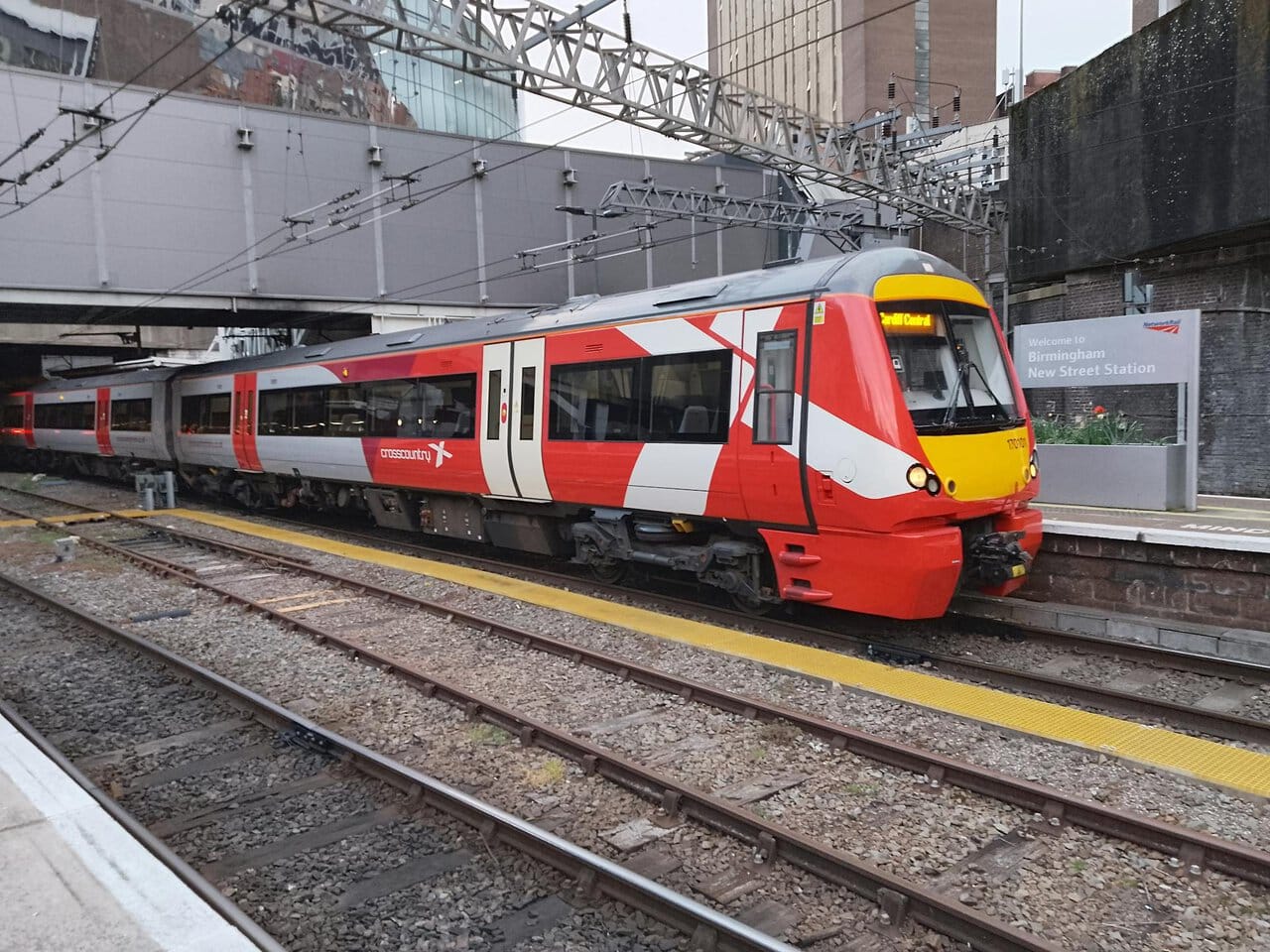
One of the defining features of CrossCountry is its reliance on hub stations, particularly Birmingham New Street. Many routes pass through Birmingham, making it a key interchange point where passengers can connect between different services.
Trains are generally comfortable and suitable for longer journeys, but they are not high-speed services in the same way as some London-focused routes. Instead, they prioritise coverage and direct connections over maximum speed.
Reservations are often recommended, especially on busy routes, as trains can become crowded during peak times and on longer journeys.
Understanding how CrossCountry works is straightforward. It is a network built for long-distance, cross-regional travel, offering direct routes that simplify journeys across the UK.
See hotel options and places to stay in United Kingdom.
Browse hotelsBrowse apartments, homes and self-catering accommodation in United Kingdom.
Browse rentalsCompare prices for United Kingdom hotels across multiple booking sites.
Check dealsMajor CrossCountry Routes Across the UK
CrossCountry operates several key corridors that define how the network functions. Rather than a single route, it is best understood as a series of long-distance travel paths linking different regions of the UK.
One of the most important routes runs from the South West, starting in Plymouth, passing through Bristol and Birmingham, and continuing north towards Leeds and Edinburgh. This route effectively connects the south coast of England with Scotland in a single line.
Another major corridor links the South Coast, including destinations such as Bournemouth, with the Midlands and the North. This provides a direct connection between coastal areas and inland cities.
Birmingham acts as the central hub, with multiple routes intersecting at Birmingham New Street. This allows passengers to switch between routes and reach a wide range of destinations without travelling via London.
What makes these routes powerful is their flexibility. You can travel long distances or shorter segments, depending on your needs, while still benefiting from the same network.
For travellers, this means CrossCountry provides a comprehensive web of connections, making it one of the most useful operators for exploring the UK beyond the capital.
Key CrossCountry Stations and Hubs
The effectiveness of CrossCountry depends heavily on its major stations, which act as connection points across the network. These hubs allow passengers to transfer between routes and continue their journey without unnecessary detours.
The most important hub is Birmingham New Street. This station sits at the centre of the CrossCountry network, with multiple routes passing through it. It acts as the primary interchange for cross-country travel, allowing passengers to connect between different regions quickly and efficiently.
Bristol Temple Meads is another key station, serving as a gateway to the South West and connecting with routes operated by Great Western Railway.
Further north, stations such as Leeds Station and Manchester Piccadilly provide important connections to northern England, while Edinburgh Waverley links the network into Scotland.
These stations are more than just stops. They are critical nodes that allow the network to function as a connected system, giving passengers the flexibility to travel across large parts of the UK.
How CrossCountry Connects the UK Without London
The real strength of CrossCountry lies in its ability to connect the UK without routing passengers through London, something very few other operators can do at scale. This fundamentally changes how you plan journeys across the country.
Most UK rail routes are designed around London as the central hub. If you want to travel between two regional cities, you are often forced to travel into London, change stations, and then head back out again. This adds time, cost, and complexity.
CrossCountry removes that problem entirely. It provides direct routes between major regional cities, allowing you to travel across the country in a far more logical way. Journeys such as Bristol to Manchester or Birmingham to Edinburgh can be completed without ever entering the capital.
This has a major impact on travel efficiency. You avoid the busiest stations, reduce the number of connections, and often arrive closer to your final destination with less stress.
It also makes CrossCountry ideal for multi-city travel itineraries, where you are moving between several destinations across different regions. Instead of building your journey around London, you can move across the country in a more natural way.
The key takeaway is clear. CrossCountry acts as a national connector, linking the UK together in a way that is faster, simpler, and more practical for many journeys.

CrossCountry Tickets and Fares
Tickets on CrossCountry follow the standard UK rail pricing structure, but because journeys are often longer, choosing the right ticket type becomes more important than on shorter routes.
Advance tickets are usually the cheapest option and can offer significant savings, especially on longer journeys. However, they are tied to a specific train, which means less flexibility if your plans change.
For many travellers, Off-Peak tickets provide the best balance. They allow travel on a range of services outside busy times, making them more suitable for journeys where you may want flexibility.
Anytime tickets offer full flexibility but come at a higher price. These are typically used when travel times are uncertain or when flexibility is essential.
Seat reservations are strongly recommended on CrossCountry services. Because these trains cover long distances and can become busy, having a reserved seat makes a noticeable difference to comfort and peace of mind.
Railcards can also be used to reduce fares, offering savings on longer journeys where ticket prices are higher.
The key is to match your ticket choice to your journey. On CrossCountry, where trips are often longer, the right ticket can make your travel both cheaper and significantly more comfortable.

Plan Your Train Journey with Rail Europe
Booking train tickets in Europe can become complicated when different operators, routes, and booking systems are involved. Rail Europe makes it easier to search routes, compare fares, and buy train tickets in one place.
It is especially useful for international rail journeys, European city-to-city travel, and travellers looking to book both regular rail tickets and passes. Instead of checking multiple train operators separately, you can plan your journey faster and book with confidence.
Upgrading to First Class with Seatfrog
One of the easiest ways to improve a long journey on CrossCountry is by upgrading to First Class using Seatfrog.
CrossCountry trains are often busy, particularly on popular routes and longer journeys. Standard Class can become crowded, especially during peak travel times. On routes that can last several hours, this can make a noticeable difference to comfort.
Seatfrog offers a simple solution. It allows you to bid for or purchase last-minute First Class upgrades, often at a fraction of the standard price. This gives you access to more space, quieter carriages, and a more relaxed travel environment, which is particularly valuable on long-distance journeys.
Because CrossCountry services often have spare First Class capacity, the chances of securing an upgrade can be good, especially if you are flexible and check availability in advance.
For travellers, this creates a practical opportunity. Instead of paying full First Class prices, you can upgrade strategically and enjoy a significantly improved experience for a relatively small additional cost.
If you are planning a longer journey, it is worth checking our Seatfrog upgrade guide to understand how the process works and how to maximise your chances of getting a good deal.
The key point is simple. On long CrossCountry routes, Seatfrog can turn an ordinary journey into a far more comfortable and enjoyable experience.
Travel Times and Popular CrossCountry Routes
CrossCountry services cover long distances, and travel times reflect the scale of the network. While not as fast as some dedicated intercity routes, they offer the advantage of direct connections across multiple regions.
A journey from Bristol to Manchester typically takes around two and a half to three hours, providing a direct link between the South West and the North West.
Travelling from Birmingham to Edinburgh can take around four to five hours, offering a continuous route from the Midlands into Scotland.
Another common journey is Leeds to Plymouth, which spans a large portion of the country and demonstrates the reach of the network.
What makes these routes powerful is not just the travel time, but the ability to complete them without changing trains or passing through London.
For travellers, this creates journeys that are often simpler, more direct, and more efficient in real-world conditions, even if they are not the fastest option on paper.
Search flights and useful route combinations for your trip.
View flightsUse an eSIM to get online without hunting for a local SIM after arrival.
See eSIM optionsArrange a private airport pickup for your trip to United Kingdom.
Check transfersWhen to Use CrossCountry vs Other UK Rail Options
Choosing when to use CrossCountry can make a significant difference to how efficient and comfortable your journey is. While it is not always the fastest option, it is often the most practical for real-world travel across the UK.
CrossCountry is at its best when travelling between regional cities that are not directly linked by other major operators. If your journey would otherwise require travelling into London and back out again, CrossCountry usually provides a simpler and more direct alternative.
Compared to Great Western Railway, which focuses on routes from London to the South West and Wales, CrossCountry offers cross-regional connections that avoid the capital entirely.
Against routes like the West Coast Main Line or East Coast Main Line, CrossCountry is generally slower, but it often removes the need for transfers, which can make journeys more efficient in practice.
The key is to think about your journey as a whole. If a direct route exists on CrossCountry, it is often the best balance of simplicity, comfort, and travel time.
Tips for Using CrossCountry Trains
Using CrossCountry effectively comes down to planning ahead and managing longer journeys properly.
The most important tip is to reserve a seat whenever possible. These trains can become busy, especially on popular routes and during peak times. Having a reserved seat ensures you avoid standing or searching for space on a long journey.
Timing also matters. Travelling outside peak hours can make a noticeable difference to comfort, with fewer passengers and more available seating.
If you are travelling long distances, it is worth preparing for the journey. Bringing snacks, drinks, and entertainment can improve the experience, particularly on routes that last several hours.
Checking your route in advance is also important. Because trains stop at multiple stations, understanding your journey helps you avoid confusion and ensures you are on the correct service.
Finally, consider upgrading when possible. Using tools like Seatfrog can significantly improve comfort, particularly on longer journeys.
With the right approach, CrossCountry travel becomes smooth, comfortable, and far more enjoyable.

Rupert’s Handy Travel Tips
Rupert knows that long train journeys can either be a pleasure or a struggle, depending on how you prepare. On CrossCountry routes, he always makes sure he has a seat, some snacks, and a plan for the journey ahead.
- Reserve a seat in advance to avoid crowded carriages
- Travel off-peak where possible for a more comfortable journey
- Consider upgrading with Seatfrog on longer trips
- Plan your route to take advantage of direct connections
Want to meet the reindeer behind our travel tips? Find out more in our page Who is Rupert?.



Frequently Asked Questions About CrossCountry Trains
Are CrossCountry trains good?
Yes. They are one of the most useful options for long-distance travel between UK cities, particularly when avoiding London.
Do CrossCountry trains go to London?
No. The network is designed specifically to connect regions without passing through London.
Are CrossCountry trains fast?
They are not high-speed in the same way as some intercity routes, but they offer direct journeys that can be more efficient overall.
Do you need a seat reservation?
It is not always required, but it is strongly recommended, especially on longer journeys or busy routes.
Can you upgrade to First Class?
Yes. Upgrades are available, and apps like Seatfrog can help you secure them at lower prices.
Further Reading & Related Guides
If you are planning wider rail travel across the UK, our UK rail guide explains how different operators connect and how to plan efficient multi-city journeys. For routes heading towards London and the South West, our Great Western Railway guide shows how to travel between major destinations efficiently.
If you are travelling north, our guides to the East Coast Main Line and West Coast Main Line help you understand the fastest routes between England and Scotland. To find the best fares and manage your bookings, our train booking apps guide makes it easy to compare options across operators.
For improving comfort on longer journeys, our Seatfrog guide explains how to upgrade your seat for less, while our eSIM apps guide ensures you stay connected for live updates and journey planning throughout your trip.