Reviewed by our editorial team Updated
Why Visit Snowdon (Yr Wyddfa)
Snowdon, officially known as Yr Wyddfa, is the highest mountain in Wales, standing at 1,085 metres. It is one of the most iconic natural landmarks in the United Kingdom and attracts visitors from across the world looking to experience its dramatic scenery, rewarding climbs, and unique accessibility.
What makes Snowdon stand out is its versatility. It is one of the few major peaks in the UK that can be experienced in multiple ways. You can climb it via a range of walking routes, each offering a different level of challenge, or you can take the Snowdon Mountain Railway to the summit, making it accessible even for those who are not experienced hikers.
The surrounding landscape is just as impressive. Located within Snowdonia National Park, the mountain is surrounded by lakes, valleys, and rugged peaks, creating one of the most visually striking environments in the UK. On a clear day, the views from the summit can extend across North Wales, the Irish Sea, and even into England and Ireland.
Snowdon is not just a hike. It is a complete travel experience, combining nature, adventure, and accessibility in a way that few destinations can match.
Where Snowdon Is and How to Get There
Snowdon is located in North Wales, within Snowdonia National Park, one of the UK’s most popular outdoor destinations. Its central position within the park makes it relatively easy to access from several key towns and transport routes.
The main base for visiting Snowdon is Llanberis, which sits at the foot of the mountain and serves as the starting point for both the Llanberis Path and the Snowdon Mountain Railway. This is the most popular and accessible entry point for visitors.
Another important access point is Betws-y-Coed, a well-known tourist village located to the east. While not directly at the base of the mountain, it acts as a gateway to Snowdonia, offering accommodation, transport links, and access to several walking routes.
Snowdon can be reached by road from major cities such as Chester, Liverpool, and Manchester, typically within two to three hours. Parking is available at key starting points, but it can become extremely busy during peak periods, particularly in summer.
Public transport options are also available, though they often require planning. Buses connect nearby towns with key trailheads, while rail services bring you close to the region.
Overall, Snowdon is well connected but requires some planning, particularly during busy seasons when demand is high.
Compare hotels and other places to stay for your trip.
Check availabilityBrowse apartments, homes and self-catering accommodation.
Browse rentalsCompare hotel deals from multiple booking sites in one search.
Compare pricesHow to Get to Snowdon by Train
Travelling to Snowdon by train is one of the most convenient and scenic ways to reach the area, especially if you are combining your visit with wider travel across the UK.
The nearest mainline rail station is Bangor, which is well connected to major cities via services operated by Avanti West Coast and Transport for Wales.
Travelling from Bangor to Llanberis by bus is one of the most straightforward and popular ways to reach the base of Snowdon using public transport. This route forms part of the Sherpa’r Wyddfa (Snowdon Sherpa) network, a seasonal bus service run to reduce traffic congestion around the mountain, with the Bangor to Llanberis leg operating as the S2 service. Buses run from Bangor Bus Station, a short walk from the main railway station, typically every 30 to 60 minutes depending on the time of day and season, with journey times of around 25 to 35 minutes.
The route takes you directly into Llanberis, stopping close to the village centre and within easy walking distance of both the Llanberis Path and the Snowdon Mountain Railway station. Fares are typically in the region of £3 to £6 (€3.50–€7/$3.80–$7.60) for a single ticket, making it an affordable option compared to taxis. During peak travel periods, particularly in summer, services can become busy, so allowing extra time or catching an earlier bus is a sensible approach.
Alternatively, you can travel to stations such as Llandudno Junction, served by the North Wales Coast Line, or Betws-y-Coed, which provide access to different parts of Snowdonia and connect with local transport services.
For those planning a wider journey, the UK rail network makes it possible to reach Snowdon from cities such as London, Birmingham, Manchester, and Liverpool with one or two changes. Using tools and routes explained in our UK rail guide can help you plan the most efficient journey.
Travelling by train offers several advantages. It removes the need for parking, reduces travel stress, and allows you to enjoy the journey through scenic Welsh landscapes before even reaching the mountain.
For many visitors, combining rail travel with local transport provides the most practical and relaxed way to access Snowdon, particularly during peak travel periods.

Search your destination Rail Routes with Omio
When planning onward travel involving your destination, Omio allows you to search train routes and compare available journeys from multiple operators.
This can be useful for everything from short city-to-city journeys to longer European rail trips where checking each operator separately would take considerably more time.
Scan to open
on your phone

Snowdon Mountain Railway: The Easiest Way to the Summit
For those who want to experience the summit of Snowdon without undertaking a full hike, the Snowdon Mountain Railway offers a unique and highly accessible alternative.
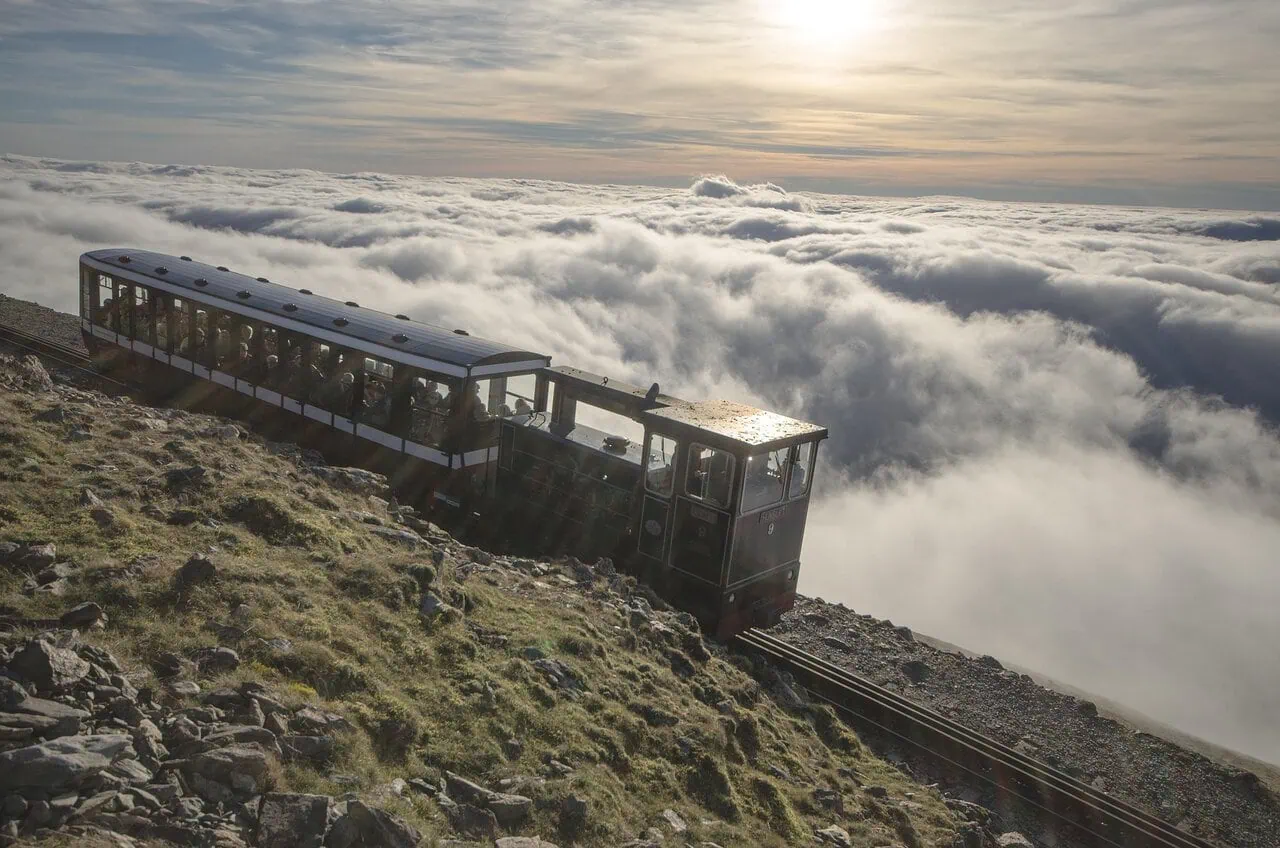
Departing from Llanberis, the railway climbs steadily up the mountain using a rack-and-pinion system, designed to handle steep gradients that would be difficult for conventional trains. The journey takes approximately one hour, passing through changing landscapes that mirror the experience of hiking, but without the physical effort.
This is one of the few mountain railways in the UK and provides a rare opportunity to reach the top of a major peak without climbing. It is particularly popular with families, older visitors, and those with limited time, offering a practical way to experience the mountain.
The journey itself is a highlight. As the train ascends, views open up across Snowdonia, with the scenery becoming increasingly dramatic as you gain altitude. On clear days, the panoramas from higher sections of the route can be exceptional, offering views across mountains, lakes, and coastline.
However, it is important to understand how the railway operates. Services run on a seasonal basis, typically from spring to autumn, and do not operate during the winter months. In addition, trains do not always reach the summit, as weather conditions such as high winds or poor visibility can limit how far they can safely travel. In these cases, services may terminate at a lower station.
When conditions allow, trains reach the summit, where visitors can explore the area, take in the views, and visit the Hafod Eryri visitor centre before descending.
The Snowdon Mountain Railway remains one of the most distinctive ways to experience the mountain, transforming what would normally be a demanding hike into a more accessible and achievable journey for a wide range of visitors.
Snowdon Walking Routes Explained
One of the biggest appeals of Snowdon is the variety of walking routes available to reach the summit. Each path offers a different experience, ranging from steady, gradual climbs to more challenging and rugged terrain, allowing visitors to choose a route that suits their fitness level and confidence.
The Llanberis Path is the most accessible and popular route. Starting in Llanberis, it follows a long, gradual ascent alongside the railway. While it is the longest route, it is also considered the easiest, making it ideal for beginners or those looking for a steady climb.
The Pyg Track is shorter but steeper, offering a more direct route to the summit. It begins near Pen-y-Pass and provides some of the most dramatic views of Snowdon’s lakes and surrounding peaks. This route is popular with walkers who want a balance between challenge and scenery.
The Miners’ Track, which also starts at Pen-y-Pass, begins with a relatively gentle walk alongside lakes before becoming steeper towards the summit. It is often combined with the Pyg Track to create a circular route, giving walkers a varied experience.
The Watkin Path is one of the most scenic but also one of the most demanding routes. It starts at a lower elevation, meaning a longer and more sustained climb. This route offers a quieter experience and a strong sense of progression through changing landscapes.
The Snowdon Ranger Path starts near Llyn Cwellyn on the A4085 and is one of the oldest and quietest routes up the mountain. It covers around 8 miles there and back, with roughly 936 metres of ascent, and typically takes 3 to 4 hours to reach the summit. Its steady approach and lighter footfall make it a good option for walkers wanting to avoid the busier paths from Llanberis and Pen-y-Pass.
Crib Goch is a different proposition altogether. Starting from Pen-y-Pass, this narrow, exposed ridge is graded as a scramble rather than a walk, with steep drops on either side and sections that demand a good head for heights and prior scrambling experience. It is not suitable for beginners and should be avoided in high wind, rain, or icy conditions.
Each of these routes provides a different way to experience Snowdon, making it possible to tailor your climb to your fitness level, time available, and desired level of challenge.

Best Route to Climb Snowdon (Quick Comparison Table)
Choosing the right route is one of the most important decisions when visiting Snowdon. The table below provides a clear comparison to help you decide.
| Route | Difficulty | Time (Up) | Starting Point | Best For |
|---|---|---|---|---|
| Llanberis Path | Easy–Moderate | 3–4 hours | Llanberis | Beginners, steady climb, families |
| Pyg Track | Moderate | 2.5–3 hours | Pen-y-Pass | Scenic views, shorter route |
| Miners’ Track | Moderate | 3–4 hours | Pen-y-Pass | Gradual start, varied terrain |
| Watkin Path | Hard | 3.5–4.5 hours | Nant Gwynant | Experienced walkers, quieter route |
| Snowdon Ranger Path | Moderate–Hard | 3–4 hours | Llyn Cwellyn (A4085) | Quiet, historic route |
| Crib Goch | Scramble (not a walking route) | 4–5 hours (full traverse) | Pen-y-Pass | Experienced scramblers only |
This comparison highlights the key differences. If you want the easiest and most gradual route, the Llanberis Path is the best option. If you are looking for strong scenery and a shorter climb, the Pyg Track is a popular choice. For a quieter and more challenging experience, the Watkin Path stands out.
What the Climb Is Actually Like
Climbing Snowdon is a rewarding experience, but it is important to understand what to expect. While it is accessible to many people, it is still a serious mountain environment where conditions can change quickly.
The lower sections of most routes begin relatively gently, often passing through grassy paths and open countryside. As you gain elevation, the terrain becomes more rugged, with rockier sections, steeper gradients, and narrower paths.
Higher up, the landscape becomes more exposed. Weather conditions can shift rapidly, with wind, rain, and reduced visibility even on days that start clear at the base. This adds to the challenge and makes preparation essential.
The final approach to the summit is typically the most demanding part of the climb. Paths can become crowded, and the terrain is often steeper and more uneven. However, reaching the top provides a strong sense of achievement, with panoramic views that make the effort worthwhile.
The overall experience is one of progression and contrast, moving from gentle beginnings to a more rugged and dramatic summit environment.
How Long It Takes to Climb Snowdon
The time it takes to climb Snowdon depends on the route you choose, your fitness level, and the conditions on the day.
Most routes take between 2.5 to 4.5 hours to reach the summit, with the descent typically taking a similar amount of time. This means a full climb usually requires 5 to 8 hours in total, including breaks.
The Llanberis Path, while longer, allows for a more gradual pace and is often completed in around 3 to 4 hours up and 2.5 to 3.5 hours down. Shorter routes such as the Pyg Track can reduce ascent time but often require a more intense effort.
For those using the Snowdon Mountain Railway, the journey to the summit takes approximately one hour, making it significantly quicker and requiring no physical effort.
It is important to allow extra time for rest, weather changes, and busy conditions, particularly during peak seasons when paths can become crowded.
Planning your timing carefully ensures that you can complete the climb safely and enjoy the experience without unnecessary pressure.
Search flights and useful route combinations in one place.
View flightsChoose an Airalo eSIM and arrange mobile data before you arrive.
Browse eSIMsArrange a private pickup before travel instead of sorting transport after landing.
Book a transferBest Time to Visit Snowdon
The best time to visit Snowdon depends on what kind of experience you are looking for, as conditions can vary significantly throughout the year.
The most popular time to visit is between late spring and early autumn (May to September), when weather conditions are generally more stable and daylight hours are longer. During this period, walking routes are more accessible, and the Snowdon Mountain Railway operates its full schedule. However, this is also when the mountain is at its busiest, particularly during weekends and school holidays.
Spring and early autumn can offer an excellent balance. You are more likely to experience clear views and fewer crowds, while still benefiting from relatively mild weather conditions.
Winter presents a completely different experience. Snow and ice can transform the mountain into a more challenging environment, requiring specialist equipment and experience. For most visitors, winter is better suited to viewing Snowdon from lower levels rather than attempting a full climb.
Weather is one of the most important factors. Conditions at the summit can be very different from those at the base, with lower temperatures, strong winds, and reduced visibility. Checking forecasts before your visit is essential.
Choosing the right time to visit ensures that you can enjoy the experience safely while making the most of the views and conditions.
Tickets and Prices for Snowdon Mountain Railway
The Snowdon Mountain Railway is one of the most popular ways to experience the summit of Snowdon, and tickets should be planned in advance, particularly during peak season.
Prices vary depending on the time of year and demand, but return tickets to the summit are typically in the range of £30 to £40+ per adult (€35–€46+/$38–$51+), with discounts available for children and families. One-way options are sometimes available, allowing visitors to combine the train with a walking route.
Demand for tickets is high, especially in summer, and trains often sell out days or even weeks in advance. Booking early is strongly recommended to secure your preferred time.
The journey includes both the ascent and descent, with time at the summit to explore the area and take in the views. However, weather conditions can affect services, and trains may not always reach the summit if conditions are poor.
Understanding ticket options and booking ahead ensures that you can secure your place and avoid disappointment, particularly during busy periods.
Facilities at the Summit and in Llanberis
Visiting Snowdon is not just about the journey. Knowing what facilities are available both at the summit and at the base in Llanberis can make a significant difference to how you plan your visit.
At the summit, facilities are centred around the Hafod Eryri visitor centre, a modern building located at the top of the mountain. When open, it offers toilets, a café, and indoor seating, providing a welcome break from the often exposed and unpredictable conditions at the summit. The café serves hot drinks, snacks, and light meals, making it a popular stop for both walkers and those arriving via the Snowdon Mountain Railway.
However, it is important to understand that summit facilities are weather-dependent and seasonal. The building is typically open during the main visitor season, but it may close in poor weather or outside peak months. You should not rely entirely on it being available and should always carry water, food, and essentials with you.
At the base of the mountain, Llanberis provides a full range of facilities to support your visit. The village includes cafés, restaurants, shops, public toilets, and parking areas, making it the main hub for visitors. It is also where you will find the Snowdon Mountain Railway station and the starting point for the Llanberis Path.
Llanberis is well set up for tourism, and it is the best place to prepare for your climb, grab food after your walk, or organise transport connections. During busy periods, facilities can become crowded, but overall it provides a convenient and well-equipped base for exploring Snowdon.
Understanding the facilities available at both the summit and the base helps you plan your visit more effectively, ensuring that you are properly prepared for the conditions and can make the most of your time on the mountain.
Tips for Visiting Snowdon
Visiting Snowdon is a rewarding experience, but preparation is essential to ensure that your trip is both safe and enjoyable.
One of the most important considerations is weather. Conditions can change quickly, and the summit can be significantly colder and windier than the base. Dressing in layers and bringing waterproof clothing is essential, even in summer.
Footwear is equally important. Proper walking shoes or boots provide better grip and support, particularly on steeper or uneven sections of the routes.
Starting early in the day can help you avoid crowds and give you more time to complete your journey comfortably. This is particularly important during peak season when paths can become busy.
If you are using the Snowdon Mountain Railway, arriving early and allowing time for boarding helps ensure a smooth experience.
Finally, always plan your route and be realistic about your ability. Snowdon is accessible, but it is still a mountain, and preparation makes a significant difference.
With the right approach, your visit becomes safe, comfortable, and far more enjoyable.
Beyond the Summit: What Else to Do Nearby
Snowdon is not the only reason to base yourself in this part of North Wales. A short drive from Llanberis, Zip World Penrhyn Quarry in Bethesda runs zip lines through a disused slate quarry, offering an adrenaline-filled contrast to a day spent walking or riding the mountain railway.
Further along the coast near the Conwy Valley, Surf Snowdonia operates an inland surf lagoon using artificial wave technology, giving visitors a way to try surfing without needing the sea. Both attractions work well as a rest-day activity either side of a Snowdon visit, particularly if the weather rules out a summit attempt.

Rupert’s Handy Travel Tips
Rupert has tackled Snowdon more than once, and he’ll tell you it’s all about pacing yourself and being prepared. Whether you walk or take the train, the mountain always rewards those who plan ahead.
- Start early: avoid the crowds and give yourself plenty of time on the mountain.
- Check the forecast: conditions at the summit can differ sharply from the base, so check before you set out.
- Bring layers: pack warm, waterproof clothing even in summer.
- Mix it up: combine walking with the railway for a varied experience.
Want to meet the reindeer behind our travel tips? Find out more in our page Who is Rupert?.




Frequently Asked Questions About Visiting Snowdon
Can beginners climb Snowdon?
Yes. Routes such as the Llanberis Path are suitable for beginners with a reasonable level of fitness, though preparation is still important.
Is Snowdon difficult to climb?
It depends on the route. Some paths are relatively gradual, while others are more challenging with steeper and rougher terrain.
Can you reach the summit without walking?
Yes. The Snowdon Mountain Railway provides access to the summit without hiking.
How long does it take to climb Snowdon?
Most climbs take between 5 and 8 hours in total, depending on the route and pace.
Is Snowdon busy?
Yes, particularly in summer and during weekends. Visiting early or outside peak season can help avoid crowds.
Compare hostels and lower-cost accommodation for your trip.
Search hostelsAccess compensation support, eligible lounge benefits and faster payouts.
See the benefitsArriving before check-in or leaving later? Store your luggage and enjoy the extra time hands-free.
Store your bagsFurther Reading & Related Guides
If you are exploring more of North Wales, our Wales trains guide explains how to travel across the region efficiently, while our UK rail guide shows how Snowdon fits into wider rail journeys across the country. For scenic rail experiences, the Cambrian Line guide and West Highland Line guide offer some of the most memorable train journeys in the UK.
To stay connected during your trip, our eSIM apps guide ensures you have reliable mobile data for maps and weather updates, while our local transport apps guide helps you navigate the final stages of your journey once you arrive in Snowdonia.