
Reviewed by our editorial team Updated
Why the Dead Sea Is One of Jordan’s Must-Visit Wonders
The Dead Sea is one of the most extraordinary natural landscapes on Earth, and it earns its place on almost every Jordan itinerary. Sitting at 430 metres below sea level, it is officially the lowest point on the planet, framed by desert cliffs, rugged mountains, and a stillness that feels completely removed from the rest of the world.
What draws people here is the water itself. With salinity levels far higher than the ocean, your body rises effortlessly the moment you lean back. Floating here feels strange at first, almost unnatural, but quickly becomes one of those rare travel experiences you will remember long after the trip ends.
The area is also known for its mineral-rich mud and wellness culture. Resorts along the shoreline have built their reputation on spa treatments, relaxation, and the therapeutic properties of the water. Whether or not you come for the health benefits, it is undeniably one of the most relaxing places in the region.
Another reason the Dead Sea stands out is how easy it is to reach. It is just 45 minutes from Amman and under an hour from Queen Alia International Airport, making it one of the simplest additions to a wider Jordan trip. You can visit for a few hours or stay for a couple of nights, depending on how much time you want to spend unwinding.
| Key Detail | Information |
|---|---|
| Country | Jordan |
| Region | Jordan Valley / Al-Balqa Governorate |
| Altitude | –430m (lowest point on Earth) |
| Salinity | Around 34% |
| Best Time to Visit | March–May, October–November |
| Distance from Amman | 45 minutes by car |
| Closest Airport | Queen Alia International Airport (AMM) |
| Nearby Highlights | Wadi Mujib, Mount Nebo, Madaba, Baptism Site |
| Recommended Apps | Weather apps, map apps, hotel booking apps, Jordan Pass, local transport apps |
How to Get There
Getting to the Dead Sea is straightforward, and most routes are short and scenic. The majority of travellers arrive from Amman, Madaba, or directly from the airport.
Driving is the most flexible option. The Dead Sea Highway runs along the coastline and offers uninterrupted views across the water and desert landscape. The road is in good condition and easy to follow, but having navigation ready is important, especially if you plan to stop at viewpoints along the way.
Taxis are widely available from Amman and Madaba. It is best to agree on the fare before you leave, with most journeys costing between 25 and 35 JOD (≈£28–£40 / $35–$49 / €33–€46). Ride-hailing apps can sometimes be used, but availability is not always consistent.
Many hotels offer private transfers, which are more expensive but remove any uncertainty, particularly if you are arriving late at night or travelling with luggage.
If you are coming from Petra or Aqaba, expect a journey of around 3.5 to 4 hours. It is a longer drive, but one that passes through some of Jordan’s most striking landscapes.
Compare hotels and other places to stay in Jordan.
Check availabilityBrowse apartments, holiday homes and self-catering stays in Jordan.
View rentalsCompare hotel deals in Jordan from multiple booking sites.
Compare pricesSwimming, Floating & Safety Tips
Floating in the Dead Sea is completely unlike swimming anywhere else in the world, and understanding how to handle it properly makes all the difference.
The moment you enter the water, you will notice how quickly your body rises. The correct way to experience it is to move slowly, stay controlled, and lean back gently into a floating position. Once you are on your back, you will remain afloat with almost no effort. Trying to swim normally is ineffective and often uncomfortable, so it is best to think of this as a floating experience, not a swim.
The most important rule is simple and non-negotiable: keep the water out of your eyes. The salt concentration is extremely high, and even a small splash can cause intense burning. Avoid touching your face, avoid splashing, and move carefully at all times. If water does get into your eyes, head straight to a freshwater shower and rinse immediately.
Skin sensitivity is another key consideration. You should never enter the water with cuts, sunburn, or freshly shaved skin, as the salt will sting far more than expected. Many travellers wear water shoes to protect their feet from sharp salt crystals and to make entering and exiting the water easier.
Time in the water should be limited. Most visitors stay in for 10 to 15 minutes at a time, then rinse off before going back in. This keeps the experience comfortable and avoids skin irritation, especially in the heat.
One final point that often catches people out is positioning. Do not attempt to float on your front. Rolling back over is difficult and can easily lead to water entering your eyes or mouth. Staying on your back is the safest and most enjoyable way to experience it.
Spa Treatments, Mud Baths & Wellness
The Dead Sea is not just about floating. It is one of the world’s most famous destinations for natural wellness and spa treatments, and this is a huge part of the experience.
One of the most recognisable activities is covering yourself in Dead Sea mud. This dark, mineral-rich mud is found along the shoreline and is known for its high concentrations of magnesium, calcium, and potassium. Travellers apply it directly to their skin, let it dry in the sun, and then wash it off in the sea. It is simple, slightly messy, and surprisingly satisfying.
Beyond this classic experience, most resorts offer full spa facilities. These typically include mineral baths, salt scrubs, massages, hydrotherapy pools, steam rooms, and relaxation areas. Treatments are designed to make the most of the unique environment, combining heat, minerals, and stillness to create a deeply relaxing atmosphere.
Resort spas tend to provide a more refined experience, with controlled conditions and trained therapists. While some public beaches offer free mud, the quality and cleanliness can vary, so many visitors prefer to use hotel facilities even if they are not staying overnight.
Booking treatments in advance is a smart move, particularly at high-end spas where availability can be limited. Many travellers choose to combine a treatment with time by the pools or beach, turning the visit into a full wellness day rather than a quick stop.
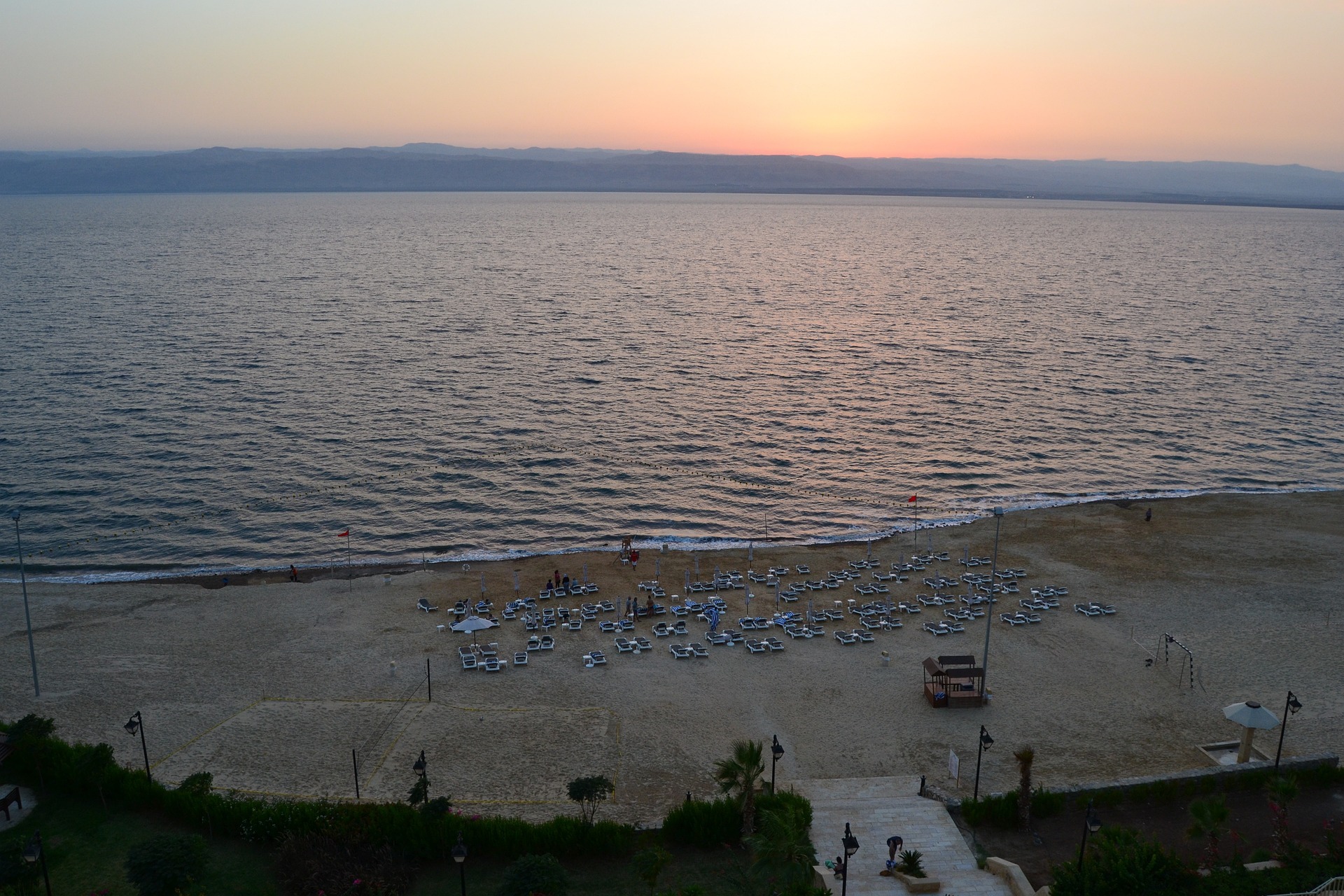
The setting adds to the experience. Late afternoon and sunset are particularly special, as the light over the water softens and the entire area takes on a calm, almost surreal quality.
Best Apps for Visiting the Dead Sea
The Dead Sea may feel remote and relaxed, but having the right apps can make your visit significantly smoother and more enjoyable.
Navigation is one of the most important considerations. The coastline is long, resorts are spread out, and signage can be limited in places. Using reliable map apps with offline capability ensures you can find your hotel, nearby viewpoints, and surrounding attractions without stress.
Weather apps are equally important. Temperatures here can rise quickly, particularly between spring and early autumn. Having access to hourly forecasts, UV levels, and wind conditions helps you plan when to float, when to stay in the shade, and when to avoid the midday heat.
Connectivity can be inconsistent depending on your location, so using an eSIM or local data solution is highly recommended. This ensures you have reliable access to maps, bookings, and transport options without relying on hotel Wi-Fi.
Hotel booking apps are useful even after you arrive. They allow you to compare day-pass prices, check availability, and read recent reviews if you are considering moving between resorts or visiting multiple properties.
If you are exploring more of Jordan, having access to tools related to major attractions can also be helpful. Planning ahead makes it much easier to combine your time here with places like Petra, Jerash, or Wadi Rum without unnecessary backtracking.

Nearby Attractions & Perfect Day Trips
One of the biggest advantages of staying at the Dead Sea is how close you are to some of Jordan’s most important historical and natural sites.
A short drive south takes you to Wadi Mujib, one of the country’s most exciting natural attractions. Known for its dramatic canyon landscape, it offers seasonal hiking routes where you walk through flowing water, climb small waterfalls, and navigate narrow rock passages. It is a completely different experience from the calm of the Dead Sea and adds a sense of adventure to your trip.
To the north, Mount Nebo provides one of the most iconic viewpoints in Jordan. From here, you can look out across the Jordan Valley, and on clear days, see into Israel and the West Bank. The site also holds deep religious significance and is an important stop for many visitors.
Nearby Madaba is known for its historic mosaics, including the famous sixth-century map housed in St George’s Church. The town itself is compact, easy to explore, and offers a more local feel compared to the resort-focused Dead Sea coastline.
Another key site is Bethany Beyond the Jordan, widely recognised as the traditional baptism site of Jesus. The area is quiet, reflective, and historically significant, making it a very different experience from the more commercialised resort environment.
All of these locations are within easy reach and can be visited in half a day or less. This makes the Dead Sea an excellent base if you want to combine relaxation with light exploration without long travel times.
Dead Sea Etiquette & Local Rules
Although the Dead Sea feels relaxed and resort-oriented, it is still important to respect local customs and practical rules during your visit.
Dress standards are the first thing to be aware of. Swimwear is completely acceptable within hotel beach areas, but you should cover up when moving through public spaces such as lobbies, restaurants, and reception areas. On public beaches, expectations are more conservative, and modest swimwear is recommended.
Photography should be handled with care. It is always best to avoid taking photos of other people without permission, particularly in areas where visitors are relaxing or applying mud. Some areas may also have restrictions, so pay attention to signage.
Drone use is tightly controlled in Jordan. You cannot simply fly a drone freely around the Dead Sea. Permission is required in advance, and ignoring this can lead to fines or confiscation.
Alcohol is widely available within resorts, but outside these areas, public drinking is not common. Keeping alcohol consumption within hotel grounds is the safest approach.
If you are driving, take local road rules seriously. The Dead Sea Highway is well maintained, but speed limits and seatbelt laws are enforced, and police checks are not uncommon.
Following these simple guidelines ensures a smooth, respectful experience while allowing you to enjoy everything the area has to offer.
Food & Drink at the Dead Sea
Dining at the Dead Sea is centred around resort restaurants, which offer a mix of Middle Eastern dishes, international cuisine, and buffet-style meals. Expect prices to be slightly higher than in Amman due to the remote location and hotel-based market. Many travellers enjoy classic Jordanian dishes such as mansaf, hummus, tabbouleh, and freshly baked breads, while seafood and grilled meats are widely available.
For snacks and quick meals, several resorts have pool bars, cafés, and lounge terraces serving light bites, smoothies, and fresh juices. Sunset dining is especially popular, as the colours across the water create one of the region’s most impressive views.
Those on a tighter budget often stop in Madaba before or after their visit. This nearby town offers excellent local restaurants with far more affordable menus. It’s also a good place to stock up on bottled water, fruit, and essentials before arriving at the resort.
Whether you’re enjoying mezze by the pool or grabbing shawarma in Madaba, food plays a big part in the overall experience of your Dead Sea Jordan travel guide itinerary.
Compare routes and fares for your journey to Jordan.
Compare flightsUse an eSIM to get online without hunting for a local SIM after arrival.
See eSIM optionsCheck private pickup options and plan your onward journey before arrival.
View transfersVisiting the Dead Sea Without Staying Overnight
You do not need to stay at a resort to experience the Dead Sea. Many travellers visit for a few hours by purchasing a day pass, which gives access to the same facilities used by hotel guests.
This is one of the most practical ways to experience floating, especially if you are short on time or travelling as part of a wider Jordan itinerary. Instead of committing to an overnight stay, you can arrive, relax, float, and leave on your own schedule.
Most major resorts offer day access, and what you get is often very similar across properties. Entry typically includes private beach access, swimming pools, sun loungers, freshwater showers, and access to Dead Sea mud. Some resorts also include towels and changing facilities, making it easy to arrive with minimal planning.
Prices usually range between 20 and 40 JOD per person (≈£23–£45 / $28–$56 / €26–€52), depending on the hotel and time of year. Higher-end resorts may charge more, but they also tend to offer quieter environments, better-maintained beach areas, and more space to relax.
Arriving earlier in the day is recommended. Mornings are cooler, quieter, and give you more time to enjoy the facilities before the heat peaks. Late afternoon is also a great option if you want to experience the sunset over the Dead Sea, which is one of the most memorable moments of any visit.
There are also a small number of public beach areas, which are cheaper or sometimes free. However, facilities are more limited, and cleanliness can vary. Most travellers prefer resort day passes for the added comfort, safety, and overall experience.
If you are planning to visit independently, it is worth checking with your chosen resort in advance, as availability can be limited during busy periods. Some hotels allow walk-ins, while others may require pre-booking.
For many visitors, a day pass offers the perfect balance between cost, convenience, and experience, making it one of the smartest ways to enjoy the Dead Sea without committing to a full resort stay.
Costs & Budgeting Guide
The Dead Sea is known for its resort pricing, so budgeting helps avoid surprises. Hotel stays vary widely: luxury hotels such as Kempinski or Hilton can range from 150–300 JOD per night (≈£169–£339 / $210–$420 / €195–€390), while mid-range options like Holiday Inn or Crowne Plaza often sit between 80–150 JOD (≈£90–£169 / $112–$210 / €104–€195), depending on the season.
Day passes for non-guests typically cost 20–40 JOD (≈£23–£45 / $28–$56 / €26–€52), including beach access, towels, showers, pools, and sometimes mud. Spa treatments cost extra, with massages and mineral therapies usually priced from 40–80 JOD (≈£45–£90 / $56–$112 / €52–€104).
Food is one of the biggest expenses. Resort buffets often cost 15–25 JOD (≈£17–£28 / $21–$35 / €20–€33), while à la carte meals can reach 12–20 JOD (≈£14–£23 / $17–$28 / €16–€26) per dish. Drinks, especially cocktails and imported alcohol, are premium-priced.
Transport costs vary too. A taxi from Amman usually falls between 25–35 JOD (≈£28–£40 / $35–$49 / €33–€46), while longer journeys to Petra or Aqaba will be significantly more.
With a bit of planning, especially around meals and spa add-ons, the Dead Sea can be enjoyed at a wide range of budgets.
Accessibility & Mobility Information
The Dead Sea region offers good accessibility, especially at major resort hotels that cater to international guests. Many properties include step-free pathways, ramps, accessible rooms, and adapted bathrooms. Beaches vary, however, some have gently sloping sand, while others rely on boardwalks and mats to reach the water.
Floating can be accessible for many travellers with reduced mobility because the salt water provides natural buoyancy. However, entering and exiting the sea can be challenging where the seabed is uneven or rocky. Resorts often provide handrails, designated entry points, and staff who can assist where needed.
If you plan to visit nearby attractions such as Madaba, Mount Nebo, or the Baptism Site, be aware that accessibility varies widely. Some archaeological areas have uneven ground, gravel paths, or steps.
Before booking, it’s worth emailing your chosen hotel to ask for current accessibility details, as facilities can differ between resorts even on the same stretch of coastline.
Where to Stay
Accommodation at the Dead Sea is built almost entirely around full-service resort hotels, and choosing the right one has a big impact on your overall experience. Unlike destinations with town centres and independent hotels, the Dead Sea coastline is relatively undeveloped, so most travellers stay within a resort environment that includes private beach access, pools, restaurants, and spa facilities all in one place.
At the top end of the market, Kempinski Hotel Ishtar Dead Sea is widely regarded as the standout property in the region. The resort is designed as a series of elegant terraces descending towards the shoreline, creating multiple quiet zones, infinity pools, and uninterrupted views across the water.
The scale of the property means it never feels crowded, and the Ishtar Spa is often considered one of the best in the Middle East, offering extensive treatments based on Dead Sea minerals. It is the benchmark for a luxury stay here and ideal for travellers who want a calm, high-end retreat.
Equally impressive, but with a very different character, is Mövenpick Dead Sea Resort & Spa. Instead of a modern layout, it is built to resemble a traditional village, with stone pathways, shaded courtyards, and smaller buildings spread across landscaped gardens. This gives the resort a more intimate and authentic feel. The Zara Spa is a major draw, offering thermal pools, hydrotherapy circuits, and a full range of treatments. It suits travellers who value atmosphere and design just as much as facilities.
Hilton Dead Sea Resort & Spa is one of the most popular choices for travellers looking for a modern, reliable experience. The design is contemporary, with large open spaces, a lively pool area, and a well-maintained private beach. The resort has a slightly more social feel than some of its neighbours, with a mix of couples, groups, and families. Rooms are bright and practical, and the pool deck with its swim-up bar is one of the best in the area. It strikes a strong balance between comfort, facilities, and value.
Another excellent upper mid-range option is the Dead Sea Marriott Resort & Spa, which is often overlooked but consistently delivers a high-quality stay. It has a slightly more traditional resort layout, with multiple pools set across terraced levels leading down to the beach. The property is known for its relaxed atmosphere, good service, and a wide range of dining options. It tends to attract travellers who want a quieter environment without stepping up to the highest price bracket.
The InterContinental Jordan Dead Sea Resort is one of the longest-established hotels on the shoreline and still holds a strong reputation. Its terraced design means most areas have excellent views across the Dead Sea, and the pool layout creates a calm, uncrowded feel. While some parts of the hotel are not as modern as newer developments, the rooms are spacious and comfortable, and the private beach area is particularly well managed. It is a solid choice for couples and travellers looking for a more peaceful stay.
For travellers seeking good value without sacrificing the core experience, Crowne Plaza Dead Sea Resort & Spa and Holiday Inn Resort Dead Sea are two of the most reliable options. Both offer large pool complexes, direct access to the water, and well-equipped rooms at a lower price point than the premium resorts.
The Crowne Plaza is especially popular for its long beachfront and generous layout, while the Holiday Inn is known for its friendly atmosphere and strong value for money. These properties are ideal if you want the full Dead Sea experience without paying luxury prices.
A slightly more understated option is the Grand East Hotel Dead Sea, which caters to travellers looking for a simpler, quieter stay. While it does not have the same level of polish or facilities as the larger international resorts, it still offers access to the key Dead Sea experience and can be a practical choice for shorter visits or tighter budgets.
For those who prefer not to stay directly on the shoreline, Madaba provides a very different alternative. This small town has a wide range of guesthouses and hotels at much lower prices, along with restaurants, shops, and a more local atmosphere. Staying here allows you to visit the Dead Sea as a day trip while also exploring nearby highlights such as Mount Nebo and the famous mosaics in St George’s Church. The drive to the coast takes around 30 minutes, making it an easy and flexible option.
It is also worth considering that you do not need to stay overnight to enjoy the Dead Sea. Most resorts offer day access, which includes use of pools, beach areas, mud stations, and freshwater showers. This can be the most efficient way to experience floating and spa-style relaxation if you are short on time or passing through as part of a wider itinerary.
Because the number of resorts is limited, availability can become tight during peak seasons. Booking ahead is strongly recommended, particularly in spring and autumn when conditions are at their best.
Kempinski Hotel Ishtar Dead Sea
The Kempinski Hotel Ishtar Dead Sea is widely regarded as the most luxurious resort on the entire Dead Sea shoreline, and it sets the standard for what a high-end stay here should feel like. The design alone makes it stand out. Built as a series of stone terraces cascading down towards the water, the resort feels expansive, private, and carefully structured to maximise views at every level.
One of its defining features is the sheer number of pools spread across different tiers, including several stunning infinity pools that appear to blend directly into the Dead Sea horizon. This layout means you can always find a quieter space, even during peak periods, which is something many other resorts struggle to offer.
The private beach area is exceptionally well maintained, with clear entry points, mud stations, freshwater showers, and attentive staff who help guide first-time visitors through the floating experience. It is one of the most comfortable and well-managed access points along the coastline.
The highlight for many guests is the Ishtar Spa, often considered one of the finest spa complexes in the Middle East. It offers an extensive range of treatments using Dead Sea minerals, alongside hydrotherapy pools, steam rooms, and tranquil relaxation areas. Many travellers choose this hotel specifically for its wellness offering, making it ideal for a dedicated spa-focused stay.
Rooms are spacious, elegant, and designed to complement the surroundings, with many offering direct views over the Dead Sea. Dining is equally strong, with multiple restaurants covering both international and Middle Eastern cuisine, all delivered at a consistently high standard.
For travellers looking for a premium, quiet, and visually impressive resort experience, this is the benchmark property at the Dead Sea.
Mövenpick Resort & Spa Dead Sea
The Mövenpick Dead Sea Resort & Spa offers a completely different atmosphere, trading ultra-modern design for something far more authentic and character-driven. The resort is laid out like a traditional village, with stone buildings, narrow pathways, shaded courtyards, and landscaped gardens, creating a much more intimate and relaxed feel.
This design makes it particularly appealing for travellers who want a sense of place rather than a standard resort layout. Walking through the property feels calm and unhurried, with plenty of quiet corners and shaded areas to escape the heat.
The resort’s private beach is long and well equipped, offering easy access to the water along with loungers, umbrellas, and mud stations. It is one of the better stretches of shoreline for a more natural, less structured experience.
The Zara Spa is a major highlight and one of the most established wellness centres in the region. It features hydrotherapy pools, saunas, steam rooms, and a wide range of treatments using Dead Sea minerals. The size and quality of the spa make it a strong choice for travellers planning a full-day wellness experience rather than a quick visit.
Dining is another strength, with several restaurants offering a mix of Jordanian, Mediterranean, and international cuisine. The variety and setting make meals feel like part of the experience rather than just a necessity.
Rooms are comfortable and styled with warm tones and natural materials, many featuring balconies or terraces that open onto gardens or sea views. Overall, this is an excellent choice for travellers who value atmosphere, design, and a slower pace.
Browse hostels and budget-friendly stays around Jordan.
See hostelsGet help with compensation, eligible lounge access and disruption support.
Explore AirHelp+Use convenient luggage storage around Jordan between arrival, check-in and departure.
Check storageHilton Dead Sea Resort & Spa
The Hilton Dead Sea Resort & Spa is one of the most popular choices for travellers who want modern comfort, strong facilities, and a lively atmosphere. It offers a more contemporary take on the Dead Sea experience, with clean lines, open spaces, and a layout designed around social areas and views.
The pool complex is one of the standout features. Wide terraces, multiple pools, shaded loungers, and a swim-up bar create an environment that feels both relaxed and energetic. It is particularly appealing for travellers who want a balance between downtime and a more social resort setting.
The private beach area is well maintained and easy to access, with clear entry points and good facilities. Staff are usually on hand to assist, making it a comfortable option for first-time visitors to the Dead Sea.
Rooms follow Hilton’s modern design style, with bright interiors, high-quality bedding, and well-planned layouts. Many include balconies with sea views, adding to the overall sense of space and comfort.
Dining is varied and consistently well reviewed, with several restaurants and bars offering both local and international options. The sunset-facing venues are particularly popular, offering some of the best views in the resort.
The onsite spa provides a solid range of treatments using Dead Sea minerals, often at more accessible prices than some of the ultra-luxury properties nearby. This makes it easier to add wellness experiences without significantly increasing your budget.
For travellers looking for a modern, well-rounded resort with strong facilities and a vibrant atmosphere, the Hilton is one of the safest and most reliable choices.
Crowne Plaza Dead Sea Resort & Spa
The Crowne Plaza Dead Sea Resort & Spa is one of the best options for travellers who want a full resort experience at a more accessible price point. It delivers everything you expect from a Dead Sea stay, including pools, beach access, dining options, and spa facilities, but without the premium pricing of the top-tier properties.
The resort features a large and well-spaced pool area, including quieter zones for relaxation and family-friendly sections. Even during busier periods, the layout helps prevent it from feeling overcrowded, which is a major advantage at this price level.
Its private beach is one of the longest in the area, providing plenty of space for floating and mud treatments. The entry points are straightforward, and the facilities are well maintained, making it a comfortable and practical choice.
Rooms are modern, spacious, and well equipped, with many offering direct views over the Dead Sea. They tend to be larger than expected for this category, which makes the hotel a good option for longer stays.
The spa offers a good range of treatments using Dead Sea minerals, often at more competitive prices than neighbouring resorts. This makes it a strong choice for travellers who want to experience the wellness side without overspending.
Dining options are varied, with buffets, casual dining, and poolside service all available. The overall experience is consistent and reliable, even if it does not aim for luxury-level refinement.
For travellers looking for value, space, and solid facilities, the Crowne Plaza is one of the most dependable choices on the Dead Sea.
InterContinental Jordan Dead Sea Resort
The InterContinental Jordan Dead Sea Resort is one of the most established properties along the coastline and remains a favourite for travellers seeking a quieter, more relaxed atmosphere.
The resort is built into the hillside, with terraced pools cascading down towards the sea, creating excellent views from multiple levels. This layout naturally separates different areas, meaning the hotel often feels calmer and less crowded than some of the larger, more modern resorts.
The private beach area is well organised, with clear access points, mud stations, and staff available to assist. It is one of the more peaceful beach environments, making it particularly appealing for couples or those looking to avoid busier resort scenes.
Rooms are spacious and comfortable, with many offering balconies overlooking the Dead Sea. While some areas of the hotel are not as recently updated as newer competitors, the overall standard remains high, and the extra space is a noticeable advantage.
Dining includes a mix of buffet and à la carte options, with several terraces offering views across the water, especially during sunset. Many guests opt for half-board packages due to the limited dining options outside the resort area.
The spa provides a range of treatments using Dead Sea minerals, with a focus on relaxation rather than high-end luxury. It complements the overall tone of the property, which is more about comfort and calm than spectacle.
For travellers who prioritise peace, space, and a more understated experience, the InterContinental is an excellent choice.

Rupert’s Handy Travel Tips
Rupert took one step into the Dead Sea and immediately realised this wasn’t your average swim spot. After a slightly chaotic first float, he’s worked out how to get it right:
- Lean back slowly: the water lifts you instantly, so stay calm and controlled.
- Keep your hands away from your face: even a tiny splash in your eyes will ruin the moment.
- Stick to short sessions: 10 to 15 minutes at a time keeps it comfortable.
- Use the mud properly: apply it, let it dry slightly, then rinse off fully.
- Watch your footing: the ground can be uneven and sharp near the shoreline.
Want to meet the reindeer behind our travel tips? Find out more in our page Who is Rupert?.


Frequently Asked Questions
Is the Dead Sea safe to swim in?
Yes, as long as you follow the safety rules. The Dead Sea is for floating only, not swimming. Avoid water in your eyes, don’t splash, and rinse off after 10–15 minutes.
Do I need special shoes?
Most travellers wear water shoes because the seabed can be uneven or sharp with salt crystals. They also help prevent slipping when entering or exiting the water.
Can you visit the Dead Sea without staying at a resort?
Absolutely. Many resorts offer day passes, and there are also public beaches. However, resort beaches are usually cleaner, better supervised, and include showers, towels, and fresh-water rinse stations.
What’s the best time of year to visit?
Spring (March–May) and autumn (October–November) offer the most comfortable temperatures. Summer can be extremely hot, while winter brings cooler evenings and occasional rain.
How long do you need at the Dead Sea?
A half-day is enough for the classic floating and mud experience, but most travellers stay one or two nights to enjoy spa treatments and nearby attractions like Wadi Mujib and Mount Nebo.

Further Reading & Related Travel Guides
Planning a trip to Jordan or exploring more of the country? A few of our other guides pair naturally with a Dead Sea stay. Our Jordan Pass Spotlight Guide explains how to save money on major attractions nationwide, and if you have not yet visited Jordan’s most famous archaeological site, our Petra Travel Guide covers everything from entrance fees to the best time to explore the Treasury.
The Dead Sea also sits well alongside other major historic and religious landmarks. Our guide to Visiting the Baptism Site of Jesus and Mount Nebo covers two of the country’s most important pilgrimage sites, and if you have time north of Amman, a Jerash Day Trip from Amman introduces one of the best-preserved Roman provincial cities in the world.
For transport, comparing options between Jordan’s two biggest cities? See our Amman to Aqaba Flight guide, and if you would rather explore the country by car, the Ultimate Jordan Road Trip guide plans your route from Amman to Aqaba.
For the cities themselves, our Amman Travel Guide and Aqaba Travel Guide cover local apps, attractions, and practical tips, while the Royal Jordanian Airline Guide is worth a read if you are flying with Jordan’s national carrier at any stage of your trip.











