
Reviewed by our editorial team Updated
Driving Across Jordan: The Ultimate Amman to Aqaba Adventure
Jordan is one of the most rewarding countries in the Middle East to explore by car, and it is perfectly suited to a self-drive itinerary. Distances between major attractions are short, roads are generally well maintained, and the variety of landscapes makes every leg of the journey feel different.
This route from Amman to Aqaba connects many of the country’s most iconic locations in a single, well-paced journey. Along the way, you move from Roman ruins and biblical landmarks to desert valleys, mountain roads, and the Red Sea coastline. It is a trip that delivers constant variety without requiring long or exhausting drives.
Driving gives you something tours cannot: flexibility. You can stop at viewpoints, detour into small towns, and explore places that most organised itineraries simply pass by. With a bit of planning, the route is easy to follow, even for first-time visitors, and rental cars are readily available from Queen Alia International Airport.
Over six days, this journey takes you through Jerash, the Dead Sea, Mount Nebo, Petra, Wadi Rum, and Aqaba, combining history, scenery, and relaxation in one continuous route.
Arrival & Amman City – Day 1
Your journey begins in Amman, a city that blends ancient history with modern Middle Eastern life in a way few capitals can. After landing at Queen Alia International Airport, collect your rental car and make the 45-minute drive into the city. The route is simple and well signposted, easing you into driving in Jordan without stress.
Once you arrive, it is best to take things at a steady pace. Amman is built across rolling hills, and its layout can feel unfamiliar at first. Give yourself time to settle in before heading out to explore.
Start at the Amman Citadel, one of the most important historical sites in the country. Sitting high above the city, it offers wide panoramic views that immediately give you a sense of Amman’s scale. The site itself spans multiple eras, with highlights including the Temple of Hercules and the Umayyad Palace. Walking through the ruins, you begin to understand how many civilisations have passed through this region.
From here, descend into the heart of the city to visit the Roman Theatre, a striking structure carved into the hillside. It remains in use today, and standing at the base looking up at the tiered seating gives a strong sense of its original scale and purpose.
In the afternoon, head into the Downtown Souks, where the atmosphere shifts completely. This is where Amman feels most alive. Narrow streets are filled with spice stalls, bakeries, fruit vendors, and small workshops, all operating at a constant, energetic pace. It is the perfect place to experience everyday life and pick up small local items.
A stop at Habibah Sweets is almost essential. Their freshly made knafeh is one of the most famous desserts in Jordan, and trying it here gives you a real taste of local food culture.
As evening arrives, make your way to Rainbow Street, one of Amman’s most relaxed and social areas. Rooftop cafés, casual restaurants, and a slower pace make it the ideal place to unwind after a day of travel. This is also the best place to try mansaf, Jordan’s national dish, served with lamb, rice, and fermented yoghurt.
Driving Distance: 35 km
Overnight: Amman
Browse hotels and accommodation for your visit to Aqaba.
View staysBrowse apartments, holiday homes and self-catering stays in Aqaba.
View rentalsCompare hotel deals in Aqaba from multiple booking sites.
Compare pricesAs-Salt & Jerash – Day 2
After breakfast, leave the capital and head west to As-Salt, a town that offers a completely different perspective on Jordan. Built across three hills, it is known for its honey-coloured stone buildings and long-standing tradition of cultural coexistence.
Walking through As-Salt feels slower and more personal than Amman. The Harmony Trail takes you through quiet streets where mosques and churches sit side by side, reflecting a deep-rooted sense of community. It is less about ticking off sights and more about absorbing the atmosphere.
A visit to the Abu Jaber House Museum adds depth to the experience, offering insight into the lives of wealthy merchant families who once shaped the town. From here, you can pause for lunch at a local terrace restaurant, where the views stretch across the hills and rooftops below.
From As-Salt, continue north to Jerash, one of the best-preserved Roman cities anywhere in the world. Arriving here feels like stepping into a completely different era.
Enter through Hadrian’s Arch, then move into the vast Oval Plaza, where the scale of the site becomes immediately clear. The Cardo Maximus, the main street, runs through the centre and is lined with tall, weathered columns that create a strong visual impact.
Take your time exploring. Key highlights include the Temple of Artemis, which sits slightly elevated and offers views across the ruins, and the North Theatre, where the acoustics are still impressive today. Walking through Jerash is not rushed, and allowing time to wander is what makes the visit worthwhile.
By mid to late afternoon, return to Amman. The contrast between the ancient ruins and the modern capital becomes even more noticeable after spending the day immersed in history.
Driving Distance: 200 km round trip
Overnight: Amman
Madaba, Mount Nebo & Dead Sea – Day 3
Today marks a shift from city exploration to open landscapes and major historical sites.
Leave Amman after breakfast and head south towards Madaba, a town known for its remarkable mosaic heritage. The highlight is inside St George’s Church, where the famous 6th-century mosaic map of the Holy Land is displayed. Although modest in size, it is one of the most important historical artefacts in the region and worth taking the time to view properly.
Afterwards, take a short walk through the town or visit the Madaba Archaeological Park, where additional mosaics and ruins provide further context. This is a good place to slow down slightly before continuing the journey.
From Madaba, drive up to Mount Nebo, one of Jordan’s most significant religious landmarks. The site is traditionally believed to be where Moses viewed the Promised Land. Standing at the viewpoint, you are met with wide, uninterrupted views across the Jordan Valley, and on clear days, visibility stretches far into the distance. It is a quiet, reflective stop that contrasts with the busier locations on the itinerary.
The next stage of the journey is one of the most visually striking. The road descends towards the Dead Sea, and as you lose elevation, the landscape becomes increasingly dry and dramatic. The temperature rises noticeably, and the environment begins to feel more extreme.
Arriving at the Dead Sea is a moment in itself. Check into your resort and take time to adjust before heading down to the water. Floating here is unlike anything else, and easing into the experience makes it far more enjoyable.
Spend the afternoon moving between the sea, pools, and shaded areas, allowing time to relax rather than rushing. Many travellers also choose to try a mud treatment, which is simple but adds another layer to the experience.
As the day ends, the light softens and the entire area takes on a calm, almost surreal atmosphere. Sunset here is one of the quiet highlights of the trip.
Driving Distance: 110 km
Overnight: Dead Sea
Dead Sea to Petra to Aqaba – Day 4
This is the most demanding day in terms of distance, but also one of the most rewarding. Starting early is essential to make the most of it.
Leave the Dead Sea in the morning and head south along the Jordan Valley Highway, a route that runs through the Great Rift Valley. The scenery changes constantly, with stretches of open desert, rocky outcrops, and distant mountain ranges creating a sense of scale and isolation.
The drive itself becomes part of the experience, with long, uninterrupted sections of road that feel far removed from the busier parts of the country.
As you approach Petra, the landscape begins to shift again, becoming more rugged and mountainous. Arriving here is one of the defining moments of the entire journey.
Enter through the Siq, a narrow canyon that winds through towering rock walls. The path builds anticipation gradually, and then, without warning, opens onto the Treasury, Petra’s most iconic structure. The contrast between the enclosed canyon and the open space beyond creates a genuinely memorable first impression.
From here, you can explore deeper into the site depending on your energy and time. The Royal Tombs, Street of Facades, and elevated viewpoints all offer different perspectives on the scale and complexity of Petra.
By mid to late afternoon, begin the drive south to Aqaba. The road is straightforward, and arriving at the Red Sea after days of desert and mountains provides a clear shift in atmosphere.
End the day with a relaxed evening by the water, where the pace slows again and the final stage of the journey begins.
Driving Distance: Approx. 350 km
Overnight: Aqaba
Aqaba & Wadi Rum – Day 5
After several days of driving and exploring inland, Aqaba offers a completely different pace. Sitting on the Red Sea, it is Jordan’s only coastal city and a natural place to slow down and reset.
Start your morning by heading to South Beach, where the water is clear, calm, and filled with coral reefs just offshore. You can snorkel directly from the beach or join a short boat trip to explore further out. The marine life here is vibrant, and visibility is often excellent, making it one of the easiest places in the region to experience the Red Sea without needing advanced diving skills.
Travellers extending their trip beyond Jordan can also cross into Israel from here via the Aqaba–Eilat border, one of the more straightforward crossings in the region; our Jordan to Israel Border Crossing Guide covers what to expect.
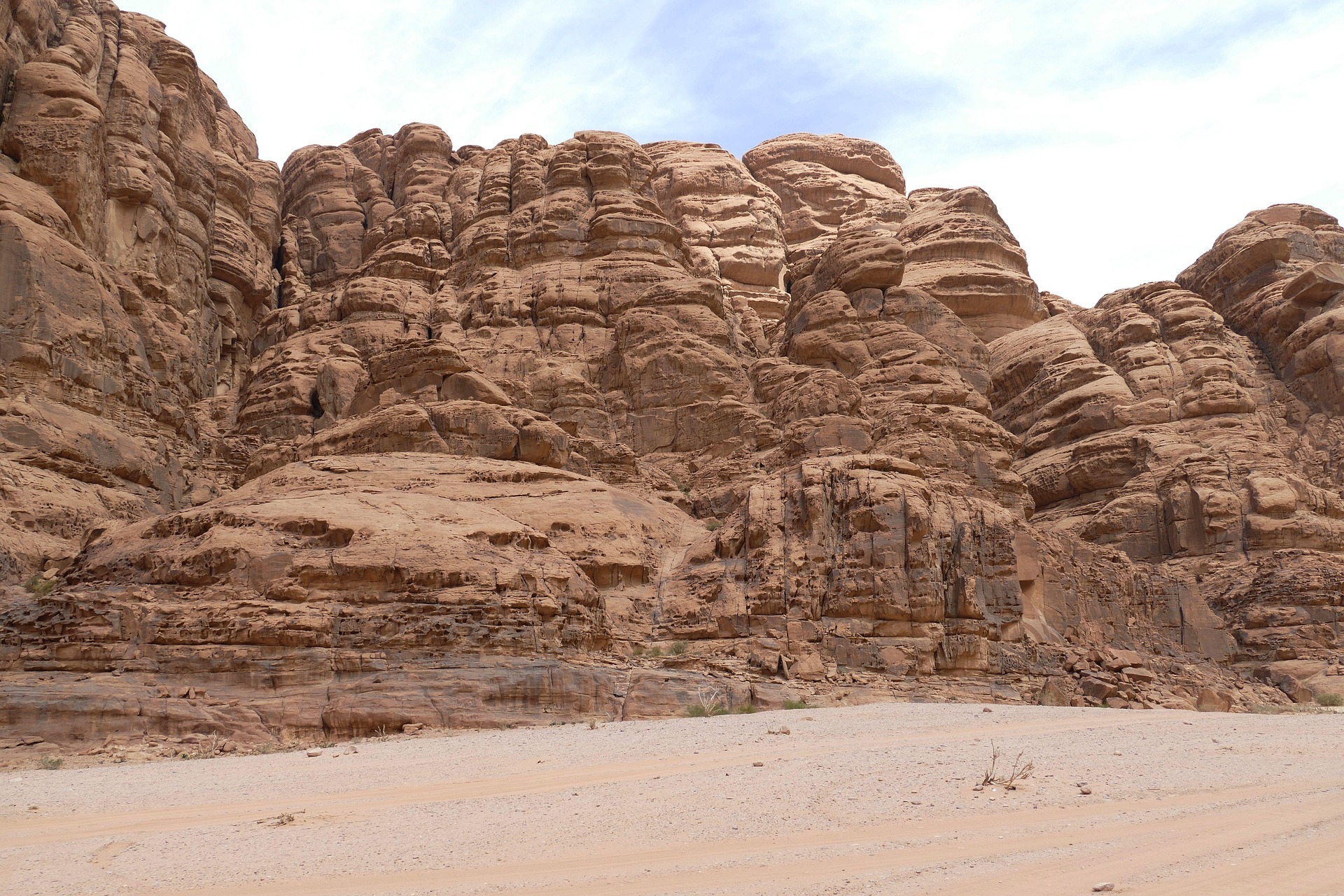
After lunch, shift gears and head inland to Wadi Rum, one of the most dramatic landscapes in Jordan. The one-hour drive takes you from coastline to desert, and the change is immediate. Towering sandstone cliffs, deep red sand, and wide open spaces create a setting that feels almost unreal.
The best way to explore Wadi Rum is by joining a jeep tour with a local Bedouin guide. These typically last a few hours and take you to key sites such as Lawrence’s Spring, Khazali Canyon, and Um Fruth Rock Bridge. Along the way, you will stop for short walks, viewpoints, and traditional Bedouin tea.
As the day ends, the desert light becomes softer and more atmospheric. Many travellers choose to stay overnight in a Bedouin camp, where the experience continues with traditional food, stargazing, and a level of quiet that is hard to find anywhere else.
Driving Distance: 120–150 km round trip
Overnight: Aqaba or Wadi Rum
Return to Amman via the King’s Highway – Day 6
The final day takes you back north, and choosing the right route makes a big difference. The King’s Highway (Route 35) is the most scenic option, offering a slower but far more rewarding journey through Jordan’s highlands.
This route winds through mountain landscapes, deep valleys, and small rural towns, giving you a more authentic feel for the country compared to the faster Desert Highway. The road includes tight bends and elevation changes, but the views make it one of the most memorable drives of the trip.
One of the key stops along the way is Karak Castle, a large Crusader fortress that dominates the surrounding valley. Walking through its stone corridors and looking out over the landscape gives a strong sense of the region’s strategic importance throughout history.
Further north, the Mujib Dam viewpoint offers another dramatic stop, with sweeping views across a deep gorge carved into the landscape. It is a perfect place to pause, stretch, and take in the scale of the terrain.
If time allows, you can stop again near Madaba or Mount Nebo before returning to Queen Alia International Airport. This provides a final opportunity to revisit the views across the Jordan Valley before the journey ends.
Driving Distance: Approx. 330 km
Overnight: Departure or Amman stay

Book Car Hire for Your Jordan Trip
If your plans in Jordan include day trips, rural areas or several stops, having your own car can make the itinerary much easier to manage.
Discover Cars and EconomyBookings both let you compare available vehicles and prices from a range of rental companies.
Road Conditions & Safety Tips
Driving in Jordan is generally safe and enjoyable, with well-maintained highways linking major cities. Roads like Road conditions across Jordan are generally very good, particularly on major routes connecting key cities and tourist destinations. Highways such as the Desert Highway (Route 15) and the Jordan Valley Highway (Route 65) are smooth, well signposted, and easy to navigate.
The biggest adjustment for most visitors comes in Amman, where traffic can feel chaotic. Lanes are not always strictly followed, and drivers often make quick decisions, so staying alert and driving defensively is important.
Outside the capital, conditions are much calmer. Roads are quieter, and driving becomes far more relaxed. However, you should still watch for pedestrians, animals, and slower-moving vehicles, particularly in rural areas.
Speed limits are clearly posted and generally set at 60 km/h in towns, 80 km/h on rural roads, and up to 110 km/h on highways. Speed cameras are common, and fines are enforced, so it is important to stay within limits.
Weather can occasionally affect driving conditions, particularly in winter when flash floods can impact lower-lying areas such as the Jordan Valley. Checking forecasts before setting off is a sensible precaution.
One key piece of advice is to avoid driving at night outside major cities. Many rural roads are unlit, and visibility can drop quickly, especially in desert areas.
Search flights and useful route combinations for your trip.
View flightsChoose an Airalo eSIM and arrange mobile data before you arrive.
Browse eSIMsArrange a private airport pickup for your trip to Aqaba.
Check transfersNavigation & Travel Apps for Drivers
Using the right apps makes a noticeable difference when driving across Jordan, especially when moving between cities, deserts, and more remote areas.
For navigation, Google Maps works well across most of the country, offering accurate routes and reliable travel times. However, downloading offline maps in advance is essential, particularly for areas like Wadi Araba or Wadi Rum where signal can be inconsistent.
For offline use, apps like Maps.me are particularly useful. They highlight petrol stations, viewpoints, and smaller roads that may not always appear clearly on standard navigation tools.
Traffic-focused apps such as Waze can be helpful in Amman, where congestion and route changes are more common. They provide real-time updates that can save time in busier areas.
Staying connected is also important. Using an eSIM or local data plan ensures you can access navigation, bookings, and communication without relying on patchy hotel Wi-Fi.
Other useful tools include weather apps for monitoring heat and changing conditions, and fuel tracking apps if you want to keep an eye on costs during longer drives.
Having everything set up before you leave Amman ensures you can focus on the journey itself rather than worrying about signal or directions.
Fuel, Food & Rest Stops
Long drives through Jordan’s deserts and highlands are not just part of the journey, they are a defining part of the experience. Planning your stops properly makes the difference between a smooth, enjoyable drive and an uncomfortable one.
Fuel is easy to manage across most major routes. The two main chains, Manaseer and JoPetrol, are widely available and provide clean restrooms, cafés, and small convenience stores. Fuel stations are full-service, so attendants will fill your tank for you. It is customary to leave a small tip, usually around 0.5 to 1 JOD, which is appreciated but not mandatory.
On the Desert Highway (Route 15), stations appear regularly, typically every 40 to 60 kilometres, so there is little risk of running low. The situation is slightly different on Route 65 and the King’s Highway, where distances between fuel stops can be longer. It is a good habit to top up early, particularly near Ghor Safī or Tafilah, before entering quieter stretches.
Food options vary depending on the route. Along the main highways, service stations offer quick meals and snacks, but the more memorable stops are found off the main road. Places like the Dana Tower Hotel Restaurant provide traditional Jordanian dishes with views across the surrounding landscape, while Rest House Karak offers a convenient stop overlooking the Crusader castle.
Along the Dead Sea, many hotel cafés allow non-guests to stop for light meals, drinks, and access to clean facilities, making them a reliable option if you are passing through.
It is always worth carrying bottled water, snacks, and basic supplies, especially when driving through desert regions. Small roadside shops often stock essentials such as nuts, dates, and strong Arabic coffee, but availability can be inconsistent.
Most importantly, plan each leg of your journey with a simple rule in mind. Start with at least half a tank of fuel and enough water for the drive, particularly when heading into remote areas such as Wadi Araba or Wadi Rum.
Hiring a Car in Jordan – What to Know Before You Drive
Hiring a car in Jordan is straightforward and gives you complete control over your journey, allowing you to explore at your own pace without relying on fixed schedules or organised tours.
Both international and local rental companies operate across the country. Brands such as Avis, Hertz, Sixt, and Europcar offer consistency and easy airport pickup, while local companies like Monte Carlo, Reliable, and Arena often provide more competitive pricing. The trade-off is usually in convenience, so it is important to balance cost with reliability and recent reviews.
To rent a vehicle, you will need a valid driving licence, passport, and rental agreement. An International Driving Permit is strongly recommended, as it simplifies interactions at checkpoints and avoids unnecessary delays. Minimum age requirements usually fall between 21 and 25, depending on the vehicle category.
Most rental companies require a credit card deposit between 500 and 1,000 JOD, which is held until the vehicle is returned. Some local providers accept debit cards or cash deposits, but these arrangements often come with additional conditions or fees. It is essential to ensure that all terms are clearly written into your agreement.
Insurance is one of the most important areas to check. Always confirm that your booking includes comprehensive cover and understand the excess amount in detail. Taking photos of the car at pickup and return is a simple but effective way to avoid disputes over damage.
Fuel is easy to manage, with attendants filling the tank for you at stations across the country. Petrol types are clearly labelled, and payment is straightforward. Before longer drives, particularly towards Wadi Rum or southern Route 65, it is important to refuel in advance.
Parking is generally simple. In Amman, blue-marked zones require payment, while most hotels and major attractions offer free or monitored parking. Fines are relatively low but must be settled before returning your vehicle.
Driving habits in Jordan require a bit of adjustment. Traffic in Amman can feel unpredictable, while outside the capital roads are calmer but require awareness of pedestrians, animals, and informal driving patterns. Speed limits are clearly posted and enforced, so sticking to them is important.
Before returning your car, take a few minutes to refuel, inspect the vehicle, and obtain confirmation that no damage has been recorded. Keeping receipts and documentation ensures a smooth handover.
Rules, Etiquette & Local Customs
Driving across Jordan is not just about the landscapes, it is also an opportunity to experience the country’s culture, hospitality, and everyday life. Understanding a few local customs makes the journey smoother and more enjoyable.
Police checkpoints are a normal part of driving in Jordan and are nothing to be concerned about. Officers are typically polite and professional. Slow down, greet them respectfully, and be ready to show your passport, driving licence, and rental documents if requested.
Politeness goes a long way. Simple gestures such as a nod, a smile, or saying “shukran” are appreciated and often returned with warmth. Respect for local customs is important, particularly in smaller towns and rural areas.
Dress standards are relaxed in cities and resort areas, but more modest clothing is expected elsewhere. Covering shoulders and knees is a good general guideline when stopping in villages or visiting local sites.
Friday is the main day of prayer, and this can affect your travel plans. Roads are often quieter in the morning, with more local traffic in the afternoon as families head out. Some attractions may open later, so allowing flexibility in your schedule is helpful.
Driving etiquette can feel different at first. Horns are often used as a friendly signal rather than a sign of frustration, and it is not uncommon for drivers to slow down or stop briefly to greet someone they know.
One of the most memorable aspects of travelling in Jordan is the willingness of people to help. If you encounter a problem, it is very likely that someone will stop to assist, often without expecting anything in return. A simple “shukran jazeelan” is always appreciated.
Keeping small change on hand is useful throughout the trip, whether for tipping, parking, or quick roadside stops. These small details make daily travel easier and more comfortable.

Rupert’s Handy Travel Tips
Rupert quickly realised that driving across Jordan isn’t about rushing from A to B. It’s about knowing when to slow down, refuel, and take in the views without getting caught out by the heat or distance.
- Start early on long drives: the heat builds quickly, and photo stops always add more time than you expect.
- Refuel before remote stretches: stations become sparse south of the Dead Sea and near Wadi Rum.
- Avoid driving after dark: unlit roads, sharp bends, and occasional animals make night driving risky.
- Download maps before you leave: signal can drop in desert areas and along quieter routes.
- Carry water and cash: small stops, cafés, and petrol tips often rely on cash payments.
Want to meet the reindeer behind our travel tips? Find out more in our page Who is Rupert?.


Frequently Asked Questions
Do you need an international driving permit to drive in Jordan?
Most visitors from the UK, EU, US, Canada and Australia can drive on a national licence, but carrying a valid International Driving Permit alongside it is strongly recommended, as it speeds up checkpoint stops and rental paperwork.
Is a 4×4 necessary for a Jordan road trip?
No. The main routes, including the Desert Highway, the King’s Highway and the Jordan Valley Highway, are paved and well maintained, so a standard rental car is perfectly adequate for this itinerary.
What are the roads and fuel stations like?
Major highways are smooth and clearly signposted, with fuel stations spaced roughly every 40 to 60 km on the Desert Highway. Stations are sparser on the King’s Highway and near Wadi Rum, so topping up early is advisable.
Is it safe to drive at night in Jordan?
Driving after dark outside major cities is best avoided. Rural roads are often unlit, and hazards such as animals or sharp bends are harder to see in the dark.
Can you drop off a rental car in a different city?
Yes, most major rental companies allow one-way drop-offs between Amman and Aqaba, though this usually comes with an additional fee that’s worth checking before you book.
Further Reading & Related Guides
Planning a trip to Jordan or exploring more of the country? These guides will help you discover historic sites, plan routes, and travel with confidence.
For help planning ticketed sites, our Jordan Pass Spotlight Guide explains how to save money on entry fees across the country, and pairs naturally with our Petra Travel Guide, covering Jordan’s most iconic archaeological site in full.
If you’re still deciding how to link Amman and Aqaba, our Amman to Aqaba Flight guide compares flying against driving, while the Amman Travel Guide and Aqaba Travel Guide cover local apps, attractions and practical tips for each city.
Along the route, it’s worth reading our guide to the Baptism Site of Jesus and Mount Nebo, two of Jordan’s most significant religious landmarks, and our Dead Sea Jordan Travel Guide for tips on floating, resorts and getting there. If you’re flying with Jordan’s national carrier at any stage, the Royal Jordanian Airline Guide covers routes, fleet and loyalty details.
Prefer a guided experience over self-driving? Our guide to Petra Tours from Amman, Aqaba & Wadi Rum rounds up the best organised trips if you’d rather leave the driving to someone else.











