Reviewed by our editorial team Updated
Why Choose the Jordan Pass
Travelling through Jordan can be a genuinely transformative experience. From ancient cities and desert castles to world-famous landmarks like Petra, the country delivers an extraordinary density of history and culture. However, entry fees, visa costs, and ticket queues can quickly add up if you are paying for everything separately. This is exactly where the Jordan Pass becomes essential.
Designed by the Jordan Ministry of Tourism and Antiquities, the Jordan Pass combines the country’s most important attractions into a single cost-saving digital pass. Instead of managing multiple tickets and payments, travellers can unlock Jordan with one simple QR code, making it one of the most efficient travel tools in the region.
The Jordan Pass is far more than a basic ticket. It acts as a complete sightseeing solution, giving prepaid access to over 40 major attractions, including Petra, Jerash, Wadi Rum, and the Amman Citadel. For anyone planning to visit more than one key site, the financial savings become clear almost immediately.
One of its most valuable features is the visa fee waiver. The standard 40 JD tourist visa-on-arrival fee is removed entirely for eligible travellers who purchase the pass before arrival and stay at least two consecutive nights in Jordan. This means your entry into the country is effectively prepaid, saving both money and time at immigration.
The pass also simplifies the entire travel experience. Instead of dealing with cash payments or waiting in ticket lines at each attraction, you simply present your digital pass for scanning at the entrance. The pass is delivered instantly by email and can be used straight away, making it particularly appealing for independent travellers, digital nomads, and organised tour groups.
Beyond cost savings and convenience, the Jordan Pass encourages travellers to explore more of the country. Many visitors use it as a reason to discover lesser-known destinations such as Umm Qays, Madaba, or the As-Salt Museum, adding depth to their itinerary. In practical terms, it delivers exactly what modern travellers want. Value, simplicity, and the freedom to explore at your own pace.
What’s Included & How It Works
The Jordan Pass provides access to more than 40 of Jordan’s most important attractions, covering everything from Roman cities and Crusader castles to desert fortresses and coastal museums. It is fully digital, highly flexible, and designed to remove friction from your travel experience.
Once purchased through the official website jordanpass.jo, the pass is delivered instantly as a PDF and image file. Travellers can either display it on their phone or carry a printed copy. In practice, having both options is recommended, as scanners can occasionally struggle with screen glare in bright desert conditions.
Using the pass is extremely straightforward. At each included attraction, staff scan your unique QR code, granting entry without the need for additional tickets, payments, or paperwork. This removes the need to carry cash or queue at ticket offices, which can be a major advantage at busy sites like Petra or Jerash.
The entire process is designed for simplicity. You purchase the pass online, receive it instantly by email, and use it at each attraction with a quick scan. There are no hidden steps or complicated procedures once you arrive in the country.
In addition to entry access, the pass also includes free downloadable travel brochures, offering practical guidance and highlighting key heritage sites across Jordan. These resources help travellers better understand what they are visiting and plan their routes more effectively.
The Jordan Pass is officially recognised by the Jordan Tourism Board and accepted at all major attractions nationwide. Whether you are exploring the vast ruins of Jerash, standing atop the Amman Citadel, or crossing the red desert landscapes of Wadi Rum, the experience remains consistent. One pass, one scan, and seamless access throughout your journey.
Compare hotels and other places to stay in Jordan.
Check availabilityBrowse apartments, homes and self-catering accommodation in Jordan.
Browse rentalsSee hotel prices from multiple booking sites in one search.
Compare ratesJordan Pass Packages & Pricing
The Jordan Pass is offered in three simple packages, each structured around how many days you plan to spend in Petra, Jordan’s most iconic attraction. All options include access to over 40 sites, visa fee waiver eligibility, and travel resources. The only difference lies in how much time you want inside Petra itself.
The Jordan Wanderer package costs 70 JDs and includes one day entry to Petra. This option is best suited to travellers on tighter schedules who still want access to major sites such as Jerash, Wadi Rum, and the Amman Citadel without paying separate fees.
The Jordan Explorer package costs 75 JDs and includes two consecutive days in Petra. This is widely considered the best-balanced option, allowing visitors to explore the Siq, Treasury, Monastery, and surrounding trails at a more relaxed pace. For most travellers, this represents the ideal combination of value and flexibility.
The Jordan Expert package costs 80 JDs and includes three consecutive days in Petra. This is designed for travellers who want to explore the site in depth, including lesser-visited trails, hidden tombs, and multiple sunrise or sunset visits.
All packages remain valid for three months from the date of purchase and activate automatically when first scanned. From that moment, the pass is valid for 30 consecutive days, giving you plenty of time to explore the country.
When compared to buying individual tickets and paying visa fees, the Jordan Pass can easily save more than 150 USD. For any itinerary that includes Petra, it is not just good value. It is the most cost-effective way to explore Jordan.
Entry Visa Waiver Explained
One of the smartest financial advantages of the Jordan Pass is its ability to completely remove the 40 JD visa-on-arrival fee for eligible travellers. In practical terms, this means your entry into Jordan is already covered before you even land.
To qualify for this waiver, three simple conditions must be met. You must purchase the Jordan Pass before arriving in the country, stay for at least two consecutive nights, and enter through an eligible border point such as Queen Alia International Airport, Sheikh Hussein Bridge, or the Wadi Araba crossing near Aqaba.
When you arrive, the process is straightforward. You present your digital or printed Jordan Pass at the visa desk, where the QR code is scanned. Once verified, the visa fee is waived and you proceed through passport control without making any payment.
It is important to understand that this waiver applies only to single-entry visas. Travellers planning to leave and re-enter Jordan will need to arrange a new visa separately. In addition, some nationalities still require a visa in advance, as the Jordan Pass does not override all entry restrictions.
For most travellers, however, the system works seamlessly. You arrive, present your pass, and enter the country without delays or additional costs. This combination of time saving, cost efficiency, and simplicity is one of the strongest reasons why the Jordan Pass is so widely recommended.
Amman & Central Jordan Highlights
For many visitors, Amman is the starting point of their journey and the cultural centre of modern Jordan. With the Jordan Pass, the capital becomes far more than a transit hub. It becomes a gateway into thousands of years of history, all accessible without additional entry fees.
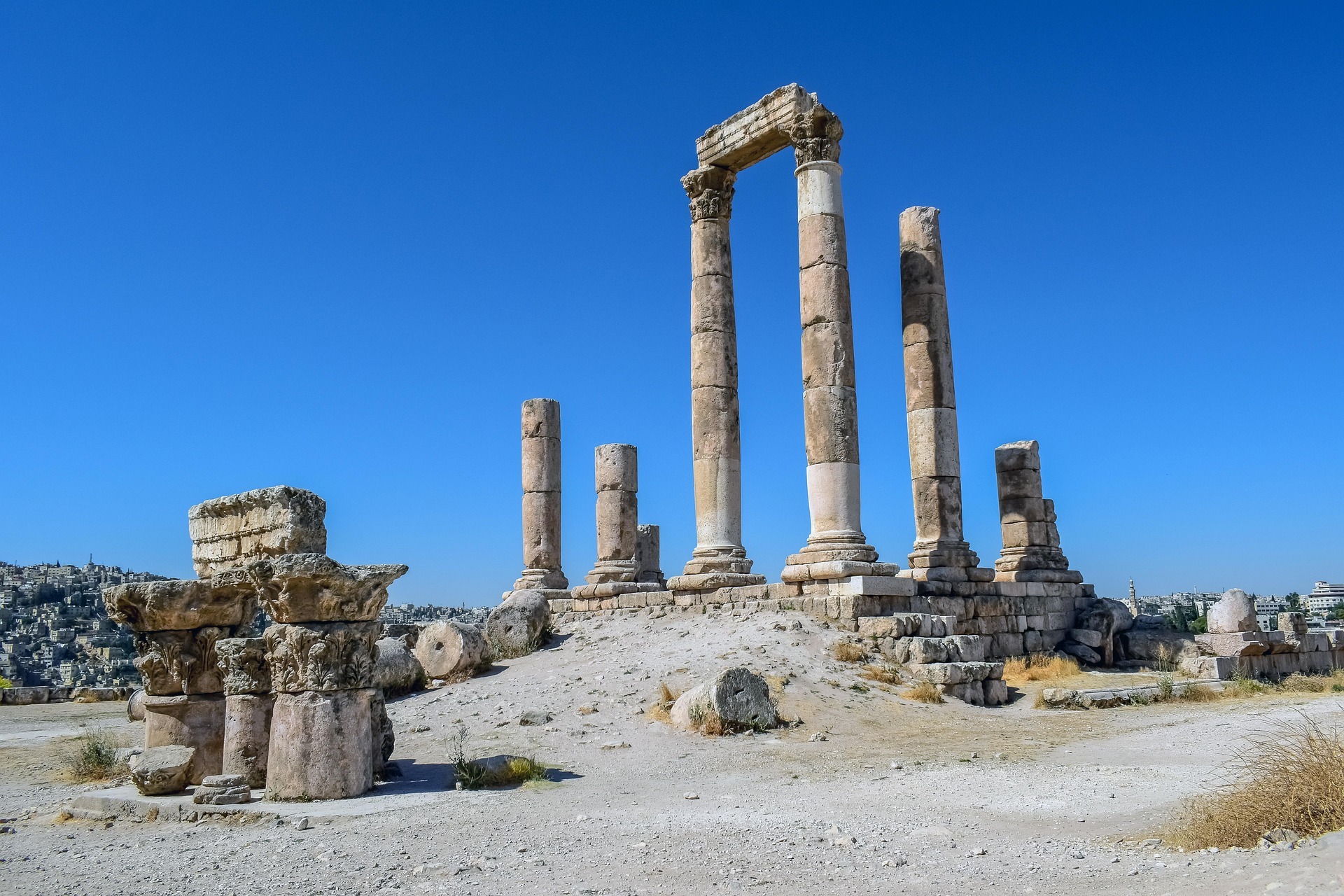
At the heart of the city sits the Amman Citadel, located on Jabal al-Qal’a. From this elevated site, visitors can explore the remains of the Temple of Hercules and the Umayyad Palace, while enjoying panoramic views across the city. Just below, the Roman Theatre stands as one of the best-preserved in the Middle East and remains in use for cultural performances today.
The Jordan Pass also includes access to the Jordan Archaeological Museum and the Museum of Popular Traditions, where artefacts trace the region’s history from prehistoric settlements through to the Nabataean era and beyond. These museums provide important context that enhances visits to larger sites like Petra.
A short distance from the city centre, the Iraq Al-Amir caves offer a very different perspective. Carved into limestone cliffs, these early settlements reveal the human story of the region long before Roman or Islamic influence.
Beyond Amman, the Jordan Pass opens access to several desert castles located to the east. Sites such as Qasr Al-Mushatta, Qasr Al-Kharranah, and Qasr Hammam Al-Sarh showcase early Islamic architecture set against stark desert landscapes.
With all of these sites included, Amman transforms into a living museum of interconnected civilisations. Roman, Byzantine, and Islamic influences are all visible within a short distance of each other. With the Jordan Pass in hand, you can move freely between them, turning a short city visit into a rich historical journey through the heart of Jordan.

Jerash & Northern Jordan Highlights
North of Amman, the landscape changes quickly. The dry plateau gives way to green hills, olive groves, and some of the most rewarding archaeological and historical sites in the country, a region where Roman ruins and medieval castles sit within easy reach of one another. With the Jordan Pass, this region becomes one of the easiest and best-value day-trip circuits in Jordan.
The standout attraction is Jerash, often described as the Pompeii of the East. Once one of the great cities of the Roman Decapolis, Jerash is one of the best-preserved Roman sites anywhere outside Italy. With the Jordan Pass, you can walk straight into a vast archaeological park filled with colonnaded streets, temples, plazas, arches, and theatres.
The Oval Plaza, the long Cardo Maximus, and the surviving monumental gateways give a real sense of scale and urban sophistication. It is not just a quick photo stop. Jerash is a place that rewards time, walking, and attention to detail.
Further west, the pass also covers Ajloun Castle, a 12th-century Islamic fortress built during the era of Saladin to help defend the region from Crusader forces. The castle sits high above forested hills and the Jordan Valley, and its towers deliver some of the best views in northern Jordan. Inside, vaulted halls, narrow staircases, and stone chambers give a strong sense of its military purpose, while the hilltop setting makes the approach itself memorable.
Another major northern highlight is Umm Qays, the ancient city of Gadara, perched above dramatic views of the Sea of Galilee, the Jordan Valley, and the Golan Heights. The site combines black basalt ruins, Roman columns, Ottoman buildings, and a beautifully positioned theatre, creating a much more atmospheric and less crowded experience than some of the better-known headline attractions. It is one of the best places in Jordan to combine archaeology with big, open landscape.
The broader north also includes places such as Pella, one of the oldest continuously occupied areas in the region, where layers of settlement from the Canaanite, Roman, Byzantine, and Islamic periods can still be traced. For travellers interested in the long arc of human history, Pella adds depth that goes far beyond the more polished main sites.
With good roads and relatively short travel distances, northern Jordan is one of the most efficient regions to explore. The Jordan Pass makes it even more rewarding by removing the need to pay separately at each stop, allowing you to build a full day of Roman ruins, medieval fortresses, and panoramic viewpoints without constant ticket costs.
Madaba & Mount Nebo Region
Southwest of Amman, Madaba is one of Jordan’s most rewarding heritage stops and one of the easiest places to add to an itinerary. Known as the City of Mosaics, it combines Byzantine craftsmanship, Christian pilgrimage history, and manageable town-centre exploring in a way that feels both accessible and rich in detail.
The Jordan Pass includes access to several of Madaba’s most important sites, starting with the Madaba Archaeological Park. This complex brings together Roman streets, Byzantine churches, preserved mosaic floors, and layers of settlement hidden beneath modern buildings. It gives an immediate sense of how deeply historical this small city really is.
The most famous mosaic in town, the 6th-century map of the Holy Land, is housed in the Greek Orthodox Church of St. George and remains one of the best-known visual records of the region from Late Antiquity. It shows Jerusalem, the Dead Sea, the River Jordan, and surrounding sacred sites with remarkable detail.
Other included highlights such as the Church of the Apostles, the Burnt Palace, and the Madaba Archaeological Museum deepen that experience. Together, they reveal a city shaped by Christian pilgrimage, Roman urban life, Byzantine religion, and early Islamic continuity. Madaba is compact enough that you can walk between many of these sites easily, which makes the Jordan Pass especially useful here, as you can explore multiple stops in one sweep without worrying about paying separate entry fees.
A short drive away is Mount Nebo, one of the most significant religious sites in Jordan. Although it is not formally included in the Jordan Pass, it sits so naturally within the Madaba region that most visitors treat it as part of the same excursion.
According to tradition, this is the mountain from which Moses viewed the Promised Land. On a clear day, the views stretch across the Jordan Valley, the Dead Sea, and towards Jerusalem, making it one of the most memorable scenic viewpoints in the country. The site also includes a church and mosaic remains that reinforce its importance as both a historical and spiritual destination.
Madaba works particularly well because it offers a strong concentration of cultural value without requiring long transfers or difficult logistics. It is easy to reach from Amman, easy to combine with nearby sites, and one of the clearest examples of how the Jordan Pass helps turn smaller heritage stops into major parts of the journey rather than quick add-ons.
As-Salt & Western Highlands
Tucked into the hills northwest of Amman, As-Salt offers a very different experience from the better-known tourist circuit. It is one of the most characterful towns in Jordan, shaped by Ottoman architecture, merchant history, and a strong tradition of religious coexistence. The town is now recognised as a UNESCO World Heritage Site, and the Jordan Pass gives you a strong reason to include it rather than simply passing through.
The pass includes entry to both the As-Salt Museum and the As-Salt Historical Museum, which together provide a detailed look at the town’s social and architectural history. These museums are housed in beautifully restored 19th-century merchant mansions, and that matters because the buildings themselves are part of the attraction.
Inside, exhibitions on family life, traditional crafts, trade, clothing, furniture, and local customs explain how As-Salt developed into one of the most important urban centres in the region before Amman rose to dominance.
What makes As-Salt especially appealing is the atmosphere. This is not a place of crowds or grand headline ruins. It is a place of ochre-coloured houses, sloping streets, stairways, churches, mosques, and local cafés, all tied together by a genuine lived-in feel. Walking here feels much more like stepping into a historic Jordanian town than visiting a formal archaeological site.
The surrounding Western Highlands add another layer. Rolling hills, olive groves, and scenic roads make this area ideal for travellers who enjoy slower routes and regional contrasts. As-Salt can fit naturally into a loop that also includes Ajloun, Madaba, or Amman, making it an excellent stop for anyone building a broader road trip through central and northern Jordan.
Because the Jordan Pass already covers the town’s main heritage museums, there is no barrier to spending time here properly. Instead of skipping it in favour of larger attractions, you can treat As-Salt as what it really is: one of Jordan’s most distinctive cultural towns and one of the country’s best underappreciated heritage experiences.
Compare routes and fares for your journey to Jordan.
Compare flightsBrowse Airalo eSIM options for convenient travel data.
Check eSIMsArrange a private airport pickup for your trip to Jordan.
Check transfersKarak & Shobak Castles
Jordan’s southern highlands are home to some of the most dramatic fortified sites in the Levant, and the Jordan Pass includes two of the most important: Karak Castle and Shobak Castle. These are not just old ruins on hilltops. They are major medieval strongholds that reveal the scale of conflict, strategy, and control that once defined this part of the region.
Karak Castle dominates the modern town of Al-Karak and is one of the largest and most imposing Crusader fortresses still standing in the Middle East. Built in the 12th century, it was a key defensive site on the old routes linking Damascus, Egypt, Jerusalem, and Arabia. Its position high above the valleys below made it both militarily powerful and visually intimidating.
Inside, the castle is filled with stone corridors, vaulted halls, hidden chambers, lookout points, and long subterranean passages that give a strong sense of how formidable it once was. The Karak Museum, also covered by the pass, adds context through artefacts and displays that explain the site’s Crusader and later Islamic phases.
Further south lies Shobak Castle, sometimes called Montreal, established by Baldwin I of Jerusalem in 1115. Where Karak feels massive and urban in its context, Shobak feels more remote and atmospheric. It sits on a lonely hill surrounded by open landscape, giving it a very different kind of presence.
Visitors can explore its remains, climb to viewpoints, and descend into the famous escape tunnel that once connected the castle to a hidden water source. The site’s isolation enhances its drama and makes it especially rewarding for photographers and history-focused travellers.
Both castles sit naturally along the King’s Highway, making them ideal additions for anyone driving between Amman, Madaba, Petra, or Wadi Musa. They help break up the journey while adding substantial historical weight to the route. With the Jordan Pass, you can visit both without extra entry fees, turning what might otherwise feel like optional detours into some of the most memorable and atmospheric stops in the country.
For travellers interested in Crusader history, military architecture, and big landscape scenery, Karak and Shobak are among the strongest inclusions in the entire pass.
Petra & Wadi Rum Experience
For most travellers, Petra is the central reason to buy the Jordan Pass, and in practical terms it is where the value of the pass becomes instantly obvious. Entry to Petra on its own is expensive enough that once it is combined with the visa waiver and a few other sites, the pass quickly justifies itself.
Petra is not a single monument. It is a vast archaeological landscape that deserves time, energy, and ideally more than one quick visit. Depending on which Jordan Pass package you choose, entry is included for one, two, or three consecutive days. That matters because Petra is much bigger and more physically demanding than many first-time visitors expect.
After walking through the Siq and emerging in front of the Treasury, most people quickly realise that the famous façade is only the beginning. The site continues through the Street of Facades, the Royal Tombs, the Roman Theatre, the Colonnaded Street, and the climb to the Monastery, with additional side trails and viewpoints rewarding anyone prepared to explore more deeply.
A one-day visit can cover the essentials, but two or three days dramatically improve the experience. They allow you to spread out the walking, avoid the pressure to rush, and see the site in different light conditions. Petra at sunrise, late afternoon, or near closing time feels completely different from the midday crowds, and that is one of the biggest reasons the higher-tier Jordan Pass packages are worth considering.
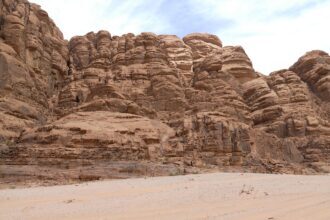
The other major southern highlight is Wadi Rum, included in the pass for standard site entry. Known as the Valley of the Moon, Wadi Rum offers a completely different kind of grandeur. Here the draw is not carved stone architecture but vast desert spaces, red sand, towering cliffs, natural rock bridges, and Bedouin culture. The Jordan Pass covers your entrance to the protected area, although activities inside, such as jeep tours, camel rides, and camp stays, are paid separately.
Together, Petra and Wadi Rum form the emotional and visual heart of most Jordan itineraries. One represents the brilliance of an ancient civilisation carved into rock. The other delivers raw desert scale and some of the most cinematic landscapes in the region. With the Jordan Pass, the logistical side becomes simpler and the financial side far more manageable, allowing you to focus on the experience itself rather than on buying separate tickets at every step.
These two places alone make the pass worth serious consideration. Combined, they create one of the strongest travel pairings anywhere in the Middle East.
Aqaba & Red Sea Coast Attractions
At the southern edge of Jordan, Aqaba offers a completely different pace and atmosphere compared with the country’s inland sites. After days spent exploring deserts, ruins, and mountain roads, the Red Sea coast delivers warm water, coral reefs, and a more relaxed, resort-style environment. The Jordan Pass ensures that even here, the cultural side of the destination is fully covered.
Included with the pass are the Aqaba Castle and the Aqaba Archaeological Museum, two compact but historically important sites located close to the waterfront. Aqaba Castle, also known as the Mamluk Fort, dates back to the 16th century and played a role in protecting trade routes along the Red Sea.
It later became associated with the Arab Revolt during World War I, adding another layer of historical significance. Walking its walls and courtyards provides a clear contrast to the larger inland fortresses like Karak, with a setting that blends history and coastal views.
Next to the castle, the Aqaba Archaeological Museum offers insight into the region’s long history as a trading port. Exhibits include artefacts from the Bronze Age, Nabataean period, and early Islamic era, helping to explain how Aqaba functioned as a gateway between Arabia, Africa, and the wider Mediterranean world.
Beyond these sites, Aqaba’s main appeal lies in the Red Sea itself. The coastline here is known for clear, calm waters and accessible coral reefs, making it one of the best places in the region for snorkelling and scuba diving. While these activities are not included in the Jordan Pass, the fact that your key cultural stops are already covered means you can allocate more of your budget to experiences on the water.
Aqaba is also part of a special economic zone, which means it benefits from duty-free shopping, lower taxes, and generally better value on food and accommodation. Many travellers choose to end their trip here, using it as a place to relax after Petra and Wadi Rum, or as a base for short excursions before departure.
With the Jordan Pass removing entry costs for its main landmarks, Aqaba becomes more than just a beach destination. It becomes a well-rounded coastal stop that blends history, relaxation, and access to one of the region’s most beautiful marine environments.
Desert Castles & Eastern Jordan Route
East of Amman lies a vast and often overlooked region that feels completely different from the rest of the country. The landscape opens into wide desert plains, broken only by a series of early Islamic castles, lodges, and caravan stops. With the Jordan Pass, exploring this area becomes straightforward and highly rewarding, turning what might seem like a remote detour into a structured and worthwhile route.
One of the most important sites is Quseir Amra, a UNESCO World Heritage Site famous for its well-preserved frescoes. These paintings depict scenes of hunting, bathing, music, and even zodiac imagery, offering a rare glimpse into early Islamic art and daily life. Unlike many historical sites where decoration has been lost, Quseir Amra still retains vivid visual storytelling that feels surprisingly modern in tone.
Nearby, Qasr Al-Kharranah stands as one of the most visually striking structures in the desert. Its fortress-like exterior suggests a defensive purpose, yet historians still debate its true role. Inside, the building reveals a network of rooms, staircases, and courtyards that hint at use as a caravanserai or meeting place rather than a military fort. The sense of mystery adds to its appeal.
Further east, Qasr Al-Azraq is built from distinctive black basalt stone, giving it a completely different appearance from the sandstone sites elsewhere in Jordan. This castle holds particular historical interest as it served as the headquarters of T. E. Lawrence during the Arab Revolt. Visitors can still see the room associated with him, adding a layer of modern historical narrative to the site.
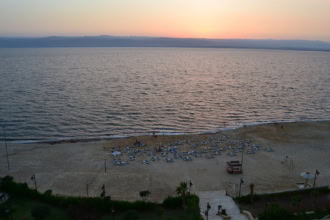
Other inclusions in the region, such as Al-Humaimah and the Museum of the Lowest Place on Earth near the Dead Sea, extend the experience beyond castles, showing how settlement and trade developed across this harsh landscape.
Driving the Desert Castle Route offers a unique perspective on Jordan. Instead of concentrated sites in one location, you move between isolated landmarks that once served travellers crossing vast distances. With the Jordan Pass covering entry throughout, you can explore freely, building a route that combines architecture, history, and open desert scenery without additional cost at each stop.
Restricted Countries & Border Entry Notes
While the Jordan Pass simplifies entry for most travellers, it is important to understand that visa rules still depend on nationality. The pass removes the visa fee, but it does not override all entry requirements, particularly for travellers from countries that require pre-arranged visas.
For visitors from the United Kingdom, European Union, United States, Canada, Australia, New Zealand, and many Asian countries, the process is straightforward. You can arrive in Jordan, present your Jordan Pass, and benefit from the visa fee waiver, provided you meet the minimum stay requirement.
However, travellers from restricted countries must arrange a visa before travelling, even if they have already purchased a Jordan Pass. This includes several countries across Asia and Africa, as well as certain others depending on current immigration policy. The most reliable and up-to-date information is always found on the official jordanpass.jo website.
Jordan offers multiple entry points, and the Jordan Pass works at the main ones. The most common is Queen Alia International Airport in Amman, which handles the majority of international arrivals. Other key crossings include Aqaba Airport and port, the Sheikh Hussein Bridge from Israel, and the Wadi Araba crossing between Eilat and Aqaba.
To ensure a smooth experience, it is strongly recommended to carry both a digital and printed copy of your pass. While most checkpoints accept phone screens, printed versions can be more reliable, particularly in bright conditions or where scanning equipment is less consistent.
Understanding these entry rules in advance avoids delays and ensures that you fully benefit from the Jordan Pass from the moment you arrive.
Benefits, Validity & Money-Saving Tips
The Jordan Pass is not just about convenience. It is one of the most effective ways to reduce travel costs in Jordan while simplifying logistics at the same time. When used properly, it can deliver substantial savings while improving the overall travel experience.
The pass is valid for three months from the date of purchase, giving flexibility for planning. Once it is scanned at your first attraction, it becomes active for 30 consecutive days, which is more than enough time for most itineraries across the country.
From a financial perspective, the biggest savings come from combining Petra entry, visa fee waiver, and multiple site visits. Petra alone can cost up to 50 JD per day, and once you add the 40 JD visa fee and additional attractions like Jerash or Karak, the total quickly exceeds the cost of the pass. This means that even moderate itineraries usually justify the purchase.
To maximise value, it is important to plan strategically. Starting with high-cost attractions such as Petra and Jerash ensures immediate savings. From there, adding smaller sites such as Madaba Archaeological Park or the As-Salt museums increases the overall return without adding extra cost.
Timing also matters. Purchasing the pass before arrival is essential if you want to benefit from the visa waiver. Waiting until after you land removes one of the most valuable savings.
Practical preparation also helps. Keeping both a printed copy and a digital version of your pass ensures smooth scanning at entrances. Bright sunlight and screen glare can occasionally cause issues, so having a backup avoids delays.
For families, the value can be even higher. Children under 12 often enter sites for free when accompanied by adults, meaning the pass mainly needs to be purchased for older travellers.
When used correctly, the Jordan Pass delivers exactly what travellers look for. Lower costs, less friction, and the ability to explore widely without constantly thinking about tickets or payments.

Rupert’s Handy Travel Tips
Heading to Jordan with your new Jordan Pass? Here are a few smart tips to make your trip even smoother:
- Buy before you fly: Purchase the pass online before arriving to activate the visa fee waiver — it won’t apply after landing.
- Print and save: Always carry a paper copy as backup; some border scanners struggle with phone screens.
- Start Petra early: Gates open at 6am, and the morning light gives incredible photos without the crowds.
- Plan by region: Group sites in Amman, Madaba, and Jerash to minimise driving and save fuel.
- Use every inclusion: Visit smaller stops like the As-Salt Museum and Aqaba Castle — they add real value to the pass.
Want to meet the reindeer behind our travel tips? Find out more in our page Who is Rupert?.




Frequently Asked Questions
Q: Is the Jordan Pass a visa?
A: No. The Jordan Pass is not a visa, but it waives the visa fee for eligible nationalities who stay at least two consecutive nights. You’ll still receive a visa-on-arrival stamp in your passport, but there’s no payment required if your pass was purchased in advance.
Q: How long is the Jordan Pass valid for?
A: The pass is valid for three months from the purchase date and remains active for 30 days once scanned at your first attraction.
Q: Can I visit the same site more than once?
A: No, the pass allows single entry per site, except for Petra, where the number of days depends on your package (1, 2, or 3).
Q: Is public transport included?
A: Transport is not included. The pass covers entry fees only, so you’ll need to arrange your own travel between sites.
Q: Do children need a Jordan Pass?
A: Children under 12 can enter included sites for free when accompanied by parents. Older children require their own pass.
Q: What should I do if I didn’t receive my pass email?
A: Check your spam or junk folder first. If it’s missing, visit jordanpass.jo and use the download ticket option with your booking reference.
Q: Can I upgrade my package later?
A: No. Once purchased, package upgrades or downgrades are not available, so choose carefully when you buy.
Q: Is “Petra by Night” included?
A: No. The night-time light show is a separate ticketed event not covered by any Jordan Pass package.
Q: Who do I contact if I have issues in Jordan?
A: Call the Tourism Police on 117777 for assistance at any time during your stay.
Browse hostels and budget-friendly stays around Jordan.
See hostelsAccess compensation support, eligible lounge benefits and faster payouts when flights go wrong.
See the benefitsUse convenient luggage storage around Jordan between arrival, check-in and departure.
Check storageFurther Reading & Related App Guides
Planning a trip to Jordan or exploring more of the country? These guides will help you discover historic sites, plan routes, and travel with confidence.
Our Petra Travel Guide covers Jordan’s most famous archaeological site in full, and pairs well with our Baptism Site of Jesus and Mount Nebo guide, which explores two of the country’s most important religious landmarks.
If you’re weighing up transport between Jordan’s two biggest cities, our Amman to Aqaba Flight guide compares flying and driving, while our Ultimate Jordan Road Trip guide is worth reading if you’d rather explore the country by car.
For help settling into the capital, our Amman Travel Guide covers local apps, tips and practical insights, and pairs naturally with our Aqaba Travel Guide for anyone continuing to the Red Sea. If you’re flying with Jordan’s national carrier at any stage, the Royal Jordanian Airline Guide covers routes, fleet and loyalty details.
Further afield, our Dead Sea Jordan Travel Guide explains how to visit, float and explore one of the world’s most unusual natural wonders.