
Discover the Best of Nice
Nice is one of those cities that can easily be misunderstood. Its location makes it a natural base for exploring Monaco, the French Riviera and the wider Côte d’Azur, but treating it only as somewhere to sleep between day trips would mean missing one of the most rewarding cities on the Mediterranean.
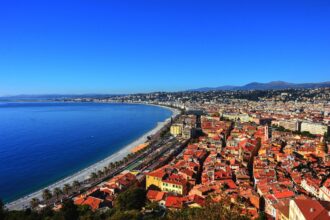
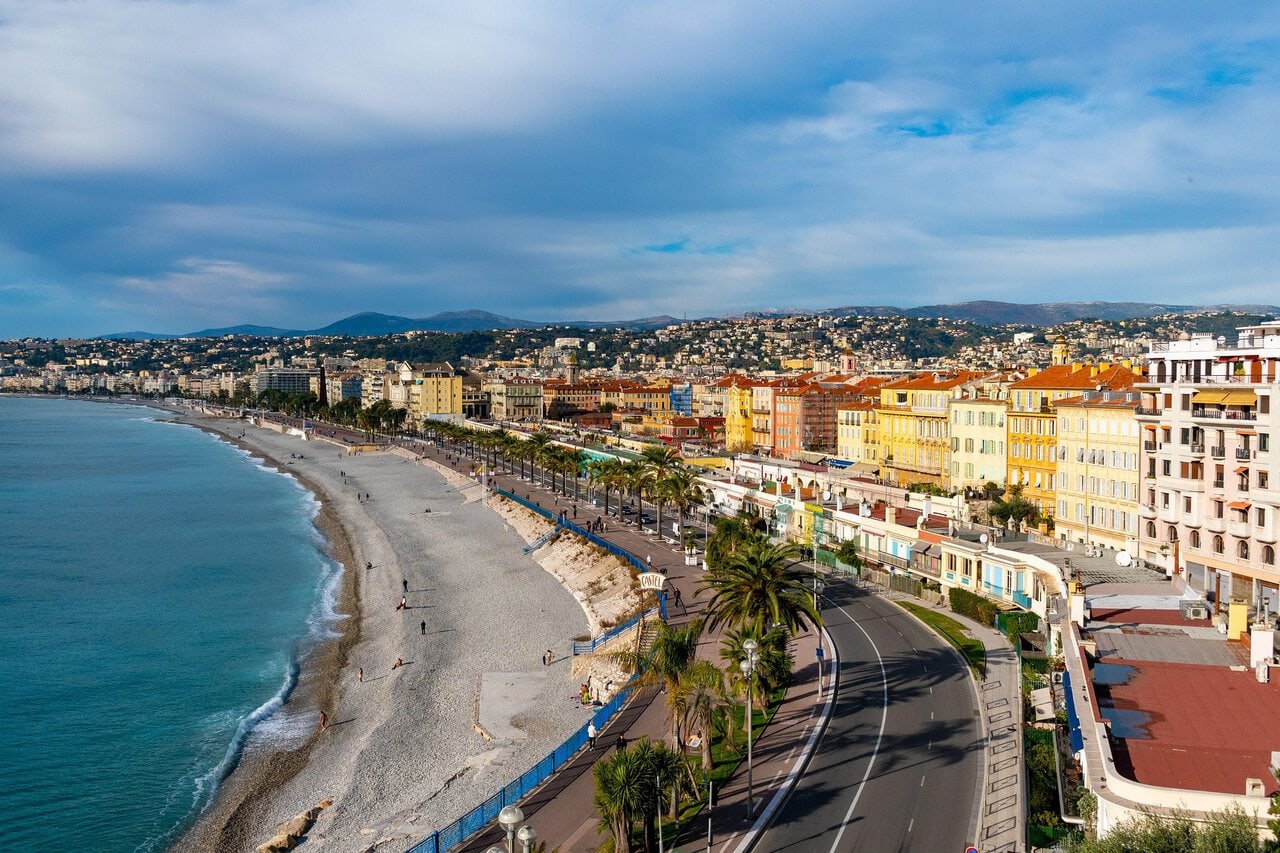
The sea is always part of the experience. The Baie des Anges curves around the city, the Promenade des Anglais follows the waterfront for kilometres and the beaches sit directly in front of the centre. Yet Nice is much more than its coastline.
Behind the seafront, Vieux Nice is a dense maze of narrow streets, colourful buildings, churches, markets and restaurants. Climb above it and the views open across the bay from Castle Hill. Travel further inland and the city reveals Roman ruins, gardens and museums devoted to artists including Henri Matisse and Marc Chagall.
Nice also rewards visitors who slow down. A morning can disappear among the stalls of Cours Saleya, while an evening can be spent moving between Place Masséna, the Promenade du Paillon and the illuminated streets of the Old Town.
Most of the central sights are close enough to explore on foot. The Promenade des Anglais, Vieux Nice, Cours Saleya, Place Masséna, Castle Hill and Port Lympia can all be linked into a long walking route without needing a car.
The city becomes more spread out when you add places such as Cimiez, the Russian Orthodox Cathedral and the Allianz Riviera. Nice’s trams and buses make these journeys manageable, while sightseeing tours can be useful when you want to cover several widely separated attractions without repeatedly working out the public transport connections.
Allow at least two full days if you want to experience Nice itself rather than simply see the headline sights. A third day gives you more time for museums, the coast and neighbourhoods beyond the Old Town, while a longer stay opens up easy journeys around the Riviera.
If you are flying into the city, our Nice Airport Transfers Guide explains the journey between the airport and central Nice. For visitors planning several regional journeys, our Pass Sud Azur Guide explains whether the local transport pass could save money.
Walk Along the Promenade des Anglais
The Promenade des Anglais is the defining image of Nice. Running beside the curve of the Baie des Anges, it separates the city from the Mediterranean and provides one of the easiest ways to understand Nice when you first arrive.
The promenade stretches for several kilometres, so there is no need to walk the entire length to experience it. For most visitors, the most rewarding section lies between the central waterfront and the eastern end near Vieux Nice and Castle Hill.
On one side, the Mediterranean fills the horizon. On the other stand hotels, apartment buildings and some of the city’s most recognisable architecture, including the pink-domed Hôtel Negresco.
The promenade is not simply a sightseeing route. People run, cycle, skate and walk along the waterfront throughout the day, while the distinctive blue chairs facing the sea provide one of the simplest pleasures in Nice: sitting down and watching the changing light across the bay.
Below the promenade are the city’s beaches. Nice is famous for its coastline, but first-time visitors should know that the beaches are covered in large pebbles rather than soft sand. The water can be beautifully clear, but walking barefoot across the stones is uncomfortable for many people.
Public beaches and private beach clubs sit beside one another along the coast. You do not need to pay to reach the sea, although private sections provide sunbeds, parasols and other facilities.
The promenade is particularly attractive in the early morning, before the busiest part of the day, and again towards sunset. After dark, the waterfront remains one of the most atmospheric places to walk, with the lights of the city curving around the bay.
It is also an excellent route into the rest of Nice. From the central promenade, you can turn inland towards Place Masséna, continue east towards Cours Saleya and Vieux Nice, or walk beneath Castle Hill towards Port Lympia.
Cycling is another way to explore the waterfront, but pedestrians should pay attention to the different sections of the promenade. The cycle route can be busy, particularly during summer, and stepping into it without looking is an easy mistake to make.
For a first visit, allow at least an hour for a relaxed walk, longer if you stop for the beach, a drink or one of the sights nearby. The Promenade des Anglais is not an attraction to tick off quickly; it is the route that ties much of central Nice together.
See hotel options and places to stay in Nice.
Browse hotelsExplore holiday homes and apartments around Nice.
See holiday homesCompare hotel deals in Nice from multiple booking sites.
Compare pricesExplore the Colourful Streets of Vieux Nice
Vieux Nice is the part of the city where a map becomes least useful. The Old Town is a compact maze of narrow lanes, tall ochre buildings, hidden squares, churches, cafés and small shops, and much of the pleasure comes from wandering without trying to follow a perfect route.
The streets feel very different from the broad boulevards elsewhere in Nice. Buildings rise close together, creating shade during the heat of the day, while shutters, painted façades and washing above the streets give the neighbourhood a distinctly Mediterranean character.
Place Rossetti is one of the natural centres of the Old Town. The square sits in front of Nice Cathedral and fills with café tables, people and activity, particularly during the warmer months.
From here, the surrounding lanes lead towards shops selling local food, small restaurants and some of the busiest streets in Vieux Nice. It is easy to move through the area quickly, but the Old Town is much better when you allow time to look down side streets and step into smaller squares.
The western side of the neighbourhood opens towards Cours Saleya, while the eastern edge rises towards Castle Hill. This makes Vieux Nice easy to combine with several of the city’s most important sights during the same day.
Food is a major part of the experience. This is one of the best areas to try socca, pissaladière and other Niçoise specialities, although the most obvious streets also contain restaurants aimed heavily at visitors. Look beyond the busiest routes before choosing where to eat.
The Old Town changes as the day progresses. Mornings are shaped by the market and deliveries, afternoons bring more visitors into the streets and evenings fill the squares and restaurant terraces.
It can become extremely busy during the summer, particularly around the main routes between Cours Saleya and Place Rossetti. Visit earlier in the morning if you want to see the neighbourhood at a quieter pace.
Vieux Nice is almost entirely a walking destination. The narrow streets are not designed for sightseeing by car, and there is no reason to use public transport once you are inside the historic centre.
Allow at least two or three hours if you want to combine the streets, cathedral, market and a stop for food. It is also worth returning after dark, when the Old Town feels very different from the daytime sightseeing rush.
Browse the Cours Saleya Market
Cours Saleya sits between Vieux Nice and the waterfront, making it one of the easiest places to include in a day of sightseeing. The long square is best known for its flower and food market, but its atmosphere changes significantly depending on when you visit.
In the morning, stalls fill the space with flowers, fruit, vegetables, olives, spices and other regional products. The colours and setting make this one of the most photographed places in Nice, but it is still a functioning market rather than simply a display for visitors.
This is a good place to look for ingredients and flavours associated with the region. You may find olives, tapenades, seasonal produce and local specialities, while the surrounding streets provide more opportunities to try the food of Nice.
Arrive earlier if the market itself is your priority. As the morning progresses, the area becomes busier, particularly during the main visitor season.
On Mondays, the usual flower and food market gives way to an antiques and flea market. The stalls can include furniture, books, jewellery, prints, decorative objects and a wide range of unexpected finds.
Later in the day, Cours Saleya changes again. Market stalls disappear and the surrounding restaurants and terraces become more prominent, turning the square into a busy place for lunch, drinks and evening meals.
The location makes it easy to build into a wider route. Explore the market in the morning, continue through Vieux Nice, then climb Castle Hill or head towards the seafront.
You do not need to set aside half a day for the market alone. For most visitors, 45 minutes to an hour is enough to browse the stalls, although food lovers and photographers may want longer.
Cours Saleya is at its best when treated as part of the Old Town rather than an isolated attraction. The market, surrounding streets and nearby food culture all belong to the same experience, and together they provide one of the strongest introductions to Nice.
Climb Castle Hill for the Best Views in Nice
Castle Hill rises between Vieux Nice and Port Lympia, providing some of the finest views across the city. Despite the name, there is no castle left to explore. The former fortress was destroyed in the early 18th century, and the hill is now a large public park filled with viewpoints, paths and trees.
The most famous view looks west across Vieux Nice, the Promenade des Anglais and the sweeping curve of the Baie des Anges. It is the classic Nice panorama, with the red roofs of the Old Town below and the Mediterranean stretching beyond the city.
Walk to the eastern side of the hill and the landscape changes completely. From here, you can look down over Port Lympia, its colourful waterfront buildings and the coastline towards Mont Boron.
The hill is much larger than a single viewpoint. Paths run through wooded areas, archaeological remains and quieter corners, while several terraces reveal different views as you move around the park.
One of its most unexpected features is the Cascade de la Colline du Château, an artificial waterfall surrounded by greenery. The waterfall dates from the 19th century and provides a cool, shaded stop away from the exposed viewpoints.
There are several ways to reach the top. You can climb the stairs from the eastern end of the Quai des États-Unis, follow other walking routes up the hill or use the free lift near the base when it is operating.
The lift saves energy, but it does not remove all walking. The park covers a substantial area, and you will still need to move between the viewpoints, waterfall and different sides of the hill.
Allow at least one to two hours if you want to explore properly. A quick trip to the main viewpoint is possible, but it misses much of what makes Castle Hill one of the best places in Nice.
The exposed viewpoints can become extremely hot during summer. Visit in the morning or later in the afternoon, carry water and do not underestimate the climb if you decide to use the stairs.
Sunset can be spectacular, but check the park’s current closing time before planning an evening visit. Castle Hill does not remain open throughout the night, and seasonal opening hours can affect how late you are able to stay.
See More of Nice on the Hop-On Hop-Off Bus
Central Nice is easy to explore on foot, but some of the city’s major attractions sit well beyond the Old Town and waterfront. A hop-on hop-off bus can be useful when you want to connect widely separated sights without spending much of the day working out local transport routes.
The sightseeing route begins near the waterfront and covers central landmarks before travelling further across the city. Stops include areas close to the Promenade des Anglais, Russian Orthodox Cathedral, railway station, Vieux Nice and Port Lympia.
The route also continues beyond central Nice to Villefranche-sur-Mer, giving the tour a much wider reach than a simple loop around the city centre. This is one of its strongest features, particularly for visitors with limited time.
A complete circuit without getting off takes around one hour and 30 minutes. That makes the bus useful on your first day, when riding the full route can help you understand how Nice fits together before deciding where to spend more time.
The ticket is available for one or two days, with unlimited hopping on and off during its validity. Recorded commentary is available in several languages, including English.
The bus is not necessary for attractions clustered around Vieux Nice. Walking is faster and more enjoyable for Cours Saleya, Nice Cathedral, Place Masséna and Castle Hill.
Its value comes from the longer journeys. The Russian Orthodox Cathedral sits away from the main waterfront sightseeing route, while Villefranche-sur-Mer would otherwise require a separate public transport journey.
Current services run roughly once an hour, so this is not a turn-up-every-few-minutes transport system. Check the timetable and decide which stops matter before getting off, as missing a bus can mean a significant wait.
The open upper deck provides excellent views, particularly along the coast, but bring sun protection during summer. The combination of direct sun and sea air can be stronger than it first appears.
For visitors spending several days in Nice and comfortable using trams and buses, ordinary public transport will usually be cheaper. For a first visit, limited time or a day built around several spread-out attractions, the hop-on hop-off bus can provide a much simpler sightseeing route.
Visit the Musée Matisse
Henri Matisse spent much of his later life in Nice, and the city became deeply connected with his work. The Musée Matisse explores that relationship through a collection displayed in a striking 17th-century villa in Cimiez.
The museum is not simply a room filled with the artist’s most famous paintings. Its collection follows the development of Matisse’s work across different periods and media, including paintings, drawings, sculptures, prints and personal objects.
This makes the museum particularly interesting for visitors who want to understand how his style developed. The collection reveals the working process behind the art rather than focusing only on instantly recognisable masterpieces.
The setting is part of the experience. The museum stands among the olive trees and historic landscapes of Cimiez, away from the busy waterfront and Old Town.
This location means the Musée Matisse should not be treated as an isolated journey. The Roman archaeological site, gardens and monastery are nearby, making Cimiez one of the best areas in Nice for combining several attractions during the same half-day.
Public transport is the easiest way to reach the museum from central Nice. Local buses run towards Cimiez, with the complete journey generally taking around 20 to 30 minutes depending on your starting point and traffic.
There is no need to take a taxi unless time is extremely limited. The main challenge is simply planning the area as one trip rather than repeatedly travelling between Cimiez and the centre.
Allow around one to two hours inside the museum, longer if you have a strong interest in Matisse. Then leave additional time for the surrounding archaeological and garden areas.
Check the museum’s current opening days before travelling. Nice’s museums can have weekly closure days, and planning a dedicated journey to Cimiez without checking first is an avoidable mistake.
The Musée Matisse is one of the most important art attractions in Nice, but the wider setting makes the visit even stronger. Come for the collection and stay to explore the historic landscape around it.
Ride the Little Train for a Gentler Tour of Nice
Not everyone wants to climb Castle Hill or spend several hours walking through the city. The little electric train offers a much gentler way to see part of Nice, with a short sightseeing route that includes panoramic views across the city and the Baie des Anges.
The small tourist train departs from the Promenade des Anglais and follows a scenic route through Nice. Unlike the hop-on hop-off bus, this is not designed as transport between attractions. You remain on board for the tour, making it a better choice when you want to sit back, listen to the commentary and see the city without a long walk.
The complete experience lasts around 50 minutes. During the journey, the train climbs above the centre and includes a 10-minute stop at a panoramic viewpoint, giving passengers time to get off and enjoy the views.
This is particularly useful during hot weather. Nice can be exhausting to explore on foot in the middle of summer, and the train allows you to cover more ground without spending the entire tour walking in direct sun.
Commentary is available in eight languages, including English, helping to explain the city and the places passed along the route.
The train is also wheelchair accessible and welcomes people with reduced mobility, making it one of the more accessible sightseeing options in Nice. Visitors with specific access requirements should still check the latest arrangements before booking.
Do not confuse the little train with the hop-on hop-off bus. The train is a short continuous sightseeing experience, while the bus provides one or two days of transport between stops across a much larger area.
If you want to reach several attractions and get on and off throughout the day, choose the sightseeing bus. If you prefer a relaxed 50-minute introduction to Nice with panoramic views and minimal walking, the little train is the stronger option.
Traffic and weather can affect the route and timetable, so check the latest departure information before setting out. For families, visitors with limited mobility or anyone who simply wants a break from walking, the little train is an easy activity to fit into a day in central Nice.
Search routes and flight options for your trip to Nice.
Search flightsChoose an Airalo eSIM and arrange mobile data before you arrive.
Browse eSIMsArrange a private airport pickup for your trip to Nice.
Check transfersExplore the Roman Ruins and Gardens of Cimiez
Long before Nice became a Riviera resort, the Romans established Cemenelum on the hill at Cimiez. The remains of that ancient settlement now sit within one of the greenest and most historically layered parts of the modern city.
The archaeological area includes the remains of Roman baths and an amphitheatre, revealing a history that feels completely removed from the seafront below.
The ruins are not on the scale of the great Roman sites elsewhere in southern France, but they add important context to Nice. The city’s story did not begin with hotels, winter visitors and the Promenade des Anglais.
Nearby, the Musée d’Archéologie de Nice-Cimiez displays finds from the ancient settlement and helps explain the structures visible across the site.
The wider neighbourhood is just as important. The Jardin des Arènes de Cimiez is filled with olive trees and open spaces, creating one of the most pleasant places in Nice to slow down after visiting the museums.
Continue towards the Monastery of Cimiez and its gardens for another change of atmosphere. The formal gardens overlook the city and provide broad views towards the surrounding hills.
The cemetery beside the monastery contains the graves of Henri Matisse and Raoul Dufy, adding another connection between Cimiez and the artists associated with Nice.
The strongest way to visit is to combine the entire area. Start with the Musée Matisse, explore the Roman remains and archaeological museum, then continue through the gardens towards the monastery.
Allow at least half a day for Cimiez if you want to do more than rush between attractions. The journey from central Nice is short enough, but repeatedly travelling back and forth wastes time.
Buses provide the most practical connection from the city centre, with journeys generally taking around 20 to 30 minutes. Once you arrive, the main sights are close enough to explore on foot.
Cimiez is one of the best examples of why Nice deserves more than a quick visit. In a relatively small area, you can move between Roman history, modern art, centuries-old religious buildings and peaceful gardens, all far from the busiest parts of the waterfront.
Cruise from Nice to Villefranche Bay
Nice looks completely different from the Mediterranean. From the water, the dense city opens into a much wider Riviera landscape of curving bays, rocky headlands, colourful ports and villas built into the hillsides.
The one-hour sightseeing cruise from Nice is a particularly easy way to experience that view without sacrificing half a day. Boats depart from Port Lympia and follow the coast towards Villefranche-sur-Mer before returning to Nice.
Soon after leaving the harbour, the route passes the coastline around Saint-Jean-Cap-Ferrat. The peninsula has long been associated with some of the Riviera’s most expensive homes, and large villas appear among the trees above the water.
The journey continues into the Bay of Villefranche, one of the deepest natural harbours in the Mediterranean. The sheltered water is surrounded by steep hills, while the colourful waterfront of Villefranche-sur-Mer curves around the edge of the bay.
Seeing Villefranche from the sea gives a much better sense of its setting than simply arriving by road or train. The old town appears squeezed between the hillside and the water, with the surrounding landscape rising sharply behind it.
On the return journey, the cruise enters the Baie des Anges, giving you a completely different view of Nice. The Promenade des Anglais stretches along the shore, with the city and hills rising behind it.
The complete trip lasts around one hour, making it easy to fit between other attractions. You could explore Port Lympia before departure, take the cruise and then continue on foot towards the Old Town or along the coastal path.
Commentary is provided in English and French, explaining the coastline and places visible from the boat. Food and drinks are not included, so this is best treated as a sightseeing experience rather than a lunch or sunset cruise.
The departure point is at Quai Lunel in Port Lympia. Tram Line 2 provides a convenient connection to the port area from central Nice, while the harbour can also be reached on foot from Vieux Nice.
Weather matters more here than it does for most attractions in the city. Sea conditions can affect sailings, so check the latest information if the forecast is poor or the wind is strong.
For visitors who want to experience the Riviera from the water without committing to a long boat excursion, this is one of the easiest activities to add to a Nice itinerary. In a single hour, you see Nice, Villefranche-sur-Mer and Saint-Jean-Cap-Ferrat from an angle that is impossible to experience from the road.
Discover the Marc Chagall National Museum
The Marc Chagall National Museum is one of the most important art museums in Nice, but its focus is very different from the Musée Matisse. Rather than tracing an artist’s entire career through a broad collection, the museum was created around a major group of works with a clear central theme.
At its heart is Chagall’s Biblical Message cycle, a series of monumental paintings inspired by the books of Genesis, Exodus and the Song of Songs. The scale, colour and symbolism of the works make the collection accessible even to visitors who know little about Chagall before arriving.
The museum was developed with the artist’s involvement, which gives the building and collection a particularly strong connection. Chagall helped shape how the works were presented rather than simply having his paintings placed in an existing gallery after his death.
The collection extends beyond the main paintings. Stained glass, mosaics, drawings and other works reveal different sides of Chagall’s artistic language, while the garden provides a quieter space around the museum.
This is not a huge museum, and that works in its favour. You can explore the collection properly without losing an entire day inside a gallery.
Allow around one to two hours for the visit. Visitors with a strong interest in Chagall may want longer, but the museum also works well as a focused cultural stop during a wider day in the city.
The museum sits north of the immediate Old Town and waterfront area. It is possible to walk from central Nice, but the route climbs away from the coast, so a local bus can be the more comfortable option, particularly in hot weather.
The Marc Chagall National Museum and Musée Matisse are sometimes treated as though visitors should choose between them. In reality, they provide very different experiences. Choose Matisse for a broader journey through an artist’s development and Chagall for a concentrated collection built around powerful monumental works.
Art lovers can visit both during the same stay, but there is no need to force them into a single rushed museum day. Nice has enough variety to give each collection the time it deserves.

Step Inside Nice Cathedral
Nice Cathedral stands at the heart of Vieux Nice, facing the busy Place Rossetti. Its location makes it easy to pass without fully noticing it, but the interior is one of the most impressive religious spaces in the Old Town.
The cathedral is dedicated to Saint Reparata, the patron saint of Nice. The present building was largely developed during the 17th century, with a richly decorated Baroque interior that contrasts sharply with the narrow streets outside.
Inside, elaborate chapels, painted decoration and gilded details create a much grander space than the exterior first suggests. The dome rises above the surrounding Old Town and is easier to appreciate from higher viewpoints around the city.
The cathedral does not require a separate journey. It sits directly on one of the main routes through Vieux Nice, only a short walk from Cours Saleya and the streets leading towards Castle Hill.
That makes it best visited as part of a wider exploration of the Old Town. Stop at the cathedral while moving between Place Rossetti, Cours Saleya and the surrounding lanes, rather than building a separate itinerary around it.
Allow around 20 to 30 minutes for a normal visit. Entry is generally free, although access can be restricted during services and religious events.
As with any active place of worship, dress and behave appropriately inside. Keep noise low, avoid disrupting services and check before taking photographs where restrictions are displayed.
Place Rossetti itself is worth pausing in after the visit. The square is one of the liveliest parts of Vieux Nice, surrounded by cafés and restaurants and particularly atmospheric in the evening.
Nice Cathedral is not the city’s largest attraction, but it adds an important layer to the Old Town. Vieux Nice makes much more sense when you step inside its churches and buildings rather than seeing the neighbourhood only as a collection of colourful streets.
See the Russian Orthodox Cathedral
The Saint Nicholas Russian Orthodox Cathedral is one of the most unexpected sights in Nice. Onion domes, colourful tiles and richly decorated façades rise above a quiet area west of the main city centre, creating an architectural scene that feels far removed from the Promenade des Anglais.
Its presence reflects Nice’s long connection with wealthy Russian visitors. During the 19th century, members of the Russian aristocracy increasingly spent time on the Riviera, creating demand for an important Orthodox place of worship.
The cathedral was completed in the early 20th century and remains one of the most significant Russian Orthodox buildings outside Russia. Its exterior is immediately striking, but the interior is equally important.
Inside, visitors can see icons, painted decoration, woodwork and religious objects within an active place of worship. This is not simply a historic monument or decorative building, and visitors should behave accordingly.
Dress requirements can be stricter than at some other attractions. Shoulders and knees should be covered, and hats should be removed before entering. Photography restrictions may apply inside, so follow the current instructions displayed at the cathedral.
The cathedral sits away from the main cluster of sights around Vieux Nice. From the central waterfront, walking can take around 25 to 35 minutes, depending on your starting point.
Public transport can save time, particularly during hot weather. Local buses serve the surrounding area, while the Alsace-Lorraine tram stop leaves you with an onward walk of roughly 15 minutes.
The hop-on hop-off sightseeing bus also stops close to the cathedral, which is one reason the route can be useful. It allows visitors to combine this outlying attraction with other parts of Nice without repeatedly returning to the centre.
Check the current visiting hours before travelling. The cathedral may close during part of the day, and access can be affected by religious services.
Allow around 30 to 45 minutes for the visit itself, plus the journey. It combines particularly well with other attractions west of the Old Town rather than being squeezed between sights on the opposite side of the city.
The Russian Orthodox Cathedral is worth the extra journey because it reveals a completely different part of Nice’s history. The Riviera was shaped not only by French and Mediterranean influences, but by generations of international visitors who left permanent marks on the city.
Walk Around Port Lympia
Port Lympia reveals another side of Nice. The grand hotels and long sweep of the Promenade des Anglais give way to fishing boats, yachts, ferries and colourful buildings wrapped around a sheltered harbour.
The port has been part of Nice since the 18th century and remains an active working harbour. Traditional wooden boats share the water with modern yachts, while ferries and excursion boats connect the city with destinations further along the Mediterranean coast.
One of the most attractive parts of a visit is simply walking around the harbour. The buildings surrounding the water are painted in warm shades of ochre, red and yellow, creating a distinctly Mediterranean setting that feels very different from the Belle Époque architecture further west.
The monumental Notre-Dame-du-Port church stands at the northern end of the harbour, facing the water across Place Île de Beauté. Its classical façade forms one of the most recognisable views around the port.
Restaurants and cafés line the surrounding streets, making Port Lympia a good place to stop for lunch or an evening meal. Walk a little beyond the most obvious waterfront terraces and you will find more of the neighbourhood that has developed around the harbour.
The port is also the departure point for sightseeing cruises along the Riviera. The one-hour cruise towards Villefranche-sur-Mer and Saint-Jean-Cap-Ferrat leaves from Quai Lunel, making it easy to combine time around the harbour with a trip on the water.
Port Lympia is well connected by public transport. Tram Line 2 terminates at Port Lympia, providing a direct link from central Nice and the airport side of the city.
Walking from Vieux Nice is just as rewarding. The route around the base of Castle Hill takes roughly 15 to 25 minutes, depending on your starting point, and creates a natural sightseeing journey from the Old Town to the harbour.
For the best views, climb part of Castle Hill and look down over the port from above before exploring it at water level. The contrast between the two perspectives helps reveal the shape of the harbour and its position between the city and the coast.
Allow around an hour for a relaxed walk, longer if you stop for food or take a cruise. Port Lympia is not a place that needs a rigid itinerary; its appeal comes from slowing down and following the edge of the water.
Compare hostels and budget-friendly accommodation around Nice.
Browse hostelsFlying to Nice? Get fast compensation payouts, eligible lounge benefits and expert help when flights go wrong.
See AirHelp+ benefitsUse convenient luggage storage around Nice between arrival, check-in and departure.
Check storageFollow the Coastal Path Beyond the Port
The coastline does not end when the Promenade des Anglais reaches Castle Hill. East of Port Lympia, a much wilder walking route follows the Mediterranean away from the busiest parts of central Nice.
The Sentier du Littoral, also known locally as the coastal path, provides a very different experience from the broad, paved promenade. Here, the route follows rocky coves and exposed sections of coast, with the sea immediately below.
A useful starting point is the area around Coco Beach, east of the port. From there, the path continues around the coastline towards Cap de Nice.
This is not a flat city-centre stroll. The route includes steps, uneven surfaces and exposed sections, so wear proper footwear rather than attempting it in beach sandals.
The reward is a series of changing Mediterranean views. Rocky inlets replace the long urban beach, while villas and hillside buildings rise above the coast.
You do not need to walk the entire route to enjoy it. Even a shorter out-and-back journey from the port provides a strong contrast with the Promenade des Anglais.
Allow around one to two hours for a shorter walk, depending on how far you continue and how often you stop. More ambitious walkers can extend the journey further along the coast.
Weather conditions matter. Parts of the path can be affected by strong winds, rough seas and high waves, and access may be restricted when conditions are unsafe. Check before setting out if the weather is poor.
There is limited shade on exposed sections, so carry water and sun protection during warmer months. Early morning and later afternoon are generally more comfortable than the middle of a hot summer day.
The coastal path is one of the best free experiences in Nice for visitors who want to escape the busiest sightseeing routes. Within a relatively short walk of the Old Town, the city gives way to a much rougher and more natural Mediterranean coastline.
Spend Time on Nice’s Pebble Beaches
Nice has one of the most famous urban coastlines in Europe, but its beaches often surprise first-time visitors. The shore is covered with smooth grey pebbles rather than sand, and that changes how you should prepare for a beach day.
Walking across the stones can be uncomfortable, particularly when they become hot in the sun. Water shoes are one of the most useful things you can bring, making it much easier to cross the beach and enter the sea.
The beach runs for several kilometres along the Baie des Anges, divided between free public sections and private beach clubs. You do not need to pay for access to the Mediterranean.
Public beaches are the simple option. Bring a towel or something padded to lie on, as the stones are far less forgiving than sand. Some sections have showers and other basic facilities nearby.
Private beaches provide sunbeds, parasols, restaurants and changing facilities, but prices can be high during the main season. They are best viewed as a comfort upgrade rather than the only way to enjoy the coast.
The Mediterranean can look calm from the promenade, but the beach shelves relatively steeply in places and waves can make entering and leaving the water awkward. Take extra care when the sea is rough.
There are no long stretches of shallow sandy water of the kind found at many resort beaches. Families with young children should pay close attention to conditions and choose their swimming location carefully.
The central beaches are the easiest to reach, but they can also be the busiest. Walking further along the promenade can provide more space, although facilities vary between sections.
The beach is particularly appealing at the beginning and end of the day, when temperatures are lower and the light across the Baie des Anges changes. An evening swim followed by a walk along the promenade is one of the simplest ways to enjoy Nice.
Allow as much or as little time as you want. The great advantage of the coastline is that the beach sits directly beside the city, so you can swim for an hour and then return immediately to museums, restaurants and the Old Town.
See Place Masséna After Dark
Place Masséna is one of the main meeting points between old and modern Nice. The large square connects the shopping streets, Promenade du Paillon, Old Town and routes towards the seafront, making it almost impossible to explore central Nice without passing through it.
During the day, the most striking feature is the architecture. Red and ochre façades surround a broad open space crossed by the tram, while the black-and-white paving creates a distinctive geometric pattern underfoot.
At the southern end stands the Fontaine du Soleil, dominated by a large statue of Apollo. The fountain marks the transition towards the Old Town and the streets leading to Cours Saleya.
Above the square, a series of figures sit on tall poles. The installation, known as Conversation à Nice, represents the continents and becomes particularly noticeable after dark when the figures are illuminated.
This is why Place Masséna deserves an evening visit. As the light fades, the buildings, fountain and public art take on a completely different appearance from the daytime shopping rush.
The square is also one of the easiest places in Nice to reach. Tram Line 1 stops directly at Masséna, while the seafront, Vieux Nice and central shopping streets are all within a short walk.
There is no need to build a separate journey around it. Visit during the day as you move through the centre, then return after dinner or on the way back from the Old Town.
The surrounding area remains lively into the evening, and the pedestrian spaces make it a natural place to pause before continuing towards the waterfront.
Place Masséna is not an attraction that requires hours. Twenty or thirty minutes after dark is enough to appreciate it, but its central location means you are likely to return several times during a stay.
The best city squares are not simply monuments to photograph once. They become part of how you move around a destination, and Place Masséna is the point where many of Nice’s most important areas come together.

Walk Through the Promenade du Paillon
The Promenade du Paillon provides a green route through the centre of Nice, linking Place Masséna with the area around the Old Town and the museums further north.
The park was created above the covered River Paillon, transforming what was once a dividing line through the city into a long public space filled with lawns, trees, play areas and fountains.
Its most recognisable feature is the Miroir d’Eau, a large water mirror where jets rise directly from the ground. When the fountains stop, the shallow surface reflects the surrounding buildings and sky; moments later, clouds of mist and water can completely change the scene.
The fountains are particularly popular with families during hot weather, but the wider park is useful for almost every visitor. It provides a quieter walking route away from traffic and connects several parts of central Nice.
From Place Masséna, you can follow the gardens north alongside the edge of Vieux Nice. This makes the Promenade du Paillon a natural route between the central shopping streets, Nice Cathedral, Place Garibaldi and the Museum of Modern and Contemporary Art area.
The park is also a useful place to stop during a busy sightseeing day. Benches, shaded areas and open lawns provide somewhere to sit without needing to order food or drinks.
Allow around 30 to 45 minutes to walk through a substantial section at a relaxed pace. Families may spend much longer around the fountains and play areas.
The promenade is free and easy to reach from almost anywhere in the centre. Tram Line 1 runs alongside parts of the route, while several stops provide convenient access.
It is not a destination that requires a dedicated half-day, but it improves the experience of moving around Nice. Rather than treating every journey between attractions as dead time, the Promenade du Paillon turns the walk itself into part of the sightseeing.
Discover the Belle Époque World of the Musée Masséna
The Musée Masséna sits directly beside the Promenade des Anglais in one of the grand villas that helped define Nice during the height of the Riviera’s Belle Époque.
The building was constructed in the early 20th century and is surrounded by formal gardens. Even before entering the museum, the villa provides a glimpse of the wealth and international influence that transformed Nice into one of Europe’s most fashionable winter destinations.
Inside, the museum explores the history of Nice and the French Riviera from the late 18th century into the 20th century. Paintings, furniture, decorative objects and historic material help explain how the city developed from a Mediterranean town into a resort known across Europe.
The collections also cover Napoleon and the wider political history of the period, alongside the growth of tourism, changing fashions and the personalities connected with the Riviera.
This is one of the best museums in Nice for visitors who want to understand the city itself. The Matisse and Chagall museums focus on individual artists; the Musée Masséna explains how modern Nice came to look and feel the way it does.
The villa interiors are part of the attraction. Grand rooms, staircases and decorative details create a setting that suits the story being told inside.
Allow around one to two hours for the museum, depending on your interest in local history. The gardens can be explored separately and provide another reason to pause.
The location is extremely convenient. The museum stands beside the Promenade des Anglais, close to the Hôtel Negresco, and can easily be included during a waterfront walk.
There is no need for a car or special public transport journey. From Place Masséna, the walk takes around 15 minutes, while nearby buses and trams make the area easy to reach from elsewhere in Nice.
The Musée Masséna is particularly valuable after you have already spent time around the city. The architecture, hotels and promenades outside make more sense once you understand the period that created them.
Tour the Allianz Riviera and National Sports Museum
The Allianz Riviera sits well away from Nice’s historic centre, but it offers one of the city’s most distinctive specialist experiences. The stadium is home to OGC Nice, while the same complex also houses France’s National Sports Museum.
The guided experience combines both attractions. Visitors first go behind the scenes at the stadium before continuing into the museum, creating a visit that covers modern football, major sporting events and the wider history of sport in France.
The stadium tour enters areas that ordinary matchday visitors do not normally see. Depending on current access, the route can include the dressing rooms, pitchside areas, press facilities and spaces used by VIP guests and journalists.
The Allianz Riviera was built as a modern multi-purpose stadium and has hosted major international events, including matches during UEFA Euro 2016 and the Paris 2024 Olympic football tournament.
The National Sports Museum broadens the experience beyond football. Its collections explore the development of sport from the ancient world to the present day, with objects, displays and exhibitions covering major athletes and competitions.
The combined guided visit lasts around two hours. The most important detail for international visitors is that the tour is conducted primarily in French, although some information is available in English.
That makes this a more specialist choice than the major central attractions. Football and sports fans may still find it worthwhile, but visitors who want a fully guided English-language experience should consider the language arrangements before booking.
The stadium is on the western edge of Nice, close to the Var valley and far from the Old Town. Allow around 45 minutes to one hour for the complete public transport journey from central Nice, depending on your starting point and connection.
The most useful route is generally to travel west by tram and continue towards the stadium area using the current local connection. Check the latest journey before setting out, as this is not an attraction where you should simply begin walking from the city centre.
Arrive at the National Sports Museum at least 15 minutes before the booked tour time. Because entry is tied to a specific guided departure, missing the start is much more serious than arriving late at a conventional museum.
For most first-time visitors, the Allianz Riviera will sit below Castle Hill, Vieux Nice and the major art museums. For football supporters and visitors with a strong interest in sporting history, however, it provides something completely different from the usual Riviera itinerary.

Experience the Food of Nice
Nice has a food culture distinct enough to carry its own name. Cuisine niçoise reflects the city’s Mediterranean setting, its proximity to Italy and the ingredients of Provence, creating dishes that are closely tied to the region.
One of the simplest foods to try is socca, a thin chickpea pancake cooked at high heat until crisp around the edges. It is best eaten hot, usually with plenty of black pepper.
Another local speciality is pissaladière, a soft bread base topped with slow-cooked onions, olives and anchovies. It may look like a pizza at first glance, but the flavour and texture are very different.
Pan bagnat turns the ingredients associated with salade niçoise into a substantial sandwich. Traditionally filled with vegetables, tuna, egg, olives and olive oil, it is particularly useful for a picnic or beach lunch.
You will also encounter petits farcis, vegetables such as courgettes, tomatoes and onions filled with a savoury stuffing, along with dishes built around local seafood and seasonal produce.
Cours Saleya is an obvious place to begin exploring the ingredients of Nice, but do not limit yourself to the market square. The streets of Vieux Nice contain traditional food shops, bakeries and restaurants alongside the more tourist-focused businesses.
A guided food tour can be useful for visitors who want to understand the dishes rather than simply order them. The strongest tours combine tastings with the history of the Old Town and explain how the food reflects Nice’s position between France, Provence, Italy and the Mediterranean.
If you prefer exploring independently, spread the local specialities across your stay. Trying socca, pissaladière, pan bagnat and a full restaurant meal in a single afternoon is more endurance test than cultural experience.
Look for places that treat Niçoise food as a living local cuisine rather than a list of famous names on a tourist menu. The best food experiences in Nice are often simple, inexpensive and closely connected to the streets and markets where the dishes developed.
Use the Pass Sud Azur to Explore Further
Nice has an excellent public transport network, but the city becomes even more useful when you start looking beyond its boundaries. Trains, trams and buses connect the city with coastal towns, hilltop villages and destinations across the French Riviera.
The Pass Sud Azur is designed for visitors who expect to make several journeys using different forms of public transport. Rather than buying separate tickets every time you travel, the pass can cover participating trains, trams and buses within the zones you choose.
This is particularly useful because the Riviera does not have one simple transport system. A day might involve a tram across Nice, a regional train along the coast and a local bus to reach somewhere away from the railway.
The pass is available for different geographical areas, so choosing the correct zones matters. A pass covering the journeys you actually intend to make can be excellent value; paying for a much larger area than you need defeats the point.
It becomes particularly interesting for visitors using Nice as a base. You might spend one day exploring the city, then travel towards Monaco, Menton, Antibes, Cannes or other destinations across the region.
The Pass Sud Azur is less important if you plan to stay entirely within central Nice. Most of the main sights are walkable, and ordinary local tickets may be cheaper for occasional tram or bus journeys.
Before buying one, sketch out the journeys you genuinely expect to make. Compare the cost of those individual tickets with the relevant pass rather than assuming that a transport pass automatically saves money.
Our Pass Sud Azur Guide explains the available zones, validity periods, transport included and how to decide which version is right for your trip.
For visitors planning several days of independent travel around the Riviera, the pass can make the region feel much simpler. Its real value is not only the potential saving, but the freedom to move between different transport networks without buying a new ticket for every part of the journey.
Take a Day Trip from Nice to Monaco
Monaco is one of the easiest and most popular day trips from Nice. The two destinations sit only a short distance apart, but the experience changes quickly as you move from the broad waterfront of Nice to Monaco’s steep streets, harbour, palace and densely built coastline.
The train is the most straightforward option for most visitors. Direct regional services connect Nice-Ville with Monaco-Monte-Carlo, and the journey typically takes around 20 to 25 minutes.
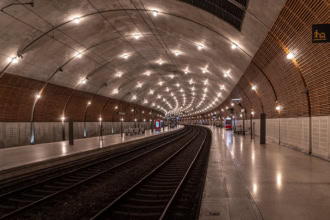
Monaco station is built into the hillside, with several exits leading towards different parts of the principality. Pay attention to the signs before leaving, as choosing the wrong exit can add an unnecessary climb to the start of your day.
Buses also connect Nice with Monaco and can provide spectacular coastal views, but they are much more vulnerable to traffic. The train is generally the better choice when speed and reliability matter.
Once there, you can explore the Prince’s Palace and Monaco-Ville, look across Port Hercule, visit the Oceanographic Museum or continue towards Monte Carlo and the famous casino district.
Do not underestimate the terrain. Monaco is compact on a map but built across steep levels, and a day can involve far more climbing than the short distances suggest. Public lifts, escalators and local buses can save a considerable amount of effort.
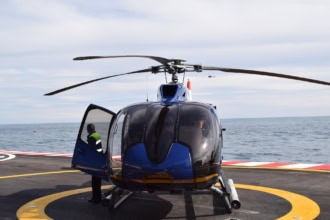
For a completely different journey, it is also possible to travel between Nice and Monaco by helicopter. This is obviously far more expensive than the train, but the flight provides extraordinary views of the Riviera and turns the transfer itself into part of the experience.
Our Nice to Monaco Guide compares the practical options for travelling between the two destinations, including the train and bus. If you are considering the fastest and most spectacular route, our Nice to Monaco by Helicopter Guide explains how the journey works.
Monaco is easy enough to visit independently, so you do not need an organised tour simply to get there. Leave Nice early, choose the sights you most want to see and allow a full day if this is your first visit.

Getting Around Nice
Nice is one of the easiest major cities on the French Riviera to explore without a car. The centre is highly walkable, while trams and buses cover the longer journeys to attractions beyond the Old Town and waterfront.
For most first-time visitors, walking should be the default. The Promenade des Anglais, Place Masséna, Cours Saleya, Vieux Nice, Castle Hill and Port Lympia can all be connected on foot.
The distances become less convenient when you travel to Cimiez, the Russian Orthodox Cathedral or the Allianz Riviera. This is where the public transport network becomes useful.
Nice has several tram lines. Line 1 crosses the city centre and serves areas around Place Masséna and the main shopping districts, while Line 2 provides a particularly useful east-west route linking the airport side of the city with central Nice and Port Lympia.
The tram is also one of the simplest ways to travel between Nice Airport and the city. Our Nice Airport Transfers Guide explains the airport journey in detail, including the available public transport options and where they take you.
Local buses fill the gaps beyond the tram network. They are particularly useful for reaching Cimiez and other hillside neighbourhoods, although traffic can make journey times less predictable than the tram.
For the attractions covered in this guide, a car is more hindrance than help. Parking, traffic and restricted streets make driving unnecessary for normal sightseeing in central Nice.
Taxis and ride-hailing services can be useful late at night, when travelling with luggage or when several people are sharing the fare. They are rarely necessary for moving between the main central attractions.
The hop-on hop-off bus offers another option, but it serves a different purpose from ordinary public transport. It is designed around sightseeing and provides commentary, while local trams and buses are generally the cheaper choice for simple journeys from one place to another.
If you are travelling beyond Nice several times, the Pass Sud Azur may simplify the combination of regional trains, trams and buses. For a city-only stay, ordinary local tickets are likely to be sufficient.
The best approach is to divide Nice into areas. Explore the Old Town and waterfront on foot, visit Cimiez as one dedicated trip and use public transport for the outlying attractions. This avoids wasting time travelling back and forth across the city.
How Many Days Do You Need in Nice?
Nice can be visited quickly, but the city becomes much more rewarding when you stop treating it as a checklist of famous sights. Two full days is a sensible minimum for a first visit, while three days provides a much better balance between sightseeing and enjoying the Mediterranean setting.
With one day, concentrate on the heart of the city. Walk the Promenade des Anglais, explore Vieux Nice and Cours Saleya, then climb Castle Hill for the views. Finish around Port Lympia or return to Place Masséna after dark.
A second day gives you room to explore beyond the obvious central sights. Visit Cimiez and the Musée Matisse, choose another museum or the Russian Orthodox Cathedral, then spend time on the beach or take the sightseeing cruise towards Villefranche Bay.
With three days, the pace becomes much more comfortable. You can add the coastal path, spend longer in the museums, enjoy the food of Nice properly and avoid forcing every evening into another sightseeing itinerary.
A fourth or fifth day does not mean you will run out of things to do. Instead, Nice becomes a base for exploring the wider Riviera. Monaco, Menton, Antibes, Cannes and other coastal destinations can be reached without changing hotels.
This is where the distinction between staying in Nice and visiting Nice becomes important. If you only want the headline sights, two days can work. If you want museums, neighbourhoods, beach time and regional trips, four or five nights is much more realistic.
The time of year also matters. During summer, heat can make a tightly packed itinerary exhausting, and the city is better explored with breaks during the hottest part of the day. Outside the peak season, longer walks and full sightseeing days are generally easier.
For most first-time visitors, we would choose three days for Nice itself, then add extra nights for any Riviera day trips. The city has excellent transport connections, but it deserves to be more than the place you return to after spending every day somewhere else.

Rupert’s Handy Travel Tips
Planning a visit to Nice? Here are a few useful tips to make your time in the city easier:
- Bring water shoes: Nice’s beaches are covered with large pebbles, and walking into the sea is much more comfortable with proper footwear.
- Save your legs on Castle Hill: Use the free lift when it is operating if you want to reach the main viewpoints without tackling the full climb, but expect plenty of walking once you reach the park.
- Explore Cimiez in one journey: Combine the Musée Matisse, Roman remains, gardens and monastery rather than travelling back and forth between the hill and central Nice.
- Use the tram for longer journeys: Central Nice is best explored on foot, but the tram is useful for crossing the city and reaching Port Lympia and the airport.
- Check the Pass Sud Azur before buying separate tickets: If you are planning several trips around the Riviera, the right pass can be more convenient than paying for every train, tram and bus separately.
Want to meet the reindeer behind our travel tips? Find out more in our page Who is Rupert?.
Frequently Asked Questions
What is Nice best known for?
Nice is best known for the Promenade des Anglais, Vieux Nice, the Baie des Anges and its Mediterranean setting. The city also has major art museums, colourful markets, pebble beaches and some of the best public transport connections for exploring the French Riviera.
Is Nice worth visiting?
Yes. Nice combines beaches, historic streets, museums, food and coastal scenery in a city that is easy to explore without a car. It also works extremely well as a base for travelling to Monaco and other destinations along the Côte d’Azur.
How many days do you need in Nice?
Allow at least two full days for the main sights. Three days gives you enough time to add museums, the coast and neighbourhoods beyond the centre, while four or five nights work well if you also want to take day trips around the Riviera.
Is Nice a walkable city?
Yes. The Promenade des Anglais, Place Masséna, Cours Saleya, Vieux Nice, Castle Hill and Port Lympia can all be explored on foot. You will need public transport for more distant attractions such as Cimiez and the Allianz Riviera.
Are the beaches in Nice sandy?
No. Nice’s beaches are covered with large smooth pebbles rather than sand. Water shoes make walking across the shore and entering the sea much more comfortable.
Can you swim in Nice?
Yes. Public beaches provide free access to the Mediterranean, while private beach clubs offer sunbeds and additional facilities. Take care when the sea is rough, as the beach can shelve steeply and waves can make getting in and out of the water difficult.
Is Castle Hill free to visit?
Yes. Castle Hill is a public park and there is no admission charge. The viewpoints, waterfall and walking paths can all be explored for free.
Is there still a castle on Castle Hill?
No. The former fortress was destroyed in the early 18th century. Visitors now come for the panoramic views, park, waterfall and paths rather than a surviving castle building.
What is the best museum in Nice?
It depends on your interests. Choose the Musée Matisse for the life and development of Henri Matisse, the Marc Chagall National Museum for its monumental Biblical Message cycle, or the Musée Masséna to understand the history of Nice and the Riviera.
Do you need a car in Nice?
No. A car is unnecessary for sightseeing in Nice and can create additional problems with traffic and parking. Walking, trams and buses are sufficient for the attractions covered in this guide.
Is the hop-on hop-off bus in Nice worth it?
It can be useful for a first visit or when you want to connect sights that are spread across the city. The route reaches places including the Russian Orthodox Cathedral, Port Lympia and Villefranche-sur-Mer, but ordinary public transport is cheaper if you simply need to travel from one place to another.
Can you take a boat trip from Nice?
Yes. A one-hour sightseeing cruise operates from Port Lympia towards Villefranche-sur-Mer and Saint-Jean-Cap-Ferrat, returning with views across the Baie des Anges and the Promenade des Anglais.
Is the Pass Sud Azur worth buying?
It can be good value if you plan several journeys using regional trains, trams and buses. It is less likely to save money if you are staying entirely within central Nice and only making occasional local journeys.
Can you visit Monaco from Nice for the day?
Yes. Direct trains from Nice-Ville to Monaco-Monte-Carlo typically take around 20 to 25 minutes, making Monaco one of the easiest day trips from Nice.
How far is Nice Airport from the city centre?
Nice Airport sits only a few kilometres from central Nice. Tram Line 2 provides a direct connection towards the city centre and Port Lympia, making the airport unusually easy to reach by public transport.
What is the best free thing to do in Nice?
Castle Hill is one of the strongest free attractions, but you can also explore Vieux Nice, walk the Promenade des Anglais, visit the beaches and follow part of the coastal path without paying an admission charge.
Further Reading
If you are arriving by air, our Nice Airport Transfers Guide explains the different ways to travel between Nice Côte d’Azur Airport and the city. The airport is unusually close to central Nice, and the guide covers the tram and other options so you can choose the most practical route for your arrival.
Visitors planning to explore beyond the city should read our Pass Sud Azur Guide before buying separate transport tickets. The pass can cover participating trains, trams and buses across different zones, making it particularly relevant if you intend to use Nice as a base for several journeys around the French Riviera.
Monaco is one of the easiest places to visit from Nice. Our Nice to Monaco Guide compares the practical ways to make the journey, while our Nice to Monaco by Helicopter Guide covers the much faster and more spectacular option of flying along the Riviera coast.
Finally, our eSIM Apps Guide compares the main options for staying connected while travelling. Mobile data is particularly useful in Nice for checking tram and train times, navigating the Old Town and managing journeys to destinations elsewhere along the Côte d’Azur.