Reviewed by our editorial team Updated
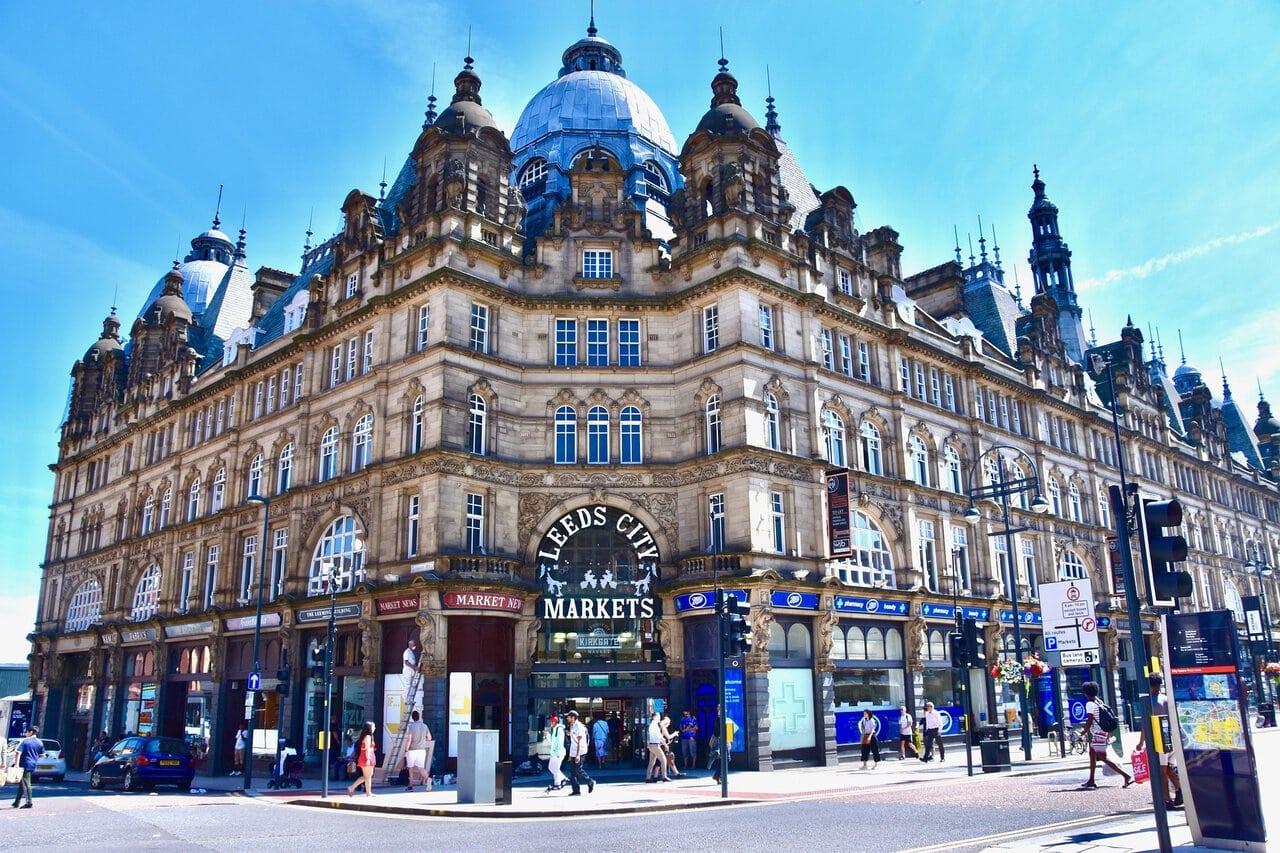
Admire Leeds’ Grand Victorian Architecture
Leeds is a city that rewards curiosity. At first glance, it can look like a busy northern shopping and business centre, but start exploring on foot and you will quickly find ornate Victorian arcades, vast indoor markets, grand civic buildings, independent shops, museums, breweries and waterside neighbourhoods.
One of the best things about visiting Leeds is how much you can see without spending half the day travelling between attractions. The compact city centre is particularly easy to explore on foot, with many of the main sights clustered around Briggate, The Headrow, Kirkgate and the waterfront. Venture a little further and you can add ruined abbeys, historic estates and some of the city’s most distinctive neighbourhoods.
Whether you are visiting for a weekend, arriving for a football match or simply looking for somewhere different for a UK city break, there is much more to Leeds than shopping. This guide explores the places and experiences that are genuinely worth making time for.
Start in the Heart of Leeds
The best way to get your bearings is simply to walk through the centre of Leeds. The city grew rapidly during the Industrial Revolution, and the wealth generated during that period left behind an impressive collection of Victorian civic and commercial buildings.
A good place to begin is City Square, directly outside Leeds railway station. From here, walk towards Park Row and The Headrow, where some of the city’s grandest architecture begins to appear. The most imposing landmark is Leeds Town Hall, a monumental Grade I listed building designed by Cuthbert Brodrick and opened by Queen Victoria in 1858.
The Town Hall is currently closed to the public for major conservation work, so it should be treated as an architectural landmark rather than an attraction you can enter. Even so, the surrounding area remains worth exploring. Nearby you will find the Leeds Central Library building, Leeds Art Gallery and several of the grand stone buildings that give this part of the city its distinctive character.
Continue towards Briggate and the atmosphere changes quickly. Grand civic architecture gives way to historic shopping streets, narrow passages and covered arcades, with modern shops occupying buildings that often deserve as much attention as the businesses inside them.
You do not need a rigid route. One of the pleasures of central Leeds is that many of its most interesting details are found by looking upwards or turning down a passage that would be easy to miss. Ornate façades, old clocks, mosaics and decorative ironwork are scattered throughout the centre.
For first-time visitors, allow at least an hour for a relaxed walk between the station, City Square, The Headrow and Briggate. It is an easy introduction to the city and leads naturally into one of Leeds’ most distinctive attractions.
See hotel options and places to stay for your trip.
Browse hotelsBrowse apartments, holiday homes and self-catering stays.
View rentalsCompare prices from multiple hotel booking sites.
Check dealsExplore Leeds’ Historic Shopping Arcades
You do not need to enjoy shopping to appreciate the arcades of Leeds. These covered passages are among the city’s finest architectural features, and together they create one of the most distinctive shopping districts in Britain.
The best-known is Victoria Quarter, where former streets and historic buildings have been brought together beneath an enormous stained-glass roof. Inside, the experience is less like walking through a conventional shopping centre and more like exploring an elaborate piece of Victorian architecture. Look for mosaics, marble, wrought iron, decorative shopfronts and colourful glazed tiles.
County Arcade is particularly impressive. Even if the luxury shops are not within your budget, it is worth walking through slowly and looking at the details above the storefronts. This is one of those places where visitors rushing between shops can easily miss the very thing that makes the arcade special.
A short walk away, Thornton’s Arcade has a completely different character. It is narrower and less polished, with a mix of independent businesses and one of the city centre’s most curious features. Look up for the Ivanhoe Clock, where figures linked to Sir Walter Scott’s novel strike the bell at regular intervals.
The nearby Queens Arcade is another easy addition to the walk, while the Grand Arcade sits slightly further north towards the city’s independent quarter. It is worth the short detour for its local businesses and historic Potts Clock.
The arcades are close enough together that you can explore several in a single walk. Most are concentrated around Briggate, and the main cluster can be covered comfortably in 30 to 60 minutes, although it is easy to spend longer if you stop for coffee or browse the shops.
For the best experience, visit during the daytime and avoid rushing. The architecture is the attraction here, and many of the finest details are above eye level.
Wander Through Leeds Kirkgate Market
Few places tell the story of Leeds as clearly as Leeds Kirkgate Market. It is one of the city’s most important historic spaces, but it remains a working market rather than a preserved attraction.
Inside, the market spreads through a mixture of grand historic halls and more modern trading areas. Stalls sell fresh produce, meat, fish, spices, clothing, household goods and food from around the world, making this as useful to local shoppers as it is interesting to visitors.
The most attractive part is the ornate 1904 market hall. Its ironwork, glazed roof and traditional shopfronts provide a reminder of the scale and confidence of Leeds during its industrial heyday. Take time to wander rather than heading straight for the food stalls, as some of the building’s best details are easy to overlook.
Kirkgate Market also occupies an important place in British retail history. In 1884, Michael Marks opened a Penny Bazaar stall here, laying the foundations for what would become Marks & Spencer. The company’s connection with the market is still commemorated, and the story adds another layer to a building that was already central to the commercial life of Leeds.
Today, one of the biggest reasons to visit is the food. The market has developed into a good place for an inexpensive lunch, with traders serving dishes from a wide range of cuisines. It is particularly useful for visitors who want something more local and informal than a chain restaurant.
The market sits just east of Briggate and is easily reached on foot from the main shopping arcades. Allow around 45 minutes for a look around, or longer if you plan to eat. Combining the arcades with Kirkgate Market makes one of the strongest half-day walks in central Leeds.
Discover the Story of Leeds at Leeds City Museum
For a broader introduction to the city, head to Leeds City Museum on Millennium Square. Entry is free, making it an easy addition to a day spent exploring the city centre.
The museum covers far more than local history. Its galleries range from ancient civilisations and archaeology to natural history and the development of Leeds itself, so it works particularly well for families or groups with different interests.
One of the most memorable exhibits is the Leeds Mummy, an ancient Egyptian mummy that has been part of the city’s collections for more than a century. The Ancient Worlds gallery places it alongside objects from ancient Egypt, Greece and Rome, while the Life on Earth gallery explores the natural world through animals, fossils and interactive displays.
For visitors interested in the city itself, the Leeds Story gallery is the most relevant part of the museum. It follows the development of Leeds from a small settlement into a major industrial city, exploring the industries, communities and people that shaped it along the way.
The museum occupies the former Leeds Institute building, an impressive landmark in its own right. Its location also makes it particularly easy to include in a city-centre itinerary. Leeds Town Hall, Leeds Art Gallery and the Henry Moore Institute are all close by, while the shops and arcades around Briggate are around a 10 to 15-minute walk away.
Allow around one to two hours for a typical visit. You could move through the main galleries more quickly, but it is worth allowing extra time if you are particularly interested in the history of Leeds.

Explore Centuries of History at the Royal Armouries
The Royal Armouries Museum is one of the biggest attractions in Leeds and deserves far more time than a quick look around. Located at Leeds Dock, the museum houses the national collection of arms and armour and is free to enter.
Its galleries explore warfare, hunting, tournaments and self-defence across different periods and cultures. The collection includes medieval armour, swords, firearms, Asian weapons and objects associated with tournaments and royal history, but the museum is much broader than a simple display of weapons.
One of its strengths is the way the collection is arranged into themed galleries. You can move from the armour of medieval Europe to objects from Japan, India and other parts of the world, with displays explaining how weapons and armour reflected the societies that created them.
Even visitors with little interest in military history may find more here than expected. The craftsmanship alone is remarkable, particularly in the elaborately decorated suits of armour and ceremonial pieces. Allow at least two hours, although it is easy to spend half a day inside if you explore every gallery.
The museum is at Leeds Dock, around a mile from the main railway station. Walking is straightforward and usually takes around 20 minutes, depending on your starting point and pace. From the city centre, head towards the Calls and continue east towards the waterfront.
Several local bus services also connect the city centre with the Leeds Dock area, while the Leeds Water Taxi can provide a more unusual way to travel between the waterfront near the station and the dock. Services and operating times can vary, so check the current arrangements if you are planning your day around the boat.
If you are travelling with someone who uses a wheelchair or has limited mobility, the museum is a particularly practical attraction to consider. The modern building was designed with accessibility in mind, and the galleries are spread across several floors connected by lifts.
For most visitors, the easiest plan is to combine the Royal Armouries with time around Leeds Dock rather than treating it as an isolated trip away from the centre.
Spend Some Time Around Leeds Dock
The Royal Armouries may be the main reason many visitors first reach Leeds Dock, but the surrounding waterfront is well worth exploring in its own right.
This part of Leeds feels noticeably different from the busy streets around Briggate and The Headrow. Former industrial waterways have been transformed into a modern neighbourhood of apartments, offices, cafés and waterside spaces, while the surviving docks provide a reminder of the city’s commercial past.
You do not need a complicated route. Walk around the dock basin, cross the footbridges and follow the water towards the city centre. The area is particularly pleasant when the weather is good, with several cafés, restaurants and outdoor seating areas providing excellent places to stop for lunch, a coffee or an evening drink beside the water.
One of the most enjoyable ways to reach the Royal Armouries is by the Leeds Water Taxi. Operated by The Wharfedale, this distinctive solar-powered boat runs between Granary Wharf, beside Leeds Railway Station, and Leeds Dock, with the journey taking around 10 to 15 minutes. Services generally operate every 15 to 20 minutes during the daytime, with extra departures during busy periods, although timetables can vary seasonally.
The water taxi isn’t simply a practical way of travelling between the station and the museum. The cruise itself has become one of Leeds’ hidden attractions, offering a unique perspective of the River Aire, historic warehouses, converted mills, modern apartment developments and some of the city’s lesser-known waterfront architecture. Sitting on the open deck on a sunny day provides a completely different view of Leeds than you’ll experience on foot.
If you prefer to walk, allow around 20 minutes between Leeds Railway Station and the Royal Armouries. The route is largely flat and follows well-maintained pedestrian paths, although visitors with limited mobility should allow extra time and check for any temporary diversions caused by construction or maintenance work.
Leeds Dock is best treated as part of a wider waterfront walk. After visiting the Royal Armouries, you can continue back towards the city centre along the River Aire, passing converted industrial buildings, waterside cafés and attractive public spaces that highlight Leeds’ remarkable regeneration over recent decades.
Allow an extra 30 to 60 minutes beyond your museum visit if you want to properly explore the dock, enjoy the waterfront atmosphere or take a return journey on the Leeds Water Taxi. For many visitors, it’s one of the most relaxing and unexpectedly memorable parts of a day out in Leeds.
See Leeds Art Gallery and the Henry Moore Institute
Art lovers can visit two important collections almost side by side on The Headrow. Leeds Art Gallery and the Henry Moore Institute are separate attractions, but their neighbouring locations make them an obvious combination.
Leeds Art Gallery is particularly known for its collection of British art, with works spanning several centuries. The galleries include paintings, sculpture and works on paper, while temporary exhibitions bring different artists and themes into the building throughout the year.
The building itself is also worth seeing. Do not rush straight through the galleries without looking at the architecture and interior spaces, particularly the Tiled Hall, one of the most attractive historic interiors in central Leeds. Today, the former reading room provides an atmospheric place to stop for coffee beneath colourful decorative tiles and grand arches.
Next door, the Henry Moore Institute focuses on sculpture in all its forms. Named after the Yorkshire-born sculptor Henry Moore, it hosts changing exhibitions, research and displays exploring both historic and contemporary sculpture.
Because the exhibitions change, this is a place where the experience can be quite different from one visit to the next. That makes it worth checking what is on before you arrive, particularly if you have a strong interest in a particular artist or period.
Both venues are centrally located and easy to combine with Leeds City Museum, the Town Hall area and the historic arcades. From Leeds railway station, the walk takes around 10 to 15 minutes.
Allow around 90 minutes to two hours for both venues, although serious art enthusiasts could spend considerably longer. Together, they provide one of the best free cultural experiences in the centre of Leeds.
Search routes and flight options for your journey.
Search flightsBrowse Airalo eSIM options for convenient travel data.
Check eSIMsBook a private airport transfer in advance and have your ride planned before you arrive.
Check transfersStep Inside Leeds Minster
A short walk from Kirkgate Market brings you to Leeds Minster, one of the city centre’s most important historic buildings and a peaceful contrast to the busy streets nearby.
The present church dates largely from the 19th century, although there has been a place of worship on or close to the site for many centuries. Its size reflects the rapid growth and increasing importance of Leeds during the Victorian period, when the town was developing into one of Britain’s major industrial centres.
Inside, look for the stained glass, carved stonework and historic memorials. The Minster also has a strong musical tradition, with its organ and choral programme continuing to play an important role in the life of the church.
This is not an attraction that needs several hours. For most visitors, 20 to 30 minutes is enough for a look around, although you may want to stay longer if a service, recital or special event is taking place.
Leeds Minster is particularly easy to combine with other attractions. Kirkgate Market is only a few minutes away on foot, while the Calls, Leeds Dock and the Royal Armouries can all be reached by continuing towards the waterfront.
As this remains an active place of worship, access can occasionally be affected by services, weddings, funerals and other events. Check before making a special journey, and remember that visitors should explore quietly when services or private prayer are taking place.
See a Show in Leeds
Leeds has one of the strongest performing arts scenes in northern England, so it is worth checking what is on before assuming your sightseeing day has to end when the museums close.
One of the major venues is Leeds Playhouse, close to the city centre and Leeds Bus Station. The theatre stages a varied programme of drama, new writing, adaptations and family productions, with performances spread across several spaces.
For opera and large touring productions, look towards Leeds Grand Theatre. Opened in the 19th century, the theatre is worth seeing for its elaborate interior as well as its programme. It is also closely associated with Opera North, which is based in Leeds and performs regularly in the city.
The City Varieties Music Hall offers something different again. Hidden away close to Briggate, it is one of the oldest surviving music halls in Britain and still hosts comedy, music and entertainment. Its more intimate scale makes it a particularly atmospheric place to see a performance.
The venues are spread across different parts of the centre, but none is difficult to reach. Leeds Grand Theatre and City Varieties are both convenient for the main shopping and dining areas, while Leeds Playhouse is close to the bus station and around a 15 to 20-minute walk from Leeds railway station.
If you are staying overnight, checking the performance schedules before your trip can completely change the shape of your visit. A day of museums, markets and historic buildings followed by theatre, opera, comedy or live performance makes much better use of a short city break than simply returning to your hotel after dinner.
Discover the Independent Side of Leeds
Beyond the department stores and luxury arcades, Leeds has a strong independent side that is worth seeking out. You will find it in converted historic buildings, small shopping arcades, record shops, cafés, bars and creative spaces scattered across the centre.
The Corn Exchange is the obvious place to begin. Designed by Cuthbert Brodrick, the same architect responsible for Leeds Town Hall, the circular Victorian building is one of the most distinctive structures in the city.
Step inside and the building opens into a dramatic central space beneath a vast domed roof. The original trading floor is now surrounded by independent shops, food businesses and creative retailers, making this one of the best places in Leeds to browse somewhere genuinely different from a conventional shopping centre.
From the Corn Exchange, it is easy to continue towards Call Lane and the surrounding streets. During the day, this part of the city has cafés, independent businesses and historic buildings to explore. In the evening, the atmosphere changes as its bars and music venues become busier.
The Grand Arcade is another worthwhile stop. Smaller and less polished than the Victoria Quarter, it has a more independent feel and is home to local businesses. Its historic Potts Clock is also worth looking out for.
Leeds is at its best when you allow time to explore the streets between the major attractions. The Corn Exchange, Kirkgate Market, Briggate and the historic arcades are all close enough to visit on foot, so there is little need to follow a rigid itinerary.
Allow at least an hour or two for browsing, particularly if you want to stop for coffee, lunch or a drink. This is also one of the easiest parts of the day to extend if the weather turns bad, as many of the most interesting spaces are indoors.
Tour a Leeds Brewery and Taste the Local Beer
Leeds has a strong brewing tradition, and a brewery experience offers a very different way to explore the city. Rather than simply ordering a local beer in a pub, you can learn how it is made and taste it close to the source.
One of the best-known names in the modern Leeds beer scene is Northern Monk. Its original home at the Old Flax Store in Holbeck combines the brewery’s roots with a taproom known as the Refectory, creating one of the city’s most distinctive beer destinations.
A brewery tour takes visitors behind the finished pint and into the brewing process itself. You can learn about ingredients, brewing methods and the development of Northern Monk, with tastings forming part of the experience.
The Old Flax Store is in Holbeck, south of Leeds railway station. From the station, the walk generally takes around 15 minutes, although the exact route depends on which station exit you use. The area is part of Leeds’ historic industrial landscape, so the journey also gives you a look at a side of the city that many visitors miss.
If you are walking from Briggate or the main shopping arcades, allow around 20 to 25 minutes. The route is straightforward, but you should leave extra time if you are unfamiliar with the area, particularly if you have booked a tour with a fixed starting time.
The experience works particularly well later in the day. You can spend the morning exploring the arcades and museums, have lunch around Kirkgate Market or the Corn Exchange, and then head towards Holbeck for a brewery visit.
Book ahead if you specifically want a tour, rather than assuming you can simply arrive and join one. Tour dates and times can be limited, and availability may be particularly tight at weekends.
Even if a full brewery tour does not fit your plans, Leeds has a wider craft beer scene worth exploring. Taprooms and specialist beer venues provide plenty of opportunities to try beers produced in Leeds and elsewhere in Yorkshire.
For anyone interested in brewing, this is one of the experiences that helps distinguish Leeds from a generic UK city break. The combination of industrial heritage, independent brewing and local beer culture makes it much more than just another stop for a drink.
Walk Along the Leeds and Liverpool Canal
For a quieter side of the city, spend some time walking beside the Leeds and Liverpool Canal. The waterway begins close to the centre of Leeds before heading west through former industrial districts and eventually continuing across the Pennines towards Liverpool.
You do not need to tackle a long-distance walk to enjoy it. One of the easiest options is to join the canal close to Leeds railway station and Granary Wharf, where old warehouses and waterways now sit alongside apartments, bars and restaurants.
From here, follow the towpath west and the city gradually begins to change. Modern developments give way to locks, bridges, converted industrial buildings and stretches of surprisingly peaceful waterway. It is a good reminder that the canals were once essential working infrastructure rather than places for weekend walks.
The route is largely flat, making it suitable for a relaxed stroll, although the condition and width of the towpath can vary. Cyclists also use the route, so keep to one side on busier sections and take care around narrow bridges and locks.
For a short walk, simply follow the canal for 30 to 60 minutes and return the same way. If you want something more substantial, continue west towards Kirkstall. This creates a natural connection with Kirkstall Abbey, although the full walk is considerably longer and is best planned in advance rather than treated as a casual extension to a morning in the city centre.
Granary Wharf is only a few minutes on foot from Leeds railway station. Look for the station exits leading towards the waterfront rather than heading north into City Square. If you are staying centrally, the canal is one of the easiest outdoor experiences to add without needing a bus, taxi or advance booking.
The walk is particularly enjoyable in dry weather, but this is northern England and conditions can change quickly. Wear suitable shoes if it has been raining, especially if you plan to continue beyond the more developed sections close to the centre.
Explore the House and Parkland at Temple Newsam
To see a very different side of Leeds, leave the city centre behind and head to Temple Newsam, a vast historic estate on the eastern edge of the city.
At its heart stands an impressive Tudor-Jacobean mansion surrounded by extensive parkland. The house contains historic interiors, decorative art, furniture and collections connected with the families who lived there, while the wider estate provides enough space to turn a visit into a substantial half-day or full-day trip.
Temple Newsam is not simply a historic house. The estate also includes Home Farm, where visitors can see rare breeds and learn more about traditional farming. This makes the attraction particularly useful for families, as the house, farm and open spaces offer very different experiences in one location.
The parkland is a major part of the appeal. There are woodland areas, open grassland and walking routes across an estate that feels far removed from central Leeds. If the weather is good, allow time to explore outside rather than visiting only the house and immediately returning to the city.
Temple Newsam is around six miles east of central Leeds, so this is not an attraction you should attempt to reach on foot as part of a normal sightseeing day. Public transport is the better option for most visitors without a car.
Bus services operate from Leeds towards the areas surrounding the estate, but the most convenient route and final stop can depend on the day and service timetable. Check the current journey before setting out, particularly on Sundays and public holidays, and pay close attention to the distance between your bus stop and the entrance you intend to use. The estate is large, so arriving at the wrong side can add a considerable walk.
If you are driving, follow signs for Temple Newsam rather than relying on a central Leeds postcode alone. The estate has parking, making a car particularly useful for families, visitors carrying equipment or anyone combining Temple Newsam with other places outside the centre.
Allow at least three to four hours if you want to see the house and explore some of the grounds. Families visiting Home Farm could easily spend longer. Check opening arrangements before travelling, as the house, farm and wider estate do not necessarily operate to identical hours.
Temple Newsam works best as a dedicated half-day trip rather than something squeezed between city-centre attractions. The reward is one of the most complete historic days out in Leeds, combining architecture, art, farming and extensive green space.
Browse hostels and budget-friendly stays.
See hostelsGet fast compensation payouts, eligible lounge benefits and expert help when flights go wrong.
See AirHelp+ benefitsLeave your luggage somewhere convenient and explore hands-free.
View storageExplore the Ruins of Kirkstall Abbey
Standing beside the River Aire, Kirkstall Abbey is one of the most impressive historic sites in Leeds. The extensive ruins of the medieval Cistercian monastery provide a dramatic contrast to the busy city centre only a few miles away.
Founded in the 12th century, the abbey survived for hundreds of years before the Dissolution of the Monasteries. Much of the structure remains standing, allowing visitors to walk through the former church, cloisters and monastic buildings rather than simply viewing a few fragments of stone.
The scale is what makes Kirkstall particularly memorable. Tall arches, roofless chambers and surviving sections of the church make it possible to understand the original layout of the monastery. Information around the site helps explain how the community lived and how different parts of the abbey were used.
The ruins are surrounded by green space beside the River Aire, so allow time to walk around the exterior as well as exploring inside. The abbey is especially atmospheric in changing weather, when the dark stone and open arches can look dramatically different from one moment to the next.
Kirkstall Abbey is around three miles northwest of Leeds city centre. For most visitors, the easiest public transport option is a bus from central Leeds along the A65 towards Kirkstall. Several services use this busy corridor, and the journey will typically take around 20 to 30 minutes, depending on traffic and where you board.
When planning your journey, search specifically for Kirkstall Abbey rather than simply Kirkstall. The wider district covers a substantial area, and you want a stop close to the abbey grounds rather than one near Kirkstall railway station or the retail parks.
Travelling by train is possible, but it is generally less convenient for a first-time visitor because Kirkstall Forge and Headingley stations are not directly beside the abbey. A direct bus from the centre is usually simpler.
If you enjoy walking, it is also possible to approach the wider Kirkstall area by following sections of the canal and riverside routes from Leeds. This takes considerably longer and should be treated as a proper walk rather than the quickest way to reach the attraction.
Allow around one to two hours for the abbey itself. You will need longer if you also visit Abbey House Museum, which sits directly across the road and makes the obvious companion attraction.
Step Back in Time at Abbey House Museum
Directly across from Kirkstall Abbey, Abbey House Museum recreates everyday life in Victorian Leeds. The two attractions are so close together that it makes sense to visit them on the same trip.
The museum is best known for its recreated Victorian streets. Rather than looking at everyday objects in display cases, visitors can walk through atmospheric spaces designed to resemble shops, homes and businesses from the 19th century.
The recreated streets help bring the period to life, particularly for families and visitors who find traditional museums less engaging. Look closely at the shopfronts, interiors and everyday objects, as many of the smaller details reveal how dramatically life in Leeds has changed.
Abbey House Museum also explores childhood and domestic life, with collections that provide a more personal view of the city’s past. This makes it a useful contrast to the grand civic buildings and industrial history found elsewhere in Leeds.
The museum sits on the opposite side of the A65 from Kirkstall Abbey. Use the designated crossing rather than attempting to cross the road wherever you leave the abbey grounds, as this is a busy route carrying traffic between central Leeds and the western suburbs.
The same buses that serve Kirkstall Abbey are suitable for reaching the museum, so there is no need for a separate journey. If you are visiting both attractions, allow around three to four hours for the complete trip from the city centre, including travel time.
Opening days and hours can vary, so check both attractions before setting out. It is particularly important not to assume that the museum and abbey will always have exactly the same opening arrangements.
Together, Kirkstall Abbey and Abbey House Museum make one of the strongest half-day trips from central Leeds. One explores the remains of medieval religious life, while the other recreates the streets and homes of the Victorian city that grew centuries later.
Experience Elland Road
Football is a major part of the identity of Leeds, and for many visitors, a trip to Elland Road is one of the main reasons for coming to the city.
Home to Leeds United, the stadium has witnessed some of the most important moments in the club’s history. Matchdays bring a completely different atmosphere to the area, with supporters arriving from across the city and much further afield.
If you are attending a match, plan your journey before the day itself. Elland Road is around two miles southwest of Leeds city centre, but walking from the railway station typically takes around 35 to 45 minutes. The route is manageable for many visitors, although it becomes much busier before and after matches.
Bus services connect central Leeds with the Elland Road area, and special matchday arrangements may operate for some fixtures. Traffic can be extremely heavy around kick-off and after the final whistle, so do not plan a tight connection with a train immediately after a match.
A taxi may look like the easiest option, but road congestion can make journey times unpredictable. If you are physically able to walk, walking back towards the city centre after the match can sometimes be simpler than waiting in traffic.
For visitors who want to see more than a match, check whether stadium tours are available during your stay. These can provide access to areas that are normally closed to spectators and offer more insight into the history of the club and stadium. Tour dates are not necessarily available every day, so advance booking is important.
Even without a match ticket, football supporters may want to see the Billy Bremner statue outside the stadium and visit the club shop. However, Elland Road is not in the main sightseeing area, so it makes sense to plan this as a specific trip rather than casually adding it to a walk around central Leeds.
On matchdays, allow far more travel time than a map suggests. Crowds, road closures, queues and heavy traffic can all affect the journey, particularly for high-profile fixtures.

See Leeds from a Different Perspective
Leeds does not have a single famous observation deck that dominates the skyline, but there are several places where you can see the city from a different perspective.
One of the easiest options is simply to pay attention to the changing views as you explore. The streets around the civic quarter reveal the scale of buildings such as Leeds Town Hall, while the waterfront provides a completely different view of former warehouses, bridges and modern developments.
For a broader panorama, head beyond the immediate centre to one of the city’s higher green spaces. Woodhouse Moor and the areas around north Leeds can provide a sense of the city’s position within the wider landscape, although these are better treated as part of a longer walk than as formal viewpoints.
Another option is to look for publicly accessible rooftop bars and elevated venues in the centre. These can provide excellent views across the rooftops, particularly around sunset, but access arrangements, opening hours and minimum spending requirements can change. Check before making a special journey solely for the view.
The most rewarding perspective may come from the waterways. Travelling between the city centre and Leeds Dock reveals a side of Leeds that is easy to miss from the main streets. Bridges, converted industrial buildings and new developments look completely different from the River Aire and surrounding waterfront paths.
This is one part of the guide where it is better not to chase a single supposedly perfect photograph. Leeds is a city of changing viewpoints rather than one iconic panorama, and some of the best views appear unexpectedly while walking between attractions.
Enjoy Leeds After Dark
Leeds remains lively long after its museums and markets have closed. The city has a large student population, a strong music scene and enough variety to offer much more than a single nightlife district.
Call Lane is one of the best-known areas for bars and late-night venues. It is centrally located and easy to reach from Briggate, the Corn Exchange and Kirkgate Market. The area becomes particularly busy on Friday and Saturday nights.
For a more traditional evening, seek out some of the city’s historic pubs. Leeds has everything from elaborate Victorian interiors to small independent beer venues, and the local brewing scene means you can often find Yorkshire-brewed beer alongside nationally known names.
Live music is another major part of the city’s identity. Venues range from small independent spaces to large concert halls and arenas, so check listings before your visit. A band, comedy show or theatre performance can be a better way to plan an evening than simply choosing a bar when you arrive.
The area around the Grand Theatre, Briggate and the northern part of the centre works well for combining dinner with a performance. Call Lane and the streets around the Corn Exchange are better suited to visitors looking for a livelier late evening.
If you are staying outside the centre, check your journey back before going out. Late-night public transport is more limited than daytime services, and frequencies vary by route and day of the week. Taxis and private-hire vehicles are widely available, but demand and prices can increase when major events finish.
As in any busy city, keep an eye on your belongings and stick to well-used routes late at night. Leeds city centre is compact, but there is no advantage in taking unfamiliar shortcuts simply to save a few minutes.
Take a Day Trip from Leeds
Leeds is an excellent base for exploring more of Yorkshire. Its position on the rail network makes it possible to reach historic cities, spa towns, villages and countryside without changing hotels.
One of the easiest trips is York. Direct trains from Leeds are frequent, and the fastest journeys take around half an hour. That makes it realistic to spend a full day exploring York Minster, the medieval streets and the city walls before returning to Leeds in the evening.
Harrogate is another straightforward option, with direct trains linking the two centres. The journey usually takes around 35 minutes, making the spa town easy to visit for its historic centre, gardens and cafés.
For industrial heritage, consider Saltaire, where the UNESCO-listed model village sits close to Saltaire railway station. Direct trains from Leeds make this one of the easiest shorter trips, and the combination of Salts Mill, historic streets and the Leeds and Liverpool Canal gives it a very different atmosphere from central Leeds.
Literary visitors may prefer Haworth, associated with the Brontë family. The journey requires more planning than York or Harrogate, usually involving travel towards Keighley followed by an onward bus or heritage railway connection.
The Yorkshire Dales are also within reach, but public transport planning becomes more important. Some towns and villages have useful rail or bus connections, while others are much easier to reach by car or organised tour.
Do not try to squeeze several destinations into one day simply because they look close on a map. Yorkshire is a large region, and travel into rural areas can be slower than expected.
We cover the routes, journey times and best places to visit in much more detail in our dedicated guide to day trips from Leeds.

Plan Your Visit to Leeds
Leeds is an easy city to explore, particularly if you concentrate on the centre. Many of the main attractions, including Kirkgate Market, the historic arcades, Leeds City Museum, Leeds Art Gallery and the Corn Exchange, are within comfortable walking distance of each other.
For a first visit, two days is a good amount of time. Spend the first day exploring the city centre, markets, museums and arcades, then use the second for the Royal Armouries and one of the attractions outside the centre, such as Kirkstall Abbey or Temple Newsam.
If you only have one day, stay mainly in the centre. A practical route could begin around the civic quarter before continuing through the historic arcades to Kirkgate Market and the Corn Exchange. From there, walk or travel towards Leeds Dock for the Royal Armouries.
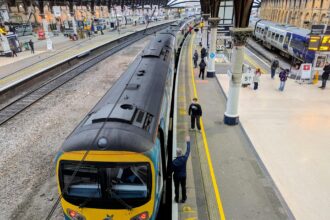
Leeds railway station is the main arrival point for visitors travelling by train. It sits directly beside the city centre, with City Square immediately outside and Briggate around a 10-minute walk away. Most visitors arriving by rail will not need a bus or taxi to reach the main central attractions.
The railway station is served by direct trains from cities including London, Manchester, York, Newcastle, Sheffield and Edinburgh, making Leeds particularly easy to reach for a short break. Journey times and fares vary considerably, so booking ahead can be worthwhile for longer journeys.
Long-distance and regional buses generally use Leeds Bus Station, on the eastern side of the centre close to Leeds Playhouse and Kirkgate Market. The bus station and railway station are around a 15 to 20-minute walk apart, so allow enough time if you need to transfer between them.
For attractions outside the centre, buses are usually the most useful form of public transport. Kirkstall Abbey, Temple Newsam and Elland Road all require more planning than the central sights, and you should check the latest route and timetable before travelling.
Leeds is a busy city, so journey times by road can vary significantly. Traffic is particularly important when travelling to Elland Road on matchdays or crossing the city during the morning and evening peaks.
If you are flying into the region, Leeds Bradford Airport is northwest of the city and does not have its own railway station. Bus services connect the airport with Leeds, while taxis and private transfers are also available. We cover the journey in detail in our dedicated Leeds Bradford Airport transfers guide.
The weather can change quickly at any time of year. Even if the forecast looks dry, carrying a light waterproof layer is sensible, particularly if you plan to walk along the canal, explore Temple Newsam or spend time around Kirkstall Abbey.
========================= Rupert’s Handy Travel Tips (Header Banner, Fixed Image) ========================= –>

Rupert’s Handy Travel Tips
Heading to Leeds? Here are a few useful tips to make your visit smoother:
- Explore the centre on foot: Many of the main attractions, including Kirkgate Market, the historic arcades, Leeds City Museum and the Corn Exchange, are within easy walking distance of each other.
- Plan ahead for attractions outside the centre: Kirkstall Abbey, Temple Newsam and Elland Road all require a separate journey, so check current bus routes and travel times before setting out.
- Allow plenty of time for the Royal Armouries: The museum is free to enter and much larger than many visitors expect. Give yourself at least two hours rather than treating it as a quick stop.
- Book brewery tours in advance: Tour dates and spaces can be limited, particularly at weekends, so reserve ahead if a brewery experience is one of the main reasons for your visit.
Want to meet the reindeer behind our travel tips? Find out more in our page Who is Rupert?.
Frequently Asked Questions
Is Leeds worth visiting?
Yes. Leeds is particularly good for a UK city break if you enjoy historic architecture, markets, museums, independent shops, food and local beer. Many of the main attractions are close together, while places such as Kirkstall Abbey and Temple Newsam add variety beyond the city centre.
How many days do you need in Leeds?
Two days is a good amount of time for a first visit. One day allows you to explore the historic arcades, Kirkgate Market, museums and waterfront, while a second gives you time for the Royal Armouries and an attraction outside the centre.
What is Leeds best known for?
Leeds is known for its Victorian architecture, historic shopping arcades, Kirkgate Market, sporting heritage and strong cultural scene. It was also one of Britain’s major industrial cities and remains an important centre for shopping, finance and entertainment.
Is Leeds a walkable city?
The centre of Leeds is very walkable. Most of the main central attractions can be reached on foot, including the historic arcades, Kirkgate Market, the Corn Exchange, Leeds City Museum and Leeds Art Gallery. You will need public transport or a longer walk for places such as Kirkstall Abbey, Temple Newsam and Elland Road.
What can you do in Leeds for free?
Several of the city’s major attractions are free, including the Royal Armouries Museum, Leeds City Museum and Leeds Art Gallery. You can also explore the historic arcades, walk along the canal and spend time around Leeds Dock without paying an admission fee.
Is Leeds good for a weekend break?
Yes. Leeds works particularly well for a weekend because the city centre is compact and easy to explore. You can combine museums, markets, historic buildings and shopping during the day with theatre, live music, brewery experiences and restaurants in the evening.
Further Reading
Planning more of your trip? Our Leeds Bradford Airport Transfers guide explains the different ways to travel between the airport and Leeds, including public transport, taxis and private transfers.
If you want to explore beyond the city, our Day Trips from Leeds guide covers the best places to visit, with practical details on reaching destinations across Yorkshire and beyond.
Travelling around northern England by train? Our TransPennine Route Guide explains the key routes and connections linking Leeds with cities and destinations across the north.
Heading to Leeds from overseas? Our Best eSIM Apps guide compares the easiest ways to stay connected without relying on expensive roaming charges.