Reviewed by our editorial team Updated
Why Montenegro is the Perfect Destination for a Two Week Road Trip
Montenegro may be one of Europe’s smallest countries, but it delivers an extraordinary variety of landscapes within remarkably short driving distances. Over the course of just two weeks you’ll discover UNESCO World Heritage towns, dramatic limestone mountains, deep river canyons, tranquil national parks, historic monasteries and some of the Adriatic’s most beautiful beaches, all without spending entire days behind the wheel.
Unlike larger European countries where long motorway journeys often separate major attractions, Montenegro rewards slow, scenic travel. One morning you can be enjoying coffee beside the yachts of Porto Montenegro in Tivat before winding your way high into Lovćen National Park. A few days later you’ll find yourself standing on the edge of the breathtaking Tara River Canyon before finishing your holiday beside the turquoise waters of the Adriatic.
This itinerary has been designed to create a logical circular route with very little backtracking. Beginning in Tivat, you’ll explore the spectacular Bay of Kotor before climbing into the mountains of central Montenegro. From there the journey heads north to Durmitor National Park, before looping south through Podgorica and Lake Skadar and finally following the Adriatic coast back towards Budva and Tivat.
Rather than rushing from one attraction to the next, the itinerary allows plenty of time to experience each destination properly. You’ll spend several nights in the mountains around Žabljak, allowing you to enjoy Durmitor National Park without feeling pressured, while the slower pace along the coast means you’ll have time to enjoy Montenegro’s beaches, promenades and historic towns before returning home.
Whether you’re visiting for dramatic scenery, outdoor adventure, photography, history or simply to experience one of Europe’s fastest-growing travel destinations, this two week road trip showcases the very best Montenegro has to offer. Each day builds naturally on the previous one, creating an unforgettable journey through a country that continually surprises visitors with the sheer diversity packed into such a compact area.
Two weeks is a lot to commit to, so it helps to know that almost every stop along this route also has its own standalone guide on the site. Dip into just Things to Do in Kotor guide or Things to Do in Budva guide, for instance, and build a shorter trip around whichever regions interest you most.
Route Map & Two Week Itinerary Overview
This itinerary follows a clockwise circuit around Montenegro, making it one of the most efficient ways to explore the country by car. Instead of repeatedly crossing the same roads, each stage leads naturally into the next, allowing you to experience changing landscapes every day while keeping driving times comfortable.
The journey begins beside the Adriatic in Tivat, before exploring the spectacular Bay of Kotor and climbing into Lovćen National Park. Historic Cetinje marks the gateway to Montenegro’s mountainous interior, where the route continues via the remarkable Ostrog Monastery towards Žabljak, Tara River Canyon and Durmitor National Park.
After several days amongst Montenegro’s highest peaks, the road gradually descends towards Podgorica before reaching the wetlands and vineyards surrounding Lake Skadar. From there the scenery changes once again as the itinerary follows the southern Adriatic coast through Ulcinj, Bar, Petrovac, Sveti Stefan and Budva before returning to Tivat for your departure.
| Day | Route | Approx. Drive | Overnight Stay |
|---|---|---|---|
| 1 | Arrive in Tivat | Arrival | Tivat |
| 2 | Bay of Kotor | Local driving | Tivat |
| 3 | Lovćen National Park & Cetinje | 60 km | Cetinje |
| 4 | Ostrog Monastery to Žabljak | 170 km | Žabljak |
| 5 | Tara River Canyon | Local driving | Žabljak |
| 6 | Durmitor National Park | Local driving | Žabljak |
| 7 | Durmitor Ring to Podgorica | 170 km | Podgorica |
| 8 | Podgorica & Lake Skadar | 35 km | Virpazar |
| 9 | Lake Skadar to Ulcinj | 75 km | Ulcinj |
| 10 | Ulcinj to Bar | 30 km | Bar |
| 11 | Bar to Petrovac | 20 km | Petrovac |
| 12 | Petrovac, Sveti Stefan & Budva | 20 km | Budva |
| 13 | Explore Budva | Local driving | Budva |
| 14 | Return to Tivat or Podgorica | 30–90 km | Departure |
The itinerary is suitable throughout much of the year, although late spring, early summer and early autumn generally offer the best combination of pleasant temperatures, quieter roads and excellent conditions for sightseeing.
Prefer to skip the car hire altogether? Our Montenegro Public Transport guide explains which stages of this route are realistically doable by bus and train, since several of the mountain sections here are considerably easier with your own vehicle.
See hotel options and places to stay in Montenegro.
Browse hotelsExplore holiday homes and apartments around Montenegro.
See holiday homesSee hotel prices from multiple booking sites in one search.
Compare ratesBefore You Set Off: Driving Around Montenegro
Hiring a car is by far the easiest way to complete this itinerary. While Montenegro has an improving public transport network linking the country’s major towns, many of its finest viewpoints, mountain roads and national parks are either difficult or impossible to reach without your own vehicle. Having a car gives you the freedom to stop at panoramic viewpoints, linger in picturesque villages and adapt each day’s schedule to suit the weather and your interests.
Most international visitors begin their journey at Tivat Airport, which sits just a few minutes from Porto Montenegro and offers the shortest transfer to the Bay of Kotor. Alternatively, Podgorica Airport provides another convenient gateway, particularly if flight prices are lower or you’re planning to reverse the itinerary. During the summer months it’s worth booking your rental car well in advance, as availability can become limited and prices rise considerably.
Although Montenegro’s road network is generally in good condition, driving here differs from many parts of Western Europe. The mountain roads are often narrow, winding and steep, particularly around Lovćen National Park and Durmitor, where sharp hairpin bends and dramatic drops are common. Speeds are naturally lower than motorway driving, so it’s sensible to allow extra time between destinations and avoid trying to squeeze too many stops into a single day.
Fuel stations are widely available throughout the country, especially along the coast and in larger towns, although they become less frequent in the mountains. Filling up before heading into Durmitor National Park or other remote areas is always a sensible precaution. Parking is generally straightforward outside the busiest coastal resorts, while many hotels provide free or inexpensive parking for guests.
One of the greatest pleasures of driving in Montenegro is simply enjoying the scenery. Throughout this itinerary you’ll encounter spectacular viewpoints overlooking the Bay of Kotor, Tara River Canyon, Durmitor National Park, Lake Skadar and the Adriatic coastline, so don’t be afraid to stop regularly. Some of the country’s most memorable moments aren’t famous landmarks at all, but the unexpected panoramic views waiting around the next corner.
Most visitors touch down at one of Montenegro’s two main airports before starting out, so it’s worth a read through our Tivat Airport Transfers guide or Podgorica Airport Transfers guide beforehand. Both walk through car hire desks, transfer times and what to expect on arrival, which matters more than you’d think if your flight lands late in the day.
Welcome to Tivat – Day 1
| Today’s Journey | |
|---|---|
| Start | Tivat Airport |
| Finish | Tivat |
| Driving Distance | Minimal |
| Driving Time | Around 10 minutes |
| Estimated Sightseeing | 4–6 hours |
| Main Stops | Porto Montenegro, Tivat Promenade |
| Overnight Stay | Tivat |
Welcome to Montenegro. After collecting your hire car, your road trip begins in Tivat, a stylish waterfront town that has rapidly transformed into one of the country’s most attractive destinations. While many visitors immediately continue towards Kotor, spending your first afternoon and evening here allows you to unwind after your flight while getting your first taste of Montenegro’s beautiful Adriatic coastline.
The heart of modern Tivat is Porto Montenegro, a luxurious marina lined with elegant yachts, waterfront restaurants, boutique shops and palm-lined promenades. Even if you’re not staying in the marina itself, it’s a wonderful place to spend your first few hours, enjoying a leisurely walk beside the water while watching luxury yachts arrive from across the Mediterranean. Numerous cafés and restaurants provide the perfect opportunity for your first Montenegrin meal, whether you’re looking for fresh seafood, grilled meats or traditional Balkan cuisine.
Away from the marina, Tivat has a much more relaxed atmosphere than neighbouring Kotor. The town’s attractive waterfront promenade stretches beside the bay, offering beautiful views across the water towards the surrounding mountains. As the evening approaches, the changing light creates a spectacular backdrop and provides a gentle introduction to the scenery that will accompany you throughout the next two weeks.
Your first day is intentionally relaxed. Rather than rushing to fit in sightseeing after a flight, the aim is to settle into Montenegro’s slower pace of life, collect any last-minute supplies for your journey and enjoy an early night before beginning your first full day of exploring tomorrow. Staying in Tivat also places you in the perfect position for an early start as you set out to discover the breathtaking Bay of Kotor, one of the highlights of the entire itinerary.
Beyond Porto Montenegro, Tivat has plenty more to explore in the way of beaches, restaurants and museums, and our dedicated Things to Do in Tivat guide is worth a look before you arrive, particularly if you fancy spending part of your first day away from the marina.
Around the Bay of Kotor – Day 2
| Today’s Journey | |
|---|---|
| Start | Tivat |
| Finish | Tivat |
| Driving Distance | Around 75–90 km |
| Driving Time | Around 2 hours (excluding stops) |
| Estimated Sightseeing | Full day |
| Main Stops | Kotor, Perast, Kamenari–Lepetane Ferry, Herceg Novi (optional) |
| Overnight Stay | Tivat |
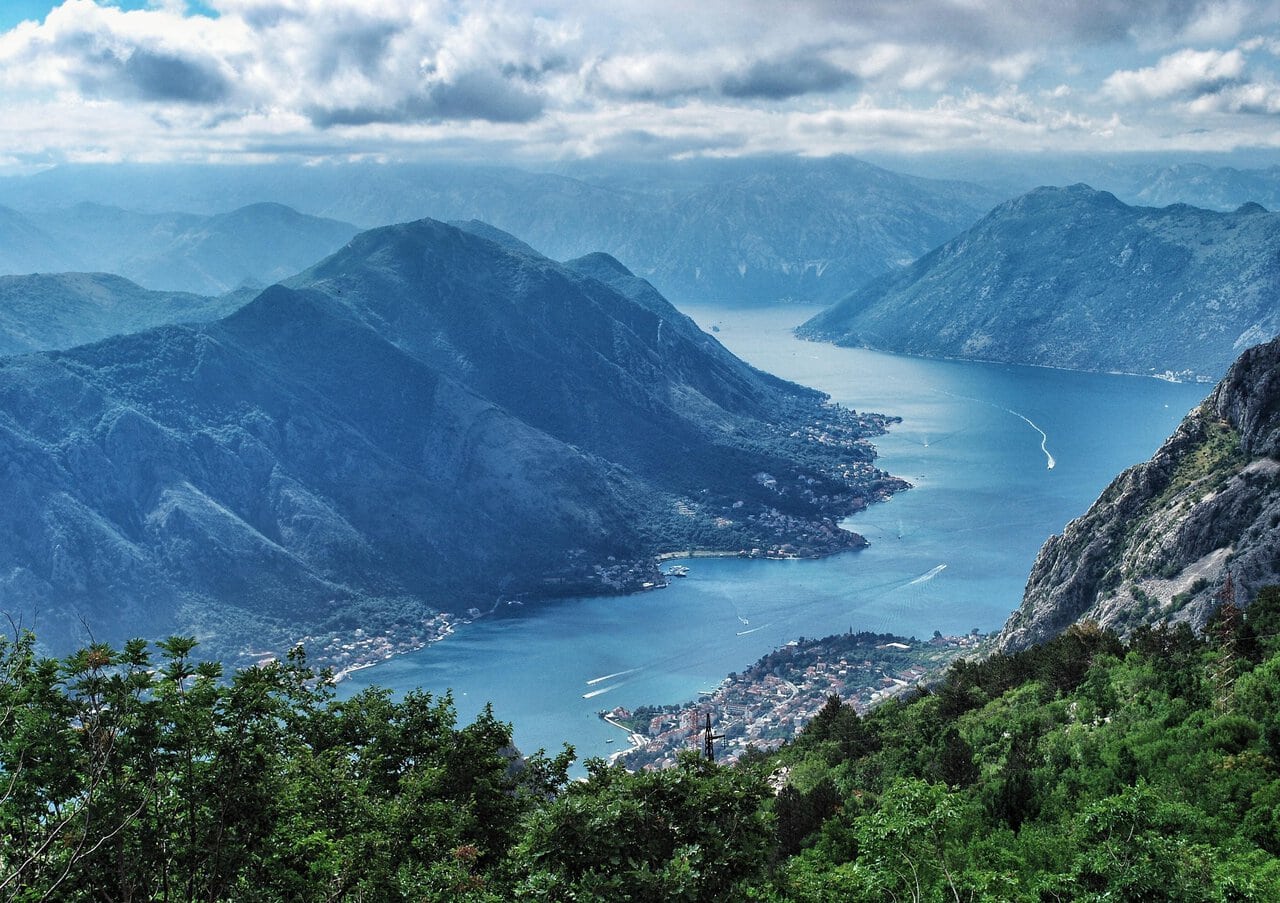
Today introduces you to one of the most spectacular stretches of coastline anywhere in Europe. Although often described as a fjord, the Bay of Kotor is actually a submerged river canyon, creating an extraordinary landscape where towering limestone mountains rise almost vertically from the calm waters below. Every few kilometres the scenery changes again, with medieval towns, tiny fishing villages and historic churches appearing around seemingly every corner.
An early start allows you to enjoy the bay before the busiest tour buses arrive. Your first destination is Kotor, the best-known town in Montenegro and a UNESCO World Heritage Site that has remained remarkably unchanged for centuries. Enclosed within impressive Venetian walls, the compact Old Town is a maze of narrow stone streets, lively squares, historic churches and welcoming cafés. Simply wandering without a map is part of the experience, as hidden courtyards and centuries-old buildings reveal themselves around almost every corner.
If you’re feeling energetic, consider climbing part of the Kotor Fortress path during the morning. The climb is steep, particularly during the summer, but even reaching the lower viewpoints rewards you with breathtaking panoramas across the bay. Looking down over the orange rooftops of the Old Town, with the mountains reflected in the water beyond, it’s easy to understand why this has become one of Montenegro’s most photographed locations.
After exploring Kotor, continue northwest along the shoreline towards Perast, one of the prettiest towns on the Adriatic. Unlike Kotor, Perast has a quieter and more elegant atmosphere. Grand stone palaces line the waterfront, while church towers rise above the small harbour where traditional boats continue to operate much as they have for centuries. This is an excellent place to stop for lunch, with several waterfront restaurants serving fresh seafood alongside uninterrupted views across the bay.
From Perast you can also take the short boat trip to Our Lady of the Rocks, a tiny artificial island crowned by a beautiful blue-domed church. According to local tradition, sailors gradually created the island by dropping stones into the sea whenever they returned safely from a voyage. Today the church contains fascinating artwork and maritime artefacts, making it one of Montenegro’s most unusual attractions and well worth the short crossing.
During the afternoon, continue around the outer section of the bay before boarding the Kamenari–Lepetane vehicle ferry. The crossing itself takes only a few minutes, but it saves a lengthy drive around the bay and offers wonderful views back towards the surrounding mountains. Watching cars quietly glide across the water has become part of the classic Bay of Kotor experience, and it’s one of those small moments that visitors often remember long after returning home.
If time allows, continue to Herceg Novi, a charming coastal town close to the Croatian border. Built across a hillside overlooking the entrance to the bay, Herceg Novi combines attractive squares, historic fortifications and a long seaside promenade with a distinctly Mediterranean atmosphere. Even a couple of hours here provides a pleasant contrast to both Kotor and Perast before you begin the drive back towards Tivat.
By early evening you’ll return to Tivat after completing one of Europe’s finest scenic driving routes. Although you’ve travelled less than one hundred kilometres, the day will have been filled with unforgettable viewpoints, historic towns and spectacular coastal scenery. Tomorrow the journey leaves the sea behind as you climb into the mountains of Lovćen National Park and continue to Montenegro’s historic royal capital of Cetinje.
Because today packs so much into a single circuit of the bay, our dedicated guides to Kotor, Perast and the Kamenari–Lepetane Ferry go into far more depth than a single day allows, covering opening hours, ticket prices and the practicalities of the crossing. If you decide to extend your stay around the bay, our Bay of Kotor scenic drive guide lays out a slower, more flexible version of today’s route.

Lovćen National Park & Cetinje – Day 3
| Today’s Journey | |
|---|---|
| Start | Tivat |
| Finish | Cetinje |
| Driving Distance | Around 60 km |
| Driving Time | Around 2 hours |
| Estimated Sightseeing | Full day |
| Main Stops | Lovćen National Park, Njegoš Mausoleum, Cetinje |
| Overnight Stay | Cetinje |
Leaving the coast behind, today’s journey climbs rapidly into the mountains that dominate Montenegro’s interior. The famous Lovćen Serpentine Road is one of the country’s greatest drives, twisting through a series of dramatic hairpin bends while continually revealing ever more impressive views across the Bay of Kotor. As you gain height, yesterday’s coastal towns appear increasingly small below, framed by the steep limestone peaks that surround the bay.
The destination is Lovćen National Park, an area that holds enormous historical and cultural importance for Montenegro. Beyond its beautiful scenery, Lovćen is regarded as the spiritual heart of the nation and has played a central role in the country’s identity for generations. The fresh mountain air, peaceful forests and expansive viewpoints create a striking contrast with the bustling coastline you left behind only a short time earlier.
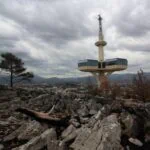
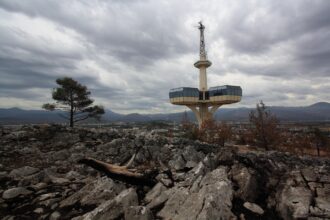
The park’s principal attraction is the Njegoš Mausoleum, which stands proudly on the summit of Jezerski Vrh at more than 1,650 metres above sea level. Reaching the mausoleum involves climbing a long tunnel and staircase, but the reward is one of the most spectacular panoramas anywhere in the Balkans. On a clear day you can see across huge areas of Montenegro, with mountains stretching in every direction and, remarkably, the Adriatic Sea still visible in the distance.
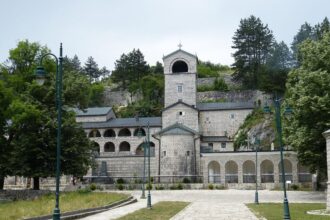
After spending time in the national park, continue the short drive to Cetinje, Montenegro’s historic royal capital. Although no longer the country’s administrative centre, Cetinje remains one of its most fascinating towns. Broad avenues, colourful buildings and former embassies reflect the period when this small mountain settlement served as the political and cultural heart of Montenegro.
Spend the afternoon exploring the compact town centre, where museums, monasteries and elegant nineteenth-century architecture create an atmosphere unlike anywhere else in the country. Cafés spill onto quiet squares, making Cetinje an excellent place to slow down after a morning of mountain driving. Compared with the busy coastal resorts, life here moves at a gentler pace, allowing visitors to appreciate another side of Montenegro’s history.
Staying overnight in Cetinje is both practical and enjoyable. Rather than returning to the coast, you’ll already be perfectly positioned for tomorrow’s drive towards Ostrog Monastery and the spectacular mountain landscapes of northern Montenegro. It keeps the itinerary flowing naturally while reducing unnecessary driving.
Njegoš Mausoleum and the hiking trails around it get a fuller treatment in our Lovćen National Park guide, and if you’d like to prioritise particular museums during your afternoon in the former royal capital, our Things to Do in Cetinje guide is worth a read beforehand.
Ostrog Monastery and the Drive to Žabljak – Day 4
| Today’s Journey | |
|---|---|
| Start | Cetinje |
| Finish | Žabljak |
| Driving Distance | Around 170 km |
| Driving Time | Around 3½ to 4 hours |
| Estimated Sightseeing | Full day |
| Main Stops | Ostrog Monastery |
| Overnight Stay | Žabljak |
Today’s drive marks the transition from Montenegro’s historic heartland into its wild northern mountains. Leaving Cetinje behind, the scenery gradually changes from rugged limestone ridges to greener valleys before the remarkable silhouette of Ostrog Monastery comes into view, seemingly suspended high above the valley floor.
Built directly into a sheer vertical cliff, Ostrog Monastery is one of the most extraordinary religious sites in Europe. Its brilliant white walls appear to grow naturally from the rock itself, creating a sight that is almost unbelievable when viewed from below. The monastery is the country’s most important pilgrimage destination, attracting Orthodox Christians from across the Balkans as well as visitors from many other faiths who come simply to admire its remarkable setting.
The road climbing to the Upper Monastery is narrow and winding, but the drive is well worth the effort. Once at the top you’ll find magnificent views across the surrounding countryside, while the peaceful atmosphere inside the monastery provides a welcome contrast to the dramatic journey that brought you there. Even visitors with little interest in religious history often describe Ostrog as one of the highlights of their time in Montenegro.
After leaving the monastery, continue north towards Žabljak, the highest town in the Balkans and your base for the next three nights. The scenery becomes increasingly mountainous as forests, rivers and open plateaus replace the valleys further south. It’s a wonderfully scenic drive that hints at the adventures awaiting over the coming days in Durmitor National Park.
Arriving in Žabljak during the late afternoon gives you time to settle into your accommodation and perhaps enjoy an evening stroll through the town before dinner. Despite its small size, Žabljak has a welcoming atmosphere, with plenty of restaurants serving hearty mountain cuisine that provides the perfect end to a day spent crossing the heart of Montenegro. Tomorrow you’ll head to one of the country’s most spectacular natural wonders, the mighty Tara River Canyon.
The dress code, visitor etiquette and the difference between the Lower and Upper Monastery are all explained properly in our Ostrog Monastery guide, well worth reading given how central this stop is to today’s drive. Once you’re up in the mountains, our Things to Do in Žabljak guide is handy to have for your three nights in town.
Standing Above the Tara River Canyon – Day 5
| Today’s Journey | |
|---|---|
| Start | Žabljak |
| Finish | Žabljak |
| Driving Distance | Around 50 km |
| Driving Time | Around 1 hour |
| Estimated Sightseeing | Full day |
| Main Stops | Đurđevića Tara Bridge, Tara River Canyon |
| Overnight Stay | Žabljak |
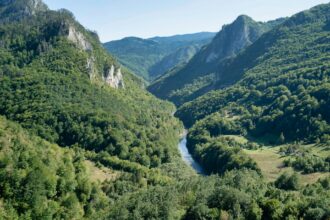
Few places demonstrate Montenegro’s extraordinary natural beauty quite like the Tara River Canyon. Stretching for around 80 kilometres and reaching depths of more than 1,300 metres in places, it is Europe’s deepest canyon and forms part of the UNESCO-listed Durmitor National Park. Today’s shorter driving schedule allows you to spend far more time appreciating the landscape rather than simply passing through it.
The highlight of the day is the impressive Đurđevića Tara Bridge, an elegant concrete arch bridge spanning the canyon high above the emerald-green Tara River. Standing on the bridge provides unforgettable views both upstream and downstream, where steep forested cliffs disappear into the distance. It’s one of Montenegro’s most iconic viewpoints and deserves plenty of time simply to absorb the scenery.
Adventure seekers can also experience the canyon from a completely different perspective. During the warmer months, white-water rafting on the Tara River is one of Montenegro’s premier outdoor activities, while the famous zipline crossing beside the bridge offers an exhilarating way to appreciate the scale of the canyon from above. Even if you prefer to keep your feet firmly on the ground, watching others soar across the gorge is entertainment in itself.
Away from the main bridge, quieter viewpoints and forest roads reveal different aspects of the canyon’s immense scale. The combination of towering cliffs, dense woodland and crystal-clear water creates an almost untouched wilderness that feels far removed from the busy Adriatic coast where your journey began only a few days earlier.
Returning to Žabljak in the late afternoon leaves time to relax before another unforgettable day in the mountains. Tomorrow you’ll explore Durmitor National Park itself, discovering glacial lakes, dramatic peaks and some of the finest scenery anywhere in the Balkans.
The rafting trips, the zipline and the best viewpoints along the gorge all get a proper write-up in our Tara River Canyon guide, worth a look beforehand if you’re planning on spending more than a couple of hours here.
Search routes and flight options for your trip to Montenegro.
Search flightsUse an eSIM to get online without hunting for a local SIM after arrival.
See eSIM optionsHave a private airport pickup arranged before you travel.
Book a transferExploring Durmitor National Park – Day 6
| Today’s Journey | |
|---|---|
| Start | Žabljak |
| Finish | Žabljak |
| Driving Distance | Around 40–60 km |
| Driving Time | Around 1 hour |
| Estimated Sightseeing | Full day |
| Main Stops | Black Lake, Durmitor National Park |
| Overnight Stay | Žabljak |
After yesterday’s dramatic views across the Tara River Canyon, today is dedicated to exploring the spectacular landscapes of Durmitor National Park, one of Montenegro’s greatest natural treasures. Covering almost 400 square kilometres of mountains, forests, glacial lakes and deep valleys, the park has been recognised as a UNESCO World Heritage Site thanks to its exceptional scenery and biodiversity. Rather than rushing through, this itinerary gives you an entire day to appreciate why Durmitor is widely regarded as the country’s finest national park.
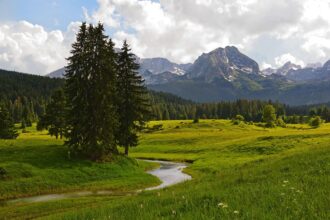
Begin your morning at Black Lake (Crno Jezero), the park’s most famous attraction and one of Montenegro’s most photographed locations. Just a few minutes from Žabljak, the lake sits beneath towering pine forests and rugged mountain peaks, creating a peaceful setting that changes throughout the day as the light moves across the surrounding landscape. On calm mornings, the reflections in the water are extraordinary, making this one of the best places in Montenegro for photography.
A well-maintained walking trail circles the lake, allowing visitors to enjoy constantly changing views while taking in the fresh mountain air. The full circuit is relatively easy and usually takes between one and two hours depending on how often you stop to admire the scenery. Benches positioned around the shoreline provide excellent places to pause, while small beaches become popular for paddling and relaxing during the warmer summer months.
Beyond Black Lake, Durmitor offers countless opportunities to explore further. Scenic roads wind through dense forests before emerging onto open mountain plateaus where dramatic limestone peaks dominate the skyline. During the summer, hikers can choose from dozens of marked trails leading to panoramic viewpoints, hidden lakes and remote valleys, while visitors preferring a gentler pace will find that simply driving through the park delivers unforgettable scenery around almost every bend.
Wildlife enthusiasts may spot golden eagles soaring overhead or, with a little luck, deer moving quietly through the forests. The combination of untouched woodland, alpine meadows and rocky mountain ridges supports an impressive variety of plants and animals, adding another layer to the experience beyond the remarkable landscapes.
As evening approaches, return to Žabljak for another relaxing night in the mountains. Spending multiple nights here allows you to experience Durmitor properly rather than treating it as a brief stop on a longer journey. Tomorrow you’ll tackle one of Montenegro’s most spectacular drives as you complete the famous Durmitor Ring before descending towards the capital, Podgorica.
The park’s hiking trails, Black Lake and the practicalities of a visit are all laid out in our dedicated Durmitor National Park guide, well worth reading before you set off this morning, especially if one of the longer marked trails beyond the lake circuit appeals.
The Durmitor Ring and Podgorica – Day 7
| Today’s Journey | |
|---|---|
| Start | Žabljak |
| Finish | Podgorica |
| Driving Distance | Around 170 km |
| Driving Time | Around 4 hours |
| Estimated Sightseeing | Full day |
| Main Stops | Sedlo Pass, Durmitor Ring, Piva viewpoints |
| Overnight Stay | Podgorica |
Today combines one of Europe’s finest mountain drives with the journey back towards southern Montenegro. Before leaving Durmitor behind, you’ll complete much of the famous Durmitor Ring, a spectacular circular route that passes through some of the country’s most dramatic alpine scenery.
The road quickly climbs above the forests surrounding Žabljak before crossing wide mountain plateaus dotted with grazing sheep and traditional stone shepherds’ huts. Traffic is usually light, allowing you to enjoy the drive at a relaxed pace while stopping frequently at the numerous viewpoints overlooking the surrounding peaks. Unlike many scenic roads elsewhere in Europe, the Durmitor Ring still feels wonderfully undiscovered, giving visitors a genuine sense of wilderness.
One of the highlights is Sedlo Pass, where the road reaches more than 1,900 metres above sea level. Here enormous limestone cliffs tower over the narrow road, while vast panoramas stretch across the national park in every direction. This is undoubtedly one of Montenegro’s greatest viewpoints and a place where many visitors find themselves lingering far longer than planned.
Continuing south, the landscape gradually begins to soften as the road descends through remote valleys and traditional mountain villages. Along the way you’ll encounter numerous opportunities to stop for photographs, enjoy a picnic or simply appreciate the remarkable contrast between the rugged northern mountains and the greener countryside that gradually appears as you leave Durmitor behind.
By late afternoon you’ll arrive in Podgorica, Montenegro’s capital city. After several days surrounded by forests, mountains and national parks, the capital provides a refreshing change of pace. Although often overlooked by visitors heading directly for the coast, Podgorica offers lively cafés, riverside walks and an increasingly vibrant restaurant scene, making it a pleasant place to spend the evening before continuing towards Lake Skadar tomorrow.
If mountain scenery like this is turning out to be a highlight, our Durmitor National Park guide has plenty more on the park’s viewpoints and trails, while our Things to Do in Podgorica guide is a handy reference for tonight’s stop in the capital.
Podgorica and Lake Skadar – Day 8
| Today’s Journey | |
|---|---|
| Start | Podgorica |
| Finish | Virpazar |
| Driving Distance | Around 35 km |
| Driving Time | Around 40 minutes |
| Estimated Sightseeing | Full day |
| Main Stops | Podgorica, Virpazar, Lake Skadar |
| Overnight Stay | Virpazar |
After several days in the mountains, today’s journey is deliberately shorter, allowing time to experience two completely different sides of Montenegro. Spend the morning exploring Podgorica, a city that combines modern development with leafy parks, riverside cafés and reminders of its long and varied history.
Unlike Kotor or Budva, Podgorica isn’t defined by a historic Old Town. Instead, it’s a working European capital where visitors can experience everyday Montenegrin life. A stroll through the city centre takes in lively squares, independent cafés and attractive riverside promenades, while landmarks such as the striking Millennium Bridge and the historic Clock Tower offer interesting glimpses into both the modern and Ottoman chapters of the city’s past.
Podgorica also provides an excellent opportunity to enjoy a leisurely lunch before continuing south. The city’s growing food scene reflects Montenegro’s varied influences, with traditional Balkan dishes sitting comfortably alongside Italian and Mediterranean cuisine. It’s an enjoyable contrast after several days of mountain villages and national parks.
The afternoon brings another complete change of scenery as you make the short drive to Virpazar, the charming lakeside village that serves as the main gateway to Lake Skadar National Park. Surrounded by vineyards, rolling hills and wetlands, Virpazar has become the ideal base for visitors wishing to explore the largest lake in the Balkans.
If time allows, consider taking an afternoon or early evening boat trip on Lake Skadar. Gliding quietly across the calm waters reveals a landscape filled with water lilies, reed beds, tiny islands and distant mountain backdrops. The lake is internationally recognised for its birdlife, with pelicans, herons and countless other species regularly spotted throughout the national park. Watching the sun begin to set across the water provides a wonderfully peaceful end to the day and perfectly prepares you for tomorrow’s scenic drive along the southern shores of the lake.
Podgorica’s museums, riverside walks and restaurant scene all get more room to breathe in our Things to Do in Podgorica guide. Before your afternoon boat trip, it’s also worth flicking through our Lake Skadar National Park guide, which lists the best cruise operators and where to spot the park’s famous pelicans.
Along Lake Skadar to Ulcinj – Day 9
| Today’s Journey | |
|---|---|
| Start | Virpazar |
| Finish | Ulcinj |
| Driving Distance | Around 75 km |
| Driving Time | Around 1½ hours |
| Estimated Sightseeing | Full day |
| Main Stops | Lake Skadar viewpoints, Ulcinj Old Town |
| Overnight Stay | Ulcinj |
Leaving Virpazar behind, today’s drive follows the southern edge of Lake Skadar, offering some of the most overlooked scenery in Montenegro. While many visitors simply drive directly between Podgorica and the coast, taking the quieter lakeside roads rewards you with peaceful viewpoints, traditional villages and sweeping panoramas across the vast expanse of water.
The route winds gently through vineyards and rolling countryside before revealing regular glimpses of the lake between the hills. There are numerous places to stop for photographs, and the slower pace of the drive allows you to appreciate a side of Montenegro that remains largely untouched by mass tourism. During spring and autumn, the surrounding landscape is particularly beautiful as vineyards and forests display vibrant seasonal colours.
As the road gradually leaves the lake behind, the Adriatic Sea soon comes back into view and you’ll arrive in Ulcinj, Montenegro’s southernmost major town. Rich in Ottoman history and heavily influenced by Albanian culture, Ulcinj feels noticeably different from the Venetian towns further north. The atmosphere, architecture and cuisine all reflect centuries of cultural exchange, making it one of the country’s most distinctive destinations.
Spend the afternoon wandering through Ulcinj Old Town, where narrow stone streets climb towards ancient fortifications overlooking the sea. From the town walls you’ll enjoy magnificent views across the Adriatic coastline, while cafés tucked into historic buildings provide ideal places to pause with a coffee or a leisurely dinner.
If time permits, finish the day with a visit to Long Beach (Velika Plaža), a remarkable stretch of golden sand extending for around 13 kilometres towards the Albanian border. As the sun begins to set over the Adriatic, it’s a fitting end to another varied day on what has already become an unforgettable journey through Montenegro.
Fancy spending longer around the lake before heading south? Our Lake Skadar National Park guide has more on the wineries and quieter viewpoints along its southern shore. Once you reach the coast, our Things to Do in Ulcinj guide is a handy reference for tonight’s stop, particularly if you’re torn between the Old Town and Ada Bojana for tomorrow morning.
Ulcinj and the Journey to Bar – Day 10
| Today’s Journey | |
|---|---|
| Start | Ulcinj |
| Finish | Bar |
| Driving Distance | Around 30 km |
| Driving Time | Around 35 minutes |
| Estimated Sightseeing | Full day |
| Main Stops | Ulcinj Old Town, Long Beach, Bar Promenade |
| Overnight Stay | Bar |
Although today’s drive is one of the shortest of the entire itinerary, there’s no need to rush. Spend the morning enjoying more of Ulcinj, a town unlike anywhere else you’ve visited during your road trip. Influenced by both Montenegro and neighbouring Albania, Ulcinj has a distinctive character that blends Ottoman history with a laid-back seaside atmosphere, making it well worth exploring before continuing north along the Adriatic coast.
Begin with another stroll through the atmospheric Old Town, where centuries-old stone buildings cling dramatically to the cliffs above the sea. The narrow lanes are filled with small cafés, artisan shops and terraces offering magnificent coastal views, while the ancient fortifications provide fascinating reminders of Ulcinj’s long and sometimes turbulent history. According to local legend, even the famous writer Miguel de Cervantes may have spent time here after being captured by pirates, adding another layer of intrigue to one of Montenegro’s oldest settlements.
If you didn’t visit yesterday evening, take the opportunity to explore Long Beach (Velika Plaža) before leaving town. Stretching for almost 13 kilometres, it is the longest sandy beach in Montenegro and feels very different from the smaller pebble coves further north. During the summer months the beach is popular with swimmers, paddleboarders and kite surfers thanks to its shallow waters and reliable coastal breezes, while outside the main season it provides a peaceful place for a leisurely walk along the shoreline.
The drive to Bar follows the Adriatic coast and takes less than an hour, allowing plenty of time to enjoy the scenery along the way. As you approach the town, the landscape becomes greener, with olive groves covering the surrounding hillsides and the busy commercial port gradually coming into view. Unlike Budva or Kotor, Bar is both a modern working city and an important transport hub, giving it a completely different atmosphere from Montenegro’s more tourism-focused resorts.
After checking into your accommodation, spend the remainder of the afternoon exploring Bar’s attractive seafront promenade. Lined with cafés, restaurants and palm trees, it’s an enjoyable place to relax after several days of mountain adventures. Watching ferries arrive and depart across the Adriatic towards Italy also serves as a reminder of Montenegro’s historic maritime links with the wider Mediterranean. As the sun begins to set, enjoy dinner beside the waterfront before tomorrow’s exploration of the region’s remarkable history in Old Bar.
Long Beach and Ada Bojana deserve more than a single morning can give them, so our Things to Do in Ulcinj guide is worth a proper read. Once you reach Bar, our dedicated Things to Do in Bar guide fills in the rest, and if extending your trip by rail appeals, our Belgrade to Bar Train guide covers one of Europe’s great scenic railway journeys, which passes directly through town.
Old Bar and Petrovac – Day 11
| Today’s Journey | |
|---|---|
| Start | Bar |
| Finish | Petrovac |
| Driving Distance | Around 20 km |
| Driving Time | Around 30 minutes |
| Estimated Sightseeing | Full day |
| Main Stops | Old Bar, Ancient Olive Tree, Petrovac |
| Overnight Stay | Petrovac |
Today’s journey combines one of Montenegro’s most fascinating historical sites with one of its most relaxed seaside towns. Before leaving Bar behind, head inland to explore Old Bar (Stari Bar), an extraordinary fortified settlement that sits beneath the imposing slopes of Mount Rumija.
Unlike many historic towns that continue to thrive within their ancient walls, Old Bar was largely abandoned following a devastating earthquake in the nineteenth century. Today the ruined streets, churches, aqueducts and defensive towers create an atmospheric open-air archaeological site where visitors can wander freely amongst centuries of history. Walking through the stone gateways and along the quiet lanes offers a fascinating glimpse into medieval Montenegro, while the elevated position provides wonderful views across the surrounding countryside and towards the Adriatic Sea.
A short drive from the old town brings you to another of the region’s most remarkable landmarks, the Ancient Olive Tree of Mirovica. Believed to be more than 2,000 years old, it is one of the oldest olive trees in Europe and remains a symbol of peace and longevity. Standing beneath its enormous twisted trunk is a surprisingly moving experience, particularly when you consider the countless generations that have lived in its shade throughout Montenegro’s long history.
Leaving Bar behind, continue north along the scenic coastal road towards Petrovac, a charming resort that offers a noticeably slower pace than neighbouring Budva. Surrounded by pine-covered hills and centred around a beautiful horseshoe-shaped bay, Petrovac has become a favourite destination for visitors seeking a quieter stretch of Montenegro’s coastline without sacrificing excellent restaurants, beaches or waterfront cafés.
Spend the afternoon strolling along the attractive seafront promenade, relaxing on the beach or climbing to the small Venetian fortress (Kastio Castle) that overlooks the bay. From its stone walls you’ll enjoy excellent views along the coastline and out towards the Adriatic, particularly as the late afternoon sun begins to illuminate the surrounding cliffs. Petrovac is the perfect place to slow the pace of your road trip before returning to some of Montenegro’s best-known destinations tomorrow.
Old Bar and its ancient olive tree get a fuller write-up in our Things to Do in Bar guide, while our dedicated Things to Do in Petrovac guide is worth reading before you settle in for the night, especially if you’re deciding between the beach and the fortress for your afternoon.
Browse hostels and budget-friendly stays around Montenegro.
See hostelsFlying to Montenegro? Get fast compensation payouts, eligible lounge benefits and expert help when flights go wrong.
See AirHelp+ benefitsLeave your luggage somewhere convenient and enjoy Montenegro hands-free.
View storageSveti Stefan and Budva – Day 12
| Today’s Journey | |
|---|---|
| Start | Petrovac |
| Finish | Budva |
| Driving Distance | Around 20 km |
| Driving Time | Around 30 minutes |
| Estimated Sightseeing | Full day |
| Main Stops | Sveti Stefan, Budva Riviera |
| Overnight Stay | Budva |
Although today’s drive covers only a short distance, it includes one of Montenegro’s most iconic landmarks. Leaving Petrovac behind, follow the coastal road north until the unmistakable silhouette of Sveti Stefan appears ahead, connected to the mainland by its famous narrow causeway.
Originally a fortified fishing village dating back to the fifteenth century, Sveti Stefan has since become one of the country’s most recognisable images. The island itself now operates as an exclusive luxury resort, meaning public access is generally restricted, but visitors can still admire its extraordinary setting from several viewpoints along the coast. The elevated viewpoint above the island provides one of the finest photographic opportunities in Montenegro, with the terracotta rooftops contrasting beautifully against the deep blue waters of the Adriatic.
Spend some time exploring the surrounding beaches and coastal paths before continuing towards Budva, the final major destination of your road trip. The journey takes only a few minutes, but the atmosphere changes noticeably as you arrive in Montenegro’s most vibrant seaside resort. Budva combines a beautifully preserved medieval Old Town with lively beaches, excellent restaurants and an energetic waterfront that attracts visitors from across Europe.
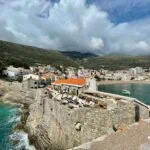
After checking into your hotel, head straight for Budva Old Town, where centuries-old stone walls surround a maze of narrow streets filled with cafés, boutique shops and historic churches. The compact historic centre is ideal for exploring on foot, with every corner revealing hidden courtyards, attractive squares and impressive viewpoints overlooking the harbour.
As evening approaches, enjoy dinner within the ancient walls or beside the bustling marina before taking a leisurely walk along Budva’s lively promenade. After travelling through mountains, lakes, canyons and quiet coastal towns, arriving in Budva provides a fitting finale to your Montenegrin adventure. Tomorrow you’ll have an entire day to explore everything this fascinating town has to offer.
The best viewpoints and photography spots along this stretch of coast are covered properly in our Sveti Stefan guide, and given how much there is to see during your two nights in town, our Things to Do in Budva guide is worth reading in advance too.
A Full Day in Budva – Day 13
| Today’s Journey | |
|---|---|
| Start | Budva |
| Finish | Budva |
| Driving Distance | Minimal |
| Driving Time | None |
| Estimated Sightseeing | Full day |
| Main Stops | Budva Old Town, Mogren Beach, Budva Marina |
| Overnight Stay | Budva |
Your final full day in Montenegro is intentionally unhurried, giving you the opportunity to enjoy Budva without the need to pack the car or move on to another destination. After nearly two weeks exploring the country, today offers the perfect balance between sightseeing and relaxation before tomorrow’s journey home.
Start by returning to Budva Old Town, where the early morning is often the most enjoyable time to wander through its ancient streets. Before the cafés become busy and the day-trippers arrive, you’ll have the opportunity to appreciate the impressive Venetian architecture, medieval churches and defensive walls that have protected the town for centuries. Climbing onto the town walls rewards you with sweeping views across the Adriatic and back towards the beaches that have made Budva Montenegro’s best-known holiday resort.
From the Old Town it’s only a short walk to Mogren Beach, a picturesque bay connected by a scenic coastal path beneath the cliffs. The crystal-clear water makes this an excellent place for a swim during the warmer months, while those who prefer to stay dry can simply relax with a drink overlooking the sea. If you’d rather spend the day exploring, boat excursions and watersports are also widely available from the marina.
The afternoon is an ideal time to enjoy Budva’s cafés, restaurants and boutique shops before taking one final stroll along the waterfront. Looking back over the last two weeks, it’s remarkable just how much variety Montenegro has packed into such a compact country. From medieval towns and soaring mountains to tranquil lakes and beautiful beaches, you’ve experienced landscapes that many larger countries struggle to match.
Finish your final evening with dinner overlooking the Adriatic as the sun sets beyond the coastline. It’s a memorable conclusion to a journey that has showcased the very best of Montenegro, and one that will almost certainly leave you planning a return visit to explore even more of this remarkable country.
Budva’s beaches, Old Town and restaurant scene get the full treatment in our Things to Do in Budva guide, worth reading before you plan exactly how to spend your final full day.
Returning to Tivat or Podgorica – Day 14
| Today’s Journey | |
|---|---|
| Start | Budva |
| Finish | Tivat Airport or Podgorica Airport |
| Driving Distance | 23 km to Tivat or 65 km to Podgorica |
| Driving Time | Around 30 minutes to Tivat or 1 hour 15 minutes to Podgorica |
| Estimated Sightseeing | Flexible |
| Main Stops | Optional coastal viewpoints |
| Overnight Stay | Departure |
Your final morning in Montenegro doesn’t have to signal the end of the adventure immediately. Depending on your flight time, there’s still an opportunity to enjoy breakfast overlooking the Adriatic, take one last stroll through Budva’s historic streets or simply sit beside the marina and reflect on everything you’ve experienced during the past two weeks.
If you’re flying from Tivat Airport, the drive is short and straightforward, following the scenic coastline around the Bay of Kotor before arriving at the terminal in around half an hour. If your return flight departs from Podgorica Airport, allow a little longer for the inland journey, although the roads are generally fast and uncomplicated compared with the mountain routes earlier in the itinerary.
Before returning your hire car, it’s worth making time for one final viewpoint if your schedule allows. Even after nearly fourteen days of spectacular scenery, Montenegro somehow manages to produce one last memorable panorama around almost every corner. Whether it’s a final glimpse across the Adriatic or a distant view of the mountains you’ve spent the previous week exploring, the journey back to the airport provides a fitting conclusion to your road trip.
Over the course of this itinerary you’ve travelled from elegant marinas and medieval coastal towns to high mountain passes, Europe’s deepest canyon, peaceful national parks and the shores of the Balkans’ largest lake. Despite covering almost every corner of the country, you’ve never spent excessive time driving, proving just how perfectly suited Montenegro is to a self-drive holiday.
Many visitors arrive expecting a relaxing beach destination and leave having discovered one of Europe’s most rewarding road trip destinations. The country’s compact size, spectacular scenery and ever-changing landscapes make it possible to experience an incredible variety of attractions within a relatively short holiday, and it’s this diversity that keeps so many travellers returning year after year.
Whichever airport you fly out of, our Tivat Airport Transfers guide and Podgorica Airport Transfers guide both explain car hire drop-off procedures and typical transfer times, worth checking the evening before to avoid any last-minute surprises.

Where to Stay Throughout Your Road Trip
One of the strengths of this itinerary is that it keeps hotel changes to a sensible minimum while placing you exactly where you need to be for the following day’s drive. Rather than checking into a new hotel every night, you’ll spend several nights in key locations, giving you time to unpack, relax and properly experience each region before moving on.
Your first two nights are spent in Tivat, allowing you to settle into Montenegro before exploring the Bay of Kotor. Staying here is often more convenient than Kotor itself, with easier parking, excellent restaurants and quick access to the airport. It also places you in an ideal position for the scenic climb into Lovćen National Park on the third day.
After crossing the mountains you’ll spend a single night in Cetinje, Montenegro’s historic royal capital. This avoids unnecessary backtracking and positions you perfectly for the drive to Ostrog Monastery the following morning. From there the itinerary moves to Žabljak, where three consecutive nights allow plenty of time to enjoy Durmitor National Park, Tara River Canyon and the spectacular Durmitor Ring without feeling rushed.
Following your mountain adventure, you’ll spend one night in Podgorica before moving just a short distance to Virpazar, the gateway to Lake Skadar National Park. Staying beside the lake rather than returning to the city makes it much easier to enjoy an evening boat trip or an early morning departure before continuing towards the coast.
The final section of the journey follows Montenegro’s Adriatic coastline, with overnight stays in Ulcinj, Bar, Petrovac and finally Budva, where you’ll spend your last two nights. This leisurely progression north along the coast means there’s never any need to rush, while each destination offers a different atmosphere and character.
By structuring the itinerary in this way, daily driving remains comfortable and you’ll never need to tackle long mountain roads after dark unless you choose to. It also means you’ll experience Montenegro’s diverse regions properly, rather than simply passing through them on the way to somewhere else.
Want to compare specific neighbourhoods before booking? Our destination guides to Tivat, Cetinje and Budva each include a short section on where to base yourself, worth reading alongside this overview as you choose accommodation for each stage of the route.
Best Time of Year for This Montenegro Road Trip
One of the great advantages of Montenegro is that it can be enjoyed throughout much of the year, although each season offers a very different experience. Choosing the right time to travel depends largely on whether your priority is hiking in the mountains, relaxing on the coast or avoiding the busiest tourist crowds.
For most visitors, May, June and September offer the ideal balance. Temperatures are pleasantly warm without becoming uncomfortable, the mountain roads are fully open and attractions are generally much quieter than during the height of summer. These months are perfect for combining sightseeing with outdoor activities, while accommodation prices are often noticeably lower than in July and August.
July and August bring guaranteed sunshine and lively coastal resorts, making them ideal if beaches are a priority. However, these are also Montenegro’s busiest months. Popular destinations such as Kotor, Budva and Sveti Stefan can become crowded, traffic increases significantly along the coast and accommodation should be booked well in advance. The mountain regions provide welcome relief from the heat, with noticeably cooler temperatures around Žabljak and Durmitor National Park.
Spring is particularly rewarding for nature lovers. Lake Skadar is at its most vibrant, wildflowers blanket many of the mountain meadows and waterfalls often flow more dramatically following the winter snowmelt. Autumn, meanwhile, brings beautiful colours to Montenegro’s forests and vineyards while still providing excellent conditions for sightseeing.
Winter creates a completely different experience. Coastal towns remain relatively quiet and atmospheric, while Durmitor National Park transforms into one of the Balkans’ leading winter sports destinations. Snow can affect some mountain roads, particularly along the Durmitor Ring, so anyone attempting this itinerary during winter should always check local road conditions before travelling.

Rupert’s Handy Travel Tips
Planning to drive around Montenegro? Here are a few tips that’ll make your road trip even more enjoyable:
- Start early each day: Popular places such as Kotor, Budva and Sveti Stefan become much busier from mid-morning during the summer, so setting off early means quieter roads, easier parking and better photographs.
- Don’t underestimate mountain roads: Distances in Montenegro may look short on a map, but winding roads through Lovćen and Durmitor mean journeys often take longer than expected. Enjoy the drive rather than trying to rush between destinations.
- Keep your fuel tank topped up: Petrol stations are common around the coast and larger towns but become less frequent in the mountains. Fill up before heading into Durmitor National Park.
- Pack for every season: Even during the height of summer, temperatures in Žabljak and Durmitor can be more than 10°C cooler than the Adriatic coast. A light jacket is well worth bringing.
- Leave time for spontaneous stops: Some of Montenegro’s best viewpoints aren’t marked on maps. If you see somewhere worth stopping, pull over safely and enjoy it. Many of our favourite memories came from places we hadn’t planned to visit.
Want to meet the reindeer behind our travel tips? Find out more in our page Who is Rupert?.




Frequently Asked Questions
Is two weeks enough to see Montenegro?
Yes. Two weeks is widely considered the ideal amount of time to explore Montenegro at a comfortable pace. It allows you to experience the country’s mountains, national parks, historic towns and Adriatic coastline without feeling rushed.
Do I need a hire car for this itinerary?
Yes. While buses connect Montenegro’s larger towns, many of the highlights in this itinerary, including Lovćen National Park, Durmitor National Park, the Durmitor Ring and Tara River Canyon, are much easier to reach by car.
How much driving is involved?
The complete route covers approximately 800 to 900 kilometres, depending on optional detours and sightseeing. Most driving days are relatively short, with only two days involving more than three hours behind the wheel.
Is Montenegro easy to drive around?
Generally, yes. Main roads and coastal routes are well maintained, although mountain roads can be narrow, winding and steep. Driving at a relaxed pace and allowing extra time for viewpoints makes the journey both safe and enjoyable.
Which airport should I use?
This itinerary has been designed to begin and end at Tivat Airport, although it can easily be adapted if you’re flying into or out of Podgorica Airport.
When is the best time to complete this road trip?
Late spring and early autumn usually provide the best combination of pleasant weather, quieter attractions and ideal driving conditions. May, June and September are particularly recommended.
Can this itinerary be completed using public transport?
Some sections can, particularly along the coast and between larger towns. However, destinations such as Durmitor National Park, Tara River Canyon and many scenic viewpoints are difficult to reach without a car. For most visitors, hiring a car remains the easiest and most enjoyable way to complete this itinerary.
Further Reading
This road trip touches almost every corner of Montenegro, so it’s worth digging a little deeper into whichever destinations interest you most before you set off. Along the Bay of Kotor, our guides to Kotor, Perast and Tivat go well beyond what a single day of driving allows, covering each town’s attractions, opening hours and best viewpoints in full.
The mountain stages get their own dedicated treatment too. Our guides to Lovćen National Park, Ostrog Monastery, Durmitor National Park and the Tara River Canyon walk through hiking trails, visitor etiquette and seasonal conditions in proper depth, and our Things to Do in Žabljak guide is worth a look if you fancy extending your stay in the mountains beyond the three nights suggested here.
Further south, our guides to Podgorica, Lake Skadar National Park and Cetinje take you deeper into the country’s inland highlights. Along the coast, meanwhile, our guides to Ulcinj, Bar, Petrovac, Sveti Stefan and Budva each explore a different stretch of the Adriatic than we’ve had room for here.
Prefer to explore a single region more slowly rather than tackle the full circuit? Our Best Day Trips from Kotor and Best Day Trips from Podgorica guides show how to build a shorter, base-based trip around either end of this route, and our Montenegro Public Transport guide is worth reading if you’re considering swapping some of these driving days for buses and trains instead.