Reviewed by our editorial team Updated
Discover Montenegro’s Southern Gem
Because it sits at the far end of the coast, Ulcinj is often left off shorter itineraries that focus on Kotor and Budva, which is a shame given how different it feels from the rest of the country. Pairing it with a stop in Bar along the way makes for a natural southern extension to a longer coastal trip, especially if you’re travelling by train or bus rather than driving the whole route yourself.
At the very southern tip of Montenegro, close to the border with Albania, lies Ulcinj, a coastal town unlike anywhere else in the country. With its fascinating Ottoman Old Town, beautiful sandy beaches, rich Albanian heritage and relaxed Mediterranean atmosphere, Ulcinj offers visitors a completely different side of Montenegro from the better-known destinations around the Bay of Kotor.
Believed to be one of the oldest settlements on the Adriatic, Ulcinj boasts a history stretching back more than 2,000 years. Over the centuries it has been ruled by the Illyrians, Romans, Byzantines, Venetians and Ottomans, with each civilisation leaving its mark on the town’s architecture, culture and traditions.
Today, Ulcinj is perhaps best known for its remarkable coastline. It’s home to Velika Plaža (Long Beach), a spectacular 13-kilometre stretch of golden sand that’s the longest beach in Montenegro, along with the unique river island of Ada Bojana, one of Europe’s leading destinations for kitesurfing and watersports.
Whether you’re looking to relax on sandy beaches, explore ancient streets, sample delicious seafood or experience Montenegro’s multicultural heritage, Ulcinj is one of the country’s most rewarding and distinctive destinations.
Why Visit Ulcinj?
There’s also a genuine sense of discovery to visiting Ulcinj that’s harder to find in Montenegro’s more established resorts. Fewer international visitors make it this far south, so exploring the town still feels a little like finding somewhere overlooked, even though the beaches and history here are every bit as compelling as the country’s headline attractions.
It’s also one of the more affordable stretches of the Montenegrin coast, with accommodation, food and drink generally costing noticeably less than the busier resorts further north. That value, combined with the space afforded by such a long beach, makes Ulcinj a popular choice for longer stays rather than the quick day trips that are more common around the Bay of Kotor.
While many visitors spend their holidays around Kotor, Budva or Herceg Novi, Ulcinj offers a completely different experience. Instead of dramatic mountain scenery and medieval Venetian architecture, you’ll discover a town shaped by Ottoman history, Albanian traditions and one of the finest stretches of coastline on the Adriatic.
One of Ulcinj’s biggest attractions is its wonderfully relaxed atmosphere. Life moves at a slower pace here, with locals gathering in waterfront cafés, families enjoying evenings along the promenade and visitors spending long summer days on the town’s expansive sandy beaches.
The food is another highlight. Fresh seafood, grilled meats, traditional Albanian dishes and Mediterranean flavours combine to create one of Montenegro’s most interesting culinary scenes, while the nearby beaches provide endless opportunities for swimming, watersports and sunset walks.
For travellers wanting to experience a side of Montenegro that’s authentic, multicultural and refreshingly different, Ulcinj is a destination that shouldn’t be overlooked.
Compare hotels and other places to stay for your trip.
Check availabilityBrowse apartments, holiday homes and self-catering stays.
View rentalsCompare hotel deals from multiple booking sites in one search.
Compare pricesExplore Ulcinj Old Town
Look out too for the small mosques and religious buildings scattered through the old streets, a visible reminder of the town’s long Ottoman period and its continuing multicultural character today. Together with the stone houses and sea views, they give the Old Town an atmosphere that feels distinctly different from the more overtly Venetian centres further north along the coast.
Give yourself at least an hour or two to wander without a fixed plan, since much of the Old Town’s appeal lies in stumbling across a quiet terrace or an unexpected sea view rather than following a strict route between landmarks. Early evening is a particularly good time to visit, when the light softens over the Adriatic and the streets are noticeably quieter than during the middle of the day.
Perched on a rocky headland overlooking the Adriatic Sea, Ulcinj Old Town (Stari Grad) is one of Montenegro’s oldest and most atmospheric historic centres. Surrounded by sturdy stone walls and filled with narrow cobbled streets, it’s a fascinating place to explore while discovering more than two millennia of history.
Unlike the grand squares of Kotor, Ulcinj’s Old Town has a distinctly Ottoman character, with winding alleyways, traditional stone houses and panoramic terraces overlooking the coastline. Every corner seems to reveal another hidden courtyard, ancient gateway or spectacular sea view.
Several historic buildings now house small museums, art galleries, boutique shops and welcoming cafés where visitors can enjoy a drink while admiring the Adriatic. Information panels throughout the Old Town explain its long history, helping visitors understand the many civilisations that once ruled this important coastal settlement.
Whether you’re interested in architecture, history or photography, wandering through Ulcinj Old Town is one of the highlights of any visit to Montenegro’s southern coast.
Relax On Long Beach (Velika Plaža)
Facilities vary considerably along the beach’s length, so it’s worth having a rough idea of what you’re after before you arrive. The stretches closest to town tend to have the most developed beach clubs and easiest access to cafés, while the sections further towards Ada Bojana feel progressively wilder and quieter, which suits visitors looking to escape the busier crowds entirely.
Stretching for an incredible 13 kilometres, Velika Plaža, or Long Beach, is one of Montenegro’s greatest natural attractions and the country’s longest sandy beach. Unlike the pebble beaches found across much of the Adriatic coastline, Long Beach offers wide expanses of soft golden sand, shallow water and plenty of space to spread out, even during the height of summer.
The beach is popular with every type of visitor. Families appreciate the gently shelving shoreline and safe swimming conditions, couples enjoy the spectacular sunsets, while adventure seekers come for some of the best kitesurfing and windsurfing conditions in Europe. Reliable afternoon winds have helped establish Ulcinj as an internationally recognised destination for watersports, with numerous schools offering lessons for complete beginners as well as equipment hire for experienced riders.
Despite its size, Velika Plaža never feels overdeveloped. Along its length you’ll find a mixture of beach clubs, watersports centres, relaxed cafés, seafood restaurants and quieter stretches where you can simply enjoy the sound of the waves and uninterrupted views across the Adriatic.
Whether you’re planning to spend an hour or an entire day by the sea, Long Beach is one of the defining attractions of Ulcinj and one of the very best beaches anywhere in Montenegro.
Visit Ada Bojana
Photographers in particular tend to linger here longer than planned, since the combination of wooden stilt houses, still river water and wide open sky creates some of the most distinctive scenery anywhere on the Montenegrin coast. Late afternoon light across the river is especially rewarding if you’re hoping to capture the island at its most atmospheric.
Getting there is straightforward from central Ulcinj, with regular taxis and occasional local buses covering the short distance, though many visitors simply combine it with a longer walk or cycle along Long Beach. It’s worth allowing at least half a day if you want to properly enjoy a riverside lunch alongside any time on the water.
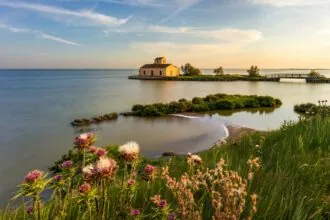
At the southern end of Long Beach, where the Bojana River meets the Adriatic Sea, lies one of Montenegro’s most unusual destinations. Ada Bojana is a beautiful triangular island formed naturally by river sediments, creating a peaceful landscape of sandy beaches, wooden restaurants and quiet waterways.
The island has a completely different atmosphere from the rest of Montenegro’s coastline. Instead of busy promenades and historic streets, you’ll find wide open spaces, traditional wooden fishing huts built on stilts above the river and a relaxed lifestyle centred around nature and the sea.
Ada Bojana has become internationally renowned for kitesurfing and windsurfing thanks to its reliable winds, shallow water and expansive beaches. Numerous schools offer lessons for beginners, while experienced riders travel from across Europe to enjoy some of the Adriatic’s best conditions.
Even if watersports aren’t your thing, Ada Bojana is well worth visiting. Riverside seafood restaurants serve freshly caught fish with wonderful views across the water, while the peaceful beaches are perfect for swimming, walking or watching one of Montenegro’s most spectacular sunsets.

Discover Ulcinj’s Beautiful Beaches
Facilities at the smaller beaches are generally simpler than those found along the main stretch of Long Beach, so it’s worth bringing your own umbrella, water and snacks if you’re heading somewhere quieter like Valdanos Bay for the day rather than relying on finding everything on site.
Each of these beaches has its own character, so it’s worth trying more than one if you’re staying for several days rather than settling on the first you come across. Mala Plaža works well for an easy evening stroll from the Old Town, while Valdanos Bay is better suited to a dedicated half-day trip given its slightly more remote setting among the olive groves.
Although Long Beach is the area’s biggest attraction, Ulcinj is blessed with several other excellent beaches, each offering a different experience.
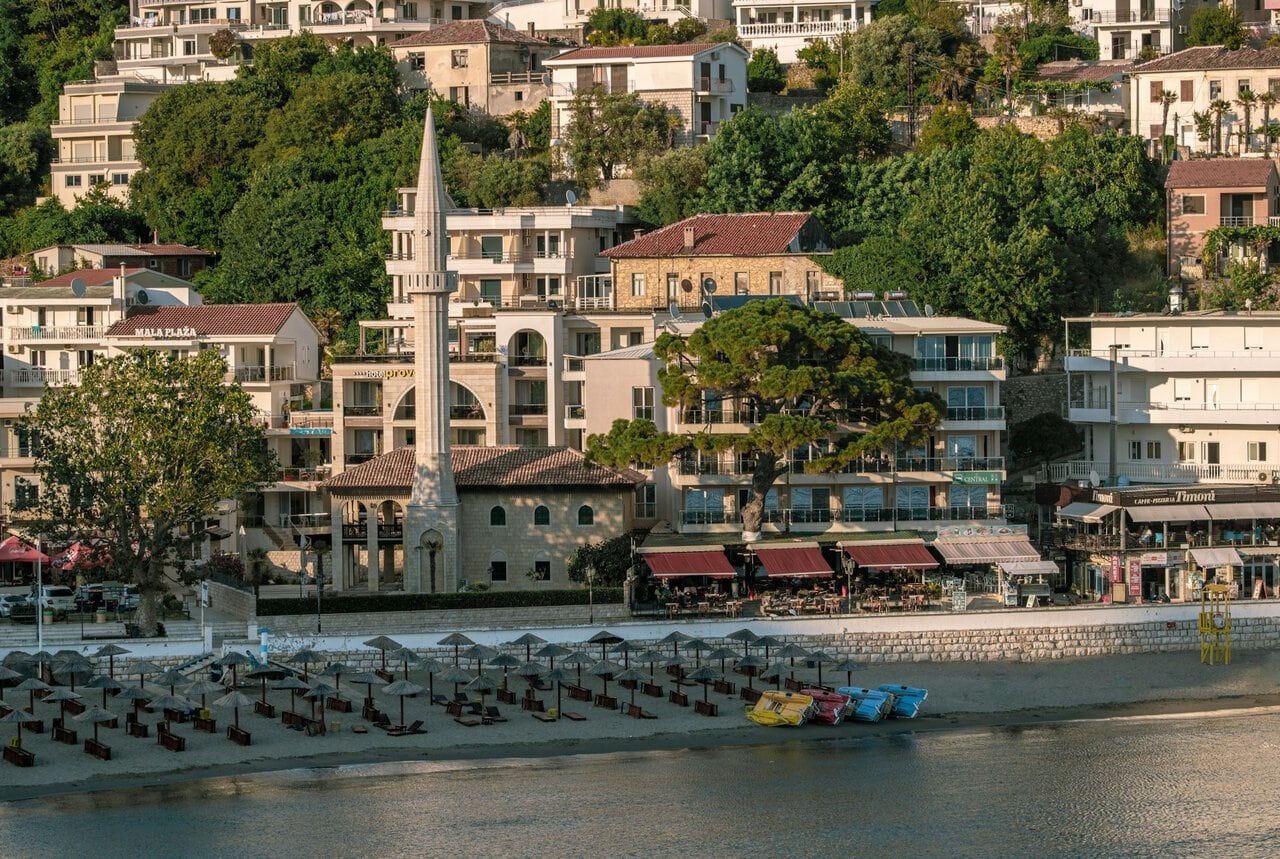
Closest to the Old Town is Mala Plaža (Small Beach), a lively sandy beach surrounded by cafés, restaurants and hotels. Its central location makes it particularly popular with families and visitors staying in the town centre, while the calm water is ideal for swimming during the summer months.
A short distance away lies Ladies’ Beach, famous for its naturally occurring mineral springs and peaceful surroundings. For generations, local tradition has associated the beach with health and wellbeing, making it one of the most distinctive bathing spots in Montenegro.
If you’re looking for somewhere quieter, head towards Valdanos Bay, where a peaceful pebble beach is surrounded by one of the largest olive groves on the Adriatic coast. The sheltered bay offers crystal-clear water, excellent snorkelling and a far more tranquil atmosphere than the busier beaches closer to town.
Together, these beaches ensure that Ulcinj has something for every visitor, whether you’re seeking lively beach clubs, family-friendly swimming or peaceful coastal scenery.
These would work well just before Rupert’s Box, after you’ve covered the beaches and Old Town. They add genuine value while creating a natural place for your affiliate links.
Discover Crystal Beach by Boat
While Long Beach and Valdanos Bay are easy to reach by road, one of Ulcinj’s most beautiful stretches of coastline can only be accessed from the sea. Crystal Beach (Kristalna Plaža) is hidden beneath dramatic white cliffs west of the town and is known for its crystal-clear turquoise water, peaceful atmosphere and unspoilt surroundings.
One of the best ways to visit is on a full-day boat excursion departing from Ulcinj Old Town Marina. Travelling aboard a traditional boat with a local skipper, you’ll cruise along Ulcinj’s rugged coastline, passing the small Liman beaches, hidden coves and the dramatic cliffs around Valdanos Bay before reaching Crystal Beach itself.
Because there is no road access, the beach remains far quieter than many of Montenegro’s better-known coastal resorts. Visitors have several hours to swim, relax on the pebble beach and enjoy the remarkably clear water before returning to Ulcinj.
A freshly prepared fish picnic lunch with drinks is included, giving the trip a distinctly local feel rather than simply being another sightseeing cruise. On the return journey there’s often time for another swim stop, while the coastal views back towards Ulcinj Old Town provide some excellent photo opportunities.
This excursion is ideal if you’re spending several days in Ulcinj and want to discover parts of the coastline that most visitors never see. With free cancellation up to 24 hours before departure and consistently excellent reviews, it’s one of the most enjoyable boat trips available from the town.
We recommend booking ahead during the summer months, as places are limited and the tour regularly fills during July and August.
Enjoy a Private Sunset Cruise Along the Ulcinj Coast
For a more relaxed experience, few activities compare with watching the sun disappear into the Adriatic from the deck of a private boat. Departing from the small marina beneath Ulcinj Old Town, this one-hour private sunset cruise offers a completely different perspective on Montenegro’s southern coastline.
As you leave the harbour, your captain shares stories about Ulcinj’s fascinating maritime history, including its connections with pirates, merchants and the Ottoman Empire, while the illuminated walls of the Old Town provide a spectacular backdrop. A complimentary drink is included, allowing you to simply sit back and enjoy the scenery as the boat cruises along the coast.
Depending on weather conditions and your preferences, the route can include stops at Liman Beach, Valdanos Bay or Long Beach, with the opportunity to enjoy a refreshing swim in the warm Adriatic before sunset. Because the cruise is completely private, the itinerary is more flexible than a standard group excursion, allowing the captain to tailor the experience to your interests.
As daylight fades, the coastline takes on a completely different character. The medieval walls of Ulcinj Castle, the surrounding cliffs and the calm sea combine to create one of the most memorable evenings on Montenegro’s coast, making this an excellent choice for couples celebrating a special occasion or anyone looking to end the day in style.
With excellent reviews praising both the friendly local captain and the stunning sunset views, this private cruise has quickly become one of Ulcinj’s highest-rated experiences. Booking in advance is recommended, particularly during the peak summer season when sunset departures are in greatest demand.
Search routes and flight options for your journey.
Search flightsBrowse Airalo eSIM options for convenient travel data.
Check eSIMsBook a private airport transfer in advance and have your ride planned before you arrive.
Check transfersLearn About Ulcinj’s Pirate History
The town’s fortifications are best appreciated from the water, and several of the boat trips that depart along this stretch of coast pass close enough to the old walls to give a real sense of how formidable they must once have appeared to approaching ships, pirate or otherwise.
Local guides and small museums around the Old Town occasionally bring this history to life in more detail than the information panels alone can manage, and it’s worth asking locally if any walking tours are running during your visit. Even without a guide, simply picturing the town’s fortified walls sheltering pirate vessels adds an extra layer of interest to what might otherwise be a straightforward stroll through the old streets.
Few visitors realise that Ulcinj was once one of the most feared pirate ports on the Adriatic.
During the sixteenth and seventeenth centuries, the town became a notorious base for pirates and privateers who preyed on merchant ships sailing along the Adriatic coast. Its naturally protected harbour and heavily fortified Old Town provided the perfect refuge, allowing pirate ships to disappear behind the town’s defensive walls after their raids.
Ulcinj also played an important role during the Ottoman Empire, serving as a busy trading port linking the Balkans with the wider Mediterranean. Stories from this period have become woven into local folklore, including the famous legend that the Spanish writer Miguel de Cervantes was once held captive here. While historians continue to debate the story, it remains one of the town’s most enduring legends.
Today, visitors can still see sections of the ancient fortifications, watchtowers and defensive walls that once protected the harbour. Exploring these historic streets while imagining Ulcinj’s colourful past adds another fascinating dimension to a visit beyond its beautiful beaches.
Enjoy The Local Restaurants & Cafés
Vegetarian and vegan travellers will also find more options here than they might expect, thanks to the strong Mediterranean influence on the local diet, with grilled vegetables, fresh salads and traditional pastries widely available alongside the seafood-heavy menus found closer to the water.
Prices in Ulcinj tend to be noticeably gentler than around Kotor or Budva, particularly away from the most obvious tourist spots, so it’s worth venturing a street or two back from the main promenade if you’re looking for the best value. Reservations are rarely essential outside the very busiest weeks of August, though arriving a little earlier for a waterfront table during sunset is still a sensible idea.
One of the highlights of visiting Ulcinj is discovering its distinctive cuisine, which reflects the town’s unique blend of Montenegrin, Albanian, Ottoman and Mediterranean influences.
Fresh seafood naturally dominates many menus, with grilled sea bass, calamari, octopus, mussels and locally caught fish served in restaurants overlooking both the Adriatic and the Bojana River. Inland, traditional dishes include slow-cooked lamb, grilled meats, homemade pastries and rich stews that have been enjoyed across the Balkans for generations.
The café culture is equally enjoyable. Throughout the day, locals gather for strong coffee and conversation, while in the evening the waterfront terraces fill with visitors enjoying dinner as the sun disappears beyond the Adriatic. Around the Old Town, you’ll also find charming cafés tucked into historic stone buildings where you can relax after a morning exploring the narrow streets.
Whether you’re looking for a simple beach café, a traditional family-run restaurant or an elegant seafood terrace overlooking the sea, Ulcinj offers one of the most varied and rewarding dining scenes in Montenegro.
Getting To Ulcinj
If you’re arriving by train, our Belgrade to Bar train guide covers the scenic rail route that ends just up the coast in Bar, from where Ulcinj is a short onward bus or taxi ride. Combining the train with a stay in Ulcinj is a popular way to reach the southern coast without needing a hire car for the whole trip.
Situated close to Montenegro’s border with Albania, Ulcinj is well connected by road and public transport, making it easy to reach whether you’re travelling along the Adriatic coast or arriving from inland Montenegro.
| Starting Point | Bus | Car | Typical Journey |
|---|---|---|---|
| Bar | ✔ | ✔ | Around 35 minutes |
| Podgorica | ✔ | ✔ | Around 1 hour 20 minutes |
| Budva | ✔ | ✔ | Around 1 hour 30 minutes |
| Kotor | ✔ | ✔ | Around 2 hours |
| Tivat Airport | ✔ | ✔ | Around 2 hours |
Regular intercity buses connect Ulcinj with Bar, Podgorica, Budva, Kotor and many other Montenegrin towns throughout the day. Travelling by bus is an affordable option, although journey times can increase during the busy summer season because of traffic along the Adriatic coast.
Visitors travelling by car will enjoy the greatest flexibility, particularly if planning to explore Long Beach, Ada Bojana, Valdanos Bay and the surrounding countryside. Public parking is available throughout the town, although spaces closest to the beaches can fill quickly during July and August.
If you’re flying into Montenegro, Podgorica Airport is the nearest international airport. Tivat Airport is another popular option, particularly for visitors combining Ulcinj with destinations around the Bay of Kotor.

Check Bus Routes for Ulcinj with Busbud
If your plans include travelling by bus to or from Ulcinj, Busbud provides a convenient way to search routes and compare tickets.
Instead of checking individual operator websites, you can see several options together and choose the journey that best fits your itinerary.
The Best Time To Visit Ulcinj
Thanks to its Mediterranean climate, Ulcinj is a wonderful destination throughout much of the year, although each season offers a different experience.
Late spring is one of the best times to visit. Temperatures are warm enough for sightseeing and relaxing on the beach, while visitor numbers remain relatively low. It’s an ideal season for exploring the Old Town, enjoying coastal walks and discovering the surrounding nature reserves.
During summer, Ulcinj becomes one of Montenegro’s leading beach destinations. Long Beach is at its liveliest, beach clubs are in full swing and the warm Adriatic Sea provides perfect conditions for swimming, kitesurfing, windsurfing and boat trips to Ada Bojana. Although this is the busiest season, the sheer size of Velika Plaža means it rarely feels overcrowded.
Autumn is another excellent time to visit. The sea remains pleasantly warm, the crowds begin to disappear and the weather is often ideal for exploring both the coastline and the historic centre. It’s also one of the best seasons for photography, with beautiful evening light across the Adriatic.
Even winter has its attractions. While swimming gives way to peaceful seaside walks, the quieter atmosphere offers the opportunity to experience everyday life in one of Montenegro’s most distinctive towns without the summer crowds.

Rupert’s Handy Travel Tips
Planning a visit to Ulcinj? Here are a few tips to help you enjoy Montenegro’s southernmost coastal town:
- Spend more than a day here: Between the Old Town, Long Beach and Ada Bojana, Ulcinj deserves at least two or three days.
- Explore beyond Long Beach: While Velika Plaža is spectacular, don’t miss quieter spots such as Valdanos Bay and the historic streets of the Old Town.
- Try the local seafood: Ulcinj’s position between the sea and the Bojana River makes it one of the best places in Montenegro for fresh fish and seafood.
- Visit Ada Bojana at sunset: The combination of the river, the Adriatic Sea and the evening light creates one of the most beautiful sunsets on Montenegro’s coastline.
- Bring your beach gear: With kilometres of sandy coastline and excellent swimming conditions, you’ll almost certainly want to spend more time on the beach than you originally planned.
Want to meet the reindeer behind our travel tips? Find out more in our page Who is Rupert?.




Frequently Asked Questions
Is Ulcinj worth visiting?
Absolutely. Ulcinj offers a completely different side of Montenegro, combining a fascinating Ottoman Old Town, 13 kilometres of sandy beaches, a rich Albanian cultural heritage and a wonderfully relaxed atmosphere. It’s one of the country’s most distinctive destinations.
What is Ulcinj famous for?
Ulcinj is best known for Velika Plaža (Long Beach), the historic Old Town, Ada Bojana, its pirate history and being home to the longest sandy beach in Montenegro.
How many days should I spend in Ulcinj?
Allow two to three days to explore the Old Town, relax on the beaches, visit Ada Bojana and enjoy a boat trip or watersports. If you’re mainly interested in sightseeing, a full day is sufficient, but the beaches encourage a longer stay.
Is Long Beach really 13 kilometres long?
Yes. Velika Plaža stretches for approximately 13 kilometres, making it the longest beach in Montenegro and one of the longest sandy beaches on the entire Adriatic coast.
Is Ada Bojana worth visiting?
Definitely. Ada Bojana is one of Montenegro’s most unique destinations, famous for its river island setting, excellent seafood restaurants, kitesurfing, peaceful beaches and spectacular sunsets.
Can you visit Ulcinj by public transport?
Yes. Regular buses connect Ulcinj with Bar, Budva, Podgorica, Kotor and other towns throughout Montenegro, making it easy to visit without hiring a car.
Is Ulcinj suitable for families?
Yes. The shallow waters of Long Beach, the wide sandy shoreline and numerous family-friendly hotels make Ulcinj one of the best seaside destinations in Montenegro for visitors with children.
Can you swim at Ulcinj?
Absolutely. The warm, shallow waters along Long Beach, Small Beach and Ada Bojana are excellent for swimming throughout the summer months.
When is the best time to visit Ulcinj?
Late spring, summer and early autumn provide the best weather for sightseeing and beach holidays. Summer is ideal for swimming and watersports, while May, June and September offer warm weather with fewer crowds.
What makes Ulcinj different from the rest of Montenegro?
Unlike the Venetian towns around the Bay of Kotor, Ulcinj has a strong Ottoman and Albanian influence, a more relaxed atmosphere and the country’s finest sandy beaches. It offers a completely different cultural experience while still showcasing Montenegro’s spectacular Adriatic coastline.
Further Reading
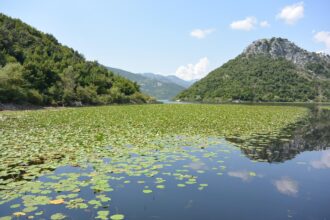
Bar is close enough that most visitors combine it with Ulcinj as one southern leg of a trip. Coming in by rail, this scenic railway guide is worth reading, and if you’ve got a car and a spare day, Lake Skadar makes a rewarding detour.
Heading further up the coast, Sveti Stefan and the towns around the Bay of Kotor show a much more Venetian side of the country, worth the drive if Ulcinj is just one stop among several.
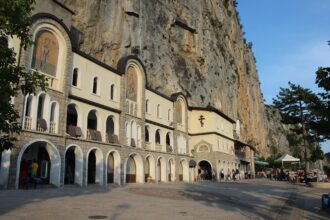
Inland, Lovćen, Durmitor, Ostrog Monastery and the Tara River Canyon couldn’t feel more different from the coast, mountain monasteries and Europe’s deepest gorge among them.
Planning to see the whole country rather than just the coast? This 14-day itinerary shows how it all fits together.