Reviewed by our editorial team Updated
Durmitor National Park: Montenegro’s Mountain Wilderness
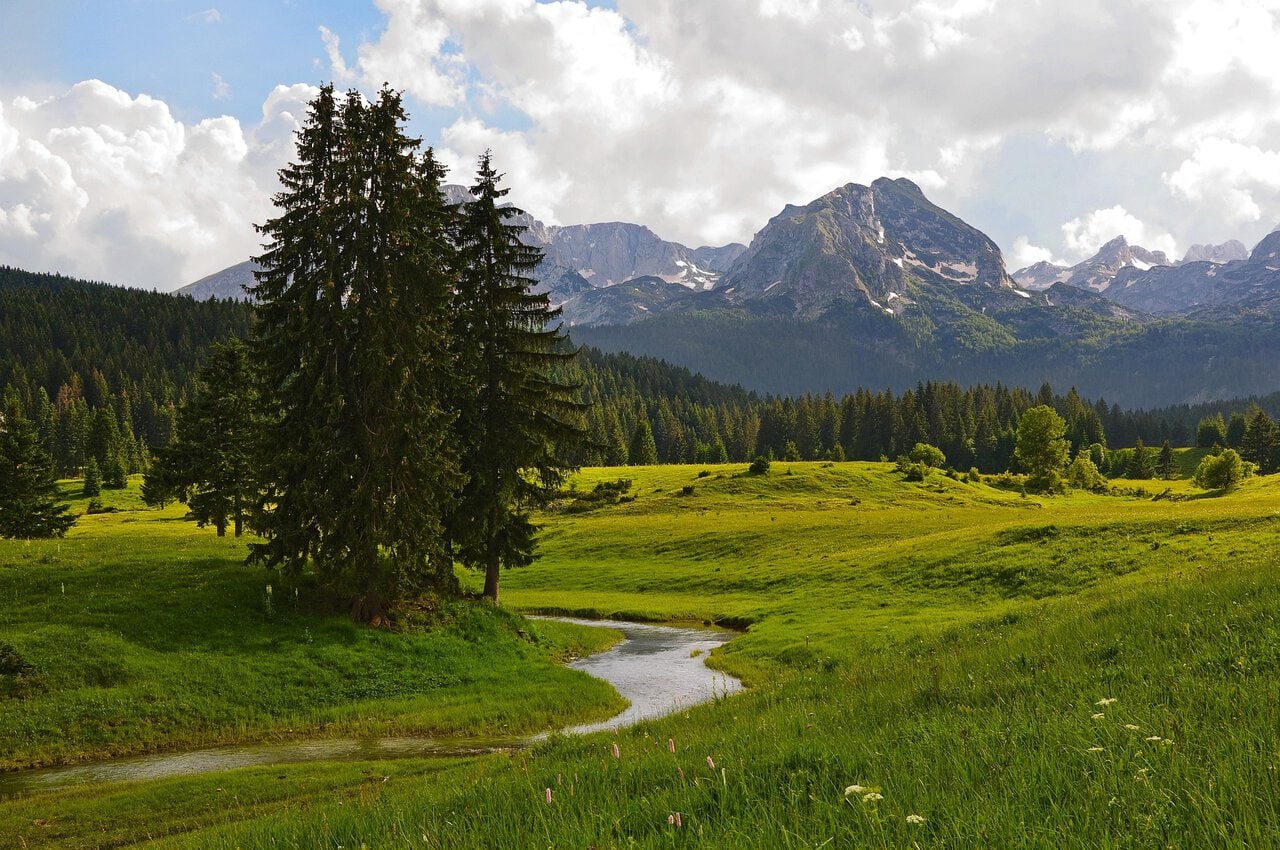
Rising high above the valleys of northern Montenegro, Durmitor National Park is one of the country’s true natural treasures, and a UNESCO World Heritage Site to boot. This vast protected landscape holds towering limestone peaks, crystal-clear glacial lakes, ancient forest and the breathtaking Tara River Canyon, adding up to one of the finest outdoor destinations anywhere in Europe.
Unlike Montenegro’s Adriatic coastline, where the focus is beaches and historic old towns, Durmitor is all about dramatic mountain scenery and genuinely memorable adventure. People come here to hike through alpine meadows, raft down turquoise rivers, stand on panoramic summits and wander landscapes that still feel largely untouched by modern development.
At the heart of the park sits Žabljak, the highest town in the Balkans. Sitting at almost 1,500 metres, it’s the natural base for exploring the surrounding wilderness, with easy access to the park’s best-known attractions, including Black Lake, Bobotov Kuk and the world-famous Tara River Canyon.
Whether you’re after a gentle lakeside walk, an adrenaline-filled rafting trip or simply some of the most spectacular scenery anywhere in the Balkans, Durmitor shows off a genuinely different side of Montenegro to the one most visitors picture, and it deserves a proper slot in any Montenegro itinerary, including our own 14-Day Montenegro Itinerary.
The contrast with the coast is genuinely part of the appeal. After a week of beaches, cruise ports and old town alleys, arriving in Durmitor feels like stepping into an entirely different country, thinner air, pine forest, and mountains that stay snow-capped well into early summer.
Learn More from UNESCO
This destination is connected to a UNESCO World Heritage Site, recognised for its outstanding cultural, historical, or natural importance. You can explore official listings, background information, and protected heritage sites through UNESCO’s global database.
Why Durmitor Deserves a Place on Your Montenegro Trip
Few places in Europe pack such a variety of landscape into a relatively compact area. Durmitor combines rugged mountain peaks, dense pine forest, deep river canyons, peaceful glacial lakes and traditional mountain villages, making it a genuine paradise for anyone who enjoys spending time outdoors.
One of the biggest draws is simply the sense of space. Even in the height of summer, it’s easy to leave the crowds behind and spend hours walking through quiet forest or across alpine plateau surrounded by mountain views on every side. That feeling of genuine wilderness is what separates Durmitor from Montenegro’s busier coastal destinations.
Adventure plays a big role too. You can go white water rafting, ziplining, hiking, cycling, canyoning, horse riding, and even skiing come winter. Few national parks anywhere in the Balkans offer this range of outdoor activity in one place.
That said, Durmitor isn’t only for hardened adventurers. Families, photographers and anyone simply after peaceful scenery will find plenty here too, from an easy walk around Black Lake to scenic drives, wildlife spotting and mountain restaurants serving genuinely hearty Montenegrin cooking.
It’s also considerably cheaper than the coast in peak season, since Žabljak hasn’t seen the same tourism boom as Kotor or Budva. Accommodation, food and guided activities all tend to work out noticeably better value here than along the Adriatic.
It also rewards repeat visits in a way few Montenegrin destinations do, since summer hiking and winter skiing feel like almost entirely different trips to the same place.
Compare hotels and other places to stay for your trip.
Check availabilityBrowse apartments, homes and self-catering accommodation.
Browse rentalsCompare hotel deals from multiple booking sites in one search.
Compare pricesBlack Lake (Crno Jezero): Durmitor’s Most Photographed Spot
Without much competition, the most famous attraction in Durmitor is Black Lake, known locally as Crno Jezero. A short walk from Žabljak, this glacial lake sits surrounded by towering pine forest and dramatic peaks, and it’s easily one of Montenegro’s most photographed landscapes.
Despite the name, the lake isn’t actually black. The dark tone comes from the reflection of the surrounding evergreen forest, and on a sunny day the water often shifts between deep blue, emerald green and clear turquoise depending on where you’re standing.
A well-maintained trail circles the entire lake, making it accessible for pretty much any visitor. The full loop takes around one to one-and-a-half hours, with plenty of natural stopping points for photos and uninterrupted views across the water towards the mountains.
Through the warmer months, you can hire a rowing boat, have a picnic on the shore, or simply sit and take in one of the more peaceful natural settings in the country. If you’re only in Durmitor for a single day, Black Lake genuinely should sit at the top of your list.
Arrive early morning if you want the lake at its calmest, before the day’s visitors arrive and while the surface is often still enough for a genuinely perfect reflection of the mountains behind it.
A small kiosk near the main entrance sells hot drinks and snacks, useful if you’d rather not carry everything with you for the full loop around the shoreline.
The Tara River Canyon: Europe’s Deepest Canyon
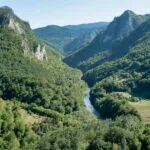
One of the great natural wonders of Europe runs along the eastern edge of Durmitor. The Tara River Canyon stretches more than 80 kilometres and reaches depths of roughly 1,300 metres, making it the deepest canyon in Europe and the second deepest anywhere in the world after the Grand Canyon.
Carved over thousands of years by the Tara River, the canyon is known for dramatic cliffs, dense forest and brilliantly turquoise water. The river itself is often described as one of the cleanest in Europe, with visibility extending several metres beneath the surface on a clear day.
Several scenic viewpoints let you take in the scale of the canyon, and the famous Đurđevića Tara Bridge offers one of the finest panoramas anywhere in Montenegro. Standing high above the river with mountains stretching off into the distance is genuinely one of those views that photos never quite do justice.
Whether you admire it from above, hike through the surrounding landscape, or experience it from the water on a rafting trip, the Tara River Canyon is one of Montenegro’s absolute highlights, and our dedicated Tara River Canyon guide covers it in far more depth if you’re planning to spend real time there.
A handful of small viewpoints along the canyon rim are easy to reach by car, so even visitors without the time or fitness for a longer hike can still take in genuinely spectacular views without much effort.
White Water Rafting on the Tara River
For a lot of visitors, rafting the Tara is the single highlight of a Durmitor trip. The crystal-clear river runs straight through the canyon, making this one of Europe’s premier rafting destinations and a genuinely unforgettable way to experience Montenegro’s wilder side.
Trips range from gentle, scenic floats suited to complete beginners through to proper white water during spring, when snowmelt from the surrounding mountains swells the river considerably. By summer, conditions calm down again, making it suitable for families and first-timers who’d rather ease into the experience.
As you head downstream, you’ll pass beneath towering limestone cliffs, through quiet forested stretches and under the Đurđevića Tara Bridge itself, surrounded the whole way by some of the cleanest river water you’ll find in Europe. Many trips also build in a swim stop, a pause at a secluded beach, and a traditional Montenegrin lunch once you’re back on dry land.
Book ahead if you can, particularly between June and September when demand peaks. Most operators include all safety equipment, an experienced guide and transport to the launch point, so it’s one of the easiest adventure activities to organise once you’re in the area.
Most rafting sections run for around two to three hours on the water, which is enough to properly experience the canyon without becoming exhausting for less experienced paddlers in the group.
Wetsuits are usually included in the price, even in summer, since the water stays cold year-round regardless of the air temperature above it.

Hiking Trails Across Durmitor’s 50 Peaks
With more than 50 distinct peaks, countless marked trails and dramatic scenery at pretty much every turn, Durmitor ranks among the best hiking destinations in the Balkans. Whether you want an easy lakeside stroll or a proper mountain ascent, there’s a route to match.
The Black Lake loop is the most popular, taking around one to one-and-a-half hours and suiting almost any visitor. It runs through pine forest with constantly shifting views across the water towards the surrounding mountains, and it’s a genuinely good introduction to the park if you’re short on time.
More experienced hikers tend to head for Bobotov Kuk, Durmitor’s highest peak at 2,523 metres. Reaching the summit is a full day out and needs decent fitness, but the reward is one of the best panoramas in the country, sweeping across rugged ranges and deep valleys in every direction.
Other routes lead to hidden glacial lakes, dramatic viewpoints and the genuinely curious Ice Cave (Ledena Pećina), where snow and ice linger for much of the year despite the summer heat elsewhere in the park. Whatever trail you choose, decent boots, plenty of water and weather-appropriate layers are essential, since mountain conditions here can shift fast.
A local guide is worth hiring for the longer routes, both for safety and because they tend to know which viewpoints are worth the small detour that isn’t always obvious from the marked trail alone.
Trail difficulty is generally well signposted in English as well as Montenegrin, which makes independent hiking considerably more approachable than in some of the country’s more remote areas.
Đurđevića Tara Bridge: A 1940s Engineering Landmark
Standing high above the Tara River Canyon, the Đurđevića Tara Bridge is one of Montenegro’s most recognisable landmarks. When it opened in 1940, it was one of the largest concrete arch bridges anywhere in Europe, and it remains a genuinely impressive piece of engineering today.
The bridge spans around 365 metres and sits more than 170 metres above the Tara River, with views in every direction. Looking straight down into the turquoise water far below is the kind of moment that sticks with you, and the surrounding mountains only add to what’s already one of Montenegro’s best photo spots.
You can walk the entire bridge free of charge, stopping at several viewpoints along the way to take in the canyon below. Information boards cover its history, including its role during the Second World War, when part of the structure was deliberately destroyed to slow advancing forces before it was later rebuilt.
Whether you’re here for the views, the history or simply to appreciate one of Europe’s genuinely great engineering landmarks, the bridge is an essential stop on any Durmitor visit and pairs naturally with a zipline ride or rafting trip launching from nearby.
A small café and a few souvenir stalls sit at one end of the bridge, making it an easy stop even if you’re only passing through on the way to Žabljak rather than stopping specifically for the view.
Visiting early morning avoids the tour buses that tend to arrive from Žabljak and the coast from mid-morning onwards, giving you a noticeably quieter walk across.
Ziplining Across the Tara Canyon
If walking across the bridge doesn’t feel exciting enough, you can see the canyon from an entirely different angle on one of the Tara Canyon ziplines. Launching from platforms close to the bridge, these rides send you soaring high above the river, with panoramic views the whole way down.
Several operators run out of the area near the bridge, offering rides of varying length and speed. Staff provide all the safety equipment and a full briefing beforehand, so it’s approachable even if you’ve never ziplined before and aren’t entirely sure what to expect.
As you glide across, you get sweeping views of the river, the surrounding forest and the limestone cliffs that make this stretch of Montenegro so dramatic. It’s genuinely exhilarating, and one of those activities that photos from the ground simply can’t capture properly.
The ziplines get busy through summer, so booking ahead between June and September is worth doing if you specifically want a slot. For anyone looking to add a bit of adrenaline to an otherwise scenic mountain trip, it’s hard to beat.
Weight limits and minimum ages typically apply, so it’s worth checking the specific operator’s requirements in advance if you’re travelling with children or an older relative who wants to join in.
Photos and video from the ride are usually available to purchase afterwards, worth considering since capturing the moment yourself mid-zipline isn’t really practical.
Search routes and flight options for your journey.
Search flightsUse an eSIM to get online without hunting for a local SIM after arrival.
See eSIM optionsArrange a private pickup before travel instead of sorting transport after landing.
Book a transferŽabljak: The Highest Town in the Balkans
Known as the highest town in the Balkans, Žabljak is the main gateway to Durmitor and the natural base for exploring the surrounding mountains. At almost 1,500 metres, it has a relaxed alpine feel, with mountain restaurants, cosy cafés and decent visitor facilities all within easy walking distance of each other.
Although it’s a small town, Žabljak has most of what visitors actually need, including hotels, guesthouses, apartments, supermarkets, equipment hire shops and the Durmitor National Park Visitor Centre. It’s also where a lot of guided hikes, rafting trips and jeep safaris begin, so it’s a sensible place to arrange activities once you’ve arrived.
After a day in the mountains, Žabljak’s restaurants are the natural place to try proper Montenegrin mountain cooking. Local specialities include grilled meats, homemade stews, fresh trout, mountain cheeses and traditional pastries, usually served with local wine or a shot of rakija to finish.
Whether you’re stopping for one night or basing yourself here for several days, Žabljak gets the balance right between convenience and genuinely spectacular mountain scenery, and our dedicated Žabljak guide covers the town itself in more detail.
Evenings here are noticeably cooler than on the coast, even in August, so it’s worth packing a warm layer regardless of how hot your Montenegro trip has been so far.
Card payment is increasingly common, though smaller guesthouses and mountain restaurants still sometimes prefer cash, so it’s worth carrying some just in case.
Wildlife and Nature Across Durmitor’s Forests
Durmitor is famous for its landscapes, but it’s also one of the more important wildlife habitats in the Balkans. Ancient forest, alpine meadow, glacial lakes and remote valleys together support an impressive range of plants and animals, some of which are genuinely rare elsewhere in Europe.
The park is home to brown bears, wolves, wild boar, red deer and foxes, though these larger mammals are naturally shy and only occasionally spotted by visitors. Squirrels, hares and various smaller woodland species are far more commonly seen around Black Lake and the higher slopes.
Birdwatchers have plenty to look for too, with golden eagles, peregrine falcons, owls, woodpeckers and countless songbirds living throughout the park. Come spring and summer, the alpine meadows fill with hundreds of wildflower species blooming beneath the limestone peaks, which is worth timing a visit around if botany interests you.
This biodiversity is a big part of why Durmitor earned UNESCO World Heritage status in the first place, protecting these landscapes for the long term rather than just for the benefit of this season’s visitors.
If wildlife photography is a genuine priority, dawn and dusk around the forest edges near Black Lake tend to be the most productive times, when larger mammals are more likely to be moving between cover.
Rangers at the visitor centre in Žabljak can point out recent sightings and the best current trails for spotting particular species, which is worth asking about on arrival.
Durmitor in Winter: Skiing, Snow and Frozen Lakes
Most visitors arrive during the warmer months, but Durmitor genuinely transforms into one of Montenegro’s premier winter destinations once the snow starts falling.
From December through March, the mountains around Žabljak are blanketed in snow, ideal for skiing, snowboarding, snowshoeing and cross-country skiing. The nearby Savin Kuk Ski Centre has pistes for beginners and intermediates, plus equipment hire and lifts serving the surrounding slopes.
Even without any interest in winter sports, the snowy forest and frozen lake create a genuinely different landscape. Walking around Black Lake after fresh snowfall barely resembles the same walk in summer, and photographers in particular tend to get some of their best Montenegro shots during this season.
Winter is also one of the quietest times to visit overall, letting you enjoy the mountains without the crowds that arrive through the main hiking season, which suits anyone who’d rather have the trails largely to themselves.
Roads into Žabljak are generally kept clear through winter, though snow chains are worth carrying if you’re driving yourself, since conditions on the higher passes can turn quickly after fresh snowfall.
Equipment hire at Savin Kuk is straightforward for visitors without their own gear, and lessons are available for anyone trying skiing or snowboarding for the first time.
Piva Lake and Other Side Trips from Durmitor
If you have a car and a spare afternoon, Piva Lake is well worth the detour. This striking turquoise reservoir sits a little west of Žabljak, ringed by steep canyon walls and dotted with small islands, and the drive there is genuinely as good as the destination itself.
The Piva Monastery, relocated stone by stone when the original site was flooded for the reservoir, sits just above the lake and is worth the short stop if you’re already in the area. Combine it with a scenic drive along the Piva Canyon road, and you’ve got a genuinely rewarding half-day out from Žabljak without needing to plan much in advance.
The drive between Žabljak and Piva Lake takes around an hour, and combining it with a stop at the monastery makes for an easy, unhurried day that doesn’t need much advance planning beyond a full tank of fuel.
Photographers in particular tend to rate the lake’s colour, an almost unnatural turquoise against the grey canyon walls, as one of the more underrated sights in northern Montenegro.
Getting to Durmitor National Park from Podgorica and the Coast
Despite its remote mountain setting, Durmitor is relatively easy to reach from most of Montenegro, though travelling by car gives you by far the greatest flexibility.
| Starting Point | Bus | Car | Typical Journey |
|---|---|---|---|
| Podgorica | ✔ | ✔ | Around 2½ hours |
| Kotor | ✔ | ✔ | Around 3½ hours |
| Budva | ✔ | ✔ | Around 3½ hours |
| Bar | ✔ | ✔ | Around 3½–4 hours |
| Tivat | ✔ | ✔ | Around 3½ hours |
There’s no railway station in Žabljak, so visitors relying on public transport generally use one of the regular long-distance buses from Podgorica, Nikšić, Kotor, Budva or Bar. Journey times are longer than driving, but the routes themselves are genuinely scenic, passing through mountains, forest and small traditional villages.
If you’re driving, the roads into Durmitor rank among the most spectacular in the Balkans. Winding mountain passes, deep valleys and viewpoint after viewpoint make the journey part of the experience rather than just a means of getting there. Parking is available at Black Lake, in Žabljak itself, and at most of the park’s main attractions.
If you’re planning to cover several parts of northern Montenegro, hiring a car is genuinely worth it, letting you combine Durmitor, the Tara River Canyon, Piva Lake and other mountain highlights at your own pace rather than working around bus timetables.

Check Bus Routes for Durmitor with Busbud
If your plans include travelling by bus to or from Durmitor, Busbud provides a convenient way to search routes and compare tickets.
Instead of checking individual operator websites, you can see several options together and choose the journey that best fits your itinerary.
See Northern Montenegro on a Guided Day Tour
If you’re staying along Montenegro’s Adriatic coast but don’t want to hire a car, a full-day guided excursion to Durmitor National Park is one of the easiest ways to experience the country’s spectacular mountain scenery. With departures available from Kotor, Tivat, Budva and Herceg Novi, the tour combines some of Montenegro’s most famous natural and cultural landmarks into a single unforgettable day.
Leaving the coast behind, the journey heads north through Montenegro’s rugged interior, stopping first at several panoramic viewpoints overlooking the Bay of Kotor before continuing towards Nikšić, where there’s time to enjoy a traditional Montenegrin breakfast (not included in the tour price).
From there, the scenery becomes increasingly dramatic as you travel into Durmitor National Park, a UNESCO World Heritage Site renowned for its limestone peaks, dense forests and glacial lakes. One of the day’s highlights is a stop at the spectacular Đurđevića Tara Bridge, which spans the breathtaking Tara River Canyon, the deepest canyon in Europe. The viewpoint offers some of the finest scenery in Montenegro and is one of the country’s most photographed locations.
The tour then continues to Black Lake, the best-known of Durmitor’s eighteen glacial lakes. You’ll have time to enjoy the peaceful surroundings and walk part of the scenic trail around the lake before continuing to Žabljak, the highest town in the Balkans at 1,450 metres above sea level. Here there’s time for lunch and an opportunity to experience traditional mountain cuisine before beginning the journey south.
The final major stop is the remarkable Ostrog Monastery, one of Montenegro’s most important pilgrimage sites. Built dramatically into a sheer cliff face, the monastery attracts visitors from around the world and provides a fascinating contrast to the mountain landscapes visited earlier in the day. Arriving during the late afternoon also allows you to experience the monastery in a quieter and particularly atmospheric setting.
The tour includes return transport by modern minibus or coach, an English-speaking guide and entry to Durmitor National Park, while breakfast and lunch are available to purchase during the day. Hotel pickup is available on selected departures, making it an exceptionally convenient option for visitors based on Montenegro’s coast.
With more than 2,200 reviews and an average rating of 4.8 out of 5, this is one of Montenegro’s highest-rated excursions. It’s an excellent choice for first-time visitors who want to experience Durmitor National Park, the Tara River Canyon, Black Lake, Žabljak and Ostrog Monastery without spending more than five hours driving themselves.
We recommend booking in advance, particularly during the summer months, as places on this tour regularly sell out.

Rupert’s Handy Travel Tips
Planning to visit Durmitor National Park? Here are a few tips to help you make the most of your mountain adventure:
- Start early: Whether you’re hiking, visiting Black Lake or heading to the Tara River Canyon, early mornings offer quieter trails, cooler temperatures and the best light for photography.
- Pack layers: Even during the height of summer, temperatures can be surprisingly cool at almost 1,500 metres, especially during the morning and evening.
- Wear proper walking shoes: Many trails are rocky and uneven. Good footwear will make exploring the national park much safer and far more enjoyable.
- Book rafting in advance: White water rafting is one of Montenegro’s most popular outdoor activities, and trips often sell out during the summer holidays.
- Spend at least one night in Žabljak: A day trip barely scratches the surface. Staying overnight gives you time to enjoy Black Lake, the Tara River Canyon and the mountain scenery without rushing.
Want to meet the reindeer behind our travel tips? Find out more in our page Who is Rupert?.




Frequently Asked Questions
Is Durmitor National Park worth visiting?
Absolutely. It’s one of Montenegro’s most spectacular destinations, combining dramatic mountain scenery, glacial lakes, deep canyons, hiking trails and outdoor adventure within a UNESCO World Heritage Site.
How many days do you need in Durmitor National Park?
A day trip is possible, but two to three days is ideal, giving you time for Black Lake, the Tara River Canyon, a proper hike and an activity like rafting or ziplining.
What is Durmitor National Park famous for?
Black Lake, the Tara River Canyon, Bobotov Kuk, excellent hiking trails and some of the finest mountain scenery anywhere in the Balkans.
Can you visit Durmitor National Park without a car?
Yes. Regular long-distance buses connect Žabljak with Podgorica, Bar, Budva, Kotor and other towns, and once there, many attractions are reachable on foot or by local taxi.
Can you swim in Black Lake?
Yes, swimming is allowed in the warmer months, though the water stays refreshingly cold even in summer since it’s fed by mountain streams and snowmelt.
When is the best time to visit Durmitor National Park?
June to September is best for hiking, rafting and general sightseeing, while December to March suits skiing and snow-covered mountain scenery.
Is Durmitor suitable for families?
Yes. Families can enjoy easy walks around Black Lake, scenic viewpoints, wildlife spotting and gentle outdoor activity, while older children often love rafting and the Tara Canyon zipline.
Do you have to pay to enter Durmitor National Park?
Yes, there’s a national park entrance fee that helps maintain trails and facilities. It’s worth checking current prices on the National Parks of Montenegro website before your visit, as the authority publishes its official price list in Montenegrin only and rates can change year to year.
Can beginners go white water rafting on the Tara River?
Yes. Many trips are designed specifically for beginners and families, with experienced guides providing all safety equipment and instruction beforehand.
Is Durmitor National Park a UNESCO World Heritage Site?
Yes, it was inscribed for its outstanding mountain landscapes, glacial lakes, forests and the spectacular Tara River Canyon.
Further Reading
Durmitor’s own backyard deserves a closer look too, Žabljak is your base for the park, and the Tara River Canyon sits right on its doorstep, both are worth reading alongside this one.
Come winter, this same stretch of mountains becomes Montenegro’s most scenic ski area. Our Savin Kuk Ski Resort guide covers skiing beneath Durmitor’s peaks in full, and the wider Best Ski Resorts in Montenegro guide is a good starting point if you’re comparing it with the Kolašin resorts further east.
Once you’re heading back down to the coast, Kotor, Budva and the Tivat Airport transfer guide cover the next stage of most trips, and this breakdown of the bus network is useful if you’re not driving.
Further south, Lake Skadar and Bar both make sense as onward stops, and if you’re arriving in the country by train rather than road, this scenic railway guide is worth a read.
For the bigger picture, this 14-day route shows how the mountains around Durmitor connect with the rest of the country.