Reviewed by our editorial team Updated
Why You Don’t Need A Car In Montenegro
One of the biggest surprises for first-time visitors is just how easy it is to explore Montenegro without hiring a car. Although the country is famous for its dramatic mountain roads and spectacular coastal drives, an extensive network of buses, trains, ferries and airport transfers connects most of the destinations that travellers want to visit.
For many visitors, travelling by public transport is actually the more relaxing option. Instead of navigating unfamiliar mountain roads or searching for parking in busy coastal towns such as Kotor and Budva, you can simply sit back and enjoy some of the most beautiful scenery in the Balkans.
The country’s compact size is another major advantage. Travelling from Podgorica to Budva takes around an hour, while Kotor, Bar, Lake Skadar National Park, Cetinje and Ulcinj are all within comfortable day-trip distance using public transport. Even longer journeys, such as the spectacular Belgrade–Bar Railway, become part of the travel experience rather than simply a way of getting from A to B.
That said, public transport isn’t perfect. Some of Montenegro’s most spectacular places, including parts of Lovćen National Park, Durmitor National Park, Tara River Canyon and Ada Bojana, are easier to reach by car or organised tour. This guide explains where public transport works brilliantly, where it has limitations and how to plan your journey with confidence.
Whether you’re travelling on a budget, avoiding the stress of driving or simply wanting a more sustainable way to explore, Montenegro is one of the easiest countries in the Balkans to discover without a car.
Understanding Montenegro’s Public Transport Network
Although Montenegro is a relatively small country, it has a surprisingly comprehensive public transport system that allows visitors to travel between most towns and major attractions with ease.
The bus network forms the backbone of public transport and reaches almost every town, village and tourist destination. If you’re travelling between Budva, Kotor, Podgorica, Bar, Ulcinj, Herceg Novi, Cetinje or Nikšić, buses are usually the quickest and most frequent option.
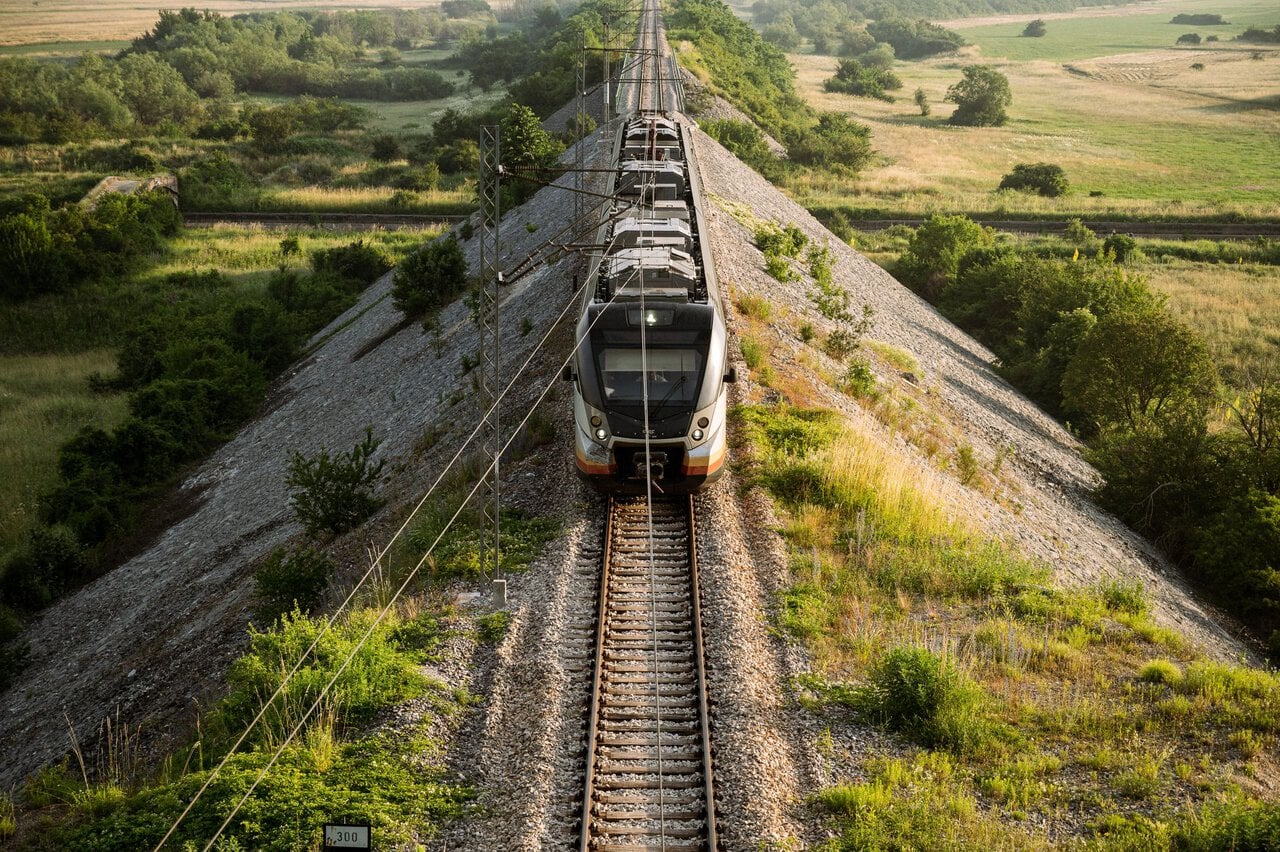
The railway is smaller but offers one of Europe’s greatest rail journeys. The famous Belgrade–Bar Railway crosses mountains, deep canyons and hundreds of bridges before reaching the Adriatic coast, while regular domestic trains connect Podgorica, Bar, Nikšić, Bijelo Polje and Podgorica Airport.
Several ferry services also play an important role. International ferries link Bar with Italy, while local ferries across the Bay of Kotor provide useful shortcuts for both residents and visitors.
Finally, both Podgorica Airport and Tivat Airport offer a variety of transport options including airport shuttles, trains, taxis, private transfers and car hire, making it easy to continue your journey immediately after landing.
Understanding when to use each form of transport is the key to travelling efficiently around Montenegro. In general, buses provide the widest coverage, trains offer the most scenic journeys, ferries save time in specific locations and airport transfers provide the simplest option after a flight.
For a much deeper look at any single mode of transport, our dedicated guides to the Belgrade to Bar Train, Kamenari-Lepetane Ferry, Podgorica Airport Transfers and Tivat Airport Transfers go into far more detail than we can cover in a single overview.
Browse hotels and accommodation for your visit to Montenegro.
View staysBrowse apartments, holiday homes and self-catering stays in Montenegro.
View rentalsSee hotel prices from multiple booking sites in one search.
Compare ratesMontenegro’s Bus Network
If there’s one form of transport that almost every visitor will use, it’s the bus. Montenegro’s bus network is extensive, affordable and reaches virtually every major town, making it the easiest way to travel around the country without hiring a car.
Unlike many European countries, there isn’t a single national bus company. Instead, services are operated by a number of private companies including Glušica, Božur, Blue Line, Lens, Zejdin Tours, Royal Travel, Pavićević, Simon Voyages and several regional operators. Although this may sound complicated, passengers don’t normally need to worry about which company they’re travelling with, as departures are listed together at each bus station.
The busiest routes operate between Podgorica, Budva, Kotor, Bar, Herceg Novi, Ulcinj, Nikšić and Cetinje, with departures often running every 30 to 60 minutes during the day. Popular tourist routes become even more frequent during the summer season.
Buses are generally modern, comfortable and air-conditioned, particularly on the main intercity routes. Most have dedicated luggage compartments beneath the coach, although it’s common for a small luggage fee to be charged separately, usually €1 to €2 per suitcase.
Tickets can be purchased in several ways. The easiest is at the bus station ticket office, although many routes also allow you to buy directly from the driver if seats remain available. Increasingly, journeys can also be booked online through platforms such as Omio, allowing you to compare operators, departure times and prices before you travel.
Fares remain excellent value. A journey from Podgorica to Budva typically costs around €8–10, while Kotor to Budva is usually around €4–6. Even longer journeys rarely exceed €15–20, making buses by far the most economical way to explore Montenegro.
For most visitors, the bus network will form the backbone of their Montenegro itinerary, providing reliable, inexpensive connections between almost every major destination in the country.

Plan Your Bus Journey with Omio
Booking bus tickets can be a simple and affordable way to travel between cities, especially on routes where trains are expensive or less direct. Omio lets you compare bus routes, check timetables, and buy tickets in one place.
It is ideal for budget travel, intercity journeys, and travellers who want to compare practical transport options before booking. Instead of checking multiple operator websites, you can plan faster and book with confidence.
Montenegro’s Railway Network
Although Montenegro’s railway network is much smaller than its bus system, it offers some of the most scenic train journeys in Europe and is well worth including in your travel plans wherever possible.
The country’s rail services are operated by Željeznički prevoz Crne Gore (ŽPCG), Montenegro’s national passenger railway company. Trains are comfortable, inexpensive and generally reliable, although services are less frequent than buses, so checking timetables before travelling is always recommended.
The star attraction is undoubtedly the legendary Belgrade–Bar Railway. Stretching for 476 kilometres, this remarkable line links the Serbian capital with the Adriatic coast, crossing 435 bridges, passing through 254 tunnels and climbing high into the mountains before descending towards the sea. Many rail enthusiasts consider it one of Europe’s greatest railway journeys, with spectacular views of the Morača Canyon, deep gorges, dramatic mountain scenery and the famous Mala Rijeka Viaduct, one of the highest railway bridges in Europe.
Within Montenegro, the railway provides several particularly useful routes for visitors.
The Podgorica–Bar line is one of the country’s busiest, taking around one hour and providing an excellent alternative to the road. It’s ideal for travellers heading to Bar Ferry Port, the Adriatic beaches or the historic Old Bar.
Another important route connects Podgorica with Nikšić, Montenegro’s second-largest city. Modern trains operate several times each day, with journey times of approximately one hour, making it an easy destination for a day trip.
Heading north, trains continue through Kolašin, Mojkovac, Bijelo Polje and onwards towards Belgrade, passing some of Montenegro’s most dramatic mountain landscapes. Although buses often provide faster connections for tourists travelling between coastal destinations, the railway offers scenery that simply can’t be experienced by road.
Tickets are refreshingly affordable. Most domestic journeys cost between €2 and €6 (approximately £1.75–£5.25 or US$2.30–$7), depending on distance and train type. Tickets can be purchased from station ticket offices, onboard many trains where ticket offices aren’t available, through the official ŽPCG website, or via selected third-party booking platforms.
For anyone who enjoys train travel, Montenegro’s railway is much more than just transport. It’s one of the country’s attractions in its own right.
Ferry Services
While buses and trains carry the vast majority of passengers around Montenegro, ferries provide several useful connections that can both save time and add a memorable experience to your journey.
The country’s principal international ferry terminal is located in Bar, where seasonal services connect Montenegro with Bari in southern Italy. These ferries allow passengers to travel with cars, motorcycles and bicycles, making them particularly popular with visitors touring Europe. Overnight sailings also provide a comfortable alternative to flying between the Balkans and Italy.
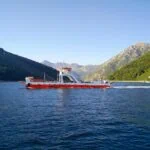
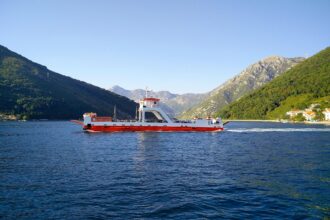
Within the Bay of Kotor, the most important service is the Kamenari–Lepetane Ferry, operated by Morsko Dobro. Running 24 hours a day, this short crossing takes only around 10 minutes and saves drivers from making the much longer journey around the head of the bay. During the summer months, ferries depart every few minutes, making waiting times relatively short despite heavy traffic.
Visitors exploring the bay will also find numerous local passenger boats linking destinations such as Kotor, Perast and Our Lady of the Rocks. While these are aimed primarily at tourists rather than commuters, they’re an enjoyable way to experience the spectacular scenery from the water and are often one of the highlights of a visit.
Although ferries form only a small part of Montenegro’s overall public transport network, they provide valuable connections and are well worth considering when planning your itinerary.
For a full breakdown of exactly how the crossing works, current operating hours and what to expect if you’re driving during peak season, our dedicated Kamenari-Lepetane Ferry guide covers everything you need to know before joining the queue.

Airport Public Transport
Both of Montenegro’s international airports offer good onward transport, although the options available differ slightly between them.
Podgorica Airport provides the greatest choice. Visitors can travel into the city using the MS Tours Airport Shuttle, take a train from nearby Aerodrom Station on the Belgrade–Bar Railway, use official taxis, pre-book private transfers or hire a car directly from the terminal. This makes Podgorica one of the easiest airports in the Balkans from which to continue your journey using public transport.
Tivat Airport has a different setup. There is no railway station and no dedicated airport shuttle, but frequent intercity buses pass along the Adriatic Highway just outside the airport entrance. Reaching the roadside bus stop requires a walk of around 300–500 metres, after which buses heading towards Kotor, Budva, Herceg Novi, Bar and Ulcinj can usually be flagged down. Official taxis and private transfers remain the simplest option for many visitors, particularly those arriving with luggage.
If you’re planning to rely entirely on public transport during your holiday, Podgorica Airport generally offers the better transport connections. However, if your accommodation is in Kotor, Perast, Tivat or elsewhere around the Bay of Kotor, flying into Tivat Airport often results in a much shorter onward journey.
Our dedicated Podgorica Airport Transfers and Tivat Airport Transfers guides cover every option available at each airport in far more depth, including approximate costs, booking advice and which choice suits different types of traveller.
Whichever airport you fly into, it’s worth checking your flight’s arrival time against the last realistic bus, shuttle or train departure of the day, since options thin out noticeably after early evening, particularly outside the summer season.
Buying Public Transport Tickets
One of the best things about travelling around Montenegro is that buying tickets is generally straightforward. Whether you’re travelling by bus, train or ferry, there are several convenient ways to purchase your journey depending on how far ahead you’re planning.
For intercity buses, the most common option is to buy your ticket at the bus station ticket office before departure. Major stations such as Podgorica, Budva, Kotor, Bar and Herceg Novi all have staffed ticket counters where you’ll find departures from multiple operators displayed on electronic boards. During the busy summer season it’s sensible to arrive 20 to 30 minutes before departure, particularly for popular coastal routes.
Many bus companies also allow passengers to buy tickets directly from the driver, provided seats are still available. This is particularly common on quieter routes, although buying at the station is generally recommended if you’re travelling during July or August.
If you prefer to organise everything before travelling, online booking has become much easier in recent years. Platforms such as Omio allow you to compare operators, departure times, journey durations and ticket prices for many of Montenegro’s most popular routes before purchasing your ticket electronically. It’s one of the easiest ways for international visitors to plan journeys without worrying about language barriers.
Train tickets can be purchased from ŽPCG station ticket offices, onboard many services where ticket offices aren’t available, or through the official railway website for selected routes. Domestic rail tickets are inexpensive and reservations are generally unnecessary, although international services such as the Belgrade–Bar Railway are best booked in advance during the summer.
For ferries, ticket arrangements vary. The Kamenari–Lepetane Ferry simply charges vehicles and passengers as they arrive, while tickets for international ferries from Bar should be booked well in advance, particularly if travelling with a vehicle.
Most ticket offices accept cash in euros, while larger stations increasingly accept credit and debit cards. Even so, carrying a small amount of cash remains advisable, particularly when travelling through smaller towns or purchasing tickets directly from drivers.
The Best Public Transport Routes In Montenegro
These routes give a general sense of how the network fits together, but it’s always worth building in a little flexibility, especially on longer cross-country journeys like Podgorica to Kotor or Herceg Novi, where buses can fill up during peak summer weeks. Booking or arriving at the station a little earlier in July and August is a sensible habit, and pairing a bus leg with a short taxi or transfer at either end often works out cheaper and more convenient than trying to force a single vehicle to cover the whole trip, particularly if your accommodation sits away from the main terminal.
Some routes are particularly easy to travel using public transport and are ideal for visitors exploring Montenegro without a car.
| Route | Best Transport | Typical Journey | Frequency |
|---|---|---|---|
| Podgorica ↔ Budva | Bus | Around 1 hour | Every 30–60 minutes |
| Podgorica ↔ Bar | Train or Bus | Around 1 hour | Hourly or better |
| Podgorica ↔ Lake Skadar (Virpazar) | Train | Around 30 minutes | Several daily services |
| Budva ↔ Kotor | Bus | 30–40 minutes | Very frequent |
| Kotor ↔ Herceg Novi | Bus | Around 1 hour | Frequent throughout the day |
| Bar ↔ Ulcinj | Bus | 35–45 minutes | Frequent |
| Podgorica ↔ Cetinje | Bus | Around 45 minutes | Frequent |
| Podgorica ↔ Nikšić | Train | Around 1 hour | Several daily services |
These routes form the backbone of most visitor itineraries and make it possible to explore a large part of Montenegro without needing to drive.
These are the routes worth building an itinerary around if you’re travelling without a car, since they combine frequent departures with reasonably short journey times. Less common combinations are still usually possible, just with a little more planning around timetables and, on some routes, a change partway through the journey.
Timetables can shift slightly between seasons, with summer generally offering more frequent departures than the quieter winter months, so it’s always worth double-checking current times locally or online a day or two before travelling rather than relying purely on the general frequencies shown here.
Search routes and flight options for your trip to Montenegro.
Search flightsChoose an Airalo eSIM and arrange mobile data before you arrive.
Browse eSIMsArrange a private airport pickup for your trip to Montenegro.
Check transfersCan You Visit Montenegro’s Top Attractions Without A Car?
While public transport reaches most towns, some attractions are much easier to access than others.
| Destination | Public Transport | Recommendation |
|---|---|---|
| Podgorica | ✅ Excellent | Train, bus and airport shuttle |
| Budva | ✅ Excellent | Frequent buses |
| Kotor | ✅ Excellent | Frequent buses |
| Perast | ✅ Good | Bus then short walk |
| Bar | ✅ Excellent | Train or bus |
| Ulcinj | ✅ Good | Frequent buses |
| Lake Skadar National Park | ✅ Excellent | Train to Virpazar |
| Cetinje | ✅ Good | Regular buses |
| Herceg Novi | ✅ Good | Regular buses |
| Ostrog Monastery | ⚠ Possible | Train or bus plus taxi/walk |
| Lovćen National Park | ⚠ Limited | Best by organised tour or car |
| Žabljak | ⚠ Limited | Bus available but infrequent |
| Durmitor National Park | ⚠ Limited | Reach Žabljak by bus, then local transport or walking |
| Tara River Canyon | ⚠ Limited | Best with organised tour or car |
| Ada Bojana | ⚠ Limited | Bus to Ulcinj then taxi |
The good news is that most of Montenegro’s major towns and cities are very easy to reach using public transport. The destinations that become more challenging are generally those located deep within the mountains or away from the main transport corridors.
For travellers who don’t wish to hire a car, guided day tours provide an excellent solution for places such as Lovćen National Park, Ostrog Monastery, Durmitor National Park and the Tara River Canyon, while buses and trains comfortably cover the rest of the country.
As a general pattern, coastal towns and destinations directly on the Belgrade–Bar Railway line are the easiest to reach without your own transport, while mountain national parks and remote natural attractions almost always require either a car, a taxi for the final stretch, or an organised tour from a nearby town.
Is Public Transport Better Than Hiring A Car?
The answer depends entirely on the type of trip you’re planning.
If your itinerary focuses on destinations such as Podgorica, Budva, Kotor, Perast, Bar, Ulcinj, Cetinje and Lake Skadar National Park, public transport works extremely well. Buses are frequent, affordable and connect almost every major town, while the railway provides an enjoyable alternative on several key routes.
Public transport also removes many of the challenges associated with driving in Montenegro. You won’t need to worry about navigating unfamiliar mountain roads, finding parking in busy destinations such as Kotor or Budva, or sitting in coastal traffic during the height of summer.
However, hiring a car becomes a much better option if your plans include Lovćen National Park, Durmitor National Park, Tara River Canyon, Ada Bojana or exploring remote mountain villages. Although some of these places can be reached by bus, services are often limited and travelling by car provides far greater flexibility.
For many visitors, the ideal solution is a combination of both. Spend most of your holiday using Montenegro’s excellent buses and trains, then hire a car for a day or two if you want to explore the country’s more remote regions. It’s often cheaper than hiring a vehicle for your entire stay while still giving you access to Montenegro’s most spectacular landscapes.

Rupert’s Handy Travel Tips
Travelling around Montenegro without a car? Here are a few tips to make your journey easier:
- Use buses for most journeys: They reach almost every town in Montenegro and are usually more frequent than trains.
- Take the train whenever you can: The Belgrade–Bar Railway isn’t just transport, it’s one of Europe’s most spectacular rail journeys.
- Book coastal buses early in summer: Routes between Budva, Kotor and Herceg Novi can become very busy during July and August.
- Carry cash for small purchases: While larger stations increasingly accept cards, you’ll often need a few euros for luggage fees, local buses or smaller ticket offices.
- Mix public transport with organised tours: For places such as Lovćen National Park, Durmitor National Park and Tara River Canyon, a guided tour can save time and simplify your journey.
Want to meet the reindeer behind our travel tips? Find out more in our page Who is Rupert?.



Frequently Asked Questions
Can you travel around Montenegro without a car?
Yes. Most visitors can explore Montenegro entirely using buses, trains, ferries, airport transfers and the occasional taxi. Popular destinations including Podgorica, Budva, Kotor, Perast, Bar, Ulcinj, Cetinje and Lake Skadar National Park are all accessible by public transport.
Are buses reliable in Montenegro?
Generally, yes. Intercity buses are the backbone of Montenegro’s transport network and operate frequently between the country’s major towns. During the busy summer season, coastal routes can occasionally experience delays because of traffic, so allowing a little extra time is always sensible.
Is the train worth using?
Absolutely. While the railway doesn’t reach every destination, the Belgrade–Bar Railway is considered one of Europe’s most scenic railways. Domestic routes between Podgorica, Bar, Nikšić and Bijelo Polje are comfortable, affordable and highly recommended.
Can I buy tickets online?
Yes. Many bus journeys can be booked through platforms such as Omio, while train tickets are available from ŽPCG for selected routes. You can also purchase tickets at most stations or directly from the driver on many bus services if seats are available.
Can I pay by card?
Many larger bus stations, railway stations and transport providers accept credit and debit cards, but it’s still advisable to carry some euros in cash. Smaller stations, luggage fees and onboard ticket purchases may sometimes be cash only.
Which airport is best if I’m using public transport?
If you’re relying entirely on public transport, Podgorica Airport generally offers the best connections thanks to its airport shuttle, nearby railway station, buses and central location. However, if you’re staying around Kotor, Perast or Tivat, flying into Tivat Airport usually results in a shorter onward journey.
Can I visit Durmitor National Park without a car?
Yes, although it requires a little more planning. Regular buses connect Podgorica with Žabljak, the gateway to Durmitor National Park. Once there, many of the park’s main attractions can be explored on foot, while organised excursions are available for destinations further afield.
Can I reach Lovćen National Park by public transport?
Not directly. The easiest option is to travel by bus to Cetinje before joining an organised tour or taking a taxi into the national park. Hiring a car also provides much greater flexibility for exploring the mountain roads.
Is Montenegro an expensive country to travel around?
No. Public transport in Montenegro is generally very affordable. Most intercity bus journeys cost between €5 and €15, while many domestic train journeys cost less than €6, making it one of the most budget-friendly countries to explore in Europe.
What’s the best way to see as much of Montenegro as possible?
For most visitors, the ideal approach is to use buses and trains for the main towns and cities, then join guided day tours for attractions such as Lovćen National Park, Ostrog Monastery and Tara River Canyon. This provides the best balance between convenience, cost and flexibility.
Further Reading
A couple of the specific journeys above are worth reading in more depth: the Belgrade to Bar railway and the Kamenari–Lepetane ferry each get their own dedicated guide, and Podgorica and Tivat airport transfers are covered separately too.
Once you’ve arrived somewhere, Podgorica, Budva, Kotor and Perast are four of the easiest destinations to reach by bus or train.
For places that work better with a car or an organised tour instead, Lake Skadar, Durmitor National Park and the Tara River Canyon explain what to expect and the best way to reach each one.
To see how it all fits into a longer trip, this 14-day itinerary ties the coast, the mountains and the national parks together into one route.