Reviewed by our editorial team Updated
The Fastest Way Across The Bay Of Kotor
If you’re planning your own driving itinerary, it’s worth building the ferry into your route from the outset rather than treating it as an afterthought. Many visitors combine the crossing with a wider loop of the coast, perhaps following our Bay of Kotor scenic drive guide on one leg of the journey and using the ferry to shortcut the return trip. Because the terminals sit directly on the main coastal highway, there’s no real planning required beyond allowing a little extra time during the busiest summer weeks.
If you’re driving around Montenegro, there’s one piece of local knowledge that can save you both time and kilometres: the Kamenari–Lepetane Ferry.
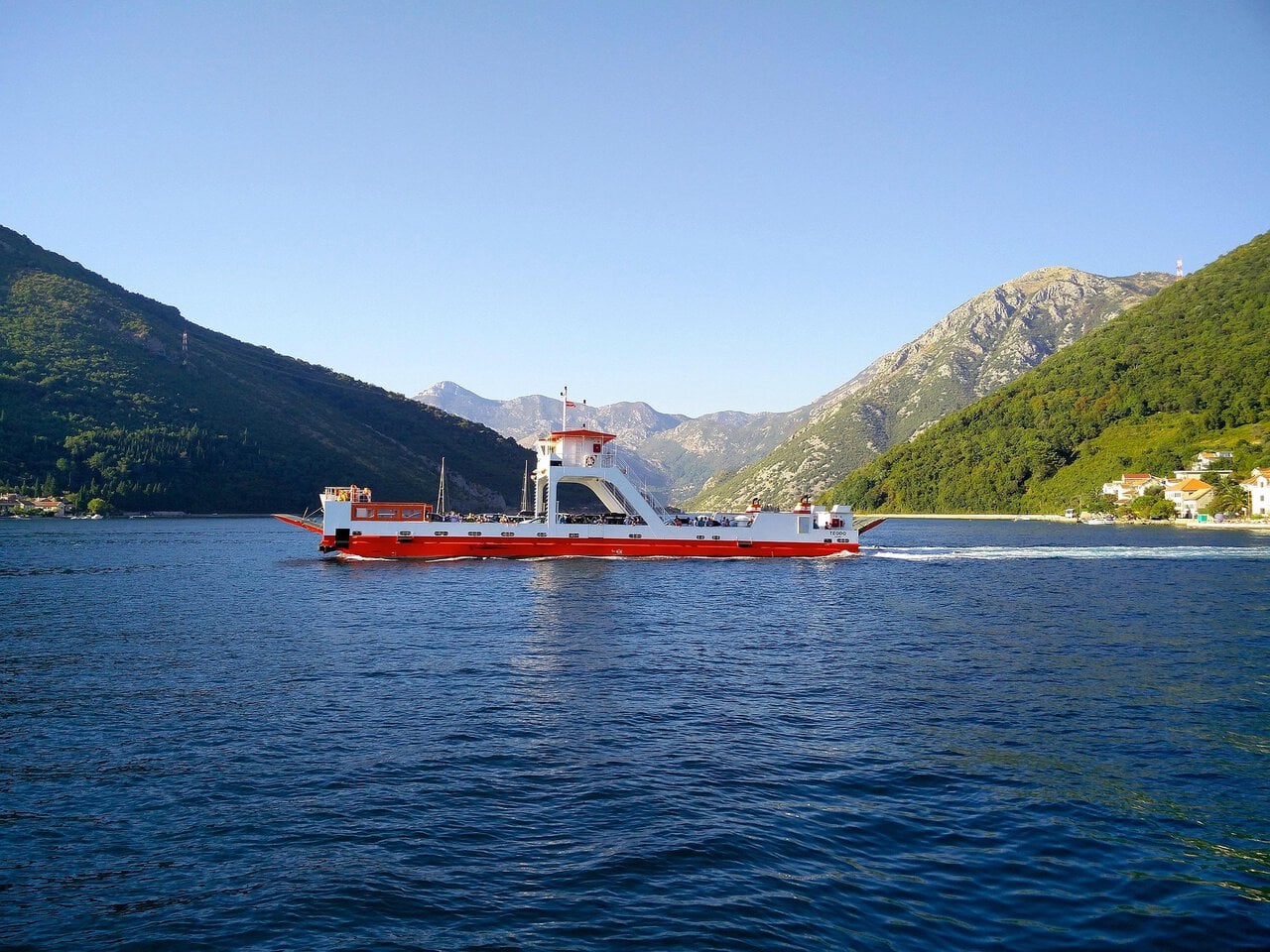
Operating across the narrowest point of the Bay of Kotor, this short vehicle ferry links the villages of Kamenari on the northern shore with Lepetane on the southern side. Instead of following the road all the way around the bay through Herceg Novi, Risan, Perast, Kotor and Tivat, drivers can simply board the ferry and cross the water in around 10 minutes.
For locals, it’s an essential part of everyday life. For visitors, it’s one of the easiest ways to save 30 to 45 minutes of driving while also enjoying one of the most scenic ferry crossings in the Adriatic.
The service carries cars, motorcycles, motorhomes, coaches, cyclists and foot passengers, operating throughout the day and night. Because the crossing is so short and departures are frequent, there’s no need to book in advance for most vehicles.
Whether you’re travelling from Croatia towards Budva, heading between Herceg Novi and Tivat Airport, or simply exploring the spectacular Bay of Kotor, the Kamenari–Lepetane Ferry is often the quickest and most enjoyable route.
Where Does The Ferry Operate?
It’s a good idea to glance at a map before your trip so the crossing doesn’t come as a surprise mid-journey. Drivers heading from Dubrovnik towards Kotor or Tivat will reach the Kamenari terminal naturally along the coastal highway, while those coming from the south will arrive at Lepetane in much the same way. Because signage along the route is clear and the queue is visible well in advance, there’s little risk of missing the turning or taking a wrong road.
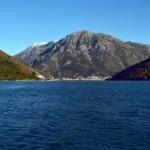
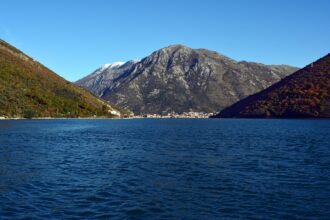
The Kamenari–Lepetane Ferry crosses the Verige Strait, the narrowest section of the Bay of Kotor.
The northern terminal is located in the village of Kamenari, approximately 15 minutes south of Herceg Novi, while the southern terminal sits in Lepetane, just 15 minutes north of Tivat and around 30 minutes from Kotor.
Because both terminals sit directly on the Adriatic Highway (M-1/E65/E80), using the ferry is extremely straightforward. There are no complicated diversions or dedicated ferry roads. Simply follow the main coastal highway and you’ll naturally arrive at the queue for the next departure.
The ferry is particularly useful for journeys including:
The ferry is particularly useful for journeys such as Herceg Novi across to Tivat, Croatia down to Tivat Airport, Croatia further south towards Budva, Herceg Novi to Budva, Herceg Novi up towards Lovćen National Park, and Herceg Novi through to Podgorica. Each of these routes benefits from the roughly ten-minute crossing, which shaves a meaningful chunk of time off what would otherwise be a long loop around the entire bay.
Without the ferry, these journeys require driving all the way around the Bay of Kotor, adding considerable distance and, during the summer, potentially well over an hour to your journey.
See hotel options and places to stay in Kotor.
Browse hotelsBrowse apartments, holiday homes and self-catering stays in Kotor.
View rentalsCompare hotel deals in Kotor from multiple booking sites.
Compare pricesFerry Timetable
Because there’s no fixed schedule to memorise, most travellers simply treat the ferry as part of the road itself rather than a separate journey to plan around. That said, if you’re catching a flight from Tivat Airport or trying to reach a hotel by a specific time, it’s sensible to build in a buffer of fifteen to twenty minutes during July and August, since even a short queue can add up when combined with other traffic along the coast.
One of the biggest advantages of the Kamenari–Lepetane Ferry is that it operates 24 hours a day, 365 days a year.
Unlike many ferry services, there isn’t a traditional timetable with fixed departure times. Instead, ferries shuttle continuously backwards and forwards across the bay throughout the day.
During normal conditions, departures take place approximately every 10 to 15 minutes, while at busy times multiple vessels operate simultaneously to reduce waiting times.
The crossing itself takes around 10 minutes, meaning that even if you arrive just after a ferry has departed, you’re rarely waiting long before boarding the next sailing.
Summer is naturally the busiest period. Between June and September, queues can build during weekends, public holidays and the middle of the day, particularly when holiday traffic is travelling between Croatia, Herceg Novi, Tivat, Budva and the rest of the Montenegrin coast.
Outside the main tourist season, however, many drivers simply arrive, board the next available ferry and continue their journey with little or no waiting time.
Unlike international ferries, advance reservations are not required. Simply join the vehicle queue, purchase your ticket and board when directed by the ferry crew.
Ticket Prices
It’s worth noting that fares are collected in cash euros or by card at the booth rather than online, so there’s no need to pre-purchase tickets or download an app before travelling. Hire car companies rarely include ferry costs in their rental price, so it’s a good idea to keep a few coins or a card handy specifically for the crossing, especially if you’re planning to use the ferry more than once during a longer road trip around the bay.
The Kamenari–Lepetane Ferry is operated by Morsko Dobro and is designed to provide an affordable alternative to driving around the entire Bay of Kotor. Fares are charged per vehicle, while foot passengers travel free of charge, making the crossing excellent value whether you’re driving or exploring on foot.
Typical one-way fares are:
| Vehicle | Typical Fare |
|---|---|
| Foot Passenger | Free |
| Bicycle | Free |
| Motorcycle / Scooter | Around €2 (£1.75 / US$2.35) |
| Car | Around €5 (£4.35 / US$5.85) |
| Car + Trailer | Higher tariff |
| Motorhome / Campervan | Vehicle length dependent |
| Minibus / Coach / HGV | Charged according to vehicle category and length |
For most visitors driving a standard hire car, the crossing costs approximately €5, making it one of the best-value transport services in Montenegro when you consider the distance and time it saves.
Payment is made before boarding at the toll booths beside the ferry queue. Cash (Euros) is always accepted, while bank cards are accepted at most payment booths. During the summer it’s still worth carrying a small amount of cash in case card terminals are temporarily unavailable.
Prices are set by the operator and may occasionally change, particularly for commercial vehicles, but private vehicle fares have remained very reasonable compared with the fuel and time required to drive around the bay.
Taking A Car On Board
First-time users sometimes worry about the loading process, but in practice the crew are highly experienced at directing traffic and the whole procedure rarely takes more than a couple of minutes once it’s your turn to board. There’s no need to reverse or manoeuvre into a tight space yourself, since staff will guide you into position. Pets travelling in vehicles are generally fine to remain in the car for the short crossing, and windows can be left open to enjoy the sea air during the ten-minute journey.
Using the ferry couldn’t be much simpler, even if it’s your first time.
As you approach either Kamenari or Lepetane, you’ll simply join the clearly marked vehicle queue. Staff direct traffic towards the next available ferry, and vehicles are loaded efficiently to maximise space onboard.
After paying your fare, you’ll be instructed when to drive onto the vessel. Crew members position vehicles carefully, often asking drivers to park close together so that as many cars as possible can be accommodated on each crossing.
Once parked, drivers normally apply the handbrake, switch off the engine and remain either inside the vehicle or on the passenger deck for the short crossing. Because the journey lasts only around 10 minutes, there are no cabins or onboard lounges, although most ferries have open decks where passengers can enjoy views across the Bay of Kotor.
Motorhomes, campervans, coaches and heavy goods vehicles also use the ferry regularly. Larger vehicles are loaded according to available space, and at particularly busy times they may need to wait for the next sailing if the ferry reaches capacity.
During July and August, arriving earlier in the day can significantly reduce waiting times, especially on weekends when traffic between Croatia, Herceg Novi, Tivat and Budva is at its busiest.
Travelling As A Foot Passenger
For anyone based in Herceg Novi or Tivat without a hire car, the ferry also opens up an easy half-day excursion on foot. You can walk aboard, spend a few hours exploring the opposite shore, and simply catch a later sailing back, all without any need to arrange transport in advance. It’s a particularly pleasant option in the shoulder seasons of spring and autumn, when the crossing is quieter and the light across the bay tends to be at its most photogenic.
Although most people use the Kamenari–Lepetane Ferry with a vehicle, foot passengers are also welcome and can simply walk aboard when the ferry is loading.
One of the biggest advantages is that pedestrians travel free of charge, making it an excellent way to experience the Bay of Kotor from the water without needing a car.
Cyclists are also accommodated and can wheel their bicycles onto the ferry before enjoying the short crossing. This makes the service particularly useful for anyone touring Montenegro by bicycle or following the scenic coastal roads around the bay.
The crossing itself offers wonderful views in every direction. Looking north, you’ll see the mountains rising behind Herceg Novi, while to the south the coastline stretches towards Tivat and the entrance to the inner Bay of Kotor. It’s a surprisingly scenic journey despite lasting only a few minutes.
Passengers with luggage can also use the ferry without difficulty, although there are no dedicated luggage facilities because of the crossing’s short duration. Accessibility is generally good, with vehicle ramps providing step-free access, although assistance from the crew may occasionally be required depending on the vessel in service.
Is The Ferry Worth Using?
When weighing it up, it helps to think about what you actually want from that stretch of your journey. If your priority is simply getting from one side of the bay to the other as efficiently as possible, on the way to somewhere like Budva or back towards Croatia, the ferry is very hard to beat. It’s really only travellers with a specific sightseeing goal along the northern shore who have a genuine reason to skip it.
For almost every visitor, the answer is yes.
Unless you specifically want to drive the full circuit of the Bay of Kotor, the ferry is almost always the faster option. Instead of following the road through Risan, Perast, Kotor and around the bay, you can cross directly in around 10 minutes, often saving 30 to 45 minutes of driving.
The financial savings are modest but worthwhile. By avoiding the longer route, you’ll usually spend less on fuel while also reducing wear on your vehicle. When combined with the relatively low ferry fare, it makes excellent economic sense.
Perhaps the biggest benefit, however, is that the crossing itself becomes part of your holiday. Standing on deck with panoramic views across one of Europe’s most beautiful natural harbours is far more enjoyable than sitting in slow-moving summer traffic.
The only occasions when you may decide to avoid the ferry are if you specifically want to visit Perast, Our Lady of the Rocks, Risan or Kotor along the way, or if exceptionally busy holiday traffic has created unusually long queues. Even then, the ferry often remains the quicker option.
Alternatives To The Ferry
Public buses that run the long way around the bay can also be useful if your schedule is flexible and you’d rather not drive at all, though journey times are naturally longer than a self-driven route using the ferry. Whichever option you choose, it’s worth checking current road and ferry conditions during major holiday weekends, since both the highway and the crossing can be busier than usual at those times.
Although the Kamenari–Lepetane Ferry is usually the quickest way across the Bay of Kotor, it’s not your only option.
The most obvious alternative is to drive around the bay, a route covered in more detail in our Bay of Kotor scenic drive guide. Following the coastal road takes you through the historic towns of Risan, Perast, Kotor and Tivat, offering some of Montenegro’s finest scenery along the way. If you’ve never visited the bay before and have plenty of time, this longer route can become a memorable sightseeing drive rather than simply a journey between two places.
However, during the summer months, traffic around the bay can become extremely heavy, particularly between Kotor and Tivat. A drive that might normally take around an hour can easily stretch much longer, which is exactly why many locals choose the ferry instead.
If you’re travelling without a car, local and intercity buses operate around the bay, linking Herceg Novi, Risan, Perast, Kotor and Tivat. While these don’t use the ferry, they remain an excellent option for visitors relying on public transport.
Another enjoyable alternative is to join one of the many boat excursions operating throughout the Bay of Kotor. These sightseeing cruises don’t replace the ferry for practical transport, but they do provide a wonderful way to experience the bay while visiting attractions such as Our Lady of the Rocks, the Blue Cave and the picturesque waterfront towns.
Search routes and flight options for your trip to Kotor.
Search flightsChoose an Airalo eSIM and arrange mobile data before you arrive.
Browse eSIMsCheck private pickup options and plan your onward journey before arrival.
View transfersNearby Attractions
Because the ferry sits in the centre of the Bay of Kotor, it’s easy to combine the crossing with several of Montenegro’s best destinations.
Just 15 minutes north, Herceg Novi welcomes visitors with its elegant Old Town, impressive fortresses, palm-lined promenade and excellent seafood restaurants. It’s one of the most relaxed towns on the Montenegrin coast and makes a wonderful stop before or after using the ferry.
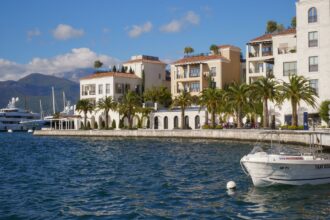
Heading south, Tivat is home to the luxurious Porto Montenegro marina. Filled with waterfront cafés, designer boutiques and superyachts from around the world, it’s a completely different experience from Montenegro’s historic towns and is also the closest major destination to Lepetane.
Continue a little further and you’ll reach the UNESCO World Heritage town of Kotor, where medieval streets, ancient churches and the famous climb to St John’s Fortress await. It’s one of Montenegro’s most visited destinations and can easily be combined with the ferry crossing.
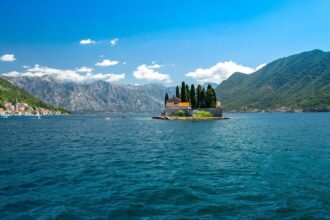
If you have more time, don’t miss the charming town of Perast, famous for its magnificent Venetian architecture and the beautiful island church of Our Lady of the Rocks. Many visitors spend the morning exploring Herceg Novi, cross using the ferry, enjoy lunch in Perast and finish the day wandering the medieval streets of Kotor.
The ferry also provides one of the quickest routes for anyone travelling between Croatia, Tivat Airport, Budva and Montenegro’s central coast, making it an important link for both holidaymakers and locals.

Rupert’s Handy Travel Tips
Planning to use the Kamenari–Lepetane Ferry? Here are a few tips to help your crossing go smoothly:
- Don’t automatically follow your sat nav: If you’re travelling between Herceg Novi and Tivat or Budva, check that your navigation is routing you via the ferry rather than around the entire bay.
- Avoid the lunchtime rush in summer: July and August can bring long queues, especially on weekends. Early morning and early evening are often quieter.
- Step out onto the deck: The crossing only lasts around 10 minutes, but the views across the Bay of Kotor are some of the best in Montenegro.
- Keep a few euros handy: Card payments are widely accepted, but carrying cash can make payment quicker, particularly during busy periods.
- Combine the ferry with sightseeing: It’s easy to visit Herceg Novi, Perast, Kotor and Tivat on the same day, making the ferry part of the adventure rather than just a shortcut.
Want to meet the reindeer behind our travel tips? Find out more in our page Who is Rupert?.




Frequently Asked Questions
How long does the Kamenari–Lepetane Ferry take?
The crossing takes around 10 minutes. Ferries operate continuously throughout the day, so the total journey usually depends more on how long you wait to board than the crossing itself.
Does the ferry operate 24 hours a day?
Yes. The Kamenari–Lepetane Ferry operates 24 hours a day, 365 days a year, making it one of Montenegro’s most reliable transport links.
Do I need to book the ferry in advance?
No. Reservations are not required. Simply drive to the ferry terminal, join the queue and board the next available sailing when directed by the crew.
How much does the ferry cost?
A standard car typically costs around €5 (approximately £4.35 or US$5.85). Motorcycles are cheaper, while foot passengers and cyclists travel free of charge. Larger vehicles such as motorhomes and coaches pay according to their size.
Can pedestrians use the ferry?
Yes. Foot passengers are welcome and travel free of charge. The crossing is also popular with cyclists exploring the Bay of Kotor.
Can I pay by card?
Yes. Most payment booths accept credit and debit cards, although carrying some cash in euros is recommended, particularly during busy periods or in case of technical issues.
Is the ferry quicker than driving around the Bay of Kotor?
In most cases, yes. Using the ferry can save 30 to 45 minutes, and sometimes even longer during the busy summer season when traffic around Kotor and Tivat becomes congested.
Are there long queues in summer?
There can be. During July and August, especially at weekends and around midday, waiting times can increase significantly. Travelling early in the morning or later in the evening usually results in a much shorter wait.
Can motorhomes and caravans use the ferry?
Yes. Motorhomes, campervans, caravans, coaches and heavy goods vehicles all use the ferry regularly. Fares are based on the size and type of vehicle.
Is the ferry worth using?
For most travellers, absolutely. Unless you specifically want to visit Risan, Perast or Kotor en route, the ferry is usually the quickest, easiest and most enjoyable way to cross the Bay of Kotor.
Further Reading
The ferry isn’t the only way to cross the bay. Drivers who fancy a slower, more scenic approach can skip the shortcut and follow the water’s edge instead, and our Bay of Kotor scenic drive guide lays out that longer route stop by stop, including the best spots to pull over for photos. Many travellers end up doing both, taking the ferry one way and the coast road the other, so there’s no need to pick just one for the whole trip.
Once you’ve made the crossing, the towns on both shores reward a proper look rather than a quick pass-through. Things to do in Kotor, things to do in Perast and things to do in Tivat are each covered in their own guide, so whether you’ve got a spare afternoon or several days to spend around the bay, you’ll find enough to fill the time.
Landing or leaving by air is easy to work around the ferry schedule too. Our Tivat Airport transfers guide walks through how the crossing fits into a typical airport run, while the Montenegro public transport guide is worth a look if you’d rather rely on buses and trains than rent a car for the rest of your stay.
Planning something bigger than a single crossing? Our 14-day Montenegro itinerary shows exactly where a hop like this one fits into a full two-week loop of the country, from the coast to the mountains and back again.