
Reviewed by our editorial team Updated
Why Flight Tracker Apps Are Essential for Modern Air Travel
Flight tracker apps have become one of the most important tools for modern air travel, transforming how passengers navigate airports, monitor flights, and manage disruptions. In an environment where delays, gate changes, and last-minute announcements are common, relying solely on airport screens is no longer enough.
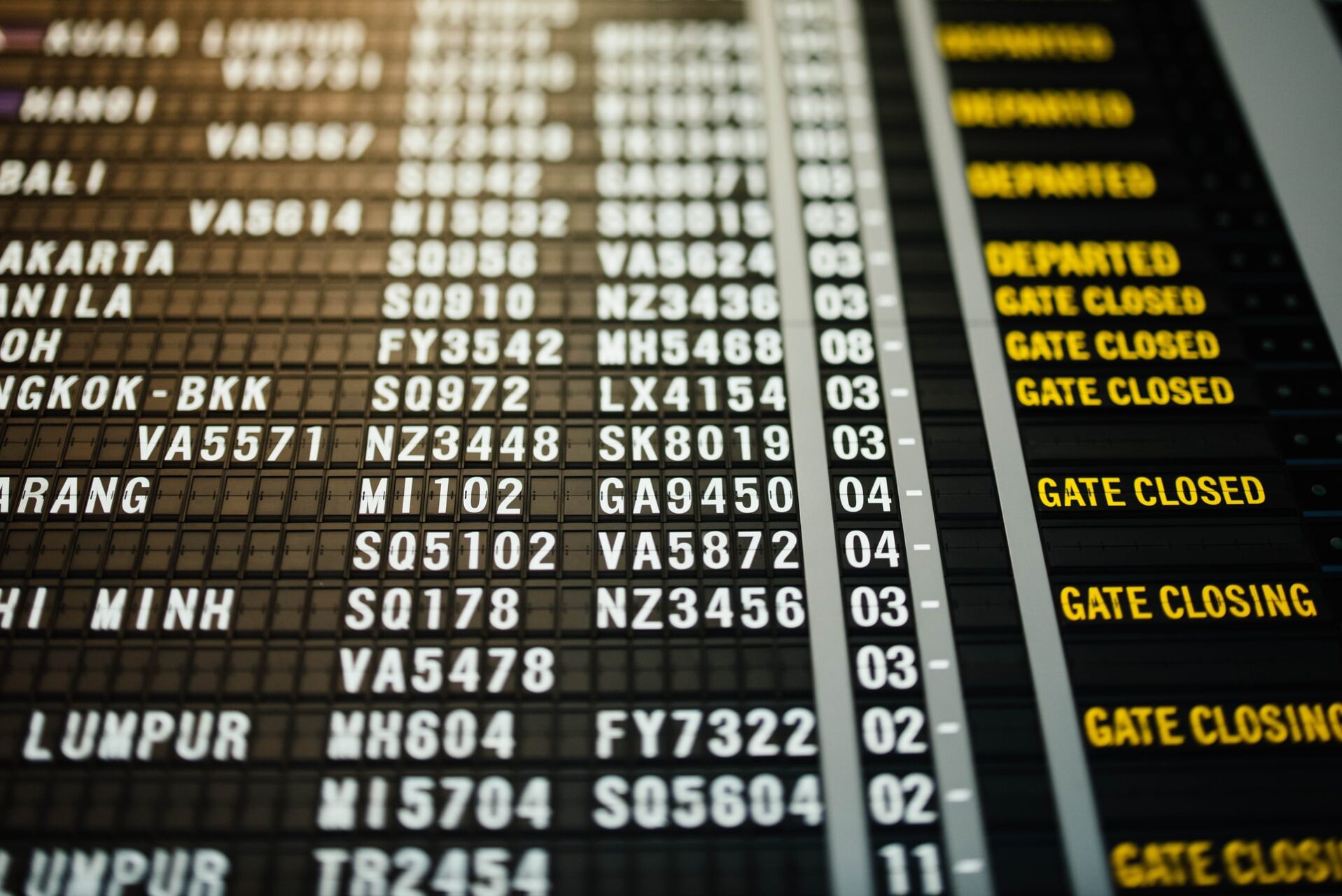
Instead of standing under crowded departure boards, travellers can now access live flight status updates, gate information, and real-time aircraft tracking directly from their phone. This shift gives passengers far greater control over their journey, allowing them to react instantly rather than waiting for announcements that may already be outdated.
What makes these apps especially valuable is their speed. Many flight tracker apps update faster than airport systems, particularly when it comes to gate changes, boarding updates, or inbound aircraft delays. For travellers with tight connections or those arriving at busy international hubs, this early visibility can make the difference between a smooth transfer and a missed flight.
These apps are also incredibly useful beyond your own journey. Whether you are tracking a friend’s arrival, monitoring an incoming aircraft, or checking delays before leaving for the airport, they provide a level of insight that traditional airport information simply cannot match.
Ultimately, flight tracker apps reduce uncertainty and give travellers confidence, turning what can often be a stressful part of travel into something far more manageable and predictable.
What These Apps Actually Do
At their core, flight tracker apps provide real-time data on commercial flights worldwide, but their capabilities extend far beyond simple departure boards. While many travellers initially use them to check flight times, the depth of information available is significantly more advanced.
Most apps combine data from ADS-B receivers, radar feeds, airline systems, and satellite tracking, allowing them to display aircraft positions across global airspace with impressive accuracy. This means users can follow a flight from departure to arrival, watching its route, altitude, and speed update in real time.
In addition to live tracking, these apps provide detailed departure and arrival boards for thousands of airports, often updating more quickly than the displays inside the terminal itself. Gate assignments, boarding times, and delays are pushed directly to your device, reducing the need to constantly check screens or announcements.
Many platforms also include aircraft-specific data, such as the model, registration number, and flight history. For some travellers, this is simply interesting. For others, particularly frequent flyers or nervous passengers, it adds reassurance and context to the journey.
More advanced apps go further by integrating with your travel plans. Itinerary syncing, calendar integration, and notification systems allow the app to automatically track your flights and alert you to any changes. Some even store boarding passes or provide offline access to key information, ensuring you remain informed even without a stable connection.
Taken together, these features mean that flight tracker apps act as both a real-time information hub and a personal travel assistant, helping you stay organised and informed throughout your journey.
See hotel options and places to stay for your trip.
Browse hotelsBrowse apartments, homes and self-catering accommodation.
Browse rentalsCompare hotel deals from multiple booking sites in one search.
Compare pricesKey Benefits for Travellers
Using a flight tracker app gives travellers a clear advantage, particularly in busy or unpredictable travel environments where timing and information are critical.
One of the most important benefits is speed. Updates are often delivered faster than airport systems, especially when it comes to last-minute gate changes or delays. This allows travellers to react immediately, avoiding unnecessary stress or confusion inside the terminal.
Another major advantage is visibility. Travellers can monitor inbound aircraft before departure, which is particularly useful for identifying delays early. If your aircraft is arriving late from another destination, you can often see this hours before the airline announces it.
For those meeting arriving passengers, these apps provide accurate arrival tracking, including estimated landing times and taxi delays. This eliminates guesswork and reduces waiting time at the airport, making pickups far more efficient.
Flight tracker apps also improve decision-making during disruptions. Proactive notifications allow travellers to adjust plans quickly, whether that means rebooking connections, heading to a different gate, or preparing for a delay. This level of control is especially valuable in large international airports where distances between gates can be significant.
There is also a psychological benefit. Having real-time information reduces uncertainty, which in turn reduces stress. Travellers feel more in control of their journey, even when things do not go according to plan.
In practical terms, these apps save time, reduce confusion, and improve overall travel efficiency. For anyone flying regularly, or even occasionally, they quickly become an essential part of the travel toolkit.
How to Choose the Right Flight Tracker App
Choosing the right flight tracker app depends largely on how you travel and what level of detail you need. Not all apps are built the same, and selecting the wrong one can lead to unnecessary complexity or missing features.
For frequent travellers, particularly those flying internationally or managing complex itineraries, apps with predictive alerts and deep integration are the best choice. These platforms track inbound aircraft, analyse delays, and provide early warnings that help you stay ahead of schedule changes.
Casual travellers may prefer something simpler. A clean, easy-to-read departure board app that provides quick access to gate information and flight status updates is often more than enough for occasional trips.
Coverage is another important factor. While most leading apps operate globally, data quality can vary by region, particularly in parts of Africa, South America, and rural Asia. Choosing an app with strong global coverage ensures more reliable updates wherever you travel.
Ease of use also matters. A well-designed interface allows you to access key information quickly without navigating complex menus, which is especially important in busy airport environments where time is limited.
Cost should also be considered. Many apps offer free versions with basic functionality, while premium subscriptions unlock features such as historical data, advanced alerts, weather overlays, and deeper analytics. Understanding what you actually need helps avoid paying for features you will not use.
In the end, the best approach is to match the app to your travel style. Simple travellers benefit from clarity and speed, while frequent flyers benefit from depth and predictive insight.
FlightAware
FlightAware is one of the most reliable and widely used flight tracker apps in the world, trusted by travellers, airlines, and aviation professionals alike. Its strength lies in its data accuracy, combining inputs from ADS-B receivers, FAA systems, and satellite tracking to deliver comprehensive global coverage.
For travellers, this translates into highly dependable real-time flight status updates, often delivered faster than airport displays. Gate changes, delays, and cancellations are pushed directly to your device, allowing you to stay informed without constantly checking airport screens.
One of the key advantages of FlightAware is its ability to track both current and historical flights. Users can view previous journeys, analyse delays, and monitor aircraft movements over time. This is particularly useful for frequent flyers who want to understand patterns or verify past travel details.
The app also provides airport-specific departure and arrival boards, along with integrated weather data. This combination gives travellers a clearer picture of conditions that may affect their journey, from local delays to broader weather disruptions.
For aviation enthusiasts, FlightAware goes even further. Aircraft details such as tail numbers, altitude, speed, and route history are available within the app, offering a deeper level of insight into each flight.
While the free version covers most needs, premium subscriptions unlock additional alerts and advanced tracking features, making it more suitable for users who require detailed monitoring or frequent notifications.
The main drawback is the interface, which can feel slightly dated compared to newer apps. However, its reliability and depth of data more than compensate for its design, making it one of the strongest all-round flight tracker apps available today.

App availability and prices vary by country. Some of these may not appear in your local App Store or Google Play.

FlightRadar24
FlightRadar24 is the most widely recognised live flight tracker app in the world, offering an unmatched view of global air traffic in real time. It has become the go-to platform for both travellers and aviation enthusiasts who want detailed, map-based insight into flights across every major region.
What sets FlightRadar24 apart is its interactive radar-style map, which displays aircraft moving across global airspace with impressive precision. Instead of relying purely on airport departure boards, users can follow flights visually, track routes, and see exactly where an aircraft is at any given moment. This makes it far more engaging and informative than traditional flight status apps.
For travellers, the practical benefits are clear. You can search by flight number, airport, or route and instantly access live updates, including estimated arrival times, delays, and gate changes. The app also provides aircraft details such as model type, altitude, and speed, giving a deeper understanding of your journey.
Another major advantage is the app’s flexibility. It functions both as a simple departure board tool and a highly advanced tracking platform, depending on how you use it. Casual users can quickly check flight times, while more experienced users can apply filters to track specific airlines, aircraft types, or routes.
Premium features add further depth, including weather overlays, historical playback, and enhanced airport data, allowing users to analyse flights in greater detail. These features are particularly useful for frequent travellers who want more context around delays or disruptions.
The main limitation is complexity. For users who only want a quick glance at departure times, the interface can feel overwhelming. However, for those who want the most comprehensive global flight tracking available, FlightRadar24 remains one of the strongest options on the market.

App availability and prices vary by country. Some of these may not appear in your local App Store or Google Play.
Flighty
Flighty is a premium flight tracker app designed specifically for speed, accuracy, and predictive insights, making it one of the most advanced tools available for frequent flyers. Unlike traditional apps that simply report delays, Flighty focuses on helping users anticipate them before they are officially announced.
The app’s standout feature is its delay prediction capability, which analyses inbound aircraft movements and historical performance data. If your aircraft is running late on a previous journey, Flighty can often identify the issue well in advance, giving you more time to adjust your plans. This is particularly valuable for travellers dealing with tight connections or multi-leg itineraries.
Another powerful feature is the 25-hour aircraft tracking window, which allows users to follow their plane from its previous departure. This provides a much clearer picture of how your flight is progressing before it even arrives at your departure airport.
Flighty is also built for seamless integration within the Apple ecosystem. Calendar syncing, email itinerary imports, and Siri integration ensure that all your flight information is automatically organised and updated. This level of automation makes it especially useful for business travellers who need everything in one place.
The app’s design is clean, fast, and highly intuitive. Push notifications are delivered instantly, often faster than airline updates, which helps reduce stress and uncertainty during travel. For nervous flyers, this constant stream of accurate information can be particularly reassuring.
The main drawback is availability. Flighty is currently iOS-only, which limits its accessibility, and many of its most powerful features are locked behind a premium subscription. However, for users within the Apple ecosystem, it is widely considered one of the best flight tracker apps available today.
App availability and prices vary by country. Some of these may not appear in your local App Store or Google Play.
Plane Finder
Plane Finder is a visually driven flight tracker app that focuses on real-time aircraft movement through an interactive map interface. It provides a strong alternative to more complex platforms by combining accurate tracking with a straightforward user experience.
Powered by its own network of ADS-B receivers, Plane Finder delivers precise aircraft positioning across global airspace. This allows travellers to follow flights in real time, seeing exactly where an aircraft is, how fast it is travelling, and at what altitude. For users who prefer visual tracking over text-based departure boards, this approach is particularly effective.
The app also includes customisable alerts, allowing users to receive updates on delays, arrivals, or specific flights. This makes it useful for both personal travel and for tracking incoming flights when meeting someone at the airport.
One of its most distinctive features is its augmented reality mode, which allows users to point their device at the sky and identify nearby aircraft instantly. While not essential for travel planning, it adds an engaging layer for aviation enthusiasts and curious travellers alike.
Historical playback is another useful tool. Users can review past flights and track previous routes, which can help resolve disputes around delays or simply provide insight into past journeys.
While the app is reliable and feature-rich, it does have some limitations. In heavily congested airspace, performance can occasionally slow down, and the interface, while functional, lacks the polish of newer apps like Flighty.
Despite this, Plane Finder remains a strong choice for travellers who prefer map-based tracking and real-time visual data, offering a balance between usability and depth.

App availability and prices vary by country. Some of these may not appear in your local App Store or Google Play.
Search routes and flight options for your journey.
Search flightsChoose an Airalo eSIM and arrange mobile data before you arrive.
Browse eSIMsBook a private airport transfer in advance and have your ride planned before you arrive.
Check transfersFlight Board
Flight Board is a minimalist flight tracker app designed to replicate the classic airport departure board experience in a digital format. Instead of offering complex tracking features, it focuses entirely on delivering clear, fast, and easy-to-read flight information.
The app displays real-time departure and arrival boards for over 1,400 airports worldwide, presenting information in a familiar flip-board style that mirrors what you see in airport terminals. This makes it extremely intuitive, particularly for travellers who simply want quick access to flight times and gate details.
One of its key strengths is speed. Flight information loads quickly and refreshes frequently, ensuring that users receive up-to-date data without unnecessary delays. This makes it particularly useful in busy airport environments where time is limited.
Another advantage is its offline capability. Recently loaded schedules can still be viewed without an active internet connection, which is especially valuable for international travellers who may not always have access to mobile data.
Unlike more advanced flight tracker apps, Flight Board does not include map tracking, predictive alerts, or detailed aircraft data. However, this simplicity is intentional. It is designed for users who want clarity without complexity, making it one of the easiest apps to use.
The main limitations are its lack of advanced features and its iOS-only availability, which restricts access for Android users. However, for those who prioritise simplicity and speed, Flight Board delivers exactly what is needed without distraction.
App availability and prices vary by country. Some of these may not appear in your local App Store or Google Play.
AirNav Radar (Formerly RadarBox)
AirNav Radar, commonly known as RadarBox, is a data-rich flight tracker app designed for users who want deeper insight into global air traffic and flight operations. It combines real-time tracking with additional layers of information that go beyond standard flight status updates.
Like other leading apps, RadarBox uses a network of ADS-B receivers and satellite data to track flights across the world. Its live map displays aircraft density, routes, and movement patterns in real time, providing a comprehensive view of global air traffic.
What sets RadarBox apart is its focus on additional contextual data, particularly environmental information. The app includes details such as carbon emissions and efficiency scores, giving travellers insight into the environmental impact of their journey. This feature is especially relevant for those who want to make more informed travel decisions.
The app also provides departure and arrival boards for major airports, along with push notifications for delays, cancellations, and diversions. Integration with devices such as Apple Watch allows users to receive updates quickly without needing to open the app.
For more advanced users, premium features unlock extended historical playback, offline access, and additional data layers, making RadarBox a powerful tool for both travellers and aviation professionals.
The main drawback is the interface. The app can feel cluttered due to the volume of data displayed, which may overwhelm casual users who only need basic flight information. Many of its most useful features also require a subscription.
Despite this, RadarBox stands out as one of the most detailed and information-rich flight tracker apps available, making it ideal for users who want more than just basic updates.

App availability and prices vary by country. Some of these may not appear in your local App Store or Google Play.
Comparison Table of Key Features
Choosing between the best flight tracker apps becomes much easier when you compare their core capabilities side by side. While most apps provide real-time flight status and airport boards, the depth of features varies significantly depending on whether the focus is simplicity, visual tracking, or advanced analytics.
| App Name | Live Departures | Map Tracking | Push Alerts | Airport Info | Free Version |
|---|---|---|---|---|---|
| FlightAware | Yes | Yes | Yes | Yes | Yes |
| FlightRadar24 | Yes | Yes | Yes | Yes | Yes |
| Flighty (iOS) | Yes | Yes | Yes | Yes | Yes |
| Plane Finder | Yes | Yes | Yes | Yes | Yes |
| Flight Board | Yes | No | No | Yes | Yes |
| RadarBox | Yes | Yes | Yes | Yes | Yes |
This comparison highlights a clear pattern. Apps like FlightRadar24 and RadarBox deliver the most comprehensive tracking experience, combining real-time maps with detailed flight data. FlightAware provides a strong balance between simplicity and reliability, making it ideal for most travellers. Flighty stands out for predictive alerts and speed, while Flight Board remains the simplest option for users who only need basic departure information.
The best choice depends on how much information you want. Casual travellers benefit from simplicity, while frequent flyers benefit from deeper insights and faster alerts.
Flight Tracker App Safety Tips
Using flight tracker apps effectively requires a small amount of awareness, particularly when relying on them during time-sensitive travel situations.
One of the most important habits is to cross-check important updates with official airline communications. While these apps are often faster than airport systems, they are still third-party tools, and final decisions such as boarding closures or cancellations should always be confirmed through the airline itself.
Security is another consideration. When logging into apps or storing travel details, it is best to avoid unsecured public Wi-Fi networks, especially in busy airports. Using mobile data or a VPN helps protect sensitive information such as booking references and personal details.
Battery management also plays a role. Constant tracking, notifications, and background updates can drain your device quickly. Disabling unnecessary location services and reducing screen usage helps preserve battery life during long travel days.
Travellers should also avoid over-reliance. While these apps are highly accurate, they should be used as a support tool rather than the sole source of information. Arriving at the airport early and monitoring official announcements remains essential.
When used correctly, these apps provide a powerful advantage. When used without awareness, they can create unnecessary risk. The difference comes down to combining technology with basic travel discipline.
Usage Rules & Legal Restrictions
Flight tracker apps operate using publicly available aviation data, but their accuracy and functionality can vary depending on regional regulations and data-sharing policies.
Most apps rely on ADS-B transmissions and radar feeds, which are legal to receive and display in most countries. However, some regions place restrictions on how this data is distributed or delayed. This means that in certain parts of the world, flight information may appear slightly behind real-time or lack full detail.
Another limitation comes from airlines themselves. Not all carriers share data equally, and this is particularly noticeable with low-cost airlines or smaller regional operators, where updates may be less frequent or less detailed.
Airports can also influence accuracy. Some restrict access to live gate or terminal data, which can result in minor discrepancies between app information and official airport displays. For this reason, travellers should always treat app notifications as guidance rather than final confirmation.
From a user perspective, there are very few legal concerns. These apps are widely accepted and used globally. However, it is still important to understand that they do not replace official airline communication, and travellers remain responsible for following airline instructions.
In practical terms, these apps are safe and legal to use worldwide, but understanding their data sources helps set realistic expectations.
App Availability by Region
Most leading flight tracker apps are available globally, but the quality and depth of data can vary depending on location.
In North America, coverage is exceptionally strong. All major apps perform well due to comprehensive FAA data and dense ADS-B receiver networks. This results in highly accurate real-time tracking across both domestic and international flights.
In Europe, coverage is similarly reliable. The region benefits from a strong aviation infrastructure and widespread data sharing, meaning apps like FlightRadar24, FlightAware, and RadarBox deliver consistent performance across major hubs and regional airports.
In Asia, coverage remains strong in major aviation hubs such as Singapore, Tokyo, and Dubai. However, in more rural areas, data availability can be slightly reduced, particularly for smaller regional flights.
In Australia, tracking is accurate across major routes and airports, with strong support for both domestic and international travel. Remote areas may experience minor delays in data updates.
In Africa and South America, coverage can be more variable. Major cities and international airports are well supported, but rural airspace may have gaps or slight delays, depending on receiver coverage and data availability.
In the Middle East, coverage is excellent at major hubs such as Dubai and Doha, with strong real-time tracking and detailed flight information.
Overall, while these apps work worldwide, their performance is strongest in regions with dense aviation infrastructure and weaker in remote or less connected areas.

Rupert’s Handy Travel Tips
Flight apps are brilliant for keeping journeys smooth, but a few clever tricks make them even more powerful:
Smart Flying Hacks
- Avoid roaming fees – Pair your flight apps with our top-rated eSIM Apps.
- Track tight connections – Flighty is ideal for multi-leg itineraries.
- Screenshot gate info – Low-cost carriers often change terminals at the last minute.
- Upgrade your wait – Use our Airport Lounge Access Apps to find comfort and perks.
- Practice first – Test your chosen app at your home airport so you know how accurate and responsive it is before big trips.
Want to meet the reindeer behind our travel tips? Find out more in our page Who is Rupert?.
Frequently Asked Questions
What is the best flight board app?
The best app depends on your needs. Flighty is great for predictive delay alerts, FlightRadar24 is the most detailed for global map tracking, and FlightAware is a reliable all-rounder with strong coverage.
How do flight tracker apps predict delays?
Apps like Flighty monitor the inbound aircraft and its historical performance. If the aircraft is running late on its previous journey, the app can forecast your delay before the airline confirms it.
Are flight tracker apps better than airport departure boards?
Yes. These apps often update faster than the airport’s own screens. They can send push notifications for gate changes or delays, so you don’t have to keep checking the terminal boards.
Do flight tracker apps work worldwide?
Most leading apps cover flights globally. FlightRadar24 and FlightAware have the broadest international coverage, while regional data may be more limited in parts of Africa, South America, and rural Asia.
Are flight tracker apps free to use?
Yes, all major apps offer a free tier with live departures and basic tracking. Premium versions unlock features such as historical playback, augmented reality spotting, and more detailed flight alerts.
Compare hostels and budget-friendly places to stay.
Browse hostelsAccess compensation support, eligible lounge benefits and faster payouts.
See the benefitsArriving before check-in or leaving later? Store your luggage and enjoy the extra time hands-free.
Store your bagsFurther Reading & Related App Guides
Tracking your flight is only half the job of getting through an airport smoothly, and a few companion apps cover the rest. Before you even book, our Flight Aggregator Apps guide rounds up the best tools for comparing fares, and if you are flying with a regional low-cost carrier, our Low-Cost Asian Airline Apps guide covers the budget airlines whose own schedules can be harder to track through a generic app.
A delay is far more bearable with somewhere comfortable to wait, so our Airport Lounge Access Apps guide explains how to unlock a lounge even without elite status. Once you land, our WiFi Map Finder Apps guide helps you find a signal to keep checking on your onward connections.
If your trip involves more than flying, our Cruise Booking Apps guide is worth a look for anyone continuing a journey by sea, and our Hotel Booking Apps guide can help sort out a place to stay once a delay changes your plans for the night.