Reviewed by our editorial team Updated
Planning to explore Düsseldorf on foot? This self-guided Düsseldorf walking tour brings together the city’s most iconic sites, from medieval architecture and baroque churches to striking modern art and riverside strolls. Whether you’re here for the culture, history, or food scene, this walk will uncover the essence of the city. For even more recommendations, check out our full Düsseldorf City Guide.
Estimated duration: 3–4 hours
Distance: ~4 km, point to point
Start point: Burgplatz
End point: MedienHafen
Burgplatz & Schlossturm – Stop 1
Begin at Burgplatz, one of Düsseldorf’s oldest public squares and the historic heart of the Altstadt. Once home to Düsseldorf Castle, destroyed by fire in 1872 and later demolished, the square preserves the Schlossturm (Castle Tower), the only remnant of the original structure. Built in the 13th century and remodeled in baroque style, the tower houses the SchifffahrtMuseum (Maritime Museum), one of the oldest inland navigation museums in the world. It showcases ship models, navigational tools, and artifacts tracing the city’s history as a Rhine trading hub.
From the top floor’s observation deck, visitors can enjoy sweeping panoramic views over the river. The square often hosts seasonal events, market stalls, and street performances, and Jan Wellem, the Elector Palatine who greatly influenced Düsseldorf’s development, is closely associated with this area.
Directions: Walk west down Reuterkaserne, then turn left onto Rheinuferpromenade (4 mins).
Rhine Promenade – Stop 2
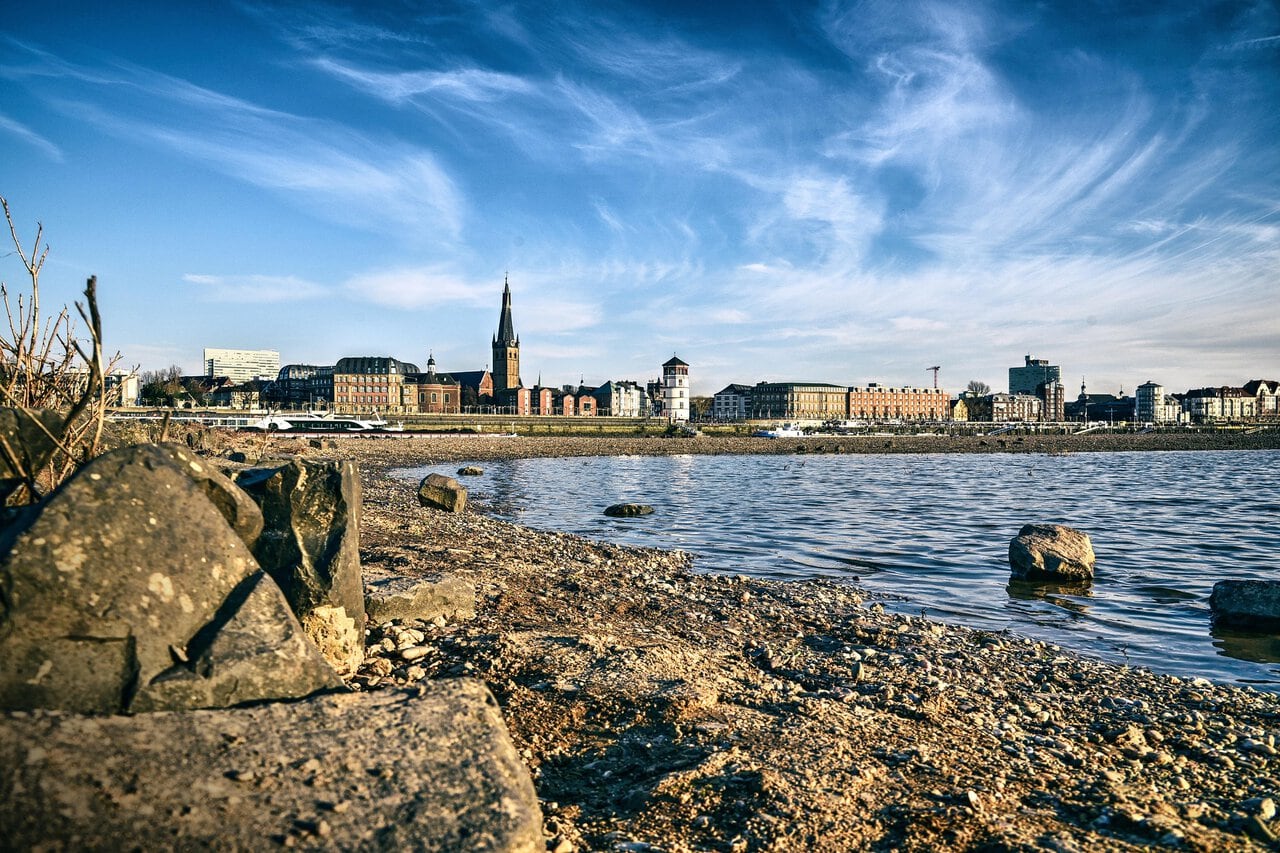
Originally developed in the 1990s to reconnect the city with the river, the Rhine Promenade is now a beloved pedestrian path running alongside the Rhine. This riverside walkway is perfect for watching boats glide past or grabbing a coffee from a riverside kiosk. It connects the Altstadt to MedienHafen and is especially lively on sunny afternoons.
Locals come here to stroll, cycle, or skate, and it’s also home to various art installations and seasonal events. During the summer, it becomes a hub for the “Rheinkirmes,” one of Germany’s largest funfairs held just further downriver, while in winter it links to festive Christmas markets that spill toward the waterfront.
Directions: Continue walking south along the promenade for 5–6 minutes.
Compare hotels and other places to stay in Dusseldorf.
Check availabilityBrowse apartments, holiday homes and self-catering stays in Dusseldorf.
View rentalsCompare prices for Dusseldorf hotels across multiple booking sites.
Check dealsSt. Lambertus Church – Step 3
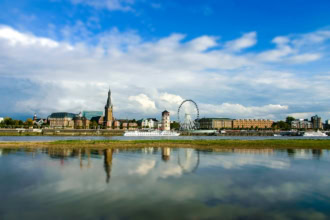
This Gothic-style church dates back to the 13th century and is easily recognised by its twisted spire, a result of fire damage in 1815 and reconstruction with unseasoned wood. Legend claims it twisted in shame after a bride lied about her virginity, adding a local tale to its silhouette. The church holds the tomb of Duke Wilhelm V of Jülich-Cleves-Berg and a prized collection of sacred art. Inside, you’ll find a peaceful atmosphere, stained glass windows, and a small side chapel devoted to St. Apollinaris, Düsseldorf’s patron saint.
Directions: Walk south on Lambertusstraße and turn left into Marktplatz (2–3 minutes).
Düsseldorf Town Hall (Rathaus) – Stop 4
Düsseldorf’s Rathaus isn’t a single building but a collection of four structures from different centuries clustered around a charming cobbled square. The oldest section dates back to 1573 and features ornate Renaissance-style architecture. A prominent equestrian statue of Elector Jan Wellem, a key figure in Düsseldorf’s development, stands in the centre of the square and serves as a popular photo spot.
City council meetings still take place here, making it one of the oldest functioning government buildings in Germany. Seasonal markets, concerts, and public rallies often fill this square, adding vibrancy to the historic façade.
Directions: Head east along Flinger Straße, then turn north onto Grabbeplatz (5 minutes).
Kunstsammlung NRW (K20) – Stop 5
For modern art lovers, this museum is a must-see. The Kunstsammlung NRW (K20) houses works by Picasso, Matisse, Kandinsky, and Warhol, alongside German masters like Joseph Beuys and Gerhard Richter. Its distinctive black granite facade, nicknamed the “black box,” is a local architectural landmark. Inside, you’ll find rotating exhibitions that range from surrealism to post-war German art. The museum plays host to lectures, live performances, and international retrospectives, often drawing large crowds during exhibition launches.
Directions: Leaving K20 at Grabbeplatz, walk northeast along Heinrich-Heine-Allee for 6 minutes. Hofgarten, the next stop, opens up ahead of you at the top of the street.
Hofgarten – Stop 6
Take a relaxing break in Düsseldorf’s oldest public park, designed in 1769 by landscape architect Maximilian Weyhe. Hofgarten was one of Germany’s first public gardens and marked a shift toward urban green planning. Blending French symmetry with English naturalism, the park is home to shady tree-lined paths, ornamental lakes, sculptures, and duck-filled ponds. It also hosts seasonal art installations, music performances, and family events throughout the summer. Look out for the Goethe monument and the tranquil stream known as the Düssel, which gave the city its name.
Directions: Walk east along Jacobistraße, then turn right onto Immermannstraße to enter Little Tokyo (8–10 minutes).
Little Tokyo – Immermannstraße & Japanese Quarter – Stop 7
Centered around Immermannstraße and Klosterstraße, this area is home to Europe’s third-largest Japanese community and is lined with over 400 Japanese businesses. Expect ramen shops like Takumi, sushi counters, matcha cafés, and manga stores, all nestled between bilingual signs in Japanese and German. The quarter flourished in the postwar decades as Japanese firms expanded into the Rhine-Ruhr region.
Little Tokyo becomes especially vibrant during Japan Day in May, when cosplay events, open-air concerts, and fireworks take over the streets. It’s a perfect cultural interlude in the walking tour before continuing along Düsseldorf’s most famous boulevard.
Directions: Walk south on Immermannstraße, then turn right onto Königsallee (5 minutes).
Königsallee – Stop 8
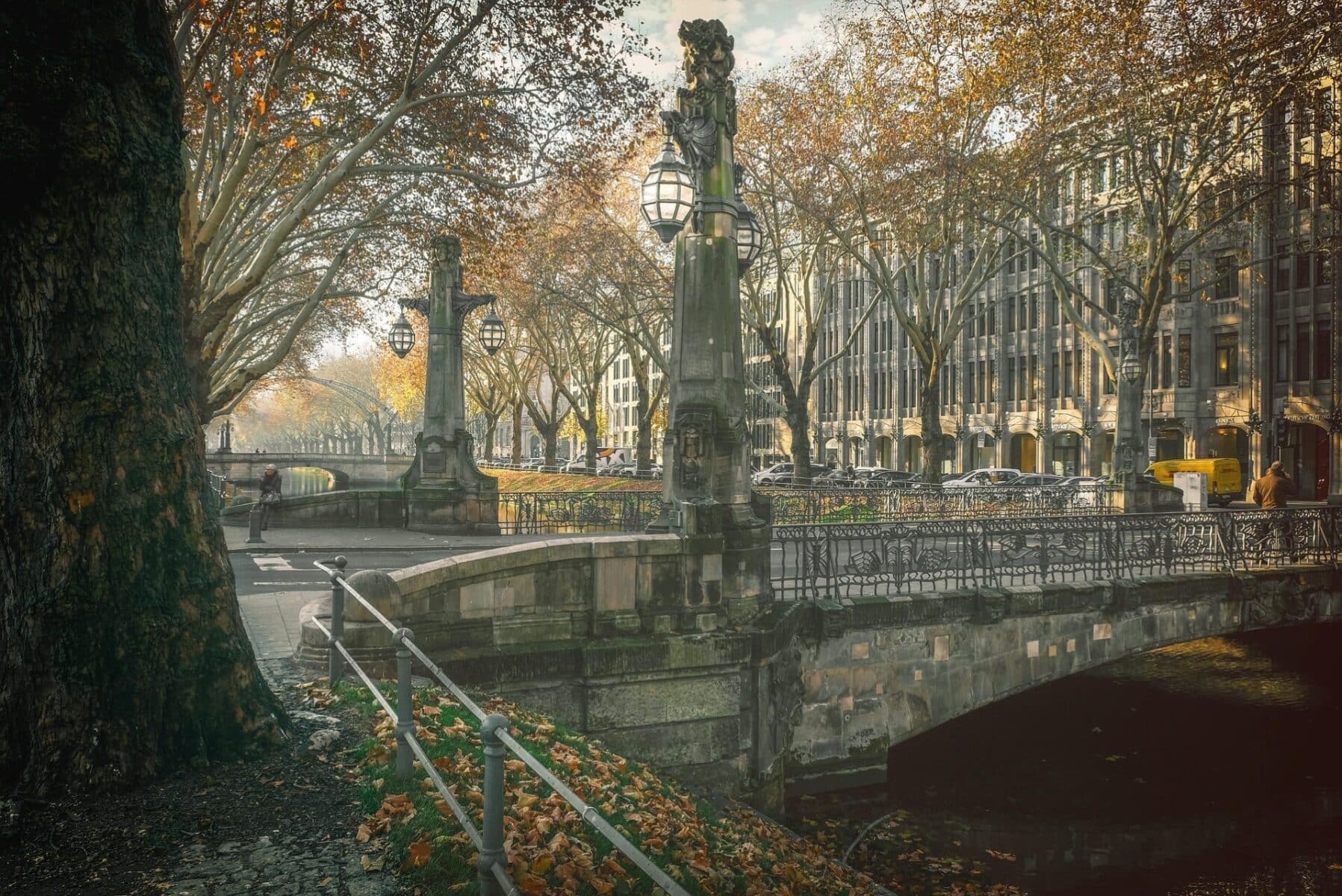
Known locally as the “Kö,” this elegant boulevard was laid out in 1804 and is one of Europe’s most luxurious shopping avenues. Flanked by a tranquil canal and rows of horse chestnut trees, Königsallee hosts fashion week parades, art fairs, and high-end pop-up installations. You’ll pass flagship stores from Dior, Chanel, and Prada alongside fine art galleries and five-star hotels. The Kö-Brücke (bridge) in the middle offers a prime photo spot and often features floral decorations in spring and light displays during winter.
Directions: Follow Königsallee south to its far end at Graf-Adolf-Platz, then bear right onto Haroldstraße and keep heading southwest towards the Rhine to reach Stadttor (12–15 minutes). If you want the lunch stop Rupert suggests, Carlsplatz Market is a short detour west of the Kö into the Altstadt before you set off.
Search flights and useful route combinations for your trip.
View flightsChoose an Airalo eSIM and arrange mobile data before you arrive.
Browse eSIMsHave a private airport pickup arranged before you travel.
Book a transferStadttor – Stop 9
As you near MedienHafen, the glass-and-steel Stadttor (‘City Gate’) tower makes a striking impression. Completed in 1998, this 20-storey structure uses double-skin glass walls for passive climate control and has won international design awards for sustainability. Inside, it houses government offices and tech startups. The glass skybridge connecting both towers offers sweeping Rhine views, especially at sunset. The building is often illuminated during festivals and national holidays and has appeared in several architectural documentaries.
Directions: From Stadttor, continue south and cross Stromstraße into MedienHafen (6 minutes).
MedienHafen – Stop 10
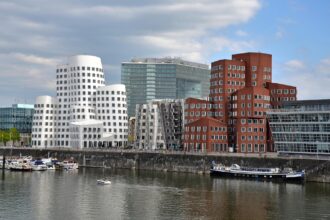
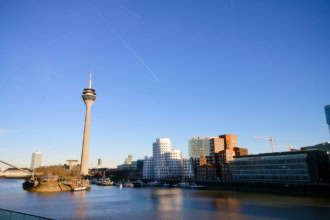
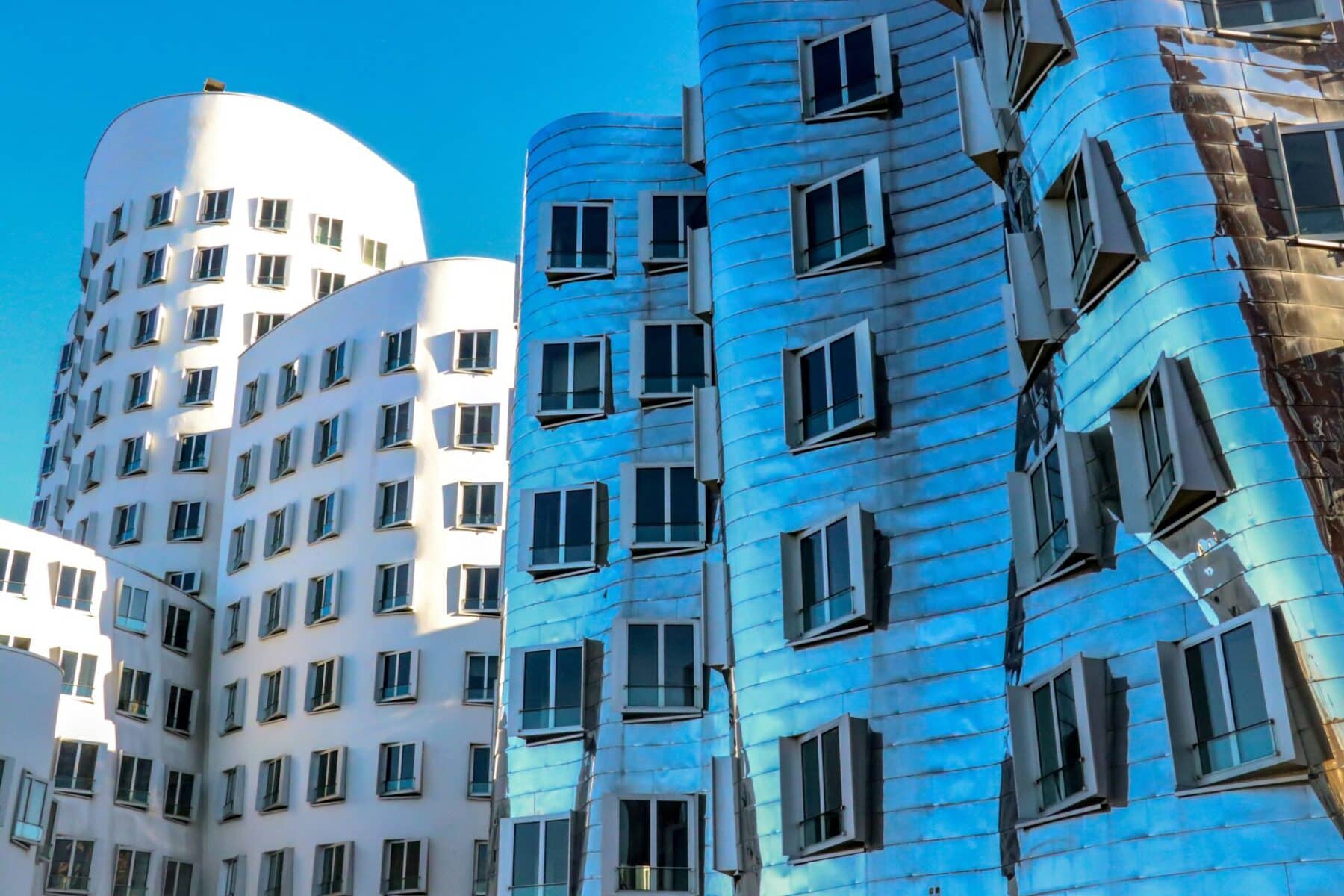
Düsseldorf’s MedienHafen (Media Harbour) is a shining example of urban regeneration. Once a bustling Rhine harbour, it has transformed into a striking district filled with avant-garde architecture and media company HQs. The standout structures are the Neuer Zollhof buildings, designed by Frank Gehry; their warped, reflective facades make them some of the most photographed in the city. Other notable landmarks include the Colorium and the Roggendorf-Haus with its colourful climbing figures. Beyond the architecture, MedienHafen is a culinary hotspot, home to rooftop bars, trendy cafes, and Michelin-starred restaurants.
If you’re here in the evening, the riverside promenade offers fantastic sunset views and the area lights up with vibrant nightlife. Special events like architectural tours and outdoor film screenings often take place here, especially in summer months. The blend of modern innovation with historical elements, such as repurposed warehouses, makes it a dynamic endpoint for your walk.
Navigation Apps
Citymapper – Offers real-time transit and walking directions tailored to Düsseldorf. Ideal for planning your route between Altstadt, Hofgarten, and MedienHafen.
Google Maps – A universal favourite for maps, saved locations, reviews, and nearby spots to explore.

App availability and prices vary by country. Some of these may not appear in your local App Store or Google Play.

App availability and prices vary by country. Some of these may not appear in your local App Store or Google Play.
Tickets & Attractions
GetYourGuide – Skip-the-line museum entries, walking tours, and Rhine boat cruises. This app is especially useful if you want to pre-book tickets for attractions like the SchifffahrtMuseum at Burgplatz, join a guided walking tour through the Altstadt, or hop aboard a scenic Rhine river cruise from MedienHafen.
Tiqets – Mobile ticketing for modern art museums and historic sites in Düsseldorf. Ideal for quick access to venues like Kunstsammlung NRW (K20), or if you’re planning to explore exhibitions without queueing. Many temporary installations at Hofgarten and cultural events at Carlsplatz also feature here seasonally.

App availability and prices vary by country. Some of these may not appear in your local App Store or Google Play.

App availability and prices vary by country. Some of these may not appear in your local App Store or Google Play.

Rupert’s Handy Travel Tips
Rupert has walked this route more than once, and a little planning makes the 4 km walk far more enjoyable. Here’s what to keep in mind before you set off.
- Wear comfortable shoes: much of the Altstadt is cobbled, so trainers or walking shoes make the 3–4 hour route far easier on your feet.
- Download an offline map: save the route on Google Maps or Citymapper before you start in case you lose signal in the narrower Altstadt streets.
- Combine with a Rhine cruise: finish the walk at MedienHafen, then hop on a Rhine river cruise to see the same skyline from the water.
- Time your photo stops: the Kö-Brücke and the Gehry buildings at MedienHafen both look best in late afternoon light, so aim to reach Stops 8 to 10 closer to sunset.
- Break for food along the way: Carlsplatz Market near Königsallee and the ramen shops of Little Tokyo are both well-placed for a lunch stop without straying from the route.
Want to meet the reindeer behind our travel tips? Find out more in our page Who is Rupert?.




Frequently Asked Questions About the Düsseldorf Walking Tour
How long does the walking tour take?
Most visitors complete the full 4 km route in around 3 to 4 hours, including short stops at each site. Add extra time if you plan to go inside museums like the Kunstsammlung NRW or the SchifffahrtMuseum.
Is the route suitable for kids or those with mobility issues?
The route is flat and largely pedestrianised, making it manageable for families, though some sections of the Altstadt are cobbled, which can be trickier for wheelchairs, buggies, or anyone with limited mobility.
Where’s the best place to start the tour?
Burgplatz is the recommended starting point, as it sits at the heart of the Altstadt and puts you within easy reach of the Schlossturm and Rhine Promenade before the rest of the route unfolds.
Do I need to book anything in advance?
No booking is required for the walk itself, but if you want to visit attractions like the SchifffahrtMuseum or Kunstsammlung NRW along the way, pre-booking tickets through GetYourGuide or Tiqets can save time queueing.
What’s the best time of day to do the walk?
Mornings are quieter and cooler for the first few stops, while ending at MedienHafen in the late afternoon or early evening makes the most of the sunset views over the Rhine.
Further Reading & Related Düsseldorf Guides
Before you set off, our Düsseldorf Airport Transfers guide covers the fastest ways into the city, and if you’re staying more than a day or two, the Düsseldorf Card can bundle public transport with free entry to several museums right along this route.
Once you’ve finished at MedienHafen, extend the day with a scenic Rhine river cruise to see the Gehry buildings and the rest of the skyline from the water. And if you have an extra day free, our Best Day Trips from Düsseldorf guide covers easy train and road trips beyond the city, while our full Düsseldorf City Guide ties everything together for the rest of your visit.