
Getting Around Thessaloniki
Getting around Thessaloniki has become much easier since the opening of the metro. The city now combines fast underground journeys with an extensive bus network, while many of the places visitors come to see remain close enough to explore on foot.
For a normal city break, you are unlikely to need a car. The historic centre stretches along the waterfront and much of it is highly walkable, with Aristotelous Square, Ladadika, the White Tower and many of the main Roman and Byzantine sites within a relatively compact area.
The metro is the quickest way to cover longer distances across the city. Its main line connects New Railway Station with Nea Elvetia, passing through useful central stations including Venizelou, Agias Sofias and Sintrivani. Services are frequent enough that visitors rarely need to plan around an exact departure time.
Buses provide the coverage the metro cannot. OASTH operates Thessaloniki’s urban buses, reaching neighbourhoods and transport hubs beyond the underground network. This includes airport services and connections with parts of the city that would otherwise require a long walk or taxi.
The wider public transport system is coordinated by OSETH, the Thessaloniki Transport Authority. The names can initially be confusing, but the distinction is fairly simple: OSETH oversees the network and ticketing arrangements, while OASTH operates the buses.
Walking still plays an important role. In central Thessaloniki, it can be quicker to continue on foot than to make a short public transport journey. The main exception is Ano Poli, where the steep hills make a bus or taxi much more appealing on the way up.
For most visitors, the best approach is to walk around the centre, use the metro for longer journeys across the city and take an OASTH bus when the rail network does not reach the place you need.
Thessaloniki Public Transport at a Glance
The metro and buses complement each other rather than competing for the same journeys.
| Transport | Best For | Main Limitation |
|---|---|---|
| Metro | Fast journeys across the city | Does not reach everywhere |
| OASTH Buses | Wider city coverage | Delays in road traffic |
| Airport Buses | Direct airport connections | Longer journey times |
| Taxi | Door-to-door travel | Higher cost |
| Walking | Historic centre and waterfront | Hills and longer distances |
The metro is the easiest option when both ends of your journey are close to a station. Trains are frequent, journeys are unaffected by road traffic and the line passes directly beneath the central parts of Thessaloniki.
Buses become more useful once you move beyond the metro corridor. They reach a much wider area, but journey times are less predictable because services share the roads with other traffic.
Airport transport is slightly different from ordinary travel around the city. Dedicated OASTH routes connect the terminal with Thessaloniki, while another bus provides access to the metro network. Our Thessaloniki Airport Transfers Guide explains those journeys in full.
Taxis are useful for awkward journeys, late arrivals and travelling with heavy luggage. They are rarely necessary for moving between the main visitor areas during a normal day of sightseeing.
Most visitors will use a mixture of walking and the metro, with occasional bus journeys for places the underground network does not serve.
Browse hotels and accommodation for your visit to Thessaloniki.
View staysBrowse apartments, holiday homes and self-catering stays in Thessaloniki.
View rentalsCompare prices for Thessaloniki hotels across multiple booking sites.
Check dealsUsing the Thessaloniki Metro
The metro is now the fastest way to travel across the main east-to-west corridor through Thessaloniki. The first line runs underground from New Railway Station to Nea Elvetia, passing through the city centre along the way.
For visitors, the most useful central stations include Venizelou and Agias Sofias. Both place you within easy walking distance of major sights, shopping streets, restaurants and the waterfront.
New Railway Station is the western terminus and provides the most important transport connection on the line. Travellers arriving by train can transfer directly to the metro rather than continuing into the centre by road.
The service currently runs from early morning until 23:00 each day. Trains operate every few minutes for much of the day, so there is normally no need to build a sightseeing itinerary around a timetable. The exact first departure time can change with the operating schedule, so check the current information when planning a very early journey.
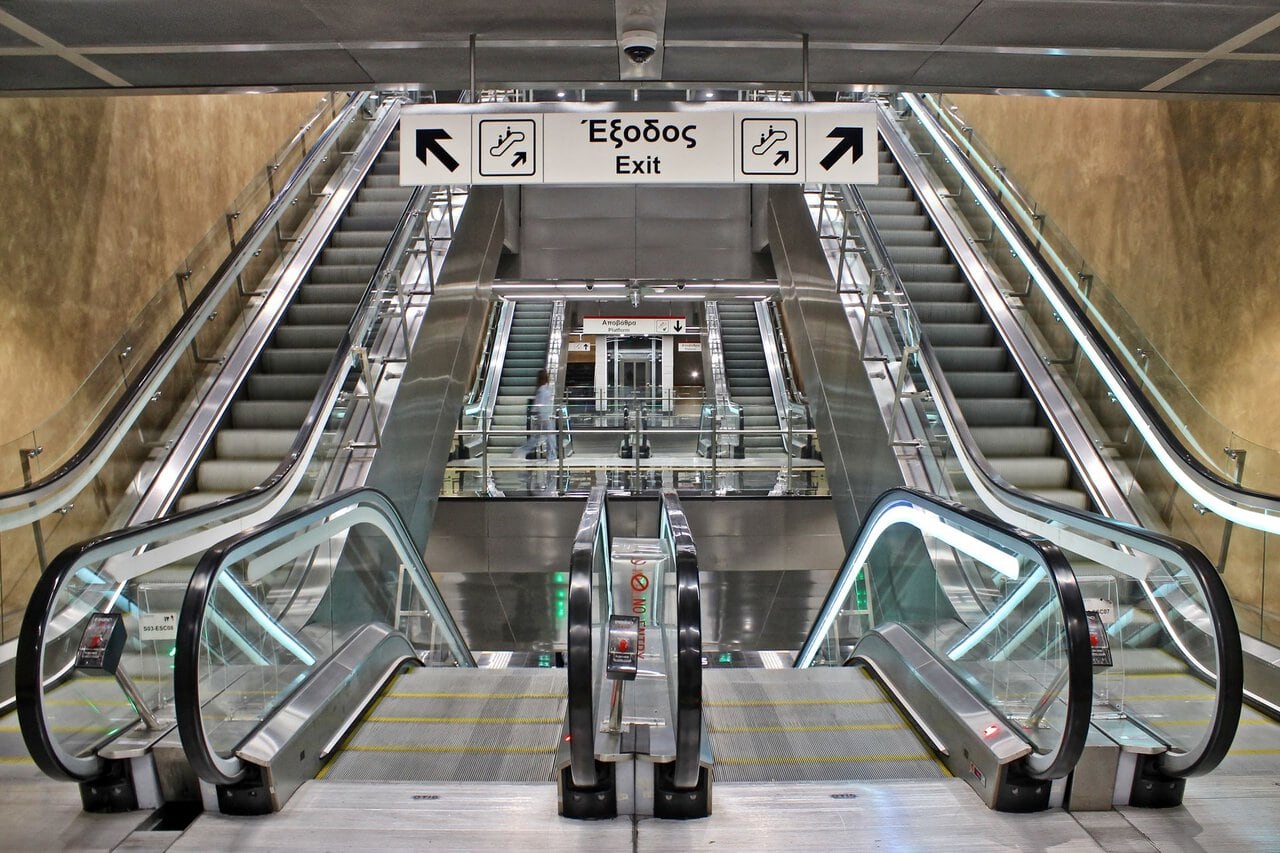
Stations are modern and fully underground, while the trains operate automatically without drivers. Lifts provide step-free access, making the metro useful for passengers with luggage and many travellers with reduced mobility.
One of the most distinctive parts of the system is the archaeology displayed inside several stations. Venizelou station is a transport stop and an archaeological site at the same time, allowing passengers to see discoveries made during construction without leaving the network.
The metro is particularly useful for crossing the centre quickly. It is less valuable for very short journeys where walking would take almost the same amount of time once you include entering the station and reaching the platform.
Further expansion towards Kalamaria is being prepared, but visitors should plan journeys around the stations actually operating on their travel date rather than future lines shown on development maps.
Use the metro for longer journeys across Thessaloniki and the railway station connection. For short trips between the main central sights, walking will often remain easier.
Buying Public Transport Tickets
Thessaloniki’s ticketing system is one of the areas where older travel guides can quickly become misleading. Bus and metro fares are inexpensive, but the two modes do not currently operate as one completely interchangeable ticket system.
An ordinary urban bus ticket costs €0.60 and is valid for 70 minutes within the urban zone. A 24-hour bus ticket costs €2.50, while the special airport bus routes use a separate €2 fare.
Metro tickets are purchased through the metro ticketing system. Visitors should not assume that buying an ordinary bus ticket automatically gives them access to the metro, or that a metro ticket can simply be used to continue on any OASTH bus.
This matters most when combining different forms of transport. A bus and metro journey may require separate tickets, so check the fare needed for each stage rather than assuming the 70-minute validity period covers the complete journey.
Tickets and travel products use the ThessTicket and ThessCard system. Ticket machines are available for purchasing and reloading travel products, while metro stations have their own ticket facilities.
Reduced fares are available to eligible passengers, but proof of entitlement may be required. Reduced and free-travel products can also have different rules from ordinary visitor tickets.
Validation is essential. Buying a ticket does not remove the need to use it correctly before or during the journey, so follow the instructions shown by the ticket machine, validator or station gate.
The low fares mean most short-term visitors do not need to spend much time trying to optimise every journey. Buy the correct ticket for the transport you are actually using, validate it properly and avoid relying on outdated information that treats the bus and metro as a single seamless fare system.
Do You Need a ThessCard?
The ThessCard is Thessaloniki’s personalised public transport card, but most visitors spending only a few days in the city will not need one.
For occasional travel, the reloadable ThessTicket is usually the simpler option. It can hold ordinary bus products including the €0.60 urban ticket, €2.50 daily ticket and 10+1 ticket package, without requiring the card to be personalised.
The ThessCard becomes more relevant for people staying in Thessaloniki for longer. A personalised card is required for 30-day, 90-day and 180-day travel passes, and for passengers who need to prove eligibility for reduced or free travel.
Current long-term bus products cost €16 for 30 days, €45 for 90 days and €85 for 180 days. Equivalent long-term products are also available for the metro.
One important complication is that bus and metro smart tickets and personalised cards remain separate. A ThessCard issued for buses cannot simply be used as a metro card, and the metro has its own personalised card system.
Visitors who do need a personalised bus ThessCard can apply online or use an issuing point in Thessaloniki. Travellers without a Greek AMKA social security number can apply in person using a passport.
For a normal weekend or week-long city break, we would not go through the process of obtaining a personalised ThessCard. Buy individual tickets, use a daily product when it offers better value or use the reloadable ThessTicket for repeated bus journeys.
The ThessCard makes much more sense for longer stays, regular commuters and passengers entitled to reduced fares.
Using OASTH Buses
The metro handles fast journeys along its main corridor, but OASTH buses provide the wider coverage needed to reach the rest of Thessaloniki.
Services extend into neighbourhoods beyond the metro network and connect places that would otherwise require a long walk or taxi. For visitors, buses are most useful when travelling uphill towards Ano Poli, heading to areas outside the centre or connecting with transport hubs not directly served by the metro.
Routes are identified by a number and destination. Check the direction carefully before boarding, as stops on opposite sides of the road may serve completely different parts of the city.
Most stops display information about the services that call there. The OSETH Bus app is much more useful for live information, allowing you to check the route, follow the position of the bus and see estimated arrival times before leaving your accommodation.
Traffic is the main disadvantage. A journey that moves quickly at one time of day can take considerably longer during a busy period, so avoid building a tight train, coach or ferry connection around an ordinary bus arrival time.
Keep an eye on your location during the journey and prepare to leave before reaching the stop. If a stop needs to be requested, use the button inside the bus rather than assuming the driver will automatically stop everywhere.
Luggage is permitted, but you remain responsible for keeping it clear of doors and aisles. For short journeys around the centre, carrying large bags on a crowded bus can be much less convenient than using the metro or taking a taxi.
The bus network is most useful as the part of Thessaloniki’s transport system that fills the gaps. Use the metro when it takes you where you need to go, then turn to OASTH for the places the underground network does not reach.
The OSETH Bus App
For anyone planning to use buses more than once, the OSETH Bus app is worth downloading before arriving in Thessaloniki.
The app shows bus routes and stops across the city, helping you identify which service to use without trying to understand the entire network in advance. This is particularly useful in areas where several routes use the same road before heading towards different destinations.
Live vehicle information is its strongest feature. You can see the position of buses on the map and check estimated arrival times, making it easier to decide whether to wait for a service or use another form of transport.
Journey planning is also included. Enter your starting point and destination to compare the available public transport options rather than searching through individual route numbers.
The app can also be used to buy QR bus tickets, allowing you to arrange the fare on your phone. Follow the current activation and validation instructions shown in the app when travelling.
The important name to remember is OSETH Bus. Older information may still direct visitors towards the previous OASTH app, but the newer OSETH Bus app is the one we would use for current route information, live vehicle tracking and mobile bus tickets.
It is useful beyond a single airport transfer. If you plan to visit Ano Poli, travel beyond the metro line or use buses for several journeys during your stay, having live information on your phone makes the network much easier to use.



Connecting the Airport with the Metro
Thessaloniki Airport does not have its own metro station, but a dedicated bus connection allows passengers to join the underground network.
OASTH route 2X connects the airport with Nea Elvetia, the eastern terminus of the operating metro line. From there, passengers can continue by train towards the city centre and New Railway Station.
This option is most useful when your accommodation sits close to a metro station or when road traffic makes a journey across the city less predictable. Once you reach Nea Elvetia, the remainder of the trip runs underground and is unaffected by congestion.
The disadvantage is the change. You need to leave the bus, enter the metro station and continue with your luggage, making the journey less convenient than remaining on the direct 01X airport service.
Ticketing also needs attention because the bus and metro do not currently operate as one completely interchangeable fare system. Check the ticket required for each stage before travelling.
For many central hotels, the direct airport bus remains simpler. The 2X connection becomes more attractive when the metro leaves you significantly closer to your destination or provides a better journey towards the western side of Thessaloniki.
Our Thessaloniki Airport Transfers Guide covers the 01X daytime bus, 01N night service, 2X metro connection, taxis and private transfers in full.
Search flights and useful route combinations for your trip.
View flightsBrowse Airalo eSIM options for convenient travel data.
Check eSIMsHave a private airport pickup arranged before you travel.
Book a transferReaching Thessaloniki’s Main Transport Hubs
Thessaloniki’s main railway, coach, ferry and airport connections are spread across different parts of the city. Do not assume that reaching one transport hub means you are close to the others.
The easiest major transport hub to reach by metro is New Railway Station, the western terminus of the line.
Passengers travelling from the centre can use the metro directly, avoiding road traffic and arriving at the station without needing a bus connection. This is particularly useful when travelling with luggage or catching one of the limited direct trains to Athens.
Thessaloniki’s passenger port sits beside the central waterfront, close to Ladadika. Depending on your starting point, walking may be easier than making a short public transport journey.
The port is part of a large working harbour, so check the exact passenger departure area shown on your booking before travelling. Our Ferry Routes from Thessaloniki Guide covers the direct services from the city.
KTEL Makedonia lies west of the city centre and is not directly served by the operating metro line.
OASTH buses provide connections with the terminal, but allow extra time when catching a fixed long-distance departure. A taxi can be worthwhile when travelling with several bags or when the connection time is limited.
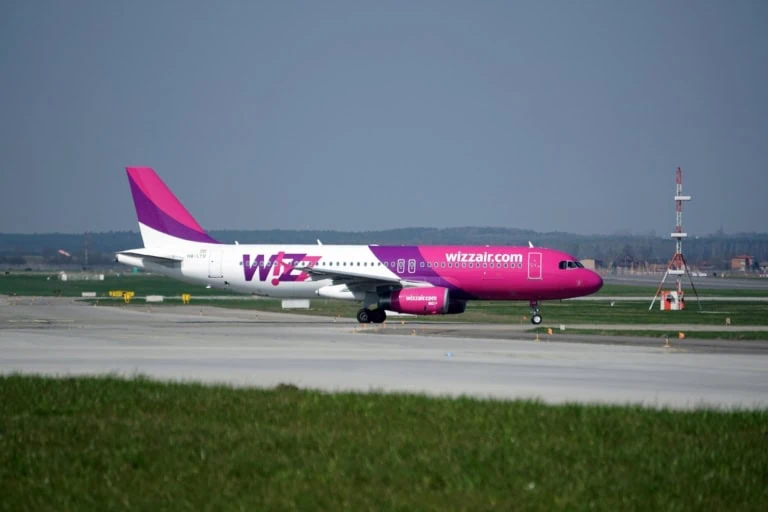
The airport lies southeast of the city and has no direct metro station. OASTH operates direct airport buses and the 2X connection with the metro at Nea Elvetia.
For the complete journey, including daytime and overnight options, use our Thessaloniki Airport Transfers Guide.
Getting Around the Main Visitor Areas
Much of central Thessaloniki is compact enough to explore on foot. Public transport becomes most useful when you need to cross the city quickly, travel uphill or reach somewhere beyond the main historic centre.
The metro passes beneath the central districts, but not every short journey is worth making underground. By the time you have walked to a station, reached the platform and returned to street level, you may have covered the same distance on foot.
Aristotelous Square sits at the heart of central Thessaloniki and is one of the easiest areas to explore without public transport.
The waterfront, shopping streets and many restaurants are within walking distance. Venizelou and Agias Sofias metro stations provide useful connections for longer journeys across the city.
For most sightseeing around the square itself, walking is easier than taking a bus or metro.
Ladadika lies west of Aristotelous Square, close to the waterfront and passenger port. The district is compact, and its narrow streets are best explored on foot.
The metro can bring you into the wider central area, but the final part of the journey will normally involve walking. This is rarely a problem unless you are carrying heavy luggage or staying on a street that is difficult to reach by car.
The waterfront is one of the best walking areas in Thessaloniki. A long promenade runs beside the sea, connecting the central districts with the White Tower and the newer waterfront further east.
Public transport can help you reach the area, but once there, walking is part of the experience. The promenade is flat and provides an easy route between several of the city’s main sights.
The metro is useful when travelling from somewhere further away before beginning a walk along the waterfront.
Ano Poli is the part of Thessaloniki where public transport can save the most effort.
The Upper Town sits on steep hills above the centre, and walking uphill can be tiring, particularly during hot weather. An OASTH bus or taxi can take you towards the higher parts of the district, allowing you to explore on foot and walk downhill afterwards.
This is one journey where choosing transport based only on distance can be misleading. Ano Poli may not look far from the centre on a map, but the gradient makes the journey much harder than walking the same distance along the waterfront.
Our preferred approach is to travel uphill and walk back down through the historic streets towards the centre.
Using Taxis in Thessaloniki
Taxis are widely available across Thessaloniki and can be useful when public transport does not provide a simple journey.
You can find taxis at ranks, hail an available vehicle in the street or arrange a journey through a taxi app. They are particularly useful for late-night travel, heavy luggage and destinations that require an awkward combination of buses.
Journeys within the central area are usually short, so a taxi can be a practical option when two or more people share the fare.
Traffic remains the main disadvantage. A taxi cannot avoid congestion simply because it costs more than the bus, and journeys across the city can take considerably longer during busy periods.
Make sure the meter is used for ordinary city journeys and check the current payment arrangements before travelling. If paying by card is important, confirm this before the journey begins rather than waiting until you arrive.
For airport journeys, the calculation is different because the distance and fare are much greater. Our Thessaloniki Airport Transfers Guide covers taxis from the airport separately.
You are unlikely to need taxis regularly during a normal city break, but they are useful for filling the gaps left by the metro and bus network.

Is Thessaloniki Easy to Explore Without a Car?
For a normal city break, Thessaloniki is much easier to explore without a car.
The main historic centre is walkable, the waterfront is designed for exploring on foot and the metro provides fast journeys across the city. OASTH buses reach areas beyond the underground network.
Driving introduces problems that most visitors do not need. Traffic can be heavy, parking requires planning and a car may spend most of the trip unused while you explore the centre on foot.
The strongest argument against hiring a car is that the places where most visitors spend their time do not require one. Aristotelous Square, Ladadika, the waterfront, the White Tower and many historic sites can be combined on foot.
Ano Poli is easier to reach by bus or taxi than by driving and then trying to find somewhere to park.
A car becomes more useful when Thessaloniki is the starting point for a wider journey. Destinations around Halkidiki and northern Greece can be easier to explore independently, particularly when you want to visit several places in one day.
Our Day Trips from Thessaloniki Guide looks at the places you can visit beyond the city and the different ways to reach them.
For the city itself, leave the car behind. Walk when distances are short, use the metro for longer journeys and take a bus or taxi when the network requires it.

Rupert’s Handy Travel Tips
Using public transport in Thessaloniki? Here are a few useful tips to make getting around easier:
- Walk when the distance is short: Much of central Thessaloniki is compact, and walking is often easier than entering the metro for a very short journey.
- Use the metro for longer journeys across the city: Trains avoid road traffic and provide particularly useful connections with New Railway Station and the central districts.
- Download the OSETH Bus app: Live bus positions, estimated arrival times, journey planning and QR tickets make the wider bus network much easier to use.
- Remember that the airport does not have a metro station: Use the 2X bus to connect with the metro at Nea Elvetia or take the direct airport bus into the city.
- Travel uphill before exploring Ano Poli: Take a bus or taxi towards the Upper Town, then enjoy a much easier walk downhill through the historic streets.
Want to meet the reindeer behind our travel tips? Find out more in our page Who is Rupert?.
Frequently Asked Questions
Does Thessaloniki have a metro?
Yes. The metro runs between New Railway Station and Nea Elvetia, passing through central Thessaloniki.
How much is public transport in Thessaloniki?
An ordinary urban bus ticket costs €0.60, while a 24-hour bus ticket costs €2.50. Metro and special airport services have their own fare arrangements.
Can I use the same ticket on buses and the metro?
Do not assume that an ordinary bus ticket automatically covers a metro journey. The bus and metro do not currently operate as one completely interchangeable ticket system, so check the ticket required for each part of the journey.
What is the best public transport app for Thessaloniki?
We recommend the OSETH Bus app for bus routes, live vehicle positions, estimated arrivals, journey planning and QR bus tickets.
Can you buy Thessaloniki bus tickets on your phone?
Yes. The OSETH Bus app supports QR bus tickets. Follow the current activation and validation instructions shown in the app.
Is there a metro to Thessaloniki Airport?
No. The airport does not have a metro station. OASTH route 2X connects the airport with Nea Elvetia metro station.
How do I get to Thessaloniki Railway Station?
New Railway Station is the western terminus of the metro line, making the underground the easiest option from many parts of central Thessaloniki.
How do I get to the ferry port?
The passenger port is close to Ladadika and the central waterfront. Depending on where you are staying, walking may be easier than making a short public transport journey.
Does public transport run at night in Thessaloniki?
Most services do not operate throughout the night, but the 01N airport bus provides an overnight connection between the city and Thessaloniki Airport.
Do I need a car in Thessaloniki?
No. Most visitors can explore Thessaloniki using a combination of walking, the metro and OASTH buses. A car is more useful for wider trips beyond the city.
Further Reading
Flying into the city? Our Thessaloniki Airport Transfers Guide explains the direct OASTH airport buses, the 2X metro connection, taxis and private transfers.
Planning your time after arrival? Our Best Things to Do in Thessaloniki Guide covers the city’s historic sites, museums, neighbourhoods and waterfront.
Exploring Greece by rail? Our Interrail Greece Guide explains how to use a pass on the Greek railway network, including reservations, routes and connections with Thessaloniki.
Looking beyond the city? Our Day Trips from Thessaloniki Guide explores the best places to visit from Thessaloniki and how to reach them.
Continuing your journey by sea? Our Ferry Routes from Thessaloniki Guide covers direct summer ferries to the Sporades and long-distance sailings across the Aegean.
Need mobile data while travelling? Our eSIM Apps Guide compares the main options for staying connected in Greece without relying on public Wi-Fi or paying expensive roaming charges.