
Why Faro is Worth Visiting
Often overlooked by visitors heading straight for the Algarve’s famous beach resorts, Faro is a destination that deserves far more than a brief stop after landing at the airport. As the regional capital of the Algarve, the city combines centuries of history, a picturesque waterfront, excellent restaurants and one of Portugal’s most important natural landscapes, making it an ideal place to spend a day or two before continuing your journey.
At the heart of Faro is the beautifully preserved Cidade Velha (Old Town), where cobbled streets, ancient city walls and elegant squares provide a glimpse into the city’s long history. Beyond the historic centre, visitors can stroll along the marina, relax in waterfront cafés or take to the water to explore the remarkable Ria Formosa Natural Park, a maze of lagoons, islands and sandbanks that has been recognised as one of the Seven Natural Wonders of Portugal.
Unlike many Algarve resorts, Faro offers a genuine mix of culture, nature and coastal scenery. You can spend the morning exploring medieval streets, enjoy fresh seafood overlooking the marina at lunchtime, then board a boat to deserted beaches or watch the sun set across the lagoons. Whether you’re interested in history, wildlife or simply slowing down and enjoying the atmosphere, Faro offers a very different experience from the region’s larger holiday resorts.
Thanks to its compact size, most of the city’s main attractions can easily be explored on foot, while regular boat trips make it simple to discover the islands and nature reserves just offshore. Faro also makes an excellent base for exploring the wider Algarve, with excellent rail and bus connections to destinations including Tavira, Albufeira, Portimão and Lagos.
Whether you’ve arrived for a city break, are waiting before checking into a nearby resort, or simply want to experience a more authentic side of southern Portugal, Faro is well worth adding to your Algarve itinerary.
See the City on the Faro Tourist Train
If you’re short on time or simply want an easy introduction to the city, the Faro Tourist Train is one of the most enjoyable ways to begin exploring. The 45-minute sightseeing tour takes visitors through many of Faro’s best-known landmarks while providing an informative audio commentary in English, Portuguese, French and Spanish.
Departing from Praça Dom Francisco Gomes, right beside the marina in the heart of the city, the train follows a circular route through both the historic centre and the newer parts of Faro before returning to the same location. Along the way you’ll pass many of the city’s highlights, including the Old Town, Jardim Manuel Bivar, Arco da Vila, Faro Cathedral, Igreja da Misericórdia, Teatro Lethes, Igreja do Carmo, Igreja de São Pedro, the shopping streets of the Baixa and the edge of the beautiful Ria Formosa Lagoon.
For first-time visitors, the train provides an excellent overview of the city, helping you decide which attractions you’d like to return to later on foot. It’s particularly useful during the warmer summer months when walking between sights can become tiring, allowing you to see much more of Faro while relaxing in the open-air carriages.
The tourist train is also wheelchair accessible, making it suitable for a wide range of visitors. Services generally depart at 10:00, 11:00, 12:00, 13:00, 15:00, 16:00 and 17:00, although it’s always worth checking availability in advance, particularly during the busy summer season.
For many visitors, the Faro Tourist Train offers the perfect introduction to the city before exploring the Old Town, marina and waterfront at a more leisurely pace. It is especially popular with families, cruise passengers and anyone visiting Faro for just a few hours.
Discover Faro’s Historic Old Town
The heart of Faro is its beautifully preserved Cidade Velha, or Old Town, a peaceful maze of cobbled streets, whitewashed buildings and hidden squares enclosed by centuries-old defensive walls. While many visitors pass straight through Faro on their way to the Algarve’s beach resorts, those who take the time to wander through the historic centre quickly discover one of southern Portugal’s most charming cities.
Entering through the impressive stone gateways feels like stepping back in time. Narrow lanes wind between traditional Portuguese houses decorated with wrought-iron balconies, colourful shutters and flowering bougainvillea, while quiet cafés spill onto small squares shaded by orange trees. Unlike many historic towns that have become overcrowded with souvenir shops, Faro’s Old Town still feels authentic, with local residents living alongside historic churches, museums and restaurants.
Many of the city’s most important attractions are located within the Old Town, making it easy to explore on foot. The Cathedral, Episcopal Palace, Arco da Vila, ancient city walls and several historic churches are all just a few minutes apart. Along the way you’ll also discover small boutiques, traditional restaurants and peaceful courtyards that reward visitors who wander away from the main streets.
The best time to explore is either early in the morning, when the streets are quiet and the temperatures are cooler, or later in the afternoon as the golden evening light illuminates the historic buildings. Because the Old Town is relatively compact, most visitors can comfortably explore its highlights in two or three hours, although it’s easy to spend much longer simply enjoying the relaxed atmosphere.
Whether you’re visiting Faro for a few hours or several days, the Old Town is undoubtedly the city’s must-see attraction and provides the perfect introduction to the Algarve’s fascinating history.
Visit Faro Cathedral
Standing proudly in the centre of Largo da Sé, Faro Cathedral (Sé de Faro) has dominated the city’s skyline for more than 700 years. Built on the site of a former mosque after the Christian reconquest of Faro in the thirteenth century, the cathedral has survived earthquakes, fires and centuries of rebuilding, resulting in a fascinating blend of Gothic, Renaissance and Baroque architecture.
The exterior is impressive enough, but it’s inside where the cathedral truly comes to life. Visitors can admire beautifully carved wooden choir stalls, intricate gilded chapels, religious artwork and an impressive pipe organ that remains one of the highlights of the building. Every corner reflects the cathedral’s long history, making it one of the Algarve’s most important religious monuments.
One of the biggest reasons to visit, however, is the bell tower. Climbing the narrow staircase rewards visitors with some of the finest panoramic views in Faro. From the top, you can look across the terracotta rooftops of the Old Town, the marina, the Ria Formosa Natural Park and, on a clear day, the barrier islands stretching towards the Atlantic Ocean. It is one of the best photography locations in the city and well worth the climb.
Allow around 45 minutes to one hour for your visit, particularly if you plan to climb the tower and spend time enjoying the views. Combined with the surrounding square and neighbouring historic buildings, Faro Cathedral forms the cultural heart of the Old Town and is an essential stop for anyone interested in Portuguese history or architecture.
Check Faro hotel availability
See hotel options and places to stay in Faro.
Browse hotelsBook your own place in Faro
Browse apartments, holiday homes and self-catering stays in Faro.
View rentalsCheck Faro hotel deals
Compare prices for Faro hotels across multiple booking sites.
Check dealsWalk the Ancient City Walls
Encircling much of Faro’s historic centre are the ancient city walls, which have protected the city for centuries against pirates, invading armies and attacks from the sea. Although parts of the fortifications date back to the Roman period, much of what visitors see today reflects later rebuilding carried out during the medieval and early modern eras.
Walking alongside the walls provides a fascinating perspective on Faro’s history. Massive stone ramparts, defensive towers and fortified gateways still surround much of the Old Town, creating a clear distinction between the historic centre and the modern city beyond. As you follow the walls, you’ll discover quiet viewpoints overlooking the marina and the lagoons of the Ria Formosa, providing excellent opportunities for photography.
Several of Faro’s most important landmarks are connected by the defensive walls, including Arco da Vila, Faro Cathedral and the surrounding squares. Rather than simply moving from one attraction to another, following the line of the fortifications allows visitors to appreciate how the city developed over hundreds of years while enjoying a pleasant walk through one of the Algarve’s most atmospheric settings.
Because much of the route is flat and pedestrian-friendly, walking the walls can easily be combined with exploring the Old Town. It offers a slower, more relaxed way to experience Faro and helps visitors understand why the city became such an important strategic port throughout Portuguese history.
Explore Arco da Vila
One of Faro’s most recognisable landmarks is Arco da Vila, the elegant ceremonial gateway that marks the main entrance into the Old Town. Completed in 1812, the arch was built in a neoclassical style, but it incorporates part of the original medieval gateway that once formed the city’s principal line of defence.
Passing beneath the arch is an experience that almost every visitor enjoys. On one side lies the bustling marina and modern city, while on the other the narrow cobbled streets of the historic centre immediately create a calmer, more traditional atmosphere. It is the point where most walking tours begin and one of the most photographed locations in Faro.
Look closely and you’ll notice that the gateway also contains the Arab Gate, one of the few surviving examples of Moorish architecture in southern Portugal. This hidden feature serves as a reminder that Faro spent several centuries under Islamic rule before becoming part of the Kingdom of Portugal.
Above the arch, visitors may also spot one of Faro’s most unusual residents. A pair of white storks frequently nest on top of the gateway, with their enormous nests becoming something of a local landmark. During spring and summer, seeing the adult birds tending to their chicks has become a favourite sight for photographers and wildlife enthusiasts.
Whether you’re entering or leaving the Old Town, Arco da Vila is far more than simply a gateway. It represents the meeting point between Faro’s ancient past and its modern present, making it one of the city’s most iconic attractions.
See the Bone Chapel (Capela dos Ossos)
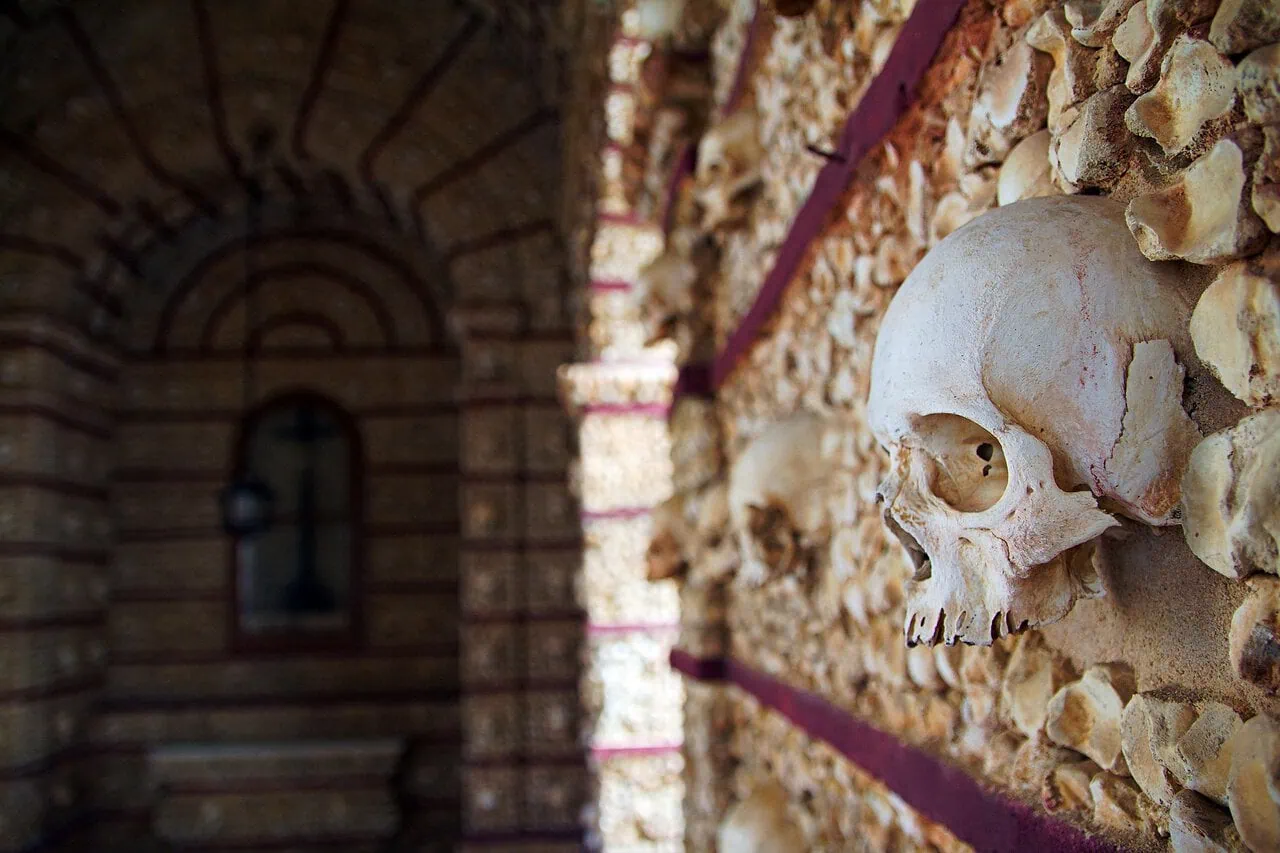
Hidden within the Igreja do Carmo, the Capela dos Ossos, or Bone Chapel, is one of Faro’s most unusual and thought-provoking attractions. Unlike the bright streets and sunny waterfront outside, this small chapel offers a striking reminder of the city’s past, with its walls and ceilings decorated using the bones and skulls of more than 1,000 Carmelite monks.
Constructed during the early nineteenth century, the chapel was designed to encourage visitors to reflect on the temporary nature of life. Above the entrance, you’ll find the inscription “Stop here and consider that you will reach this state too,” setting the tone before you even step inside. While the display may seem unsettling at first, it was created as a religious symbol rather than a curiosity, reflecting beliefs that were common at the time.
Despite its sombre appearance, the Bone Chapel is beautifully presented and surprisingly peaceful. Soft lighting highlights the intricate patterns formed from the bones, while the small size of the chapel creates an intimate atmosphere that contrasts sharply with the busy streets outside. It has become one of Faro’s most photographed attractions and is often regarded as one of the most unusual chapels in Portugal.
The chapel can easily be combined with a visit to the Igreja do Carmo, one of Faro’s finest Baroque churches, making it well worth allowing 30 to 45 minutes for your visit. Whether you’re interested in history, architecture or simply seeing something completely different, the Bone Chapel is one of Faro’s most memorable sights.
Cruise through the Ria Formosa Natural Park
No visit to Faro is complete without spending time on the water. The Ria Formosa Natural Park stretches for around 60 kilometres along the Algarve coast and is widely regarded as one of Portugal’s greatest natural treasures. Made up of lagoons, salt marshes, sandbanks and barrier islands, it provides a constantly changing landscape that is best explored by boat.
One of the most popular experiences is the four-hour guided boat tour through the park, departing from Faro Marina. Travelling in a small group of no more than eleven passengers, the trip offers a much more personal experience than larger sightseeing boats while allowing plenty of opportunities to learn about the area’s wildlife, history and traditional fishing communities.
During the cruise you’ll travel through the winding channels of the nature reserve before stopping at two of its most beautiful islands. The first is Ilha Deserta, a peaceful island of rolling sand dunes and unspoilt beaches where you’ll have free time to relax, swim or simply enjoy the tranquillity. The second stop is Ilha do Farol, home to the striking Santa Maria Lighthouse, colourful cottages and another magnificent stretch of golden sand.
Throughout the journey your guide explains the unique ecosystem of the Ria Formosa, which supports countless species of birds, shellfish and marine life. Depending on the season, you may spot herons, egrets, ospreys and other wildlife that make this protected landscape one of Europe’s most important wetland habitats.
If you only book one organised excursion during your stay in Faro, this is arguably the best choice. Combining spectacular scenery, island beaches, wildlife and fascinating local knowledge, it offers an experience that simply isn’t possible from land alone.
Watch the Sunset from the Water
As evening approaches, the Ria Formosa becomes even more magical. The lagoons turn shades of gold and orange, birds settle for the night and the calm waters reflect one of the Algarve’s most spectacular sunsets. One of the best ways to experience this daily spectacle is aboard a one-hour sunset boat cruise departing from Faro Marina.
Travelling on a comfortable pontoon boat with a knowledgeable local guide, you’ll gently cruise through the protected waters of the natural park while learning about its wildlife and history. Unlike the longer island tours, the emphasis here is on relaxing and enjoying the changing colours of the landscape as the sun slowly sinks towards the horizon.
The cruise departs from the Formosamar Boat Tours office beside the Ginásio Clube Naval de Faro, making it easy to reach on foot from the city centre and marina. Life jackets are provided, the boats are wheelchair accessible, and commentary is available in English, Portuguese, French and Spanish, making the experience suitable for a wide range of visitors.
Although couples often choose this trip for its romantic atmosphere, it’s equally enjoyable for solo travellers, families and photographers hoping to capture the beautiful evening light across the lagoons. Wildlife is often active at this time of day, adding another dimension to the experience as birds glide across the calm waters in search of their evening feeding grounds.
Whether you’re celebrating a special occasion or simply looking for a relaxing way to end the day, a sunset cruise on the Ria Formosa is one of Faro’s most memorable experiences and an ideal finale to a day spent exploring the city.

Visit Ilha Deserta
True to its name, Ilha Deserta, also known as Barreta Island, is the quietest and least developed of the barrier islands protecting the Ria Formosa Natural Park. Accessible only by boat from Faro, it offers visitors the chance to experience one of the Algarve’s most pristine stretches of coastline, far removed from the busy beaches found elsewhere in the region.
The island is famous for its unspoilt golden sands, crystal-clear Atlantic waters and peaceful atmosphere. With no permanent residents and very little development, it’s an ideal place to escape the crowds, enjoy a long walk along the shoreline or simply relax with the sound of the waves. Even during the height of summer, it’s often possible to find a quiet spot all to yourself.
Most visitors arrive as part of a guided boat tour, although seasonal ferry services also operate from Faro. Many excursions allow around 45 minutes on the island, giving plenty of time to swim, explore the dunes or admire the spectacular coastal scenery before continuing to the next stop.
As part of the protected Ria Formosa Natural Park, the island is home to an impressive variety of birds and coastal wildlife. Wooden boardwalks help protect the fragile dune system while making it easy for visitors to explore responsibly.
For anyone looking to experience the Algarve’s natural beauty away from the larger resorts, Ilha Deserta is one of the region’s true hidden gems and an unforgettable addition to any visit to Faro.
Escape to Ilha do Farol
While Ilha Deserta is all about untouched nature, Ilha do Farol offers a completely different experience. This charming island is home to a small community of colourful holiday cottages, quiet sandy streets and the striking Santa Maria Lighthouse, which has guided ships safely into Faro for more than a century.
Despite being just a short boat ride from the city, Ilha do Farol feels wonderfully peaceful. Cars are almost entirely absent, leaving visitors free to stroll between the cottages, admire colourful gardens and enjoy the relaxed pace of island life. The lighthouse remains the island’s most recognisable landmark, standing proudly above the dunes and providing a dramatic backdrop for photographs.
The beaches are another major attraction. Soft golden sand stretches for kilometres along the Atlantic coast, while the calm waters are ideal for swimming during the warmer months. Even in the height of summer, the beach feels far less crowded than many of the Algarve’s better-known resorts, making it an excellent place to spend a relaxing afternoon.
Most visitors arrive as part of the Ria Formosa Islands Boat Tour, which usually allows around 45 minutes to explore the island. This gives enough time for a walk to the lighthouse, a swim in the sea or simply relaxing with a drink overlooking the beach before returning to Faro.
For many travellers, Ilha do Farol perfectly combines traditional Algarve charm, beautiful beaches and stunning coastal scenery, making it one of the highlights of any visit to Faro.
Discover Ilha da Culatra
A short distance from Ilha do Farol lies Ilha da Culatra, one of the most fascinating communities in the Ria Formosa Natural Park. Unlike many of the Algarve’s beach resorts, Culatra is a genuine working island where fishing remains an important part of everyday life, giving visitors the opportunity to experience a more authentic side of the region.
The island is home to a small year-round population who rely heavily on the sea. Fishing boats line the harbour, seafood restaurants serve freshly caught fish and shellfish, and the narrow pedestrian streets create a relaxed atmosphere that feels worlds away from the busy mainland. Because there are virtually no cars, exploring on foot is both easy and enjoyable.
Beyond the village, wide sandy beaches stretch along the Atlantic coast, offering plenty of space to relax even during the busiest months of the year. The crystal-clear water makes the island popular for swimming, while nature lovers will appreciate the surrounding dunes and birdlife that form part of the protected Ria Formosa ecosystem.
Regular ferries operate between Faro and Culatra, while some guided boat excursions include the island as part of a wider tour of the lagoon. Visitors often spend several hours here, combining a seafood lunch with a walk through the village before heading to the beach.
If you’re looking to experience traditional island life rather than purpose-built tourism, Ilha da Culatra is one of the Algarve’s most rewarding places to visit.
Spend the Day at Praia de Faro
Just a few kilometres from the city centre, Praia de Faro is Faro’s main beach and one of the easiest stretches of sand to reach without taking a boat. Sitting on a narrow barrier island between the Atlantic Ocean and the Ria Formosa lagoon, it offers visitors the chance to enjoy both beautiful coastal scenery and convenient access from the city.
The beach extends for several kilometres, providing plenty of space for sunbathing, swimming and long walks along the shoreline. During the summer months, the Atlantic Ocean offers welcome relief from the Algarve’s high temperatures, while the steady sea breeze makes the beach a popular destination for surfers, paddleboarders and other watersports enthusiasts.
Behind the beach you’ll find a good selection of cafés, seafood restaurants and beach bars where you can enjoy lunch or a drink overlooking the ocean. Fresh grilled fish is a particular speciality, making Praia de Faro an excellent place to sample local Algarve cuisine after a morning on the beach.
Reaching Praia de Faro is straightforward. Regular Próximo Route 16 buses operate from Faro city centre and Faro Airport, while taxis take around 10 minutes from the Old Town. There is also parking for visitors arriving by car, although spaces can fill quickly during July and August.
Whether you’re looking to spend a few hours relaxing after sightseeing or dedicate an entire day to the coast, Praia de Faro provides the perfect beach escape without travelling far from the city.
Relax at Faro Marina
Stretching along the edge of the Old Town, Faro Marina is one of the city’s most attractive places to slow down and enjoy the atmosphere. Lined with cafés, restaurants and palm trees, the waterfront provides a pleasant contrast to the historic streets behind it and acts as the gateway to many of Faro’s most popular boat trips.
Throughout the day you’ll see fishing boats, sailing yachts and excursion vessels coming and going, while visitors relax on outdoor terraces watching the world pass by. It is an excellent place to stop for a coffee in the morning, enjoy a leisurely seafood lunch or simply take in the views across the calm waters of the Ria Formosa.
Many of Faro’s organised excursions depart directly from the marina, including Ria Formosa island cruises, sunset boat trips and wildlife tours. This makes the waterfront more than just a scenic place to walk. It’s also the starting point for many of the city’s most memorable experiences.
As evening approaches, the marina becomes one of the liveliest parts of Faro. Restaurants fill with locals and visitors, the lights begin to reflect on the water and the atmosphere becomes noticeably more relaxed. It’s the perfect place to enjoy dinner after a day exploring the Old Town or visiting the islands.
Even if you don’t plan to take a boat trip, Faro Marina is well worth visiting. It perfectly captures the laid-back character of the city and provides one of the best places to appreciate Faro’s unique position between the historic centre and the beautiful Ria Formosa lagoon.
Browse Faro Municipal Museum
Housed within the former Convent of Nossa Senhora da Assunção, Faro Municipal Museum is one of the Algarve’s most important cultural attractions. Located inside the Old Town, the museum tells the story of Faro and the surrounding region through an impressive collection of archaeological discoveries, religious art and historical artefacts spanning more than two thousand years.
One of the highlights is the collection of Roman mosaics, including the famous Ocean Mosaic, which was discovered at the nearby Roman ruins of Milreu. Beautifully preserved sculptures, inscriptions and everyday objects provide a fascinating insight into life in southern Portugal during the Roman Empire, while later galleries explore the city’s medieval and religious history.
The museum building itself is just as impressive as the exhibits it contains. The peaceful cloisters, elegant courtyards and historic architecture make it worth visiting even before you begin exploring the collections. Information panels are well presented, allowing visitors to understand how Faro developed from a Roman settlement into the capital of the Algarve.
Allow around one to two hours for your visit, depending on your interest in history. Combined with the nearby cathedral and city walls, the museum forms an important part of any walking tour of Faro’s historic centre.
Whether you’re interested in archaeology, architecture or Portuguese history, Faro Municipal Museum offers one of the city’s most rewarding cultural experiences.
Shop and Dine Around Faro
Although Faro is best known for its history and natural surroundings, it’s also an excellent place to enjoy the Algarve’s food and shopping scene. Around Jardim Manuel Bivar, the marina and the pedestrian streets of the city centre you’ll find a wide variety of cafés, traditional restaurants, boutique shops and independent retailers.
Seafood naturally dominates many menus. Freshly grilled sardines, sea bass, octopus and locally caught shellfish are all popular choices, while the Algarve’s famous cataplana, a rich seafood stew cooked in a traditional copper pan, is a must-try for first-time visitors. Many restaurants also serve regional desserts made with almonds, figs and citrus fruits, reflecting the area’s agricultural heritage.
Shopping in Faro is less about large shopping centres and more about discovering local businesses. The pedestrian streets around the Baixa are lined with gift shops, fashion boutiques, artisan stores and delicatessens selling local olive oils, wines and handmade products. It’s an enjoyable area simply to wander, particularly during the evening when the streets become lively with both residents and visitors.
The cafés surrounding the marina are perfect for watching the world go by with a coffee or a glass of Portuguese wine, while the Old Town offers quieter restaurants tucked away in historic courtyards. Whether you’re looking for a quick lunch between sightseeing or a leisurely dinner after a boat trip, Faro has dining options to suit every budget.
For many visitors, sampling the local cuisine is just as memorable as visiting the city’s historic attractions, making food an important part of any visit to Faro.
Check Faro hostel options
Compare hostels and lower-cost places to stay in Faro.
Search hostelsMake disruption on your Faro trip less painful
Access compensation support, eligible lounge benefits and faster payouts when flights go wrong.
See the benefitsExplore Faro without your bags
Arriving before check-in or leaving later? Store your luggage and make more of your time in Faro.
Store your bagsWatch the Sunset from Faro Marina
As the day draws to a close, Faro Marina becomes one of the most beautiful places in the city. The evening light reflects across the calm waters of the Ria Formosa, fishing boats gently bob in the harbour and the terraces begin to fill with people enjoying dinner or an evening drink.
Unlike many west-facing coastal resorts, Faro’s sunsets are more subtle than dramatic. Rather than watching the sun disappear directly into the Atlantic, visitors are treated to constantly changing colours spreading across the lagoons, salt marshes and islands of the Ria Formosa. Shades of gold, orange and pink create a peaceful atmosphere that perfectly complements the city’s relaxed character.
The waterfront promenade offers plenty of places to sit and enjoy the view, while many restaurants and cafés have outdoor terraces overlooking the marina. It’s an ideal opportunity to enjoy fresh seafood, sample a local Portuguese wine or simply pause after a busy day of sightseeing.
For photographers, the hour before sunset provides some of the best lighting anywhere in the city. Historic buildings, yachts and palm trees all take on a warm golden glow, creating countless opportunities for memorable photographs.
If you’ve already enjoyed a sunset boat cruise, returning to the marina afterwards allows you to experience the changing atmosphere from both the water and the waterfront. If you haven’t taken the cruise, simply watching the evening unfold from the promenade is still one of the most relaxing ways to finish a day in Faro.
Best Time to Visit Faro
Thanks to its Mediterranean climate, Faro is a destination that can be enjoyed throughout the year, although each season offers a slightly different experience. The best time to visit depends on whether you’re interested in sightseeing, beaches, wildlife or simply enjoying pleasant weather without the crowds.
Spring, from March to May, is one of the most enjoyable times to explore Faro. Temperatures are warm but comfortable, flowers bloom throughout the city and the Ria Formosa Natural Park is particularly attractive for birdwatching as migratory species pass through the lagoons. It’s also an excellent time for walking around the Old Town before the summer heat arrives.
Summer, between June and September, brings long sunny days, lively waterfront cafés and ideal conditions for boat trips, swimming and visiting the islands. This is also the busiest period of the year, so attractions, beaches and restaurants can become crowded, particularly during July and August.
Autumn offers many of the same advantages as spring. The sea remains warm enough for swimming well into October, while visitor numbers begin to fall, creating a more relaxed atmosphere throughout the city.
Even winter is surprisingly mild compared with much of Europe. Although beach weather is less predictable, Faro remains an excellent destination for exploring the Old Town, enjoying local restaurants and discovering the natural beauty of the Algarve without the summer crowds.
No matter when you visit, Faro combines history, nature and coastal scenery in a way that makes it an attractive destination throughout the year.
How Long Should You Spend in Faro?
Many visitors treat Faro as little more than the Algarve’s airport city, collecting their luggage before heading immediately to the coast. While that’s understandable if you’re travelling directly to a beach resort, spending at least one full day in Faro allows you to experience a very different side of southern Portugal.
If you only have a few hours, it’s still possible to see many of the city’s highlights. Begin with a walk through the Old Town, visit Faro Cathedral, stroll beneath Arco da Vila and relax beside the marina before finishing with lunch overlooking the Ria Formosa. The Faro Tourist Train is also an excellent option if you’re short on time, providing a 45-minute overview of the city’s main sights before you continue exploring on foot.
A full day gives you time to experience Faro at a much more relaxed pace. You can spend the morning exploring the historic centre, visit the Bone Chapel and Municipal Museum, enjoy a leisurely lunch, then head out onto the water during the afternoon with a boat trip through the Ria Formosa Natural Park. Returning to the marina for dinner provides the perfect end to the day.
If your itinerary allows two days, Faro becomes an excellent base for discovering the surrounding area. You’ll have time to visit the nearby islands, spend several hours at Praia de Faro, enjoy one of the sunset cruises and sample more of the city’s restaurants and cafés without feeling rushed.
Although many travellers arrive expecting Faro to be simply a transport hub, most leave pleasantly surprised by its combination of history, nature and relaxed atmosphere. For many visitors, one night in Faro before continuing around the Algarve proves to be the perfect introduction to the region.

Rupert’s Handy Travel Tips
Planning to explore Faro? Here are a few tips to help you make the most of your visit.
- Visit early or late in the day: The Old Town is much quieter during the morning and late afternoon, making sightseeing more enjoyable, especially in summer.
- Book a boat trip in advance: The Ria Formosa island cruises and sunset tours are among Faro’s most popular experiences and can sell out during the busiest months.
- Bring comfortable shoes: Faro’s historic centre is compact but its traditional cobbled streets can be uneven in places.
- Don’t rush straight to the resorts: Even one day in Faro gives you the chance to experience the Algarve’s history, culture and spectacular natural scenery before heading elsewhere.
Want to meet the reindeer behind our travel tips? Find out more in our page Who is Rupert?.
Frequently Asked Questions
Is Faro worth visiting?
Yes. While many visitors pass through on their way to the Algarve’s beach resorts, Faro offers a beautiful Old Town, excellent restaurants, fascinating history and easy access to the stunning Ria Formosa Natural Park.
How many days do you need in Faro?
Most visitors can see the main attractions in one full day, although spending two days allows time to visit the islands, enjoy a boat trip and explore the city at a more relaxed pace.
Can you walk around Faro?
Yes. The city centre is compact and most attractions, including the Old Town, cathedral, marina and museum, are within easy walking distance of each other.
What is Faro famous for?
Faro is best known for its historic Old Town, Faro Cathedral, the Bone Chapel, the Ria Formosa Natural Park and its role as the gateway to Portugal’s Algarve region.
Further Reading & Related Guides
If you’re planning to explore more of southern Portugal, our Faro Airport Transfers Guide explains the different ways of travelling between the airport, the city centre and the Algarve’s most popular resorts, helping you choose the best option for your arrival.
Looking to venture beyond the city? Our Day Trips from Faro Guide covers some of the Algarve’s best excursions, including picturesque coastal towns, historic villages, spectacular beaches and some of the region’s most beautiful natural attractions.
If you’re planning to travel further around the country by rail, our Portugal Rail Pass Guide explains the different tourist rail passes available, while our Interrail Portugal Guide explores how to discover Portugal and continue your journey into neighbouring Spain by train.
Finally, staying connected makes travelling around Portugal much easier. Our Best eSIM Apps Guide compares the leading providers, helping you find reliable mobile data for navigation, booking attractions and staying in touch throughout your trip.