
Discover Northern Greece from Thessaloniki
Thessaloniki is much more than a city-break destination. Its position in northern Greece puts ancient Macedonian capitals, Mount Olympus, waterfalls, thermal springs, wetlands, beaches and historic cities within reach, making it an excellent base for exploring the wider region.
The variety is exceptional. One day can take you underground into the royal tombs of ancient Macedon; another can place you beneath the monasteries of Meteora or swimming in the clear water around Halkidiki. You can follow the story of Alexander the Great, walk beneath Mount Olympus, watch pelicans at Lake Kerkini or spend several hours soaking in naturally heated pools.
The challenge is not finding somewhere to go. It is deciding which trips genuinely work in a single day from Thessaloniki.
Distances can be deceptive. A destination only an hour from the city by road may be awkward to reach without a car, while a more distant city can be surprisingly easy because it has a direct bus or train. Some places have public transport to the nearest town but no useful connection for the final few kilometres to the attraction itself.
Throughout this guide, we will make that distinction clear. For every day trip, we explain whether public transport is genuinely practical, how to make the journey when it is, and when a car or organised excursion is the more sensible choice.
That matters particularly for places such as Pella, Vergina, Mount Olympus and Halkidiki. It is often possible to find a bus that travels somewhere in the right direction, but that does not automatically mean the journey works well for sightseeing.
You should also think about what you want from the day. Vergina and Pella are the strongest choice for ancient Macedonian history, Mount Olympus and Dion combine mythology with archaeology and landscapes, while Meteora delivers the most dramatic scenery. In summer, Halkidiki offers a complete change of pace from the city, while Edessa, Pozar and Lake Kerkini reveal a greener side of northern Greece.
The best day trip is therefore not necessarily the most famous one. It is the trip that fits your interests, the season, the transport available and the amount of time you are prepared to spend travelling.
Day Trips from Thessaloniki at a Glance
The table below gives you a quick comparison of the main choices. Journey times are approximate and can vary depending on the exact destination, traffic and connections.
| Day Trip | Best For | Typical Journey | Best Way to Visit | Public Transport? |
|---|---|---|---|---|
| Vergina and Pella | Ancient Macedonia | Around 1 to 1.5 hours each way | Tour or car | Possible separately; difficult together |
| Mount Olympus and Dion | History and landscapes | Around 1 to 1.5 hours | Tour or car | Possible, but awkward to combine |
| Meteora | Monasteries and scenery | Around 3.5 hours each way | Organised tour | Possible, but a long day |
| Halkidiki | Beaches and coast | 1 to 2+ hours | Car or tour | Yes, to selected resorts and towns |
| Edessa and Pozar Baths | Waterfalls and relaxation | 1.5 to 2+ hours | Tour or car | Edessa is easy; Pozar is difficult |
| Lake Kerkini | Wildlife and nature | Around 1.5 hours | Tour or car | Not practical for most visitors |
| Kavala | Historic city break | Around 2 hours | Intercity bus | Yes, and relatively easy |
| Veria | History and old streets | Around 1 to 1.5 hours | Train or bus | Yes |
The important column is public transport, because a simple yes or no does not tell the whole story.
Vergina, for example, can be reached without a car, but it normally requires travelling to Veria and connecting with a local bus. Pella has bus access from Thessaloniki, but combining both major Macedonian sites in a single day becomes much more difficult when you are working around several timetables.
Edessa is straightforward by intercity bus, while continuing to the Pozar Thermal Baths is the problem. Similarly, public transport can take you towards Mount Olympus, but visiting both the mountain area and ancient Dion efficiently is much harder.
At the other end of the scale, Kavala and Veria are genuine independent day trips. You can travel out, explore on foot and return without needing a car for the sightseeing itself.
We will explain the exact practicalities in each section rather than pretending that every destination is equally easy.
Compare hotels and other places to stay in Thessaloniki.
Check availabilityBrowse apartments, holiday homes and self-catering stays in Thessaloniki.
View rentalsSee hotel prices from multiple booking sites in one search.
Compare ratesWhich Thessaloniki Day Trip Should You Choose?
If your main interest is Alexander the Great and ancient Macedonia, choose Vergina and Pella. The two sites tell different parts of the same story: Pella was the great capital where Alexander was born, while Vergina preserves the royal tombs of the dynasty from which he came.
For history combined with landscapes, Mount Olympus and Dion are the stronger choice. You can explore an ancient Macedonian religious centre beneath the mountain associated with the Greek gods, making the two destinations a natural pairing.
If you want the most dramatic scenery, choose Meteora. It is the longest mainstream day trip in this guide, but the monasteries standing on immense rock pillars create one of the most extraordinary landscapes in Greece. It is the right choice when seeing Meteora matters more than having a relaxed day.
In summer, Halkidiki offers the clearest escape from the city. Choose Kassandra for the easiest resort and beach access, Sithonia for more spectacular coastal scenery, or a full-day cruise if you want to reach the water without renting a car.
For something completely different, combine the Pozar Thermal Baths and Edessa. This is one of the best choices outside summer, bringing together naturally heated pools, mountain scenery and the waterfalls of Edessa.
Nature lovers should look towards Lake Kerkini, particularly if birdlife is a priority. The wetland is famous for pelicans and other wildlife, but the lack of convenient public transport means it requires more planning than an independent city trip.
For the easiest car-free choices, look at Kavala, Veria or Edessa. These are places where public transport gets you to a useful central arrival point and you can continue exploring on foot.
The key question is not simply “Where can I reach?” but “What can I realistically explore once I arrive?” That is the test we will use throughout this guide.
Walk Through the Royal History of Vergina
Vergina is one of the most important archaeological destinations in Greece, but the experience is very different from walking around a vast landscape of exposed ruins. The main attraction lies beneath the earth, where the royal tombs of ancient Macedon were discovered.
The ancient city was known as Aigai, the first capital of the kingdom of Macedon. Long before Pella became the centre of royal power, Aigai was the heart of the dynasty that would eventually produce Philip II and his son, Alexander the Great.
The most famous discovery is the royal tomb widely identified as that of Philip II of Macedon. Philip transformed Macedonia into the dominant power in Greece and created the military foundations that Alexander would later use to build his empire.
Rather than removing the tombs and their contents to a conventional museum elsewhere, the site has been designed around the burial mound itself. Visitors descend into a darkened museum where the tombs, treasures and funerary objects are presented in an atmosphere that feels completely different from an ordinary archaeological collection.
The finds include gold, weapons, armour, jewellery and extraordinary royal objects, but the power of the visit comes from seeing them in the context of the burial site. Even visitors who have already spent hours in archaeological museums are unlikely to feel that Vergina is simply more of the same.
The wider Aigai site extends beyond the royal tombs. The remains of the royal palace occupy higher ground nearby, while the broader archaeological landscape helps reveal the importance of the ancient capital.
For most first-time visitors, however, the Museum of the Royal Tombs is the essential experience. Allow enough time to explore it properly rather than treating Vergina as a quick stop on the way to somewhere else.
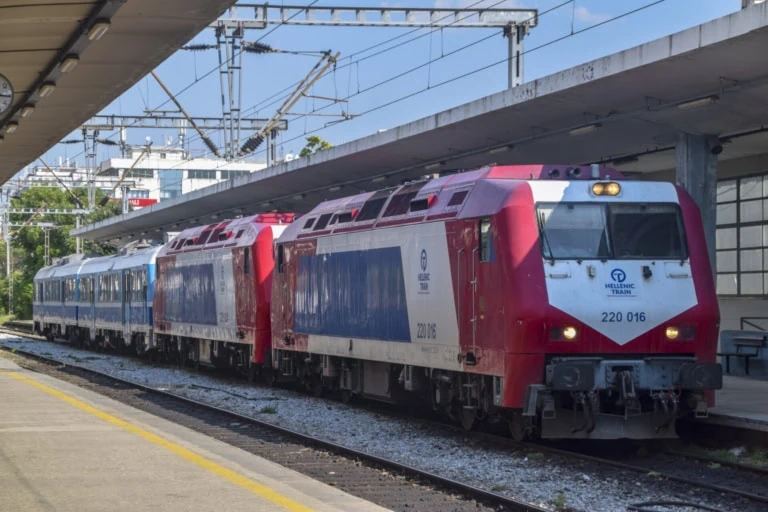
Reaching Vergina independently is possible, although the journey requires a change in Veria. The fastest public transport option is usually to take a train from Thessaloniki to Veria in around one hour, then continue by local bus to Vergina, which takes approximately 22 minutes.
You can also travel from Thessaloniki’s Macedonia KTEL Bus Station to Veria. The bus journey takes around 1 hour 30 minutes, after which you make the same local bus connection to Vergina.
In practice, allow around 2 to 2½ hours each way by public transport once the connection in Veria is included. The journey can take longer if the local bus times do not line up neatly, so check both the outward and return connections before leaving Thessaloniki. The main Thessaloniki–Veria route is frequent; the short final journey to Vergina is the part that determines whether your day runs smoothly.
This still makes Vergina a realistic car-free day trip, but it is not a quick one. If you leave Thessaloniki early and plan the connections carefully, you should have enough time to explore the royal tombs properly before returning.
One particularly useful option is to combine Vergina and Veria. Visit the royal tombs first, return to Veria by local bus, spend the remaining part of the afternoon exploring the city and then take a direct bus or train back to Thessaloniki. This is a much more natural public transport itinerary than trying to continue from Vergina to Pella.
A car gives you more freedom to explore the wider archaeological landscape, while an organised excursion is considerably more practical if you want to see both Vergina and Pella in a single day. The two sites are closely connected historically, but their public transport connections do not work well as a combined sightseeing route.
As a standalone destination, Vergina is entirely possible without a car. Allow around two hours or more for the journey in each direction, plan the Veria connection before setting out and do not rely on turning up to find an immediate onward bus.
Explore the Ancient Capital at Pella
Before Alexander the Great began the campaigns that would transform the ancient world, he grew up in Pella, the capital of the kingdom of Macedon. The city replaced Aigai as the centre of royal power and developed into one of the most important cities in northern Greece.
Pella is a very different experience from Vergina. At Aigai, the focus is on the royal dynasty, burial traditions and the extraordinary treasures discovered inside the tombs. At Pella, you are exploring the remains of the city where the Macedonian court lived and governed.
The archaeological site reveals the scale and wealth of the ancient capital. Large houses were arranged around central courtyards, while streets, public buildings and the enormous agora show that Pella was much more than a royal residence.
The site is particularly famous for its pebble mosaics. Detailed scenes once decorated the floors of wealthy houses, including hunting and mythological subjects. Some of the most important finds are now protected and displayed in the nearby archaeological museum.
The Archaeological Museum of Pella is essential rather than an optional extra. Its collections bring the exposed ruins to life through mosaics, sculpture, pottery, jewellery, coins and objects from everyday life. Visiting the site without the museum would leave much of the story unfinished.
Pella is also closely associated with Alexander the Great, who was born here in 356 BC. Although visitors should not expect a single surviving palace room or birthplace that can be pointed out with certainty, the wider site gives you a much clearer sense of the capital in which Alexander grew up.
For most visitors, allow at least three hours for the archaeological site and museum together. The distances and summer heat can make the outdoor site more tiring than the underground museum at Vergina, so carry water and avoid rushing between the ruins.
Pella is one of the easier major archaeological day trips to make from Thessaloniki without a car. KTEL Pellas buses towards Giannitsa and Edessa leave from the Macedonia KTEL Bus Station and stop at Pella, with the journey taking roughly 45 minutes to one hour, depending on the service and traffic.
The important detail is the arrival point. The intercity bus does not deliver you to the entrance of both attractions. It stops around the modern settlement, so you need to allow for the final walk between the bus stop, archaeological museum and ancient site. The exact stop used by your service is worth confirming with the driver when you board.
For a realistic independent visit, allow around 1¼ to 1½ hours for the complete journey from Thessaloniki to the museum area, including the walk after leaving the bus. The return journey is similar, although you should check the timetable before beginning your visit rather than assuming that buses run at short city-style intervals throughout the day.
This makes Pella much easier independently than Vergina. You can leave Thessaloniki in the morning, spend several hours exploring the museum and archaeological site and return during the afternoon without needing a car or organised excursion.
The situation changes if you want to visit Pella and Vergina on the same day. There is no useful direct tourist connection between the two archaeological sites, and trying to link local and intercity buses consumes too much time. For Pella alone, public transport works well. For the full story of ancient Macedon in one day, a car or organised excursion is far more practical.
Follow the Story of Ancient Macedon from Pella to Vergina
Pella and Vergina are often presented as competing day trips, but they are much better understood together. Pella shows the living capital of ancient Macedon; Vergina reveals the royal dynasty behind it.
At Pella, you walk through the remains of a major city. The houses, agora, mosaics and museum help you understand the wealth and sophistication of the Macedonian capital during the period associated with Philip II and Alexander the Great.
Vergina offers a completely different experience. The underground royal tombs, burial treasures and wider landscape of ancient Aigai take you back to the dynasty’s earlier capital and the ceremonial heart of the kingdom.
Visiting both creates a much stronger historical journey than seeing either site in isolation. You move from the city where Alexander was born to the royal burial place associated with his father, Philip II.
The difficulty is transport. Both destinations can be reached independently from Thessaloniki, but public transport works well for visiting them separately, not for combining them efficiently.
A public transport day would require travelling from Thessaloniki to one site, making a series of onward connections across the region and then finding a workable route back to the city. The waiting time between services can quickly turn an excellent historical itinerary into a day dominated by bus stations and timetables.
Driving solves that problem. The two sites can be linked by road, allowing you to control how long you spend at each and travel directly between them. Even with a car, this should be treated as a full-day journey, particularly if you want to explore both museums rather than rushing through the headline exhibits.
An organised excursion is the easiest option for visitors without a car. Current full-day trips from Thessaloniki typically last around eight hours and handle the transport between the two archaeological areas, allowing the day to focus on the sites rather than the connections.
This is one of the clearest examples on the page where paying for transport can genuinely improve the experience. You are not booking a tour simply because public transport does not exist; you are booking it because the public transport networks do not connect the two places in a way that makes sense for a single sightseeing day.
If you prefer travelling independently, choose one site and explore it properly. Pella is the easier direct public transport trip from Thessaloniki, while Vergina can be paired naturally with Veria. Trying to force both into one car-free day is not something we recommend.
For visitors with a strong interest in ancient history, however, seeing Pella and Vergina together is arguably the best historical day trip from Thessaloniki. Few other excursions allow you to follow such a clear story from royal capital to royal tombs in the course of a single day.
Perea and Neoi Epivates: Beaches, Seafront Restaurants and a Scenic Boat Trip
If you’re looking to escape the city for a few hours, Perea and Neoi Epivates are two of the easiest and most enjoyable day trips from Thessaloniki. Located on the opposite side of the Thermaic Gulf, these neighbouring seaside resorts are popular with locals thanks to their long sandy beaches, palm-lined promenade, excellent seafood restaurants and relaxed atmosphere. They can be visited in just a few hours or enjoyed as a full-day trip, particularly during the warmer months.
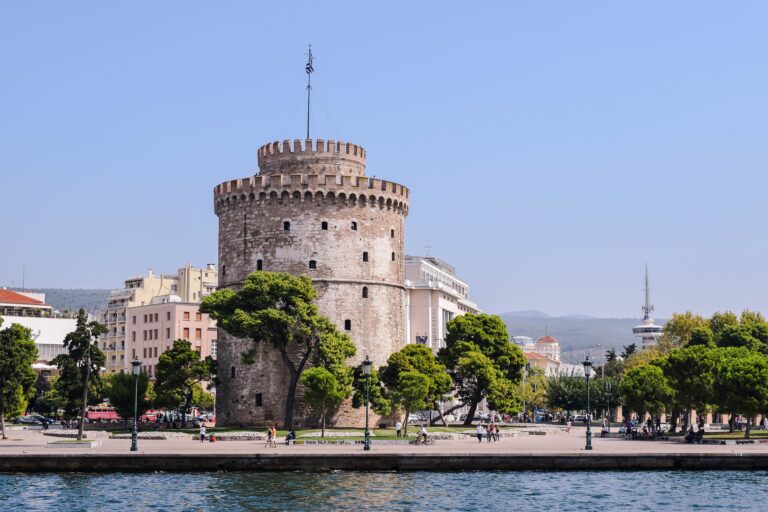
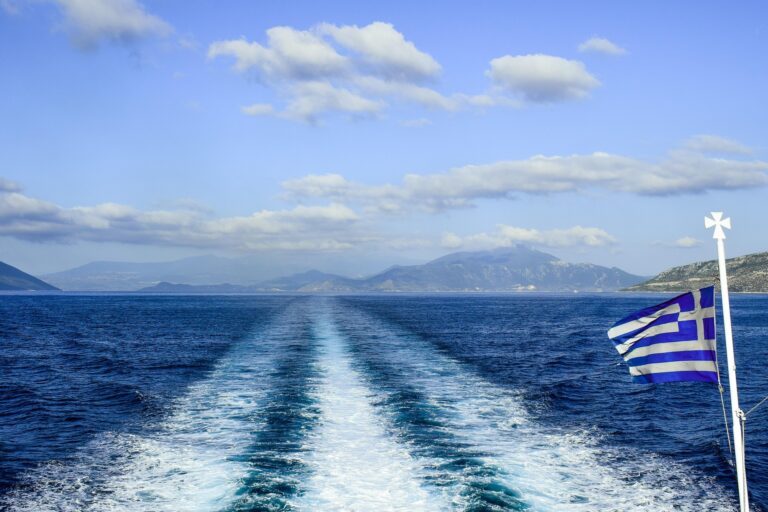
One of the highlights is simply getting there. Instead of travelling by road, you can take the Karavakia Thessboat Waterbus, which crosses the gulf and provides fantastic views back towards Thessaloniki’s waterfront, White Tower and city skyline. It is one of the most scenic public transport journeys available in northern Greece and is an attraction in its own right.
Travelling by Boat
The Karavakia waterbus departs from two locations in Thessaloniki. The first departure point is at Thessaloniki Port, making it convenient if you are staying near Ladadika or the ferry terminal. Around five minutes later, the same boat calls at the White Tower, allowing passengers staying closer to the city centre to board before the crossing to the coast.
The crossing to Perea takes approximately 45 minutes, with the boat also stopping at Neoi Epivates before continuing to its final destination.
A one-way adult ticket costs €10, while children under five travel for €2. Reduced fares are available for disabled passengers, a 10-journey card costs €60, and discounted rates are available for larger groups. Tickets can be purchased online or at the departure point, although booking ahead is recommended during the busy summer months.
The boats are modern and comfortable, with indoor and outdoor seating available. There is also a small onboard vending machine selling soft drinks, bottled water, juices, energy drinks and beer, making it easy to buy refreshments during the journey.
At the time of writing, boats leave Thessaloniki Port at 09:30, 12:05, 14:25 and 16:45. The same sailings depart from the White Tower at 09:45, 11:50, 14:10 and 16:30.
Return services leave Neoi Epivates at 10:40, 13:00, 15:20 and 17:40, before continuing from Perea at 10:55, 13:15, 15:35 and 17:55 back towards Thessaloniki.
The crossing from the White Tower to Perea takes around 45 minutes, while the short hop between Thessaloniki Port and the White Tower takes approximately five minutes.
A one-way adult ticket costs €10, while children under five travel for €2. Reduced fares are available for disabled passengers, a 10-journey card costs €60, and discounted rates are available for larger groups. Tickets can be purchased online or at the departure point, although booking ahead is recommended during the busy summer months.
The boats are modern and comfortable with both indoor and outdoor seating. Refreshments are available from an onboard vending machine selling soft drinks, bottled water, juices, energy drinks and beer, making the crossing a pleasant way to begin your day.
Getting There by Bus
Travelling by bus is the cheapest way to visit Perea and Neoi Epivates. KTEL Thessaloniki bus routes 72, 72A and 76 all serve the coastal area, with buses running regularly throughout the day from Thessaloniki.
The journey normally takes around 45 to 60 minutes, depending on traffic, and services generally operate every 20 to 30 minutes during the daytime. Bus fares are inexpensive, making this a good option if you’re travelling on a budget or visiting outside the ferry operating season.
Getting There by Car
Driving from Thessaloniki takes around 30 to 40 minutes, depending on traffic. The route is straightforward and follows the coast towards Thessaloniki Airport before continuing to Perea. Having a car also makes it easy to continue further along the coast or combine your visit with nearby beaches and attractions.
Parking is usually much easier than in Thessaloniki city centre, although the seafront becomes busy on sunny weekends and during the summer holidays.
Things to Do in Perea and Neoi Epivates
The main attraction is the long sandy beach, which stretches for several kilometres along the waterfront. During summer you’ll find organised sections with sunbeds and umbrellas alongside quieter areas where you can simply spread out a towel and enjoy the sea.
Behind the beach runs a lively promenade lined with cafés, traditional tavernas, seafood restaurants, cocktail bars and ice cream parlours. Many restaurants have outdoor seating overlooking the water, making this one of the best places around Thessaloniki for a relaxed lunch or dinner with sea views.
Families are well catered for, with children’s rides, amusement arcades and small entertainment areas adding to the lively atmosphere during the evenings. The promenade is perfect for a leisurely stroll, and on a clear day you’ll enjoy beautiful views back across the Thermaic Gulf towards Thessaloniki.
Because Neoi Epivates lies immediately beside Perea, it’s easy to walk between the two along the waterfront. Many visitors spend time on the beach, enjoy lunch overlooking the sea and then return to Thessaloniki by boat in the late afternoon or evening.
For visitors looking for beautiful beaches, fresh seafood, a relaxed seaside atmosphere and one of Greece’s most scenic urban ferry journeys, Perea and Neoi Epivates are among the best day trips from Thessaloniki and deserve far more attention than they currently receive.
Follow the Legends to Mount Olympus
Few names carry as much weight as Mount Olympus. The highest mountain in Greece was believed by the ancient Greeks to be the home of the twelve Olympian gods, but a day trip from Thessaloniki is not about attempting to conquer its highest peaks.
The mountain is enormous, and serious hiking requires far more time and preparation than a normal city-based excursion allows. For most first-time visitors, the realistic gateway is Litochoro, the town at the eastern foot of the mountain.
Litochoro provides access to the lower landscapes of Olympus and the Enipeas Gorge. Depending on the weather, season and your fitness, you can take a shorter walk, explore the town or simply experience the mountain setting without committing to a major hike.
This distinction matters. A tour advertised as a Mount Olympus day trip does not take you to the summit, and arriving in Litochoro does not mean you have reached the high mountain. Olympus is a region to experience, not a single viewpoint where a bus drops you off.
The mountain works particularly well for visitors who want a break from museums and archaeological sites. Forests, ravines and changing views replace the dense streets of Thessaloniki, while the mythology gives even a relatively gentle visit a strong sense of place.
Public transport to the Olympus area is possible, but there is an important trap to avoid. Trains from Thessaloniki Railway Station to Litochoro station take around one hour, but the railway station is approximately 6 kilometres from Litochoro town. You will normally need a taxi for the final part of the journey.
Once the taxi transfer is included, allow around 1½ hours from Thessaloniki to central Litochoro if the train and onward journey connect smoothly. The train is still the fastest public transport option, but you need to plan the last six kilometres rather than arriving at the station expecting to walk into town.
The alternative is to travel by bus from Thessaloniki’s Macedonia KTEL Bus Station, changing in Katerini for Litochoro. The complete journey takes around 2 hours 15 minutes, depending on the connection.
For an independent day trip, the train plus taxi is usually the better use of time. Leave Thessaloniki early, travel to Litochoro, explore the town and lower mountain area, then return in the evening. Check the final return train before setting out, as the service is not frequent enough to treat the timetable casually.
A car becomes much more useful if you want to move beyond Litochoro and visit several points around the mountain. It also makes it easier to combine Olympus with ancient Dion.
Mount Olympus is therefore entirely possible without a car, provided your goal is a day around Litochoro and the lower mountain. If you want to explore several locations, reach trailheads beyond the town or combine the mountain with an archaeological site, independent public transport becomes much less efficient.
Search flights and useful route combinations for your trip.
View flightsBrowse Airalo eSIM options for convenient travel data.
Check eSIMsCheck private pickup options and plan your onward journey before arrival.
View transfersExplore Ancient Dion Beneath Mount Olympus
At the foot of Mount Olympus, the ancient city of Dion brings together archaeology, religion and landscape in a way that few other sites in northern Greece can match.
For the ancient Macedonians, this was a sacred place. The city developed around sanctuaries dedicated to Zeus and other gods, with the mountain itself rising above the surrounding landscape. Macedonian kings came here for religious festivals, sacrifices and celebrations.
Dion later developed into a substantial city, and the archaeological park contains remains from several periods. Visitors can explore sanctuaries, baths, theatres, streets and other structures across a large, green site.
The setting is one of the main reasons to visit. Unlike the exposed urban ruins of Pella, Dion feels closely connected to water and vegetation. Springs and rivers shaped the sacred landscape, while Mount Olympus gives the site a backdrop that reinforces its religious importance.
The nearby Archaeological Museum of Dion displays sculptures, mosaics and other discoveries from the site. As at Pella, the museum adds essential context to the ruins and is worth including rather than treating the outdoor park as the entire visit.
Allow at least three hours for the archaeological park and museum. The site covers a substantial area, and trying to combine both in a quick stop means missing much of what makes Dion different.
Reaching Dion without a car is possible, but it is more complicated than travelling to Litochoro. The most useful public transport hub is Katerini, which has frequent bus connections from Thessaloniki’s Macedonia KTEL Bus Station. The journey from Thessaloniki to Katerini takes around 50 minutes.
From Katerini, you need an onward local connection towards Dion. The exact usefulness of that route depends heavily on the current timetable, and the service is not designed around visitors spending a fixed number of hours at the archaeological park.
In practical terms, allow around 1½ to 2 hours each way when travelling independently, including the change in Katerini and the final journey towards the site. Waiting time can push the total higher, so this is a destination where checking both the outward and return services before leaving Thessaloniki is essential.
Dion is possible as a standalone public transport day trip if you are prepared to plan carefully. What does not work particularly well is trying to visit Dion, Litochoro and several Mount Olympus locations using ordinary buses in a single day.
A car makes that combined itinerary much easier. Organised day trips also solve the problem by linking the archaeological park with Litochoro and other stops around the Olympus area; some current itineraries use the train from Thessaloniki for the main journey and then provide road transport between Dion, Litochoro and additional sights.
If your priority is archaeology, visit Dion on its own and give the site the time it deserves. If you want the complete combination of ancient Macedonia, mythology and mountain scenery, the next section explains why Dion and Mount Olympus work so well together.
Combine Mount Olympus and Dion in One Day
Mount Olympus and ancient Dion belong together historically and geographically. The mountain was sacred to the ancient Greeks, while Dion developed beneath it as one of the most important religious centres of the Macedonian kingdom. Visiting both creates a day that moves naturally between archaeology, mythology and the landscapes that shaped them.
The order matters less than allowing enough time at each place. Dion deserves several hours for the archaeological park and museum, while the Olympus part of the day is normally focused on the lower mountain rather than high-altitude hiking. Depending on the itinerary, that can mean time around Litochoro, the Enipeas Gorge or another accessible part of the national park.
This is not a day for attempting the summit of Mount Olympus. Serious hiking requires its own planning, equipment and usually more than a single day. A combined excursion is about understanding the mountain, seeing its lower landscapes and connecting them with the ancient sanctuary below.
The difficulty is that public transport reaches the individual areas more easily than it connects them to one another. You can travel from Thessaloniki towards Litochoro by train or reach the wider region through Katerini, and Dion has local transport connections through the same general area. What you cannot do easily is move from the archaeological site to the most useful parts of the mountain on a timetable designed around sightseeing.
Even if every connection works, an independent public transport itinerary can easily involve four or more separate journey stages: Thessaloniki to the region, onward to Dion, another journey towards Litochoro or the mountain area, then the return to Thessaloniki. Waiting between local services can consume a large part of the day.
For that reason, we do not recommend trying to combine Dion and Mount Olympus using ordinary public transport in a single day. Visit either one independently, or use a car or organised excursion to see both.
Driving gives you the most flexibility. From Thessaloniki, allow around 1 hour 15 minutes to 1 hour 30 minutes to reach the Olympus region, depending on traffic and your first stop. You can explore Dion properly, continue towards Litochoro and then choose how much time to spend around the lower mountain before returning.
An organised excursion solves the same logistical problem without requiring you to drive. Current full-day trips from Thessaloniki provide road transport between the archaeological site and the mountain area, allowing the day to focus on the destinations rather than waiting for local connections.
This is one of the combinations where paying for organised transport has a genuine practical benefit. Dion works independently. Litochoro works independently. Trying to connect both efficiently by public transport is the problem.
If ancient history is your priority, spend a full day at Dion and give the archaeological park and museum the time they deserve. If the mountain matters more, travel independently to Litochoro and concentrate on the lower Olympus landscape. For visitors who want the complete story in one day, a car or organised trip is the sensible choice.
Make the Long Journey to Meteora
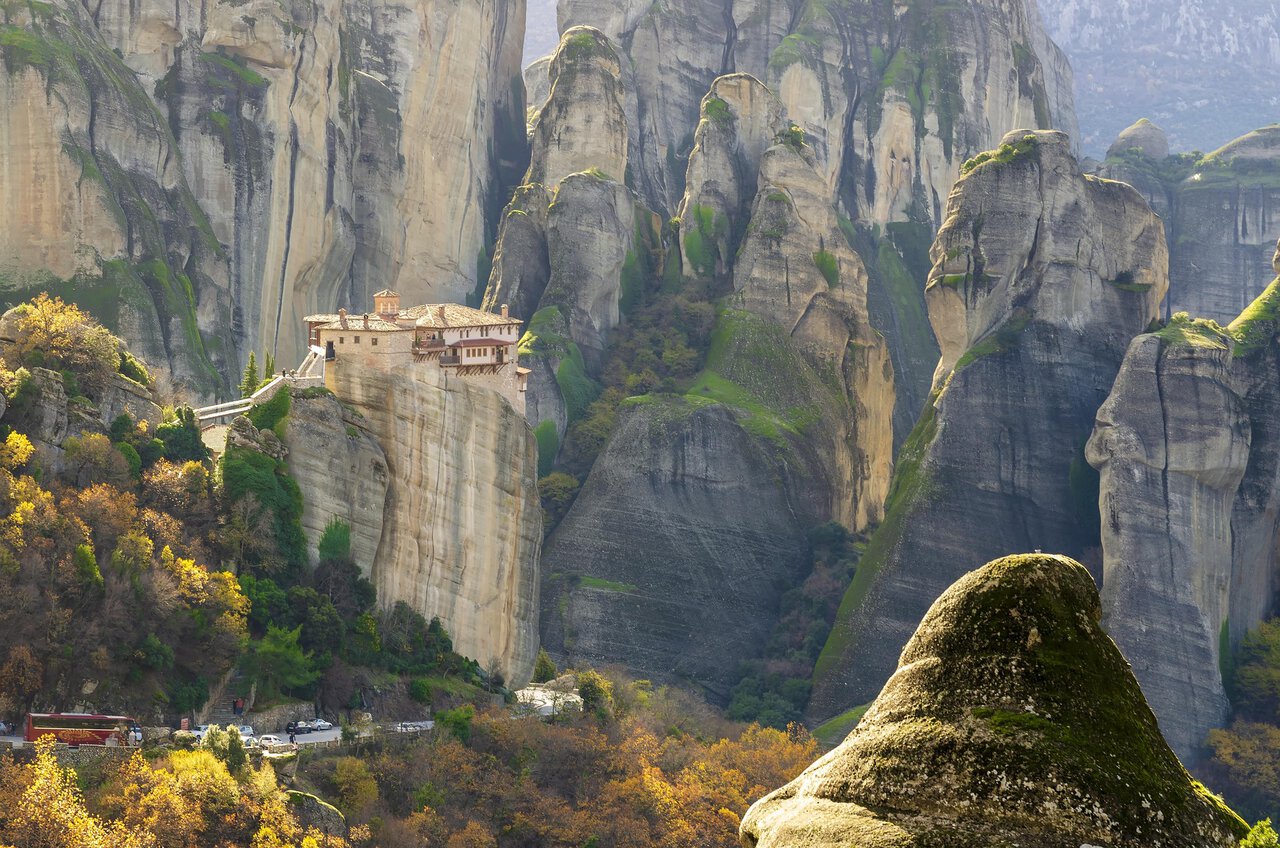
Meteora is the most ambitious mainstream day trip from Thessaloniki. It is also one of the most memorable. Enormous rock pillars rise from the Thessalian landscape, with centuries-old monasteries standing on summits that appear almost impossible to reach.
The setting is so extraordinary that photographs struggle to explain its scale. The monasteries were established by communities seeking isolation, and at their height, dozens of religious sites occupied the rocks. Today, six active monasteries remain, forming part of the UNESCO World Heritage Site.
A day trip will not allow you to visit all six, nor should you try. Opening days vary between monasteries, and even when several are accessible, moving between them and climbing the steps takes time. A realistic day from Thessaloniki normally focuses on two monastery interiors, panoramic viewpoints and the wider landscape.
The monasteries themselves are only part of the experience. The road between the rocks reveals changing views of the towers, cliffs and buildings above, while the villages of Kalambaka and Kastraki sit beneath the formations.
The main problem is distance. Meteora is around 230 kilometres from Thessaloniki, and you should expect to spend a substantial part of the day travelling. By road, the journey is roughly three hours each way without a long stop.
Public transport is possible, but it is not currently a simple direct rail day trip. The practical independent option is to travel from Thessaloniki’s Macedonia KTEL Bus Station towards Kalambaka, changing in Trikala. A well-timed journey takes around 3 hours 45 minutes, although the exact total depends on the connection.
That only gets you to Kalambaka. The monasteries are spread across the rocks above the town, so you then need another way to explore the actual site. Walking from the town to individual monasteries is possible for strong hikers, but it is not a practical way to see several locations during an already compressed day trip.
This is the biggest weakness of doing Meteora independently in one day. After spending almost four hours reaching Kalambaka, you still need transport around Meteora, then you must return in time for the connections back to Thessaloniki.
Current rail arrangements also need particular care. Services to Kalambaka have been affected by infrastructure disruption, with replacement and connecting transport used on parts of the route. Do not rely on older guides describing a straightforward direct train from Thessaloniki to Meteora.
For a relaxed independent visit, staying overnight is much better. You can travel to Kalambaka, explore Meteora without watching the return timetable and see the rocks in the quieter late afternoon or morning light.
For a genuine same-day trip, an organised coach is usually the most practical option. It does not make the journey shorter, but it removes the changes and, crucially, takes you directly from Thessaloniki into the Meteora landscape rather than leaving you in Kalambaka to arrange the final part yourself.
Meteora is therefore possible independently, but we would not describe it as an easy public transport day trip. Allow around 3½ to 4 hours each way before local sightseeing transport, and be realistic about how little margin that leaves if a connection is missed.

Decide Whether a Meteora Day Trip Is Worth the Distance
The answer depends on what happens after Thessaloniki. If this is your only realistic opportunity to see Meteora, then yes, the long day can be worth it. The landscape is unlike anywhere else in Greece, and an organised trip allows you to experience the monasteries without rebuilding your wider itinerary around an overnight stay.
The full-day bus trip lasts around 11 hours. It leaves from central Thessaloniki, includes a rest stop during the journey and then visits two of Meteora’s active monasteries, with an additional panoramic viewpoint stop and time for lunch in Kastraki.
That is a much more efficient use of a single day than travelling independently. The coach journey still takes around 3½ hours each way including the break, but when you arrive, the transport continues into Meteora and between the sightseeing stops. You are not left in Kalambaka trying to work out how to reach the monasteries.
The trade-off is obvious: this is a long coach day with a relatively concentrated period of sightseeing. Visitors who dislike extended road journeys may find the travel disproportionate to the time at Meteora.
You also need to budget beyond the tour price. Monastery admission is extra, currently listed by the activity provider at €5 per monastery and payable in cash, while lunch in Kastraki is not included. Carry cash rather than assuming every small payment can be made by card.
Clothing rules matter too. The monasteries have strict requirements, and visitors who arrive dressed incorrectly can be refused entry. There are also steps to climb, making the trip unsuitable for some visitors with reduced mobility.
The organised day trip makes most sense for travellers spending several nights in Thessaloniki who will not otherwise travel through central Greece. It allows you to see one of the country’s great landscapes without changing hotels or sacrificing two days of the trip.
If Meteora already fits naturally into your onward route, stay overnight instead. You will have more time, see more of the landscape and avoid spending seven hours of the same day travelling back to where you started.
For everyone else, the full-day excursion is a defensible compromise. It is not a relaxed day trip, but it is a practical one, and the direct transport removes most of the difficulties involved in attempting Meteora independently.
Escape to the Beaches of Halkidiki
Halkidiki is often described as though it were a single beach destination. It is not. The region extends across three long peninsulas, and choosing the right one can make the difference between an easy day beside the sea and spending most of your time travelling.
The three peninsulas are Kassandra, Sithonia and Athos. Each has a very different character, and they become progressively more difficult to explore on a casual day trip from Thessaloniki.
Kassandra is the easiest choice for a conventional beach day. It is the westernmost peninsula, closest to Thessaloniki and home to many of Halkidiki’s largest resorts. This is where public transport is most useful if you simply want to reach a coastal town, spend several hours by the sea and return.
Sithonia, the middle peninsula, is more rugged and widely regarded as the more scenic choice. Its coves, beaches and coastal roads are a major part of the appeal, but that also makes a car much more valuable. Reaching one town by bus is not the same as exploring the peninsula.
Athos, the eastern peninsula, requires a different explanation. The monastic territory of Mount Athos has strict access rules and is not a conventional beach destination that visitors can simply enter for the day. Coastal cruises allow visitors to see the monasteries from the sea without entering the monastic state.
Public transport from Thessaloniki is provided by KTEL Chalkidikis, but its buses leave from the separate KTEL Chalkidikis station on the eastern side of the city, not the Macedonia KTEL Bus Station used for many other regional journeys.
This is an important practical detail. From central Thessaloniki, you need to reach the Halkidiki bus terminal first. OASTH bus 45 connects the railway station and Macedonia KTEL area with KTEL Chalkidikis, passing through the city on the way.
Once at the terminal, direct intercity buses serve selected towns and resorts across Halkidiki. The actual journey from the bus station can range from around one hour to well over two hours, depending on the peninsula and destination. You must also add the journey from your accommodation to KTEL Chalkidikis.
This makes public transport perfectly realistic for one carefully chosen resort or beach town. It is much less useful for beach-hopping, reaching isolated coves or moving between several places in a single day.
Before choosing a destination, check the last return bus to Thessaloniki. Summer services are generally more useful than winter ones, but frequencies vary significantly between destinations and seasons. A beautiful remote beach is not a sensible public transport day trip if the timetable leaves you with only a short stay or no practical return.
For visitors without a car, the best choices are therefore a single Kassandra destination or an organised coastal excursion. For visitors who want to explore Sithonia properly, stop at several beaches or follow the coast at their own pace, driving is usually the better option.
Spend a Day on Kassandra
Kassandra is the easiest of Halkidiki’s three peninsulas to visit from Thessaloniki. It is the westernmost peninsula, closest to the city and home to many of the region’s best-developed resorts, making it the most practical choice for a straightforward day beside the sea.
The peninsula has a very different character from Thessaloniki. Resorts and villages line both coasts, with long beaches, beach bars, restaurants and views across the Aegean. Some areas are lively and highly developed, while others become quieter once you move away from the largest resorts.
The key to a successful day trip is choosing one destination rather than trying to explore the entire peninsula. Kassandra is around 50 kilometres long, and public transport is designed to carry passengers between settlements rather than provide a hop-on sightseeing service between beaches.
For a livelier resort experience, Kallithea is one of the best-known choices. It combines a popular beach with restaurants, shops and a busy summer atmosphere. Pefkochori and Hanioti are further south and also work well for visitors who want a developed resort with plenty of places to eat and drink.
If the beach itself is your priority, check exactly where the bus stops in relation to the water before choosing a destination. Arriving in a resort does not always mean stepping off the bus directly beside the sand, and the final walk can make a significant difference in hot weather.
Public transport is entirely possible. KTEL Chalkidikis operates buses from the KTEL Chalkidikis terminal on the eastern side of Thessaloniki to destinations across Kassandra. The exact journey time depends on how far down the peninsula you travel.
As a useful guide, the direct bus from the Halkidiki terminal to Kassandreia takes around 1 hour 45 minutes. Journeys to resorts further south take longer, so a realistic trip from central Thessaloniki to a beach destination can easily approach 2½ to 3 hours each way once you include the journey across the city to the bus terminal and the onward intercity service.
That does not make a public transport beach day impossible, but it makes the timetable crucial. Check the first useful outward bus and final return service before choosing the resort. A destination with a beautiful beach is a poor day-trip choice if the available buses leave you with only a few hours beside the sea.
The KTEL Chalkidikis terminal is separate from Thessaloniki’s main Macedonia KTEL Bus Station. OASTH route 45 connects the two intercity terminals, while route 36 also serves the Halkidiki coach station from the Voulgari area. Allow enough time for this first journey rather than treating the published Halkidiki bus time as your complete travel time from the city centre.
For an independent day trip without a car, choose one well-connected resort, leave Thessaloniki early and spend the entire day there. Do not attempt to use ordinary buses for beach-hopping.
Driving becomes more useful if you want to see several parts of Kassandra, stop at smaller beaches or move between the east and west coasts. For a simple day of swimming, food and relaxation, however, Kassandra is the most realistic part of Halkidiki to visit independently by public transport.
Compare hostels and budget-friendly accommodation around Thessaloniki.
Browse hostelsFlying to Thessaloniki? Get fast compensation payouts, eligible lounge benefits and expert help when flights go wrong.
See AirHelp+ benefitsArriving before check-in or leaving later? Store your luggage and make more of your time in Thessaloniki.
Store your bagsDiscover the More Scenic Coast of Sithonia
Sithonia is the middle peninsula of Halkidiki and, for many visitors, the most beautiful. The coastline is more rugged than Kassandra, with forested hills, rocky headlands, turquoise coves and views towards Mount Athos.
The appeal is not centred on one large resort. Sithonia is at its best when you move between different parts of the coast, stopping at beaches, viewpoints and smaller settlements. That makes it a wonderful place to explore, but a more difficult day trip without a car.
Nikiti is one of the most practical gateways to the peninsula. It has a long waterfront, places to eat and a useful location near the northern end of Sithonia. Further south, Neos Marmaras offers a larger resort atmosphere on the western coast, while the east side of the peninsula gives access to the landscapes around Vourvourou and the Diaporos islands.
Public transport does reach Sithonia. KTEL Chalkidikis buses leave from the same dedicated Halkidiki terminal in Thessaloniki used for Kassandra services, with direct routes to selected towns and villages.
Journey times are considerably longer than they first appear on a map. A direct bus towards the northern and eastern side of Sithonia can take a little over two hours from the KTEL Chalkidikis terminal, before adding the time needed to reach that terminal from central Thessaloniki.
For most visitors, a realistic door-to-destination journey is therefore around 2½ to 3 hours each way, and potentially longer for settlements further down the peninsula. This can still work if you choose one destination and the summer timetable provides an early outward journey and useful evening return.
What public transport does not do well is reveal the best of Sithonia. Many of the peninsula’s most attractive beaches and coves sit away from the main settlements, and moving between them by ordinary bus is slow or impossible.
A car changes the experience completely. You can follow the coast, stop when a beach or viewpoint catches your attention and adjust the day around the weather and crowds. For exploring Sithonia, driving is far better than simply travelling to one town by bus.
Without a car, the strongest alternative is a boat trip. Cruises from the eastern side of Halkidiki can reach island areas, swimming stops and sections of coast that would otherwise require a long series of road journeys.
Choose Sithonia over Kassandra if scenery matters more than convenience. For a simple car-free beach day, Kassandra is easier. For a road trip or day on the water, Sithonia is the stronger choice.
Cruise Through Halkidiki’s Blue Waters
A full-day cruise is one of the easiest ways to experience the sea around Halkidiki without renting a car. The most useful excursions from Thessaloniki solve both parts of the problem: they provide the road transfer to the coast and the boat for exploring once you arrive.
The Blue Lagoon cruise begins with an air-conditioned coach journey from Thessaloniki to Ormos Panagias, on the eastern side of Sithonia. The transfer takes around 1½ hours, after which the day continues by boat.
From Ormos Panagias, the cruise heads towards Ammouliani and the waters of the Athos Gulf. Ammouliani is the only permanently inhabited island in Halkidiki, and the itinerary includes time around the island rather than simply viewing the coast from the boat.
A stop in Ammouliani village gives you time to walk around before the cruise continues towards the beach. The main swimming and relaxation stop is at Banana Beach, where there is time to swim, snorkel and relax beside the water.
Lunch is included during the day, together with a glass of wine or juice. This makes the experience closer to a complete full-day excursion than a simple sightseeing cruise where every extra needs to be purchased separately.
The return journey includes another swimming stop near Vourvourou and the Diaporos islands, an area known for shallow turquoise water and small islands off the Sithonia coast. The complete excursion lasts around 11 hours, including the coach journeys between Thessaloniki and Ormos Panagias.
This is an important distinction when comparing the cruise with independent travel. Reaching Ormos Panagias by ordinary public transport and then coordinating a boat departure is possible in theory, but it creates two separate timetable problems. The organised excursion removes both and returns you to Thessaloniki at the end of the day.
The cruise is best suited to visitors who want swimming, scenery and time on the water rather than a detailed tour of Halkidiki’s towns. You will see several different coastal environments, but this is not a substitute for exploring Sithonia by road.
Bring swimwear, a towel, sunscreen and protection from the sun. The day involves long periods outdoors, and the reflection from the sea can make the sun feel stronger than it does in Thessaloniki.
For visitors without a car, this is one of the most practical ways to experience the wider Halkidiki coast. The transport from Thessaloniki is as valuable as the cruise itself, turning a difficult independent journey into a single full-day excursion.
See the Waterfalls of Edessa
Edessa is one of the easiest day trips from Thessaloniki to make independently. Unlike many natural attractions in northern Greece, you can reach the city directly by public transport and continue to its main sights on foot.
The city is famous for its water. Streams and channels run through Edessa before reaching the edge of the plateau, where they plunge dramatically into the landscape below.
The best-known waterfall is Karanos, the largest of the Edessa waterfalls. Paths and viewpoints allow you to see the water from different angles, including from below and behind parts of the cascade.
The waterfalls are the headline attraction, but Edessa deserves more than a quick photograph and immediate return to the bus station. The surrounding park is one of the most pleasant parts of the city, while the historic Varosi district preserves traditional architecture and offers a quieter contrast to the modern centre.
Edessa also works well because the sightseeing is concentrated. You do not need a car after arriving, and you can comfortably combine the waterfalls, old quarter and a meal in the city during a single day.
The easiest public transport option is the direct KTEL Pellas bus from Thessaloniki’s Macedonia KTEL Bus Station. The journey takes around 1 hour 30 minutes, with services operating regularly through the day.
From central Thessaloniki, allow around two hours for the complete journey once you include travel to the Macedonia bus station and the walk from the Edessa arrival point towards the waterfalls. That still leaves plenty of time for sightseeing if you leave in the morning.
Before setting out, check the final return bus and work backwards when planning the day. Edessa is much easier than many destinations in this guide, but intercity buses do not run with the frequency of an urban transport network.
A car is not necessary for Edessa itself. In fact, this is one of the strongest choices on the page for visitors who want a genuinely straightforward car-free day trip.
The reason to consider driving or joining an organised excursion is not Edessa. It is what lies beyond it. The Pozar Thermal Baths are much harder to reach by public transport, and combining the waterfalls with the hot springs creates a very different full-day experience.
For Edessa alone, take the direct bus and explore independently. For Edessa and Pozar together, the transport becomes the deciding factor.
Relax in the Warm Waters of Pozar
The Pozar Thermal Baths offer one of the biggest changes of pace from Thessaloniki. Instead of archaeological sites and city streets, the experience centres on naturally heated water, forested mountain scenery and time to slow down.
The springs rise near Kato Loutraki at the foot of Mount Voras, around 110 kilometres from Thessaloniki. The thermal water emerges at approximately 37°C, creating a year-round bathing destination even when the surrounding air is cold.
Visitors can choose between different bathing areas. The smaller natural pools provide a more atmospheric experience close to the river and waterfalls, while the larger thermal pool offers more space for swimming and relaxing. Private baths and other facilities are also available within the wider complex.
The setting is a major part of the appeal. Water flows through a narrow wooded gorge, and paths lead around the river and surrounding landscape. This means Pozar is not simply a spa complex where you spend the entire visit indoors.
Allow at least two hours at the baths themselves. That gives you enough time to change, enjoy the water and explore some of the surrounding area without feeling that you have travelled all the way from Thessaloniki for a rushed swim.
Bring your own swimwear, towel and suitable footwear. Towels can be rented, but carrying your own keeps the visit simpler. Admission arrangements differ between the smaller natural pools and the larger thermal pool, so decide which experience you want rather than assuming one ticket covers every facility.
Public transport is the difficult part. There is no straightforward ordinary KTEL bus from Thessaloniki directly to the thermal baths. The independent route involves travelling towards Edessa or Aridaia and then arranging the final journey to Kato Loutraki and the springs.
Even when the main intercity connections work well, the final section is the problem. Local services are not frequent enough to make Pozar a relaxed spontaneous day trip, and the baths sit away from the main regional transport routes.
In practice, an independent public transport journey can take around 3½ to 4 hours each way once connections and the final transfer are included. That is too much travelling for most visitors who only want a few hours at the springs.
There is, however, a direct excursion service from central Thessaloniki as part of organised day trips, reaching Pozar in around two hours. This is not ordinary public transport, but it is a useful distinction for visitors who want to reach the baths without renting a car.
Driving is the most flexible independent option. The journey takes roughly 1 hour 45 minutes to two hours each way, and a car also makes it possible to stop in the nearby village of Orma or continue to Edessa.
Pozar is therefore very different from Edessa. Edessa is easy by public transport; Pozar is not. If the thermal baths are your main priority, drive or use an organised excursion rather than building the day around a series of uncertain connections.
Watch Pelicans and Wildlife at Lake Kerkini
Lake Kerkini is one of the most distinctive day trips from Thessaloniki. The artificial reservoir has developed into an internationally important wetland, creating a landscape of shallow water, flooded woodland, mountains and extraordinary birdlife.
The lake is particularly famous for its pelicans. Dalmatian pelicans and great white pelicans can be seen here, along with cormorants, herons, flamingos and many other species depending on the season.
The experience changes throughout the year. Water levels rise and fall, migratory species arrive and leave, and the surrounding landscape shifts between lush green wetlands and more exposed shores. This is not a destination where every visitor sees exactly the same thing.
A boat trip is one of the best ways to experience the lake. Small boats can take visitors closer to the wetland environment and provide a much better chance of seeing birdlife than simply standing beside the shore.
The wider area is also known for its water buffalo, which graze around the wetlands. Buffalo farming has become closely associated with Kerkini, and local food products are another part of visiting the region.
Lake Kerkini sits roughly 100 kilometres from Thessaloniki, with the road journey taking around 1½ hours each way. The difficulty is that the lake is not a single attraction with one obvious entrance. Villages, boat departure points and wildlife areas are spread around a large landscape.
Public transport can take you towards settlements in the wider region, but it does not provide a useful way to explore the lake itself. Even if you reach a nearby village, you still need to arrange transport to the shore, a boat departure point and any other places you want to visit.
For that reason, we do not recommend Lake Kerkini as an ordinary public transport day trip. The problem is not simply reaching the region; it is moving around once you arrive.
Driving is the strongest independent option. It allows you to choose a part of the lake, arrange a boat trip and move between villages and viewpoints without depending on local connections.
Organised excursions provide another option for visitors without a car, with full-day trips from Thessaloniki combining road transport with time around the lake and surrounding villages. Some experiences offer boat trips and other activities separately rather than including every extra in the base price, so check exactly what is covered before booking.
Allow a full day rather than treating Kerkini as a quick nature stop. The journey, boat experience and time around the wetland justify a slower visit.
Choose Lake Kerkini if wildlife and landscapes matter more to you than monuments. It is one of the best nature day trips from Thessaloniki, but it is also one of the clearest examples of a destination where having road transport makes the experience far easier.
Combine Pozar and Edessa in One Day
Pozar and Edessa are natural partners. One offers warm thermal water and mountain scenery; the other provides waterfalls, old streets and an easily explored small city.
The two places are close enough to combine by road, but their public transport situations are completely different. You can travel directly from Thessaloniki to Edessa without much difficulty. Reaching Pozar and then linking the baths with Edessa is where an independent car-free itinerary becomes awkward.
Trying to combine them using ordinary public transport means working around the main journey from Thessaloniki, local connections towards the baths and another onward journey to Edessa. Even if every service runs as planned, waiting time can consume a substantial part of the day.
For that reason, we would not recommend attempting Pozar and Edessa together by ordinary public transport. If you are travelling independently without a car, visit Edessa alone and enjoy the waterfalls properly.
Driving makes the combination straightforward. Leave Thessaloniki early, spend the first part of the day at the thermal baths, stop for lunch around Orma or the wider Pozar area, then continue to Edessa for the waterfalls and historic quarter before returning to Thessaloniki.
The organised full-day excursion follows a similar logic. The complete trip lasts around ten hours, beginning with an approximately two-hour coach journey from Thessaloniki to Pozar.
Around two hours are allowed at the thermal baths, followed by time for lunch in the village of Orma. The journey then continues for roughly 50 minutes to Edessa, where there is around an hour of free time before the two-hour return journey to Thessaloniki.
This is a well-balanced itinerary for visitors who want variety, although it is important to understand what is not included. Admission to the thermal pools and lunch are extra, so the excursion price covers the transport and organisation rather than the complete cost of the day.
The thermal bath arrangements also require a little planning. Different pools have different admission systems, and towels can be rented if you do not bring your own. Carry swimwear and a towel so you do not lose part of the limited bathing time organising equipment after arrival.
The trip works particularly well outside the hottest part of summer. Spring and autumn bring comfortable sightseeing weather, while winter can make the contrast between the cool mountain air and 37°C thermal water particularly appealing.
For visitors without a car, this is one of the strongest examples of an organised excursion solving a genuine transport problem. You are not paying simply to be shown two places that are easy to reach independently. You are paying to connect two destinations that ordinary public transport handles poorly as a single day trip.

Visit Kavala for a Different Kind of City Break
Kavala offers something completely different from the archaeological sites, mountains and beaches elsewhere in this guide. It is a historic port city built around a hillside, with an old town, Ottoman monuments, a fortress and views across the northern Aegean.
The city is immediately more dramatic than many visitors expect. Modern Kavala curves around the waterfront, while the old district of Panagia climbs onto a rocky peninsula above the harbour.
One of the city’s most recognisable landmarks is the Kamares aqueduct, an enormous Ottoman structure crossing the modern city. From there, the streets rise towards Panagia and the castle.
The old town is the strongest part of a first visit. Narrow streets climb between historic houses towards Kavala Castle, where the elevated position provides views across the rooftops, harbour and sea.
Kavala also has important connections with Muhammad Ali of Egypt, who was born in the city. His former residence and the surrounding area add another layer to a place shaped by Byzantine, Ottoman, tobacco-trading and modern Greek history.
The waterfront provides a completely different atmosphere. Cafés and restaurants face the harbour, ferries use the port and the city feels closely connected to the islands and coastline of the northern Aegean.
Kavala is one of the easiest substantial day trips from Thessaloniki without a car. KTEL Kavalas buses leave from the Macedonia KTEL Bus Station and travel directly to Kavala.
Allow roughly 2 hours 10 minutes to 2 hours 30 minutes each way, depending on the service and route. Some buses make more intermediate stops than others, so check the journey time when choosing your departure rather than assuming every service is equally fast.
From central Thessaloniki, the realistic complete journey is closer to 2½ to 3 hours each way once you include travel to the Macedonia bus station. That makes Kavala a long day, but the direct journey removes the stress of connections.
Once you arrive, the main sights can be explored on foot. The old town is steep, so comfortable shoes are essential, but you do not need another vehicle to make the day work.
Leave Thessaloniki early and allow at least five or six hours in Kavala before returning. The city deserves time for the old town, castle, aqueduct and waterfront rather than being treated as a quick lunch stop.
For travellers relying on public transport, Kavala is one of the strongest choices in this guide. The journey is longer than Edessa or Veria, but it is direct, the city is genuinely worth a full day and you can continue sightseeing independently as soon as you arrive.

Rupert’s Handy Travel Tips
Planning a day trip from Thessaloniki? Here are a few useful tips to make the journey easier:
- Check the complete journey: A destination may be easy to reach by train or intercity bus but still require a taxi, local bus or long walk at the other end. Always check how you will reach the actual attraction before setting out.
- Plan the return before you leave: Regional buses and trains do not run like city transport. Check the final useful return service before travelling, particularly for Vergina, Halkidiki and other destinations with less frequent connections.
- Use public transport where it genuinely works: Edessa, Pella and Kavala are realistic independent trips. For combinations such as Pella and Vergina or Mount Olympus and Dion, a car or organised excursion can save hours of connections and waiting.
- Do not underestimate Meteora: It is possible in a day, but expect a long journey. If Meteora already fits naturally into your wider route through Greece, staying overnight will give you a much better experience.
- Choose Halkidiki carefully: The region covers three large peninsulas. Pick one resort for a public transport beach day, drive if you want to explore several beaches, or take a cruise if you want to experience the coast without renting a car.
Want to meet the reindeer behind our travel tips? Find out more in our page Who is Rupert?.
Frequently Asked Questions
What is the best day trip from Thessaloniki?
For ancient history, Pella and Vergina are the strongest choice. Choose Mount Olympus and Dion for history and landscapes, Meteora for dramatic scenery, Halkidiki for beaches and swimming, or Pozar and Edessa for thermal baths and waterfalls.
Can you visit Meteora from Thessaloniki in one day?
Yes, but it is a long day. An organised excursion typically lasts around 11 hours, with roughly 3½ hours of travel in each direction including a break. Visiting independently is possible, but the transport connections and need for onward travel around Meteora make a same-day trip considerably more complicated.
Can you take a day trip from Thessaloniki to Mount Olympus?
Yes. For an independent visit, travel towards Litochoro, the main gateway to the lower mountain. The train journey takes around one hour, but Litochoro railway station is approximately 6 kilometres from the town, so you will normally need a taxi for the final journey.
Can you visit Halkidiki from Thessaloniki for the day?
Yes. Public buses run from the KTEL Chalkidikis terminal to selected towns and resorts, making a single-destination beach day possible. For exploring several beaches or the more scenic parts of Sithonia, a car or organised cruise is much more practical.
Can you visit Pella and Vergina in one day?
Yes, but we do not recommend trying to combine them using ordinary public transport. Both sites can be reached independently, but travelling between them is awkward. A car or organised excursion is the practical choice for seeing both in one day.
Do you need a car for day trips from Thessaloniki?
No. Pella, Vergina, Edessa and Kavala can all be visited without a car, although some journeys require more planning than others. A car becomes much more useful for Lake Kerkini, Sithonia, Pozar and combined multi-stop itineraries.
What are the easiest day trips from Thessaloniki by public transport?
Edessa and Pella are among the easiest, with direct intercity bus connections. Kavala is further away but also works well because the journey is direct and the main sights can be explored on foot after arrival.
Is Lake Kerkini worth visiting?
Yes, particularly for visitors interested in birdlife, wetlands and nature. The lake is famous for its pelicans and wider wildlife, but a car or organised excursion is strongly recommended because the area is difficult to explore using ordinary public transport.
Can you visit Edessa and Pozar Baths in one day?
Yes. The two destinations combine naturally by car or organised excursion. Edessa alone is easy by public transport, but reaching Pozar and linking the two places using ordinary buses is much more difficult.
What is the best beach day trip from Thessaloniki?
For a straightforward independent beach day, choose a well-connected resort on Kassandra. For more dramatic coastal scenery, explore Sithonia by car or take a full-day cruise with transport from Thessaloniki.
How long does it take to reach Vergina from Thessaloniki by public transport?
Allow around 2 to 2½ hours each way once the change in Veria is included. The final local bus connection is less frequent than the main journey from Thessaloniki, so check both directions before travelling.
How long does it take to reach Meteora from Thessaloniki?
Allow around 3½ hours each way by organised coach, including a short break. Independent public transport can take closer to four hours before you add the transport needed to move around the Meteora monasteries.
What is the best day trip from Thessaloniki without a car?
For the easiest independent trip, choose Edessa. For ancient history, Pella is relatively straightforward by direct bus, while Kavala works well for visitors who do not mind a longer journey.
How many days should you spend in Thessaloniki before taking a day trip?
Give Thessaloniki at least two full days before using additional time for trips beyond the city. With four or five nights, adding one day trip works well. Longer stays allow you to explore more of northern Greece without rushing the city itself.
Further Reading
Before heading beyond the city, make sure you have allowed enough time to explore Thessaloniki itself. Our Best Things to Do in Thessaloniki Guide covers the waterfront, Roman monuments, Byzantine churches, Ano Poli, museums, markets and the other experiences worth prioritising during your stay.
For practical planning, our Thessaloniki Public Transport Guide explains how to use the metro and buses around the city, while the Thessaloniki Airport Transfers Guide covers the journey between the airport and central Thessaloniki. These are particularly useful if you are staying in the city without a car and using organised excursions or regional transport for your day trips.
If Thessaloniki is part of a longer journey through Greece, our Thessaloniki to Athens Guide compares the main ways to travel south. Rail travellers can also use our Interrail Greece Guide to understand how the pass works, where reservations are required and whether it makes sense for a wider Greek itinerary.
Travelling onwards by sea opens up another set of possibilities. Our Ferry Routes from Thessaloniki Guide covers the direct passenger services from the city, while the wider Greek Ferries Guide explains how to plan and book ferry journeys around Greece.