

Travel from Thessaloniki to Athens
Travelling from Thessaloniki to Athens means connecting Greece’s two largest cities, and there are four practical ways to make the journey. You can travel by direct train, KTEL coach, domestic flight or car, with each option offering a very different balance of journey time, flexibility and convenience.
The direct train is the fastest way to travel overland, taking just over five hours from Thessaloniki to Athens. However, there are only two trains each day, so the limited timetable can make the railway surprisingly difficult to fit around your plans.
The KTEL coach offers far more flexibility, with departures throughout the day and two overnight options. The journey takes a little longer than the train, but the much wider choice of departure times makes the coach a serious alternative rather than simply a backup option.
Flying gives you the shortest time in transit, with direct services operated by Aegean Airlines and SKY express. However, the flight time alone does not tell the full story. You also need to travel from central Thessaloniki to the airport, arrive in time for your flight and then make the lengthy journey from Athens Airport into the city.
Driving gives you complete control over your journey and can work particularly well for groups or travellers exploring more of mainland Greece. For a straightforward journey between the two city centres, however, motorway tolls, fuel costs, traffic and parking in Athens can make the car less attractive.
For most travellers, the decision comes down to a simple choice. Take the train if one of the two daily departures fits your plans, choose the coach if you need more flexibility, fly if the complete airport-to-airport journey works in your favour, or drive if Thessaloniki and Athens form part of a wider road trip.
Thessaloniki to Athens at a Glance
The difference between the four options is not simply about speed. The train and coach travel between the cities themselves, while flying requires additional journeys at both ends. Driving can take a similar amount of time to travelling by train or coach, but the cost depends heavily on how many people are sharing the car.
| Option | Frequency | Journey Time | Best For | Main Drawback |
|---|---|---|---|---|
| Train | 2 departures daily | 5h 9m | Fastest overland journey | Limited timetable |
| KTEL coach | Up to 9 departures daily | Around 5h 45m to 6h | Flexible departure times | Longer road journey |
| Flight | Multiple daily flights | Around 1 hour in the air | Travellers prioritising speed | Airport transfers and pre-departure time |
| Car | Anytime | Around 5 to 6 hours | Groups and road trips | Tolls, fuel and Athens traffic |
The train is our preferred option for a straightforward city-to-city journey, but only when one of its two departure times works. The 05:55 service reaches Athens at 11:04, while the 16:49 departure arrives at 21:58.
The KTEL coach is much easier to fit around a wider itinerary. Services leave throughout the day, and the timetable also includes late-night departures that travel to Athens overnight. Some coaches continue beyond Athens to Piraeus, which can be useful if you are connecting with a ferry.
Flying becomes more attractive if you are already close to Thessaloniki Airport, find a particularly good fare or need to connect with another flight in Athens. For travellers staying in the centres of both cities, however, the five-hour direct train is much more competitive than the headline one-hour flight time suggests.
Driving offers the greatest freedom, particularly if you want to stop along the way. It makes less sense if you simply need to get from central Thessaloniki to central Athens, where a car can quickly become an inconvenience.
Browse hotels and accommodation for your visit to Athens.
View staysBrowse apartments, homes and self-catering accommodation in Athens.
Browse rentalsSee hotel prices from multiple booking sites in one search.
Compare ratesHow Far Is Thessaloniki from Athens?
Thessaloniki and Athens are separated by roughly 500 kilometres by road, with the main transport routes running south through mainland Greece.
The fastest direct train completes the journey in 5 hours 9 minutes. KTEL coaches generally take around 5 hours 45 minutes to 6 hours, depending on the service and your chosen arrival point in the Athens area. Driving usually takes around five to six hours before allowing for longer stops, heavy traffic or delays entering Athens.
The distance is long enough for the journey to take up a substantial part of the day, but it is also short enough for rail and coach travel to compete effectively with flying.
A direct flight may spend only around an hour in the air, but that does not represent the complete journey. Travellers starting in central Thessaloniki first need to reach the airport and allow enough time before departure. On arrival, Athens Airport is around 30 kilometres from the city centre, adding another substantial transfer.
This is why the train remains such a strong option despite taking more than five hours. It allows you to travel directly between Thessaloniki and Athens without separate airport transfers, security queues or airline baggage restrictions.
Taking the Train from Thessaloniki to Athens
The direct Intercity train is the fastest overland way to travel from Thessaloniki to Athens. The journey takes 5 hours 9 minutes, there are no changes along the way and the standard fare is currently €40.90 each way.
The main disadvantage is the limited timetable. There are only two direct trains each day from Monday to Sunday, with one leaving early in the morning and the other departing in the late afternoon.
| Thessaloniki | Athens | Journey Time | Fare |
|---|---|---|---|
| 05:55 | 11:04 | 5h 9m | €40.90 |
| 16:49 | 21:58 | 5h 9m | €40.90 |
The 05:55 train is the best option if you want to reach Athens with most of the day still ahead of you. Its main drawback is the very early departure, particularly if you are not staying close to Thessaloniki railway station.
The 16:49 service allows you to spend most of the day in Thessaloniki before travelling south, but it does not reach Athens until 21:58. If you need to travel between the two departures, the much more frequent KTEL coach is likely to be the better option.
The return timetable is similarly limited, with two direct trains from Athens to Thessaloniki each day.
| Athens | Thessaloniki | Journey Time | Fare |
|---|---|---|---|
| 06:58 | 12:10 | 5h 12m | €40.90 |
| 17:58 | 23:10 | 5h 12m | €40.90 |
Travelling south from Thessaloniki, the train follows the main railway corridor through Platy, Katerini, Larissa, Paleofarsalos, Lianokladi, Tithorea, Levadia, Thiva and Oinoi before reaching Athens.
The journey is direct, so you remain on the same train throughout. This makes the railway particularly easy to use with luggage and removes the risk of missing a connection along the way.
At €40.90, the train is also competitive with flying. A low airline fare may initially look cheaper, but the final comparison needs to include transport to Thessaloniki Airport, any baggage charges and the journey from Athens Airport into the city.
The train is the best overall option when one of the two departures fits your plans. It is faster than the coach, simpler than flying and takes you directly between the two cities. Its only major weakness is the timetable, and with such a long gap between departures, that weakness is significant.
Splitting the Journey Between Thessaloniki and Athens
You do not have to travel from Thessaloniki to Athens in a single day. The railway passes through several parts of mainland Greece that many international visitors simply travel straight through, and breaking the journey can turn a five-hour transfer into part of the trip itself.
The easiest place to stop is Larissa, which sits directly on the Intercity route. Both daily Thessaloniki to Athens trains call at the city, making it possible to leave the train, stay overnight and continue south on a later service.
Larissa is one of Greece’s largest cities, but it receives far fewer international visitors than Thessaloniki or Athens. The Ancient Theatre of Larissa sits in the heart of the modern city, while the pedestrianised centre is filled with cafés, restaurants and shops. The Diachronic Museum explores the history of the wider Thessaly region.
Larissa works best as a one-night stop. Arrive from Thessaloniki, spend the afternoon and evening exploring the city, then continue to Athens the following day.
Katerini offers a more ambitious alternative. The city is also directly served by the Thessaloniki to Athens Intercity trains, but the main reason to stop is its location close to Dion, Litochoro and Mount Olympus.
This is not a practical few-hour break between trains. To make the stop worthwhile, you should stay for at least one night and plan your onward transport carefully. With more time, however, it allows you to combine Greece’s two largest cities with the archaeological site of Dion and the landscapes around Mount Olympus.
For most travellers, Larissa is the easiest place to split the journey, while Katerini and the Mount Olympus area offer the more memorable detour.
Where to Catch the Train in Thessaloniki
Trains to Athens leave from Thessaloniki New Railway Station, the city’s main railway terminus. The station sits to the west of the historic centre and is now directly connected to the Thessaloniki Metro, making it much easier to reach than it was in the past.
The metro station is called New Railway Station, and trains on Line 1 connect it with central stops including Venizelou, Agias Sofias and Sintrivani. This is generally the easiest way to reach the station if you are staying close to the historic centre.
Thessaloniki city buses also serve the railway station, while taxis can drop passengers directly outside the entrance. If you are taking the 05:55 train, check the operating times of public transport carefully before relying on the metro or bus. A taxi may be the simplest option for such an early departure.
The station has ticket facilities and waiting areas, but it is worth arriving with your ticket already booked. With only two direct trains to Athens each day, missing your chosen service could mean waiting until late afternoon or switching to a KTEL coach.
Our Thessaloniki Public Transport Guide explains the metro and bus network in more detail, including the easiest ways to travel between the city centre and the railway station.
Arriving in Athens by Train
Direct trains from Thessaloniki arrive at Athens Railway Station, commonly known as Larissa Station. Despite the name, this is the main railway station in Athens and should not be confused with the city of Larissa, which the train passes through earlier in the journey.
The station is connected directly to Athens Metro Line 2, giving the train a major advantage over both flying and arriving by coach at Kifisos. You can step off the Intercity train and continue towards many of the main areas of central Athens without needing a taxi or a lengthy airport transfer.
Metro Line 2 runs south through the city centre, providing direct connections towards Omonia, Panepistimio, Syntagma and the Acropolis area. This makes the railway particularly convenient for travellers staying close to the historic centre.
For Monastiraki, you can change from Line 2 to Line 1 at Omonia or to Line 3 at Syntagma. Travellers continuing to Piraeus can also connect with the wider metro network, although the KTEL coach may be worth considering if a suitable service continues directly towards the port area.
This city-centre arrival is one of the strongest arguments for choosing the train. A flight may spend far less time in the air, but Athens Airport is around 30 kilometres from central Athens. The railway brings you directly into the urban transport network and removes a substantial transfer from the end of the journey.
Taking the KTEL Coach from Thessaloniki to Athens
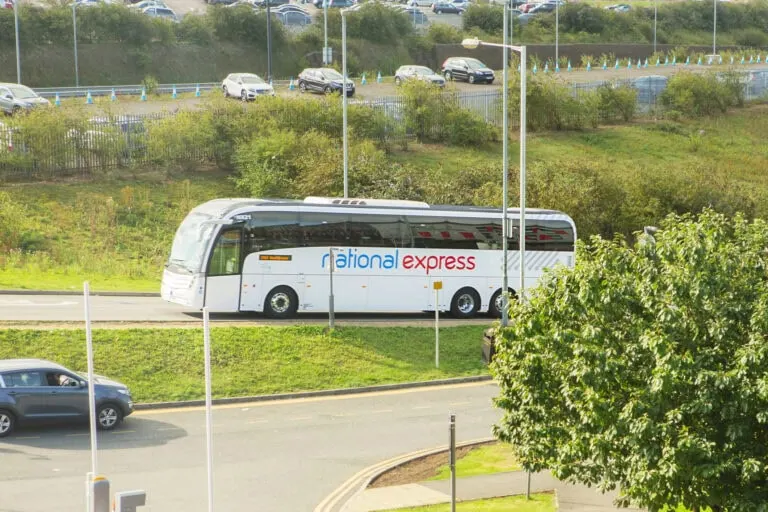
The KTEL coach is the most flexible overland option for travelling from Thessaloniki to Athens. While there are only two direct trains each day, the coach timetable offers up to nine departures, spread from early morning until midnight.
The journey is slower than the train, but not dramatically so. Most daytime services take around 5 hours 45 minutes to reach Karaiskaki Square and approximately 6 hours to reach Kifisos Station.
The current timetable shows departures from Thessaloniki at:
| Monastiriou Station | Makedonia Station | Karaiskaki Square | Kifisos Station | Piraeus |
|---|---|---|---|---|
| 07:00 | 07:15 | 12:45 | 13:00 | 13:30 |
| 10:00 | 10:15 | 15:45 | 16:00 | 16:30 |
| 12:00 | 12:15 | 17:45 | 18:00 | 18:30 |
| 13:30 | 13:45 | 19:15 | 19:30 | 20:00 |
| 15:00 | 15:15 | 20:45 | 21:00 | Does not continue |
| 16:30 | 16:45 | 22:15 | 22:30 | Does not continue |
| 18:00 | 18:15 | 23:45 | 00:00 | Does not continue |
| 23:00 | 23:15 | Early morning | Early morning | 05:30 |
| 24:00 | 00:15 | 05:45 | 06:00 | Does not continue |
The biggest advantage is immediately clear. If neither the 05:55 nor 16:49 train suits your plans, there is likely to be a coach at a much more convenient time.
Several daytime services also continue to Piraeus, which can be particularly useful if you are travelling onwards by ferry. Instead of arriving in central Athens and making a separate journey towards the port, you may be able to remain on the coach for the final part of the journey.
The overnight departures are another important advantage. There is currently no sleeper train between Thessaloniki and Athens, but the late KTEL services allow you to travel through the night and arrive the following morning.
The published timetable for the 23:00 service contains an apparent inconsistency in the order of its Athens arrival times, so we would check the exact stopping pattern directly with KTEL before relying on a specific overnight stop.
Search routes and flight options for your trip to Athens.
Search flightsBrowse Airalo eSIM options for convenient travel data.
Check eSIMsArrange a private airport pickup for your trip to Athens.
Check transfersWhere to Catch the Coach in Thessaloniki
One of the most useful features of the Thessaloniki to Athens coach service is the choice of two boarding points in Thessaloniki.
Services first leave Monastiriou Station before calling at Makedonia Intercity Bus Station 15 minutes later. This means you do not automatically need to travel all the way to the main intercity coach terminal if Monastiriou is more convenient for your accommodation.
The choice of boarding point matters because Makedonia Station is well west of central Thessaloniki. Travelling there can add a significant amount of time to the beginning of your journey, particularly during busy periods.
Every service shown in the current timetable calls at both Thessaloniki boarding points. A 07:00 departure from Monastiriou, for example, leaves Makedonia Station at 07:15 before continuing south towards Athens.
You should book for the boarding point you actually intend to use and check the location carefully before travelling. Monastiriou Station and Makedonia Station are not the same place, and arriving at the wrong one could easily result in a missed coach.
For travellers staying in central Thessaloniki, the first boarding point may be the more convenient option. For those staying further west or arriving on another regional KTEL service, Makedonia Station may make more sense.
The coach therefore offers more flexibility than the train in two different ways. There are far more departure times, and passengers also have a choice of where to begin the journey in Thessaloniki.
Arriving in Athens by KTEL Coach
The KTEL coach offers more arrival choices than the train, with services stopping at Karaiskaki Square and Kifisos Station. Several daytime departures also continue to Piraeus, which can make the coach particularly useful for travellers connecting with a ferry.
The first Athens stop is Karaiskaki Square, which most daytime services reach around 5 hours 45 minutes after leaving Monastiriou Station in Thessaloniki. The coach then continues to Kifisos Station, arriving around 15 minutes later.
For many visitors, Karaiskaki Square is likely to be the more convenient place to leave the coach. It is much closer to the centre of Athens than Kifisos and offers easier access to the city’s public transport network.
Kifisos is the main long-distance coach station in Athens, but it is not directly connected to the metro. This is one of the biggest disadvantages of arriving there, particularly when compared with the train. Travellers continuing to central Athens need to use a local bus or taxi, adding extra time to the end of an already long journey.
The best arrival point therefore depends on where you are staying and whether your coach continues beyond Athens. Do not assume that you need to remain on board until Kifisos simply because it is the main coach station. If Karaiskaki Square offers an easier onward journey to your accommodation, leaving the coach there can save time.
Some of the earlier daytime services continue from Kifisos to Piraeus, usually arriving around 30 minutes later. This can be particularly valuable if Athens is simply a connection point and you are travelling onwards to one of the Greek islands.
The direct coach to Piraeus removes the need to cross Athens with luggage before a ferry departure. However, you should still leave a generous connection between your scheduled coach arrival and ferry departure. Road traffic can delay the journey, and a separate coach and ferry booking will not normally protect you if the first part of the journey runs late.
Our Greek Ferries Guide explains more about booking and using ferries in Greece, while our Interrail Greek Islands Guide is useful if Piraeus is the starting point for a wider island journey.
Overnight Travel from Thessaloniki to Athens
The KTEL coach is the only practical way to make the entire journey from Thessaloniki to Athens overnight. There is no sleeper train on the route, and the two daily Intercity services both operate during the day and evening.
The current coach timetable includes departures from Monastiriou Station at 23:00 and midnight, with both services calling at Makedonia Station 15 minutes later. They travel south overnight and reach the Athens area early the following morning.
This can be an efficient way to travel if you want to avoid losing most of a day to the journey. An overnight coach also removes the cost of one night’s accommodation, although the saving is only worthwhile if you are comfortable sleeping on a long-distance bus.
The 23:00 departure continues to Piraeus, reaching the port area early in the morning according to the published timetable. This could be particularly useful for an onward ferry, but the connection needs careful planning. Ferry check-in requirements vary, and an overnight road journey can be delayed by traffic or other disruption.
The midnight departure reaches Athens early the following morning and does not continue to Piraeus. It is the latest departure of the day and can work well if you want a full final evening in Thessaloniki before travelling south.
There is an apparent inconsistency in the published arrival sequence for one of the overnight services, so check the exact stopping pattern and arrival time before booking. This is particularly important if you are arranging an early ferry, flight or other fixed connection.
An overnight coach is unlikely to be the most comfortable way to travel between the cities, but it offers something the train and daytime flights cannot. You can leave Thessaloniki late in the evening and arrive in Athens the following morning without using most of a sightseeing day for the journey.

Flying from Thessaloniki to Athens
Direct flights between Thessaloniki and Athens are operated by Aegean Airlines and SKY express, giving travellers a choice of airlines and multiple departures on many travel dates.
The time in the air is around an hour, making flying easily the fastest way to travel between the two airports. However, it is important to compare the complete journey rather than the flight time alone.
A traveller starting in central Thessaloniki first needs to reach Thessaloniki Airport. You then need to allow enough time for check-in, baggage drop and security before departure. After landing, there is another journey of around 30 kilometres from Athens Airport to the centre of the city.
This means a one-hour flight can become a journey of several hours from one hotel to another. The direct train takes 5 hours 9 minutes, but almost all of that time is spent moving towards your destination rather than waiting at airports.
Flying becomes much more attractive in certain circumstances. It can work particularly well if you are staying close to Thessaloniki Airport, connecting with another flight from Athens or travelling to accommodation on the eastern side of the capital.
The route can also be competitive when airfares are low, but compare the final price carefully. The cheapest ticket may not include the baggage allowance you need, while the cost of travelling to and from both airports can make a low headline fare considerably more expensive.
Our Thessaloniki Airport Transfers Guide explains how to reach the airport by public transport, taxi and private transfer. It is worth checking the full airport journey before deciding that flying will save time.

Plan This Journey with Aegean Airlines
Flying is often the quickest way to travel between Athens, Thessaloniki, the Greek islands, and destinations across Europe. Aegean Airlines lets you search flights and book directly for journeys across its network.
It is particularly useful for trips within Greece, island connections, and international journeys to and from the country. Check available flights, compare travel dates, and book the option that best fits your plans.
Getting to Thessaloniki Airport for Your Flight
Thessaloniki Airport is around 13 kilometres southeast of the city centre, so flying to Athens begins with a journey in the opposite direction from the railway station and the main north to south road route.
Public transport is the cheapest way to reach the airport, with bus connections linking the terminal with Thessaloniki and the city’s wider transport network. A taxi or private transfer is faster and more convenient, particularly if you have luggage or are travelling for an early flight.
The time needed to reach the airport depends on your starting point and road conditions. Traffic can make the journey unpredictable, so avoid comparing a flight with the train based only on the scheduled departure time.
You also need to arrive before the flight itself. Travelling with checked luggage requires additional time for baggage drop, while all passengers need to clear security before reaching the departure gate.
This is where the railway has its strongest advantage. A traveller taking the train can arrive at Thessaloniki railway station and board a direct service to Athens. A traveller flying must first reach the airport, complete the departure process and wait for boarding before the one-hour flight begins.
The difference does not mean flying is a poor choice. It means that the real comparison is a complete city-to-city journey of several hours against a direct train taking 5 hours 9 minutes. For some itineraries the flight will still be faster, but the saving is much smaller than the headline journey times initially suggest.
Arriving at Athens Airport
Flights from Thessaloniki arrive at Athens International Airport, around 30 kilometres east of the city centre. This is the main disadvantage of flying when compared with the direct train, which brings you straight into the Athens urban transport network.
The airport is connected to central Athens by Metro Line 3, suburban railway services, express buses and taxis. The best option depends on where you are staying, how much luggage you have and what time your flight arrives.
Metro Line 3 provides the most straightforward public transport connection for many visitors. Trains run from the airport towards central Athens, serving important stops including Syntagma and Monastiraki. This makes the metro particularly useful for accommodation in the historic centre.
The airport express buses operate throughout the day and night. They can be useful when the metro is not running or when your destination is better served by one of the bus routes. The X95 service connects the airport with Syntagma Square, while the X96 runs to Piraeus for travellers continuing towards the ferry port.
A taxi provides a direct journey to your accommodation and can become more attractive when the cost is shared between several passengers. However, the journey into Athens can be affected by traffic, particularly during busy periods.
The airport transfer means your journey is not finished when the plane lands. You still need to leave the aircraft, collect any checked luggage and travel into Athens. For a central Athens hotel, this final stage can add well over an hour to the journey.
This is why flying works best when the wider itinerary suits it. If you are connecting with another flight, staying close to the airport or travelling to the eastern side of Athens, the plane can be an excellent choice. If you simply want to travel from one city centre to the other, the airport transfer significantly reduces the time saved by flying.
Compare hostels and budget-friendly accommodation around Athens.
Browse hostelsGet help with compensation, eligible lounge access and disruption support.
Explore AirHelp+Use convenient luggage storage around Athens between arrival, check-in and departure.
Check storageComparing the Real Journey Time by Plane
The scheduled flight between Thessaloniki and Athens takes around an hour, but this is only one part of the complete journey.
You first need to travel from your accommodation to Thessaloniki Airport, arrive early enough to complete the departure process and wait for boarding. After the flight, you need to leave Athens Airport and continue to your final destination.
For a traveller starting in central Thessaloniki and finishing in central Athens, the complete journey can easily take four hours or more. The exact time depends on the airport transfer, how early you arrive before departure and how quickly you can continue from Athens Airport.
The train takes 5 hours 9 minutes, but it requires far fewer separate stages. You travel to Thessaloniki railway station, board the train and arrive directly at Athens Railway Station with immediate access to the metro.
This makes the comparison much closer than one hour by plane versus five hours by train. A well-timed flight can still be faster, but the actual saving may be relatively small once the full journey is included.
The amount of luggage you are carrying can also affect the comparison. Train passengers do not need to go through an airline baggage drop or wait at a carousel after arrival. The cheapest airfares may also have restrictive baggage allowances, adding another cost if you are travelling with more than a small cabin bag.
Flying is most likely to save significant time when the airport locations work in your favour. It is much less compelling when you need lengthy transfers at both ends of the journey.
Driving from Thessaloniki to Athens
Driving gives you the greatest flexibility and can turn the journey between Thessaloniki and Athens into a road trip through mainland Greece rather than simply a five-hour transfer.
The journey covers roughly 500 kilometres and follows the main motorway corridor south through Greece. Without long stops, you should allow around five to six hours, although the final journey time depends on traffic and where you are staying in Athens.
Most of the route follows modern motorway, making this a relatively straightforward long-distance drive. You travel south from Thessaloniki towards Katerini and Larissa, continue through central Greece and approach Athens from the north.
For a straightforward journey between the two city centres, the car has to compete with a direct train and frequent KTEL coaches. The real advantage of driving is the freedom to leave the motorway and visit places that are difficult to include when travelling by public transport.
The Mount Olympus area is the first major opportunity to break the journey. Litochoro sits close to the mountain and works well for a meal, a walk or an overnight stay. The archaeological site of Dion Archaeological Park is another worthwhile stop in the same area.
Further south, Larissa offers the easiest urban break. You can leave the motorway for lunch, explore the pedestrianised centre and see the Ancient Theatre before continuing towards Athens. It is a much more practical short stop than attempting a major detour.
The most interesting historic stop is Thermopylae. The famous battlefield lies close to the main route, making it much easier to visit by car than by train or coach. It is not a full-day destination, but it can add a genuinely memorable break to the journey.
A detour to Meteora is also possible, but this should not be presented as a quick stop. It takes you significantly away from the direct route and deserves at least one night. For travellers with more time, however, Thessaloniki, Meteora and Athens form an excellent three-stop mainland Greece itinerary.
The disadvantages of driving become more noticeable as you approach Athens. Heavy traffic, unfamiliar roads and parking can make the final part of the journey the most stressful section of the trip. A car is also unlikely to be particularly useful if you plan to spend several days exploring central Athens.
Driving makes most sense if you actually use the freedom it gives you. If you plan to drive directly from one city centre to the other without stopping, the train or coach will usually be simpler. If you want to visit Mount Olympus, Dion, Larissa, Thermopylae or make an overnight detour to Meteora, the car becomes a much more compelling option.
The disadvantages become more noticeable as you approach Athens. Heavy traffic, unfamiliar roads and parking can turn the final part of the journey into the most stressful section of the trip. A car is also unlikely to be particularly useful if you plan to spend several days exploring central Athens.
Driving therefore makes the most sense when you are continuing beyond the capital, travelling with a group or using the journey to explore other parts of mainland Greece. If your only aim is to get from central Thessaloniki to central Athens, the train or coach will usually be simpler.
Tolls and Fuel Costs
The drive from Thessaloniki to Athens is not simply a question of paying for fuel. The main motorway route includes multiple toll stations, and the combined cost needs to be included when comparing driving with train, coach and air fares.
Tolls are collected at several points along the route. Payment arrangements can vary between operators, so it is sensible to carry a suitable payment card and some cash rather than relying on a single method.
Fuel is the other major cost. The amount you spend will depend on the vehicle, current fuel prices and how efficiently you drive, but a journey of roughly 500 kilometres uses a substantial amount of fuel.
For a solo traveller, the combined cost of fuel and motorway tolls can make driving considerably more expensive than a €40.90 train ticket. The calculation changes when two, three or four people share the car, as the road costs remain broadly the same while the cost per person falls.
A hire car adds further considerations. The headline rental price may not include every charge, and you should check the fuel policy, insurance arrangements and any additional fee for returning the vehicle to a different location.
Parking in Athens can also add to the final cost. If you are staying in the centre, check whether your accommodation has parking before driving into the city. A cheap hotel room can become much less attractive if you need to pay separately to store a car that you will not use during your stay.
For most travellers, driving is not the cheapest way to travel between Thessaloniki and Athens. Its value comes from flexibility, shared costs and the freedom to turn the journey into part of a wider trip through Greece.

Choosing the Best Way to Travel from Thessaloniki to Athens
The best way to travel from Thessaloniki to Athens depends less on the headline journey time and more on when you want to leave, where you are staying and what you plan to do next.
The train is the strongest all-round option when one of its two daily departures fits your itinerary. It is the fastest overland journey, takes just 5 hours 9 minutes and brings you directly into the Athens metro network. The €40.90 fare also makes the cost easy to understand before you travel.
Its weakness is entirely in the timetable. With only a 05:55 and 16:49 departure, there is no middle ground. If neither train suits your plans, the railway quickly stops being the most convenient option.
The KTEL coach is the best choice when flexibility matters most. Up to nine departures are spread across the day and night, and passengers can board at two locations in Thessaloniki. Some services continue to Piraeus, making the coach particularly useful for travellers connecting with a ferry.
Flying is most attractive when the airports work naturally with the rest of your journey. A flight can make sense if you are already staying near Thessaloniki Airport, need to connect with another flight in Athens or find a fare that remains competitive after adding luggage and airport transfers.
Driving is the best option for travellers who want to turn the journey into a road trip. Mount Olympus, Dion, Larissa and Thermopylae can all add something worthwhile to the route, while Meteora can be included as a longer detour. If you intend to drive directly from one city centre to the other without stopping, the train or coach is usually simpler.
For most travellers, we would take the train when the timetable works and the KTEL coach when it does not. Flying and driving become the better choices when the wider itinerary gives them a specific advantage.
Booking Tickets from Thessaloniki to Athens
Train, coach and flight tickets are all best booked before the day of travel, particularly if your itinerary depends on a specific departure.
With only two trains each day, advance planning is especially important for rail passengers. A full train is not easy to replace with another service an hour later, and the long gap between departures can force a complete change of plans.
Train tickets should be booked for the exact service you intend to use. Check the departure time again before travelling, as railway timetables can change. Your ticket should also show the details you need for the journey, including your train and seat information.
KTEL tickets are also worth booking ahead when travelling on a specific service. The coach has much greater frequency, but popular departure times and overnight journeys can still be busy. Make sure you select the correct Thessaloniki boarding point when planning the journey.
Flights operated by Aegean Airlines and SKY express use dynamic pricing, so the fare can vary considerably between dates and departure times. Compare the complete cost rather than the cheapest headline price, particularly if you need checked luggage or a larger cabin bag.
If you are hiring a car, compare more than the daily rental rate. Check the one-way fee, mileage allowance, insurance, fuel policy and return arrangements in Athens before booking.
Whichever option you choose, avoid building a tight connection around the scheduled arrival time. This is particularly important if you are continuing to a ferry from Piraeus or a separate flight from Athens Airport. A delayed train, coach or road journey could leave you responsible for buying a replacement ticket.
Planning Your Journey from Thessaloniki to Athens
The journey from Thessaloniki to Athens is straightforward once you have chosen the right transport option, but the limited train timetable and different coach arrival points make a little advance planning worthwhile.
Start by deciding whether your priority is speed, flexibility or convenience. If either of the two daily trains fits your schedule, the railway offers the simplest journey between the two cities. If you need to leave at a different time, the KTEL coach provides far more choice throughout the day and night.
Your accommodation can also influence the decision. Travellers staying close to Thessaloniki railway station may find the train particularly convenient, while the two KTEL boarding points make the coach easier to reach from some parts of the city. Flying becomes more attractive if you are already near Thessaloniki Airport or need to continue by air after reaching Athens.
Think about the end of the journey before booking. The train arrives directly on the Athens Metro network, while KTEL passengers can choose between different arrival points. Some coaches continue to Piraeus, which can be particularly useful if you are travelling onwards by ferry.
If you are flying, include the journey from Athens Airport when comparing arrival times. If you are driving, decide whether you want to travel directly to Athens or use the car to stop at places such as Mount Olympus, Dion, Larissa or Thermopylae.
Whichever option you choose, check the latest timetable before departure and allow extra time before any separate onward connection. This is especially important when connecting with a ferry from Piraeus or another flight from Athens Airport.

Rupert’s Handy Travel Tips
Travelling from Thessaloniki to Athens? Here are a few useful tips to make your journey smoother:
- Take the train when the timetable works: The direct train is the fastest overland option and brings you directly into the Athens Metro network, but there are only two departures each day.
- Choose the KTEL coach for more flexibility: The much wider timetable includes departures throughout the day and overnight, while some services continue to Piraeus.
- Compare the complete journey before flying: The flight takes around an hour, but airport transfers and pre-departure time make the difference much smaller than the headline journey times suggest.
- Make the most of a road trip: If you are driving, consider stopping at Mount Olympus, Dion, Larissa or Thermopylae instead of travelling directly between the two cities.
- Leave plenty of time before a connection: Allow a generous margin before a separate ferry or flight, particularly if you are travelling onwards from Piraeus or Athens Airport.
Want to meet the reindeer behind our travel tips? Find out more in our page Who is Rupert?.

Planning Your Journey from Thessaloniki to Athens
The journey from Thessaloniki to Athens is straightforward once you have chosen the right transport option, but the limited train timetable and different coach arrival points make a little advance planning worthwhile.
Start by deciding whether your priority is speed, flexibility or convenience. If either of the two daily trains fits your schedule, the railway offers the simplest journey between the two cities. If you need to leave at a different time, the KTEL coach provides far more choice throughout the day and night.
Your accommodation can also influence the decision. Travellers staying close to Thessaloniki railway station may find the train particularly convenient, while the two KTEL boarding points make the coach easier to reach from some parts of the city. Flying becomes more attractive if you are already near Thessaloniki Airport or need to continue by air after reaching Athens.
Think about the end of the journey before booking. The train arrives directly on the Athens Metro network, while KTEL passengers can choose between different arrival points. Some coaches continue to Piraeus, which can be particularly useful if you are travelling onwards by ferry.
If you are flying, include the journey from Athens Airport when comparing arrival times. If you are driving, decide whether you want to travel directly to Athens or use the car to stop at places such as Mount Olympus, Dion, Larissa or Thermopylae.
Whichever option you choose, check the latest timetable before departure and allow extra time before any separate onward connection. This is especially important when connecting with a ferry from Piraeus or another flight from Athens Airport.
Frequently Asked Questions
What is the best way to travel from Thessaloniki to Athens?
For most travellers, the direct train is the best option when one of its two daily departures fits the itinerary. It takes 5 hours 9 minutes and travels directly between the two cities. The KTEL coach is the better choice when you need more flexibility.
How long does the train from Thessaloniki to Athens take?
The direct Intercity train takes 5 hours 9 minutes from Thessaloniki to Athens.
How many trains are there from Thessaloniki to Athens?
There are currently two direct trains each day from Monday to Sunday, leaving Thessaloniki at 05:55 and 16:49.
How much is the train from Thessaloniki to Athens?
The standard fare shown for the direct Intercity service is €40.90 each way.
Is there a direct train from Thessaloniki to Athens?
Yes. Both daily Intercity services are direct, so there is no need to change trains during the journey.
Is the coach better than the train from Thessaloniki to Athens?
The coach is better for choice of departure times, with up to nine services compared with only two trains. The train is faster and offers a simpler city-to-city journey.
Can you travel overnight from Thessaloniki to Athens?
Yes. KTEL operates overnight coaches, including late departures from Thessaloniki that arrive in the Athens area the following morning. There is no sleeper train on the route.
Is it faster to fly from Thessaloniki to Athens?
The flight itself takes around an hour, but the complete journey also includes travelling to Thessaloniki Airport, pre-departure time and the transfer from Athens Airport. Flying can still be faster, but the difference is much smaller when the full city-to-city journey is compared.
Which airlines fly from Thessaloniki to Athens?
Direct flights are operated by Aegean Airlines and SKY express.
Can I travel directly from Thessaloniki to Piraeus?
Some KTEL coach services continue beyond Athens to Piraeus, which can be useful for travellers connecting with a ferry. Check the timetable for your chosen departure because not every coach continues to the port area.
Where is the best place to stop between Thessaloniki and Athens?
Larissa is the easiest place to split the journey by train, while the Mount Olympus area is a more ambitious option. Drivers can also stop at Dion and Thermopylae or make a longer detour to Meteora.
Can you visit Athens as a day trip from Thessaloniki?
It is technically possible using the earliest train south and the evening train back, but the long journey makes it a poor use of time. Athens deserves at least one overnight stay, and preferably longer.
Further Reading
Travelling through northern Greece involves more than simply choosing how to reach Athens. Our Thessaloniki Public Transport Guide explains how to use the city’s metro and buses, including connections with the railway station and other important transport hubs.
If you decide to fly, our Thessaloniki Airport Transfers Guide compares the different ways to travel between the city and the airport before your departure.
Travellers continuing from Athens towards the islands should read our Greek Ferries Guide before booking an onward sailing. If the journey forms part of a wider rail trip, our Interrail Greece Guide explains how to explore the mainland, while our Interrail Greek Islands Guide looks at combining rail travel with ferry journeys.
For staying connected throughout the journey, our eSIM Apps Guide compares the main options for using mobile data in Greece and elsewhere.