Reviewed by our editorial team Updated
Why Bratislava Is One of Europe’s Most Fascinating Cold War Cities
Few European capitals reveal the realities of the Cold War as clearly as Bratislava. Sitting directly beside the Austrian border, the city occupied one of the most strategically sensitive locations anywhere within the former Eastern Bloc. During the Communist era, Bratislava stood only a short distance from the West, yet for decades the border between freedom and restriction was heavily militarised, guarded, and often deadly.
What makes Bratislava particularly fascinating is how physically close the divide actually was. From parts of the city and nearby hillsides, people living under Communist rule could see Austria across the border. At night, the lights of western Europe were visible from behind border fences and military patrol zones, creating a powerful psychological reminder of the separation created by the Iron Curtain.
Unlike cities such as Berlin, where Cold War tourism has become heavily commercialised, Bratislava still feels relatively undiscovered internationally. Yet the city contains many of the same themes including Communist urban planning, Soviet memorials, secretive border infrastructure, surveillance culture, bunker systems, and dramatic political transformation after the collapse of Communism in 1989.
The geography of the city played a huge role in its Cold War identity. The Danube River, nearby forests, and borderlands surrounding Devín Castle became heavily controlled military zones where escape attempts, patrols, and surveillance operations formed part of daily life. Several people died attempting to cross the border into Austria during the Communist period, turning the frontier around Bratislava into one of the most sensitive areas in Czechoslovakia.
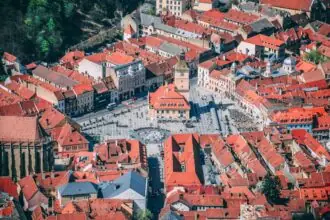
Modern Bratislava presents a fascinating contrast between old and new Europe. Medieval streets, Soviet apartment blocks, futuristic bridges, Cold War memorials, and modern cafés now exist side by side within a compact and highly walkable city. Visitors can move from historic castles to Communist housing estates within minutes, making Bratislava one of the most visually layered capitals in central Europe.
For travellers interested in Cold War history, hidden Europe, Communist architecture, and the legacy of the Iron Curtain, Bratislava offers one of the most underrated historical experiences on the continent.
Quick Facts About Cold War Bratislava
| Category | Details |
|---|---|
| Cold War Period | 1948 to 1989 |
| Country During Communism | Czechoslovakia |
| Nearest Western Border | Austria |
| Main Cold War Landmark | Devín Castle & Iron Curtain border zone |
| Best Communist Architecture Area | Petržalka |
| Major Soviet Memorial | Slavín War Memorial |
| Best Cold War Walking Area | Danube riverside & Old Town outskirts |
| Nearest Airport | Bratislava Airport |
| Best Rail Connection | Vienna to Bratislava trains |
| Best Museum Theme | Communist and border history |
| Most Atmospheric Site | Devín Castle at sunset |
| Best Hidden History Area | Former borderlands near the Danube |
| Recommended Visit Length | 2 to 3 days |
| Best Time to Visit | Spring and autumn |
| Main Historical Themes | Iron Curtain, Communism, surveillance, border control |
Best for a short trip. Compare rooms by neighbourhood, price and guest rating before you book.
Compare hotelsBest for families, or any stay past about four nights. A kitchen and a washing machine start paying for themselves.
Browse rentalsBest for double-checking. Runs the same Bratislava search across several booking sites so you are not leaving money behind.
Compare pricesUnderstanding Bratislava During the Cold War
Following the Communist takeover of Czechoslovakia in 1948, Bratislava became part of the Soviet dominated Eastern Bloc and remained under Communist rule for more than four decades. During this period, the city transformed politically, socially, and architecturally as the government aligned itself closely with the Soviet Union and the wider Warsaw Pact alliance.
Unlike western European cities rebuilding under democratic systems and open markets, Bratislava developed under a centrally planned Communist economy. The state controlled housing, industry, travel, media, and political life. Surveillance by the secret police became part of everyday existence, while criticism of the government carried serious risks for ordinary citizens.
Bratislava’s position beside the Austrian border made the city especially sensitive. Authorities feared defections and escape attempts into the West, leading to intense militarisation of the surrounding border region. Large areas near the frontier became restricted zones with fences, patrol roads, guard towers, floodlights, and armed soldiers monitoring movement.
Travel restrictions shaped daily life throughout Communist Czechoslovakia. Ordinary citizens could not simply cross into Austria or western Europe freely. Permission to travel abroad was heavily restricted, and the border itself became one of the most visible symbols of division within Cold War Europe.
At the same time, Bratislava also underwent major urban transformation. Large scale housing estates such as Petržalka were constructed to accommodate growing populations under Communist planning systems. Massive apartment blocks, wide roads, monumental architecture, and Soviet influenced public spaces reshaped the appearance of the city during the second half of the twentieth century.
Despite political control, Bratislava remained culturally important and economically active within Czechoslovakia. Factories, universities, cultural institutions, and transport networks expanded significantly during the Communist period. Yet beneath the surface, dissatisfaction with the regime gradually grew, particularly following the suppression of the Prague Spring reforms in 1968.
The collapse of Communist rule during the Velvet Revolution of 1989 transformed Bratislava once again. Border restrictions disappeared, Austria became directly accessible, and the city rapidly reoriented itself toward western Europe. Today, traces of the Cold War remain visible throughout Bratislava for visitors willing to look beyond the medieval Old Town.
The Iron Curtain and the Austrian Border
The story of the Iron Curtain is impossible to separate from Bratislava’s identity during the Cold War. Few places in Europe sat so close to the dividing line between East and West, making the city one of the most strategically important border regions within Communist Czechoslovakia.
The Austrian border lay only a short distance from the city centre, yet during the Cold War it represented an almost impossible barrier for most ordinary citizens. The Communist government heavily fortified the frontier with fences, watchtowers, patrol roads, floodlights, and armed guards designed to prevent escape into the West.
Large sections of land near the border became restricted military zones. Villages were monitored closely, movement was controlled, and entire areas along the Danube and surrounding countryside were transformed into heavily guarded security corridors. In some places, electrical fencing and minefields formed part of the border defence system during the earlier decades of the Cold War.
What made Bratislava especially psychologically powerful was the visibility of Austria itself. People living in the city could often physically see the West from nearby hillsides and border areas. The lights of Austrian towns visible across the frontier became potent symbols of freedom and separation during the Communist era.
Several escape attempts took place along the Bratislava border during the Cold War. Some people attempted crossings by foot, boat, or improvised methods along the Danube and nearby countryside. Others were captured, imprisoned, or killed while trying to flee. These stories remain an important and emotional part of the city’s hidden history.
Today, visitors exploring areas near Devín Castle, the Danube riverside, and former border zones often find it difficult to imagine how militarised the region once was. Modern cycling routes, walking paths, and open crossings now occupy landscapes that were once among the most tightly controlled frontiers in Europe.
The collapse of the Iron Curtain after 1989 completely transformed Bratislava’s relationship with the outside world. Vienna, once symbolically distant despite its physical closeness, became easily reachable by train, road, and river travel. The former borderlands shifted from militarised barriers into open European connections almost overnight.
For visitors today, the former Iron Curtain around Bratislava provides one of the strongest examples anywhere in Europe of how geography shaped Cold War politics, fear, and everyday life.
Devín Castle and the Freedom Gate
Standing dramatically above the meeting point of the Danube and Morava Rivers, Devín Castle is one of the most historically important and visually striking locations anywhere near Bratislava. While the castle itself dates back centuries and played major roles in medieval and frontier history, its Cold War significance gives the site an additional layer of emotional and political importance.
During the Communist era, Devín sat directly beside the heavily militarised border between Czechoslovakia and Austria. The surrounding countryside became part of the Iron Curtain frontier zone, monitored closely by guards and surveillance systems designed to prevent escape into the West. From the castle cliffs, people could literally look across the river toward Austria and western Europe.
This physical closeness made Devín symbolically powerful during the Cold War. For many people living under Communist rule, the castle represented both the limits imposed by the regime and the visible possibility of another world lying only a short distance away across the border.
Several escape attempts took place in the wider border region surrounding Devín. The rivers, forests, and surrounding countryside became scenes of dangerous crossings and military patrols. Stories of defectors and failed escape attempts remain deeply connected to the area’s modern historical identity.
Today, one of the most important memorials near the castle is the Freedom Gate, which commemorates victims who died attempting to cross the Iron Curtain frontier. The memorial helps visitors understand that the border around Bratislava was not simply a political boundary. It was a deadly frontier where real people lost their lives seeking freedom and escape from Communist rule.
The castle itself is also spectacular from a tourism perspective. Ruins rise above dramatic cliffs overlooking the Danube, while panoramic views extend across Slovakia, Austria, and the surrounding borderlands. The atmosphere changes dramatically depending on weather and lighting conditions, with foggy mornings and sunset visits often creating particularly memorable experiences.
Modern visitors can reach Devín easily from central Bratislava by bus, bicycle, boat, or organised tour. Combining the castle with riverside walks and former border areas creates one of the strongest Cold War tourism experiences in central Europe. Standard adult admission is around €8 (roughly £7/$9), with current prices and opening times published directly by the castle itself.
The site perfectly captures what makes Bratislava so unique historically. Few places combine medieval ruins, frontier geography, Cold War tension, and modern European openness within a single landscape quite so effectively.
Communist Architecture and Urban Planning in Bratislava
One of the most visible legacies of the Communist era in Bratislava is the city’s architecture and urban planning. While visitors often focus on the picturesque medieval Old Town, huge parts of modern Bratislava were shaped directly by Communist planning policies during the second half of the twentieth century.
The most famous example is Petržalka, the enormous housing estate located south of the Danube River. Built largely during the Communist era, Petržalka became one of the largest socialist housing developments in Europe. Endless rows of concrete apartment blocks, broad roads, and large residential zones created a landscape designed around mass housing and state planning principles.
For many western visitors, Petržalka immediately feels visually associated with the Soviet Bloc. Towering apartment blocks stretch across the skyline, while the district’s scale reflects the Communist ambition to rapidly house huge urban populations within standardised modern environments.
However, Petržalka is more complex than many stereotypes suggest. During the Communist period, these apartment districts actually represented modern housing improvements for many residents moving from overcrowded or outdated accommodation elsewhere. Central heating, running water, elevators, schools, and public transport made the estates attractive to many ordinary citizens despite their harsh architectural appearance.
Elsewhere in Bratislava, Communist urban planning reshaped roads, public squares, transport systems, and government districts. Wide boulevards and monumental structures reflected the ideological emphasis on state power, order, and collective society. Several Soviet style memorials and official buildings from this era still remain scattered throughout the city.
The contrast between Communist architecture and the medieval Old Town is particularly striking. Within short walking distances, visitors move between narrow historic streets, baroque churches, glass office towers, and vast socialist housing estates. Few European capitals display such sharp visual transitions between historical periods.
Photography enthusiasts often find Bratislava especially rewarding because of this architectural diversity. Concrete apartment blocks stand beside futuristic bridges, old fortifications, and riverside modern developments, creating a cityscape that constantly reveals layers of political and social history.
Today, districts such as Petržalka continue evolving rapidly. Modern cafés, renovated apartments, street art, and commercial redevelopment are gradually transforming many former Communist spaces, yet the scale and appearance of the original planning remain impossible to ignore.
For visitors interested in Cold War Europe, Bratislava’s architecture provides one of the clearest physical reminders of how Communist governments attempted to reshape urban life during the twentieth century.
The UFO Bridge and the Destruction of the Old Jewish Quarter
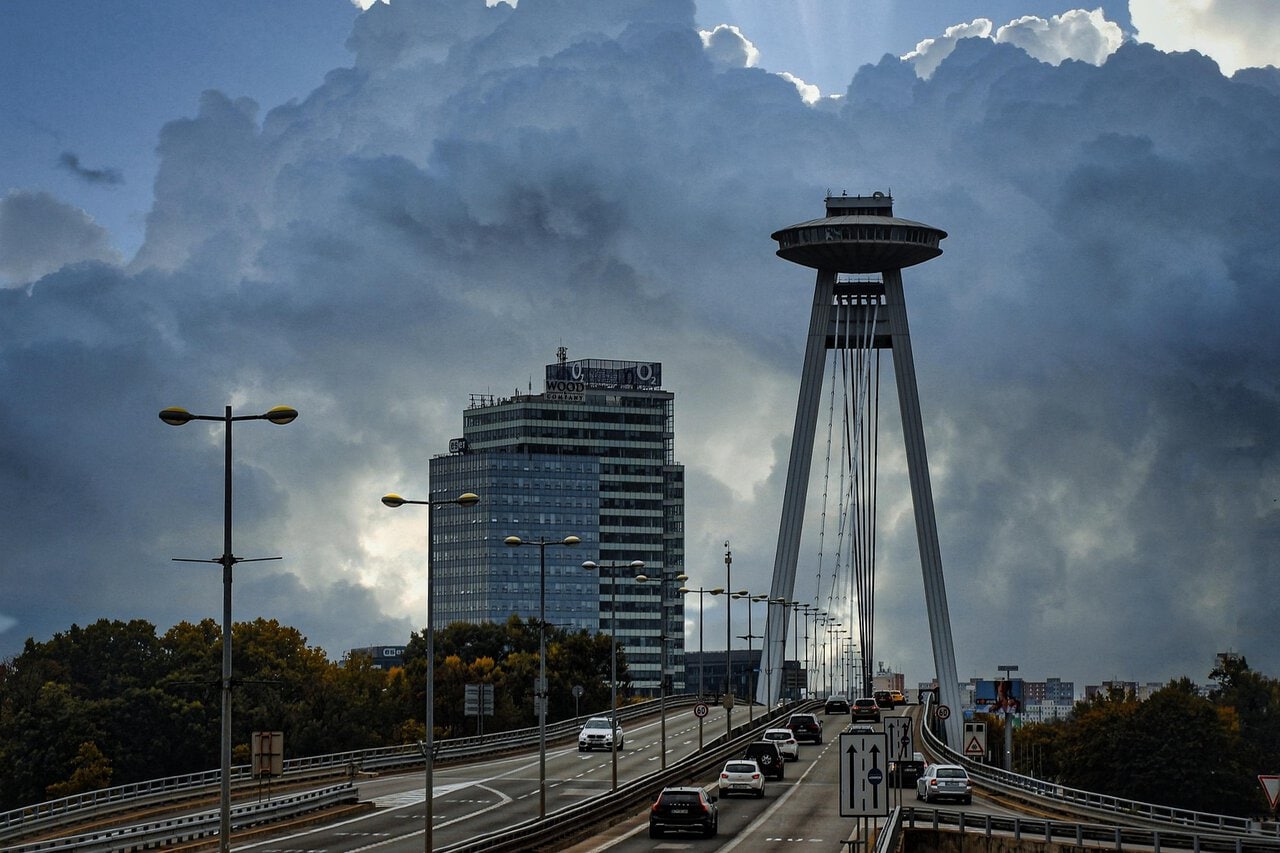
Few structures symbolise Communist era Bratislava more dramatically than the UFO Bridge, officially known as the Slovak National Uprising Bridge. Stretching across the Danube with its distinctive futuristic observation tower, the bridge has become one of the city’s most recognisable landmarks. Yet behind its striking appearance lies a far more controversial history.
Constructed between 1967 and 1972, the bridge formed part of a major Communist redevelopment project designed to modernise Bratislava and improve transport connections to the growing housing estates of Petržalka. The project reflected the broader Communist emphasis on monumental infrastructure, large scale planning, and modernist urban transformation.
However, the construction came at a huge cultural cost. Entire sections of Bratislava’s historic Jewish quarter were demolished to create access roads and bridge infrastructure. Streets, buildings, and centuries of Jewish heritage disappeared beneath the redevelopment plans, permanently altering the historical landscape of the city.
This destruction reflected wider patterns seen across several Communist cities in eastern Europe, where older neighbourhoods were often sacrificed for large infrastructure projects, ideological redesign, or mass housing developments. In Bratislava, the bridge became both a symbol of modernisation and a reminder of lost historical heritage.
Today, the contrast surrounding the UFO Bridge is fascinating. On one side lies the preserved medieval Old Town with narrow streets and historic architecture. On the other stands Petržalka, with its vast Communist housing blocks stretching into the distance. The bridge itself physically connects two completely different visions of urban Europe.
The observation deck and restaurant inside the UFO structure also provide some of the best panoramic views in Bratislava. From above, visitors can clearly see the Danube, the Old Town, Communist housing estates, and even parts of Austria beyond the former Iron Curtain frontier.
The surrounding district also contains important reminders of Bratislava’s Jewish history, including memorials and surviving heritage sites linked to the city’s pre war Jewish community. Exploring these locations helps visitors understand how twentieth century politics, war, and redevelopment dramatically reshaped the cultural identity of Bratislava.
The UFO Bridge therefore represents far more than unusual architecture. It embodies the tensions between preservation and modernisation, memory and ideology, that defined much of eastern Europe during the Communist period.
Jewish Bratislava and Second World War History
Long before the Cold War divided Europe, Bratislava experienced another devastating chapter in its history during the Second World War and the Holocaust. Exploring the city’s Jewish heritage reveals a deeper and often overlooked layer of Bratislava’s historical identity.
Before the war, Bratislava had a significant Jewish community that played an important role in the city’s commercial, cultural, and intellectual life. Synagogues, schools, cemeteries, and businesses formed part of daily life throughout the city. However, the rise of fascism and the wartime Slovak state aligned with Nazi Germany led to persecution, deportation, and destruction.
Thousands of Slovak Jews were deported during the Holocaust, and much of Bratislava’s Jewish community was devastated. Many historical buildings connected to Jewish life disappeared during the war itself or later redevelopment projects during the Communist era.
One of the most important surviving sites is the Chatam Sofer Memorial, which preserves the tomb of one of Judaism’s most influential rabbis alongside remains of the old Jewish cemetery. Located beneath modern infrastructure near the Danube, the memorial creates a powerful contrast between historical preservation and the city’s changing urban landscape.
Visitors can also explore memorial plaques, surviving Jewish heritage locations, and areas linked to the former Jewish quarter. While much was destroyed during twentieth century redevelopment, traces of the community’s history remain scattered throughout Bratislava.
The destruction of the old Jewish quarter during construction of the UFO Bridge added another layer of loss to the city’s Jewish heritage. Communist urban planning often prioritised infrastructure over preservation, meaning important historical districts vanished entirely during the post war decades.
Today, Bratislava’s Jewish history forms an essential part of understanding the city’s broader twentieth century story. The overlapping impacts of fascism, war, Communism, and redevelopment all reshaped the city and permanently altered its cultural landscape.
For visitors interested in dark tourism, Second World War history, and hidden European heritage, Jewish Bratislava provides a more reflective and historically sensitive perspective alongside the city’s Cold War attractions.
Best if you can move a day either way. Shows how the fare to Bratislava changes across the month.
Compare flightsBest if you want maps and messaging working the moment you switch your phone on.
See eSIM plansBest if you would rather not work out the transport on arrival. Book it now and forget it.
View transfersBratislava Bunkers and Underground Cold War Infrastructure
Beneath the streets, hillsides, and border regions surrounding Bratislava lies a hidden world of Cold War infrastructure, military shelters, and underground defensive systems built during decades of tension between East and West.
Although Bratislava is less famous for bunkers than cities such as Berlin or Prague, its position beside the Austrian border made it strategically important within the Communist bloc. Military planners treated the region as a vulnerable frontier zone where surveillance, defence, and rapid response systems were considered essential.
Several underground shelters and bunker structures were constructed during the Cold War period, designed to protect officials, infrastructure, and military personnel in the event of conflict. Some sites remain inaccessible or abandoned, while others have gradually become part of historical tours and hidden history exploration.
The wider border region around Devín, the Danube, and nearby military zones also contained patrol infrastructure, observation points, and defensive installations linked to the Iron Curtain. Much of this system disappeared after the collapse of Communism, but fragments still survive within forests, riverside areas, and former restricted zones.
One of the most interesting aspects of Bratislava’s underground history is how ordinary daily life existed alongside military preparation. Beneath apartment blocks, government buildings, and public infrastructure, shelters and emergency systems formed part of the broader Cold War mentality that shaped eastern Europe for decades.
Several local tours and history groups now explore hidden Cold War infrastructure across Bratislava, including underground spaces, forgotten military areas, and remnants of Communist civil defence planning. While not as heavily commercialised as some western Cold War attractions, this actually gives Bratislava a more authentic and less tourist driven atmosphere.
The city’s underground spaces also connect naturally into wider themes of hidden Europe, secretive government systems, and the psychology of Cold War fear. During periods of intense tension between NATO and the Warsaw Pact, Bratislava existed directly beside one of Europe’s most sensitive frontiers.
For visitors interested in hidden Cold War history, the appeal of Bratislava often comes from piecing together fragments of the past rather than visiting large museum attractions alone. Abandoned structures, memorials, border zones, Soviet era buildings, and underground remnants together create a much broader picture of how the city functioned during the Communist period.
Combined with Bratislava’s compact size and walkability, these hidden historical layers make the city particularly rewarding for travellers who enjoy discovering overlooked stories beneath the surface of more traditional tourism.
Best Cold War and Communist Sites to Visit in Bratislava
Bratislava’s Cold War history is spread across the city rather than concentrated within one single museum or district. This makes exploring the city feel more like uncovering layers of hidden history through architecture, memorials, border landscapes, and surviving Communist era infrastructure.
The most important location is probably Devín Castle, where medieval ruins overlook the former Iron Curtain frontier with Austria. The combination of dramatic scenery, Cold War border history, and memorial symbolism makes Devín essential for understanding Bratislava’s role during the Communist era.
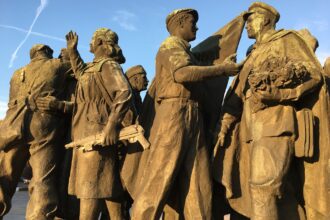
Another major landmark is the Slavín War Memorial, one of the largest Soviet war memorials in central Europe. Built to honour Soviet soldiers who liberated Bratislava during the Second World War, the enormous monument later became deeply tied to Communist political identity and state ceremonies throughout the Cold War period.
The district of Petržalka is equally important for understanding Communist urban planning. The vast housing estate reveals how socialist governments attempted to reshape city life through mass residential construction and centralised planning. Walking through Petržalka today provides one of the strongest visual reminders of Bratislava’s Communist past.
The UFO Bridge also remains central to the city’s Cold War identity. Its futuristic design and controversial construction symbolise the modernisation ambitions of Communist Czechoslovakia while also reflecting the destruction of historical districts during redevelopment.
Visitors interested in military and underground history should also explore Cold War shelters, border remnants, and lesser known memorials scattered throughout the city and surrounding countryside. While many are subtle or partially hidden, they help reveal how heavily militarised the Bratislava region once was.
The riverside along the Danube provides another fascinating historical perspective. Areas now filled with cycling paths, cafés, and modern development were once heavily monitored frontier zones tied directly to the Iron Curtain.
One of the strengths of Bratislava is that these sites remain relatively close together. Visitors can move between medieval castles, Communist housing blocks, Soviet memorials, Cold War border zones, and modern European city life within a single day.
Unlike some heavily curated Cold War tourism destinations, Bratislava still feels authentic and slightly undiscovered. The city’s Communist history has not been completely transformed into a polished tourist product, which actually makes exploring it feel more genuine and historically immersive.
The Slavín War Memorial
Towering above Bratislava on a hillside overlooking the city, the Slavín War Memorial is one of the most striking reminders of the Soviet era anywhere in Slovakia. Built in memory of Soviet soldiers who died liberating Bratislava from Nazi occupation during the Second World War, the memorial later became one of the most important symbolic sites during the Communist period.
Completed in 1960, Slavín combines monumental architecture, military symbolism, and panoramic views across the city. At the top stands a massive Soviet soldier statue holding a flag above a huge memorial complex and military cemetery where thousands of soldiers are buried.
During the Cold War, Slavín held enormous political significance within Communist Czechoslovakia. Official ceremonies, commemorations, and state events frequently took place here, reinforcing Soviet influence and the narrative of liberation tied to the Red Army. The site symbolised both wartime sacrifice and the political alignment between Czechoslovakia and the Soviet Union.
Today, the memorial carries more complex historical meanings. For some visitors, it remains primarily a place of remembrance honouring soldiers who fought against Nazi Germany. For others, it also represents decades of Soviet domination and Communist political control across eastern Europe.
The location itself is spectacular. From the memorial terraces, visitors enjoy some of the best views across Bratislava, including the Old Town, Danube River, Petržalka housing estates, and distant border regions once divided by the Iron Curtain. This perspective helps visitors understand the geography that shaped Bratislava’s Cold War history.
The atmosphere at Slavín is often surprisingly peaceful compared to the intensity of its political symbolism. Tree lined pathways, memorial stones, and open spaces create a reflective environment that contrasts strongly with the city centre below.
For travellers interested in Communist history, Second World War memory, and Soviet architecture, Slavín is one of the most important historical sites in Bratislava. It also works particularly well when combined with broader Cold War walking routes through the city.
The memorial demonstrates how Bratislava’s twentieth century history cannot be separated into simple categories. Nazi occupation, Soviet liberation, Communist rule, Cold War tension, and post Communist transformation all overlap within the city’s historical landscape.

Cold War Walking Routes in Bratislava
Bratislava is one of the best cities in central Europe for exploring Cold War history on foot. The compact city centre, riverside geography, and relatively short distances between major sites make it easy to build immersive walking routes linking Communist architecture, border history, Soviet memorials, and hidden historical locations.
One of the strongest routes begins in the Old Town, where medieval streets and baroque architecture initially hide the city’s more recent history. Walking outward toward the Danube quickly reveals how Communist redevelopment transformed parts of Bratislava during the twentieth century.
Crossing the UFO Bridge into Petržalka creates one of the sharpest visual transitions in the city. Visitors move from historic European streets into huge Communist era housing districts built under socialist planning systems. The scale of Petržalka helps visitors understand how dramatically Bratislava expanded during the Cold War.
The riverside paths along the Danube also form excellent walking routes because many sections once sat close to heavily monitored frontier zones. Areas now used for cycling, recreation, and cafés were previously connected to surveillance systems and border control infrastructure during the Communist period.
Another rewarding route combines the city centre with Slavín War Memorial, climbing gradually uphill through residential districts before opening onto panoramic views across Bratislava. This walk reveals both Soviet monumental architecture and the broader geography of the city during the Cold War era.
For visitors wanting a deeper Iron Curtain experience, excursions toward Devín Castle and the former border areas provide the most powerful atmosphere. Walking beside the rivers and frontier landscapes makes it easier to visualise how heavily guarded and politically sensitive the region once was.
Photography works particularly well during these walks because Bratislava constantly contrasts different historical periods. Communist apartment blocks stand beside medieval towers, while futuristic bridges cross rivers once forming part of one of Europe’s most dangerous borders.
One of Bratislava’s biggest advantages is that the city still feels lived in rather than over curated for tourism. Cold War history appears naturally within everyday streets and neighbourhoods rather than existing only inside museums. This makes walking through the city feel much more authentic and exploratory for visitors interested in hidden European history.
Day Trips Along the Former Iron Curtain
One of the most fascinating aspects of visiting Bratislava is how easily travellers can explore landscapes that once formed part of the Iron Curtain frontier between eastern and western Europe. Areas that were heavily militarised during the Cold War are now connected by open borders, cycling routes, railways, and river transport, creating some of the most historically powerful day trips in central Europe.
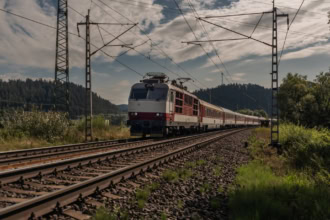
The easiest and most popular journey is the short trip between Bratislava and Vienna. Today, trains connect the two capitals in around an hour, while river boats and buses provide additional options. During the Cold War, however, this nearby western capital represented an unreachable world for many people living under Communist rule. The fact that Vienna now feels so easily accessible highlights just how dramatically Europe changed after the collapse of the Iron Curtain.
Travelling west from Bratislava toward the Austrian border also reveals former frontier landscapes that once contained fences, patrol roads, watchtowers, and military zones. Many of these areas have now been transformed into peaceful countryside, cycling trails, and nature reserves, yet memorials and historical markers still preserve the memory of the divided border.
The Danube cycling routes are especially interesting because they follow corridors that once sat close to some of the most tightly controlled borders in Europe. Cycling or walking through these landscapes today creates a striking contrast with their Cold War past.
Visitors interested in border history should also explore smaller villages and riverside districts near Devín and the western outskirts of Bratislava. Several locations contain memorials dedicated to people who died attempting to cross the border during the Communist era.
The wider region around Bratislava also connects naturally into other former Communist capitals including Budapest, Prague, and Brno. Travelling between these cities today feels simple and routine, yet during the Cold War these journeys existed within heavily controlled political systems shaped by surveillance, restricted movement, and ideological division.
River travel along the Danube adds another dimension to the experience. Modern sightseeing boats and river cruises now move freely through waterways once associated with border security and escape attempts. Seeing the region from the river helps visitors understand why the Danube itself played such an important strategic role during the Cold War.
For travellers interested in Iron Curtain tourism, Bratislava works exceptionally well because it sits at the physical meeting point between eastern and western Europe. Few places demonstrate the collapse of Cold War borders more clearly than this region.
How to Reach Bratislava’s Cold War Sites
One of Bratislava’s biggest strengths as a historical destination is how compact and accessible the city feels. Many of the major Cold War and Communist history sites can be reached easily using public transport, walking routes, or short journeys from the city centre.
Most international visitors arrive either via Bratislava Airport or through nearby Vienna International Airport, which often offers more flight options. Direct buses and trains between Vienna and Bratislava make the journey extremely straightforward, with some rail services taking less than an hour.
The city’s railway stations also provide excellent regional connections into wider central Europe. Trains from Budapest, Prague, Brno, and Vienna all connect directly into Bratislava, making the city a natural stop within broader Iron Curtain and Communist history itineraries.
Within Bratislava itself, many Cold War landmarks are walkable from the Old Town. The UFO Bridge, Danube riverside, and sections of the Communist era cityscape can all be explored on foot relatively easily. Walking is often the best way to appreciate how different historical periods overlap across the city.
To reach Devín Castle, visitors can use local buses, cycling routes, organised tours, or seasonal river boats along the Danube. The journey itself becomes part of the experience because it follows landscapes once heavily associated with the Iron Curtain frontier.
The Slavín War Memorial is accessible via uphill walking routes, buses, or taxis from the city centre. Many visitors combine it with wider walking itineraries exploring Communist architecture and Soviet era memorials across Bratislava.
Public transport across Bratislava is generally reliable and inexpensive. Trams, buses, and trolleybuses connect most districts efficiently, including routes into Petržalka and outer residential areas shaped by Communist era urban planning.
Cycling also works particularly well in Bratislava, especially along the Danube and former border regions. The city’s riverside cycling infrastructure has improved significantly in recent years, allowing visitors to follow routes that once sat beside militarised frontier zones.
Because Bratislava remains relatively compact compared to many European capitals, visitors can cover a surprisingly large amount of historical ground in a short period of time. This makes the city ideal for travellers interested in layered urban history without the overwhelming scale of larger capitals such as Berlin or Moscow.
Best for a short stop where being central matters more than the room. Dorms and private rooms both listed.
See hostelsBest for anyone flying more than once or twice a year. Handles the compensation claim so you are not chasing the airline.
See AirHelp+Best if your room is not ready yet. Left luggage booked in advance, so you are not hunting for a locker.
Check storageRecommended Apps for Exploring Bratislava
Using the right travel apps can significantly improve the experience of exploring Bratislava’s Cold War history, particularly because many of the city’s most interesting locations are spread across different districts, riverside areas, and former border zones.
For navigation, Google Maps works extremely well throughout Bratislava and is essential for locating hidden Cold War sites, memorials, and Communist era districts outside the main tourist centre. Several historical locations connected to the Iron Curtain and Soviet period are subtle or poorly signposted, making reliable mapping important.
Public transport apps are also highly useful because Bratislava’s trams, buses, and trolleybuses provide easy access to areas such as Petržalka, Slavín, and routes toward Devín Castle. The transport network is generally affordable and straightforward, particularly for visitors staying within the city centre.
Travellers arriving from abroad should strongly consider using an eSIM app before visiting Slovakia. Reliable mobile data becomes especially useful when researching historical sites, translating museum information, or navigating between former Communist districts and border landscapes.
Walking and cycling apps also work very well in Bratislava because the city is compact and highly walkable. Several of the best Cold War experiences involve riverside paths, urban exploration routes, and journeys through former frontier areas that are best experienced slowly rather than through organised coach tours.
Translation apps can also be valuable because smaller museums, memorials, and local historical interpretation signs do not always include extensive English translations. Even basic translation tools help visitors better understand the political and historical context behind lesser known sites.
Photography and weather apps are surprisingly useful too. Bratislava’s architecture and riverside landscapes change dramatically depending on weather and lighting conditions. Fog along the Danube, sunset views from Devín Castle, or winter conditions around Soviet memorials can create particularly atmospheric scenes for photographers.
Audio guide and podcast apps are another excellent addition for visitors interested in Cold War history. Listening to historical content while walking through Petržalka or former Iron Curtain border areas creates a much deeper sense of immersion than simply reading plaques alone.
For travellers exploring wider central Europe, combining transport, navigation, translation, and historical apps helps create a much smoother journey through the former landscapes of the Eastern Bloc.

Rupert’s Handy Travel Tips
Rupert says Bratislava is one of Europe’s most underrated history cities because the Cold War story is still visible almost everywhere once you know where to look. He especially recommends exploring beyond the Old Town to properly understand how the city changed during the Communist era.
- Visit Devín Castle late in the day: sunset over the former Iron Curtain borderlands creates one of the most atmospheric views anywhere in central Europe.
- Walk through Petržalka: the scale of the Communist era housing blocks is much more impressive when experienced on foot rather than just photographed from a distance.
- Combine Bratislava with Vienna: the short modern journey between the two cities feels very different once you understand the history of the Cold War border.
- Bring comfortable walking shoes: many of the best Cold War and hidden history locations are spread across riverside paths, hillsides, and larger residential districts.
- Do not rush the Slavín Memorial: spend time with the panoramic views, which help visitors understand the geography that shaped Bratislava’s Cold War history.
Want to meet the reindeer behind our travel tips? Find out more in our page Who is Rupert?.




Frequently Asked Questions About Bratislava’s Cold War History
Was Bratislava behind the Iron Curtain?
Yes. During the Cold War, Bratislava was part of Communist Czechoslovakia and sat directly beside the heavily fortified border with Austria, which formed part of the Iron Curtain.
Can you still see Iron Curtain sites in Bratislava?
Yes. Visitors can still explore former border regions, memorials, Cold War landscapes, and areas connected to the Communist frontier system around Devín Castle and the Danube.
Why is Bratislava important in Cold War history?
Bratislava occupied one of the most strategically sensitive locations in eastern Europe because it sat directly beside Austria and the western border of the Communist bloc.
What is Petržalka?
Petržalka is a huge Communist-era housing district built during the socialist period. It remains one of the largest examples of Soviet-style urban planning in Central Europe.
Is Devín Castle worth visiting?
Absolutely. Devín combines medieval history, dramatic scenery, Iron Curtain border history, and panoramic views over Slovakia and Austria.
Are there Cold War bunkers in Bratislava?
Yes. Bratislava contains underground shelters, Cold War infrastructure, and military remnants connected to its role as a frontier city during the Communist era.
How easy is it to travel between Vienna and Bratislava?
Very easy. Modern trains, buses, and river services connect the two capitals in around one hour, despite the route once crossing the Iron Curtain frontier.
What is the UFO Bridge?
The UFO Bridge is Bratislava’s famous Communist-era bridge across the Danube, known for its futuristic observation tower and controversial redevelopment history.
What is the Slavín Memorial?
Slavín is a major Soviet war memorial and military cemetery overlooking Bratislava, built to commemorate Red Army soldiers who died during the liberation of the city in 1945.
How long should you spend exploring Cold War Bratislava?
Most visitors should allow at least 2 to 3 days to properly explore the city’s Cold War, Communist, and hidden historical sites.
Further Reading & Related Central Europe Guides
Travellers exploring Bratislava’s Cold War history often continue into wider journeys across central and eastern Europe, particularly through destinations connected to the former Communist bloc and the legacy of the Iron Curtain. Visitors interested in abandoned places, wartime history, Cold War sites, and unusual historical destinations should continue into our broader Dark Tourism Guide, covering atmospheric locations across Britain and Europe. Those drawn to former Eastern Bloc capitals may also enjoy our Dark Tourism in Sofia and Tallinn Dark Tourism Guide, two more cities with strong Cold War and Soviet-era stories to explore.
To see more of the city beyond its Cold War history, our Best Things to Do in and Around Bratislava guide covers the Old Town, castle, day trips and other top attractions. For travellers moving between the former capitals of the Eastern Bloc, our dedicated Budapest to Bratislava Travel Guide explains rail routes, buses, river travel, ticket booking, and the easiest ways to cross between Hungary and Slovakia, while our Vienna to Bratislava guide covers the short hop across the former Iron Curtain border in more detail.
Rail travellers exploring central Europe should also read our Slovakia Interrail Guide, covering train routes across Slovakia, major stations, scenic rail journeys, and how to use Interrail passes throughout the country.
Visitors planning wider European rail adventures can continue into our main Interrail Europe Guide, which covers route planning, sleeper trains, reservations, budgeting, and cross border rail travel throughout Europe.
Finally, because Bratislava’s Cold War sites and hidden historical districts are best explored with reliable mobile data for maps and transport apps, international visitors may also benefit from our eSIM Guide, helping travellers stay connected across Slovakia and central Europe.