Reviewed by our editorial team Updated
Why Travel from Budapest to Bratislava
Travelling from Budapest to Bratislava is one of the easiest and most rewarding international journeys in Central Europe. The two capitals sit relatively close together along the Danube River, making the route ideal for everything from a quick day trip to a longer multi-country itinerary through the region.
One of the biggest attractions of the journey is how many transport options are available. Travellers can choose between fast international trains, cheap long-distance buses, scenic river cruises, or even self-drive road trips. This flexibility means the route works equally well for backpackers, luxury travellers, rail enthusiasts, and people building wider Interrail itineraries.
The route is particularly popular because Bratislava offers a completely different atmosphere to Budapest despite the short distance between them. While Budapest feels grand, sprawling, and monumental, Bratislava is smaller, calmer, and easier to explore on foot. The compact old town, riverside cafés, hilltop castle, and relaxed pace make it an excellent contrast to Hungary’s capital.
Another major advantage is cost. Compared to Western European city breaks, both Hungary and Slovakia remain relatively affordable. This means travellers can enjoy international rail travel, hotels, restaurants, and sightseeing without the extreme costs often associated with routes between capitals elsewhere in Europe.
The journey is also highly practical. Train travel between the two cities is frequent and reliable, buses run throughout the day, and border crossings are seamless because both countries are part of the Schengen Area. In many cases, the trip feels almost domestic in its simplicity.
For travellers exploring Central Europe, the Budapest to Bratislava route is one of the easiest and most worthwhile international connections you can make.
Quick Route Overview
The journey between Budapest and Bratislava covers approximately 200 kilometres, depending on the transport method used. Despite crossing an international border, the route is straightforward, fast, and well connected.
Travellers choosing the train can usually expect journey times of around 2 hours 20 minutes to 2 hours 45 minutes, depending on the service. Direct EuroCity trains run throughout the day and provide the most balanced combination of comfort, speed, and city-centre convenience.
Long-distance buses are often slightly cheaper and sometimes marginally faster depending on traffic conditions. Companies such as FlixBus operate frequent services between the two capitals, with journey times commonly ranging between 2 hours 30 minutes and 3 hours.
For a more scenic experience, seasonal Danube boat services connect the two cities during warmer months. These journeys take considerably longer, often around 4–6 hours, but provide a far more memorable travel experience with riverside scenery throughout the trip.
Driving is also possible and usually takes around 2 hours 15 minutes to 2 hours 45 minutes, depending on traffic leaving Budapest and conditions approaching Bratislava.
One of the most important practical points is that there are no routine border controls between Hungary and Slovakia under normal Schengen conditions. This makes the journey smooth regardless of transport type.
Because both capitals are relatively compact and well served by public transport, travellers can comfortably complete the route as either a day trip or part of a larger Central European itinerary including destinations such as Vienna or Prague.
Compare hotels and other places to stay in Bratislava.
Check availabilityExplore holiday homes and apartments around Bratislava.
See holiday homesCompare prices for Bratislava hotels across multiple booking sites.
Check dealsBudapest to Bratislava by Train
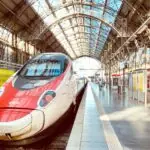
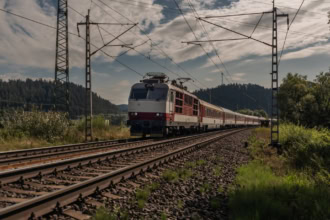
Travelling by train is widely considered the best overall way to travel from Budapest to Bratislava. The route combines speed, comfort, reliability, and direct city-centre to city-centre convenience, making it particularly attractive for both tourists and Interrail travellers.
Most services depart from Budapest Keleti Railway Station or occasionally from Budapest Nyugati depending on the timetable. Trains arrive at Bratislava hlavná stanica, the Slovak capital’s main railway station.
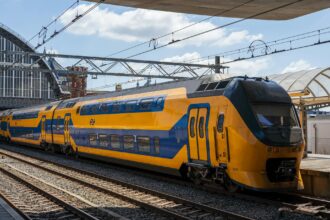
The primary services on the route are operated as EuroCity trains, jointly run by Hungarian and Slovak rail operators. These trains are generally modern, comfortable, and equipped with air conditioning, luggage storage, toilets, and often onboard catering.
Journey times usually range between 2 hours 20 minutes and 2 hours 45 minutes, making rail highly competitive against driving and often more reliable than buses during busy traffic periods.
One major advantage of the train is scenery. After leaving Budapest, the line follows flatter rural landscapes before approaching the Danube corridor and western Slovakia. While not as dramatic as alpine railways, the journey still offers pleasant Central European countryside throughout.
Ticket prices are often surprisingly affordable if booked in advance. Standard fares commonly begin around €15–€25 (£12.80–£21.35 / $16.15–$26.90, about 5,925–9,875 HUF), though flexible last-minute tickets can cost more. Travellers using Interrail or Eurail passes usually only need a reservation or can board directly depending on the service rules at the time.
Unlike airports, railway stations place travellers directly inside the city. This removes lengthy transfers, security queues, and boarding procedures, making the overall journey feel significantly faster than flying.
For most travellers, the train remains the strongest balance of comfort, speed, price, and simplicity on the Budapest to Bratislava route.

Plan Your Train Journey with Rail Europe
Booking train tickets in Europe can become complicated when different operators, routes, and booking systems are involved. Rail Europe makes it easier to search routes, compare fares, and buy train tickets in one place.
It is especially useful for international rail journeys, European city-to-city travel, and travellers looking to book both regular rail tickets and passes. Instead of checking multiple train operators separately, you can plan your journey faster and book with confidence.
Budapest to Bratislava by Bus
Long-distance buses are one of the cheapest ways to travel between Budapest and Bratislava, and they are particularly popular with budget travellers and backpackers.
The dominant operator on the route is FlixBus, though other regional coach companies also run services throughout the day. Buses usually depart from stations such as Népliget Bus Terminal or occasionally from central Budapest pickup points depending on the operator.
In Bratislava, most coaches arrive at the city’s main international bus station, conveniently located near the centre and connected to local transport.
Journey times typically range between 2 hours 30 minutes and 3 hours, though traffic conditions can occasionally increase this. Early morning or weekday departures are generally the most reliable for avoiding congestion leaving Budapest.
The biggest attraction of the bus is price. Advance fares can sometimes drop below €10 (£8.55 / $10.75, about 3,950 HUF), making this one of the cheapest international capital-to-capital routes in Europe. Even last-minute tickets are often highly competitive compared to rail fares.
Modern long-distance buses now provide far more comfort than many travellers expect. Wi-Fi, power sockets, air conditioning, and reclining seats are commonly available, especially on newer coaches.
However, buses do come with trade-offs. Traffic can occasionally cause delays, particularly around Budapest ring roads or during holiday periods. Comfort levels are also generally lower than trains for longer journeys, particularly if services are busy.
For travellers prioritising lowest cost above all else, the bus is extremely hard to beat. For those wanting more legroom, smoother journeys, or easier onboard movement, the train still tends to offer the superior experience overall.

Book Your Budapest Coach Journey with Busbud
Busbud can help you organise bus and coach travel involving Budapest by bringing routes, timetables and ticket options together in one search.
This can be especially useful when travelling between cities or across regions where multiple coach companies operate.
Budapest to Bratislava by Boat
Travelling by boat from Budapest to Bratislava is easily the most scenic, relaxed, and memorable way to complete the journey. While trains and buses focus on efficiency, the Danube river route transforms the trip itself into a major part of the experience.
The journey follows the legendary Danube River, one of Europe’s most important waterways, passing riverside countryside, forests, smaller settlements, and open landscapes that are almost completely missed when travelling by road or rail. For many travellers, the river scenery becomes just as enjoyable as the destination itself.
Departing from Budapest is particularly spectacular. Boats glide past the city’s dramatic skyline, including views of the Hungarian Parliament, Buda Castle, bridges crossing the Danube, and the hills rising above the western bank. Few European capital departures are as visually impressive.
Journey times are significantly slower than train or bus travel, usually taking around 4 to 6 hours depending on river conditions and the type of vessel used. However, speed is not really the point of this option. Travellers choosing the boat are normally prioritising experience, photography, and atmosphere over raw efficiency.
Most services are seasonal, generally operating between late spring and early autumn. Availability varies from year to year, so travellers should always confirm schedules before finalising accommodation or onward travel plans.
Prices are usually higher than rail or coach services. Standard fares commonly range between €30 and €70+ (£25.65–£59.85+ / $32.30–$75.35+, about 11,850–27,650+ HUF), particularly for faster hydrofoil services. Seating often includes indoor panoramic lounges and outdoor viewing decks, allowing travellers to enjoy the scenery throughout the trip.
For travellers building a wider Danube itinerary, the river route also combines extremely well with onward journeys towards Vienna.
If your priority is creating a memorable travel experience rather than simply reaching Bratislava as quickly as possible, the boat is unquestionably the standout option.
Budapest to Bratislava by Car
Driving from Budapest to Bratislava offers the greatest level of flexibility and works particularly well for travellers planning broader Central European road trips.
Under normal conditions, the drive usually takes around 2 hours 15 minutes to 2 hours 45 minutes. The route is relatively simple, following Hungary’s modern M1 motorway westwards before crossing into Slovakia and continuing directly towards Bratislava.
One of the biggest advantages of driving is the freedom to stop wherever you want along the way. Travellers can detour into smaller Hungarian or Slovak towns, stop at Danube viewpoints, or explore countryside areas that are difficult to reach using public transport.
Because both Hungary and Slovakia are part of the Schengen Area, border crossings are normally seamless. Under standard conditions there are no routine passport checks, meaning most drivers cross the border without even needing to stop.
However, there are several practical considerations. Both countries operate electronic motorway vignette systems, meaning drivers need valid toll coverage before using major roads. Rental cars frequently include these automatically, but travellers using private vehicles should always double-check.
Parking becomes more complicated once arriving in Bratislava itself. The historic centre is compact and partially pedestrianised, and parking in central areas can become expensive or limited during busy periods.
Traffic is another factor. Leaving Budapest during rush hour can significantly increase journey times, particularly around ring roads and motorway exits. Weekend holiday traffic during summer can also cause delays.
Compared to the train, driving is generally more stressful and less relaxing. However, for travellers wanting maximum independence or combining Slovakia with multiple destinations across Austria, Hungary, or Croatia, the car remains an excellent option.
Comparing Train vs Bus vs Boat
Choosing the best way to travel from Budapest to Bratislava depends entirely on what matters most to you: speed, comfort, price, or scenery.
For most travellers, the train is the strongest overall choice. Rail services offer the best combination of comfort, reliability, and city-centre convenience. Trains avoid traffic congestion, provide more space to move around, and place passengers directly into central Bratislava without airport-style procedures or parking concerns. Journey times of around 2 hours 30 minutes also make rail highly competitive.
The bus is usually the cheapest option. Companies such as FlixBus frequently offer extremely low fares, particularly when booked early. Modern coaches often include Wi-Fi, power sockets, and air conditioning, though overall comfort levels still tend to be lower than rail, especially on busy services.
The boat sits at the opposite end of the spectrum. It is slower and more expensive, but it delivers the best scenery and most memorable experience. Travelling along the Danube feels more like a mini cruise than ordinary transportation and is ideal for travellers prioritising atmosphere and photography.
Driving offers maximum flexibility but also introduces motorway tolls, parking concerns, and traffic stress. For travellers simply moving between capitals, public transport is generally easier overall.
In practical terms, the train is the best option for overall comfort, speed, and city-centre convenience, making it the strongest all-round choice for most travellers.
The bus is usually the cheapest way to travel between Budapest and Bratislava, making it ideal for ultra-budget trips and backpackers trying to minimise transport costs.
The boat is the standout choice for scenery, atmosphere, and overall travel experience, transforming the Danube journey itself into one of the highlights of the trip.
The car offers the greatest level of flexibility, working best for travellers planning wider Central European road trips or wanting freedom to stop along the route independently.
Fortunately, because the two capitals are so well connected, travellers can comfortably choose whichever option best matches their travel style and budget.
Best Scenic Option for the Journey
If scenery is your top priority, the journey by Danube boat between Budapest and Bratislava is unquestionably the best choice.
Unlike trains or buses, the river route allows travellers to experience the landscape slowly and continuously. Instead of rushing past motorway barriers or railway embankments, you remain fully immersed in the surroundings throughout the trip.
The departure from Budapest is especially spectacular. Passing beneath the city’s bridges while viewing landmarks such as the Hungarian Parliament, Buda Castle, and riverside promenades creates one of the most visually impressive starts to any European journey.
As the boat continues north-west, the atmosphere changes completely. Urban scenery gradually gives way to quieter riverbanks, forested stretches, open countryside, and smaller settlements lining the Danube corridor. On warm days, sitting on the outdoor deck while travelling upriver becomes a genuine highlight of the trip itself.
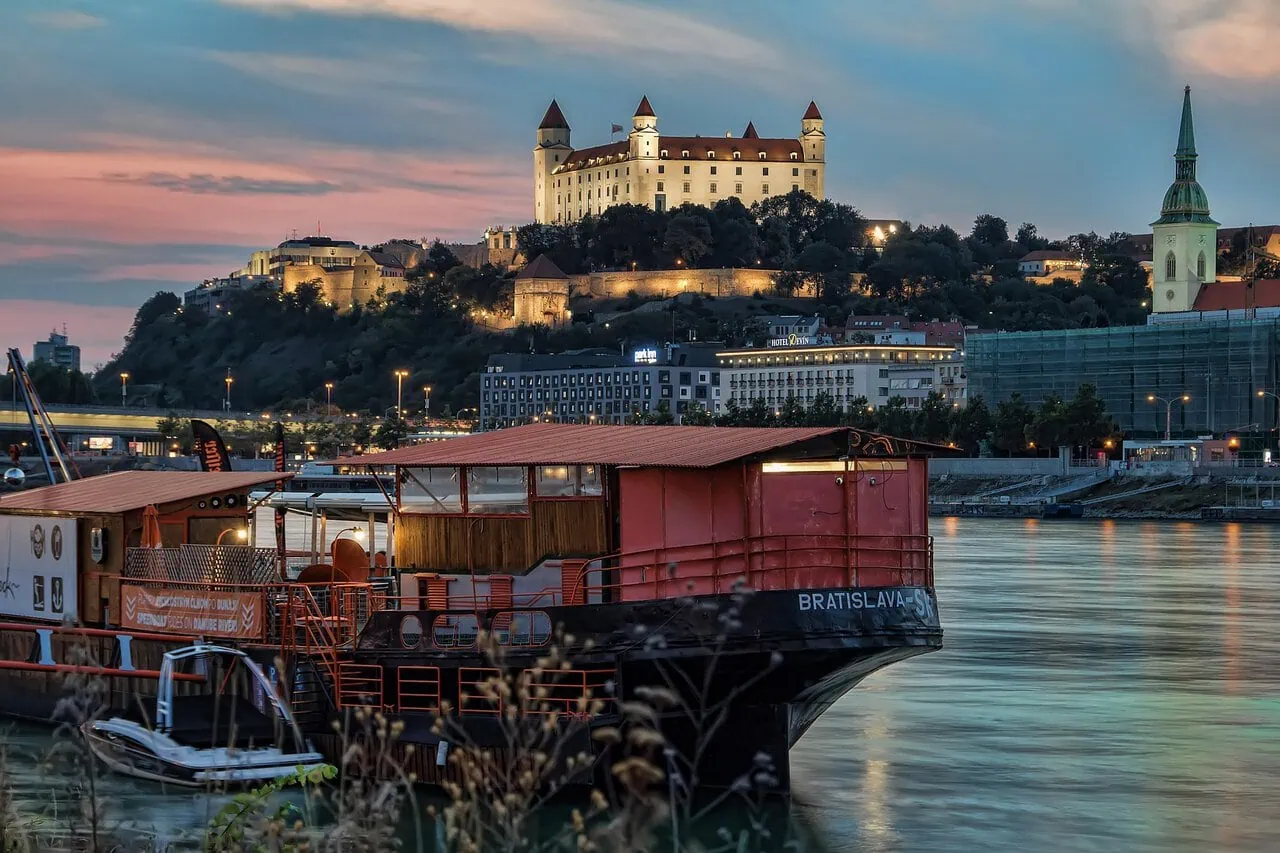
Approaching Bratislava is also memorable, particularly when the city’s castle hill comes into view above the Danube.
For travellers who still prefer rail travel but want scenery, the train remains a good secondary option. Certain sections west of Budapest and approaching Slovakia provide pleasant countryside views, though the experience is more functional than dramatic.
The motorway route by bus or car is the least scenic overall. While there are occasional countryside stretches, much of the drive follows modern transport corridors without particularly memorable views.
Travellers wanting the most photogenic and atmospheric experience should therefore strongly consider the river option, particularly during late spring, summer, or early autumn when daylight and weather conditions are best.
Search routes and flight options for your trip to Bratislava.
Search flightsBrowse Airalo eSIM options for convenient travel data.
Check eSIMsCheck private pickup options and plan your onward journey before arrival.
View transfersBest Time of Year to Travel from Budapest to Bratislava
The route between Budapest and Bratislava can be travelled year-round, but the experience changes significantly depending on the season. Choosing the right time can improve scenery, reduce crowds, and affect transport availability.
Spring is one of the best times to make the journey. Between April and June, temperatures are usually mild, cities begin to feel lively again after winter, and the countryside along the Danube corridor becomes noticeably greener. River cruises and boat services begin operating more frequently during this period, making it one of the strongest seasons for scenic travel. Train journeys are comfortable, and tourist crowds remain manageable compared to peak summer.
Summer is the busiest season. From June to August, both cities attract large numbers of international visitors, particularly weekend tourists and river cruise passengers. Trains and buses can become much busier, especially on Fridays and Sundays. Boat services operate at their fullest schedule during summer, and this is the best time for travellers prioritising the Budapest to Bratislava river cruise experience. However, temperatures regularly exceed 30°C, especially in Hungary, so midday sightseeing can become tiring.
Autumn is arguably the most balanced season overall. Between September and October, temperatures remain comfortable, summer crowds begin to fade, and the landscapes along the route take on autumn colours. This period is especially good for travellers wanting a quieter experience while still enjoying pleasant weather. Train services remain frequent, and accommodation prices often become slightly more affordable than during peak summer.
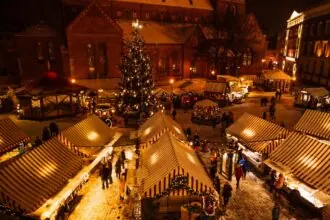
Winter offers a very different atmosphere. From late November through December, the route becomes popular for Christmas market trips, with both Budapest and Bratislava hosting festive markets and seasonal events. Trains remain reliable throughout winter, but boat services are heavily reduced or suspended entirely outside the main season. Snow is possible, particularly in Slovakia, and shorter daylight hours mean less scenic visibility during the journey. However, winter travel can feel especially atmospheric, particularly for travellers interested in festive city breaks.
Overall, spring and autumn usually offer the best combination of comfortable weather, manageable crowds, and good transport availability, while summer is strongest for river travel and winter is ideal for Christmas market experiences.
Is Budapest or Bratislava Better as a Base?
Both Budapest and Bratislava work well as travel bases, but they suit different types of travellers and itineraries.
Budapest is the stronger choice for travellers wanting a larger city with more attractions, nightlife, thermal baths, and international transport connections. Hungary’s capital offers a far wider range of accommodation, restaurants, museums, and entertainment options than Bratislava. It also connects extremely well with wider European rail routes, including trains to Vienna, Prague, Belgrade, and Romania. For travellers planning a broader Central European trip, Budapest is often the more practical long-term base.
The city also works especially well for travellers wanting multiple day trips. From Budapest, you can easily reach places such as Szentendre, Lake Balaton, and the Danube Bend, while still using the Budapest to Bratislava route as part of a larger itinerary.
Bratislava, meanwhile, is far smaller, calmer, and easier to navigate. Many travellers prefer it as a quieter base with lower accommodation prices and less tourist pressure. The compact old town means you can walk almost everywhere, and the city feels noticeably less hectic than Budapest. Bratislava also sits extremely close to Vienna, making it ideal for travellers wanting to combine Slovakia and Austria without changing hotels frequently.
Another advantage of Bratislava is its strategic position for short cross-border trips. Vienna is only around one hour away, while Budapest is roughly 2.5 hours, allowing easy access to multiple capitals from one location.
In practical terms, Budapest is usually the better base for travellers wanting a larger city experience, stronger nightlife, more attractions, and wider transport links. Bratislava is better for travellers who prefer a slower pace, a compact city centre, and easy access to neighbouring countries without big-city intensity.
Common Mistakes Travellers Make on This Route
Although travelling between Budapest and Bratislava is relatively straightforward, there are several common mistakes that can make the journey more stressful or expensive than necessary.
One of the biggest mistakes is assuming all stations are interchangeable. In Budapest especially, travellers sometimes arrive at the wrong railway station. International trains to Bratislava usually depart from Budapest Keleti, but some services may use Nyugati or other stations depending on the route and operator. Always check your departure station carefully before travelling.
Another frequent mistake is leaving reservations too late during busy periods. While regional trains generally remain available, faster services and some boat departures can sell out during weekends, holidays, and summer months. This is particularly true for Danube river services, which often have far fewer seats than trains.
Many travellers also underestimate border-related mobile roaming or ticketing issues. Although both countries are inside the Schengen Area, mobile data allowances and transport apps may behave differently depending on your provider. Downloading offline tickets and maps before departure is a smart precaution.
A surprisingly common issue is trying to do the journey as an extremely rushed same-day return without planning enough sightseeing time. While technically possible, travellers often underestimate how much there is to see in both capitals. Bratislava’s compact size encourages people to assume they only need an hour or two, but the city deserves longer if you want to enjoy it properly.
Another mistake involves choosing transport based purely on headline price. Ultra-cheap buses can sometimes arrive at stations located further from city centres or at inconvenient times, while slightly more expensive trains may offer a far smoother overall experience.
Finally, many travellers overlook the weather impact on river transport. Danube boat services can occasionally be reduced, delayed, or suspended due to water levels or seasonal conditions. If your itinerary depends heavily on the river route, always verify schedules shortly before departure.

Safety, Borders & Travel Tips
Travelling between Budapest and Bratislava is generally very safe, straightforward, and beginner-friendly, even for first-time European rail travellers.
Both countries are members of the Schengen Area, meaning there are normally no formal border checks when crossing between Hungary and Slovakia. On trains and buses, the border crossing is often barely noticeable. However, you should still carry a valid passport or ID card at all times, as occasional spot checks can still happen.
Public transport in both cities is generally safe, though normal city precautions apply. Pickpocketing can occur around major transport hubs such as Budapest Keleti Station or busy tram routes in central Budapest. Keeping valuables secure and avoiding leaving bags unattended is sensible, particularly during crowded summer periods.
For train travel, arriving around 20–30 minutes early is usually enough. Stations can initially feel confusing, particularly in Budapest, where large historic stations have multiple platforms and underground passageways. Electronic departure boards are generally reliable, but platform changes occasionally happen at short notice.
Currency can also catch travellers out. Hungary uses the Hungarian Forint (HUF), while Slovakia uses the Euro (€). Although card payments are widely accepted in both cities, carrying a small amount of local currency can still be useful for smaller cafés, lockers, or local transport tickets.
Mobile data coverage is excellent throughout the route, and both cities support modern app-based ticketing systems. Downloading transport apps before departure makes navigating stations significantly easier.
Finally, if travelling during winter, allow additional flexibility for weather disruption, particularly if using river services or regional buses. Trains are generally the most weather-resilient option on this route and remain reliable throughout most seasonal conditions.
Apps for Travelling Between Budapest and Bratislava
Using the right apps can make travelling between Budapest and Bratislava significantly easier, particularly when managing tickets, live departures, navigation, and local transport connections. Because this route crosses an international border, having reliable digital tools becomes even more useful.
The most important app for rail travellers is usually the MÁV app, operated by Hungarian State Railways. This app allows travellers to check timetables, monitor delays, and purchase train tickets for many services departing from Budapest. It is particularly useful if you are travelling from Budapest Keleti Station and want mobile tickets stored directly on your phone.
For Slovak rail services, the ZSSK app is the main railway platform. It covers domestic Slovak trains and helps with onward connections beyond Bratislava, including routes towards Košice, Žilina, and the High Tatras.
Many travellers also use broader European booking platforms such as Omio or Trainline, particularly when comparing buses and trains together. These apps simplify cross-border bookings and allow you to compare journey durations, prices, and departure stations in one place. For less experienced European rail travellers, this can remove much of the confusion around international ticketing.
For buses, FlixBus remains one of the strongest options on the route. The app provides live coach tracking, mobile boarding passes, and flexible ticket changes.
Navigation apps are equally important. Google Maps works extremely well in both cities and integrates public transport directions directly into route planning. In Budapest especially, it handles metro, tram, and suburban rail navigation very accurately.
Travellers planning to use river services should also check the official operator websites or apps before departure, as Danube schedules can change seasonally depending on water levels and weather conditions.
Finally, reliable mobile connectivity matters when travelling internationally. Using a travel eSIM can make border crossings far smoother, particularly for travellers arriving from outside Europe who may otherwise face roaming charges.
Is the Budapest to Bratislava Route Worth It?
Absolutely. The journey between Budapest and Bratislava is one of the easiest and most rewarding international city-to-city trips in Central Europe.
One of the biggest strengths of this route is how accessible it feels. The distance is short enough to make the trip manageable even for travellers with limited time, yet the two capitals feel distinctly different culturally, architecturally, and atmospherically. Budapest delivers grand boulevards, thermal baths, dramatic parliament buildings, and a huge metropolitan feel, while Bratislava offers a smaller, more relaxed old town atmosphere with a compact riverside setting.
The route also works exceptionally well for first-time European rail travellers. Border crossings are simple, trains are frequent, and transport infrastructure is modern and reliable. You can comfortably travel between two countries in just a few hours without airports, baggage restrictions, or complicated logistics.
Scenery adds another layer of appeal. Depending on your chosen transport, you may pass through stretches of the Danube corridor, rolling countryside, vineyards, and small Central European towns. Travellers choosing the river route experience one of the most scenic cross-border journeys in the region.
The route also pairs naturally with nearby capitals such as Vienna and Prague, allowing travellers to build efficient multi-country itineraries without long travel days.
For travellers interested in rail travel, affordable European city breaks, or simply experiencing two different cultures within one easy journey, the Budapest to Bratislava route offers excellent value, minimal stress, and a surprisingly varied travel experience.

Rupert’s Handy Travel Tips
Rupert really likes this route because it is one of the easiest international train journeys in Central Europe. You can leave Budapest after breakfast and still have plenty of time exploring Bratislava Old Town before lunch.
- Book trains early on Fridays and Sundays: services between Budapest and Bratislava become surprisingly busy with weekend travellers, especially during summer.
- Carry both euros and Hungarian forints: Slovakia uses the euro while Hungary does not, and small cafés or ticket machines may not always accept foreign cards.
- Sit on the left-hand side of the train leaving Budapest: you get some of the better countryside and Danube-area views during parts of the journey.
- Do not underestimate Bratislava: many travellers arrive expecting a very quick visit, then end up wishing they had stayed overnight once they see the castle, riverside, and old town atmosphere.
- Take the train out and the boat back for the most relaxing trip: this gives you both speed and scenery without doubling the slower river travel time.
Want to meet the reindeer behind our travel tips? Find out more in our page Who is Rupert?.



Browse hostels and budget-friendly stays around Bratislava.
See hostelsFlying to Bratislava? Get fast compensation payouts, eligible lounge benefits and expert help when flights go wrong.
See AirHelp+ benefitsUse convenient luggage storage around Bratislava between arrival, check-in and departure.
Check storageFrequently Asked Questions About Travelling from Budapest to Bratislava
How long does it take to travel from Budapest to Bratislava?
Most train journeys take around 2 hours 20 minutes to 2 hours 45 minutes, depending on the service. Buses are usually similar, while boats are significantly slower and seasonal.
What is the cheapest way to travel from Budapest to Bratislava?
The bus is normally the cheapest option, particularly when booked in advance through operators such as FlixBus. Promotional rail fares can occasionally compete with bus prices.
Is there a direct train from Budapest to Bratislava?
Yes. Multiple direct trains operate daily between the two capitals, usually departing from Budapest Keleti Station and arriving at Bratislava hlavná stanica.
Can you do Bratislava as a day trip from Budapest?
Yes. The journey is short enough for a comfortable day trip, particularly by train. However, staying overnight allows a far more relaxed experience.
Do I need a passport to travel between Hungary and Slovakia?
Both countries are in the Schengen Area, so there are usually no routine border checks. However, you should still carry a valid passport or ID card.
Is the Danube boat between Budapest and Bratislava worth it?
For scenery and overall experience, yes. The river route is far slower than trains or buses but offers a unique perspective of the Danube region.
Which is better: Budapest or Bratislava?
They offer very different experiences. Budapest is larger, busier, and packed with major attractions, while Bratislava is smaller, calmer, and easier to explore in a short time.
Can I use Interrail on this route?
Yes. Both Hungarian and Slovak rail services are covered by most Interrail passes, although some services may require reservations.
Further Reading & Related Guides
Planning a wider Central European journey? These related guides will help you plan rail routes, stay connected, and explore both Hungary and Slovakia more confidently. If you are building a longer Interrail itinerary, our European Train Journeys Guide highlights some of the best scenic and cross-border routes across the continent, many of which pair naturally with the Budapest to Bratislava corridor.
Travellers exploring Hungary in more depth can continue with our detailed Hungary Interrail Pass Guide, covering domestic rail travel, international connections, and the best routes across the country, while our Interrail Pass Guide explains the differences between Global Passes and One Country Passes for travellers building a wider multi-country trip. If your itinerary continues deeper into Slovakia, our Slovakia Interrail Pass Guide covers how to reach destinations such as Košice, Žilina, and the High Tatras using flexible rail travel.
This route also connects naturally with other onward journeys from the Hungarian capital. Rail travellers heading further afield can compare options in our Budapest Night Trains guide, our Budapest to Vienna Travel Guide, and our Best Day Trips from Budapest, all of which pair well with a Bratislava add-on. To stay connected while crossing borders, our eSIM Apps Guide compares the best mobile data options for European travel without expensive roaming charges.