Reviewed by our editorial team Updated
Why Cornwall’s Tin Mining History Still Matters Today
The dramatic ruins scattered across the cliffs of western Cornwall are far more than abandoned industrial structures. They are the remains of an industry that transformed the economy, landscape, and global influence of Britain for centuries. Exploring the Cornish tin mining landscape today reveals a world of dangerous underground labour, engineering innovation, coastal isolation, and communities shaped entirely by mining.
For hundreds of years, Cornwall stood at the centre of the global tin and copper industry. Mines stretched beneath cliffs, fields, villages, and even far out underneath the Atlantic Ocean itself. Cornish engineers developed technologies that were later exported around the world, while thousands of miners left Cornwall to work in places such as Australia, South Africa, Mexico, and the United States. The phrase “Cousin Jack” became associated with Cornish miners who carried their expertise across the globe.
What makes the Cornwall and West Devon Mining Landscape UNESCO World Heritage Site so powerful is the combination of beauty and hardship. The mining districts sit within some of the most spectacular coastal scenery in Britain, yet the lives of many miners were brutally difficult. Men, women, and children worked in dangerous conditions underground, facing flooding, collapses, explosions, lung disease, and arsenic exposure.
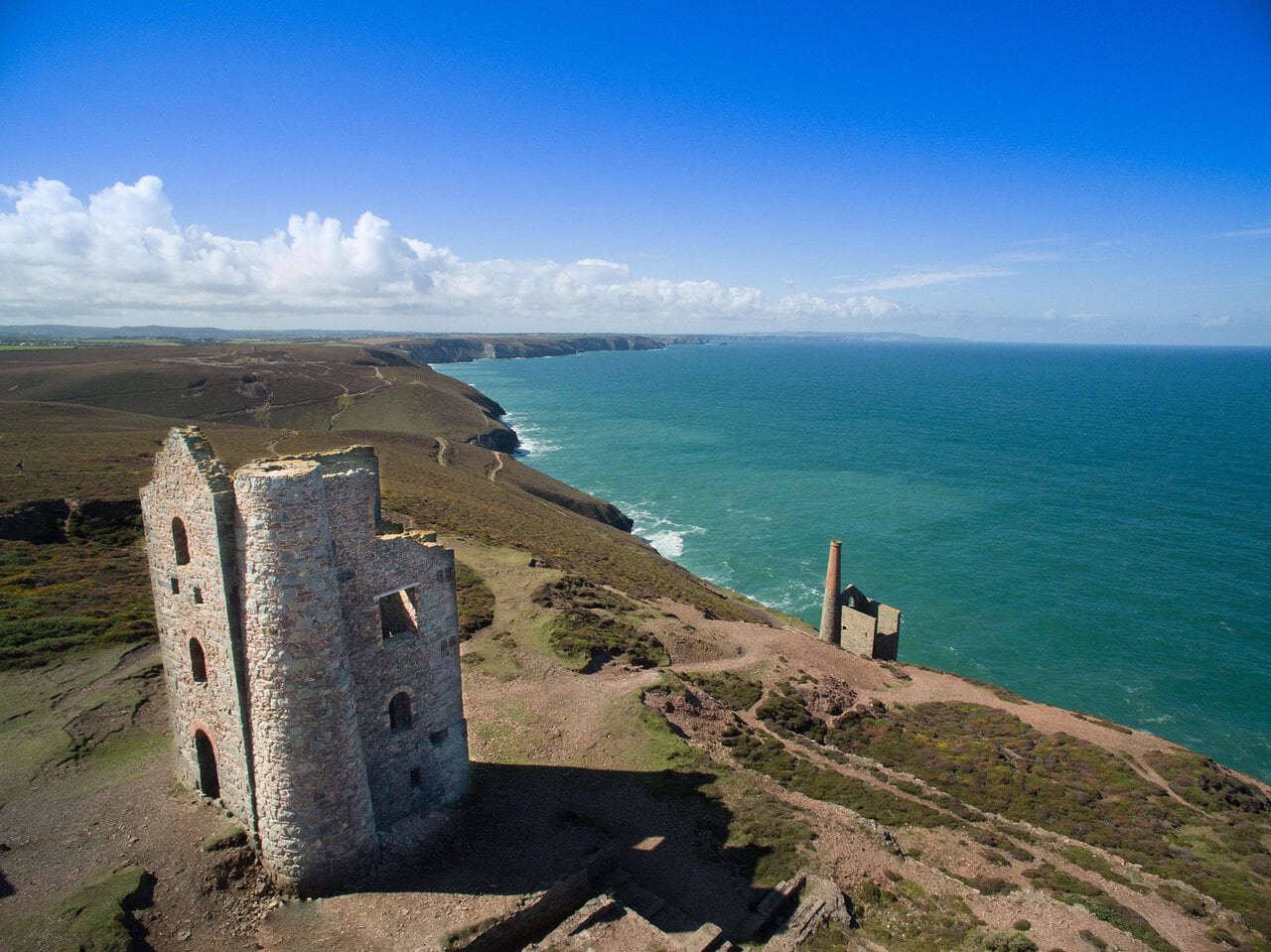
Today, visitors exploring places such as Botallack Mine, Geevor Mine, Levant Mine, and Wheal Coates encounter landscapes that feel both haunting and beautiful. Engine houses cling to cliffs above crashing Atlantic waves, abandoned chimneys rise from empty moorland, and old mine tracks cut across rugged coastal paths. The atmosphere is unlike anywhere else in Britain.
The mining heritage of Cornwall also shaped local culture, dialect, food, migration, and identity. Entire towns rose and declined alongside the fortunes of the mines, leaving behind a landscape filled with industrial ruins, chapels, harbours, tramways, and stories of hardship and survival.
For visitors interested in industrial heritage, UNESCO sites, dark tourism, coastal walking, or hidden British history, Cornwall’s mining districts provide one of the most immersive historical experiences in the country.
Quick Facts About Cornish Tin Mining
| Category | Details |
|---|---|
| UNESCO Site Name | Cornwall and West Devon Mining Landscape |
| UNESCO Status Granted | 2006 |
| Main Mining Products | Tin, copper, arsenic |
| Most Famous Mine Site | Botallack Mine |
| Best Preserved Mine | Geevor Tin Mine |
| Most Atmospheric Ruins | Wheal Coates |
| Major Disaster Site | Levant Mine |
| Best Walking Area | South West Coast Path near St Just & St Agnes |
| Best Nearby Town Base | Penzance |
| Best Rail Gateway | Penzance Station |
| Best Museum Experience | Geevor Mine Museum |
| Most Photographed Site | Crown Engine Houses at Botallack |
| Best Time to Visit | Spring to early autumn |
| Main Historical Period | 1700s to early 1900s |
| Dark Tourism Themes | Mining disasters, dangerous labour, abandoned industry |
Browse hotels and accommodation for your journey.
View staysExplore holiday homes and apartments for your trip.
See holiday homesCompare hotel deals from multiple booking sites in one search.
Compare pricesWhat Is the Cornwall UNESCO Mining Landscape?
The Cornwall and West Devon Mining Landscape UNESCO World Heritage Site protects one of the most important industrial heritage regions anywhere in the world. Rather than focusing on a single monument or attraction, the UNESCO designation covers a vast collection of mining districts, engine houses, ports, transport systems, workers’ settlements, and industrial landscapes spread across Cornwall and neighbouring parts of Devon.
UNESCO recognised the region because Cornish mining technology and expertise fundamentally influenced mining industries across the globe during the eighteenth and nineteenth centuries. Steam pumping engines, underground engineering techniques, mineral processing systems, and mining transport innovations developed in Cornwall were exported internationally by Cornish miners and engineers.
The scale of the landscape often surprises visitors. The UNESCO site includes dramatic coastal ruins around St Just and St Agnes, inland mining valleys, historic ports used for exporting minerals, and entire towns shaped by mining wealth. Instead of one central attraction, the experience involves travelling through multiple connected landscapes that together tell the story of Cornwall’s industrial past.
One of the reasons the site works so well for tourism is the incredible visual contrast between industry and nature. Rusting mine structures stand above turquoise Atlantic waters, abandoned chimneys rise from green hillsides, and old tramways now form part of coastal walking routes. In some places, the landscape feels almost post apocalyptic, particularly during misty weather or winter storms.
The UNESCO designation also helps preserve the memory of the mining communities themselves. Behind every engine house and tunnel system were thousands of workers whose lives depended entirely on the mines. Entire villages rose and declined with fluctuating mineral prices, leaving lasting social and economic impacts across Cornwall.
For travellers, the UNESCO mining landscape offers far more than industrial history alone. It combines dark tourism, coastal scenery, walking trails, museums, photography, maritime history, and hidden Britain in a way few destinations can match.
Learn More from UNESCO
This destination is connected to a UNESCO World Heritage Site, recognised for its outstanding cultural, historical, or natural importance. You can explore official listings, background information, and protected heritage sites through UNESCO’s global database.
The Rise of Cornish Tin Mining
Mining in Cornwall stretches back thousands of years, with evidence suggesting tin extraction existed even during prehistoric times. Tin was hugely valuable in the ancient world because it formed a key ingredient in the production of bronze, linking Cornwall into international trade networks long before the Roman period.
However, the true industrial expansion of Cornish tin mining arrived during the eighteenth and nineteenth centuries. Growing demand for copper and tin during the Industrial Revolution transformed Cornwall into one of the most important mining regions on Earth. Huge numbers of mines opened across the county, while new technologies allowed miners to dig deeper underground than ever before.
The development of powerful steam engines played a major role in this expansion. Cornwall’s mines constantly struggled with flooding because many shafts extended deep below sea level. Engineers such as Richard Trevithick and improvements to pumping engine technology allowed mines to continue operating despite these extreme conditions.
Mining communities rapidly expanded around the new industrial districts. Towns such as Camborne, Redruth, and St Just became heavily dependent on mining wealth, while harbours exported vast quantities of ore across Britain and beyond. The landscape itself changed dramatically as engine houses, spoil heaps, tramways, chimneys, and processing plants spread across Cornwall.
At its peak, Cornwall became internationally famous for mining expertise. Cornish engineers and miners travelled globally to establish and operate mines overseas, carrying their skills to regions including Australia, Mexico, South Africa, and the Americas. This global migration helped spread Cornish culture far beyond Britain and left lasting international connections still visible today.
Yet despite the wealth generated by the mines, life for ordinary workers remained extremely difficult. Mining was physically exhausting and highly dangerous, while economic conditions fluctuated constantly depending on mineral prices and mine productivity. Many families lived with deep uncertainty as mines opened, failed, flooded, or collapsed.
Today, exploring the surviving mining landscapes allows visitors to understand how deeply industrialisation shaped Cornwall. The county’s identity, architecture, communities, migration patterns, and even coastal appearance were all transformed by centuries of mining activity.
Dangerous Life Inside the Cornish Mines
Life inside the Cornish tin mines was brutally hard and often extremely dangerous. While the dramatic engine houses and coastal ruins attract visitors today, the reality for the miners who worked beneath these landscapes was one of constant physical risk, exhausting labour, and uncertain survival.
Many Cornish mines extended deep underground through narrow shafts and tunnels where temperatures could become intense and ventilation was poor. Conditions were often damp, dark, cramped, and filled with dust particles that damaged miners’ lungs over time. Workers spent long shifts underground using hand tools, explosives, ladders, and primitive lifting systems while surrounded by unstable rock and flooding water.
One of the biggest dangers was flooding. Several mines extended beneath the seabed itself, particularly around the dramatic coastal cliffs near Botallack and Levant. In some cases, miners worked hundreds of metres below the Atlantic Ocean, relying entirely on steam pumps to prevent tunnels from filling with water. The idea of working underground beneath crashing waves remains one of the most haunting aspects of Cornwall’s mining history.
Collapses and falling rock were constant threats. Timber supports could fail without warning, while poorly ventilated shafts sometimes filled with toxic gases. Explosions from blasting operations also caused serious injuries and deaths throughout the mining districts.
Children frequently worked within the industry too. Young workers were often employed sorting ore, carrying materials, or assisting above ground in processing areas. Women also played major roles within the mining economy, particularly in ore dressing and surface work around the mines. Entire communities depended economically on the industry, meaning dangerous working conditions became accepted as part of daily life.
Arsenic production added another layer of danger. Cornwall’s mining districts became heavily associated with arsenic processing during the nineteenth century, exposing workers to toxic chemicals that caused severe long term health problems. Around some ruined processing sites today, warning signs still advise visitors not to disturb contaminated ground.
Economic hardship often made conditions even worse. When global mineral prices fell, miners could suddenly lose employment and communities faced rapid decline. Many Cornish families eventually emigrated overseas searching for work in foreign mining regions, carrying their expertise abroad but leaving behind abandoned villages and struggling local economies.
Walking through the mining ruins today, it becomes easier to understand why Cornwall’s industrial heritage carries such a strong dark tourism atmosphere. These landscapes are beautiful, but they are also deeply connected to hardship, danger, loss, and generations of physically demanding labour.

Best Cornish Tin Mining Sites to Visit
The surviving mining landscapes of Cornwall are spread across several districts, but a handful of locations stand out as the most impressive and atmospheric for visitors exploring the county’s industrial heritage.
The most iconic site is undoubtedly Botallack Mine near St Just. The famous Crown Engine Houses perched directly above the Atlantic cliffs have become one of the defining images of Cornwall itself. The setting is extraordinary, with ruined engine buildings standing against crashing waves and rugged coastal scenery. Walking the coastal path around Botallack provides one of the most visually dramatic industrial heritage experiences anywhere in Britain.
Nearby Geevor Tin Mine offers the best preserved and most comprehensive mining experience in Cornwall. Unlike many abandoned ruins, Geevor includes extensive museum displays, preserved industrial buildings, underground tours, processing machinery, and exhibitions explaining how the mines operated. For visitors wanting to properly understand Cornish mining life, Geevor is essential.
Another major site is Levant Mine, now managed by the National Trust. Levant is particularly important because of both its preserved beam engine and the tragic mining disaster that occurred there in 1919. The restored engine demonstrations provide a rare opportunity to experience how these enormous steam powered machines once operated above the cliffs.
Further east along the coast, Wheal Coates near St Agnes may be the most atmospheric mining ruin in Cornwall. The isolated engine house standing above the sea has become one of the county’s most photographed locations, especially during sunset or stormy weather. The surrounding cliffs and walking routes create an experience that feels almost cinematic.
The mining towns of Camborne and Redruth also form important parts of the UNESCO landscape. These communities once stood at the centre of Cornwall’s industrial economy and still contain engine houses, chapels, mining infrastructure, and museums linked to the region’s industrial heritage.
Visitors interested in broader industrial history should also explore sites such as Heartlands, which combines mining history with exhibitions, gardens, and cultural interpretation focused on Cornwall’s industrial communities and social history.
What makes Cornwall’s mining sites particularly rewarding is their variety. Some locations focus on preserved machinery and museums, while others emphasise abandoned ruins, coastal scenery, walking routes, or underground exploration. Together, they create one of Britain’s richest industrial heritage landscapes.
| Site | Nearest Town / Area | Nearest Train Station | Best For | Access & Notes |
|---|---|---|---|---|
| Botallack Mine | Near St Just | Penzance | Coastal scenery, photography, cliffside ruins | Best reached by car or bus from Penzance. Excellent walking access via the South West Coast Path. |
| Geevor Tin Mine | Near Pendeen | Penzance | Full mining experience, museum, preserved machinery | The most complete visitor attraction in Cornwall’s mining landscape with guided experiences and industrial exhibits. |
| Levant Mine | Near St Just | Penzance | Beam engine, disaster history, National Trust site | Famous for the restored beam engine and the 1919 Levant disaster. Coastal walking routes nearby. |
| Wheal Coates | Near St Agnes | Truro | Atmospheric ruins, coastal walks, photography | One of Cornwall’s most photographed mining ruins. Accessed mainly via cliffside walking trails. |
| Camborne Mining District | Camborne | Camborne | Industrial heritage, engineering history | Good rail access and useful for exploring Cornwall’s inland mining history. |
| Redruth Mining District | Redruth | Redruth | UNESCO mining heritage, museums, town history | Historically one of Cornwall’s most important mining towns. Good public transport access. |
| Heartlands | Near Pool | Camborne | Family friendly mining heritage centre | Easy access by road and rail. Includes exhibitions, gardens, and mining interpretation. |
| St Agnes Mining Coast | St Agnes | Truro | Coastal scenery, walking routes, engine houses | Best explored by car and on foot. Strong photography and walking destination. |
| Poldark Filming Locations | West Cornwall | Penzance | TV filming sites, scenic landscapes | Includes several real mining sites used during filming around west Cornwall. |
| Tolvaddon & Mining Trails | Near Cambborne | Camborne | Industrial walking trails | Former industrial transport and mining landscapes with good local trail access. |
The Levant Mine Disaster
One of the darkest chapters in Cornwall’s mining history occurred at Levant Mine on 20 October 1919, when a catastrophic mechanical failure caused one of the region’s most infamous mining disasters.
Levant Mine operated along the cliffs near St Just and was famous for its extensive underground workings stretching beneath the seabed. To transport miners efficiently underground, the site used a mechanised lifting system known as a man engine. This huge moving ladder system allowed workers to travel up and down the deep mine shafts more quickly than climbing endless ladders by hand.
On the morning of the disaster, the man engine suddenly failed while miners were travelling underground. The mechanism collapsed catastrophically, throwing workers into the shaft and causing devastating injuries. In total, 31 men lost their lives, while many others were seriously injured.
The tragedy sent shockwaves through Cornwall’s mining communities. Entire families lost fathers, sons, brothers, and wage earners in a single morning. The disaster also highlighted the dangers of industrial mining even during the twentieth century, at a time when many people assumed technology was making mining safer.
Today, Levant remains one of the most powerful historical sites within the Cornwall mining UNESCO landscape. Visitors can see the restored beam engine that still operates during demonstrations and explore the dramatic cliffside location overlooking the Atlantic Ocean. Interpretation panels and exhibitions explain both the engineering achievements of the mine and the terrible disaster that unfolded there.
The atmosphere at Levant feels very different from some of the more scenic mining ruins elsewhere in Cornwall. The preserved machinery, exposed coastal location, and memorial elements create a strong connection to the human cost of industrial mining.
For visitors interested in dark industrial heritage tourism, the Levant disaster provides an important reminder that Cornwall’s mining history was not simply about engineering success and industrial wealth. It was also a story of risk, loss, and dangerous working conditions that shaped generations of Cornish communities.
The site also demonstrates how closely industry and nature collide across Cornwall’s mining coast. Massive steam engines, abandoned shafts, and industrial ruins sit directly beside one of Britain’s most beautiful coastal landscapes, creating an atmosphere that is both haunting and unforgettable.
Mining Railways and Industrial Transport
The success of Cornwall’s mining industry depended not only on underground labour, but also on vast transport networks that moved ore, machinery, coal, and workers across the county. Today, traces of these industrial transport systems still survive throughout the Cornwall mining landscape, adding another fascinating layer to the region’s history.
Many mines relied on tramways and narrow industrial railways to connect inland mining districts with ports and processing areas. Wagons carrying tin and copper ore travelled across steep valleys, moorland routes, and cliffside tracks before reaching harbours where minerals could be exported internationally.
The ports themselves became central to Cornwall’s mining economy. Harbours such as Hayle, Portreath, and Penzance developed strong industrial identities linked directly to mining exports and imported coal supplies needed for steam engines. Some coastal settlements effectively existed because of the demands of the mining industry.
Steam technology transformed transport just as dramatically as it transformed mining itself. Cornwall became closely associated with engineering innovation, particularly through figures such as Richard Trevithick, who pioneered early steam locomotive development alongside mining engine technology.
Many former tramways and industrial routes now form part of walking and cycling trails across Cornwall. Visitors exploring the mining districts often follow paths originally built for ore wagons and industrial transport rather than tourism. This creates a very immersive way to experience the landscape because the routes themselves remain part of the historical infrastructure.
The arrival of the railway network during the nineteenth century also changed Cornwall dramatically. Railways allowed faster transport of minerals, machinery, and workers while linking Cornwall more directly to the industrial centres of Britain. Today, the rail journey into Cornwall itself remains one of the most scenic railway experiences in the country.
For modern travellers, combining Cornwall’s mining heritage with rail travel works exceptionally well. Penzance, St Erth, and nearby stations provide good access to many of the western mining districts, while local buses and walking routes connect visitors onward into the UNESCO landscape.
Industrial transport may seem like a small part of the story, but it was absolutely essential to Cornwall’s mining economy. Without ports, tramways, railways, and engineering innovation, the mines themselves could never have operated on such a vast scale.
Search flights and useful route combinations in one place.
View flightsUse an eSIM to get online without hunting for a local SIM after arrival.
See eSIM optionsCheck private airport pickup options and plan the first part of your journey in advance.
View transfersBest Coastal Walks Through Cornwall’s Mining Landscape
Some of the most spectacular walking routes in Britain run directly through the Cornwall mining UNESCO landscape, combining industrial ruins, Atlantic scenery, hidden coves, and dramatic cliffside history into unforgettable coastal experiences.
The finest route is arguably the stretch of the South West Coast Path between Botallack, Levant, and Geevor Mine near St Just. This walk passes directly beside abandoned engine houses, mine shafts, ruined chimneys, and processing buildings perched above the sea. The atmosphere is extraordinary, particularly during misty weather or rough Atlantic conditions when the landscape feels almost untouched by modern life.
Walking around Botallack Mine is especially memorable because several mine workings extended directly beneath the ocean floor. Visitors standing on the cliffs today are often shocked to realise that miners once worked hundreds of metres below the seabed beneath the crashing waves below. The combination of industrial ruins and exposed coastline creates one of the strongest dark tourism atmospheres anywhere in Britain.
Further east, the route around Wheal Coates and St Agnes provides another exceptional mining walk. The isolated engine house overlooking the sea has become one of Cornwall’s most photographed landmarks and is particularly stunning during sunset. The surrounding coastal path passes old mine workings, cliffside grasslands, and abandoned industrial remains hidden within the landscape.
The Godolphin and inland mining districts provide a quieter alternative for visitors interested in the wider UNESCO landscape beyond the coast itself. Here, old tramways, spoil heaps, engine houses, and mining settlements reveal how deeply industry once shaped inland Cornwall.
Many of these walking routes are physically demanding in places because of steep coastal paths, uneven ground, and rapidly changing weather conditions. However, the rewards are enormous. Few walking experiences combine scenery, industrial heritage, and historical atmosphere as effectively as Cornwall’s mining coast.
Photography enthusiasts are particularly drawn to these routes because lighting conditions constantly transform the landscape. Early morning fog, Atlantic storms, dramatic sunsets, and shifting sea mist all create striking contrasts against the dark silhouettes of ruined engine houses.
For visitors wanting to truly understand Cornwall’s mining heritage, walking remains the best possible approach. The distances between mines, harbours, villages, and cliffside ruins help reveal how interconnected the entire industrial landscape once was.
Poldark and Cornwall’s Mining Heritage
Modern global interest in Cornwall’s mining history increased dramatically following the success of the television series Poldark, which used the county’s mining landscapes as the backdrop for its stories of eighteenth century Cornwall.
The series showcased many of the region’s most spectacular mining locations, introducing international audiences to Cornwall’s engine houses, cliffs, and industrial ruins. As a result, places such as Botallack Mine, Levant, and the wider St Agnes coastline became significantly more popular with visitors interested in both television tourism and historical exploration.
One of the reasons Poldark worked so effectively is that the real history behind Cornwall’s mining industry was already dramatic enough to rival fiction. Economic collapse, dangerous underground work, migration, industrial wealth, and social inequality all formed genuine parts of Cornish mining life during the eighteenth and nineteenth centuries.
The landscape itself also played a major role in the series’ popularity. The abandoned engine houses rising above the Atlantic cliffs created a visual identity that immediately stood out from more traditional British historical dramas. Even visitors unfamiliar with the show are often struck by how cinematic the mining districts feel in real life.
However, Cornwall’s mining history extends far beyond television adaptation. While Poldark helped popularise the region internationally, the real UNESCO landscape preserves centuries of genuine industrial heritage that shaped local communities and influenced global mining development.
Several tour operators now offer dedicated Poldark filming location tours, often combining television history with deeper interpretation of Cornwall’s industrial past. This has helped introduce broader audiences to the county’s mining heritage who may not otherwise have visited industrial sites or UNESCO landscapes.
The connection between popular culture and industrial history also demonstrates how visually powerful Cornwall’s mining landscapes remain today. Unlike many industrial heritage locations elsewhere in Britain, Cornwall’s mines sit within landscapes of exceptional natural beauty, making them attractive even to visitors with little prior interest in mining history itself.
For many travellers, Poldark becomes the gateway into discovering the much deeper story of Cornwall’s industrial communities, engineering achievements, and dangerous mining traditions.
Museums and Underground Mining Experiences
While Cornwall’s abandoned engine houses and cliffside ruins are visually spectacular, visiting museums and underground attractions helps visitors understand what mining life actually felt like beneath the surface.
The best overall experience is found at Geevor Tin Mine, widely regarded as Cornwall’s leading mining museum. Geevor preserves not only engine houses and processing areas, but also underground workings, machinery, workshops, changing rooms, and miners’ facilities that together create a much fuller picture of industrial life.
Visitors can explore exhibitions covering geology, engineering, daily labour, migration, and the economic history of Cornwall’s mining communities. The preserved industrial buildings also reveal how physically demanding the work was, particularly within cramped and dangerous underground environments.
Several guided underground experiences allow visitors to enter reconstructed mine tunnels and understand the confined conditions miners faced daily. Descending underground transforms the experience completely. The dark, narrow, damp tunnels immediately make it easier to appreciate the dangers and harsh realities of Cornish mining work.
At Levant Mine, demonstrations of the restored beam engine provide another unforgettable experience. Watching the huge steam powered machinery operate beside the Atlantic cliffs helps visitors understand the immense engineering effort required to keep Cornwall’s mines functioning.
Smaller museums and interpretation centres across the mining districts add further context. Sites around Camborne, Redruth, and St Agnes explore everything from local mining communities to global Cornish migration and industrial innovation.
One of the strengths of Cornwall’s mining museums is that they avoid presenting industrial history as purely technical or mechanical. Most exhibitions strongly emphasise the human stories behind the mines, including dangerous labour conditions, migration, disasters, economic collapse, and community life.
For visitors interested in industrial heritage tourism, Cornwall provides one of the most immersive mining experiences in Europe because it combines preserved machinery, underground exploration, dramatic landscapes, and living community history within a relatively compact region.
The museums also help balance the romantic visual appeal of the ruins with the harder realities of industrial labour. Standing inside the dark tunnels or beside enormous pumping machinery makes it much easier to understand why Cornwall’s mining heritage carries such a powerful emotional atmosphere.

Best Bases for Exploring Cornwall’s Mining Districts
Choosing the right base can make a huge difference when exploring the Cornish mining UNESCO landscape, particularly because the mining districts are spread across western Cornwall and connected by winding coastal roads and rural routes.
For most visitors, Penzance is the strongest overall base. The town provides excellent rail connections, a wide range of accommodation, restaurants, and direct access to major mining areas including Botallack, Geevor, Levant, and St Just. Penzance also combines mining heritage with harbour scenery, ferry connections, and broader Cornwall tourism infrastructure.
Travellers wanting a quieter and more immersive experience often choose to stay closer to St Just itself. This small town sits directly beside some of the most dramatic mining landscapes in Cornwall and provides easy access to coastal walking routes through the UNESCO district. Staying here allows visitors to experience the mining coast during quieter early mornings and evenings after day tourists leave.
The St Agnes area is another excellent option, particularly for visitors focused on coastal walking and photography around Wheal Coates and the eastern mining districts. The surrounding coastline contains some of Cornwall’s most visually striking industrial ruins combined with excellent beaches and cliff scenery.
For visitors wanting a broader Cornwall itinerary, towns such as Falmouth, Truro, and St Ives also work well as secondary bases while still allowing day trips into the mining landscape. However, journeys become longer compared to staying closer to the western mining districts themselves.
Rail travellers generally find Penzance Station the most practical gateway because it sits at the end of Cornwall’s main railway line and connects directly to London and other major UK cities. From there, local buses, taxis, and walking routes provide onward access to many mining sites.
One of the advantages of Cornwall’s mining districts is that accommodation often feels very different from typical city tourism. Historic inns, coastal cottages, converted miners’ buildings, and countryside hotels help reinforce the atmosphere of the region itself.
For photographers and walkers especially, staying close to the mining coast is highly recommended. Sunrise and sunset dramatically transform the engine houses and cliffs, while stormy weather creates some of the most atmospheric conditions anywhere in Britain.
How to Reach Cornwall’s Tin Mining Sites
Despite the remote appearance of many mining locations, reaching the Cornish tin mining UNESCO sites is generally straightforward with a combination of rail, road travel, and local transport. Planning ahead is important though, particularly because some of the most dramatic locations sit along rural coastal roads and cliffside walking routes.
For most visitors arriving from elsewhere in Britain, the easiest gateway is Penzance, located at the western end of Cornwall’s main railway line. Direct trains from London Paddington connect Cornwall with the rest of the UK while also providing one of Britain’s most scenic long distance rail journeys. Travelling by train into Cornwall works especially well because the route gradually transitions from urban England into increasingly dramatic coastal and rural landscapes.
From Penzance Station, local buses and road connections provide access toward St Just, Botallack, Geevor, and Levant Mine. Bus services in rural Cornwall can be less frequent than in major cities, particularly outside summer, so visitors relying on public transport should check timetables carefully in advance.
Driving remains the most flexible option for exploring the wider UNESCO mining landscape. A car allows visitors to combine multiple mining districts, coastal walks, hidden ruins, and smaller museums within a single trip. Roads across western Cornwall can be narrow and winding in places, particularly around cliffside routes near the coast, but the scenery makes the journeys highly rewarding.
Walking also forms a major part of the experience. Several of Cornwall’s most famous mining landmarks, including sections around Botallack and Wheal Coates, are best reached via the South West Coast Path and surrounding trails rather than direct roadside access. Good footwear and weather preparation are essential because coastal conditions can change quickly.
Visitors travelling internationally may find combining Cornwall with wider UK rail travel particularly effective. The mining districts fit naturally into broader journeys exploring Devon, Bath, Bristol, or the wider southwest of England.
Parking is available at most major mining attractions and visitor centres, though popular locations such as Botallack and Wheal Coates can become busy during summer afternoons and holiday periods. Early morning or late afternoon visits generally provide the best atmosphere and quieter walking conditions.
The relative remoteness of the mining coast is actually part of its appeal. Unlike heavily urbanised industrial heritage destinations elsewhere in Britain, Cornwall’s mining landscapes still feel isolated, rugged, and deeply connected to the Atlantic coastline that shaped their history.
Recommended Apps for Exploring Cornwall’s Mining Coast
The right travel apps can make exploring Cornwall’s mining landscapes significantly easier, particularly because many sites are spread across remote coastal areas where planning routes and weather conditions becomes important.
For navigation, Google Maps remains essential. Many mining ruins, walking trail entrances, and smaller heritage sites are hidden along minor roads or coastal tracks that can be difficult to locate without reliable mapping. Mobile navigation is especially useful around the more isolated districts near St Just and St Agnes.
Visitors travelling by train should strongly consider using rail apps such as Trainline or National Rail to monitor journeys into Cornwall. Rail travel works particularly well for reaching Penzance, and advance booking often provides significantly cheaper ticket prices on long distance routes from London and elsewhere in Britain.
Walking apps become extremely valuable across the mining coast. Large sections of the UNESCO landscape connect directly into the South West Coast Path, where digital trail maps help visitors navigate cliffside routes, distances, elevation changes, and nearby historical sites. Many walkers now combine route apps with offline maps because mobile signal can occasionally weaken in more exposed coastal sections.
Weather apps are arguably even more important in Cornwall than elsewhere in Britain. Atlantic weather systems can change conditions very quickly, especially on exposed cliffs and coastal paths. Fog, heavy rain, and strong winds dramatically alter both walking conditions and visibility around the mining landscapes. However, these same conditions can also create some of the most atmospheric photography opportunities.
Photography apps are particularly popular among visitors exploring the engine houses and coastal ruins. Sunset timing tools, tide information, and landscape photography planning apps help photographers capture Cornwall’s mining coast under the best possible lighting conditions.
International visitors should also consider setting up an eSIM app before travelling through rural Cornwall. Reliable mobile data helps with navigation, accommodation bookings, walking routes, and transport planning throughout the region.
Audio guide and podcast apps can also greatly improve the experience. Listening to historical content while walking between abandoned engine houses and cliffside ruins creates a much more immersive understanding of Cornwall’s industrial heritage and mining communities.
For travellers exploring wider Cornwall, combining transport, walking, weather, and historical apps creates a far smoother and more rewarding journey through one of Britain’s most unique UNESCO landscapes.

Rupert’s Handy Travel Tips
Rupert says Cornwall’s mining coast is one of the most atmospheric places anywhere in Britain, especially when the Atlantic weather rolls in and the old engine houses appear through the sea mist. He also warns that the mining landscape is much bigger than many visitors expect, so planning your route properly makes a huge difference.
- Start early for the best photographs: arrive around Botallack and Wheal Coates in the morning light, when the paths are quieter and the ruins feel even more dramatic.
- Wear proper walking shoes: coastal paths near the mines can become muddy, uneven, and slippery, especially after rain or sea mist.
- Do not skip Geevor Mine: Rupert thinks it is the best place to truly understand what life inside Cornwall’s mines was actually like.
- Check weather conditions carefully: Atlantic winds can become extremely strong along the exposed coastal cliffs, even during summer.
- Combine mining sites with local pubs and harbours: visit St Just, Penzance, and St Agnes to experience the wider culture shaped by Cornwall’s industrial history.
Want to meet the reindeer behind our travel tips? Find out more in our page Who is Rupert?.




Compare hostels and lower-cost accommodation for your trip.
Search hostelsGet fast compensation payouts, eligible lounge benefits and expert help when flights go wrong.
See AirHelp+ benefitsArriving before check-in or leaving later? Store your luggage and enjoy the extra time hands-free.
Store your bagsFrequently Asked Questions About Cornish Tin Mining
What is the Cornwall mining UNESCO site?
The official UNESCO designation is the Cornwall and West Devon Mining Landscape World Heritage Site, recognised for its global importance in mining technology and industrial history.
What are the most famous Cornish mining ruins?
The most famous sites include Botallack Mine, Wheal Coates, Geevor Tin Mine, and Levant Mine, particularly the dramatic engine houses overlooking the Atlantic coast.
Can you go underground in Cornwall’s mines?
Yes. Several attractions, particularly Geevor Tin Mine, offer underground experiences and reconstructed mining tunnels that allow visitors to understand what conditions were like below ground.
Why is Cornish mining historically important?
Cornwall became one of the world’s leading tin and copper mining regions during the Industrial Revolution. Cornish engineers and miners exported mining expertise globally, influencing industries across Europe, Africa, Australia, and the Americas.
What happened at Levant Mine?
In 1919, the man engine transport system at Levant Mine collapsed, killing 31 miners in one of Cornwall’s worst industrial disasters.
What is the best mining museum in Cornwall?
Geevor Tin Mine is widely considered the best overall museum experience because of its preserved industrial buildings, underground tours, exhibitions, and coastal setting.
What is the best walk through Cornwall’s mining landscape?
The coastal route between Botallack, Levant, and Geevor Mine along the South West Coast Path is often considered the most spectacular mining walk in Cornwall.
Can you visit Cornwall’s mining sites without a car?
Yes, although public transport can be limited in rural areas. Penzance provides the main rail gateway, with buses connecting to several major mining districts.
Did miners really work beneath the sea?
Yes. Several Cornish mines extended far beneath the Atlantic Ocean, particularly around Botallack and nearby coastal districts.
Is Cornwall mining history suitable for families?
Yes. The combination of museums, coastal scenery, walking routes, industrial history, and UNESCO heritage makes Cornwall’s mining landscape suitable for a wide range of visitors.
Further Reading & Related Cornwall Guides
Travellers exploring the Cornish tin mining UNESCO landscape often continue into wider journeys across Cornwall and the southwest of England. Our dedicated Cornwall & Devon Travel Guide expands into coastal towns, scenic railways, beaches, castles, walking routes, and hidden historical locations across the region, making it the perfect companion for a longer southwest England itinerary.
Visitors travelling into Cornwall by rail should also read our Night Riviera Sleeper Train Guide, covering the overnight sleeper service between London and Penzance. The route provides one of the most atmospheric ways to arrive in Cornwall and works especially well for travellers planning mining coast walks and multi day exploration.
For rail travellers moving around the county, our Ride Cornwall Ticket Guide explains Cornwall’s excellent value integrated rail and bus ticket, which can help visitors reach mining districts, coastal towns, and walking routes far more easily without relying entirely on a car.
Travellers wanting to continue beyond mainland Cornwall should also explore our Isles of Scilly Travel Guide, covering ferries, flights, island hopping, and Atlantic island landscapes lying beyond the Cornish coast.
Visitors interested in wider abandoned places, industrial heritage, wartime sites, and historical tragedies should continue into our broader Dark Tourism Guide, which explores unusual and atmospheric destinations across Britain and Europe.
Finally, because Cornwall’s mining landscapes often involve remote coastal walking routes and rural travel, international visitors may benefit from our eSIM Guide, helping travellers stay connected for maps, walking apps, transport planning, and photography locations throughout the region.