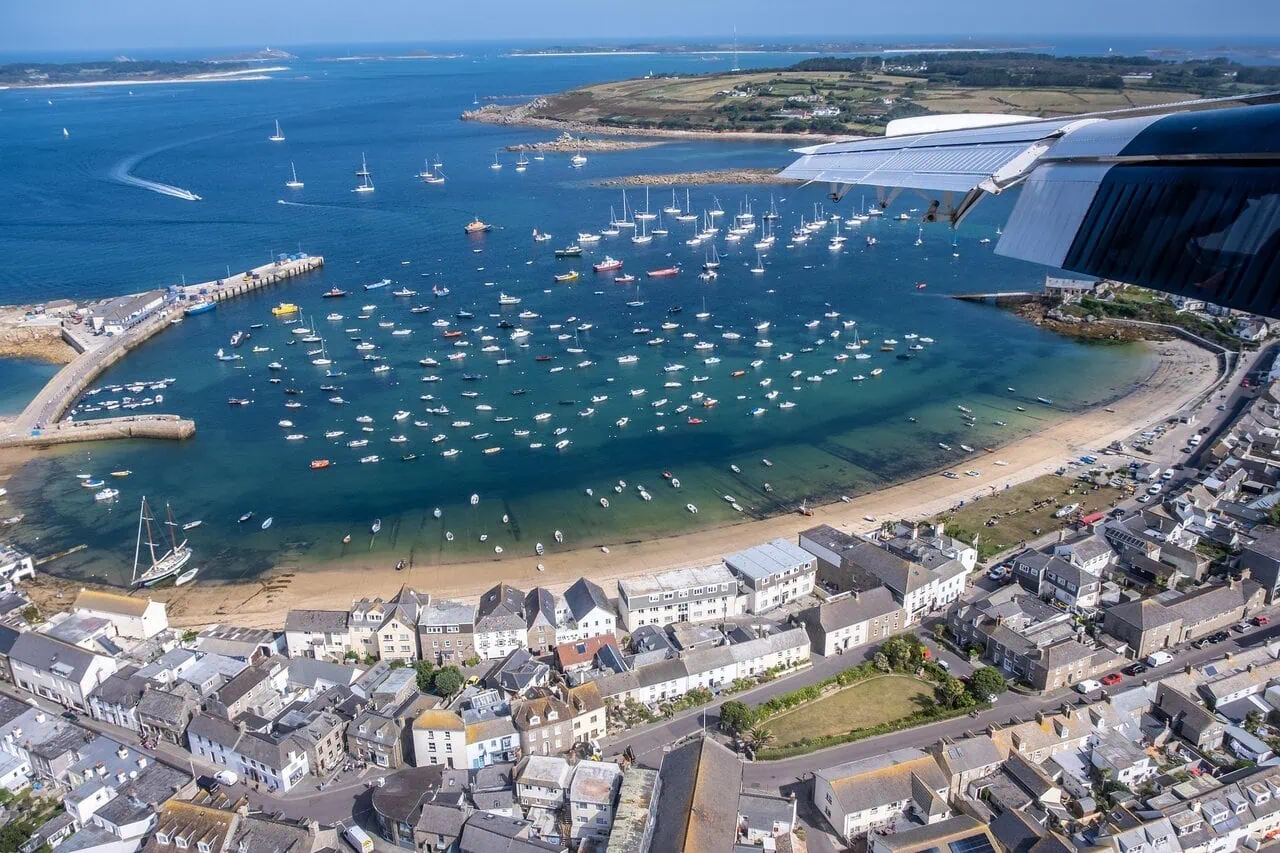
Reviewed by our editorial team Updated
Why Visit the Isles of Scilly
Planning a trip to the Isles of Scilly is unlike planning a visit to almost anywhere else in the UK. Located approximately 28 miles (45 km) off the coast of Cornwall, the islands require a deliberate journey by ferry, plane, or helicopter, creating a genuine sense of arrival that many destinations have lost. For many visitors, simply reaching the islands becomes part of the adventure.
What makes the Isles of Scilly particularly special is the combination of accessibility and isolation. Although the islands are relatively close to mainland England, the sea crossing creates a feeling of separation that is immediately noticeable. Life moves at a slower pace, crowds are limited by transport capacity, and the landscape feels distinctly different from most other parts of the UK.
Visitors are rewarded with white-sand beaches, crystal-clear waters, dramatic coastal scenery, and some of the most beautiful island landscapes in Britain. The archipelago consists of around 140 islands and rocky outcrops, although only five are inhabited. Each island offers a slightly different experience, from the busy harbour atmosphere of St Mary’s to the subtropical gardens of Tresco and the quieter beaches of St Martin’s.
The islands also appeal to a surprisingly wide range of travellers. Outdoor enthusiasts come for the walking, cycling, wildlife, and watersports. History lovers can explore ancient sites, coastal fortifications, and maritime heritage. Food enthusiasts can enjoy fresh seafood and local produce, while those simply looking to escape the mainland often find the slower pace of island life to be the biggest attraction of all.
Whether you are planning a day trip, a long weekend, or a longer island-hopping adventure, the Isles of Scilly offer one of the most distinctive travel experiences available anywhere in the British Isles.
Quick Facts About the Isles of Scilly
The Isles of Scilly are an archipelago made up of around 140 islands, although only five are inhabited. The main island, St Mary’s, is where most visitors stay, with the majority of accommodation, transport connections, and services located in and around Hugh Town, the islands’ central settlement.
The islands sit approximately 45 kilometres (28 miles) off the coast of Cornwall, making them geographically close to the mainland but noticeably different in climate and atmosphere. Thanks to the influence of the Atlantic, the Isles of Scilly enjoy a milder climate than much of the UK, with relatively warm summers and mild winters.
Access to the islands is limited, which is a key part of their appeal. Visitors can travel by ferry from Penzance or by small aircraft from several regional airports, including Land’s End, Newquay, and Exeter. This limited access helps maintain the islands’ quieter, less commercialised feel.
Despite their small size, the islands offer a wide range of activities, from coastal walking and cycling to wildlife spotting and island hopping. The focus is less on large-scale attractions and more on the natural environment, making them particularly appealing for those looking to disconnect and explore at a slower pace.
Browse hotels and accommodation for your journey.
View staysBrowse apartments, holiday homes and self-catering stays.
View rentalsCompare hotel prices across multiple booking sites.
Compare ratesHow to Get to the Isles of Scilly
Getting to the Isles of Scilly is part of the experience, and it is one of the key factors to consider when planning your trip. Unlike most UK destinations, there are no road or rail connections, so visitors must choose between sea or air travel, each offering a very different journey.
The most traditional route is by ferry from Penzance in Cornwall, which provides a direct link to St Mary’s. This option allows travellers to bring more luggage and enjoy the journey across the sea, but it is also dependent on weather conditions and can take several hours.
For those looking for a faster option, flights operate from several locations on the mainland, including Land’s End, Newquay, and Exeter. These services use small aircraft and significantly reduce travel time, making them particularly appealing for shorter trips or those with limited time.
Because there are relatively few departures each day, planning ahead is essential. Availability can be limited during peak travel periods, especially in summer, so booking transport early is strongly recommended.
Choosing how to get to the islands is one of the most important decisions in the planning process, as it affects both the cost and the overall experience of the trip.
Flights vs Ferry: Which Is Best?
Deciding between flying and taking the ferry to the Isles of Scilly is one of the most important choices you will make when planning your visit. Both options provide access to St Mary’s, but they offer very different experiences in terms of time, cost, and comfort.
Flying is the fastest option, with journey times typically ranging from 20 minutes to around an hour, depending on the departure airport. The experience is efficient and often includes impressive views of the coastline and islands as you approach. This makes it the best choice for travellers who want to maximise their time on the islands or avoid a longer sea journey.
The ferry, by contrast, is a slower but more traditional way to travel. Departing from Penzance, the crossing usually takes around 2 hours 45 minutes, depending on conditions. While the journey can be enjoyable in calm weather, it is more exposed to the Atlantic, and sea conditions can have a noticeable impact on comfort.
Cost is another key consideration. Flights are generally more expensive, particularly during peak periods, while the ferry can offer a more affordable option, especially for those travelling with luggage or planning a longer stay.
There is no single best choice. For shorter trips or those prioritising speed, flying is usually the better option. For travellers who prefer a slower journey and want to reduce costs, the ferry can be a good alternative, provided you are comfortable with the crossing.
Flights to the Isles of Scilly
Flying is the quickest and most efficient way to reach the Isles of Scilly, and for many travellers it turns what could be a long journey into a straightforward transfer. Flights operate primarily from Land’s End Airport, with additional seasonal services from Newquay and Exeter, connecting the mainland with St Mary’s Airport.
Journey times are short, typically ranging from 20 minutes from Land’s End to around 60 minutes from Exeter, making flying particularly appealing for those with limited time. The experience itself is quite different from standard commercial flights, as services use small aircraft, creating a more personal and often more scenic journey. On clear days, the approach to the islands offers exceptional aerial views of the coastline and surrounding waters, which adds to the overall experience.
One of the main advantages of flying is reliability in terms of duration. While weather can still affect flights, particularly in poor visibility, the journey itself is predictable and far less exposed than a sea crossing. This makes it a popular option for short stays, weekend trips, or visitors who want to maximise their time on the islands.
The main drawback is cost. Flights are generally more expensive than the ferry, especially during peak travel periods, and luggage allowances can be more restrictive. However, for many travellers, the time saved and the convenience of a quicker journey outweigh the additional expense.

Helicopter Transfers to the Isles of Scilly
For the fastest and most distinctive way to reach the islands, helicopter transfers from mainland Cornwall offer a premium alternative to both flights and ferry travel. Services are operated by Penzance Helicopters, departing from Penzance Heliport and flying directly to St Mary’s Isles of Scilly and Tresco.
Journey times are typically around 15 minutes, making this the quickest way to reach the Isles of Scilly from the mainland. The experience itself is a major part of the appeal, with low-altitude flights offering clear views of the Cornish coastline, open sea, and the islands as you approach, creating a far more immersive arrival than other transport options.
Unlike fixed-wing flights, helicopter services can land closer to your final destination, particularly for travellers staying on Tresco, which removes the need for additional boat transfers. This makes it a practical option for those looking to minimise travel time and simplify logistics, especially on shorter trips.
The main consideration is cost. Helicopter transfers are generally the most expensive way to travel to the islands, and availability can be limited during peak periods, particularly in summer. Booking well in advance is recommended, especially if you are travelling on specific dates or coordinating with accommodation.
For travellers who value speed, convenience, and a unique travel experience, the helicopter offers one of the most memorable ways to arrive in the Isles of Scilly, combining efficiency with exceptional views and a sense of occasion that begins the moment you leave the mainland.
Ferry to the Isles of Scilly (Scillonian III)
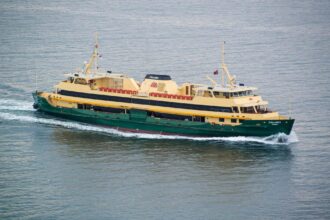
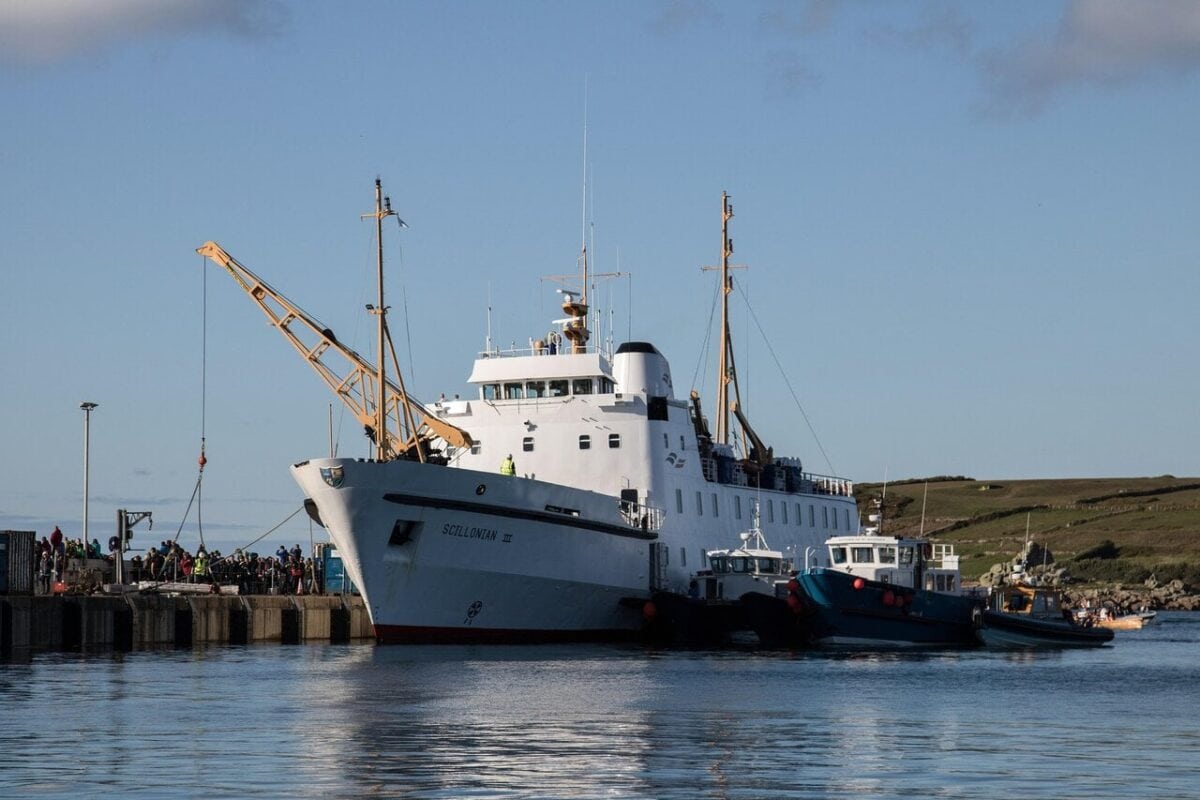
The ferry remains the most traditional way to travel to the Isles of Scilly, offering a slower but more atmospheric journey across the Atlantic. Departing from Penzance, the Scillonian III connects the mainland with St Mary’s Harbour, providing a direct route that has been used for decades.
The crossing typically takes around 2 hours and 45 minutes, although conditions at sea can influence both the duration and the overall comfort of the journey. On calm days, the ferry provides an enjoyable experience, with views of the Cornish coastline as you depart and the islands gradually appearing on the horizon. However, when the sea is rough, the crossing can feel significantly longer, and motion can become a factor for some passengers.
One of the key advantages of the ferry is flexibility with luggage. Unlike flights, there is generally more space available, making it a practical choice for those travelling with larger bags or planning a longer stay. It is also often the more affordable option, particularly when booked in advance or during quieter periods.
The ferry tends to suit travellers who are comfortable with sea travel and are less focused on speed. For those who enjoy the journey as part of the experience, it offers a more gradual transition from mainland England to island life.
How to Book Ferry Tickets to the Isles of Scilly with Direct Ferries
You can check live availability and book your Penzance to Isles of Scilly ferry tickets directly using the tool below. This allows you to view current sailing times, choose your preferred departure, and secure your place in advance
To find and book your ferry, simply follow these steps:
First, select your departure country or region, then choose your route from the available options. Next, pick your travel date and select an estimated departure time that suits your schedule.
Then enter the number of passengers travelling, including their ages, and confirm whether you are travelling as foot passengers or with a vehicle, if applicable.
You can switch between one-way and return tickets using the options at the top of the tool, and change the currency at the bottom to match your preference.
Once complete, run the search to view available sailings and prices.
Please note that some ferry operators may close bookings a few hours before departure, and this can vary depending on the route and provider. Booking in advance is recommended, especially for popular sailings or same-day travel.
Direct Ferries is one of the world’s largest ferry booking platforms, giving you access to thousands of routes and live sailing availability in one place, making it easy to plan and book your journey with confidence.
Compare routes and fares for your next trip.
Compare flightsBrowse Airalo eSIM options for convenient travel data.
Check eSIMsCheck private airport pickup options and plan the first part of your journey in advance.
View transfersCosts & Travel Planning Tips
Understanding the cost of travelling to the Isles of Scilly is an essential part of planning, as prices can vary significantly depending on the time of year, the mode of transport, and how far in advance you book.
Flights are typically the most expensive option, with prices increasing during peak periods such as summer and school holidays. Ferry tickets are usually more affordable, although prices can still rise during busy times. In both cases, availability can be limited, which means that booking early is often the best way to secure a reasonable fare.
Seasonality plays a major role. Travelling during the shoulder seasons, particularly in late spring or early autumn, can offer a better balance between cost, availability, and weather conditions. During these periods, it is often easier to find accommodation and transport without the premium prices associated with peak summer travel.
Planning also involves considering how long you want to stay. For shorter visits, the cost of flights may be justified by the time saved, while for longer stays, the ferry can provide better overall value. Factoring in accommodation, transport, and activities helps create a clearer picture of the total cost of the trip.
Taking the time to plan transport and timing carefully can make a noticeable difference, both in terms of cost and overall experience.

Compare Isles of Scilly Ferry Routes with Direct Ferries
Use Direct Ferries to compare ferry options for Isles of Scilly, including available routes, operators and sailing times.
This is especially useful for island journeys and international crossings where more than one ferry company may serve the same general route.
Want to compare ferry prices? You can also check Ferryhopper and FerryScanner before booking.
Best Things to Do in the Isles of Scilly
The best experiences in the Isles of Scilly are often found outdoors, where the islands’ landscapes, coastline, and unique atmosphere take centre stage. While the archipelago does not rely on large visitor attractions, it offers an impressive variety of activities for travellers willing to explore.
One of the most popular experiences is simply exploring St Mary’s, the largest and most accessible island. Walking around Hugh Town, visiting St Mary’s Harbour, and exploring the historic Garrison Walls provides an excellent introduction to island life. The Garrison itself is one of the most significant historic sites in the islands and offers superb coastal views alongside centuries of military history.
A short boat trip opens up opportunities to explore the surrounding islands. Tresco Abbey Garden is widely regarded as one of the finest gardens in Britain, containing thousands of subtropical plants that thrive thanks to the islands’ unusually mild climate. On Bryher, visitors can enjoy rugged coastal scenery and dramatic Atlantic views, while St Martin’s is famous for its white-sand beaches and crystal-clear waters.
The islands also offer excellent opportunities for wildlife watching. Seabirds, seals, dolphins, and occasionally even whales can be spotted around the archipelago. Boat trips provide some of the best opportunities to experience the marine environment and appreciate the scale of the island group from the water.
History enthusiasts should not miss Cromwell’s Castle and King Charles’s Castle on Tresco, both of which provide fascinating insights into the islands’ strategic importance. Meanwhile, the iconic Bishop Rock Lighthouse, standing on a tiny rocky outcrop west of the islands, remains one of Britain’s most famous maritime landmarks and can often be seen during boat excursions and flights.
Suggested Itinerary for St Mary’s (Main Island)
For first-time visitors, St Mary’s provides the ideal introduction to the Isles of Scilly. The island contains the majority of accommodation, transport links, restaurants, and visitor services, while also offering enough attractions and scenery to comfortably fill several days.
Begin your visit in Hugh Town, the islands’ main settlement. Spend time exploring the harbour area, watching boats arrive and depart, and getting a feel for daily life on the islands. The waterfront cafés and small independent businesses provide an excellent place to start your trip before heading further afield.
From Hugh Town, make your way towards The Garrison, one of the most rewarding walks on the island. The historic fortifications provide panoramic views across the archipelago and offer insight into the islands’ military history. The circular walk around the headland combines history, coastal scenery, and some of the best viewpoints on St Mary’s.
In the afternoon, visit one of the island’s many beaches. Porthcressa Beach and Porthminster Beach are both easily accessible and provide excellent opportunities to relax while enjoying the surprisingly clear waters that surround the islands.
A second day is ideal for exploring further. Walk or cycle to Peninnis Head, where rugged granite cliffs and Atlantic views create a more dramatic landscape than the sheltered beaches around Hugh Town. Along the way, you will encounter quiet lanes, open countryside, and numerous viewpoints overlooking neighbouring islands.
Many visitors also use St Mary’s as a base for island hopping. Day trips to Tresco, Bryher, or St Martin’s can easily be incorporated into a longer stay, allowing you to experience multiple islands without changing accommodation.
Which Islands Should You Visit?
While St Mary’s serves as the main gateway to the Isles of Scilly, one of the greatest pleasures of visiting the archipelago is discovering the unique character of the surrounding islands. Each of the five inhabited islands offers a distinctly different atmosphere, landscape, and visitor experience. Many travellers arrive expecting to spend most of their time on St Mary’s, only to discover that island hopping becomes one of the highlights of their trip.
St Mary’s is the largest island and home to Hugh Town, the islands’ principal settlement. Most visitors stay here because it offers the widest selection of hotels, guesthouses, restaurants, cafés, and transport connections. The island combines practical convenience with beautiful scenery, featuring attractions such as The Garrison, Star Castle, Porthcressa Beach, and Peninnis Head. For first-time visitors, St Mary’s provides the best overall introduction to island life and serves as the transport hub for exploring the rest of the archipelago.
Tresco is arguably the most famous of the off-islands and is best known for the spectacular Tresco Abbey Garden, one of the finest gardens in Britain. Thanks to the islands’ unusually mild climate, visitors can discover thousands of subtropical plants, exotic species, and colourful displays that feel more Mediterranean than British.
Beyond the gardens, Tresco offers beautiful beaches, historic fortifications, luxury accommodation, and a peaceful atmosphere that attracts visitors looking for a more refined island experience. For many travellers, a day trip to Tresco is an essential part of any visit to the Isles of Scilly.
St Martin’s is often regarded as the island with the best beaches in the Isles of Scilly. Long stretches of white sand, remarkably clear turquoise waters, and a relaxed atmosphere make it a favourite with walkers, photographers, and anyone looking to escape the busier areas of St Mary’s. Despite being only a short boat ride away, the island feels noticeably more remote and peaceful. The slower pace, open landscapes, and stunning coastal scenery make St Martin’s particularly attractive for visitors seeking tranquillity and natural beauty.
Bryher offers a completely different experience. Although it is one of the smallest inhabited islands, it contains some of the most dramatic scenery in the archipelago. The island’s western coastline faces directly onto the Atlantic Ocean, creating rugged cliffs, crashing waves, and spectacular viewpoints. In contrast, the eastern side is sheltered and calm, creating an unusual mix of landscapes within a very small area. Visitors looking for coastal walks, wild scenery, and some of the best viewpoints in the islands will find plenty to enjoy on Bryher.
St Agnes is the southernmost inhabited island in the United Kingdom and offers perhaps the strongest sense of escape. Life moves at an even slower pace here, with quiet lanes, small beaches, local cafés, and a close-knit community atmosphere. The island appeals to travellers seeking peace, solitude, and a deeper connection with the natural environment. For many visitors, St Agnes feels like stepping back to a simpler era of island life.
Beyond the inhabited islands lie numerous smaller islands and rocky outcrops, including Samson, which is now uninhabited but can be visited on selected excursions. Exploring these lesser-known locations provides fascinating insights into the maritime history, wildlife, and natural landscapes that have shaped the Isles of Scilly for centuries.
For first-time visitors, a combination of St Mary’s, Tresco, and either St Martin’s or Bryher usually provides the best introduction to the archipelago. However, travellers staying for several days should strongly consider visiting all five inhabited islands, as each contributes something unique to the overall Isles of Scilly experience. A large part of the magic of the islands comes from discovering how much variety exists within such a small and beautiful corner of the British Isles.
Island Hopping Explained
Island hopping is one of the highlights of any visit to the Isles of Scilly, allowing travellers to experience several very different islands during a single stay. While St Mary’s serves as the main transport hub, regular passenger boats operate to Tresco, Bryher, St Martin’s, and St Agnes throughout the main visitor season.
Most inter-island services are operated by the St Mary’s Boatmen’s Association, whose fleet of passenger boats provides flexible transport between the islands. Unlike a conventional mainland ferry network, services are designed around visitor demand, weather conditions, and tidal movements. This means the system is far more flexible than many first-time visitors expect.
One of the biggest advantages is that you do not normally need to reserve a specific sailing. Standard return tickets can generally be used on any available service, and additional boats are often added during particularly busy periods. Tickets are available from the St Mary’s Quay Ticket Kiosk, local ticket outlets, or directly onboard when required.
Typical adult return fares in 2026 include:
| Ticket Type | Adult Fare |
|---|---|
| Direct Return | £15.00 (€17.25/$19.05) |
| Two Island Ticket | £17.00 (€19.55/$21.59) |
| Samson / Tean Return | £17.00 (€19.55/$21.59) |
| Wildlife or Circular Trip | £21.00 (€24.15/$26.67) |
| Bishop Rock / Seabird Trip | £23.00 (€26.45/$29.21) |
| St Agnes Evening Return | £14.50 (€16.68/$18.42) |
Typical Inter-Island Sailing Times
During the main visitor season, the St Mary’s Boatmen’s Association aims to provide regular daily services between St Mary’s and the off-islands.
| Island | Typical Departures from St Mary’s | Typical Return Sailings |
|---|---|---|
| Tresco | 10:00, 10:15, 11:15, 12:15, 14:00 | 14:15, 15:45, 16:45 |
| St Agnes | 10:15, 11:45, 14:00 | 14:15, 16:00, 16:45 |
| St Martin’s | 08:45, 10:15, 12:30, 14:00 | 14:30, 15:45, 16:45 |
| Bryher | 10:15, 14:00 | 14:30, 16:45 |
These sailings provide a useful indication of the level of service available during the main season and demonstrate how easy it is to visit another island for a few hours before returning to St Mary’s later the same day.
However, visitors should be aware that the Isles of Scilly do not operate a rigid mainland-style ferry timetable. Services are influenced by weather conditions, tides, seasonal demand, and the number of passengers travelling on a particular day. Return times in particular may vary, and passengers are normally advised of the latest arrangements during their outward journey.
For this reason, the times shown above should be treated as examples of the service pattern rather than a guaranteed timetable. Travellers should always check the latest information locally once on the islands, particularly if they are planning multi-island itineraries or travelling outside the main season.
Journey times are generally short, usually ranging between 15 and 30 minutes, allowing visitors to explore another island without committing to an overnight stay. For travellers wanting to see more than one island in a day, Two Island Tickets allow combinations such as Tresco and Bryher, Bryher and Samson, or Tresco and Samson, providing an excellent way to experience the variety of landscapes and communities found across the archipelago.
Perhaps the most important thing to understand is that island hopping in the Isles of Scilly is intentionally relaxed. Rather than operating to a rigid mainland-style timetable, services adapt to local conditions and visitor demand. This flexibility forms part of the experience and contributes to the slower pace of life that makes the islands so appealing.
How Long Do You Need in the Isles of Scilly?
Deciding how long to stay in the Isles of Scilly depends largely on how you plan to travel and what you want to experience. While it is technically possible to visit in a single day, this is not always the most practical option.
A day trip can work if you are travelling by air, as flight times are short and allow for several hours on the islands. However, the cost of transport combined with limited time means that many visitors prefer to stay longer to make the journey more worthwhile.
A stay of two to three days provides a much better balance, allowing time to explore St Mary’s properly and visit at least one or two additional islands. This length of trip gives you the flexibility to adjust plans based on weather conditions and travel schedules.
For those with more time, a stay of four days or longer allows for a more relaxed experience, with the opportunity to explore multiple islands, enjoy coastal walks, and spend time without feeling rushed. Given the effort required to reach the islands, many travellers find that a longer stay offers better overall value.
In most cases, the more time you can spend on the islands, the more rewarding the experience becomes, particularly when you factor in the slower pace and the appeal of simply exploring.
Compare hostels and lower-cost accommodation for your trip.
Search hostelsGet fast compensation payouts, eligible lounge benefits and expert help when flights go wrong.
See AirHelp+ benefitsArriving before check-in or leaving later? Store your luggage and enjoy the extra time hands-free.
Store your bagsCan You Visit the Isles of Scilly as a Day Trip?
A day trip to the Isles of Scilly is possible, but whether it is worthwhile depends largely on how you choose to travel and what you hope to experience. While some visitors successfully explore the islands in a single day, many find that staying overnight allows them to appreciate the destination much more fully.
For day trips, air travel is generally the most practical option. Flights from Land’s End Airport, Newquay, and Exeter significantly reduce travel time, allowing visitors to spend several hours on the islands before returning to the mainland later the same day. Helicopter services from Penzance can make the journey even quicker, providing additional flexibility for shorter visits.
The Scillonian III ferry can also be used for day trips on certain dates, but the longer crossing time means that available time on the islands is considerably reduced. Ferry travel is often better suited to visitors planning at least one overnight stay, allowing them to enjoy the journey without feeling rushed.
If your primary goal is simply to experience the islands, explore Hugh Town, enjoy a coastal walk, and perhaps visit one of the beaches on St Mary’s, a day trip can be rewarding. However, visitors wanting to experience island hopping, visit Tresco Abbey Garden, enjoy multiple islands, or immerse themselves in the slower pace of life will generally benefit from staying longer.
For most travellers, two to three days provides the best balance between travel time and exploration. The journey to the Isles of Scilly is part of the attraction, and allowing additional time often results in a far more memorable experience than trying to fit everything into a single day.
Where to Stay in the Isles of Scilly
Accommodation on the Isles of Scilly is centred mainly around St Mary’s, particularly in and around Hugh Town, where most hotels, guesthouses, and self-catering options are located. Staying here provides the easiest access to transport links, restaurants, and boat services to other islands.
For visitors who want a convenient base, St Mary’s is usually the best choice. It allows for straightforward arrival and departure, as well as the flexibility to explore other islands without needing to move accommodation.
Smaller islands such as Tresco and St Martin’s offer a more secluded experience, with fewer accommodation options but a greater sense of tranquillity. Staying on one of these islands can create a more immersive experience, although it requires more planning, particularly around transport and availability.
Accommodation availability can be limited, especially during peak travel periods, so booking well in advance is recommended. This is particularly important if you are coordinating your stay with specific travel dates or transport options.
Choosing where to stay ultimately depends on how you want to experience the islands. For most visitors, St Mary’s provides the best balance between convenience and accessibility, while the smaller islands offer a quieter alternative for those looking to step further away from the mainland pace of life.
When to Visit the Isles of Scilly
The best time to visit the Isles of Scilly depends largely on what you want from the trip, as conditions can vary significantly across the year. The islands are most popular between May and September, when the weather is generally warmer, days are longer, and transport services run more frequently.
During the summer months, particularly July and August, the islands are at their busiest. This is when you will find the widest choice of accommodation, boat services between islands, and local activities. However, it is also when prices are at their highest, and availability can be limited if you have not booked in advance.
For many travellers, the best balance comes during the shoulder seasons, particularly late spring and early autumn. During these periods, the weather can still be pleasant, but the islands are noticeably quieter, making it easier to explore at a relaxed pace. Sea conditions are also often more manageable than in winter, which can make ferry travel more comfortable.
Outside these months, the islands take on a quieter and more remote feel. While some services may be reduced, this time of year can appeal to those looking for peace, coastal walks, and dramatic scenery, particularly when the Atlantic conditions become more pronounced.
Planning around both weather and transport availability is key, as it helps ensure a smoother and more enjoyable visit.

Annual Events and Festivals in the Isles of Scilly
While the scenery is a major attraction throughout the year, the Isles of Scilly also host a surprisingly diverse calendar of events that provide additional reasons to visit outside the traditional summer season.
The most famous annual event is the World Pilot Gig Championships, held each spring. Traditional Cornish pilot gig crews travel from across Britain and beyond to compete in races around the islands, creating one of the largest and most vibrant gatherings in the Scillonian calendar. The event transforms St Mary’s into a lively centre of sport, community, and celebration.
Food lovers should consider visiting during the Taste of Scilly Festival, which highlights local seafood, island produce, vineyards, restaurants, and artisan food businesses. Special menus, tasting events, and food experiences take place across multiple islands, providing visitors with an excellent introduction to the local food scene.
Walking enthusiasts can take advantage of the Walk Scilly Festival, which offers guided walks exploring the islands’ wildlife, archaeology, history, and landscapes. These events provide access to local knowledge and hidden corners of the archipelago that many visitors would otherwise miss.
The islands also host several unique sporting events. The Scilly60 Festival challenges participants to cover approximately 60 kilometres across all five inhabited islands, while Scilly Swimrun combines trail running and open-water swimming between islands, creating one of the UK’s most distinctive endurance events.
Autumn brings Scilly Dark Skies Week, where visitors can experience some of the darkest skies in England through astronomy talks, stargazing sessions, and observation events centred around St Martin’s Community Observatory. Around the same period, Tresco’s Autumn Tide Festival celebrates food, art, music, and island culture as the seasons change.
Perhaps the most unusual event of all is The Low Tide Event on Tresco and Bryher. During exceptional spring tides, a sandbar emerges between the two islands, allowing visitors to walk across normally submerged areas and enjoy a temporary gathering place that exists for only a short period before the sea returns. It is a uniquely Scillonian experience that perfectly captures the islands’ relationship with the natural world.
Apps to Use for Your Isles of Scilly Trip
A small amount of preparation can make travelling to and around the Isles of Scilly much easier, particularly given the limited transport options and remote setting.
For booking and managing travel, apps such as Trainline are useful for reaching the departure points in Cornwall, particularly if you are travelling via Penzance or Exeter. Once on the islands, navigation is simpler, but having access to Google Maps or offline maps can still be helpful for walking routes and finding key locations.
Staying connected is important, especially when checking travel times or coordinating boat transfers between islands. Using an eSIM app allows you to access mobile data without needing to find a local provider, which can be particularly useful on arrival.
Because services are limited and can change depending on conditions, checking updates regularly is important. Having the right apps in place helps you stay informed and avoid unnecessary delays, particularly when moving between the mainland and the islands.

Rupert’s Handy Travel Tips
Heading to the Isles of Scilly? Rupert has a few practical tips to help you make the most of your trip:
- Book transport early: Flights and ferry crossings have limited capacity, especially during summer, so planning ahead is essential.
- Choose your transport carefully: Flying saves time, while the ferry can offer better value and more luggage flexibility.
- Allow time for island hopping: Visiting at least one additional island adds a completely different perspective to your trip.
- Pack for changing weather: Conditions can shift quickly, so layers and waterproofs are always a good idea.
- Plan around your arrival and departure: Transport schedules can shape your entire itinerary, so build your plans around them.
Want to meet the reindeer behind our travel tips? Find out more in our page Who is Rupert?.
Frequently Asked Questions
How do you get to the Isles of Scilly?
You can reach the Isles of Scilly by either ferry from Penzance or flights from Land’s End, Newquay, or Exeter. The choice depends on your budget, time, and preference for travel.
Is it better to fly or take the ferry to the Isles of Scilly?
Flying is faster and more convenient, especially for short trips, while the ferry is usually more affordable and allows for more luggage. The best option depends on your priorities and travel plans.
How long does it take to get to the Isles of Scilly?
Flights take between 20 minutes and 1 hour, depending on the departure point, while the ferry from Penzance takes around 2 hours and 45 minutes.
Are the Isles of Scilly expensive to visit?
Yes, travel and accommodation can be more expensive than mainland destinations due to limited availability and transport costs. Planning and booking in advance can help manage expenses.
Can you visit the Isles of Scilly as a day trip?
It is possible, particularly by air, but most visitors find that staying for at least one or two nights provides a much better experience.
Further Reading & Related App Guides
Planning a wider trip around the south-west? Start with our Devon & Cornwall Travel Guide to explore the mainland highlights, or use our Ride Cornwall Pass Guide to move easily between key destinations.
If you are travelling from London, our Night Riviera Sleeper Train Guide shows you how to arrive in Cornwall overnight. For planning routes and bookings, our Train Booking Apps Guide and Local Transport Apps Guide will help you navigate every stage of your journey.