Reviewed by our editorial team Updated
Why Take the Ferry to the Isles of Scilly
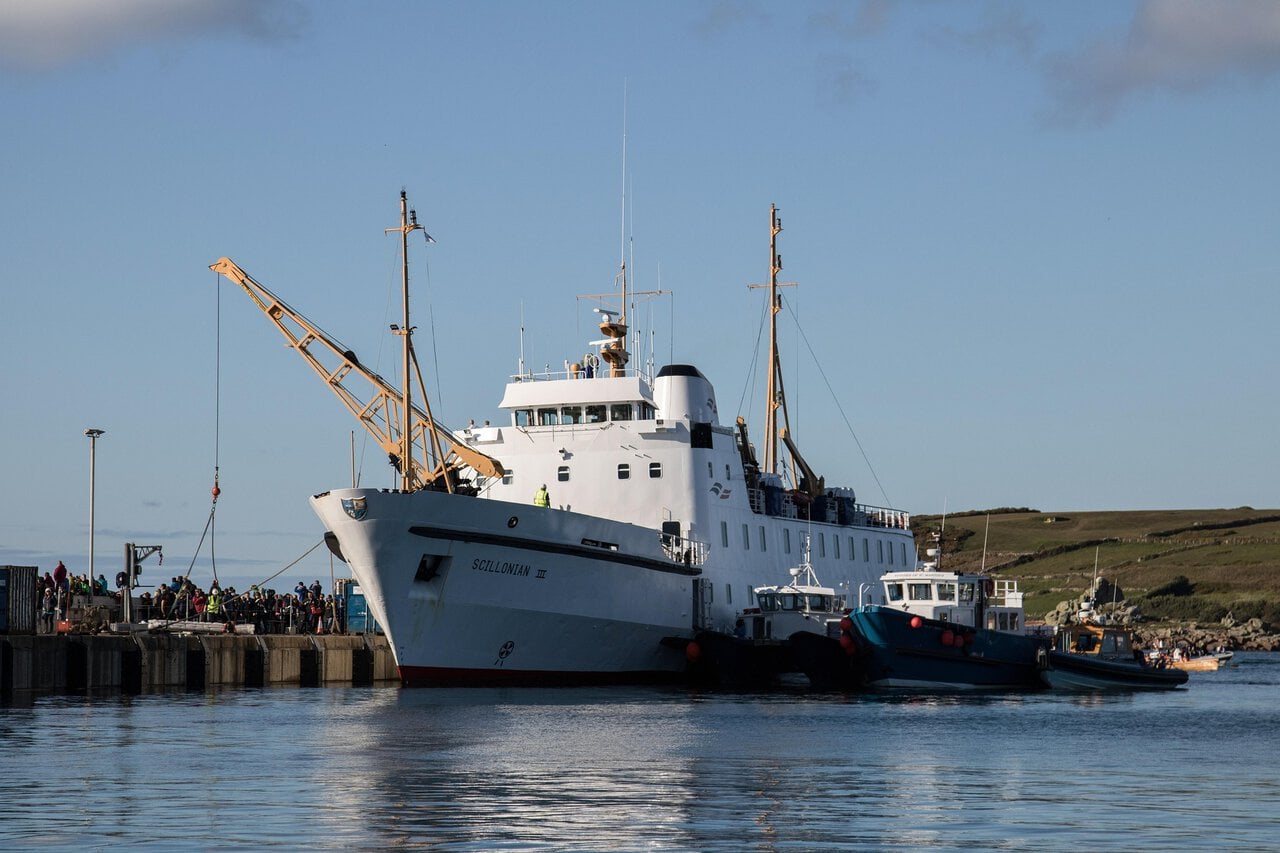
The Penzance to Isles of Scilly ferry is much more than simply a way of reaching the islands. For many travellers, the voyage itself becomes one of the highlights of the trip. Operated by the Scillonian III, this famous crossing links mainland Cornwall with the beautiful Isles of Scilly, carrying visitors across nearly 30 miles (45 kilometres) of open Atlantic Ocean. The route is run by Isles of Scilly Travel, the operator responsible for all sea and air links to the islands.
Unlike flying, the ferry allows passengers to enjoy the gradual transition from mainland Britain to the islands. As the coastline of West Cornwall disappears behind you and the islands slowly emerge on the horizon, there is a genuine sense of travelling somewhere special. It feels far more like an expedition than a simple transport connection.
The ferry is particularly popular with visitors carrying luggage, cyclists, walkers, photographers, and travellers staying on the islands for several days. Because baggage allowances are more generous than on flights and there are no airport-style security procedures, many passengers find the ferry a more relaxed way to travel.
That said, the crossing is not for everyone. The route crosses open Atlantic waters and can occasionally become rough, particularly during periods of strong winds or large ocean swells. Travellers prone to seasickness should plan accordingly, something we’ll cover in detail later in this guide.
For most visitors, however, the Scillonian III remains the classic way to reach the islands and an important part of the overall Isles of Scilly experience.
Scillonian III at a Glance
| Feature | Details |
|---|---|
| Vessel | Scillonian III |
| Operator | Isles of Scilly Travel |
| Route | Penzance to St Mary’s |
| Departure Port | Penzance Harbour |
| Arrival Port | St Mary’s Harbour (Hugh Town) |
| Crossing Time | Approximately 2 hours 45 minutes |
| Passenger Capacity | Around 600 passengers |
| Vehicle Transport | No passenger vehicles |
| Bicycle Carriage | Available subject to conditions |
| Accessibility | Accessible facilities available |
| Season | Typically operates March to November |
| Main Audience | Tourists, residents, walkers, cyclists, island visitors |
The vessel has served the route for decades and has become an iconic part of travel to the islands. Many visitors consider sailing aboard the Scillonian III to be as much a tradition as visiting the islands themselves.
Browse hotels and accommodation for your journey.
View staysBrowse apartments, homes and self-catering accommodation.
Browse rentalsCompare prices from multiple hotel booking sites.
Check dealsArriving by Train
For many visitors, the easiest way to reach the Penzance to Isles of Scilly ferry is by rail. Penzance Station sits at the very end of the famous Cornish Main Line and provides direct connections from much of southern England.
Trains operated by Great Western Railway run directly to Penzance from London Paddington, Reading, Exeter St Davids, Plymouth, Liskeard, Bodmin Parkway, Par, St Austell, Truro, Redruth, Camborne, Hayle, and St Erth.
For travellers already staying in Cornwall, reaching the ferry terminal can be remarkably straightforward. Visitors in Truro, St Austell, Par, Hayle, or St Erth can often board a direct train and arrive in Penzance without changing services.
The railway journey itself is one of the highlights of travelling to west Cornwall. After passing through Plymouth, the route crosses the dramatic landscapes of Cornwall before serving many of the county’s most important towns. Between Hayle, St Erth, and Penzance, passengers enjoy particularly impressive views across the coastline and surrounding countryside.
Upon arrival at Penzance Station, passengers are already within easy walking distance of the ferry terminal. Unlike many ferry ports that require additional transfers, Penzance offers one of the simplest train-to-ferry connections in Britain.
If you’re planning a wider Cornish rail adventure, our Ride Cornwall Ticket Guide can help you make the most of the journey.
Taking the Night Riviera Sleeper
One of the most enjoyable and convenient ways to reach the Isles of Scilly is aboard the famous Night Riviera Sleeper.
Operated by Great Western Railway, the sleeper departs London Paddington in the evening and arrives at Penzance Station at approximately 07:54 the following morning. Instead of spending an entire day travelling across southern England, passengers can sleep through much of the journey and wake up in the heart of West Cornwall ready to continue directly to the islands.
The service offers both private sleeper cabins and seated accommodation, although most travellers heading to the Isles of Scilly choose a cabin for the additional comfort and privacy. For many visitors, the train effectively replaces the cost of a hotel night while also providing transportation to Cornwall.
One of the biggest advantages of the Night Riviera is how well it connects with the ferry. After arriving at Penzance Station, passengers can simply walk to Penzance Ferry Terminal, a journey of approximately 10 to 15 minutes. This still leaves around one hour before the ferry’s usual morning departure at approximately 09:15, providing ample time to check in, purchase refreshments, and board without rushing.
The connection is so straightforward that many travellers regard the combination of the Night Riviera Sleeper and the Scillonian III as one of the most seamless rail-and-ferry journeys in Britain. It allows visitors to leave London in the evening and arrive on the Isles of Scilly around lunchtime the following day.
For passengers travelling from London, the South East, or those arriving into the capital from overseas, the sleeper remains one of the most efficient and enjoyable ways to reach the islands. If you’re considering this option, our dedicated Night Riviera Sleeper Train Guide explains the cabins, facilities, booking process, and onboard experience in much greater detail.
Arriving by National Express Coach
Many visitors are surprised to discover that reaching the Penzance to Isles of Scilly ferry by coach can be just as straightforward as travelling by train.
National Express operates services linking Penzance with destinations throughout southwest England and beyond. Depending on the service selected, direct coach connections are available from Heathrow Airport, Reading, Bristol Airport, Bristol, Bridgwater, Taunton, Exeter, Plymouth, Liskeard, Bodmin, Newquay, Truro, Redruth, Camborne, Hayle, St Erth, Falmouth, and Helston.
For international visitors, the direct connection from Heathrow Airport is particularly useful. It allows travellers to reach Cornwall and connect with the ferry without navigating London’s railway network.
The coach stop used by National Express is located adjacent to Penzance Railway Station, making transfers extremely simple. After leaving the coach, passengers simply follow the same walking route used by rail travellers to reach the ferry terminal.
National Express coaches provide luggage storage beneath the vehicle, making them a practical option for visitors carrying suitcases, camping equipment, or larger bags. For travellers looking to minimise costs, coach travel can often be significantly cheaper than rail travel, particularly when booked well in advance.
Because the coach network reaches so many destinations across Cornwall, it also provides a useful option for visitors already staying elsewhere in the county who wish to connect with the ferry.

Book Your your destination Journey with National Express
Travelling to or from your destination? National Express provides coach services across the UK, with options for standard journeys, discounted Coachcard fares and selected event transport.
Tip: If you expect to make several coach journeys, check whether a National Express Coachcard could reduce your fares.

Getting There by Car
For travellers who prefer complete flexibility, driving to Penzance Ferry Terminal remains a popular option.
The town is reached via the A30, Cornwall’s principal road route. Visitors travelling from Exeter can typically expect a journey of around 2.5 to 3 hours, while those travelling from Bristol should generally allow around 4 hours, depending on traffic conditions.
Many ferry passengers choose to drive to Penzance, park for the duration of their trip, and continue to the islands as foot passengers. This approach avoids the need for public transport connections while still allowing visitors to enjoy the islands without a vehicle.
Long-stay parking facilities are available in Penzance, although demand can be extremely high during the summer season. Spaces close to the harbour are particularly sought after and advance booking is strongly recommended whenever possible.
Visitors travelling during school holidays or peak summer weekends should allow extra time for traffic, especially on sections of the A30 approaching west Cornwall. Arriving early reduces stress and allows time to complete check-in procedures comfortably.
For many families and groups travelling from elsewhere in Britain, driving remains one of the most convenient ways to reach the Scillonian III departure point.
Arriving by Taxi
For visitors carrying significant luggage or staying in accommodation away from the railway station, a taxi can be one of the easiest and most convenient ways to reach Penzance Ferry Terminal.
A dedicated taxi rank is located directly outside Penzance Railway Station, allowing arriving rail passengers to transfer immediately to the harbour if required. The distance between the station and ferry terminal is relatively short, with most journeys taking less than 5 minutes, making this one of the quickest station-to-port transfers in the UK.
Taxis are also readily available throughout Penzance, Newlyn, Mousehole, Marazion, and surrounding parts of West Cornwall. Many local hotels, guest houses, and holiday cottages can arrange taxis for guests travelling to the ferry.
For passengers travelling with multiple suitcases, bicycles, mobility equipment, or large family groups, a taxi can often be considerably easier than walking. This is particularly true during poor weather, when strong Atlantic winds or heavy rain can make the short harbour walk less enjoyable.
Visitors arriving from nearby attractions such as St Michael’s Mount, Mousehole Harbour, Newlyn Harbour, or the Minack Theatre may also find taxis a useful way to connect directly with the ferry departure point.
Because the Scillonian III operates on a fixed sailing schedule, it is sensible to pre-book taxis during summer weekends, school holidays, and other busy travel periods. Missing the ferry can have a significant impact on onward travel plans, so allowing extra time is always advisable.
For many travellers, particularly those staying locally before departure, a short taxi ride provides the simplest possible start to their Isles of Scilly adventure.
Walking from Penzance Station to the Ferry Terminal
One of the greatest advantages of the Penzance to Isles of Scilly ferry is the exceptionally simple transfer between Penzance Railway Station and Penzance Ferry Terminal.
After leaving Penzance Station, passengers should exit through the main station entrance and head towards the seafront. The route is largely flat, well signposted, and follows straightforward roads through the centre of town before reaching the harbour.
The total distance is approximately 800 metres, and most travellers complete the journey in around 10 to 15 minutes. Even visitors carrying moderate luggage generally find the route manageable.
Along the walk, passengers pass a variety of useful facilities including convenience stores, cafés, restaurants, pharmacies, banks, and places to purchase last-minute supplies before heading to the islands. This is particularly useful for travellers staying on St Mary’s, Tresco, Bryher, St Martin’s, or St Agnes, where prices can sometimes be higher than on the mainland.
As you approach the waterfront, the atmosphere changes noticeably. Fishing boats, harbour activity, and views across Mount’s Bay create a sense that the island journey is about to begin. The ferry terminal itself becomes increasingly obvious thanks to its prominent location and clear signage.
Compared with many ferry ports around Britain, the connection is remarkably efficient. There are no shuttle buses, no airport-style transfers, and no long walks through industrial docks. Instead, the transfer feels like a natural continuation of the rail journey.
For travellers arriving on the Cornish Main Line or the Night Riviera Sleeper, this easy station-to-port connection is one of the major advantages of travelling to the Isles of Scilly via Penzance.
Compare routes and fares for your next trip.
Compare flightsBrowse Airalo eSIM options for convenient travel data.
Check eSIMsArrange a private pickup before travel instead of sorting transport after landing.
Book a transferScillonian III Timetable
The Penzance to Isles of Scilly ferry operates a relatively simple timetable compared with many larger ferry routes. During the main operating season, the Scillonian III typically operates one sailing each day in each direction, connecting Penzance Harbour with St Mary’s Harbour.
The outbound sailing from Penzance generally departs at around 09:15, allowing passengers arriving by train, coach, or overnight sleeper service to comfortably connect with the ferry. The crossing takes approximately 2 hours 45 minutes, with arrival into St Mary’s Harbour usually around midday.
Return sailings from St Mary’s are more variable. During much of the season, departures are commonly scheduled for around 16:30, although sailing times can vary significantly depending on operational requirements, tides, weather conditions, and the time of year. On some dates, departures may be as early as 14:00, while at other times they can operate as late as 19:00.
Because return timings can vary, passengers should always check the latest sailing schedule before booking accommodation, onward transport, or same-day connections.
One advantage of the timetable is that it provides a substantial amount of time on the islands for day-trippers. Visitors travelling on the morning ferry can often enjoy several hours exploring St Mary’s, Tresco, Bryher, St Martin’s, or St Agnes before returning to the mainland later the same day.
Passengers are generally advised to arrive at Penzance Ferry Terminal well before departure, particularly during the busy summer season when sailings can be extremely popular. Those travelling from London often find that the Night Riviera Sleeper provides one of the most convenient connections, arriving into Penzance with plenty of time before the morning sailing.
How to Book Ferry Tickets to the Isles of Scilly with Direct Ferries
You can check live availability and book your Penzance to Isles of Scilly ferry tickets directly using the tool below. This allows you to view current sailing times, choose your preferred departure, and secure your place in advance
To find and book your ferry, simply follow these steps:
First, select your departure country or region, then choose your route from the available options. Next, pick your travel date and select an estimated departure time that suits your schedule.
Then enter the number of passengers travelling, including their ages, and confirm whether you are travelling as foot passengers or with a vehicle, if applicable.
You can switch between one-way and return tickets using the options at the top of the tool, and change the currency at the bottom to match your preference.
Once complete, run the search to view available sailings and prices.
Please note that some ferry operators may close bookings a few hours before departure, and this can vary depending on the route and provider. Booking in advance is recommended, especially for popular sailings or same-day travel.
Because sailings (and flights) to the islands depend on Atlantic sea and weather conditions, services can occasionally be delayed, rescheduled, or cancelled at short notice, particularly during the autumn and winter months. Availability is often limited during peak summer season and school holidays, so booking your crossing well in advance is strongly recommended.
Direct Ferries is one of the world’s largest ferry booking platforms, giving you access to thousands of routes and live sailing availability in one place, making it easy to plan and book your journey with confidence.
Boarding the Scillonian III
The boarding process for the Penzance to Isles of Scilly ferry is generally straightforward, but understanding what to expect can make the experience considerably smoother.
Passengers are usually advised to arrive well before departure to allow sufficient time for check-in, luggage procedures, and boarding formalities. During the busy summer season, when several hundred passengers may be travelling, arriving early is particularly important.
After entering the terminal building, passengers complete check-in and receive any relevant boarding information. Travellers carrying larger items such as bicycles, additional luggage, or specialist equipment may be directed towards dedicated handling areas.
Once boarding is announced, passengers are guided from the terminal towards the vessel itself. Boarding normally takes place via the harbour-side access points and is managed by ferry staff to ensure an orderly process.
Many experienced travellers choose to board promptly in order to secure their preferred seating position. Window seats, upper deck seating, and sheltered outdoor viewing areas are often the most sought-after locations on busy sailings.
As departure time approaches, excitement begins to build. Looking back towards Penzance Harbour, watching crew prepare the vessel, and seeing fellow travellers gathering on deck creates a genuine sense of anticipation. Unlike many ferry crossings that simply connect two points, boarding the Scillonian III feels like the start of a real journey.
For many first-time visitors, this is the moment when the trip changes from planning and logistics into an actual Isles of Scilly adventure.

Facilities Onboard the Scillonian III
Although the crossing lasts approximately 2 hours 45 minutes, passengers will find a range of facilities available onboard the Scillonian III to make the journey comfortable.
The vessel offers extensive indoor seating areas, allowing passengers to remain sheltered regardless of weather conditions. Many travellers deliberately choose seats close to the windows so they can enjoy views of the Cornish coastline, Mount’s Bay, and the eventual arrival into the islands.
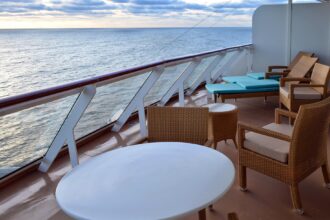
One of the most popular areas onboard is the collection of outdoor viewing decks. These spaces provide uninterrupted views across the Atlantic and are particularly busy during departure from Penzance, when passing Land’s End, and during arrival at St Mary’s Harbour.
The ferry also provides toilet facilities throughout the voyage, including accessible facilities for passengers requiring additional support.
Refreshments are available onboard, allowing passengers to purchase hot drinks, cold drinks, snacks, and light meals during the crossing. Many visitors choose to combine breakfast or lunch with the voyage, particularly when travelling on daytime sailings.
Photographers should keep their cameras close at hand. The crossing frequently provides opportunities to photograph Mount’s Bay, St Michael’s Mount, Atlantic seabirds, Wolf Rock Lighthouse, passing vessels, and eventually the stunning approach into the Isles of Scilly themselves.
The Scillonian III is not designed as a cruise ship, but for a journey of under three hours it offers everything most passengers require. In reality, the biggest attraction onboard is not the seating or refreshment facilities. It is the ever-changing scenery outside, which transforms the crossing from simple transportation into one of the most memorable parts of an Isles of Scilly holiday.
What You’ll See During the Crossing
One of the biggest advantages of taking the Penzance to Isles of Scilly ferry rather than flying is that the journey itself becomes part of the adventure. The Scillonian III passes through some of the most spectacular waters in southwest Britain, offering dramatic coastal scenery, famous landmarks, and some of the best opportunities for marine wildlife spotting anywhere on a UK ferry route.
Shortly after departure, the ferry leaves Penzance Harbour and enters Mount’s Bay, providing excellent views back towards Penzance, Newlyn, and the surrounding Cornish coastline. Looking east, passengers can often see St Michael’s Mount rising from the sea, one of Cornwall’s most iconic landmarks and a fitting farewell to the mainland.
As the vessel continues westward, the coastline of West Penwith gradually unfolds. Depending on visibility, passengers may spot Mousehole, Lamorna Cove, and sections of the rugged coastline leading towards Land’s End. This stretch of Cornwall is among the most dramatic anywhere in England and is rarely seen from the sea by most visitors.
Once clear of the mainland, the ferry enters the open Atlantic Ocean, where the crossing becomes about much more than simply reaching the islands. The route between Penzance and St Mary’s is regarded as one of the best ferry routes in the UK for marine wildlife spotting, with conservation charity ORCA regularly conducting surveys onboard.
Passengers frequently spot common dolphins, harbour porpoises, grey seals, and Risso’s dolphins, while the most memorable sightings often involve dolphins riding the ferry’s bow waves alongside the vessel. During particularly active periods, dozens of animals can be seen on a single crossing.
These waters are also home to larger species including basking sharks, minke whales, humpback whales, and even occasional killer whales. While such encounters are rare, they highlight the remarkable marine environment that surrounds the Isles of Scilly and helps make the crossing one of the most memorable parts of the journey.
One of the crossing’s most famous landmarks is Wolf Rock Lighthouse, standing alone in the Atlantic approximately 8 miles southwest of Land’s End. Many passengers head to the viewing decks when the lighthouse comes into view, as it represents one of the most isolated and dramatic lighthouses around the British coastline.
As the journey progresses, travellers should begin watching the horizon ahead. The first sight of the Isles of Scilly is often unforgettable. Initially appearing as distant silhouettes rising from the sea, the islands gradually reveal their beaches, headlands, harbours, and scattered settlements as the ferry approaches.
The final approach into St Mary’s Harbour is particularly impressive. Passengers are treated to views of Hugh Town, neighbouring islands, anchored boats, sandy beaches, and the remarkably clear turquoise waters for which the islands are famous. By the time the ferry docks, many visitors feel that the holiday has already begun.
Seasickness & Rough Crossings
Any honest guide to the Penzance to Isles of Scilly ferry needs to discuss seasickness. While many crossings are smooth and enjoyable, the route crosses open Atlantic Ocean waters and can occasionally experience significant movement.
Sea conditions vary throughout the year. Calm summer days can produce very comfortable crossings, while strong winds, Atlantic swells, and winter weather systems can create rougher conditions. Even on sunny days, ocean swells may still be present because waves can travel long distances across the Atlantic.
Passengers who know they are susceptible to motion sickness should prepare before departure. Many experienced travellers recommend taking seasickness medication before boarding rather than waiting until symptoms appear. Motion sickness wristbands and other remedies are also commonly used.
Choosing the right location onboard can help. Many passengers find that sitting in the central sections of the vessel, where movement tends to be less noticeable, improves comfort. Others prefer spending time on deck, where fresh air and a clear view of the horizon can reduce symptoms.
Staying hydrated and avoiding excessive alcohol before departure can also help. Some travellers find that light meals are preferable to travelling on either a completely full or completely empty stomach.
It is important not to let concerns about seasickness put you off travelling. Thousands of passengers make the crossing every year without difficulty, and for many people the voyage becomes one of the highlights of their visit to the islands. However, being prepared is always sensible when travelling across open Atlantic waters.
Compare hostels and budget-friendly places to stay.
Browse hostelsGet help with compensation, eligible lounge access and disruption support.
Explore AirHelp+Use convenient luggage storage between arrival, check-in and departure.
Check storageArriving at St Mary’s Harbour
After approximately 2 hours 45 minutes, the Scillonian III arrives at St Mary’s Harbour, the principal gateway to the Isles of Scilly.
The ferry docks adjacent to Hugh Town, the islands’ main settlement and the centre of services, accommodation, restaurants, and transport connections. One of the biggest advantages of arriving by ferry is that passengers arrive directly in the heart of the islands rather than at a remote airport.
Disembarkation is usually straightforward. Passengers leave the vessel and enter the harbour area, where onward travel arrangements can be made. The compact nature of Hugh Town means that many hotels, guesthouses, restaurants, cafés, and shops are within walking distance of the harbour.
Facilities around the harbour include toilets, cafés, tourist information services, convenience stores, and various local businesses catering to visitors. Because the harbour sits at the centre of island life, most travellers quickly find everything they need.
Visitors staying on St Mary’s often simply walk to their accommodation. Many guesthouses and hotels are located only a few minutes from the quay, making arrival exceptionally convenient.
For first-time visitors, one of the most striking aspects of arrival is the atmosphere. Compared with mainland Britain, St Mary’s feels noticeably slower paced, quieter, and more relaxed. The combination of boats, beaches, island scenery, and colourful waterfront buildings creates an immediate sense of having arrived somewhere special.
Getting to Tresco, Bryher, St Martin’s & St Agnes
While St Mary’s is the arrival point for the ferry, many visitors continue onwards to the smaller inhabited islands of Tresco, Bryher, St Martin’s, and St Agnes.
Fortunately, onward travel is relatively simple. Transfer boats operate between the islands and form an essential part of daily life across the archipelago. Most visitors use services organised through local boat operators, often coordinated via the harbour area in Hugh Town.
Passengers arriving on the Scillonian III and continuing immediately to another island should check transfer arrangements before travelling. During the main tourist season, connections are generally straightforward, but schedules can vary according to weather, tides, and seasonal demand.
Tresco is perhaps the most famous of the off-islands and is known for its world-renowned Tresco Abbey Garden, luxury accommodation, and beautiful beaches. Transfer times from St Mary’s are typically short and the route is served regularly during the visitor season.
Bryher offers a quieter and more rugged experience, with dramatic Atlantic scenery on one side and calmer waters on the other. St Martin’s is famous for its white-sand beaches and crystal-clear waters, while St Agnes provides a more remote and traditional island atmosphere.
For many visitors, island hopping becomes one of the highlights of a trip to the Isles of Scilly. The short boat journeys between islands allow travellers to experience several very different landscapes and communities within a relatively small area.
Understanding these onward connections is important because arriving at St Mary’s is often only the first stage of the journey. For many travellers, the real adventure begins once they step onto a smaller island and start exploring the wider archipelago.
Ferry vs Flying to the Isles of Scilly
One of the most common questions travellers ask is whether they should take the Scillonian III ferry or fly to the Isles of Scilly. Both options have advantages, and the best choice depends on your priorities, budget, luggage requirements, and how much time you have available.
| Factor | Scillonian III Ferry | Flights to the Isles of Scilly |
|---|---|---|
| Departure Point | Penzance Harbour | Land’s End, Newquay or Exeter |
| Arrival Point | St Mary’s Harbour | St Mary’s Airport |
| Journey Time | Approx. 2 hrs 45 mins | Approx. 20–60 mins |
| Luggage | Generally more generous | More restrictive |
| Scenery | Excellent throughout crossing | Excellent aerial views |
| Seasickness Risk | Yes | No |
| Weather Disruption | Possible | Possible |
| Island Experience | Part of the adventure | Fastest option |
| Accessibility to Off-Islands | Easy onward boat connections | Requires transfer from airport |
For many visitors, the ferry offers the more memorable experience. The gradual approach to the islands, views of Wolf Rock Lighthouse, and arrival directly into St Mary’s Harbour create a genuine sense of travelling somewhere remote and special.
However, travellers with limited time often choose to fly. Flights from Land’s End Airport can take as little as 20 minutes, making them considerably quicker than the ferry crossing.
The ferry tends to appeal particularly to walkers, photographers, cyclists, and visitors staying for several days, while flights are often preferred by day-trippers and those with tighter schedules.
Many experienced visitors actually use both. A popular approach is to travel out by ferry and return by air, allowing travellers to enjoy both perspectives of the islands.

Is the Scillonian III Worth It?
For most visitors, the answer is an emphatic yes.
The Scillonian III is not simply transportation. It is an important part of the overall Isles of Scilly experience. Unlike many ferry crossings where passengers simply endure the journey, the voyage between Penzance and St Mary’s often becomes one of the highlights of the trip.
The departure from Mount’s Bay, views of St Michael’s Mount, the passage through open Atlantic waters, sightings of Wolf Rock Lighthouse, and the gradual appearance of the islands all contribute to a memorable experience that cannot be replicated by air travel.
The ferry also offers practical advantages. Luggage allowances are generally more generous than on flights, the station-to-port connection in Penzance is extremely simple, and passengers arrive directly in the centre of island life at Hugh Town.
Of course, there are drawbacks. The crossing is significantly longer than flying, and rough seas can occasionally affect comfort levels. Travellers who are particularly susceptible to seasickness may prefer to fly, especially during periods of unsettled weather.
For everyone else, however, the ferry remains the classic way to reach the islands. It feels like a journey rather than a transfer, and that distinction matters. By the time the Scillonian III arrives in St Mary’s Harbour, many passengers already feel they have started their holiday.
If you are visiting the islands for the first time, the ferry is the option most likely to leave a lasting impression.
Future Plans: Scillonian IV
The future of the Penzance to Isles of Scilly ferry looks bright, with the arrival of the new Scillonian IV expected in 2027.
The vessel will replace the much-loved Scillonian III, which has served the route since 1977 and has become an iconic part of travel to the islands. While many passengers have fond memories of the current ship, the new vessel is being designed specifically to improve comfort, reliability, and the overall passenger experience.
One of the most significant improvements is expected to be enhanced performance in rougher sea conditions. Because the route crosses open Atlantic waters, sea conditions can sometimes be challenging. The new ferry has been designed with modern technology and improved stability in mind, helping to create a more comfortable journey for passengers.
The vessel will continue to carry approximately 600 passengers, ensuring capacity remains available during the busy summer season while providing a more modern onboard environment. Visitors can also expect improved accessibility and passenger facilities as part of the wider investment in the route.
The introduction of Scillonian IV is part of a broader programme of investment designed to secure long-term transport links between Cornwall and the Isles of Scilly. For residents, businesses, and visitors alike, it represents an important commitment to the future of the islands.
For passengers travelling before the new vessel enters service, the current Scillonian III remains one of Britain’s most iconic ferry journeys. For those travelling after 2027, the crossing should become even more comfortable while retaining the spectacular scenery, wildlife spotting opportunities, and sense of adventure that make this route so special.

Rupert’s Handy Travel Tips
Travelling on the Scillonian III? Here are a few useful tips to make your crossing smoother:
- Choose your seat early: Window seats and outdoor viewing areas are popular, particularly during good weather.
- Prepare for Atlantic conditions: Even sunny days can produce noticeable swells. Consider seasickness remedies if you’re susceptible to motion sickness.
- Arrive early: Summer sailings can be busy, and arriving with plenty of time reduces stress before boarding.
- Keep your camera handy: The crossing offers excellent views of St Michael’s Mount, Wolf Rock Lighthouse, and the first appearance of the islands.
Want to meet the reindeer behind our travel tips? Find out more in our page Who is Rupert?.




Frequently Asked Questions About the Penzance to Isles of Scilly Ferry
How long does the Penzance to Isles of Scilly ferry take?
The Scillonian III crossing between Penzance Harbour and St Mary’s Harbour typically takes approximately 2 hours 45 minutes.
Which ferry operates between Penzance and the Isles of Scilly?
The route is operated by the Scillonian III, which is run by Isles of Scilly Travel.
How far is Penzance Ferry Terminal from Penzance Railway Station?
The terminal is approximately 800 metres from the station and most passengers complete the walk in 10 to 15 minutes.
Can I travel from London to the Isles of Scilly by train and ferry?
Yes. Many visitors travel via the Cornish Main Line or the Night Riviera Sleeper to Penzance, before walking to the ferry terminal and boarding the Scillonian III.
Does National Express serve Penzance Ferry Terminal?
National Express services stop adjacent to Penzance Railway Station, approximately 10 to 15 minutes’ walk from the ferry terminal.
Can you take luggage on the Scillonian III?
Yes. The ferry carries passenger luggage and generally offers more flexibility than air services.
Is the Scillonian III suitable for people prone to seasickness?
Many passengers travel without difficulty, but the route crosses open Atlantic Ocean waters. Travellers concerned about seasickness should consider medication and follow the advice outlined earlier in this guide.
What facilities are available onboard the ferry?
The vessel provides indoor seating, outdoor viewing decks, refreshments, toilets, and accessible facilities.
Where does the ferry arrive in the Isles of Scilly?
The ferry arrives at St Mary’s Harbour in Hugh Town, the main settlement on the islands.
Can I reach Tresco directly from the ferry?
Passengers first arrive on St Mary’s before connecting to onward boat services serving Tresco, Bryher, St Martin’s, and St Agnes.

Further Reading & Related Guides
If you’re planning to spend time on the islands themselves, our Isles of Scilly Travel Guide provides a comprehensive overview of St Mary’s, Tresco, Bryher, St Martin’s, and St Agnes, including accommodation, island hopping, beaches, attractions, and practical planning advice. Together with this ferry guide, it covers the entire journey from mainland Cornwall to the islands.
Visitors travelling to Penzance by rail should also read our Night Riviera Sleeper Train Guide, which explains how to travel overnight between London Paddington and Cornwall. The sleeper is one of the most convenient ways to connect with the Scillonian III, allowing passengers to wake up in Penzance and continue directly to the ferry terminal.
For wider public transport travel around Cornwall, our Ride Cornwall Ticket Guide explains how Cornwall’s integrated bus and rail tickets work and can help reduce the cost of exploring destinations across the county. This can be particularly useful if you’re combining the islands with time in Penzance, St Ives, Truro, or other Cornish destinations.
Those looking to explore beyond west Cornwall should see our Devon & Cornwall Travel Guide, which brings together some of the region’s best coastal towns, attractions, transport routes, and itinerary ideas. It is an excellent companion for visitors planning a longer southwest England trip.
Cornwall’s landscape was shaped by centuries of mining history, and our UNESCO Cornish Tin Mines Guide explains how this industrial heritage transformed the region and earned international recognition. Many of the sites covered can be visited before or after your Isles of Scilly adventure.
Finally, before travelling, take a look at our eSIM Guide. Reliable mobile data can make a huge difference when checking ferry updates, booking accommodation, navigating unfamiliar destinations, or arranging onward transport both in Cornwall and across the Isles of Scilly.