
Reviewed by our editorial team Updated
Why Sorrento Belongs on Your Italian Itinerary
Sorrento genuinely earns its reputation as one of Italy’s most beloved coastal towns, perched dramatically on clifftops overlooking the Bay of Naples with Mount Vesuvius visible across the water on a clear day. Beyond its obvious beauty, Sorrento functions as the natural gateway to Capri, the Amalfi Coast and Pompeii, making it a genuinely popular base for exploring the wider Campania region.
The town’s identity is inseparable from its lemon groves, the fragrant citrus trees that blanket the surrounding hillsides and supply the ingredients for limoncello, the bright yellow liqueur found on every restaurant table across town. This agricultural heritage, combined with a centuries old tradition of intarsia woodwork and ceramics, gives Sorrento a genuinely distinctive character beyond simply its clifftop views.
This guide covers the essential things to do in Sorrento itself, from wandering Piazza Tasso and Corso Italia through to exploring Marina Grande, the dramatic Vallone dei Mulini gorge, and the town’s genuine lemon and craft traditions. For beaches, day trips and ferry connections specifically, we’ve covered those in considerably more depth in our dedicated guides linked throughout this page.
Most visitors find a genuine three to four days is enough to properly explore Sorrento itself while still leaving time for at least one or two day trips into the surrounding region, though even a single rushed day here genuinely rewards you with a real taste of what makes this stretch of coastline so beloved among visitors.
Top Attractions at a Glance
Before working through each attraction in detail, it genuinely helps to see how Sorrento’s essential sights compare on cost, time needed and what makes each one worth prioritising. Given how compact Sorrento’s historic centre genuinely is, most visitors find they can cover the highlights comfortably within a single full day, even if a longer stay is genuinely worth having.
Unlike some larger Italian coastal towns, Sorrento’s main attractions cluster tightly around Piazza Tasso and the surrounding pedestrianised streets, meaning very little time is lost simply walking between sights. This makes the town genuinely forgiving for visitors working with a tight schedule, whether arriving as part of a wider Amalfi Coast or Naples based itinerary or staying for several days.
The table below groups the essentials by rough cost and time commitment, giving you a realistic starting point for planning your visit. Many of Sorrento’s best experiences, including wandering the historic centre and admiring the views from Villa Comunale, cost nothing at all.
Use this table as a quick reference, then read the detailed sections below for genuinely useful context on each specific attraction, from Piazza Tasso through to the town’s lemon groves and craft traditions.
| Attraction | Cost | Time Needed | Best For |
|---|---|---|---|
| Piazza Tasso | Free | 30–45 mins | Town centre atmosphere |
| Corso Italia | Free (browsing) | 30–60 mins | Shopping & local crafts |
| Sorrento Cathedral | Free | 15–20 mins | History & architecture |
| Marina Grande | Free | 1.5–2 hrs | Seafood & authentic Sorrento |
| Sorrento Lift & Marina Piccola | ~€1.20 single / ~€2.20 return | 45–60 mins | Harbour views & ferries |
| Vallone dei Mulini | Free | 15–20 mins | Photography |
| Villa Comunale | Free | 30–45 mins | Sunset views |
| Bagni della Regina Giovanna | Free | 2–3 hrs | Roman ruins & wild swimming |
| Museo Correale | Admission fee | 1–2 hrs | Art & local history |
| Historic Centre & Sedil Dominova | Free | 45–90 mins | Hidden streets & history |
| Lemon Grove Experience | Free to guided tour | 45–90 mins | Limoncello & local produce |
| Traditional Food Experience | Varies | 1–2 hrs | Local cuisine |
| Best Sunset Spots | Free | 45–60 mins | Views & photography |
Compare hotels and other places to stay in Sorrento.
Check availabilityExplore holiday homes and apartments around Sorrento.
See holiday homesCompare prices for Sorrento hotels across multiple booking sites.
Check dealsWander Piazza Tasso
Piazza Tasso is genuinely the beating heart of Sorrento, a bustling, café lined square straddling the deep gorge that once physically divided the town’s clifftop centre. Named after the sixteenth century poet Torquato Tasso, Sorrento’s most celebrated native son, the square buzzes with life from early morning coffee through to late evening aperitivo.
The piazza is flanked by an elegant baroque church and an eighteenth century palace, both worth a glance as you settle into one of the many café terraces lining the square’s edges. This is genuinely the town’s premier spot for people watching, with locals and visitors alike gathering here throughout the day and well into the night.
From Piazza Tasso, several of Sorrento’s key routes branch outward, including Corso Italia, the town’s main shopping street, and the stepped pathway leading down towards Marina Piccola and the harbour below. This makes the square a genuinely natural starting point for exploring the rest of Sorrento’s historic centre on foot, whichever direction you choose.
Entry to the piazza itself costs nothing, and it works well at almost any time of day, though evenings genuinely bring the liveliest atmosphere, with locals and visitors filling the surrounding cafés and restaurants as the temperature cools and the square’s warm lighting creates a genuinely romantic backdrop for the evening.
Shop and Stroll Corso Italia
Corso Italia is Sorrento’s main pedestrianised shopping street, running from Piazza Tasso through the heart of the historic centre and lined with everything from high end boutiques to small family run shops selling local ceramics, leather goods and edible souvenirs. Strolling its length is genuinely one of the simplest pleasures a visit to Sorrento offers.
Branching off Corso Italia, a genuine maze of narrower side streets holds some of the town’s most charming corners, including small workshops still producing traditional intarsia marquetry, the intricate inlaid woodwork Sorrento has been celebrated for since the nineteenth century. Wandering without a fixed destination here genuinely rewards curious visitors far more than following a strict sightseeing checklist.
Corso Italia also holds several of the town’s best gelaterias and pasticcerias, making it a genuinely natural spot to pause for a scoop of lemon flavoured gelato, a fitting nod to the citrus that defines so much of Sorrento’s identity, or a slice of delizia al limone, the town’s signature lemon sponge dessert.
Given how central and walkable this street genuinely is, most visitors find themselves passing through Corso Italia multiple times during a stay in Sorrento, whether heading towards the Duomo, Marina Grande or simply browsing shop windows between other sightseeing stops throughout the day.
Visit Sorrento Cathedral
Sorrento Cathedral, formally the Basilica di Sant’Antonino, sits just off Corso Italia and holds a genuinely rich collection of local craftsmanship inside its relatively understated exterior. Rebuilt several times since its medieval origins, the cathedral’s current form dates largely from the fifteenth century, with later additions layered on across subsequent centuries.
Inside, the cathedral’s choir stalls showcase exquisite examples of Sorrento’s celebrated intarsia woodworking tradition, the same intricate marquetry technique found in workshops throughout the town’s side streets. The building also holds several paintings by local artists, offering a genuinely useful introduction to Sorrentine artistic heritage beyond the far more famous names found in nearby Naples or Florence.
Entry to the cathedral is free, and given its central location just steps from Piazza Tasso, it makes a genuinely easy addition to any wander through the historic centre rather than requiring a dedicated separate trip. Most visitors find around fifteen to twenty minutes genuinely sufficient to appreciate the interior properly before moving on.
The cathedral’s bell tower, built partly using recycled ancient Roman columns, offers a genuinely interesting detail for visitors with an eye for architectural history, a genuine reminder that Sorrento’s story stretches back considerably further than its current reputation as a coastal holiday town might otherwise suggest.
Explore Marina Grande
Marina Grande is genuinely Sorrento’s most authentic corner, a working fishing village tucked below the main clifftop town and considerably quieter than the tourist heavy streets around Piazza Tasso. Despite the similar name, this is a genuinely different spot from Marina Piccola, the town’s main ferry port covered in the next section.
Reaching Marina Grande involves a short but genuinely steep walk down from the historic centre, rewarded by colourful fishing boats, pastel painted houses and some of Sorrento’s most genuinely excellent seafood restaurants, several of which have operated for generations within the same families. Dining here, particularly in the evening as the fishing boats return, offers a genuinely different atmosphere from the busier restaurants closer to Piazza Tasso.
The small pebble beach at Marina Grande, while modest in scale, offers a genuinely pleasant spot for a swim away from the larger beach clubs found elsewhere along the coast, and the surrounding views back up towards the cliffs framing the village are genuinely spectacular, particularly in the late afternoon light.
Given the walk down and, more importantly, the walk back up afterwards, Marina Grande genuinely rewards visitors willing to put in a little physical effort, ideally timed around a genuinely relaxed dinner rather than a rushed midday visit squeezed between other sightseeing stops elsewhere in town.
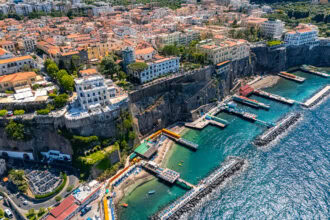
Take the Sorrento Lift to Marina Piccola
The Sorrento Lift, a covered elevator carved directly through the cliff face, offers a genuinely convenient way to reach Marina Piccola, the town’s main port serving ferries to Capri, the Amalfi Coast and Naples, without tackling the steep switchback path on foot. A single ticket costs around €1.20, with a return costing roughly €2.20.
Marina Piccola itself functions as Sorrento’s genuinely busy transport hub, with hydrofoils and ferries departing throughout the day during the warmer months, alongside several beach clubs, or lidos, offering sun loungers and swimming platforms directly over the water. For visitors planning any onward ferry journey, this is genuinely where you’ll begin, a topic covered in full in our dedicated Sorrento Ferry Guide.
Beyond its transport role, Marina Piccola offers a genuinely different vantage point on Sorrento itself, looking back up at the clifftop town from sea level, with the layered buildings and terraces stacking dramatically above the water. The walk or lift ride down is genuinely worth doing even for visitors without a ferry booking, purely for this perspective.
Given the genuine steepness of the alternative walking path, particularly in the summer heat, the Sorrento Lift is genuinely worth prioritising for anyone with mobility concerns, heavy luggage, or simply a preference for avoiding an unnecessarily strenuous climb back up to the historic centre afterwards.
Peer into the Vallone dei Mulini
The Vallone dei Mulini, or Valley of the Mills, is genuinely one of Sorrento’s most striking and unexpected sights, a dramatic ravine cutting straight through the middle of town, its abandoned stone mill buildings slowly being reclaimed by dense vegetation below the surrounding streets.
The gorge originally powered a series of watermills and, later, a sawmill, harnessing the natural water flow that once ran through the valley floor below. Once the construction of Piazza Tasso in the late nineteenth century cut off much of the gorge’s water supply, the mills gradually fell into disuse, leaving the atmospheric ruins genuinely visible today exactly where they were abandoned.
Viewing platforms around the edge of the gorge, easily reached from streets just off Piazza Tasso itself, offer excellent vantage points for photographs down into the ravine, with the crumbling mill walls now genuinely overgrown with ferns and other vegetation thriving in the sheltered, humid microclimate the gorge creates.
Entry to view the gorge from the surrounding streets is entirely free, and the whole experience typically takes no more than fifteen to twenty minutes, making it a genuinely easy and rewarding addition to a wander through Sorrento’s historic centre without requiring any significant detour from your other sightseeing plans that day.
Search flights and useful route combinations for your trip.
View flightsBrowse Airalo eSIM options for convenient travel data.
Check eSIMsCheck private pickup options and plan your onward journey before arrival.
View transfersRelax in Villa Comunale and the Church of San Francesco
Villa Comunale, Sorrento’s genuinely lovely public garden perched directly above the cliffs, offers some of the best free views anywhere in town, looking out across the Bay of Naples towards Mount Vesuvius on clear days. This is genuinely one of the best spots in Sorrento to watch the sunset without paying for a restaurant terrace.
Adjoining the gardens, the Church of San Francesco, dating originally from the fourteenth century, holds a genuinely peaceful cloister lined with intertwining stone arches and climbing greenery, a striking contrast to the busier streets just a short walk away. The cloister frequently hosts small art exhibitions and, on occasion, classical music concerts during the summer months.
Both the gardens and the church cost nothing to visit, making this pairing a genuinely excellent low cost stop for visitors looking for a break from Sorrento’s busier, more commercial streets. The combination of sea views, greenery and historic architecture genuinely rewards a slower, more contemplative pace than much of the town centre encourages.
Given its position just a short walk from Piazza Tasso, Villa Comunale genuinely works well as an early evening stop before dinner, watching the light change over the bay as the day’s heat begins to ease and the gardens genuinely fill with locals out for their own evening stroll.
Visit Bagni della Regina Giovanna
Bagni della Regina Giovanna is one of Sorrento’s most spectacular natural attractions, yet surprisingly many visitors never make the short journey from the town centre. Combining ancient Roman history, crystal-clear swimming water and dramatic coastal scenery, it offers one of the most rewarding experiences anywhere on the Sorrento Peninsula and is well worth adding to your itinerary.
The site takes its name from Queen Joanna of Naples, who, according to local legend, regularly swam here during the fourteenth century. However, the history of the location stretches back much further. The remains of an enormous Roman villa, believed to have belonged to the wealthy noble Pollio Felice, still stand on the headland overlooking the sea. Walking among these ancient ruins while enjoying panoramic views across the Bay of Naples gives visitors a fascinating glimpse into how Rome’s elite once spent their summers.
The main attraction today is the beautiful natural sea lagoon. A narrow stone bridge crosses a rocky inlet to a sheltered pool filled with remarkably clear turquoise water. It is widely regarded as one of the finest places for wild swimming near Sorrento, offering a completely different experience from the organised beach clubs found in town. There are no sun loungers, cafés or beach facilities here, just crystal-clear water, rugged limestone cliffs and peaceful Mediterranean scenery.
Reaching Bagni della Regina Giovanna takes around 30 minutes on foot from Piazza Tasso, or you can catch a local bus before completing the final downhill walk. The last section follows uneven paths with loose rocks, so comfortable footwear is highly recommended. Visiting early in the morning or later in the afternoon not only avoids the hottest part of the day but also provides a much quieter experience before the busiest crowds arrive.
Whether you visit for the Roman archaeology, the natural swimming lagoon, the coastal views or simply the chance to escape the crowds, Bagni della Regina Giovanna is one of the true highlights of the Sorrento Peninsula and deserves a place on every visitor’s itinerary.
Visit Museo Correale di Terranova
The Museo Correale di Terranova’s official website has current opening hours and ticket prices. While many visitors use Sorrento simply as a base for exploring Capri or the Amalfi Coast, the town also boasts an excellent museum that provides a fascinating insight into the area’s history, culture and artistic heritage. The Museo Correale di Terranova occupies an elegant eighteenth-century villa surrounded by peaceful gardens overlooking the Bay of Naples, making it one of Sorrento’s most underrated attractions.
Founded after the prestigious Correale family donated their extensive collection to the town, the museum displays an impressive range of paintings, sculptures, antique furniture, ceramics, clocks, glassware and decorative arts collected over several centuries. Rather than focusing on a single period, the collection illustrates how wealthy families lived in southern Italy, with beautifully preserved rooms retaining much of the villa’s original elegance and atmosphere.
Among the highlights are works by Neapolitan and European artists, together with one of Italy’s finest collections of Capodimonte porcelain. Even visitors with only a casual interest in art will appreciate the museum’s beautifully maintained gardens, elegant terraces and spectacular sea views, which alone make the visit worthwhile.
Unlike many of Naples’ larger museums, Museo Correale rarely feels crowded. It offers a welcome break from the busy streets around Piazza Tasso, providing a peaceful environment where visitors can enjoy both the exhibitions and the surroundings at a much more relaxed pace. Audio guides are available, while informative displays explain the history of both the collections and the Correale family themselves.
Located only a short walk from the historic centre, the museum fits easily into any sightseeing itinerary and is particularly appealing during the hottest part of the day when you’re looking for somewhere cool and quiet. For anyone interested in history, art or local culture, this is one of Sorrento’s hidden gems.
Wander Through Sorrento’s Historic Streets
Although Piazza Tasso and Corso Italia attract most first-time visitors, some of Sorrento’s greatest pleasures are found by simply wandering through the network of narrow streets that surround them. Hidden behind the busy shopping avenues lies a maze of medieval lanes, quiet courtyards, elegant churches and centuries-old buildings that reveal a far older and more authentic side of the town.
One of the most fascinating landmarks is the Sedil Dominova, a beautifully preserved fifteenth-century noble meeting hall that is unique within the Campania region. Its colourful frescoes and distinctive open loggia make it one of Sorrento’s most unusual historic buildings, yet countless visitors pass it without realising its significance. Nearby you’ll also discover sections of the medieval town walls, historic gateways and charming alleyways lined with independent cafés, artisan workshops and traditional family-run businesses.
The beauty of this part of Sorrento is that it rewards visitors who simply allow themselves to explore. Small churches appear unexpectedly around corners, quiet piazzas provide peaceful places to stop for a coffee, and tiny boutiques continue crafts that have been practised here for generations. Away from the busiest streets, the pace slows dramatically, allowing you to appreciate the atmosphere that has attracted travellers for centuries.
These quieter streets are also among the best places to shop for authentic local products. Family-run workshops produce handmade leather goods, intricate wood marquetry, colourful ceramics and bottles of locally produced limoncello, often with the craftsmen themselves working just behind the shopfront.
Because Sorrento’s historic centre is wonderfully compact, it’s almost impossible to become genuinely lost. Instead, allow yourself an hour or two without a fixed plan and simply follow whichever alley catches your eye. More often than not you’ll discover hidden corners, peaceful courtyards and memorable views that never appear in the guidebooks, proving that some of Sorrento’s finest experiences come from wandering rather than sightseeing.
Taste the Flavours of Sorrento
No visit to Sorrento is complete without experiencing its outstanding food scene. Blessed with fertile hillsides, an abundance of fresh seafood and some of Italy’s finest citrus fruit, the town has developed a culinary reputation that is every bit as impressive as its coastal scenery. Whether you’re enjoying a simple family-run trattoria or an elegant restaurant overlooking the Bay of Naples, eating well is an essential part of any visit.
The town’s signature dish is undoubtedly Gnocchi alla Sorrentina. These soft potato dumplings are baked with rich tomato sauce, fresh basil and melted mozzarella until golden and bubbling, creating one of Campania’s most famous comfort foods. Almost every traditional restaurant serves its own version, making it a dish every visitor should try at least once.
Of course, Sorrento’s famous lemons are never far away. Beyond the bottles of limoncello displayed in shop windows, you’ll find lemon-infused olive oils, handmade chocolates, pastries and the delicious Delizia al Limone, a light sponge cake filled with lemon cream and covered in a glossy citrus glaze. It’s considered Sorrento’s signature dessert and is the perfect way to end a leisurely lunch.
Fresh seafood also dominates local menus. Restaurants around Marina Grande and Marina Piccola serve everything from grilled sea bass and prawns to calamari, octopus and anchovies, with much of the catch arriving directly from local fishing boats each morning. Dining beside the harbour while watching boats return from sea is one of Sorrento’s classic experiences.
Don’t overlook the region’s excellent cheeses either. Provolone del Monaco, produced on the nearby Sorrento Peninsula, regularly appears alongside local cured meats and regional wines as part of traditional antipasti platters.
Whether you’re sampling street food, relaxing in a bustling piazza café or enjoying a romantic waterfront dinner, Sorrento’s cuisine is every bit as memorable as its scenery. Take your time, choose local specialities whenever possible and embrace the slower pace of dining that forms such an important part of life on the Sorrento Peninsula.
Learn About Sorrento’s Lemons and Limoncello
Learning about Sorrento’s lemon groves and limoncello production genuinely deserves dedicated time on any visit here, given how thoroughly citrus shapes the town’s identity, economy and cuisine. The specific variety grown here, known as Sorrento lemons or Femminello, holds protected geographical status under European Union law given its distinctive size, aroma and low acidity.
Several small operations within the historic centre itself, including La Limonaia, offer visitors the chance to walk through an actual working lemon grove, learning about traditional cultivation methods that still rely on wooden trellises and woven straw matting to protect the trees during cooler winter months, a technique largely unchanged for generations.
Tasting proper limoncello, made by steeping lemon peel in alcohol before blending with sugar syrup, is genuinely essential during any Sorrento visit, and most shops throughout town offer free tastings before you commit to a bottle. Quality genuinely varies considerably, so seeking out smaller producers rather than the most heavily marketed tourist shops tends to reward you with a noticeably better product.
Beyond limoncello itself, Sorrento’s lemons appear throughout the local cuisine, from the delizia al limone dessert mentioned earlier in this guide to lemon infused olive oils, marmalades and even lemon flavoured pasta sauces, making a lemon focused food tour a genuinely worthwhile way to spend part of your stay.
Browse hostels and budget-friendly stays around Sorrento.
See hostelsFlying to Sorrento? Get fast compensation payouts, eligible lounge benefits and expert help when flights go wrong.
See AirHelp+ benefitsArriving before check-in or leaving later? Store your luggage and make more of your time in Sorrento.
Store your bagsDiscover Local Crafts: Marquetry and Ceramics
Discovering Sorrento’s traditional crafts genuinely offers a rewarding alternative to the beach and food focused activities covered elsewhere in this guide, particularly for visitors interested in bringing home something more distinctive than the usual tourist souvenirs. Two traditions stand out above the rest: intarsia woodwork and hand painted ceramics.
Intarsia, an intricate marquetry technique using thin slices of different coloured woods to create detailed pictures and patterns, has been practised in Sorrento since at least the nineteenth century, with several family workshops still producing genuinely exquisite jewellery boxes, furniture and decorative panels using techniques passed down through generations. The Museo Bottega della Tarsia Lignea, housed in an eighteenth century palazzo, showcases historic examples alongside demonstrations of the craft itself.
Sorrento’s ceramics tradition, while less unique to the town specifically than intarsia, remains genuinely vibrant, with numerous shops throughout the historic centre selling hand painted plates, tiles and decorative pieces featuring the bright lemon and coastal motifs characteristic of the wider Campania region.
For visitors genuinely interested in craftsmanship rather than mass produced souvenirs, seeking out smaller workshops on the side streets branching off Corso Italia, rather than the larger shops closer to Piazza Tasso, tends to reward you with considerably more authentic pieces and, often, the chance to watch artisans actually at work.
Enjoy Sorrento After Dark
Sorrento after dark genuinely transforms from its daytime rhythm of beach clubs and sightseeing into something considerably livelier, particularly around Piazza Tasso and the surrounding streets, where cafés and bars fill with both visitors and locals well into the late evening.
Many restaurants throughout town, particularly those in Marina Grande covered earlier in this guide, offer genuinely memorable evening dining with the fishing boats returning as the sun sets, an atmosphere considerably different from the busier lunchtime service found in restaurants closer to the main square. Booking ahead during peak summer season is genuinely worth doing given how quickly the best tables at these restaurants become fully booked.
Beyond dinner, Sorrento’s evening scene includes several bars offering live music, particularly traditional Neapolitan songs performed in more atmospheric venues scattered through the historic centre, along with the ever present option of simply strolling Corso Italia with a gelato as the shops stay open late into the night during summer.
For a quieter evening, walking back up to Villa Comunale after dinner rewards visitors with the lights of Naples twinkling across the bay, a genuinely peaceful way to close out a day spent exploring one of Italy’s most beloved coastal towns before turning in for the night.
Discover Sorrento’s Best Sunset Spots
Few places in Italy do sunsets quite like Sorrento. Perched high above the Bay of Naples, the town enjoys uninterrupted west-facing views across the water towards Mount Vesuvius, with the islands of Ischia and Procida often visible on clear evenings. As the sun begins to sink below the horizon, the coastline glows with warm golden light, creating one of the most memorable experiences of any visit.
The most famous place to watch the sunset is Villa Comunale. This beautifully maintained public garden sits directly on the clifftop, offering panoramic views across the bay without any entrance fee. Arriving around 30 to 45 minutes before sunset gives you time to find a good viewpoint, enjoy the changing colours and watch ferries crossing the water below. It’s a favourite spot for both locals and visitors, yet it rarely feels overcrowded.
For a completely different atmosphere, head down to Marina Grande. As fishing boats return to the harbour and seafood restaurants begin filling for the evening, the combination of colourful waterfront buildings and the setting sun creates an unforgettable scene. It’s one of the most romantic parts of Sorrento and an ideal place to linger over dinner while daylight slowly fades.
Another excellent option is Marina Piccola, particularly if you’ve arrived by ferry or taken the Sorrento Lift down from the town centre. Looking back towards Sorrento’s dramatic cliffs as the evening light illuminates the hotels and historic buildings above provides one of the peninsula’s classic postcard views.
If you’re willing to venture slightly beyond the town centre, Bagni della Regina Giovanna offers perhaps the most spectacular natural sunset setting of all. Watching the final rays of sunlight reflect across the ancient Roman ruins and the crystal-clear lagoon is a magical experience, although you’ll want to leave before darkness falls as the return path is uneven and unlit.
Wherever you choose, don’t rush. Grab a gelato, enjoy an aperitivo, or simply find a bench overlooking the sea. In Sorrento, sunset isn’t just something to photograph. It’s an experience to savour.

Is Sorrento Worth Visiting?
With so many famous destinations competing for attention in southern Italy, it’s natural to wonder whether Sorrento deserves a place on your itinerary. For most visitors, the answer is an emphatic yes. While neighbouring towns such as Positano and Amalfi often dominate social media, Sorrento offers a wonderful balance of spectacular scenery, excellent transport links, authentic local culture and enough attractions to fill several enjoyable days.
One of Sorrento’s biggest strengths is its location. Sitting at the gateway to the Amalfi Coast, it’s perfectly positioned for day trips to Capri, Pompeii, Herculaneum, Mount Vesuvius, Naples, Ischia and Procida. Excellent ferry services and rail connections make exploring the wider region straightforward, while returning each evening to Sorrento’s relaxed atmosphere is something many travellers appreciate.
The town itself also has plenty to offer. Beyond the beautiful sea views, you’ll find historic streets, traditional artisan workshops, excellent restaurants, lemon groves, Roman ruins and one of Italy’s most attractive historic centres. Unlike some destinations that feel geared almost entirely towards day trippers, Sorrento remains a genuine working town with a lively atmosphere long after the excursion boats have departed.
That said, Sorrento won’t suit everyone equally. Visitors looking for long sandy beaches may prefer other parts of Italy, while those wanting dramatic cliffside hotels directly overlooking the sea may be drawn towards Positano. Likewise, travellers primarily interested in big-city museums and nightlife may find Naples a better base.
For first-time visitors to Campania, however, Sorrento is difficult to beat. It’s particularly well suited to couples, families, older travellers and anyone wanting to combine sightseeing with relaxed evenings overlooking the sea. If you’re looking for a destination that combines natural beauty, history, outstanding food and excellent transport links, Sorrento more than lives up to its reputation.
Spend One Perfect Day in Sorrento
Even if you’re only visiting for a day, it’s perfectly possible to experience many of Sorrento’s highlights without feeling rushed. Thanks to the town’s compact layout, most attractions are within easy walking distance, allowing you to enjoy a full day without constantly relying on transport.
Start your morning in Piazza Tasso, where cafés begin serving fresh coffee and pastries as the town slowly comes to life. From there, wander along Corso Italia, exploring the surrounding side streets before visiting Sorrento Cathedral and discovering the historic lanes around Sedil Dominova. This is also the perfect time to browse artisan workshops selling traditional marquetry, ceramics and locally produced limoncello before the streets become busier.
Around lunchtime, make your way down to Marina Grande for a leisurely seafood lunch overlooking the fishing boats. Afterwards, either stroll back through the historic centre or take the Sorrento Lift down to Marina Piccola to admire the spectacular views back towards the cliffs and harbour.
During the afternoon, visit a lemon grove, explore the Museo Correale, or, if you enjoy walking, head out to Bagni della Regina Giovanna for its Roman ruins and beautiful natural swimming lagoon. These quieter attractions provide a welcome contrast to the bustle of the town centre.
Finish your day at Villa Comunale, where you’ll enjoy one of the finest sunsets anywhere on the Sorrento Peninsula. Afterwards, settle into a traditional restaurant and order local specialities such as Gnocchi alla Sorrentina, fresh seafood and a chilled glass of limoncello. It’s the perfect ending to a day that captures everything that makes Sorrento one of Italy’s most memorable coastal towns.

Rupert’s Handy Travel Tips
Sorrento rewards a bit of planning, so here’s what I’d want to know before exploring the town.
- Take the Sorrento Lift to Marina Piccola: it’s only €1.20 one way and saves a genuinely steep climb back up afterwards.
- Seek out smaller intarsia workshops: side streets off Corso Italia offer far more authentic pieces than the larger tourist shops.
- Time Marina Grande for dinner: the atmosphere as the fishing boats return in the evening genuinely beats a rushed midday visit.
- Watch sunset from Villa Comunale: it’s completely free and offers some of the best views over the Bay of Naples in town.
- Taste limoncello before buying: most shops offer free samples, and quality varies considerably between producers.
Want to meet the reindeer behind our travel tips? Find out more in our page Who is Rupert?.




Frequently Asked Questions
How many days do you need in Sorrento?
Three to four days allows you to explore the town properly and fit in at least one or two day trips into the surrounding region.
What is Sorrento famous for?
Sorrento is famous for its lemon groves and limoncello, clifftop views over the Bay of Naples, and its position as a gateway to Capri and the Amalfi Coast.
Is Sorrento walkable?
Yes, the historic centre is genuinely compact, with most attractions within a short walk of Piazza Tasso.
How do I get down to Marina Piccola?
Take the Sorrento Lift, a covered elevator through the cliff, or walk down the steep path from the historic centre.
What souvenirs is Sorrento known for?
Intarsia marquetry woodwork, hand painted ceramics, and limoncello are the town’s most distinctive traditional products.
Does Sorrento have good beaches?
Marina Grande offers a small pebble beach, though most visitors head to dedicated beach clubs, covered in our Best Beaches in Sorrento guide.
Further Reading
Arriving by air, our Naples Airport to Sorrento guide covers every transport option into town. Once you’re here, our Best Beaches in Sorrento guide and Day Trips from Sorrento guide help you plan the rest of your stay.
Planning to explore further afield? Our Complete Guide to the Amalfi Coast and Sorrento Ferry Guide cover onward travel along the coast in detail.
If you’re connecting through Naples, our Naples Airport Transfer Guide and Naples Ferry Routes Guide cover onward connections to Capri, Ischia and beyond.
If you’re travelling around Italy more widely, our Best eSIM Apps Guide will help you stay connected wherever your Campania adventures take you.