Reviewed by our editorial team Updated
Sorrento’s Beaches Aren’t What You’d Expect
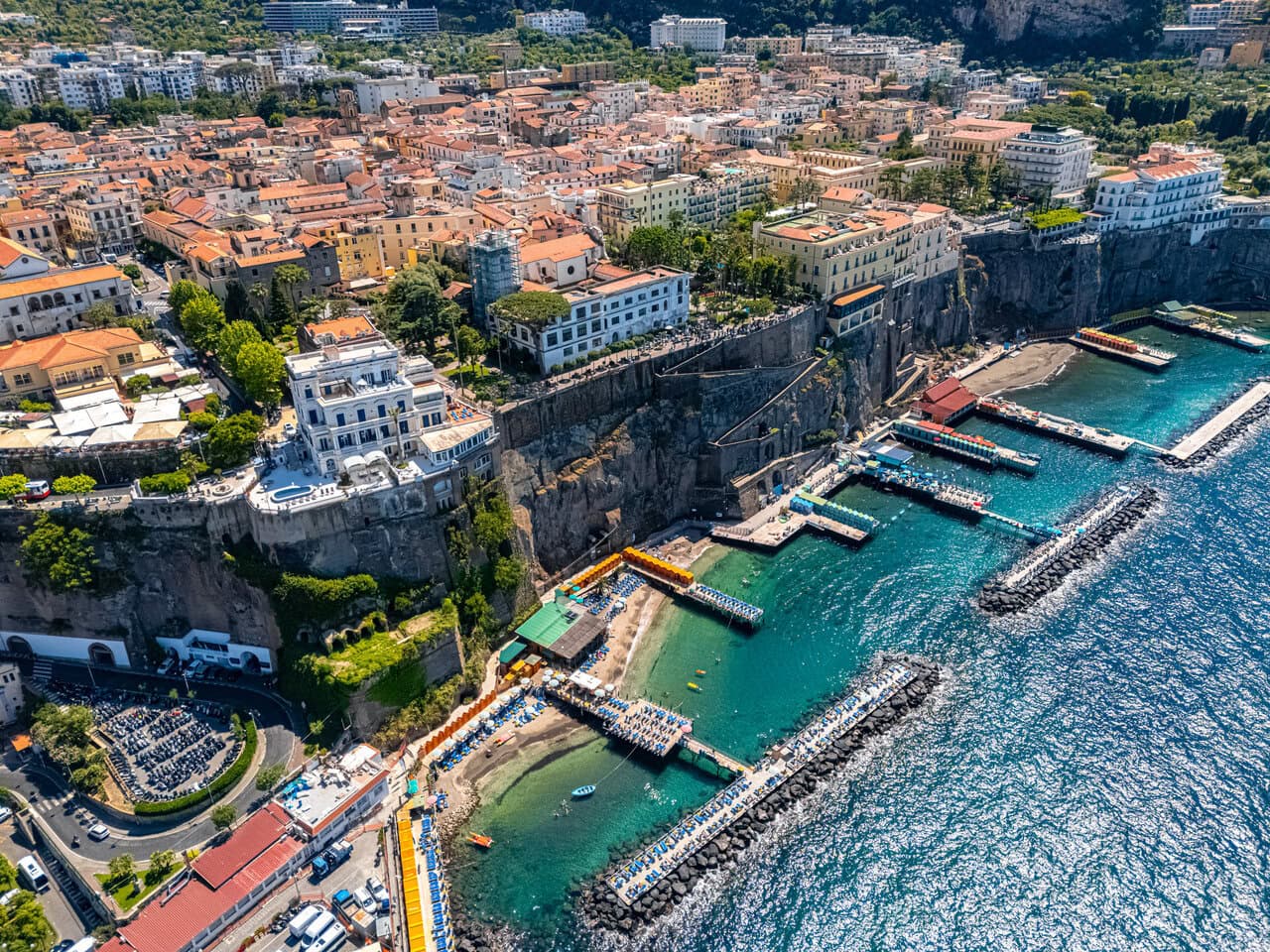
Sorrento’s beaches genuinely surprise many first time visitors, given the town’s clifftop position means you won’t find the classic sandy shoreline that a British seaside holiday might lead you to expect. Instead, swimming here typically means either a sophisticated beach club, or lido, built on platforms extending directly over the rocks, or a genuinely scenic natural cove reached by a short hike, bus ride or drive along the peninsula.
Given this, understanding what “beach” actually means around Sorrento before you arrive genuinely helps set the right expectations. Most swimming spots close to town involve pebbles or volcanic rock rather than soft sand, though the genuinely clear, clean water, which has earned Blue Flag status at several locations, more than compensates for the lack of a traditional shoreline underfoot.
This guide covers the best places to swim in and around Sorrento, from Marina Piccola and Marina Grande, the two harbours closest to town, through to Bagni della Regina Giovanna, a genuinely spectacular natural pool set among Roman ruins, Marina di Puolo, a family friendly cove a short drive along the coast, and Marina del Cantone, the genuinely favoured beach destination for locals willing to travel a little further.
Whether you’re looking for a quick dip before catching a ferry to Capri, or a full day dedicated to swimming and sunbathing further along the peninsula, this guide is built to help you choose the right spot for your specific priorities and how much effort you’re genuinely willing to put in to reach it.
Sorrento’s Beaches at a Glance
Before working through each beach in detail, it genuinely helps to see how the main options around Sorrento compare on access, atmosphere and cost, since the right choice depends heavily on how much effort you want to put in versus how much authentic, off the beaten track atmosphere you’re hoping to find on your visit.
Given that Sorrento itself sits high on the clifftop, reaching sea level at any of the closer spots genuinely involves either a set of stairs, the Sorrento Lift, or a short bus or car journey out of town, while the more distant beaches further along the peninsula require a proper excursion. Factor this into your planning, particularly if you’re travelling with young children or heavy beach gear.
The table below groups the essentials by rough cost, access and atmosphere, giving you a realistic starting point before reading the detailed sections that follow. Prices at paid beach clubs do shift by season, so treat these figures as a general guide rather than an exact quote for your specific dates.
Use this table to narrow down your options, then read the dedicated section for whichever spot catches your eye, since each one covers access routes, facilities and practical tips in considerably more depth than a simple comparison table ever could, including how to get there and what to expect once you arrive.
| Beach | Access | Cost | Best For |
|---|---|---|---|
| Marina Piccola | Sorrento Lift or stairs from town | Free areas + paid lidos, around €15-35 (£13-30 / $17-41) | Convenience, pre-ferry swim |
| Marina Grande | Short steep walk from town | Free areas + a few small lidos | Authentic, local atmosphere |
| Bagni della Regina Giovanna | 30-40 minute walk from Capo di Sorrento | Free | Scenic natural pool, Roman ruins |
| Marina di Puolo | Car, taxi or Linea A bus | Free areas + paid lidos | Families, calm shallow waters |
| Marina del Cantone | SITA bus (~45 min) or car via Sant’Agata | Free areas + paid lidos | Locals’ favourite, snorkelling, food |
Compare hotels and other places to stay in Sorrento.
Check availabilityBrowse apartments, holiday homes and self-catering stays in Sorrento.
View rentalsCompare prices for Sorrento hotels across multiple booking sites.
Check dealsMarina Piccola
Marina Piccola functions as Sorrento’s main seaside hub, home to most of the town’s beach clubs and easily reached from the historic centre via the Sorrento Lift or a short staircase descent from Villa Comunale. Given its central location, this is genuinely where most visitors staying in Sorrento itself end up spending at least part of an afternoon.
The area combines several well equipped lidos, offering sunbeds, umbrellas and changing facilities on wooden platforms extending directly over the water, alongside a narrow ribbon of dark volcanic sand and pebbles shared between the different establishments. Given how popular the spot genuinely is, arriving early during peak summer secures both a better spot on the platforms and a considerably calmer atmosphere before the crowds properly build later in the morning.
Marina Piccola also functions as Sorrento’s main port, meaning the area genuinely buzzes with activity throughout the day as ferries and hydrofoils depart for Capri, the Amalfi Coast and Naples. Many visitors combine a morning swim here with an afternoon ferry booking, making the most of the same trip down from the historic centre rather than making two separate journeys.
Given its genuine convenience and the sweeping views across the Gulf of Naples towards Mount Vesuvius, Marina Piccola suits visitors prioritising ease of access over a more secluded, authentic atmosphere, particularly those without a car who want to stay within easy walking distance of central Sorrento throughout their entire stay.
Marina Grande
Marina Grande offers a genuinely more authentic alternative to the busier Marina Piccola, a working fishing village tucked below the historic centre with its own small stretch of pebble beach and considerably fewer crowds throughout the day. Despite the similar name, this is a genuinely different location from Sorrento’s main port, and the two are easily confused by first time visitors.
Reaching Marina Grande involves a short but genuinely steep walk down from town, rewarded by colourful fishing boats, pastel houses and several excellent seafood restaurants overlooking the water. Given this walk, particularly the climb back up afterwards, the village genuinely rewards visitors with a little extra time and energy to spare, rather than those hoping for a quick, effortless dip.
The beach itself remains genuinely modest in scale, mostly pebbles with a small area suitable for swimming, but the genuinely relaxed, local atmosphere here compensates well for the lack of expansive sand or extensive facilities. A handful of small lidos operate here too, though considerably fewer than at Marina Piccola, keeping the overall atmosphere noticeably quieter and less commercial.
Given its quieter, more local character, Marina Grande genuinely suits visitors wanting an authentic afternoon swim combined with lunch at one of the harbour’s seafood restaurants, rather than a full day dedicated purely to sunbathing and beach club amenities elsewhere along the coast, particularly during the busiest weeks of summer.
Bagni della Regina Giovanna
Bagni della Regina Giovanna, or the Baths of Queen Giovanna, genuinely ranks as the most spectacular swimming spot anywhere around Sorrento, a natural pool enclosed by limestone cliffs and connected to the open sea by a striking stone archway. The setting alone genuinely justifies the walk required to reach it, even before factoring in the swim itself.
The site takes its name from a legendary medieval queen said to have swum here, though the location’s genuine history stretches back considerably further, given the ruins of a first century Roman villa, Villa Pollio Felice, still stand on the surrounding rocks overlooking the water. Exploring these ruins alongside a swim adds a genuinely rewarding historical dimension most other beaches around Sorrento simply can’t match, with views stretching out towards Naples and Vesuvius.
Reaching the site involves a narrow, occasionally uneven coastal path from Capo di Sorrento, roughly a thirty to forty minute walk from the town centre, so comfortable shoes and a reasonable level of fitness are genuinely worth bringing. Given the minimal facilities here, packing your own water and snacks is sensible, since options for buying anything on site remain genuinely limited to a small bar near the entrance.
Given the site’s genuine popularity, particularly as the day progresses, arriving early morning rewards visitors with a considerably calmer, more peaceful experience before the crowds properly build, along with better light for photographing the archway and Roman ruins together before the sun climbs higher overhead.
Marina di Puolo
Marina di Puolo offers a genuinely charming, family friendly alternative to the busier beaches closer to central Sorrento, a small fishing village and cove sitting a short drive or bus ride west along the coast towards Massa Lubrense. The gentle, shallow waters here suit families with young children particularly well, unlike some of the deeper spots closer to town.
The village itself retains a genuinely authentic character, with brightly painted fishing boats pulled up along the shore and a handful of relaxed restaurants serving fresh seafood just steps from the water. Given how much quieter Puolo genuinely is compared with Marina Piccola, it rewards visitors specifically seeking a calmer, more local atmosphere away from the busier tourist circuit.
Both public and private beach sections are available here, with several small lidos offering sunbeds and umbrellas alongside free areas for visitors happy to bring their own towel and gear. Kayak rentals also operate from the beach, offering a genuinely pleasant way to explore the surrounding coastline at your own pace during a quiet afternoon.
Given its position outside central Sorrento, reaching Marina di Puolo genuinely requires either a car, taxi or the Linea A bus from Piazza Tasso, making it a slightly less spontaneous option than the beaches within walking distance of town, but one that considerably rewards visitors willing to make the short journey out along the coast.
Marina del Cantone and Nerano
Marina del Cantone, tucked near the village of Nerano at the far tip of the Sorrentine peninsula, is genuinely the beach locals themselves head to, given how frequently Sorrento residents name it as their own favourite spot for a proper day by the sea. Reaching it requires more effort than any beach covered so far in this guide, but the reward is considerably greater too.
The beach itself is a genuinely spacious stretch of pebbles, facing south and sheltered from the wind by the mountains rising directly behind it, keeping the water calm and swimmable from as early as April through late October. The water here has earned Blue Flag status, and the clarity makes it a genuinely excellent spot for snorkelling, with plenty of marine life visible even close to shore.
Getting there from Sorrento typically means the SITA bus to Nerano, taking around forty five minutes, or driving via Sant’Agata sui Due Golfi, with a seasonal shuttle also running from the large car park there during summer. Once you arrive, a handful of restaurants serve the local speciality, spaghetti alla Nerano, a genuinely delicious dish of pasta with courgettes and provolone cheese that’s worth the trip alone.
From Marina del Cantone, a short ten minute walk leads to the sheltered Recommone Bay, while the considerably longer hike out to the protected Bay of Ieranto rewards more energetic visitors with genuinely spectacular views across to Capri from one of the most unspoiled corners of the entire peninsula.
Understanding Sorrento’s Beach Clubs (Lidos)
Understanding how beach clubs, or lidos, actually work is genuinely essential before your first swim around Sorrento, since this system differs considerably from the free, open access beaches many visitors expect from a seaside holiday. Most of the best swimming spots here operate on a paid entry basis rather than sitting entirely open to the public throughout the day.
A typical lido day pass includes a sunbed and umbrella, along with access to changing rooms, showers and often a small bar or restaurant, with prices generally ranging from around fifteen to thirty five euros depending on the season and specific venue. Given this genuine range, comparing a few options before committing is worth doing, particularly during peak summer when the busier clubs charge accordingly for their prime positions.
Most lidos also offer wooden platforms extending directly over the rocks or water, complete with ladders for easing into the sea, which genuinely solves the practical problem of Sorrento’s rocky coastline lacking much natural sand. This setup, while less traditional than a sandy beach, delivers genuinely comfortable, well organised access to swimming without the hassle of navigating slippery rocks underfoot.
For visitors on a tighter budget, free public sections do exist alongside most paid lidos, though these typically offer only bare rock or pebble access without sunbeds or facilities. Bringing your own towel, water shoes and a beach mat genuinely makes the free option considerably more comfortable for a full day spent by the water.
Search flights and useful route combinations for your trip.
View flightsChoose an Airalo eSIM and arrange mobile data before you arrive.
Browse eSIMsCheck private pickup options and plan your onward journey before arrival.
View transfersSwimming Safety and Water Conditions
The waters around Sorrento are among the cleanest in southern Italy, with several beaches along the Sorrentine Peninsula regularly receiving Blue Flag recognition for their excellent water quality and environmental standards. The Blue Flag award scheme is run internationally by the Foundation for Environmental Education, and judges bathing water quality, safety, accessibility and beach management rather than sand. The sea is typically calm throughout the main summer season, making it suitable for swimming, snorkelling and paddleboarding. Even so, understanding local conditions before heading into the water will help you enjoy your day safely.
Unlike many traditional sandy beaches, much of Sorrento’s coastline consists of volcanic rock, pebbles and man-made bathing platforms. Entering the sea can therefore be a little slippery, particularly around natural swimming spots such as Bagni della Regina Giovanna or the rocks surrounding Marina Grande. A pair of water shoes is highly recommended, both for comfort and to improve your grip when entering and leaving the water.
If you’re planning to snorkel, you’ll quickly discover why the area is so popular. The exceptionally clear water allows excellent visibility, particularly around Marina del Cantone, Bagni della Regina Giovanna and the rocky coves near Massa Lubrense. Small fish are commonly seen close to shore, although it’s worth remembering that sea urchins also inhabit many rocky areas. Avoid placing your hands or feet into gaps between rocks where you can’t clearly see.
During the summer months, qualified lifeguards supervise many of the larger lidos and organised beach clubs, although free public beaches and more remote coves often have no supervision. If you’re swimming outside designated beach areas, take extra care and avoid diving into unfamiliar water, as underwater rocks can be much closer to the surface than they appear.
Occasionally, particularly after periods of strong winds, jellyfish may drift into the Bay of Naples, although large numbers are relatively uncommon. If local warning flags or notices are displayed, it’s worth asking lifeguards or beach staff about current conditions before entering the water.
As with anywhere along the Mediterranean, avoid swimming during rough weather or when red warning flags are flying. The sea usually looks inviting, but conditions can change surprisingly quickly. A little common sense, suitable footwear and plenty of drinking water are often all that’s needed for a safe and enjoyable day by the sea.
Can You Swim in Sorrento?
One of the biggest surprises for first-time visitors is discovering that yes, you absolutely can swim in Sorrento. Although the town doesn’t have the long sandy beaches found elsewhere in Italy, it offers some of the clearest water anywhere along the Bay of Naples, with swimming opportunities ranging from modern beach clubs to secluded natural coves hidden beneath dramatic limestone cliffs.
The key difference is that Sorrento’s coastline is built around cliffs rather than sand. Instead of sprawling beaches, you’ll find a mixture of pebble coves, volcanic rocks, wooden bathing platforms and natural sea pools. Once visitors understand this, many actually come to prefer Sorrento’s style of swimming, particularly because the water is so exceptionally clear.
The swimming season generally runs from late May until early October, with the warmest sea temperatures arriving during July, August and September. Even in early autumn, the Mediterranean often remains pleasantly warm, making September one of the best months to enjoy the beaches after the peak summer crowds have begun to disappear.
If you’re looking for the easiest place to swim, Marina Piccola offers excellent facilities together with beach clubs, ladders into the sea and nearby cafés. Those seeking a more natural experience should head to Bagni della Regina Giovanna, where a sheltered lagoon surrounded by Roman ruins creates one of the most spectacular swimming locations in Campania. Families often prefer the calmer waters of Marina di Puolo, while snorkellers regularly choose Marina del Cantone for its excellent visibility.
It’s worth remembering that many beaches involve pebbles or rocks rather than soft sand, so bringing water shoes is a sensible idea. Once you’re in the water, however, you’ll discover why so many visitors describe swimming around Sorrento as one of the highlights of their trip. With beautiful scenery, remarkably clean water and unforgettable views towards Mount Vesuvius, it’s an experience that’s very different from a traditional beach holiday, but no less rewarding.
Beach Clubs or Free Beaches: Which Should You Choose?
One of the first decisions you’ll face when heading to the coast is whether to spend the day at one of Sorrento’s private beach clubs, known locally as lidos, or simply use one of the free public beaches. Neither option is necessarily better than the other, and the right choice depends entirely on your budget, comfort and the type of beach day you’re hoping to enjoy.
Choosing a lido provides a much more comfortable experience. Your entrance fee normally includes a sunbed, umbrella, access to changing rooms, showers, toilets and often waiter service or a beachside restaurant. Many beach clubs also have wooden platforms built directly above the sea, allowing easy access via ladders without needing to negotiate slippery rocks. If you’re planning to spend an entire day relaxing by the water, many visitors feel the additional cost is well worth paying.
Free beaches, on the other hand, offer exactly what the name suggests. You can simply arrive with your own towel and enjoy the sea without paying an entrance fee. This makes them ideal for visitors wanting a quick swim, travelling on a tighter budget or simply preferring a more independent experience. However, facilities are limited, shaded areas are scarce and the best spots are often claimed early during the summer.
The choice also depends on the beach itself. At Marina Piccola, the beach clubs dominate much of the waterfront, making a paid lido the easiest option for a full day. Marina Grande offers a better balance between public areas and smaller beach clubs, while places such as Bagni della Regina Giovanna remain completely natural with no organised facilities beyond a small café near the entrance.
For many visitors, the perfect solution is to combine both experiences. Spend one day enjoying the comfort of a traditional Italian lido, then dedicate another to discovering one of Sorrento’s beautiful natural swimming spots. That way you’ll experience both sides of the Sorrentine coastline and quickly understand why each has its own loyal supporters.
Which Sorrento Beach is Right for You?
With so many different swimming spots around Sorrento, choosing the right one can feel surprisingly difficult. Fortunately, each beach has its own personality, making it easier to find one that matches exactly what you’re looking for.
If convenience is your priority, Marina Piccola is the obvious choice. Located directly below the town centre and easily reached via the Sorrento Lift, it’s perfect if you want a swim before or after catching a ferry or simply don’t want to travel far.
Visitors searching for the most spectacular scenery should head straight to Bagni della Regina Giovanna. The combination of Roman ruins, limestone cliffs and a crystal-clear natural lagoon creates one of the most beautiful swimming locations anywhere in southern Italy. The walk is longer, but the reward is unforgettable.
For a more authentic local atmosphere, Marina Grande remains hard to beat. The small fishing harbour, colourful boats and excellent seafood restaurants make it an ideal place to combine swimming with a leisurely lunch while enjoying a quieter side of Sorrento.
Families with younger children will generally find Marina di Puolo the best option thanks to its gently shelving water, relaxed atmosphere and mixture of free and private beach areas. It’s also easier for children to paddle here than at some of the rockier beaches closer to the town centre.
If you’re interested in snorkelling, Marina del Cantone near Nerano is widely regarded as the top choice. The exceptionally clear water and rocky seabed attract abundant marine life, while the surrounding scenery makes the extra journey worthwhile.
Ultimately, there isn’t a single “best” beach in Sorrento. Instead, there’s a best beach for your type of holiday. Whether you want convenience, family-friendly facilities, dramatic scenery, excellent food or peaceful swimming, the Sorrentine Peninsula offers a beach that fits perfectly.

Rupert’s Handy Travel Tips
Sorrento’s beaches reward a bit of planning, so here’s what I’d want to know before heading down.
- Pack water shoes for any of these spots: most swimming areas involve pebbles or rock rather than soft sand.
- Book a lido sunbed ahead in peak summer: the best spots at Marina Piccola fill up quickly on hot days.
- Arrive early at Bagni della Regina Giovanna: it gets genuinely busy by midday, and the walk is more pleasant in cooler morning air.
- Bring cash for smaller lidos: not every beach club at Marina Grande or Puolo accepts card payment.
- Try spaghetti alla Nerano at Marina del Cantone: it’s the local speciality and genuinely worth the journey out there.
Want to meet the reindeer behind our travel tips? Find out more in our page Who is Rupert?.




Frequently Asked Questions
Does Sorrento have sandy beaches?
No. Most swimming spots around Sorrento involve pebbles, volcanic rock or beach club platforms rather than natural sand.
What is a lido in Sorrento?
A lido is a paid beach club offering sunbeds, umbrellas and facilities, typically built on platforms extending over the rocks or water.
How much does a beach club cost in Sorrento?
A typical day pass with a sunbed and umbrella costs around fifteen to thirty five euros, depending on the season and venue.
Is Bagni della Regina Giovanna worth the walk?
Yes. The natural pool and Roman ruins offer one of the most spectacular settings anywhere around Sorrento.
Which Sorrento beach is best for families?
Marina di Puolo, thanks to its gentle, sheltered waters and relaxed, family friendly atmosphere.
Which beach do locals actually go to?
Marina del Cantone, near Nerano, is widely considered the beach Sorrento residents themselves favour for a full day by the sea.
Further Reading
For an overview of the town itself, our Things to Do in Sorrento guide covers Piazza Tasso, Marina Grande and the town’s lemon and craft traditions, while our Day Trips from Sorrento guide covers Capri, Pompeii and the wider Amalfi Coast.
Planning to catch a ferry from Marina Piccola? Our Sorrento Ferry Guide covers routes, tickets and timetables in full.
If you’re connecting through Naples, our Naples Airport Transfer Guide and Naples Ferry Routes Guide cover onward connections to Capri, Ischia and beyond.
If you’re travelling around Italy more widely, our Best eSIM Apps Guide will help you stay connected wherever your Campania adventures take you.