Reviewed by our editorial team Updated
Why the French Alps Ski Railway Line Is One of Europe’s Best Ski Routes
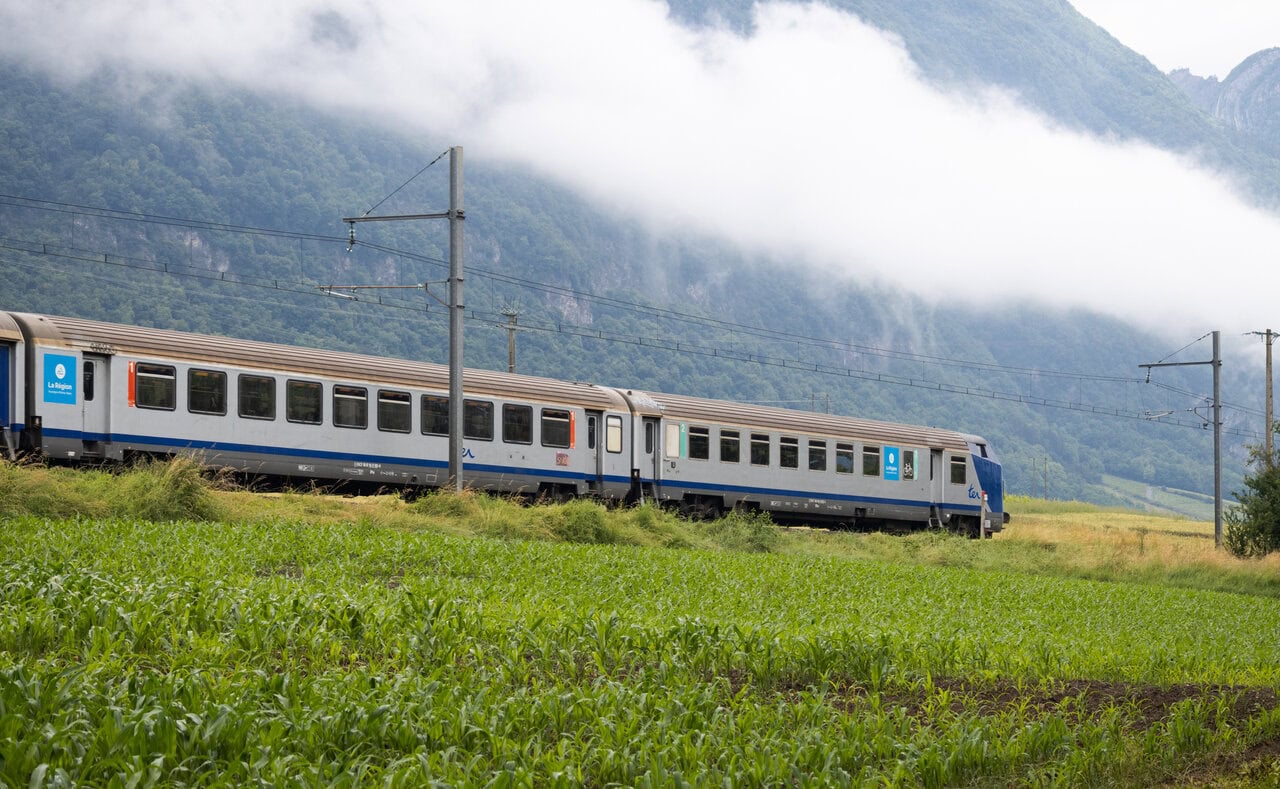
The French Alps ski railway line is one of Europe’s most underrated transport corridors. Stretching from Chambéry through Albertville, Moûtiers, Aime-la-Plagne, Landry, and finally Bourg-Saint-Maurice, it provides direct access to some of the continent’s most famous ski resorts without the need to drive mountain roads or rely entirely on airport transfers.
For decades, skiers have used this railway to reach destinations including Val d’Isère, Tignes, Les Arcs, La Plagne, Courchevel, Méribel, Val Thorens, Les Menuires, and many other Alpine resorts. During the winter season, the line becomes one of the busiest ski transport routes in Europe, carrying travellers arriving from Paris, London, Geneva, Lyon, and beyond.
One of the biggest advantages of the route is that it takes passengers deep into the heart of the Tarentaise Valley, placing them much closer to the mountains than airports alone can. Instead of facing long road transfers from major airports, travellers can often complete most of their journey by rail before using a short coach, taxi, or transfer service to reach their final resort.
The route also works exceptionally well for international travellers. Whether arriving via Eurostar, a TGV from Paris, a flight into Geneva Airport, or a connection from Lyon-Saint Exupéry Airport, the railway provides a common spine that links together many of the Alps’ most important winter destinations.
What Is the French Alps Ski Railway Line?
The French Alps ski railway line refers to the railway corridor that runs from Chambéry through the heart of the Tarentaise Valley before terminating at Bourg-Saint-Maurice, one of the most important ski gateways in Europe.
The journey from Chambéry to Bourg-Saint-Maurice takes approximately 2 hours, covering around 120 kilometres of Alpine scenery. Along the way, trains stop at a series of stations that provide access to many of the French Alps’ most famous ski resorts.
| Station | Position on Line | Major Resorts Served |
|---|---|---|
| Chambéry | Gateway to the Alps | Regional ski areas and rail connections |
| Albertville | Entrance to the Tarentaise Valley | Les Saisies, Megève area |
| Moûtiers | Three Valleys gateway | Courchevel, Méribel, Val Thorens, Les Menuires |
| Aime-la-Plagne | La Plagne gateway | La Plagne, Belle Plagne, Plagne Centre |
| Landry | Paradiski gateway | Peisey-Vallandry, Montchavin, Les Coches |
| Bourg-Saint-Maurice | Terminus | Les Arcs, Tignes, Val d’Isère, La Rosière, Sainte-Foy |
Although trains serve the route throughout the year, the railway becomes particularly important during winter when additional ski services, TGVs, and international connections operate to meet seasonal demand. During peak ski weekends, the line carries thousands of passengers arriving from across France, the UK, and the rest of Europe.
What makes the railway unique is that every station brings travellers closer to the slopes. By the time trains reach Moûtiers, passengers are within easy reach of the world’s largest ski area, the Three Valleys. Further along the line, Aime-la-Plagne, Landry, and Bourg-Saint-Maurice provide access to the huge ski domains of Paradiski, Tignes–Val d’Isère, and numerous other Alpine resorts.
For many travellers, the journey begins long before Chambéry. Visitors arriving from Paris, London, Geneva, Lyon, Grenoble, or Turin typically join the route via connecting rail services. However, from a ski-travel perspective, Chambéry marks the true start of the Alpine railway, where the route leaves the lowlands behind and begins its climb towards the mountains.
Best if you want daily housekeeping and a front desk. Filter by area first, then by price.
Check availabilityBest for groups who want one address and separate bedrooms rather than three hotel rooms.
See holiday homesBest if you have already picked a hotel. Checks the big booking sites for the same room and shows who is cheapest.
Check dealsRoute Overview and Key Stations
The railway serves a huge number of ski resorts spread across several major ski areas. Some stations provide access to dozens of resorts, while others primarily serve a specific valley or ski domain.
| Station | Major Resorts Served | Typical Transfer Time |
|---|---|---|
| Chambéry | La Féclaz, Le Revard, regional resorts | 20–45 mins |
| Albertville | Les Saisies, Flumet, Megève area | 30–60 mins |
| Moûtiers | Courchevel, Méribel, Val Thorens, Les Menuires, La Tania | 20–60 mins |
| Aime-la-Plagne | La Plagne, Belle Plagne, Plagne Bellecôte | 20–40 mins |
| Landry | Peisey-Vallandry, Montchavin, Les Coches | 15–30 mins |
| Bourg-Saint-Maurice | Les Arcs, Tignes, Val d’Isère, La Rosière, Sainte-Foy | 7–60 mins |
The busiest stations are generally Moûtiers and Bourg-Saint-Maurice, which serve some of the largest and most internationally recognised ski resorts in the Alps.
How to Reach the French Alps Ski Railway Line
The French Alps ski railway line effectively begins at Chambéry, the main gateway between France’s national rail network and the railway that serves the ski resorts of the Tarentaise Valley. While some seasonal services continue beyond Chambéry, many travellers arrive on a high-speed train, international rail service, or flight before transferring onto the local railway that continues towards Albertville, Moûtiers, Aime-la-Plagne, Landry, and Bourg-Saint-Maurice.
For travellers arriving from elsewhere in France, Paris Gare de Lyon is usually the starting point. Regular TGV services connect the French capital with Chambéry in around 3 hours, providing one of the fastest ways to reach the Alps without flying. Once in Chambéry, passengers can transfer onto regional services that continue deeper into the mountains.
For international visitors, Geneva Airport is often the easiest gateway. The airport has its own railway station located beneath the terminal, allowing passengers to travel by train to Chambéry in approximately 1 hour 30 minutes on the fastest services, and longer on itineraries that require a change. Thanks to its extensive flight network and close proximity to the Alps, Geneva has become one of Europe’s most important arrival points for ski holidays.
Lyon-Saint Exupéry Airport offers a similar journey time of around 70 minutes to Chambéry and has one major advantage over many airports. A dedicated TGV station is built directly into the airport complex, allowing passengers to step off a flight and onto a train without entering Lyon city centre. This makes Lyon one of the most efficient access points for travellers arriving from elsewhere in Europe.
Although less well known internationally, Grenoble is actually the closest major city to the railway line. Travelling between Grenoble and Chambéry takes approximately 45 minutes by train, making it a convenient option for visitors arriving through Grenoble Alpes-Isère Airport or spending time in the city before continuing to the mountains.
Travellers arriving via Turin can also access the line, although the journey is longer. Rail connections between Turin and Chambéry typically take around 2 hours 40 minutes, crossing the Alps before joining the French rail network. While this is less common than arriving through Geneva or Lyon, it can be a useful alternative for visitors combining destinations in both the French and Italian Alps.
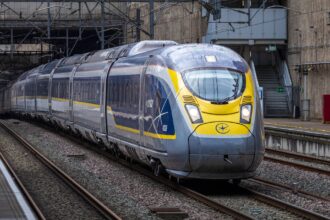
British travellers have an additional option. Although the original direct Eurostar Snow Train no longer operates in its former format, it remains possible to travel from London St Pancras International to the Alps entirely by rail. Most journeys now involve travelling to Lille Europe before connecting onto services towards Chambéry and the wider French Alps ski railway line. This remains one of the most comfortable ways to reach the mountains and avoids many of the baggage restrictions associated with air travel.
Regardless of whether you arrive from Paris, London, Geneva, Lyon, Grenoble, or Turin, the goal is essentially the same. Reach Chambéry, transfer if necessary, and continue along the French Alps ski railway line towards the station that sits closest to your chosen resort. From there, local buses, resort shuttles, taxis, and transfer companies such as Alps2Alps complete the final stage of the journey to the slopes.
| Starting Point | Typical Time to Chambéry | Main Method | Best For |
|---|---|---|---|
| Paris Gare de Lyon | ~3 hours | Direct TGV | Travellers already in France |
| Geneva Airport | ~1 hr 30 mins | Train via Geneva Cornavin | Most international visitors |
| Lyon Airport | ~70 minutes | TGV / Rail Connection | Easy air-to-rail transfers |
| Grenoble | ~45 minutes | Regional Train | Closest major city |
| Turin | ~2 hours 40 minutes | Cross-border Rail | Combining French & Italian Alps |
| London | Via Lille | Eurostar + Connecting Train | Rail travellers from the UK |
Chambéry Station
Chambéry-Challes-les-Eaux is the gateway to the French Alps ski railway line and one of the most important railway interchanges in south-eastern France. Almost every traveller arriving from Paris, Lyon, Geneva, Grenoble, or Turin will pass through Chambéry before continuing deeper into the mountains.
The station sits in the historic city of Chambéry, the former capital of Savoy, and acts as the point where high-speed and long-distance services connect with Alpine rail routes. Many TGV services terminate here before passengers transfer onto regional trains serving the Tarentaise Valley, although some seasonal winter services continue further into the Alps.
For skiers, Chambéry serves two functions. Firstly, it acts as the transfer point onto the railway serving Albertville, Moûtiers, Aime-la-Plagne, Landry, and Bourg-Saint-Maurice. Secondly, it provides access to nearby resorts and ski areas in the Bauges Massif and surrounding mountains.
The station itself is well equipped with waiting areas, shops, cafés, luggage facilities, and onward transport options. Taxis, local buses, and private transfer operators are available outside the station, while Alps2Alps and other transfer providers offer direct transport to numerous ski resorts.
Although relatively few international visitors end their journey here, Chambéry remains the most important station on the route because it connects the wider European rail network with the heart of the French Alps.

Albertville Station
Approximately 35 minutes beyond Chambéry lies Albertville, the station that marks the entrance to the Tarentaise Valley. Best known for hosting the 1992 Winter Olympics, Albertville occupies a strategic position where several Alpine valleys converge.
For travellers heading towards the mountains, Albertville is often the first station that truly feels like a ski destination. Snow-capped peaks begin to dominate the landscape and many passengers disembark here to access resorts located outside the main railway corridor.
The station provides convenient access to destinations including Les Saisies, Notre-Dame-de-Bellecombe, Flumet, Crest-Voland, and parts of the wider Espace Diamant ski area. Transfer times are generally shorter than those from the larger airports, making Albertville an attractive arrival point for these resorts.
Although smaller than Chambéry, the station offers waiting facilities, taxi services, bus connections, and transfer pick-up points. During the ski season, additional transport services are often provided to coincide with arriving trains.
Many travellers continue beyond Albertville towards the larger resorts further up the valley, but for visitors staying in the eastern Beaufortain region, Albertville can significantly reduce transfer times and simplify the final stage of the journey.
Moûtiers Station
If Chambéry is the gateway to the Alps, Moûtiers-Salins-Brides-les-Bains is the gateway to the world’s largest ski area. Located around 1 hour 15 minutes after leaving Chambéry, Moûtiers is the principal railway station for the famous Three Valleys ski region.
Every winter, thousands of skiers arrive here before transferring onwards to some of the most famous resorts in Europe. The station serves as the primary rail gateway for Courchevel, Méribel, Val Thorens, Les Menuires, Saint-Martin-de-Belleville, La Tania, and Brides-les-Bains.
What makes Moûtiers particularly important is its role as the hub for the Cars Région Savoie ski bus network. Upon arrival, passengers can transfer directly to dedicated winter services serving the surrounding resorts.
| Route | Destination |
|---|---|
| S61 | Doucy |
| S62 | Valmorel |
| S63 | Les Menuires & Val Thorens |
| S64 | Méribel |
| S65 | Courchevel |
| S66 | Champagny-en-Vanoise & Pralognan-la-Vanoise |
These routes operate throughout the winter season and are specifically designed to connect arriving rail passengers with the surrounding ski resorts. For many visitors, this means completing most of the journey by train before using a relatively short final transfer into the mountains.
During winter weekends, the station becomes one of the busiest ski transport hubs in Europe. Coaches line up outside the station, private transfer companies operate continuous services, and taxis are readily available. Visitors using Alps2Alps will find Moûtiers to be one of the company’s most important pickup points.
For many travellers, Moûtiers represents the perfect compromise. It places passengers close to the slopes while avoiding the challenges of driving mountain roads and navigating resort parking.
Aime-la-Plagne Station
Continuing further up the valley, the next major stop is Aime-la-Plagne, located approximately 20 minutes beyond Moûtiers. This station serves as the primary rail gateway to the vast La Plagne ski area and several surrounding resorts.
For visitors staying in La Plagne, Belle Plagne, Plagne Bellecôte, Plagne Centre, Plagne Soleil, Plagne Villages, Aime-la-Plagne is usually the most convenient railway station. Champagny-en-Vanoise, despite being part of the La Plagne ski area, is reached from Moûtiers rather than Aime. Resort transfer times are generally shorter than those from Moûtiers, helping visitors reach the slopes more quickly.
During the winter season, Cars Région Savoie operates dedicated ski bus services from the station transport hub. Route S70 serves Montalbert, while Route S71 connects the station with the various La Plagne resort villages. These routes provide a straightforward public transport connection between the railway and the mountain resorts.
The station is smaller than Chambéry and Moûtiers but remains well geared towards winter tourism. Local buses, private transfer operators, taxis, and hotel shuttles meet arriving trains and transport passengers directly to the resorts above.
One of the key advantages of Aime-la-Plagne is its proximity to the mountain. Instead of spending an hour or more on a transfer from a distant airport, many visitors can be checking into their accommodation within a relatively short time of leaving the station.
For travellers heading specifically to La Plagne, Aime-la-Plagne is often the ideal point to leave the railway and begin the final ascent into the mountains.
Best if you can move a day either way. Shows how the fare changes across the month.
Compare flightsBest if you want maps and messaging working the moment you switch your phone on.
See eSIM plansBest after a long flight or a late landing. Price agreed before you travel, and no taxi queue.
Check transfersLandry Station
Located approximately 10 minutes beyond Aime-la-Plagne, Landry Station is one of the lesser-known stops on the French Alps ski railway line, yet it provides access to some of the most popular resorts within the vast Paradiski ski area.
While many international visitors continue to Bourg-Saint-Maurice, Landry can be a far more convenient arrival point for travellers staying in Peisey-Vallandry, Montchavin, Les Coches, and other villages positioned on the Vanoise Express side of Paradiski. Leaving the train here can significantly reduce transfer times compared with travelling to Bourg-Saint-Maurice and then doubling back by road.
The station is served by Cars Région Savoie Route S72, which connects Landry directly with Montchavin and Les Coches. This dedicated winter route provides one of the most efficient public transport links into this section of Paradiski and is particularly useful for visitors staying close to the Vanoise Express.
The station itself is relatively small, but it becomes remarkably busy during the winter season as skiers and snowboarders arrive for nearby resorts. Local buses, hotel shuttles, taxis, and private transfer operators meet arriving trains, providing onward connections into the mountains.
Although it lacks the scale and facilities of Moûtiers or Bourg-Saint-Maurice, Landry performs an important role on the line by providing direct access to part of one of Europe’s largest interconnected ski domains. For travellers staying in this section of Paradiski, it is often the most logical station to use.
Bourg-Saint-Maurice Station
At the end of the French Alps ski railway line lies Bourg-Saint-Maurice, the most important ski railway station in the French Alps and the terminus of the route. For many travellers, reaching Bourg-Saint-Maurice means they are only minutes away from some of Europe’s most famous ski resorts.
The station sits deep within the Tarentaise Valley and acts as the gateway to Les Arcs, Tignes, Val d’Isère, La Rosière, and Sainte-Foy-Tarentaise. During the winter season, thousands of passengers arrive here every weekend on TGV services, regional trains, and international connections.
One of the station’s standout features is the Les Arcs Funicular, located immediately beside the station building. This fully automated mountain railway transports passengers from Bourg-Saint-Maurice to Arc 1600 in around 7 minutes, providing one of the fastest ski-resort transfers anywhere in Europe. Current timetables and fares are published by the Les Arcs and Peisey-Vallandry tourist office.
For travellers heading beyond Les Arcs, the station serves as the hub for the Cars Région Savoie ski bus network. The principal winter routes are:
| Route | Destination |
|---|---|
| S80 | La Rosière |
| S81 | Sainte-Foy-Tarentaise |
| S82 | Val d’Isère |
| S83 | Tignes |
Passengers travelling to Tignes use Route S83, while visitors heading to Val d’Isère use Route S82. Routes S80 and S81 provide access to La Rosière and Sainte-Foy-Tarentaise, making Bourg-Saint-Maurice one of the most important ski transport hubs in Europe.
Because Bourg-Saint-Maurice serves so many internationally recognised resorts, it has developed extensive infrastructure for ski travellers. The station offers waiting facilities, luggage services, cafés, shops, taxis, ski buses, and numerous private transfer providers.
For many visitors, Bourg-Saint-Maurice represents the perfect example of why rail travel works so well in the Alps. Instead of navigating mountain roads for hundreds of kilometres, passengers can relax on the train and arrive within a short transfer of some of the world’s best skiing.
Resort Transfer Options from the Railway Line
Once travellers leave the train, the final stage of the journey is usually completed using the dedicated Cars Région Savoie ski bus network or a private transfer service. These routes are specifically designed to connect railway stations with nearby ski resorts and operate throughout the winter season.
At Moûtiers, Routes S61 to S66 serve destinations including Courchevel, Méribel, Val Thorens, Les Menuires, Valmorel, Doucy, Champagny-en-Vanoise, and Pralognan-la-Vanoise.
At Aime-la-Plagne, Routes S70 and S71 provide connections to Montalbert and the various La Plagne resort villages.
At Landry, Route S72 connects the station with Montchavin and Les Coches, providing direct access to part of the Paradiski ski area.
At Bourg-Saint-Maurice, Routes S80 to S83 provide access to La Rosière, Sainte-Foy-Tarentaise, Val d’Isère, and Tignes. Visitors heading to Les Arcs can instead use the dedicated Les Arcs Funicular, one of the fastest rail-to-ski connections in Europe.
Private transfer companies provide another popular solution. For families, groups, and travellers carrying significant amounts of luggage, a direct transfer often represents the simplest option. Rather than navigating multiple buses or resort shuttles, passengers are collected directly from the station and transported straight to their accommodation.
One of the most useful operators for international visitors is Alps2Alps, which serves a huge number of resorts across the French Alps. From stations such as Chambéry, Albertville, Moûtiers, Aime-la-Plagne, Landry, and Bourg-Saint-Maurice, travellers can arrange direct transfers to destinations throughout the region. Shared shuttle transfers from Geneva Airport to Courchevel typically start from around £55 ($73/€64) per person, rising to £70-£90 ($92-$119/€81-€104) on peak Saturday changeover days.
The best transfer option ultimately depends on your destination, budget, and group size. However, one of the strengths of the French Alps ski railway line is that every major station has been designed around the needs of winter travellers, making the final journey to the slopes remarkably straightforward.

Best Station for Each Major Ski Resort
Choosing the correct station can dramatically reduce your transfer time and simplify your journey. The table below shows the most convenient railway station for many of the French Alps’ best-known ski resorts.
| Ski Resort | Best Railway Station | Typical Transfer Time |
|---|---|---|
| Courchevel | Moûtiers | 30–45 mins |
| Méribel | Moûtiers | 25–40 mins |
| Val Thorens | Moûtiers | 45–60 mins |
| Les Menuires | Moûtiers | 40–55 mins |
| Saint-Martin-de-Belleville | Moûtiers | 25–40 mins |
| La Tania | Moûtiers | 25–35 mins |
| La Plagne | Aime-la-Plagne | 20–35 mins |
| Belle Plagne | Aime-la-Plagne | 30–40 mins |
| Champagny-en-Vanoise | Moûtiers | 40–55 mins |
| Peisey-Vallandry | Landry | 15–25 mins |
| Montchavin | Landry | 15–25 mins |
| Les Coches | Landry | 15–25 mins |
| Les Arcs | Bourg-Saint-Maurice | 7 mins via Funicular |
| Tignes | Bourg-Saint-Maurice | 45–60 mins |
| Val d’Isère | Bourg-Saint-Maurice | 60–75 mins |
| La Rosière | Bourg-Saint-Maurice | 35–50 mins |
| Sainte-Foy-Tarentaise | Bourg-Saint-Maurice | 25–35 mins |
Understanding which station serves your resort is one of the easiest ways to make your ski holiday smoother. In many cases, leaving the train one stop earlier can save considerable time and avoid unnecessary road travel.
How to Buy Tickets for the French Alps Ski Railway Line
Booking tickets for the French Alps ski railway line is generally straightforward, although the process depends on where your journey begins and whether you are travelling during the busy winter ski season.
The official operator for most services is SNCF, and tickets can be purchased directly through the official SNCF booking channels, with one-way second-class fares to Bourg-Saint-Maurice starting from around €49 (£42/$56). This is often the first place that new services appear when timetables are released, particularly for winter ski trains and seasonal TGV services.
However, many international travellers find it easier to use Omio, which allows you to compare routes, fares, and journey times in one place. Rather than searching multiple operators separately, Omio can display available rail options from cities such as Paris, Geneva, Lyon, Turin, and many other European destinations. For visitors unfamiliar with the French rail network, this can make the booking process considerably simpler.
For journeys starting in the UK, travellers will normally need to book both their Eurostar journey and their onward French rail connections. Depending on the route and travel date, these may appear as separate bookings or as part of a wider itinerary.
During the ski season, especially around Christmas, New Year, February half-term, and major European school holidays, booking as early as possible is strongly recommended. Popular services to Moûtiers and Bourg-Saint-Maurice can sell out weeks in advance, particularly on Fridays, Saturdays, and Sundays.

Travel by Train to your destination with Omio
For rail journeys involving your destination, Omio gives you a single place to search available services and compare different travel options.
It can simplify planning when several train companies operate along your route, or when you want to compare rail, coach and flight connections.
Scan to open
on your phone

Alps2Alps Ski Transfers from the French Alps Ski Railway Line
While the French Alps ski railway line gets you remarkably close to the mountains, most travellers will still need to complete a final transfer from the station to their chosen resort. Depending on where you are staying, this could be anything from a short 7-minute funicular ride to Les Arcs from Bourg-Saint-Maurice to a longer mountain transfer to destinations such as Val Thorens, Val d’Isère, or Courchevel.
This is where Alps2Alps can be particularly useful. The company specialises in ski transfers throughout the Alps and serves many of the destinations connected to the French Alps ski railway line. Rather than navigating local bus timetables, joining taxi queues, or carrying ski equipment between multiple transport connections, travellers can arrange a transfer in advance and travel directly from the station to their accommodation.
Alps2Alps operates from all of the major stations along the route, including Chambéry, Albertville, Moûtiers, Aime-la-Plagne, Landry, and Bourg-Saint-Maurice. This means visitors heading to resorts such as Courchevel, Méribel, Val Thorens, Les Menuires, La Plagne, Peisey-Vallandry, Les Arcs, Tignes, Val d’Isère, La Rosière, and Sainte-Foy-Tarentaise can often arrange a direct transfer for the final stage of their journey.
For many travellers, the biggest advantage is convenience. Instead of planning separate rail, bus, and local transport connections, the transfer can be coordinated around your train arrival time. This is especially valuable during busy periods such as Christmas, New Year, and the February school holidays, when resort transport services can become extremely busy. Families, groups, and travellers carrying skis or snowboards often find that a pre-booked transfer removes much of the stress from arrival day.
Typical transfer times range from around 15–25 minutes from Landry to Peisey-Vallandry, 20–35 minutes from Aime-la-Plagne to La Plagne, 25–45 minutes from Moûtiers to Méribel or Courchevel, and 45–75 minutes from Bourg-Saint-Maurice to Tignes and Val d’Isère. By leaving the train at the correct station and arranging your onward transfer in advance, you can significantly reduce overall travel time and get onto the slopes more quickly.
If you’re planning to use the French Alps ski railway line this winter, it is worth checking transfer availability before you travel. Alps2Alps covers many of the resorts served by the railway and allows you to organise your station-to-resort transport before leaving home.
Best if you would rather spend the money on the trip than on the room. Compare hostels by location and rating.
Search hostelsBest for anyone flying more than once or twice a year. Handles the compensation claim so you are not chasing the airline.
See AirHelp+Best if your room is not ready yet. Left luggage booked in advance, so you are not hunting for a locker.
Check storagePlan This Ski Transfer with Alp2Alps
Need a simple way from the airport or train station to your ski resort? Rupert recommends comparing your public transport options first, then checking a door-to-door ski transfer if you are carrying skis, travelling with family, arriving late, or heading to a resort where bus timings are awkward.
Alps2Alps can help with private and shared transfers from major Alpine gateways to ski resorts across France, Switzerland, Austria and Italy.
Train vs Flying for a French Alps Ski Holiday
Choosing between the French Alps ski railway line and flying directly to a mountain airport is no longer as straightforward as it once was. While flying may initially appear faster, the reality is that once airport transfers, security queues, baggage collection, and road journeys are included, the overall time difference is often far smaller than many travellers expect.
For travellers starting in London, rail travel has become increasingly attractive. A journey using Eurostar and onward Alpine rail services allows passengers to travel from city centre to mountain station without worrying about baggage restrictions, airport security delays, or winter road conditions. Skis and snowboards can be transported far more easily than on many airlines, while passengers can move around freely during the journey, enjoy proper meals, and work or relax en route.
Flying still offers advantages for travellers coming from further afield. Airports such as Geneva, Lyon, Grenoble, and Turin provide extensive international flight networks and can often reduce overall journey times for visitors arriving from outside Western Europe. However, the final stage of the trip frequently involves lengthy coach journeys, shared transfers, or expensive private transport through mountain roads that can become congested during peak weekends.
The environmental difference is also significant. Rail travel generally produces substantially lower emissions than short-haul flights, making the railway an increasingly popular choice amongst travellers seeking a more sustainable ski holiday. Combined with the comfort of travelling directly into the Alps rather than stopping at an airport on the edge of the region, the railway offers a compelling alternative to flying.
Ultimately, the best option depends on where your journey begins. For travellers already in France, Switzerland, Belgium, the Netherlands, Germany, or the UK, the French Alps ski railway line often provides one of the most comfortable and stress-free routes to the mountains.
Essential Apps for French Alps Rail Travel
A handful of carefully chosen travel apps can make using the French Alps ski railway line considerably easier. From booking tickets and checking timetables to arranging transfers and staying connected in the mountains, the right apps can save both time and stress.
For rail bookings, Omio is particularly useful because it allows travellers to compare routes, timetables, and fares across multiple operators. Visitors travelling from Paris, Geneva, Lyon, or other European cities can use the platform to organise much of their rail journey before departure.
Travellers using French rail services should also consider SNCF Connect, which provides timetable information, ticket purchases, live updates, and platform details across the French rail network. During busy winter weekends, having access to real-time information can be extremely helpful.
For resort transfers, Alps2Alps provides access to a large network of transfer services covering many of the destinations served by the railway line. Booking transfers before arrival can remove much of the uncertainty from the final stage of the journey.
Navigation is straightforward with Google Maps, while travellers heading into the mountains may also benefit from downloading the official app for their ski resort. Many resorts provide lift status information, piste maps, weather forecasts, live webcams, and resort transport updates through their own applications.
International visitors should strongly consider arranging mobile data before departure. A travel eSIM can provide immediate connectivity throughout France and neighbouring countries, making it easier to access tickets, transfer bookings, accommodation details, and live travel updates without relying entirely on public Wi-Fi networks.

Rupert’s Handy Travel Tips
Planning to use the French Alps ski railway line? Here are a few useful tips to make your journey smoother:
- Check your station carefully: Many travellers automatically stay on the train until Bourg-Saint-Maurice when a station such as Moûtiers, Aime-la-Plagne or Landry would leave them much closer to their resort.
- Book early for peak ski weekends: Friday evenings, Saturdays and school holiday periods can be extremely busy, particularly on services heading towards Bourg-Saint-Maurice.
- Arrange your transfer before travelling: Resort buses and Alps2Alps transfers can fill up during busy periods, especially around Christmas, New Year and February half-term.
- Allow time for connections at Chambéry: While many journeys are straightforward, some itineraries require a change of train before continuing up the Tarentaise Valley.
- Travel light where possible: Although trains are generally easier than planes for ski equipment, you’ll still appreciate having manageable luggage when transferring between stations and resorts.
Want to meet the reindeer behind our travel tips? Find out more in our page Who is Rupert?.





Frequently Asked Questions about the French Alps Ski Railway Line
Where does the French Alps ski railway line start?
The railway effectively begins at Chambéry, where travellers transfer from France’s national rail network onto services heading through the Tarentaise Valley towards the major ski stations.
How long does the journey from Chambéry to Bourg-Saint-Maurice take?
The full journey takes approximately 2 hours, depending on the service and stopping pattern.
Which station should I use for Courchevel?
Moûtiers is the nearest station and serves as the primary rail gateway to Courchevel.
Which station should I use for Val Thorens?
Most travellers leave the train at Moûtiers before taking a transfer to Val Thorens.
Can I reach Les Arcs by train?
Yes. Travel to Bourg-Saint-Maurice and then use the Les Arcs Funicular, which reaches Arc 1600 in around 7 minutes.
Can I reach Tignes and Val d’Isère by train?
Yes. Travel to Bourg-Saint-Maurice and then continue by coach, taxi, or transfer service.
Can I use Eurostar to reach the French Alps ski railway line?
Yes. Travellers from the UK can use Eurostar via Lille Europe before connecting onto services towards Chambéry and the wider Alpine railway network.
What is the best airport for the French Alps ski railway line?
For most international visitors, Geneva Airport and Lyon Airport provide the most convenient rail access to Chambéry and the ski railway line.
Further Reading & Related Guides
If you’re planning a ski holiday using the French Alps ski railway line, our dedicated guides can help with every stage of the journey. UK travellers should start with our Eurostar Snow Train Guide, which explains how to travel from London St Pancras International to the Alps by rail. Visitors arriving by air may find our Geneva Airport to Ski Resorts Guide, Lyon Airport to Ski Resorts Guide, Grenoble Airport to Ski Resorts Guide, and Turin Airport to Ski Resorts Guide useful when comparing gateways to the mountains.
For resort-specific information, explore our dedicated station guides covering Chambéry, Albertville, Moûtiers, Aime-la-Plagne, Landry, and Bourg-Saint-Maurice, each explaining which ski resorts are served and how to complete the final transfer. If you’re still deciding where to stay, our Best European Ski Resorts Guide compares many of the Alps’ leading destinations, while our Sleeper Trains from Paris Guide explores alternative rail routes into the mountains.
Before travelling, don’t forget to arrange your mobile connectivity. Our eSIM Apps Guide compares the best options for staying connected throughout France and Europe.