Reviewed by our editorial team Updated
Why Take the Eurostar Snow Train?
The Eurostar Snow Train offers one of the most comfortable ways to reach the French Alps from the UK. Instead of dealing with airport security queues, baggage restrictions, transfers from distant airports, and winter road traffic, travellers can leave London St Pancras International in the morning and arrive deep in the Alps later the same day.
For skiers and snowboarders, the journey has several advantages over flying. There is generous luggage space, ski equipment can be carried onboard, there are no restrictive airline liquid rules, and passengers can move around freely throughout the journey. The experience feels much more like the start of a holiday than a day spent navigating airports.
The route is particularly attractive for travellers heading to resorts in the Three Valleys, Paradiski, Tignes, Val d’Isère, and other destinations served by the French Alps ski railway line. Rather than flying to an airport and facing a long coach transfer, the train takes you directly into the mountains and leaves you much closer to the slopes.
For environmentally conscious travellers, rail travel also offers a lower-emission alternative to short-haul flights. Combined with the convenience of city-centre departures and arrivals, this has helped make the Eurostar Snow Train increasingly popular amongst winter sports enthusiasts.
London transport status
Live from Transport for London.
Powered by TfL Open Data
Live service status for the London Underground, DLR, London Overground, Elizabeth line, London Trams, river buses and the cable car, updated continuously from Transport for London.
What Is the Eurostar Snow Train?
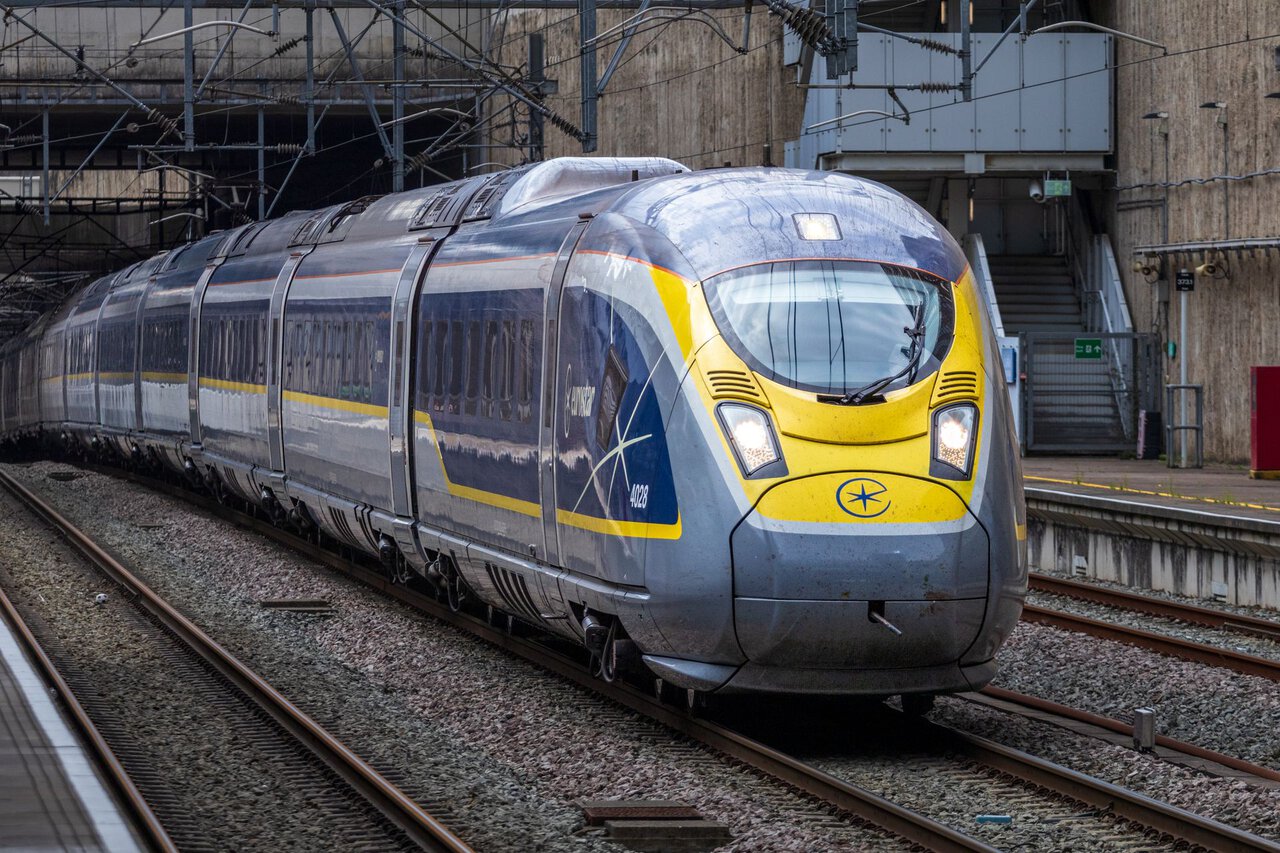
The Eurostar Snow Train is Eurostar’s seasonal winter service connecting London with the French Alps. While the service has evolved over the years, the concept remains the same: providing a simple rail route from the UK to some of Europe’s best ski resorts.
Today, passengers travel from London St Pancras International to Lille Europe, where they make a straightforward connection onto a train continuing towards the Alps. From there, services continue through the stations of Chambéry, Albertville, Moûtiers, Aime-la-Plagne, Landry, and Bourg-Saint-Maurice.
The service typically operates during the ski season, usually running from mid-December to late February, although exact dates and duration vary each year. Historically, tickets have usually gone on sale around mid-July, making summer the ideal time to secure seats for the following winter.
One of the biggest benefits is simplicity. Passport control, security checks, and border formalities are completed before departure from London, allowing passengers to step off the train in France and continue their journey without additional immigration procedures.
Although the direct train configuration has changed over time, the modern Eurostar Snow Train remains one of the easiest ways to travel from the UK to the French Alps entirely by rail.
Best if you want daily housekeeping and a front desk. Filter by area first, then by price.
Check availabilityBest for families, or any stay past about four nights. A kitchen and a washing machine start paying for themselves.
Browse rentalsBest as a last check before booking. Compares London hotel rates across several sites in one search.
Compare ratesEurostar Snow Train Route Overview
The route follows the same railway corridor explored in our French Alps Ski Railway Line Guide, gradually moving deeper into the mountains with each station.
| Station | Approximate Timing* | Notes |
|---|---|---|
| London St Pancras International | Departure | Start of journey |
| Lille Europe | Around 1 hr 20 mins after arrival in France | Change trains |
| Chambéry | First Alpine stop | Gateway to the Alps |
| Albertville | Around 25 mins after Chambéry | Tarentaise Valley begins |
| Moûtiers | Around 40 mins after Albertville | Three Valleys gateway |
| Aime-la-Plagne | Around 20 mins after Moûtiers | La Plagne gateway |
| Landry | Around 10 mins after Aime-la-Plagne | Paradiski gateway |
| Bourg-Saint-Maurice | Around 10 mins after Landry | Terminus |
*Timings vary by season and timetable. The table illustrates the approximate progression of the journey rather than exact departure and arrival times.
By the time the train reaches Moûtiers, passengers are within easy reach of the Three Valleys resorts of Courchevel, Méribel, Val Thorens, and Les Menuires. Further along the line, Aime-la-Plagne, Landry, and Bourg-Saint-Maurice provide access to La Plagne, Peisey-Vallandry, Les Arcs, Tignes, and Val d’Isère.
How the Journey Works
The journey begins at London St Pancras International, where travellers complete both security screening and border formalities before boarding. Eurostar recommends arriving at the station at the published check-in time, particularly during busy winter weekends.
The first leg takes passengers from London to Lille Europe. Upon arrival in Lille, travellers simply leave the train, check the departure boards, and locate the platform for their onward service to the Alps. Unlike changing trains at an airport, the process is relatively straightforward and remains entirely within the railway station.
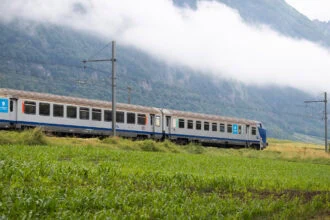
Once onboard the Alpine service, the journey becomes increasingly scenic as the train heads towards the mountains. The landscape gradually changes from northern French plains to Alpine valleys, with snow-covered peaks becoming increasingly visible as the train approaches Chambéry and continues deeper into the Tarentaise Valley.
The return journey follows the same process in reverse. Travellers leave their resort, return to their chosen railway station, travel back to Lille, and then connect onto Eurostar services for London. Because border checks for the UK take place before boarding at Lille, passengers should ensure they arrive at the station in good time before departure.
One of the reasons the route remains so popular is that it removes much of the uncertainty associated with airport transfers. Instead of navigating unfamiliar terminals and transfer desks, the journey remains rail-based from start to finish.
Onboard Facilities
One of the biggest advantages of the Eurostar Snow Train is that the journey is designed to be comfortable from start to finish. Unlike air travel, where passengers often spend much of the day moving between check-in desks, security queues, boarding gates, and transfer buses, the Eurostar experience allows travellers to settle into their seat and enjoy the journey.
Between London and Lille, passengers have access to onboard Wi-Fi, power sockets, luggage storage areas, and the Eurostar Café, where drinks, snacks, and light meals can be purchased. Travellers in Eurostar Plus receive an at-seat meal service on this section of the route.
After changing trains in Lille, passengers continue towards the Alps on the second stage of the journey. Most services offer Wi-Fi, power sockets, comfortable seating, and food and drink facilities, although some trains may provide vending machines rather than a full café or buffet service. Because facilities can vary, many experienced skiers choose to bring additional snacks and drinks for the Alpine section of the trip.
The journey also provides far more space than many travellers expect. Instead of being restricted to an airline seat for the entire day, passengers can move around the train, visit the café, stretch their legs, and enjoy the changing scenery as the route climbs towards the mountains.
For many people, this comfort is one of the biggest reasons to choose the Eurostar Snow Train over flying.
Journey Times
The exact journey time depends on which station you leave the train and the timetable operating during that season. However, the table below provides a useful guide based on previous Eurostar Snow services.
| Destination Station | Approximate Journey Time from London |
|---|---|
| Chambéry | Around 6 hours |
| Albertville | Around 6 hrs 30 mins |
| Moûtiers | Around 7 hours |
| Aime-la-Plagne | Around 7 hrs 20 mins |
| Landry | Around 7 hrs 30 mins |
| Bourg-Saint-Maurice | Just under 8 hours |
The return journey is usually slightly longer, often taking around 9 hours from Bourg-Saint-Maurice back to London St Pancras International. This difference is largely due to scheduling, connection times, and operational requirements rather than any significant difference in distance.
Although these journey times may initially appear longer than flying, it is important to compare the entire travel day. When airport check-in requirements, baggage collection, transfer queues, and lengthy coach journeys into the Alps are considered, the overall difference is often far smaller than expected.
For many travellers, arriving directly at a railway station in the mountains rather than at an airport many kilometres away more than compensates for the longer rail journey.
Which Ski Resorts Can You Reach?
One of the strengths of the Eurostar Snow Train is the huge number of ski resorts accessible from its stations. By travelling directly into the Alps, passengers can position themselves remarkably close to some of Europe’s most famous winter destinations.
Travellers leaving the train at Moûtiers gain access to the world-famous Three Valleys, including Courchevel, Méribel, Val Thorens, Les Menuires, Saint-Martin-de-Belleville, and La Tania. Together, these resorts form the largest interconnected ski area on the planet.
Passengers continuing to Aime-la-Plagne can access the extensive La Plagne ski area, while Landry provides convenient access to Peisey-Vallandry, Montchavin, and Les Coches, all part of the huge Paradiski domain.
At the end of the line, Bourg-Saint-Maurice acts as the gateway to Les Arcs, Tignes, Val d’Isère, La Rosière, and Sainte-Foy-Tarentaise. Some of these resorts are among the highest and most snow-sure destinations in Europe, attracting skiers from around the world.
The result is that a single train route from London can place travellers within easy reach of hundreds of kilometres of pistes spread across multiple world-class ski regions.
Cars Région Savoie Ski Bus Connections
One of the biggest advantages of the Eurostar Snow Train is that it connects directly with the transport network serving the French Alps. After leaving the train, many travellers can complete the final stage of their journey using the dedicated Cars Région Savoie ski bus network rather than relying on expensive private transfers.
At Moûtiers-Salins-Brides-les-Bains, passengers can connect to the following routes:
| Route | Destination |
|---|---|
| S61 | Doucy |
| S62 | Valmorel |
| S63 | Les Menuires & Val Thorens |
| S64 | Méribel |
| S65 | Courchevel |
| S66 | Champagny-en-Vanoise & Pralognan-la-Vanoise |
Travellers continuing to Aime-la-Plagne can use:
| Route | Destination |
|---|---|
| S70 | Montalbert |
| S71 | La Plagne Resorts |
Passengers leaving the train at Landry can use:
| Route | Destination |
|---|---|
| S72 | Montchavin & Les Coches |
At Bourg-Saint-Maurice, the network continues with:
| Route | Destination |
|---|---|
| S80 | La Rosière |
| S81 | Sainte-Foy-Tarentaise |
| S82 | Val d’Isère |
| S83 | Tignes |
Visitors travelling to Les Arcs can alternatively use the famous Les Arcs Funicular, which connects Bourg-Saint-Maurice Station with Arc 1600 in approximately 7 minutes.
The combination of the Eurostar Snow Train, the French Alps Ski Railway Line, and the Cars Région Savoie ski bus network allows many travellers to complete almost their entire ski holiday journey using public transport, from London St Pancras to the resort itself.
Best if you can move a day either way. Shows how the fare to London changes across the month.
Compare flightsBest if you want maps and messaging working the moment you switch your phone on.
See eSIM plansBest after a long flight or a late landing. Price agreed before you travel, and no taxi queue.
Check transfersResort Transfers from the Eurostar Snow Train
Once you’ve reached your chosen station, the final stage of the journey is usually completed using either the Cars Région Savoie ski bus network or a private transfer service. The stations served by the Eurostar Snow Train have been specifically developed around winter tourism, allowing travellers to transfer efficiently from rail to resort transport.
At Moûtiers, Routes S61-S66 provide access to destinations including Courchevel, Méribel, Val Thorens and Les Menuires, as well as Valmorel, Doucy, Champagny-en-Vanoise, and Pralognan-la-Vanoise. At Aime-la-Plagne, Routes S70 and S71 connect passengers with La Plagne and Montalbert, while Route S72 links Landry with Montchavin and Les Coches.
At Bourg-Saint-Maurice, Routes S80-S83 serve La Rosière, Sainte-Foy-Tarentaise, Val d’Isère and Tignes. Visitors travelling to Les Arcs can instead use the dedicated Les Arcs Funicular, one of the fastest rail-to-ski transfers anywhere in Europe.
Passengers leaving the train at Moûtiers gain direct access to the Three Valleys, including Courchevel, Méribel, Val Thorens, Les Menuires, Saint-Martin-de-Belleville, and La Tania. Transfer times generally range from 25 minutes to around one hour, depending on the resort.
Travellers leaving the train at Aime-la-Plagne are ideally positioned for La Plagne and Belle Plagne, and nearby villages, while Landry provides shorter transfers to Peisey-Vallandry, Montchavin, and Les Coches.
At Bourg-Saint-Maurice, the famous Les Arcs Funicular sits directly beside the station and reaches Arc 1600 in around 7 minutes. Dedicated ski bus services and transfer operators also provide connections to Tignes, Val d’Isère, La Rosière, and Sainte-Foy-Tarentaise.
Many travellers choose to pre-book their transfers before leaving home, particularly during busy periods such as Christmas, New Year and February half-term. Doing so can significantly reduce waiting times and make the final stage of the journey much smoother.
Alps2Alps Transfers from Eurostar Snow Stations
While the Eurostar Snow Train gets you remarkably close to the slopes, most travellers will still need to complete a final transfer from the railway station to their resort. Depending on your destination, this could be a short 7-minute funicular journey to Les Arcs from Bourg-Saint-Maurice or a longer mountain transfer to resorts such as Val Thorens, Val d’Isère, or Courchevel.
For travellers who want to avoid navigating local bus timetables or carrying ski equipment between multiple transport connections, Alps2Alps provides a convenient alternative. The company specialises in Alpine transfers and serves many of the destinations connected to the Eurostar Snow Train route. Rather than arranging transport after arrival, travellers can organise their transfer in advance and travel directly from the station to their accommodation.
Alps2Alps operates from all of the major stations served by the route, including Chambéry, Albertville, Moûtiers, Aime-la-Plagne, Landry and Bourg-Saint-Maurice. This gives access to a huge range of resorts, including Courchevel, Méribel, Val Thorens, Les Menuires, La Plagne, Peisey-Vallandry, Les Arcs, Tignes, Val d’Isère, La Rosière, and Sainte-Foy-Tarentaise.
Transfer times vary depending on the destination. Journeys from Landry to Peisey-Vallandry may take as little as 15–25 minutes, while transfers from Moûtiers to Courchevel or Méribel are typically around 25–45 minutes. Resorts such as Tignes and Val d’Isère usually require around 45–75 minutes from Bourg-Saint-Maurice, depending on weather and road conditions.
One of the biggest advantages of pre-booking is peace of mind. During busy periods such as Christmas, New Year, and the February school holidays, transfer services can become heavily booked. Arranging your transport before leaving home means you can coordinate your station arrival with your onward transfer and reduce waiting times after stepping off the train.
If you’re planning to use the Eurostar Snow Train, it is worth checking transfer availability before travelling. Alps2Alps covers many of the resorts served by the route and allows you to arrange station-to-resort transport before you leave the UK.
Plan This Ski Transfer with Alp2Alps
Need a simple way from the airport or train station to your ski resort? Rupert recommends comparing your public transport options first, then checking a door-to-door ski transfer if you are carrying skis, travelling with family, arriving late, or heading to a resort where bus timings are awkward.
Alps2Alps can help with private and shared transfers from major Alpine gateways to ski resorts across France, Switzerland, Austria and Italy.
Luggage Allowances and Ski Equipment
One area where the Eurostar Snow Train often compares favourably with flying is luggage. Rather than paying additional baggage fees or worrying about airline restrictions, passengers benefit from a generous luggage allowance designed to accommodate winter sports holidays.
Adult passengers can typically bring two pieces of luggage, each up to 85cm long, together with one item of hand luggage. In addition, travellers can carry one pair of skis or a snowboard, making the service particularly attractive for winter sports enthusiasts.
Unlike many airlines, there are no complicated oversized baggage procedures for most ski equipment. This removes one of the major frustrations associated with flying to the mountains and allows passengers to keep their equipment with them throughout the journey.
The train also offers flexibility when it comes to liquids. Travellers do not face the same restrictions that apply at airports, meaning toiletries, drinks, and other items can be packed without worrying about small liquid containers or security bags. Many skiers appreciate being able to travel with everything they need for a week in the mountains without constantly checking airline rules.
Large luggage racks are available throughout the train, helping passengers store bulky bags and ski equipment safely during the journey. While it is still sensible to pack efficiently, the overall experience is generally much less restrictive than air travel.
Eurostar Snow Train vs Flying
For many travellers, the biggest question is whether the Eurostar Snow Train is actually better than flying. The answer depends on your priorities, but rail travel offers several advantages that become increasingly obvious once the entire journey is considered.
Flying will often appear quicker when comparing only the time spent in the air. However, once airport check-in requirements, security procedures, baggage collection, airport transfers, and mountain road journeys are included, the difference narrows considerably. Many ski airports remain more than an hour from the resorts they serve, while the Eurostar Snow Train takes passengers directly into the heart of the Alps.
Comfort is another major advantage. Passengers can move freely around the train, visit the café, use power sockets, connect to Wi-Fi, and enjoy the scenery throughout the journey. There are no seatbelt signs, boarding gates, or crowded baggage reclaim halls to contend with.
The train is also particularly attractive for travellers carrying ski equipment. Generous luggage allowances and simpler transport of skis and snowboards remove many of the complications associated with airline travel.
Environmental considerations are increasingly important too. Rail travel generally produces substantially lower emissions than short-haul flights, making the Eurostar Snow Train one of the more sustainable ways to reach the French Alps.
For travellers starting in London and heading to resorts served by the French Alps ski railway line, the train often provides one of the most relaxing and straightforward routes to the mountains.
How to Buy Eurostar Snow Train Tickets
Tickets for the Eurostar Snow Train are normally released well before the start of the ski season, with sales often beginning around mid-July for the following winter. Because peak ski weekends can sell out quickly, booking early is strongly recommended.
The official booking channel is Eurostar, where passengers can check availability, timetables, and fares once tickets are released. Eurostar will usually announce operating dates and ticket sales through its website and newsletter during the summer.
Many travellers also use Omio to compare rail routes, journey times, and prices. This can be particularly useful if you’re combining Eurostar with other European rail services or comparing different ways of reaching the Alps.
The busiest travel dates are usually around Christmas, New Year and the February school holidays, and the main Saturday changeover weekends used by Alpine resorts. If travelling during these periods, it is worth securing both train tickets and resort transfers as soon as possible.
When booking, pay particular attention to your destination station. While some travellers automatically select Bourg-Saint-Maurice, many resorts are actually closer to Moûtiers, Aime-la-Plagne, or Landry. Choosing the correct station can significantly reduce your transfer time and help you reach the slopes more quickly.

Plan This Journey with Eurostar
Travelling between the UK and Europe is quick and convenient by train. Eurostar connects major cities such as London, Paris, Brussels, and Amsterdam, offering a fast and comfortable alternative to flying.
It is ideal for city-to-city travel, weekend breaks, and journeys where you want to avoid airport queues. With central station departures and simple boarding, you can travel smoothly and make the most of your time.
Best if you would rather spend the money on London than on the room. Compare hostels by location and rating.
Search hostelsBest arranged before you fly rather than after. Covers claim handling, plus lounge access on eligible delays.
Explore AirHelp+Best if your room is not ready yet. Left luggage booked in advance, so you are not hunting for a locker.
Check storageEssential Apps for Your Ski Holiday
A handful of travel apps can make using the Eurostar Snow Train and navigating the French Alps significantly easier. From booking rail tickets and organising transfers to checking ski conditions and staying connected in the mountains, the right apps can save both time and stress.
For rail bookings, Omio is one of the most useful tools available. It allows travellers to compare routes, fares, and journey times across multiple operators, making it particularly helpful when planning journeys from London, Paris, Geneva, or elsewhere in Europe.
Travellers should also consider downloading the official Eurostar app, which provides access to booking information, tickets, travel updates, and journey details. Having tickets available digitally can make station transfers quicker and reduce the need to carry printed documents.
For resort transfers, Alps2Alps is worth checking before departure. Booking transfer services in advance can help coordinate your train arrival with your onward journey to the resort and avoid searching for transport after stepping off the train.
Navigation is straightforward with Google Maps, while most major ski resorts also operate their own apps. These often include piste maps, live lift information, weather forecasts, webcams, snow reports, and resort transport updates. If you’re heading to destinations such as Val d’Isère, Tignes, Les Arcs, La Plagne, or Courchevel, the local resort app can quickly become one of your most-used travel tools.
International travellers should also arrange mobile data before travelling. A travel eSIM allows immediate connectivity throughout France, making it easier to access tickets, transfer bookings, accommodation details, weather forecasts, and live transport information without relying entirely on station or hotel Wi-Fi.

Rupert’s Handy Travel Tips
Planning to take the Eurostar Snow Train to the French Alps? Here are a few useful tips to make your journey smoother:
- Book as soon as tickets go on sale: Eurostar Snow services are popular and peak-season departures can sell out surprisingly quickly.
- Choose the correct station: Many travellers automatically book Bourg-Saint-Maurice when resorts such as Courchevel, Méribel or Val Thorens are actually served more conveniently from Moûtiers.
- Reserve transfers before travelling: Alps2Alps, resort buses and local transfer services can become extremely busy during Christmas, New Year and February half-term.
- Bring food for the Alpine section: Some trains offer a full café service while others may only have vending machines available.
- Travel with confidence if carrying ski equipment: The generous luggage allowance is one of the biggest advantages of taking the train instead of flying.
Want to meet the reindeer behind our travel tips? Find out more in our page Who is Rupert?.



Frequently Asked Questions about the Eurostar Snow Train
When does the Eurostar Snow Train run?
The service normally operates during the winter ski season, typically from mid-December to late February, although exact dates and duration vary each year.
When do Eurostar Snow tickets go on sale?
Historically, tickets have usually been released around mid-July for the following winter season.
Do I need to change trains?
Yes. Current journeys involve travelling from London St Pancras International to Lille Europe, where passengers transfer onto a connecting train towards the French Alps.
How long does the journey take?
Journey times vary depending on your destination. Chambéry can be reached in around 6 hours, while Bourg-Saint-Maurice is usually reached in just under 8 hours.
Can I take skis on the Eurostar Snow Train?
Yes. Passengers can normally travel with skis or a snowboard in addition to their standard luggage allowance.
Which station should I use for Courchevel?
Travellers heading to Courchevel should normally leave the train at Moûtiers, which is the main gateway to the Three Valleys.
Which station should I use for Val Thorens?
Most visitors travelling to Val Thorens leave the train at Moûtiers before taking a coach, transfer, or taxi into the resort.
Can I reach Tignes and Val d’Isère using the Eurostar Snow Train?
Yes. Travel to Bourg-Saint-Maurice and continue by coach, transfer service, or taxi.
Do I clear passport control in France?
No. Border formalities are generally completed before departure from London and before returning to the UK, making arrival in France relatively straightforward.
Is the Eurostar Snow Train better than flying?
For many travellers, yes. The train offers generous luggage allowances, easier ski equipment transport, city-centre departures, and direct access to the Alps without lengthy airport transfers.
Further Reading & Related Guides
If you’re planning a ski holiday by rail, our French Alps Ski Railway Line Guide is the perfect companion to this page and explains the stations, resorts, and transfer options served by the Alpine railway beyond Chambéry. Travellers considering alternative ways of reaching the mountains should also explore our Geneva Airport to Ski Resorts Guide, Lyon Airport to Ski Resorts Guide, Grenoble Airport to Ski Resorts Guide, and Turin Airport to Ski Resorts Guide, which compare some of the Alps’ most popular gateways.
Once you’ve decided where to stay, our dedicated station guides covering Moûtiers, Aime-la-Plagne, Landry, and Bourg-Saint-Maurice explain which resorts are served by each stop and how to complete the final transfer. If you’re still comparing destinations, our Best European Ski Resorts Guide explores many of the continent’s top ski areas, while our Sleeper Trains from Paris Guide provides additional rail-based alternatives for reaching the mountains.
Before you travel, don’t forget to arrange your mobile connectivity. Our eSIM Apps Guide compares the best options for staying connected throughout France and Europe.