
Why French Night Trains from Paris Are Making a Comeback
French night trains from Paris are experiencing a genuine revival as travellers increasingly look for alternatives to short-haul flights, expensive hotels, and exhausting early morning airport transfers. After years of decline, France’s overnight rail network has begun expanding again, with several historic sleeper routes restored or modernised under the SNCF Intercités de Nuit brand. The result is a rail network that once again allows passengers to fall asleep in Paris and wake up in the French Alps, the Riviera, the Pyrenees, or even Berlin the next morning.
Part of the renewed popularity comes from practicality. Overnight trains can save both time and accommodation costs, especially on long domestic journeys where daytime travel may consume most of a day. Travellers heading towards destinations such as Nice, Briançon, Toulouse, or Latour-de-Carol can avoid airport security queues, luggage restrictions, and hotel check-ins by travelling overnight instead. For many visitors, particularly those exploring Europe using Interrail or Eurail, sleeper trains also provide a more enjoyable and scenic travel experience than flying.
Environmental concerns have also helped fuel the return of overnight rail. Across Europe, governments and travellers are increasingly supportive of lower-carbon transport options, especially on routes where rail can realistically compete with aviation. France has become one of the most closely watched countries in Europe for sleeper rail expansion, with both domestic and international overnight services gradually returning after years of cuts.
The network remains relatively small compared with the historic sleeper era of the 1980s and 1990s, but the current routes are strategically useful. Most services leave from Paris Austerlitz, connecting the French capital with mountain resorts, southern cities, border regions, and international rail corridors. Alongside the domestic SNCF network, operators such as European Sleeper are also expanding international overnight travel from Paris towards Belgium and Germany, helping reconnect France with the wider European sleeper rail revival.
Unlike high-speed daytime trains, however, not all French sleeper services operate daily. Some routes only run on selected days of the week, while certain seasonal or international services may operate more heavily during summer holidays or winter ski periods. Timetables can also change significantly between seasons, making advance planning especially important for overnight rail journeys.
Quick Overview of French Sleeper Routes from Paris
The current French sleeper train network from Paris is built around a relatively small number of long-distance overnight routes, but those services cover some of the country’s most useful and scenic travel corridors. Most domestic services are operated by SNCF under the Intercités de Nuit brand, while international overnight routes are operated separately by companies such as European Sleeper.
The core domestic sleeper routes from Paris currently include overnight trains towards Toulouse, Nice, Briançon, Aurillac, Rodez, and Latour-de-Carol. These trains serve very different types of travellers. The Nice route is popular with Riviera visitors and Mediterranean holidaymakers, while the Briançon sleeper is heavily used by skiers and Alpine travellers during winter. The Latour-de-Carol route is particularly valuable because it provides overnight rail access towards the Pyrenees, Andorra, and the famous Yellow Train mountain railway.
Several routes also divide during the journey. The overnight service towards Rodez and Albi, for example, splits overnight to serve multiple destinations from a single departure out of Paris Austerlitz. This helps SNCF maximise coverage despite operating a relatively limited number of sleeper trains.
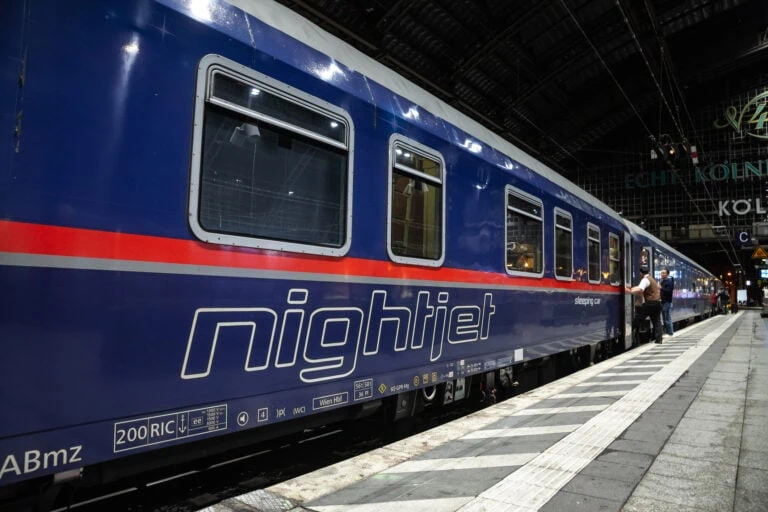
International overnight travel from Paris has also improved significantly. The most notable addition is the European Sleeper service between Paris, Brussels, Hamburg, and Berlin. This route provides one of the few direct overnight rail links between France and Germany, and from July 2026 the train will begin serving Hamburg, improving onward connections towards Denmark and Scandinavia.
Travellers using rail passes should also understand an important distinction between domestic and international services. A Interrail One Country Pass France can be used on domestic French sleeper trains within France, but international overnight trains such as the Paris to Berlin service require an Interrail Global Pass because the journey crosses multiple countries. Reservations are normally mandatory on sleeper trains regardless of pass type.
Although the network remains Paris-centric, France’s overnight rail system is once again becoming a genuinely useful way to cross large distances while saving daylight hours for sightseeing and travel.
Browse hotels and accommodation for your journey.
View staysBrowse apartments, holiday homes and self-catering stays.
View rentalsCompare hotel deals from multiple booking sites in one search.
Compare pricesWhere French Night Trains from Paris Go
Most French night trains from Paris radiate southwards from the capital, creating a network that connects Paris with mountain regions, southern cities, border towns, and international corridors. The routes may look limited compared with France’s enormous daytime high-speed network, but geographically they cover some of the country’s most strategically important long-distance journeys.
To the southwest, overnight trains run towards Toulouse, one of southern France’s largest cities and a major gateway towards the Occitanie region. Beyond Toulouse, certain sleeper portions continue deeper into the Pyrenees towards Latour-de-Carol-Enveitg, close to the borders with both Spain and Andorra. This route is especially valuable because it connects into regional mountain railways and remote border regions that can be time-consuming to reach during the day.
To the southeast, the overnight train to Nice provides direct rail access to the French Riviera, allowing travellers to reach the Mediterranean coast without losing an entire day to travel. Further inland, the sleeper to Briançon climbs into the French Alps, serving one of the highest railway stations in France and providing useful access to ski resorts and mountain hiking areas.
Central France is covered by routes towards Aurillac, Rodez, and Albi, connecting Paris with rural regions that receive far fewer high-speed rail services. These trains remain particularly important for domestic mobility because they link smaller cities and isolated regions with the French capital overnight.
Internationally, the network now stretches beyond France through the European Sleeper route from Paris via Brussels towards Hamburg and Berlin. This corridor is strategically important because it helps reconnect western and northern Europe using overnight rail rather than aviation. The addition of Hamburg as a stop from July 2026 also creates better overnight connections towards northern Germany and Scandinavia.
One important thing to understand is that the French sleeper map changes over time. Some services operate daily, while others only run on selected weekdays or during peak travel seasons. Ski demand, summer tourism, engineering works, and rolling stock availability can all affect overnight train frequencies. Because of this, travellers should always verify timetables carefully before building an itinerary around a sleeper service.
| Route | Train Number | Main Destination | Major Stops | Main Departure Station | Best For |
|---|---|---|---|---|---|
| Paris → Toulouse | 3731 | Toulouse | Limoges, Brive | Paris Austerlitz | Southwest France |
| Paris → Latour-de-Carol | 3789 | Latour-de-Carol | Toulouse, Foix | Paris Austerlitz | Pyrenees & Andorra |
| Paris → Rodez / Albi | 3751 | Rodez / Albi | Brive, Figeac | Paris Austerlitz | Rural southern France |
| Paris → Aurillac | 3755 | Aurillac | Brive | Paris Austerlitz | Massif Central |
| Paris → Nice | 5781 | Nice | Marseille, Toulon | Paris Austerlitz | French Riviera |
| Paris → Briançon | 5789 | Briançon | Valence, Gap | Paris Austerlitz | Alps & ski travel |
| Paris → Berlin | ES 475 | Berlin | Brussels, Hamburg | Paris Nord | Germany & Scandinavia connections |
How French Night Trains Work
For travellers unfamiliar with overnight rail, the modern French sleeper train system is relatively straightforward once you understand the basics. Most services depart from Paris Austerlitz during the evening, travel overnight across France, and arrive at their destination early the following morning. Instead of standard daytime seating layouts, sleeper trains use a mixture of reclining seats, couchettes, and sleeping compartments designed for overnight travel.
The majority of domestic overnight trains are operated by SNCF Intercités de Nuit, which focuses on long-distance routes where daytime rail journeys would otherwise take many hours. Travellers normally board in the evening, store luggage in their compartment or nearby racks, and spend the night onboard while the train continues south through the French rail network.
Accommodation types vary depending on the route and rolling stock being used. Some trains offer simple reclining seats for budget travellers, while others provide shared couchette compartments with bunk beds. Certain services also include more private sleeping arrangements designed for couples, families, or travellers wanting quieter overnight conditions. International operators such as European Sleeper may use different carriage layouts and comfort standards compared with SNCF domestic services.
Unlike airlines, sleeper trains usually allow travellers to keep luggage with them throughout the journey, avoiding check-in queues and baggage reclaim delays. This makes overnight rail particularly attractive for ski travellers, backpackers, and long-distance European tourists carrying larger bags. Boarding procedures are also far simpler than airports, with passengers generally able to arrive at the station shortly before departure.
Reservations are almost always required for sleeper services, even when travelling with rail passes. A rail pass covers the travel itself, but passengers still need to reserve a specific bed, couchette, or seat. Availability can become limited during summer holidays, Christmas periods, and ski season, especially on popular routes such as Paris to Nice or Paris to Briançon.
The overall experience is slower and less private than a hotel, but for many travellers the convenience outweighs the compromises. Instead of losing daylight hours travelling across France, passengers can effectively combine transport and accommodation into a single overnight journey.
Paris Austerlitz: The Main Hub for French Sleeper Trains
Most French night trains from Paris depart from Gare d’Austerlitz, the historic railway station that now serves as the main hub for France’s revived overnight rail network. While stations such as Gare du Nord dominate international Eurostar traffic and Gare de Lyon handles many high-speed southern routes, Paris Austerlitz remains the operational centre for long-distance sleeper services heading towards the French Alps, the Riviera, the Pyrenees, and rural southern France.
Located beside the River Seine in southeastern central Paris, Paris Austerlitz is well connected to the wider city through the Paris Métro network, particularly Metro Lines 5 and 10. Travellers arriving from Charles de Gaulle Airport or Paris Orly Airport can normally reach the station using a combination of RER trains, Metro services, and airport rail connections. Evening travellers should still allow extra time, especially during strikes, engineering works, or late-night reduced service periods.
Unlike busy airport terminals, the atmosphere at Paris Austerlitz during sleeper departures is usually calmer and more relaxed. Most overnight trains board during the evening, with passengers typically arriving between 60 and 90 minutes before departure. Departure boards clearly display sleeper services, but travellers should pay close attention to carriage numbers, particularly on routes where trains divide overnight and portions continue towards different destinations after midnight.
Facilities inside the station include ticket machines, waiting areas, toilets, cafes, luggage storage services, and small convenience outlets. Food options become more limited later in the evening, so experienced sleeper travellers often buy supplies elsewhere in Paris before boarding. Domestic French sleepers generally provide limited onboard catering, making advance preparation useful for overnight comfort.
Because so many overnight services depart from the station within a short evening window, hotels near Paris Austerlitz are particularly useful for travellers arriving into Paris from abroad or connecting from daytime trains. Staying nearby can dramatically reduce stress before late-night departures, especially for international visitors unfamiliar with the size and complexity of the Paris transport system.
SNCF Intercités de Nuit Explained
Most domestic French sleeper trains from Paris are operated by SNCF under the Intercités de Nuit brand, which now forms the backbone of France’s overnight rail revival. These services connect the French capital with destinations across southern France, mountain regions, and rural areas that would otherwise require extremely long daytime journeys.
Unlike the high-speed TGV network, which prioritises speed and short journey times, Intercités de Nuit focuses on practical overnight travel. Trains normally leave Paris Austerlitz during the evening, travel overnight at conventional rail speeds, and arrive the following morning in destinations such as Nice, Briançon, Toulouse, Aurillac, and Latour-de-Carol.
For decades, France steadily reduced its sleeper rail services as high-speed daytime trains expanded across the country. By the mid-2010s, much of the historic network had disappeared entirely, leaving only a small number of overnight routes in operation. In recent years, however, growing environmental concerns, political pressure, and renewed passenger demand have pushed overnight rail back into focus. Several routes once considered endangered have now been modernised, protected, or expanded as part of France’s wider rail strategy.
The experience onboard Intercités de Nuit trains is designed around practicality rather than luxury. Accommodation usually includes reclining seats, shared couchette compartments, and occasionally more private sleeping arrangements depending on the route and rolling stock being used. While the trains are generally simpler than premium overnight services operated by companies such as ÖBB, they remain extremely useful for long-distance domestic travel across France.
One distinctive feature of the network is the way some services split during the night. A single departure from Paris may divide en route, allowing separate carriage portions to continue towards different destinations across southern France. This operational system allows SNCF to serve multiple regional corridors while using a relatively small overnight fleet.
Travellers should also remember that the network is not fully daily. Some sleeper routes operate every night, while others only run on selected weekdays or during peak travel periods such as summer holidays and winter ski season. Engineering works and rolling stock availability can also affect schedules, making timetable checks particularly important before booking accommodation or onward transport.
Paris to Toulouse Night Train (3731)
The Paris to Toulouse sleeper train, numbered 3731, is one of the most important overnight rail services in France and a core part of the modern Intercités de Nuit network. Running south from Paris Austerlitz towards the heart of southwestern France, the service provides a practical alternative to domestic flights and lengthy daytime rail journeys.
The route works especially well because Toulouse sits at an ideal overnight rail distance from Paris. The journey is long enough that daytime travel can consume much of a day, but short enough that overnight rail remains highly competitive once airport transfers, security checks, and waiting times are considered. By boarding in the evening and arriving the next morning, travellers can maximise sightseeing time while also potentially saving the cost of a hotel stay.
As the train travels south overnight, it crosses central and southwestern France before arriving at Toulouse Matabiau, one of the country’s most important regional rail hubs. From there, travellers can continue onwards towards the Pyrenees, the Mediterranean coast, Andorra, and various destinations across southern France using regional rail and coach connections.
Accommodation onboard usually includes a mixture of reclining seats and couchette compartments, with couchettes being the preferred option for most overnight passengers. Compartments are typically shared unless private occupancy is booked in advance. While the onboard experience is relatively simple compared with luxury European sleepers, many travellers find the combination of affordability, convenience, and time savings more than worthwhile.
Operationally, the corridor is also important because portions of the service may continue beyond Toulouse towards destinations deeper in southern France depending on timetable structures. SNCF uses this system to maximise geographic coverage from a single overnight departure out of Paris.
The route has become particularly popular with Interrail travellers, backpackers, and slow-travel visitors exploring southwestern Europe. Toulouse also acts as an important gateway towards cross-border connections into Spain, helping make the overnight service useful not just for domestic French travel but for wider European itineraries as well.
Paris to Latour-de-Carol Night Train (3789)
The Paris to Latour-de-Carol sleeper train, numbered 3789, is one of the most fascinating and strategically important overnight rail services in France. Travelling deep into the eastern Pyrenees, the route links Paris with mountain regions close to both the Spanish border and Andorra, creating one of western Europe’s most unusual sleeper train journeys.
For many travellers, the biggest attraction of the route is its role as one of the best rail gateways towards Andorra. Although the microstate itself has no railway station, Latour-de-Carol-Enveitg provides one of the closest practical rail access points. From the station, onward coach services continue towards Andorra la Vella, allowing travellers to combine overnight rail with mountain bus transfers rather than relying entirely on flights or long-distance driving.
The destination station is also remarkable from a railway perspective. Latour-de-Carol-Enveitg sits at the meeting point of multiple rail systems, including standard French rail services, Spanish broad-gauge trains, and the famous Yellow Train mountain railway. This makes the route particularly appealing for railway enthusiasts, photographers, and slow-travel visitors exploring the high Pyrenees.
After departing Paris Austerlitz during the evening, the train gradually heads south through central France before climbing towards the mountains during the early morning hours. The scenery becomes especially impressive after sunrise, when dramatic valleys, mountain ridges, and border landscapes begin appearing outside the carriage windows.
Accommodation onboard usually consists of reclining seats and shared couchette compartments, similar to most domestic French sleeper services. Demand can increase significantly during both winter ski season and the summer hiking period, particularly because the route provides direct overnight access into mountain regions that are relatively difficult to reach efficiently during the daytime.
Operationally, the service also highlights the continuing importance of sleeper rail beyond tourism alone. Rather than functioning purely as nostalgic railway experiences, routes such as 3789 continue to provide meaningful long-distance transport connections between major cities and geographically isolated mountain regions across southern France.
Search flights and useful route combinations in one place.
View flightsBrowse Airalo eSIM options for convenient travel data.
Check eSIMsCheck private airport pickup options and plan the first part of your journey in advance.
View transfersParis to Rodez and Albi Night Train (3751)
The Paris to Rodez and Albi sleeper train, numbered 3751, is one of the most operationally interesting overnight rail services in France because the train divides during the journey to serve multiple destinations across the Occitanie region. Departing from Paris Austerlitz during the evening, the service allows passengers to wake up in smaller southern French cities that would otherwise require extremely long daytime rail journeys.
The route primarily serves Rodez, a historic hilltop city known for its dramatic cathedral skyline, rural surroundings, and access to the wider Aveyron region. Part of the train also continues towards Albi, one of southern France’s most impressive UNESCO destinations, famous for the enormous Albi Cathedral and the legacy of artist Henri de Toulouse-Lautrec.
One of the most distinctive aspects of the service is the way SNCF splits the train overnight. Different carriage portions separate en route and continue towards different final destinations, allowing a single departure from Paris to serve multiple regional corridors simultaneously. Travellers therefore need to pay close attention to carriage numbers and destination indicators before boarding, especially late in the evening when platforms become busy.
The sleeper is particularly useful for travellers wanting to explore slower-paced regions of southern France without losing daylight hours to transport. Both Rodez and Albi sit outside the main high-speed rail network, meaning overnight travel often makes more practical sense than attempting lengthy daytime connections through Toulouse or other regional hubs.
Accommodation usually includes reclining seats and shared couchette compartments, with couchettes being the preferred option for most overnight travellers. The onboard experience is relatively simple, but the convenience of travelling while asleep makes the route attractive for budget-conscious visitors, Interrail travellers, and domestic French passengers alike.
The service also demonstrates an important aspect of France’s modern sleeper strategy. Rather than focusing only on major tourist destinations, several Intercités de Nuit routes continue serving smaller regional cities and rural areas that still depend heavily on overnight rail connections with the capital.
Paris to Aurillac Night Train (3755)
The Paris to Aurillac sleeper train, numbered 3755, is one of the most rural and geographically isolated overnight rail routes still operating in France. Running from Paris Austerlitz into the mountainous landscapes of the Massif Central, the train connects the French capital with a region that receives relatively limited high-speed rail coverage and would otherwise involve a very long daytime journey.
Located in the Cantal department of central southern France, Aurillac is best known for volcanic mountain scenery, rural villages, hiking areas, and traditional regional culture. While it is not one of France’s major tourist cities, the sleeper service remains important because it provides practical overnight access to a part of the country that is otherwise comparatively difficult to reach efficiently by rail.
The route is especially valuable for domestic connectivity. Much of modern French rail investment focuses on high-speed corridors linking major cities, but overnight trains such as 3755 continue to provide long-distance transport links for smaller regional populations. This gives the service a different character compared with more tourism-focused routes towards destinations like Nice or the French Alps.
The journey itself becomes increasingly scenic after sunrise as the train approaches the upland landscapes of the Massif Central. Rolling hills, valleys, and volcanic terrain gradually replace the flatter countryside of northern France, making the final section of the route particularly appealing for slow-travel visitors and railway enthusiasts.
Accommodation onboard generally follows the standard Intercités de Nuit format, including reclining seats and shared couchette compartments. Facilities are functional rather than luxurious, but the overnight timing allows travellers to arrive in a remote part of France early in the morning without sacrificing an entire day to transport.
Because the route serves a relatively specialised market, frequencies can vary depending on season, engineering works, and operational demand. Travellers should therefore always verify timetables carefully before arranging onward transport or accommodation in the region.
Paris to Nice Night Train (5781)
The Paris to Nice sleeper train, numbered 5781, is one of the most famous and commercially important overnight rail services in France. Linking Paris Austerlitz with the French Riviera, the route provides direct overnight access to the Mediterranean coast while avoiding the need for domestic flights or long daytime rail journeys.
For many travellers, the biggest appeal of the service is convenience. Instead of spending much of the day travelling south through France, passengers can board in Paris during the evening and wake up the following morning close to the beaches, marinas, and resort towns of the Côte d’Azur. During summer, the route becomes especially popular with holidaymakers heading towards destinations such as Nice, Cannes, Antibes, and Monaco.
The overnight train also appeals strongly to environmentally conscious travellers looking to avoid short-haul flights between northern and southern France. Once airport transfer times, security checks, and baggage delays are considered, the sleeper can often feel significantly more relaxed than flying, particularly for passengers carrying larger luggage or travelling with sports equipment.
Accommodation normally includes reclining seats and couchette compartments, although sleeper demand on the route can become extremely high during summer holidays and major events along the Riviera. Booking early is therefore particularly important, especially for travellers wanting lower berths, private compartments, or Interrail reservation availability.
One of the major advantages of the route is the way it connects directly into the wider Riviera rail network. After arriving in Nice, passengers can continue easily towards the Italian border, the French Riviera coastline, or inland mountain regions using regional TER services.
The service also represents one of the clearest examples of overnight rail successfully competing with aviation on a major domestic corridor. The combination of strong tourist demand, environmental awareness, and practical overnight timing has helped make the Paris to Nice sleeper one of the flagship routes within France’s modern sleeper rail revival.
Compare hostels and budget-friendly places to stay.
Browse hostelsGet help with compensation, eligible lounge access and disruption support.
Explore AirHelp+Leave your luggage somewhere convenient and explore hands-free.
View storageParis to Briançon Night Train (5789)
The Paris to Briançon sleeper train, numbered 5789, is one of the most spectacular overnight rail journeys in France and one of the country’s most important sleeper services for mountain travel. Running from Paris Austerlitz into the heart of the French Alps, the route provides direct overnight access to alpine valleys, ski regions, and high mountain landscapes that are otherwise time-consuming to reach during the daytime.
Located at over 1,200 metres above sea level, Briançon is one of the highest towns in France and home to one of Europe’s highest railway stations. The town itself is famous for its fortified old quarter, alpine scenery, and proximity to major ski areas across the southern Alps. During winter, the sleeper becomes especially popular with skiers and snowboarders travelling from Paris towards resorts in the surrounding mountain regions.
One of the most attractive aspects of the service is the dramatic scenery during the final morning section of the journey. After travelling south overnight through France, the train begins climbing into the Alps after sunrise, passing through mountain valleys, tunnels, rivers, and steep alpine terrain before finally arriving in Briançon.
The route is particularly valuable because many alpine destinations are awkward to reach efficiently by air. Overnight rail allows travellers to avoid airport transfers and mountain road journeys while also reducing the need for overnight hotel stops en route. For ski travellers carrying luggage, boots, or winter equipment, the ability to keep belongings onboard throughout the journey is another major advantage.
Accommodation onboard generally includes reclining seats and shared couchette compartments, with couchettes heavily preferred on this route due to the overnight mountain journey length. During ski season, reservations can sell out far in advance, particularly around weekends and school holiday periods.
The Paris to Briançon sleeper has become one of the strongest symbols of France’s overnight rail revival because it demonstrates how sleeper trains can still serve highly practical transport functions. Rather than operating purely as nostalgic tourist experiences, routes such as 5789 continue providing efficient long-distance access between major urban centres and remote mountain regions.
| Ski Resort | Approx Distance from Briançon | Approx Transfer Time | Typical Transfer Method |
|---|---|---|---|
| Serre Chevalier | 5–15 km | 10–25 mins | Bus / Taxi |
| Montgenèvre | 12 km | 20 mins | Bus / Taxi |
| La Grave | 45 km | 50 mins | Bus / Car |
| Les Deux Alpes | 75 km | 1 hr 45 mins | Car / Transfer |
| Alpe d’Huez | 95 km | 2 hrs | Car / Transfer |
| Sestriere (Italy) | 40 km | 1 hr | Car / Shuttle |
| Puy-Saint-Vincent | 25 km | 35 mins | Bus / Taxi |
Paris to Berlin Sleeper via Brussels and Hamburg (ES 475)
The Paris to Berlin sleeper, numbered ES 475, is one of the most significant international overnight rail services currently operating from France. Run by European Sleeper, the route reconnects Paris, Belgium, and Germany through a direct overnight corridor that had largely disappeared for many years.
Unlike most domestic French sleeper trains, ES 475 departs from Paris Nord rather than Paris Austerlitz. After leaving the French capital during the evening, the train heads north through Aulnoye-Aymeries, continues into Mons and Brussels, before entering Germany overnight. From 16 July 2026, the service will also begin stopping at Hamburg before terminating at Berlin Hauptbahnhof. The addition of Hamburg is particularly important because it creates stronger overnight rail connections towards northern Germany, Denmark, and onward travel into Scandinavia.
One important thing travellers must understand is that the service does not currently operate daily. Paris to Berlin departures normally run on Tuesday, Thursday, and Sunday, while Berlin to Paris services operate on the alternate days. This staggered timetable means passengers often need to plan hotel stays, onward trains, or wider Interrail itineraries carefully around operating days.
The route has become especially popular with Interrail and Eurail travellers because it offers a genuine overnight alternative to short-haul flights and long daytime rail combinations. However, international overnight trains such as this require an Interrail Global Pass rather than a France-only pass because the train crosses multiple countries. Reservations are also mandatory, even when travelling with a rail pass.
Accommodation onboard is usually more varied than on many domestic French sleeper routes. Depending on the departure, passengers may find seated coaches, shared couchettes, and more private sleeper compartments. Summer demand can become extremely high, particularly during school holidays, festivals, and major events in Berlin or Paris, making advance booking highly advisable.
Operationally, the route is hugely symbolic for the wider European rail industry. Services such as ES 475 demonstrate how overnight rail is shifting from a nostalgic niche product back towards becoming a serious long-distance transport option across Europe. The combination of city-centre departures, lower environmental impact, and overnight time savings is helping sleeper trains compete once again with aviation on medium-distance European corridors.
Choosing the Right French Night Train Route
Choosing the best French sleeper train from Paris depends heavily on the type of journey you want to make. Some routes are designed around major tourism corridors, while others function more as practical overnight links into rural regions, mountain areas, or border zones that are difficult to reach efficiently during the daytime.
For travellers heading towards the Mediterranean coast, the Paris to Nice sleeper is normally the strongest option. The route allows passengers to leave Paris in the evening and wake up near the beaches, marinas, and resort towns of the French Riviera the following morning. It also connects well into regional rail services serving destinations such as Cannes, Antibes, and Monaco.
Travellers planning ski holidays or alpine hiking trips will usually find the Paris to Briançon sleeper the most practical route. This overnight service provides direct access into the French Alps, avoiding airport transfers and long mountain coach journeys. During winter, the train becomes especially popular with skiers travelling south from Paris towards alpine resorts and mountain valleys.
For railway enthusiasts, slow travellers, or visitors heading towards Andorra, the Paris to Latour-de-Carol sleeper is arguably the most unique route in the network. The service provides overnight access into the eastern Pyrenees and connects with both Spanish rail services and the famous Yellow Train mountain railway. Scenic mountain landscapes and cross-border rail connections make this one of the most distinctive sleeper experiences in western Europe.
The Paris to Toulouse route works particularly well as a straightforward long-distance domestic sleeper. Toulouse functions as a major transport hub for southwestern France and onward journeys into Spain, making the route useful for both domestic and wider European rail itineraries.
Meanwhile, services such as Paris to Aurillac and Paris to Rodez are more specialised regional routes. These trains are especially valuable for travellers exploring rural France, slower-paced destinations, and areas outside the country’s high-speed rail network.
International travellers looking for overnight cross-border rail should focus on the European Sleeper Paris to Berlin service. With the addition of Hamburg from July 2026, the train also becomes increasingly useful for travellers continuing towards northern Europe and Scandinavia.
Because not all routes operate daily, flexibility remains extremely important when planning overnight rail journeys in France. Some services only run on selected weekdays, while others may operate more heavily during summer holidays or winter ski season.

Sleeper Classes, Compartments and Onboard Comfort
Most French night trains from Paris are designed around practicality and affordability rather than luxury, but the onboard experience is still far more comfortable than many first-time travellers expect. Accommodation varies depending on the operator, route, and rolling stock, although most services provide a combination of reclining seats, shared couchettes, and occasionally more private sleeper options.
The cheapest accommodation is normally the standard seated carriage. These reclining seats can work reasonably well for shorter overnight journeys, but many travellers find them less suitable for full-night travel across France. Even so, seated tickets remain popular with backpackers and budget-conscious passengers looking for the cheapest possible overnight transport option.
Most travellers instead choose couchette compartments, which form the backbone of the domestic French sleeper experience. These cabins contain bunk-style beds arranged in either four-berth or six-berth layouts, depending on the train configuration. Bedding is usually provided, and compartments may be offered as mixed or single-gender depending on the service and availability.
Travellers wanting additional privacy can sometimes reserve private occupancy, particularly on quieter departures or international sleeper services. The European Sleeper route between Paris and Berlin may offer a broader range of accommodation compared with standard SNCF domestic sleepers.
In terms of comfort, expectations should remain realistic. Domestic French sleepers are functional rather than luxurious. Shared toilets are standard, showers are uncommon on domestic routes, and onboard catering can be limited or unavailable overnight. Many experienced travellers therefore bring snacks, drinks, chargers, toiletries, and other essentials onboard before departure from Paris Austerlitz or Paris Nord.
Despite these limitations, sleeper trains still offer several major advantages over flying. Travellers avoid airport security queues, keep luggage with them throughout the journey, and arrive directly in city centres rather than distant airports. For many passengers, the ability to combine accommodation and transport into a single overnight journey more than compensates for the simpler facilities onboard.
Noise levels and sleep quality can vary significantly depending on track conditions, carriage age, and fellow passengers. Light sleepers often benefit from bringing earplugs, eye masks, and portable charging equipment. Lower berths are generally preferred because they provide easier overnight access and tend to experience slightly less movement during the journey.
Luggage, Bikes and Safety on French Night Trains
One of the biggest advantages of using French sleeper trains from Paris is the simplicity of travelling with luggage compared with flying. Most overnight services allow passengers to keep their belongings with them throughout the journey, avoiding airport check-in procedures, baggage reclaim delays, and restrictive airline luggage rules.
Luggage policies onboard domestic French sleepers are generally fairly relaxed. Travellers can normally bring suitcases, backpacks, and smaller personal bags without major problems, although storage space inside couchette compartments can become tight if several passengers are carrying large cases. Smaller bags are often stored beside bunks, while larger items may need to be placed in luggage racks or shared storage areas inside the carriage.
For travellers heading towards the French Alps on routes such as the Paris to Briançon sleeper, carrying winter sports equipment onboard is usually far easier than dealing with airline baggage systems. Backpackers and long-term Interrail travellers also often find overnight trains considerably more convenient for transporting larger luggage across Europe.
Bike transport rules vary depending on the route and rolling stock configuration. Some sleeper services allow fully assembled bicycles with reservations, while others require partial disassembly or only offer a very small number of dedicated cycle spaces. Capacity can be extremely limited, particularly during summer, so cyclists should always verify rules carefully before booking.
In terms of personal security, French night trains are generally considered safe for overnight travel. Conductors regularly move through the train, major stations remain staffed, and couchette compartments can usually be locked internally while occupied. As with any overnight public transport, however, travellers should still take sensible precautions with phones, wallets, passports, and valuables.
Solo travellers frequently use the French sleeper network, including many women travelling independently across Europe. Shared couchettes are standard, although certain services may offer women-only compartments depending on availability. Travellers wanting additional privacy or security often prefer booking private occupancy where possible.
One of the most common practical mistakes on overnight trains is poor preparation for early morning arrivals. Several routes reach their destination shortly after sunrise, meaning passengers may need alarms set well before arrival. Keeping essential items organised before going to sleep can make overnight arrivals significantly smoother, especially after long international journeys or mountain routes.
How to Book Tickets & Make Interrail Reservations
Understanding how to book French night trains from Paris is extremely important because sleeper services work differently from standard daytime rail travel. Unlike ordinary trains where passengers simply reserve a seat, overnight services require travellers to reserve a specific seat, couchette, or sleeping berth. Availability can become limited surprisingly quickly, especially during summer holidays, winter ski season, and major event periods.
Most domestic overnight services are operated by SNCF under the Intercités de Nuit brand. Tickets for these routes can usually be booked directly through SNCF or through third-party booking platforms such as Omio. For international travellers, platforms such as Omio are often easier to use because they combine domestic and international timetables, display route variations clearly, and simplify multi-country booking in a single system.
Travellers using an Interrail One Country Pass France can use domestic French sleeper services within France, including routes towards Nice, Briançon, Toulouse, Aurillac, and Latour-de-Carol. However, many first-time rail travellers misunderstand an important detail. A rail pass does not automatically include a bed or couchette. Pass holders still need to pay an additional reservation fee for overnight accommodation.
International sleeper routes follow different rules. Services such as the European Sleeper train between Paris and Berlin require an Interrail Global Pass because the route crosses multiple countries. A France-only pass is not valid for this journey. This distinction is especially important for travellers building wider European rail itineraries involving Belgium, Germany, or onward travel towards Scandinavia.
Pricing varies significantly depending on the route, season, and accommodation type. Reclining seats are normally the cheapest option, while shared couchettes offer the best balance between affordability and overnight comfort. Private sleeper compartments can become expensive during peak travel periods, particularly on high-demand routes such as the Paris to Nice sleeper and the Paris to Briançon sleeper.
Travellers should also remember that not all French sleeper routes operate daily. Certain services only run on selected weekdays, while engineering works and seasonal timetable changes can alter frequencies throughout the year. The Paris to Berlin European Sleeper, for example, currently operates from Paris on Tuesday, Thursday, and Sunday, with return journeys from Berlin operating on alternate days. Carefully checking departure calendars before arranging hotels or onward connections is therefore essential.
Advance booking is strongly recommended on almost every overnight route in France. Popular departures can sell out weeks ahead, particularly during summer holidays, Christmas, and the French ski season. Travellers wanting lower bunks, quieter compartments, or private occupancy should ideally reserve as early as possible.
Mobile ticketing is now widely used across the French rail system, making overnight travel much easier than in previous decades. Even so, passengers should ensure phones remain charged overnight because conductors may perform ticket inspections during the journey, particularly on international routes crossing into Belgium or Germany.

Check Train Routes for your destination with Omio
If your plans include travelling by train to or from your destination, Omio provides a convenient way to search routes and compare ticket options.
Having multiple operators available through one search can make planning easier, particularly for long-distance and international journeys.
Scan to open
on your phone

When French Night Trains Make the Most Sense
There are many situations where French night trains from Paris make far more sense than flying or travelling during the daytime. The biggest advantage is usually efficiency. Instead of losing valuable daylight hours to transport, travellers can board in the evening, sleep during the journey, and wake up at their destination the following morning.
This works particularly well on long domestic corridors such as Paris to Nice, Paris to Briançon, and Paris to Latour-de-Carol. Travellers effectively combine transport and accommodation into a single overnight experience, potentially saving the cost of a hotel night while also reducing daytime travel exhaustion. For budget-conscious travellers, this can make sleeper trains surprisingly competitive with low-cost airlines once hotel costs and airport transfers are included.
Sleeper trains are especially useful for ski holidays and mountain travel. Routes into the French Alps and the Pyrenees allow passengers to avoid complicated airport transfers, winter driving conditions, and lengthy mountain coach journeys. Travellers carrying ski equipment, snowboards, or heavy winter luggage also often find overnight rail significantly easier than flying.
The sleeper network also works extremely well for slower-paced rail itineraries. Travellers using Interrail or Eurail frequently use overnight trains to maximise sightseeing time while covering large distances across Europe. A traveller can spend a full evening in Paris, sleep onboard, and wake up the next morning in the French Riviera, the Alps, or even Berlin without sacrificing an entire travel day.
Environmental considerations are another major reason behind the growing popularity of overnight rail. Many travellers now actively seek alternatives to short-haul flights, particularly on routes where city-centre rail travel is practical. Sleeper trains avoid airport security queues, reduce baggage restrictions, and usually offer a more relaxed overall experience than aviation.
At the same time, overnight trains are not ideal for every traveller. Light sleepers may struggle with carriage movement, shared compartments, or overnight station stops. Travellers expecting hotel-style luxury can also find domestic French sleepers relatively basic compared with premium overnight services elsewhere in Europe.
Even so, the overall convenience remains extremely attractive on the right routes. For travellers wanting to cover large distances efficiently while waking up directly in major cities, mountain regions, or coastal destinations, French sleeper trains continue to offer one of the most practical and memorable ways to travel across Europe overnight.
Hotels Near Paris Austerlitz for Early Departures
Staying near Paris Austerlitz can make a huge difference when using French night trains from Paris, especially for travellers arriving into the city from airports, international trains, or long daytime journeys. Most sleeper services depart during the evening, and trying to cross Paris with luggage shortly before departure can quickly become stressful, particularly during strikes, Metro disruptions, or rush hour congestion.
One of the biggest advantages of staying near Gare d’Austerlitz is simplicity. Instead of navigating the wider Paris Métro network late at night, travellers can often walk directly from nearby hotels to the station in just a few minutes. This is particularly useful for families, Interrail travellers carrying backpacks, and passengers with heavier luggage heading towards the French Alps, the Riviera, or the Pyrenees.
The area around Paris Austerlitz contains a mixture of budget hotels, mid-range chains, apartment accommodation, and business hotels. Travellers wanting the shortest possible walk to the station often stay close to the main concourse itself, while others prefer the nearby Latin Quarter or riverside areas around the Seine for restaurants and evening atmosphere before departure.
Passengers arriving from Charles de Gaulle Airport or Paris Orly Airport frequently choose overnight accommodation near the station to avoid the risk of delayed flights affecting sleeper train departures. Missing an overnight train can be particularly disruptive because many French sleeper routes do not operate daily.
Travellers should also remember that most sleeper trains require boarding well before departure, especially on routes where trains divide overnight into different destination portions. Staying nearby allows passengers to arrive calmly, buy supplies, organise luggage properly, and board without rushing through crowded Metro stations late in the evening.
For early morning arrivals back into Paris, hotels near Paris Austerlitz can also work well as recovery stops after overnight journeys, particularly for travellers connecting onwards towards airports or international rail services.

Rupert’s Handy Travel Tips
Rupert recommends booking French sleeper trains from Paris as early as possible if you are travelling during summer holidays, Christmas, or the European ski season. Overnight trains across France now have far fewer departures than the old historic network, meaning popular couchettes and lower bunks can disappear surprisingly quickly.
- Bring snacks, water, and charging equipment onboard before departure from Paris Austerlitz or Paris Nord because onboard catering can be limited overnight.
- If you are travelling towards the French Alps or the Pyrenees, check carefully whether your sleeper train operates daily. Some routes only run on selected weekdays outside peak season.
- Travellers using the European Sleeper Paris to Berlin service should remember that an Interrail Global Pass is required because the train crosses multiple countries.
- For the best overnight experience, Rupert recommends booking a couchette rather than a seated carriage, especially on longer journeys such as Paris to Nice or Paris to Briançon.
Want to meet the reindeer behind our travel tips? Find out more in our page Who is Rupert?.

Frequently Asked Questions About French Night Trains from Paris
Do all French night trains leave from Paris Austerlitz?
Most domestic French sleeper trains depart from Paris Austerlitz, including routes towards Nice, Briançon, Toulouse, Aurillac, and Latour-de-Carol. However, international overnight services can use different stations. The European Sleeper Paris to Berlin service, for example, departs from Paris Nord.
Do French sleeper trains operate every day?
No. Some overnight routes run daily, while others only operate on selected weekdays or during specific seasons. International services such as the Paris to Berlin sleeper currently operate only on certain days each week.
Can I use Interrail on French sleeper trains?
Yes, but reservations are still mandatory. Domestic French sleeper routes can usually be used with an Interrail One Country Pass France, while international routes such as the Paris to Berlin European Sleeper require an Interrail Global Pass.
Are couchettes worth booking over seats?
For most travellers, yes. Couchettes provide significantly better overnight comfort than seated accommodation, especially on longer journeys towards the French Alps, the Riviera, or international destinations such as Berlin.
Do French sleeper trains have showers?
Most domestic French sleeper services are relatively basic and do not provide showers. Shared toilets are standard onboard, and onboard catering may also be limited.
How early should I book French night trains?
Popular routes such as the Paris to Nice sleeper and Paris to Briançon sleeper can sell out weeks in advance during summer and ski season. Booking as early as possible is strongly recommended.
Is the Paris to Berlin sleeper daily?
No. The European Sleeper ES 475 currently operates from Paris on Tuesday, Thursday, and Sunday, with return journeys from Berlin operating on alternate days.
Can I take luggage and ski equipment onboard?
Yes. One of the major advantages of overnight rail is that luggage policies are usually far more relaxed than airlines. Ski equipment and larger bags are generally much easier to transport by sleeper train than by air.
Further Reading & Related France Rail Guides
Travellers using French night trains from Paris often combine sleeper rail with wider journeys across France and mainland Europe, especially when building longer Interrail or slow travel itineraries. If you are planning onward travel beyond the sleeper network itself, several related guides can help make the journey significantly easier.
Passengers travelling on routes such as the Paris to Nice sleeper, Paris to Toulouse sleeper, or the European Sleeper Paris to Berlin service may find it useful to explore the wider European high speed rail network guide, particularly when combining overnight trains with daytime high-speed connections across countries such as France, Germany, Belgium, and Spain.
Travellers interested in overnight rail more broadly should also read the European sleeper trains guide, which covers the growing revival of overnight services across the continent, including routes beyond France towards destinations such as Berlin, Vienna, and central Europe.
The Paris to Latour-de-Carol sleeper connects naturally into mountain and cross-border travel, making the Toulouse to Andorra guide especially useful for travellers continuing onwards towards the Pyrenees and Andorra la Vella. Visitors spending time in southwestern France may also benefit from the wider Toulouse city guide, particularly if using the overnight sleeper as part of a slower regional itinerary.
For rail pass users, both the Interrail pass guide and the Interrail France guide are highly relevant because sleeper reservations work differently from standard daytime trains. Understanding reservation supplements, pass validity, and international booking rules is particularly important on overnight routes crossing borders into Belgium and Germany.
Travellers using the Paris to Briançon sleeper during winter should also consider reading the ski and snowboarding guide for Europe, especially when planning alpine resort transfers, mountain rail connections, and winter travel logistics across the French Alps and wider European ski regions.
Because France’s sleeper rail network continues expanding and evolving, combining these guides can help travellers build far more efficient and connected European rail itineraries.